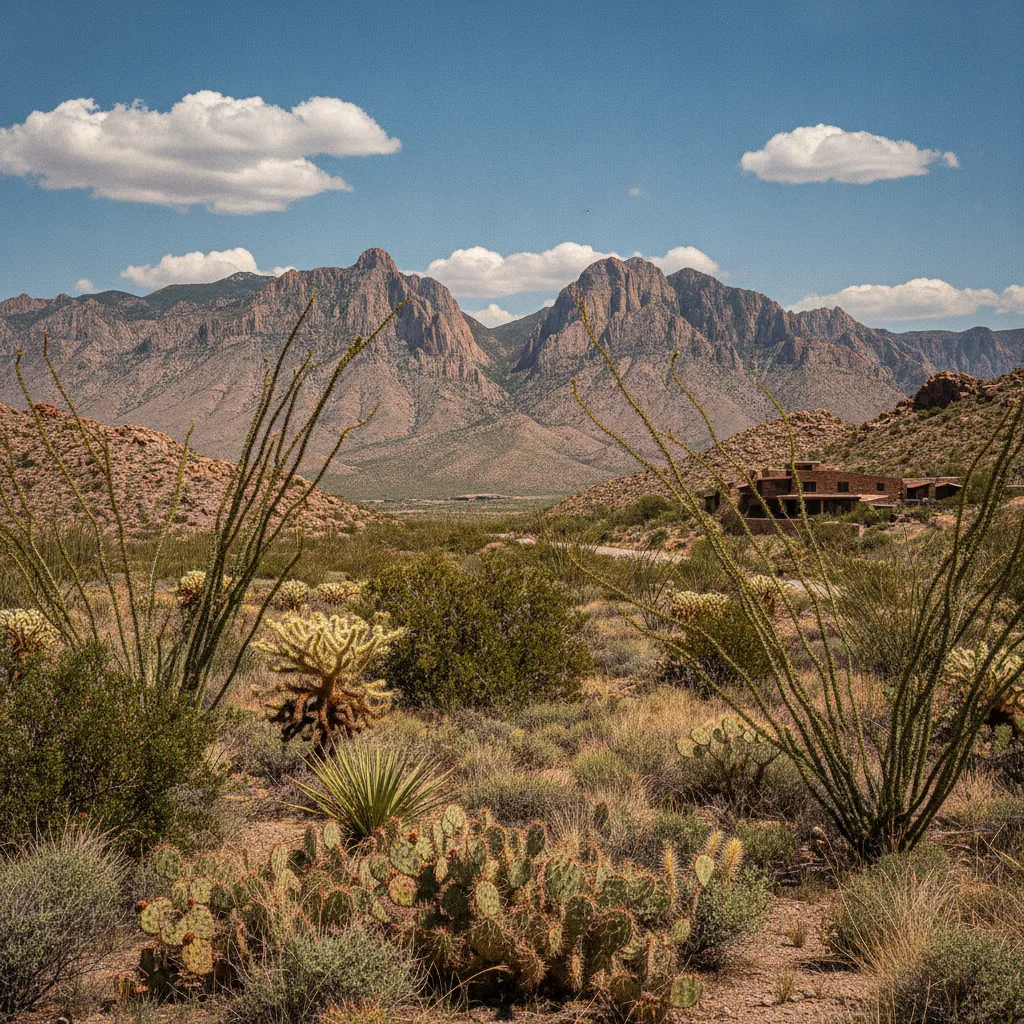
Welcome to our comprehensive guide for exploring Big Bend National Park Texas. Our team at Roam States has ventured deep into this remote corner of West Texas to bring you the most accurate, up-to-date, and actionable advice for your visit. Forget the generic travel fluff; we’re here to equip you with the specific knowledge you need to navigate this majestic and wild landscape, from its towering mountains to its vast desert and the iconic Rio Grande.
Why Visit Big Bend National Park
Big Bend National Park offers an unparalleled wilderness experience, a stark contrast to the bustling cities of Texas. Here, the Chihuahuan Desert meets the Chisos Mountains and the Rio Grande, creating three distinct ecosystems within one park. This incredible diversity means you can explore dramatic canyons, climb rugged peaks, and float along a historic river, all within the same trip. It's a place of profound solitude, where the night skies are among the darkest in the Lower 48 states, offering breathtaking stargazing opportunities. We find the sheer scale and remoteness of Big Bend to be its greatest draw, providing a true escape into untamed nature.
The park boasts more species of birds, bats, and cacti than any other national park in the United States, making it a paradise for nature enthusiasts and photographers alike. Beyond its natural wonders, Big Bend is steeped in history, with remnants of ancient cultures and early 20th-century mining operations scattered throughout the landscape. Whether you're seeking adventure, tranquility, or a deeper connection with the natural world, Big Bend delivers an experience unlike any other.
Is It Worth Visiting?
Absolutely, Big Bend National Park is worth visiting for anyone seeking a genuine wilderness adventure. Its remote location means it sees fewer visitors than many other national parks, allowing for a profound sense of solitude and discovery. We believe that the unique combination of desert, mountain, and river environments, coupled with some of the darkest night skies in North America, makes Big Bend an essential destination for any serious traveler. If you are looking for a place to truly disconnect and immerse yourself in diverse natural beauty, then Big Bend National Park is worth visiting without a doubt.
Who It's Best For
Big Bend National Park is ideal for adventurous travelers who appreciate rugged landscapes, outdoor activities, and a sense of remoteness. It's particularly well-suited for:
- Hikers and Backpackers: With over 200 miles of trails ranging from easy strolls to strenuous multi-day treks, the park is a paradise for those who love to explore on foot.
- Nature Enthusiasts: Birdwatchers, stargazers, and anyone fascinated by desert flora and fauna will find Big Bend captivating. Its diverse ecosystems support a remarkable array of life.
- River Adventurers: The Rio Grande offers unique opportunities for rafting, canoeing, and kayaking through spectacular canyons, providing a different perspective of the park's grandeur.
- Families with Older Children: While some trails are kid-friendly, the park's vastness and extreme conditions require a certain level of preparedness and stamina. Junior Ranger programs and fossil exhibits offer engaging activities for younger visitors.
- Photography Buffs: From dramatic sunrises and sunsets to expansive desert vistas and towering canyon walls, Big Bend provides endless opportunities for stunning landscape photography.
However, those seeking luxury resorts, extensive dining options, or a highly curated, accessible experience might find Big Bend challenging due to its remote nature and limited amenities.
How to Get There
Getting to Big Bend National Park is an adventure in itself, as it's one of the most remote national parks in the contiguous United States. We always emphasize planning your travel carefully, as distances between towns are vast, and cell service is spotty within the park.
Driving to Big Bend National Park
The most common way to reach the park is by car. The nearest major cities with airports are El Paso (approximately 4-5 hours northwest) and San Antonio (approximately 6-7 hours northeast). We recommend stocking up on gas, food, and water in larger towns before approaching the park, such as Alpine or Fort Stockton.
- From the North (I-10): Take US-385 South from Fort Stockton to Persimmon Gap, one of the park's northern entrances.
- From the West (El Paso): Take I-10 East to Van Horn, then US-90 East to Alpine, and finally TX-118 South to the park's western entrance near Study Butte/Terlingua.
- From the East (San Antonio): Take US-90 West to Marathon, then US-385 South to Persimmon Gap.
Park Entrances and Visitor Centers
Big Bend has three main entrances: Persimmon Gap (north), Maverick Junction (west), and Panther Junction (central). Panther Junction is the park headquarters and typically the best first stop for information, permits, and exhibits.
Parking in Big Bend National Park
Parking is available at all visitor centers and trailheads throughout the park. During peak season (October-April, especially spring break), popular trailheads like Lost Mine and Window Trail can fill up early. We advise arriving at popular spots early in the morning to secure a space. Some primitive dirt roads require high-clearance and true four-wheel-drive vehicles, and are not passable for passenger cars, minivans, or small crossover SUVs. Always check current road conditions at a visitor center before venturing onto unpaved roads.
Top Things to Do
There's an incredible array of things to do at Big Bend National Park, catering to every type of adventurer. Our team has explored many of them, and these are our top recommendations:
- Drive the Ross Maxwell Scenic Drive: This 30-mile paved road offers breathtaking views of the Chisos Mountains, desert landscapes, and the Rio Grande, leading to the iconic Santa Elena Canyon. Stop at overlooks like Mule Ears Spring and Tuff Canyon.
- Visit Santa Elena Canyon: One of the most famous attractions, this canyon features towering 1,500-foot walls carved by the Rio Grande. A moderate 1.7-mile trail leads into the canyon, offering stunning perspectives. Be aware that crossing Terlingua Creek to access the trail may involve dry sand, mud, or flowing water depending on recent rainfall.
- Soak in the Langford Hot Springs: A short, easy hike leads to the ruins of an old bathhouse and natural hot springs along the Rio Grande. It's a perfect spot to relax, especially after a long day of hiking.
- Explore the Chisos Basin: Nestled high in the Chisos Mountains, the Basin offers cooler temperatures and access to some of the park's most popular mountain trails, including the Window Trail and Lost Mine Trail. The Chisos Basin Visitor Center is also located here. Please note, the Chisos Basin area, including the lodge, campground, visitor center, and several trailheads (Lost Mine, Window, Laguna Meadows, Pinnacles, Basin Loop, Amphitheater), is closed for major construction from May 1, 2026, for approximately two years.
- Cross the Border to Boquillas, Mexico: With a valid passport, you can take a small rowboat across the Rio Grande to visit the charming village of Boquillas del Carmen. It's a unique cultural experience, offering local food and handicrafts. The Boquillas Crossing Port of Entry is open Friday through Monday, 9:00 am to 4:00 pm.
- Stargazing: Big Bend boasts the darkest night skies in the Lower 48, making it an International Dark Sky Park. Find a remote spot away from artificial light and prepare for an unforgettable celestial show.
- Visit the Fossil Discovery Exhibit: Located north of Panther Junction, this open-air exhibit showcases the rich paleontological history of the region, with real fossils and life-sized murals of prehistoric creatures.
With so many things to do at Big Bend National Park, we encourage visitors to prioritize based on their interests and the time of year.
Big Bend National Park Hiking Trails
Big Bend is truly a hiker's paradise, offering an extensive network of Big Bend National Park hiking trails across its diverse terrain. We've traversed many of these paths and can attest to the rewarding experiences they offer, from desert washes to mountain summits and riverside strolls. Remember to carry at least one gallon of water per person per day, wear appropriate sun protection, and inform someone of your hiking plans.
Mountain Hikes (Chisos Basin - *See Closure Alert*)
The Chisos Mountains offer cooler temperatures and lush environments, especially appealing during warmer months. However, as of May 1, 2026, the Chisos Basin area, including many popular trailheads, is closed for two years due to major construction. When it reopens, some of the best Big Bend National Park hiking trails in this area include:
- Lost Mine Trail: A moderate 4.8-mile round-trip hike with stunning views of Casa Grande and Juniper Canyon. It's a popular choice due to its rewarding vistas.
- Window Trail: A moderate 5.6-mile round-trip trail that descends into Oak Creek Canyon, culminating in a natural "window" framing the desert landscape. The return trip is mostly uphill.
- Emory Peak Trail: The most strenuous and rewarding hike, a 10.4-mile round-trip to the highest point in the park (7,825 feet). The final ascent involves a short rock scramble, but the 360-degree views are unparalleled.
Desert Hikes
These trails showcase the unique beauty of the Chihuahuan Desert:
- Balanced Rock (Grapevine Hills Trail): An easy to moderate 2.2-mile round-trip hike, ending with a fun scramble to see the iconic balanced rock formation. Note that Grapevine Hills Road is rough and a high-clearance vehicle is recommended.
- Chimneys Trail: A moderate 4.8-mile out-and-back trail leading to volcanic dikes and formations, some with petroglyphs.
River Hikes
These trails offer dramatic views of the Rio Grande and its canyons:
- Santa Elena Canyon Trail: As mentioned, a moderate 1.7-mile round-trip trail into the magnificent canyon.
- Rio Grande Village Nature Trail: An easy 0.75-mile loop, featuring a boardwalk over a beaver pond and a scenic overlook of the Rio Grande and Boquillas del Carmen.
- Hot Springs Trail: An easy, short hike to the historic hot springs along the Rio Grande.
Remember to check current conditions and closures before heading out on any of the Big Bend National Park hiking trails.
Best Time to Visit
Choosing the best time to visit Big Bend National Park significantly impacts your experience. We generally recommend avoiding the peak summer months due to extreme heat.
- Peak Season (March-April & October-November): These months offer the most pleasant weather, with daytime temperatures ranging from 18-25°C (March-April) and around 28°C (October). Wildflowers bloom in spring, and fall brings crisp air and dramatic cloud formations. Expect larger crowds and higher prices during these times, especially during Spring Break.
- Shoulder Season (February, May & December): Good weather with fewer crowds and potentially better prices. February and December offer cool daytime temperatures (8-15°C). May can start to get hot, with daytime highs reaching 37°C.
- Winter (December-February): Offers cool, crisp days ideal for hiking and backpacking, with cold nights. This is also the best time for stargazing due to clear skies. However, occasional snow can occur on the Chisos peaks.
- Summer (June-September): We strongly advise caution if visiting during summer. Daytime highs in the desert basin can reach a dangerous 38-42°C (100-108°F). Higher elevations in the Chisos Mountains are 10-15°C cooler. Summer visitors should only hike before 8 am and after 5 pm, as midday hiking is genuinely dangerous. Monsoon season can bring dramatic skies and brief rainstorms.
For the best balance of comfortable weather and fewer crowds, our team finds that late fall (November) and early spring (February-early March) are often the best time to visit Big Bend National Park. Always check the weather forecast before your trip.
Where to Stay Nearby
While the allure of Big Bend is its remoteness, there are several options for lodging both inside and just outside the park boundaries. We always recommend booking well in advance, especially during peak season.
Inside Big Bend National Park
- Chisos Mountains Lodge: The only lodge within the park, located in the scenic Chisos Basin. It offers rooms and cottages. However, please be aware that the Chisos Mountains Lodge is closed for major construction from April 28, 2026, for approximately two years.
Outside Big Bend National Park
The towns closest to Big Bend offer a range of accommodations, from rustic to more comfortable. These towns also serve as excellent bases for exploring other parts of West Texas, such as the historic `/destinations/the-alamo-texas` in San Antonio or the `/destinations/san-antonio-river-walk-texas`.
- Terlingua: This historic ghost town, located just west of the park, is a popular gateway. It offers unique lodging options, including rentals and small hotels, with a distinct Old West vibe.
- Study Butte: Adjacent to Terlingua, offering more conventional motels and RV parks.
- Marathon: Located about an hour north of the Persimmon Gap entrance, Marathon offers a few charming hotels and guesthouses, often catering to those seeking a quieter experience.
- Alpine: A larger town about 1.5 hours north of the park, Alpine provides more amenities, including a wider selection of hotels, restaurants, and supplies. It's a good base if you plan to explore the Davis Mountains or Fort Davis National Historic Site.
For a broader exploration of the Lone Star State, consider our guide to the Best places in Texas.
Big Bend National Park Camping
For many, camping is the quintessential Big Bend experience, allowing for unparalleled immersion in the park's natural beauty and dark skies. We find that planning ahead is crucial, as popular sites book up quickly.
Developed Campgrounds (Frontcountry)
Big Bend National Park offers three developed campgrounds operated by the National Park Service, providing drinking water and restroom facilities.
- Chisos Basin Campground: Located in the Chisos Mountains, this campground offers stunning views and access to mountain trails. However, it is closed from May 1, 2026, for approximately two years due to major construction. Reservations are normally required.
- Rio Grande Village Campground: Situated near the Rio Grande on the east side of the park, offering a lush, riverside environment. It is open year-round, and reservations are required. Standard sites are $16 per night.
- Cottonwood Campground: Located near the Rio Grande on the west side of the park, offering a more remote feel with vault toilets and potable water. It is closed during summer months due to extreme heat but will open November 1, 2026, through April 30, 2027. Reservations are required.
RV Camping
The Rio Grande Village RV Park, operated by Aramark, offers 25 sites with full hook-ups (50 amp) and is open year-round. Maximum length for RVs is 38 feet. For reservations, call 855-765-1324.
Primitive Roadside Campsites & Backcountry Camping
For a more rugged experience, primitive roadside campsites are available along certain dirt roads (e.g., Old Ore Road, River Road, Old Maverick Road). These require a high-clearance, 4x4 vehicle. Backcountry backpacking permits are also available. Permits for most designated backcountry campsites are available online through Recreation.gov, while permits for more remote sites can be acquired in person at visitor centers. Note that some backcountry areas are closed to overnight camping, including within a half-mile of developed areas or roads. No dispersed camping or "boondocking" is allowed in Big Bend National Park; all campers must be in designated sites with a permit.
Whether you choose a developed campground or a remote backcountry spot, Big Bend National Park camping offers an unforgettable connection with nature.
Sample 2-Day Itinerary
To help you make the most of your visit, we've crafted a sample 2-day itinerary for Big Bend National Park. This assumes you're visiting outside of the Chisos Basin closure period (pre-May 1, 2026, or post-mid-2028).
Day 1: Mountains and Desert Vistas
- Morning: Arrive at Panther Junction Visitor Center (open daily 8:30 am to 5:00 pm) to get maps, current conditions, and any necessary permits. Drive into the Chisos Basin (if open) and hike the Lost Mine Trail (4.8 miles, moderate) for incredible mountain views.
- Afternoon: Enjoy lunch in the Basin (or pack a picnic). Take the moderate Window Trail (5.6 miles round-trip) to see the iconic "window" formation.
- Evening: Drive to a scenic overlook for sunset, such as the Window View Trail (0.3 miles, easy) in the Chisos Basin. Enjoy stargazing from your campsite or a designated dark sky viewing area.
Day 2: Canyons and River Adventures
- Morning: Drive the Ross Maxwell Scenic Drive, stopping at various overlooks. Hike the Santa Elena Canyon Trail (1.7 miles, moderate) to explore the majestic canyon carved by the Rio Grande.
- Afternoon: Visit the Langford Hot Springs for a relaxing soak. If time and passport allow, cross the border to Boquillas, Mexico, for a unique cultural experience (open Friday-Monday, 9:00 am to 4:00 pm).
- Evening: Enjoy a final Big Bend sunset and reflect on your adventure. Consider a ranger program if available.
Remember, this is a sample, and we encourage you to tailor it to your interests and the park's current conditions.
FAQ Longtails
What are things to do in West Texas?
Beyond Big Bend National Park, West Texas offers a wealth of unique experiences. Our team recommends visiting the art town of Marfa, exploring the historic Fort Davis National Historic Site, or enjoying the cool oasis of Davis Mountains State Park. You can also explore Big Bend Ranch State Park for a more rugged, less-crowded wilderness experience, or take a dip in the spring-fed pool at Balmorhea State Park. For a historical perspective, consider a trip to the `/destinations/the-alamo-texas` in San Antonio, a cornerstone of Texas history.
Is Big Bend National Park with kids a good idea?
Yes, Big Bend National Park can be a fantastic destination for families with children, especially those who enjoy outdoor activities. We suggest focusing on easier hikes like the Window View Trail, Chihuahuan Desert Nature Trail, Rio Grande Village Nature Trail, and Boquillas Canyon Trail. Kids can also become Junior Rangers, visit the Fossil Discovery Exhibit, and participate in ranger-led programs. Remember to plan for extreme heat in summer, carry plenty of water, and be aware of wildlife.
What are some Big Bend National Park tips for first-time visitors?
Our top tips for visiting Big Bend National Park include: plan ahead and make reservations for lodging or camping well in advance; bring plenty of water (at least one gallon per person per day) and snacks; download offline maps and park information as cell service is very limited; check current weather and road conditions, especially for primitive dirt roads which require high-clearance 4x4 vehicles; dress in layers for varying temperatures; and be aware of wildlife, including bears and mountain lions. Consider visiting during the cooler months to avoid extreme summer heat.
Where is Big Bend National Park parking available?
Parking is available at all visitor centers and trailheads throughout Big Bend National Park. Popular trailheads, especially in the Chisos Basin, can fill up early during peak season. We recommend arriving early for popular hikes. For those venturing onto primitive dirt roads, ensure you have a high-clearance, 4x4 vehicle, as these roads are not suitable for passenger cars.
What is the best time to visit Big Bend National Park?
The best time to visit Big Bend National Park is during the cooler months, specifically March-April and October-November, for pleasant temperatures and blooming wildflowers. The shoulder seasons of February, May, and December also offer good weather with fewer crowds. Winter (December-February) is excellent for hiking and stargazing, but be prepared for cold nights. We strongly advise against visiting in summer (June-September) due to dangerously high temperatures.
What are Big Bend National Park hours and fees?
Big Bend National Park is open 24 hours a day, 7 days a week. The entrance fee is $30 per private vehicle, valid for 7 days. This fee can be paid at entrance stations or visitor centers. The park does not accept cash at its entrance stations; credit or debit only. Visitor center hours vary seasonally; for example, Panther Junction Visitor Center is open daily from 8:30 am to 5:00 pm year-round, with reduced hours on Christmas Day. Chisos Basin Visitor Center is open daily 8:30 am to 4:00 pm (closed for lunch), but note the Chisos Basin area is closed for construction from May 1, 2026, for approximately two years.
Our team hopes this guide provides you with the confidence and information needed to plan an unforgettable journey to Big Bend National Park. This truly wild and magnificent corner of Texas awaits your discovery.
Last updated: 2026-07-07 by the Roam States team.