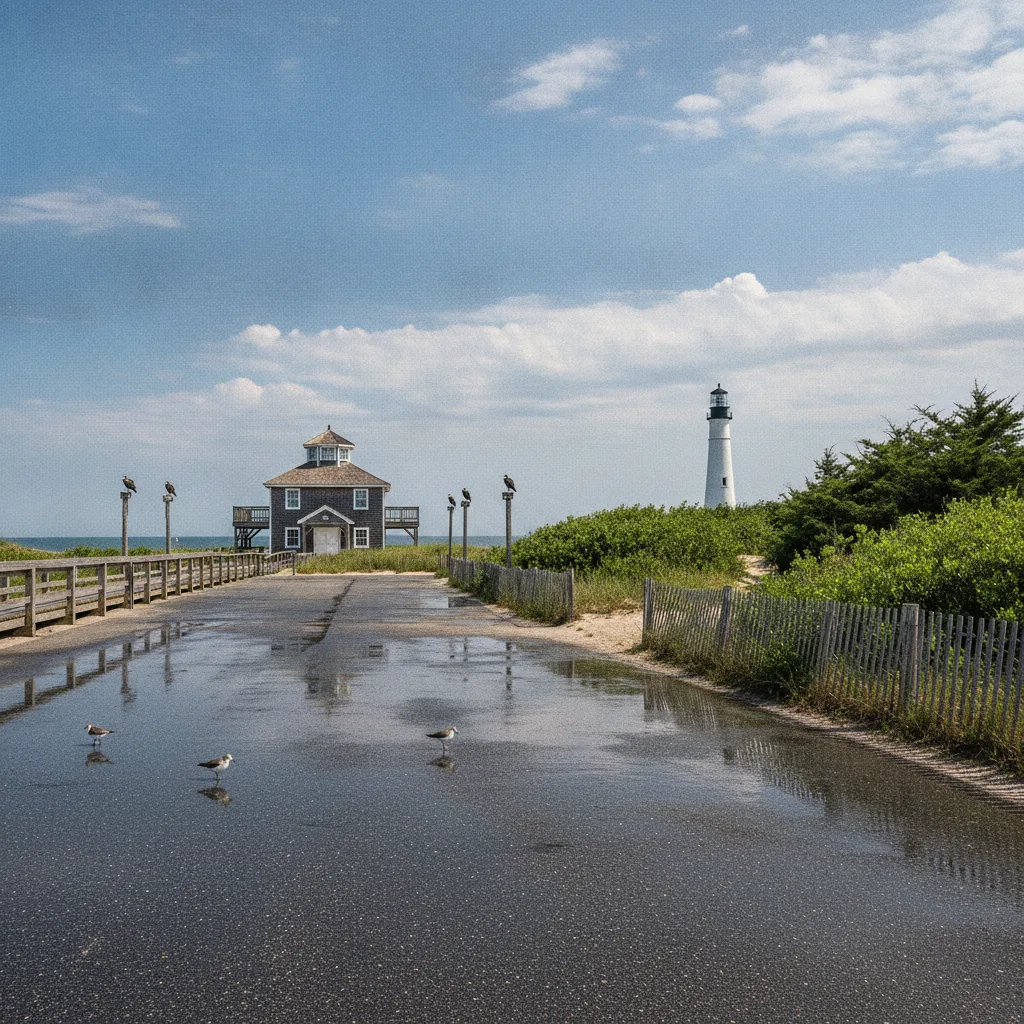
Our Cape May Bird Observatory guide covers practical planning for Cape May Bird Observatory New Jersey — best time to visit, getting there, and what to do on the ground.
As the Roam States editorial team, we've explored countless natural wonders across the United States, but few locations rival the sheer spectacle and ecological significance of the Cape May Bird Observatory New Jersey. Nestled at the tip of the Cape May Peninsula, this renowned hotspot is a critical funnel for millions of migratory birds, offering an unparalleled birdwatching experience, especially during the spring and fall migration seasons. We're here to tell you exactly why this destination should be at the top of your New Jersey travel itinerary, providing confident, specific insights to help you plan your visit in 2026.
Why Visit Cape May Bird Observatory
The Cape May Bird Observatory (CMBO) isn't just another birdwatching spot; it's a globally recognized nexus for avian migration. National Geographic lists Cape May as one of the world's best destinations for birding, and our team wholeheartedly agrees. The unique geographical position of the Cape May Peninsula, where the Atlantic Seaboard meets the Delaware Bay, creates a natural "migrant trap." Birds following the coastline north or south encounter this barrier, prompting them to stop and refuel in the peninsula's diverse habitats before continuing their arduous journeys.
Visiting CMBO offers the chance to witness this incredible phenomenon firsthand. During peak migration, you can observe thousands of raptors, songbirds, shorebirds, and waterfowl. The observatory plays a crucial role in monitoring these populations through various long-term counts, including the Cape May Hawkwatch, Avalon Seawatch, and the Morning Flight Songbird Count. Your visit directly supports these vital conservation efforts, contributing to our understanding and protection of migratory species.
Beyond the sheer numbers, the educational opportunities at CMBO are exceptional. The observatory offers a range of programs, from casual bird walks led by expert naturalists to more intensive workshops for seasoned birders. The recently renovated Northwood Center, which reopened in May 2026, now features structural upgrades, including a new public restroom, handicapped parking, and ramping that blends into nature, making it more accessible to all visitors. It also boasts a new back deck providing better access to the Ryan DeWitt Trail, and a library named in honor of Pete Dunne, a nature writer and retired director of CMBO. This commitment to education and accessibility ensures that everyone, from curious beginners to dedicated ornithologists, can deepen their appreciation for the natural world.
Who It's Best For
The Cape May Bird Observatory caters to a surprisingly broad audience, making it an ideal destination for various types of travelers.
- Avid Birdwatchers and Ornithologists: This is, without question, a premier destination. With over 430 species recorded in Cape May County, more than half the number found in all of North America, serious birders can easily tally over 325 species in a single year. The migration seasons offer the chance to see rare vagrants and massive numbers of common species.
- Nature Enthusiasts: Even if you can't tell a warbler from a wren, the sheer volume of birds and the beauty of the diverse habitats are captivating. The opportunity to connect with nature, learn about local ecology, and simply enjoy the outdoors is immense.
- Families with Children: CMBO offers family-friendly programs and walks, making nature accessible and engaging for younger visitors. Kids can borrow binoculars and participate in guided explorations of bird life, fostering an early appreciation for wildlife.
- Photographers: The abundance of birdlife, coupled with the stunning coastal landscapes, provides endless opportunities for wildlife and nature photography.
- Anyone Seeking Tranquility: Away from the bustling boardwalks of other Jersey Shore destinations like Atlantic City Boardwalk, Cape May Point offers a quieter, nature-focused experience. It's a perfect escape for those looking to unwind and immerse themselves in the peaceful rhythms of the natural world.
Getting There & Parking
Reaching the Cape May Bird Observatory is straightforward, whether you're driving from within New Jersey or arriving from further afield. The observatory has two main centers: the Northwood Center in Cape May Point and the Center for Research and Education in Cape May Court House. Most visitors will focus on the Northwood Center for direct access to birding hotspots.
How to Get There
If you're driving, the Cape May Bird Observatory Northwood Center is located at 701 East Lake Drive, Cape May Point, NJ 08212. From the Garden State Parkway, continue south beyond its terminus onto Route 109, which becomes CR 633 or Lafayette Street. Follow Lafayette Street for about 1.9 miles, then turn right onto Sunset Boulevard (CR 606). Continue for approximately two miles and turn left onto Lighthouse Avenue. After a few hundred yards, turn right onto Lake Drive, and the Northwood Center will be on your right.
For those relying on public transport, options are more limited, but local taxi services or ride-sharing apps can connect you from the main Cape May transportation hubs to the observatory. We recommend checking local schedules in advance for 2026.
Parking
Regarding Cape May Bird Observatory parking, the Northwood Center offers street parking. The recent renovations in 2026 have also improved accessibility, including handicapped parking. The Center for Research and Education in Cape May Court House has a large parking area on-site. We always advise arriving early during peak migration seasons to secure the best spots, especially for popular programs and events.
Top Things to Do
A visit to the Cape May Bird Observatory offers a wealth of activities, primarily centered around observing and learning about birds. Our team has highlighted the top things to do at Cape May Bird Observatory:
- Join a Guided Bird Walk: This is arguably one of the best things to do at Cape May Bird Observatory, especially for beginners. CMBO naturalists lead casual 2-hour walks, such as "Birding Northwood and Beyond" and "A Meadows Morning," where you can explore various habitats and learn to identify different species. Loaner binoculars are often available, and these walks are family-friendly.
- Visit the Northwood Center: The recently renovated Northwood Center is a hub of activity. Here, you can gather up-to-the-minute information on bird sightings, pick up local maps and brochures, and browse the bookstore for birding necessities and gifts. The center's grounds, with their feeders and birdbaths, attract birds year-round.
- Explore the Ryan DeWitt Memorial Trail: Accessible from the Northwood Center's new back deck, this trail offers close-up views of native plants and the potential for spotting migrating warblers or resident wrens.
- Experience the Migration Watches: Depending on the season, you can visit the Cape May Hawkwatch platform at Cape May Point State Park to witness the incredible raptor migration (September through November) or the Morning Flight Songbird Count platform at Higbee Beach for songbirds (spring and fall). The Avalon Seawatch also monitors southbound waterbird migration from October to December.
- Participate in Educational Programs and Workshops: CMBO offers a "School of Birding" and special field trips, providing deeper dives into bird identification, ecology, and conservation. Members often receive discounted rates.
- Visit the Center for Research and Education: Located in Cape May Court House, this center features native vegetation, a dragonfly pond, a bird feeding station, and a short handicap-accessible trail. It also houses a store with a large selection of optics, books, and wildlife viewing guides.
Best Time to Visit
The Cape May Bird Observatory is open year-round, but the "best" time to visit largely depends on what you hope to see. Our team recommends focusing on the migration seasons for the most spectacular displays.
- Fall Migration (Late August - November): This is arguably the most famous time to visit. Millions of birds, especially raptors, songbirds, and shorebirds, funnel down the peninsula before crossing Delaware Bay. October is considered the peak for fall migration, particularly for birds of prey. You can witness large numbers of Cooper's Hawks, Sharp-shinned Hawks, Northern Harriers, Bald Eagles, American Kestrels, Peregrine Falcons, and Merlins at the Cape May State Park Hawk Watch Platform. September also brings thousands, sometimes millions, of migrating monarch butterflies.
- Spring Migration (March - May): While less concentrated than the fall, spring migration offers a vibrant spectacle as birds return to their breeding grounds. May is considered one of the top birding destinations in North America for spring migration, especially for songbirds and shorebirds. You might see over 70 different bird species on a single two-hour walk during this time.
- Summer (June - August): While migration slows, summer is an excellent time for breeding birds, butterflies, and dragonflies. The marshes host thousands of breeding herons, egrets, and terns. It's also a great time for family visits, with many programs tailored for children.
- Winter (December - February): Even in winter, CMBO offers birding opportunities. The Northwood Center's feeders attract wintering songbirds, and you can scan Lily Lake for waterfowl and gulls. Winter waterfowl walks are also offered.
Keep in mind that pre-registration may be required for certain programs and field trips in 2026, and walk-ins are not accepted for those requiring advance sign-up.
Where to Stay Nearby
When planning your visit to Cape May Bird Observatory, you'll find a variety of lodging options to suit different preferences and budgets, ranging from charming Victorian inns to modern beachfront resorts. The area offers numerous hotels near Cape May Bird Observatory.
Many visitors choose to stay in Cape May itself, known for its picturesque Victorian architecture and vibrant atmosphere. Popular options include the Grand Hotel of Cape May, Congress Hall, and ICONA Cape May, all highly rated and offering amenities like pools and restaurants. The Montreal Beach Resort and The Beach Shack are also well-regarded choices. For a more intimate experience, consider boutique hotels or B&Bs like The Mason Cottage or the Wilbraham Mansion. These hotels near Cape May Bird Observatory provide excellent access to both birding sites and the town's attractions.
If you prefer self-catering or a more spacious accommodation, vacation rentals such as houses and cottages are abundant near Cape May Bird Observatory. Websites like Vrbo list numerous options, including properties with hot tubs, fire pits, and proximity to the bay and preserves. These can be ideal for families or groups traveling together.
For those attending specific birding tours, some packages include lodging at classic beachside hotels in historic Cape May, offering a convenient "unpack and relax" experience. We recommend booking your Cape May Bird Observatory lodging well in advance, especially during peak migration seasons, as accommodations can fill up quickly.
Sample 2-Day Itinerary
To help you maximize your birding adventure at the Cape May Bird Observatory New Jersey, our team has crafted a sample 2-day itinerary:
Day 1: Raptor & Songbird Hotspots
- Morning (Sunrise - 10:00 AM): Higbee Beach & Morning Flight Platform. Start your day before dawn at Higbee Beach Wildlife Management Area. This legendary spot offers front-row seats to the "Morning Flight" during migration, where countless songbirds fly by after encountering the Delaware Bay barrier. Look for warblers, vireos, and other passerines.
- Late Morning (10:00 AM - 12:00 PM): Cape May Bird Observatory Northwood Center. Head to the Northwood Center at 701 East Lake Drive. Pick up a free birding map and checklist, check the latest sighting sheets, and explore the Ryan DeWitt Memorial Trail and the habitat garden for close-up views of native plants and birds.
- Lunch (12:00 PM - 1:00 PM): Grab a casual lunch at a local eatery in Cape May Point.
- Afternoon (1:00 PM - 4:00 PM): Cape May Point State Park & Hawkwatch. Spend your afternoon at Cape May Point State Park. Climb the Cape May Lighthouse for panoramic views, and then position yourself at the Cape May Hawkwatch platform. This is a prime location to observe migrating raptors, especially in the fall. Explore the park's trails, which lead through diverse habitats.
- Evening: Dinner in Cape May Historic District. Enjoy dinner in the charming Cape May Historic District, known for its Victorian architecture and excellent restaurants.
Day 2: Shorebirds, Waterfowl & Local Exploration
- Morning (Sunrise - 10:00 AM): South Cape May Meadows & Delaware Bay Beaches. Begin your day at The Nature Conservancy's South Cape May Meadows Preserve, a critical habitat for shorebirds and waterfowl. Follow the paths through marshes and dunes. Afterward, explore the nearby Delaware Bay beaches for a different array of shorebirds and seabirds.
- Late Morning (10:00 AM - 12:00 PM): Birding Northwood and Beyond Program (Optional). Consider joining a scheduled "Birding Northwood and Beyond" walk offered by CMBO naturalists, which typically runs for two hours and costs $8 for members and $12 for non-members. Pre-registration is recommended.
- Lunch (12:00 PM - 1:00 PM): Enjoy lunch in Cape May.
- Afternoon (1:00 PM - 4:00 PM): Cape May Winery or Whale Watching. For a change of pace, visit the Cape May Winery for a tasting and tour, enjoying their unique culinary offerings. Alternatively, embark on a dolphin or whale watching cruise from Cape May, a popular activity for families and nature lovers alike.
- Evening: Sunset at Sunset Beach. Conclude your trip with a visit to Sunset Beach to watch the daily flag-lowering ceremony (during summer evenings) and search for Cape May Diamonds.
Is It Worth Visiting?
Our unequivocal answer to "is Cape May Bird Observatory worth visiting?" is a resounding yes. For anyone with even a passing interest in nature, birds, or simply beautiful coastal landscapes, this destination offers an enriching and memorable experience. The sheer volume and diversity of birds, particularly during migration, create a natural spectacle that few places in the world can match.
Beyond the birds, the Cape May Bird Observatory and its surrounding areas provide an opportunity for quiet contemplation, outdoor activity, and learning. The accessible facilities, knowledgeable staff, and varied programs ensure that visitors of all ages and experience levels can engage with the natural world in a meaningful way. Whether you're a seasoned birder adding to your life list or a family looking for an educational and engaging outing, the unique blend of ecological significance and visitor amenities makes Cape May Bird Observatory New Jersey an exceptional travel destination. It's a cornerstone of what makes New Jersey a fantastic state for nature lovers, and a highlight of The Jersey Shore.
Cape May Bird Observatory camping
While direct Cape May Bird Observatory camping is not available on-site, the broader Cape May area and surrounding New Jersey regions offer various campgrounds. New Jersey is ideal for camping, with diverse habitats near prime birding spots. You can find numerous camping sites by visiting resources like www.gocampingnj.com. This allows visitors to combine their birding adventures with an immersive outdoor camping experience.
Things to do in Cape May Point
Beyond the Cape May Bird Observatory, Cape May Point offers a quieter, nature-focused experience with several other attractions. You can climb the historic Cape May Lighthouse, which provides stunning panoramic views of the Atlantic Ocean and Delaware Bay. Explore Cape May Point State Park, home to the lighthouse and trails, and visit Sunset Beach to search for "Cape May Diamonds" and witness the daily flag-lowering ceremony during summer evenings. The World War II Lookout Tower is also nearby, offering a glimpse into history.
Cape May Bird Observatory with kids
The Cape May Bird Observatory is an excellent destination for families visiting with kids. The Northwood Center offers family-friendly programs and walks, where loaner binoculars are often available, making it easy for children to participate and learn about bird life. The Ryan DeWitt Memorial Trail is an accessible and engaging outdoor space for exploration. Additionally, nearby attractions like whale and dolphin watching cruises are popular activities for kids in Cape May.
Best hotels near Cape May Bird Observatory
Some of the best hotels near Cape May Bird Observatory include the Grand Hotel of Cape May, Congress Hall, and ICONA Cape May, all offering excellent amenities and proximity to attractions. Other highly-rated options include the Montreal Beach Resort, The Beach Shack, The Mason Cottage, and the Wilbraham Mansion. These properties provide comfortable stays whether you're looking for luxury, family-friendly options, or charming Victorian ambiance.
Cape May Bird Observatory tips
To make the most of your visit to Cape May Bird Observatory, we recommend a few key tips: visit during spring or fall migration for the most spectacular birding; check the CMBO calendar for guided walks and programs, and consider pre-registering for events; bring binoculars, a field guide, and appropriate clothing for all weather conditions; and arrive early, especially during peak season, to secure parking and enjoy the quieter moments of the morning. Don't forget to pick up a free birding map and checklist at the Northwood Center.
Where to stay near Cape May Bird Observatory
Beyond the specific hotels mentioned, the general Cape May area offers a wide array of lodging. You can find hotels and motels in Cape May Point, West Cape May, and central Cape May, all within a short drive of the observatory. Vacation rentals, including houses and cottages, are also a popular choice for those seeking more space or a home-away-from-home feel. Consider areas close to the Cape May Historic District for easy access to dining and shopping in addition to birding.
Our team at Roam States confidently asserts that the Cape May Bird Observatory is a truly world-class destination for birding and nature appreciation. Its unique position on the Atlantic Flyway ensures an unparalleled spectacle of migration, while its dedicated staff and educational programs provide invaluable insights into the avian world. Whether you're a seasoned birder or simply seeking a profound connection with nature, a visit here in 2026 will undoubtedly be a highlight of your travels through New Jersey.
Last updated: 2026-07-07 by the Roam States team.