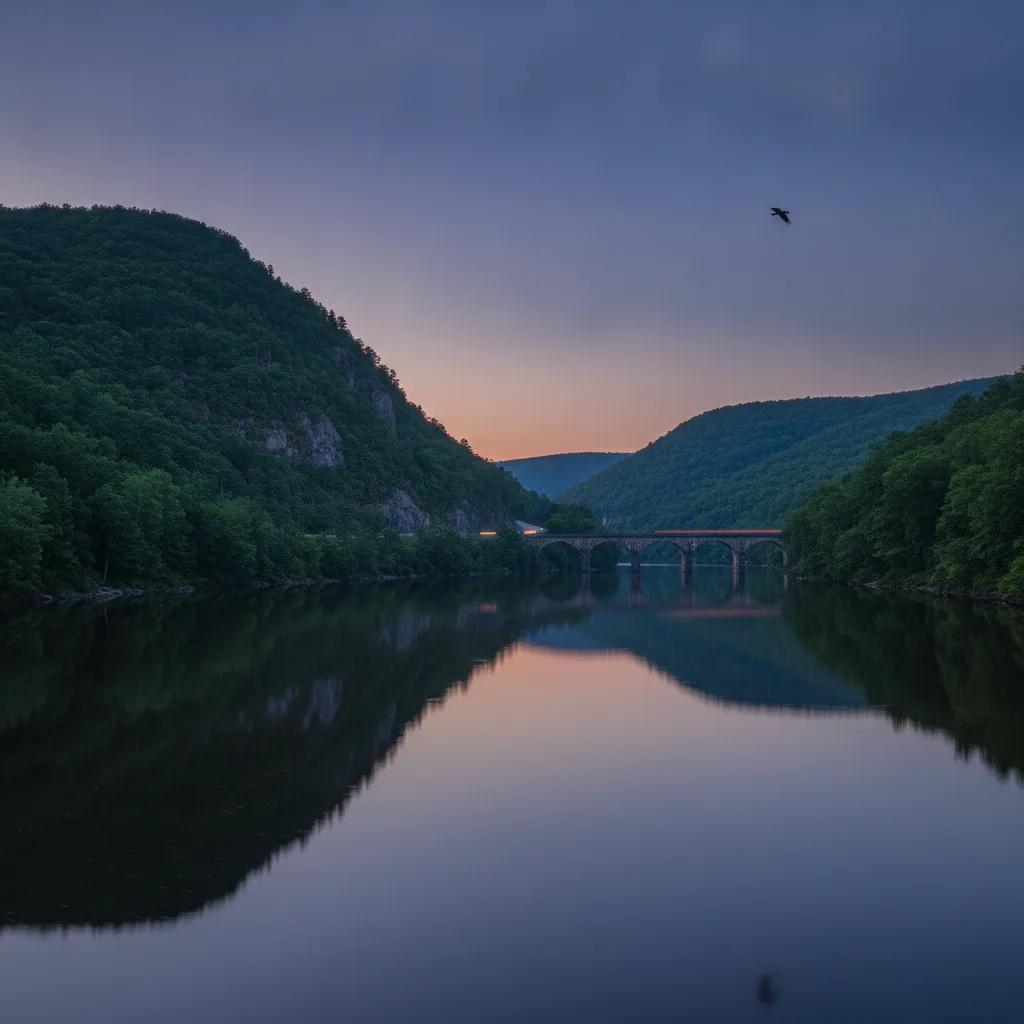
For those seeking dramatic natural beauty and unparalleled outdoor adventure, the Delaware Water Gap New Jersey region stands as a vital corridor cutting through the ancient Appalachian Mountains. Our team at Roam States has extensively explored this majestic landscape, and we're confident in declaring it one of the East Coast's premier destinations for hikers, paddlers, and nature enthusiasts alike. Here, the powerful Delaware River has carved a breathtaking gorge, creating a unique ecosystem rich in history and teeming with recreational opportunities.
Why Visit Delaware Water Gap
The allure of the Delaware Water Gap is undeniable, drawing millions of visitors annually to its 70,000 acres of protected wilderness. We believe its primary appeal lies in the sheer diversity of experiences it offers, all set against a backdrop of stunning natural scenery. Imagine towering forested ridges, cascading waterfalls, and the serene, free-flowing Delaware River. It's a place where you can truly disconnect from the hustle and bustle and reconnect with nature.
Beyond the visual splendor, the area boasts a rich tapestry of human history, from ancient Native American sites to 19th-century villages. The geological significance of the "Gap" itself—where the river dramatically cleaves through the Kittatinny Mountains—is a marvel, offering panoramic vistas that will stay with you long after your trip. Whether you're a seasoned adventurer or a family looking for a memorable escape, the Delaware Water Gap provides an accessible yet wild experience, making it a cornerstone of outdoor recreation in New Jersey. For more incredible experiences within the Garden State, check out our guide to Best Places in New Jersey.
Who It's Best For
Our team finds that the Delaware Water Gap caters to a broad spectrum of travelers, though it particularly shines for those with an active spirit and a love for the outdoors. It's ideal for:
- Hikers of all levels: From strenuous mountain climbs to gentle riverside strolls, the extensive trail network offers something for everyone.
- Paddlers and water sports enthusiasts: The Delaware River is perfect for kayaking, canoeing, and tubing, providing a unique perspective of the Gap.
- Families: With accessible trails, swimming beaches, and the Junior Ranger program, kids can engage with nature and history in an exciting way.
- Nature photographers and birdwatchers: The diverse ecosystems and scenic overlooks provide endless opportunities for capturing breathtaking shots and spotting wildlife, including bald eagles.
- History buffs: Historic sites like Millbrook Village and Peters Valley Arts Center offer a glimpse into the region's past.
- Peace-seekers: Despite its popularity, the vastness of the recreation area means you can often find tranquil spots for quiet contemplation.
If your idea of a perfect getaway involves fresh air, scenic views, and a chance to get your heart rate up, then the Delaware Water Gap is undoubtedly for you.
Getting There & Parking
Understanding how to get to Delaware Water Gap is straightforward, as the region is remarkably accessible given its wild character. The primary gateway to the New Jersey side of the Delaware Water Gap National Recreation Area is via Interstate 80. Exit 1 for Worthington State Forest will lead you directly to some of the most popular trailheads and the Kittatinny Point Visitor Center, located in Columbia, New Jersey.
Parking: Parking is available at numerous trailheads and access points throughout the park. It's important to note that while there is no general entrance fee to the Delaware Water Gap National Recreation Area, certain high-use areas do charge an "expanded amenity fee." As of April 15, 2026, these fees are $10 per vehicle per day at locations like Turtle Beach (NJ). A seasonal pass for these areas costs $45, with a 50% discount available for America the Beautiful Access, Senior, and Military pass holders. These fees are collected through Columbus Day. We recommend having a credit/debit card ready, as some fee stations at beaches like Turtle Beach only accept card payments when staff are on duty.
Road Closures & Conditions (2026): Our team advises checking the National Park Service website for current conditions before your visit, especially during winter or construction periods. As of April 6, 2026, Old Mine Road North is closed between Route 206 and Jager Road for a repaving project. There may also be delays on Old Mine Road near Van Campens Glen Trail due to bridge repairs. Additionally, the Dingmans Falls access road, visitor center, and trail remain closed for bridge replacement and trail rehabilitation, with work expected to conclude in spring 2026. Winter closures for many secondary roads and parking areas typically begin January 2, 2026, or with the first significant snowfall, with most sites reopening by April 15, 2026.
For those interested in public transport, the Pocono Pony shuttle service operates on weekends from May 23, 2026, to September 6, 2026, providing access to various trailheads and points of interest on the Pennsylvania side, which can be a convenient option if you're staying nearby.
Top Things to Do
When planning your visit, you'll find an abundance of things to do at Delaware Water Gap. Our team has curated a list of must-do activities that showcase the best of this incredible region:
- Hiking the Appalachian Trail: A significant portion of the legendary Appalachian Trail (AT) traverses the Delaware Water Gap. You can access it from various points, including the Kittatinny Point Visitor Center. Even a short section of the AT offers rewarding views and a taste of this iconic path.
- Paddle the Delaware River: Whether you prefer kayaking, canoeing, or a leisurely tubing trip, getting out on the Delaware River is a quintessential Delaware Water Gap experience. Several liveries in the area offer rentals and shuttle services, allowing you to float through the dramatic gorge itself.
- Visit Millbrook Village: Step back in time at Millbrook Village, a recreated 19th-century village within the recreation area. It offers living history demonstrations and a glimpse into rural life of the past.
- Explore Waterfalls: While Dingmans Falls (PA) is currently closed for repairs until spring 2026, Raymondskill Falls (PA) is a popular alternative, featuring a triple cascade that is the tallest in Pennsylvania. On the New Jersey side, trails like Dunnfield Creek offer smaller cascades and beautiful scenery.
- Biking the McDade Recreational Trail: This relatively flat, shaded trail runs along the Pennsylvania side of the river and is perfect for families and casual cyclists. It offers scenic views and access to various points of interest.
- Swimming at Turtle Beach: On the New Jersey side, Turtle Beach is a designated swimming area where you can cool off on a hot summer day. Remember that an expanded amenity fee of $10 per vehicle applies here. Note that Kittatinny Point boat launches and Karamac Trail riverbanks are closed to swimming and wading.
- Scenic Drives: Take a leisurely drive along Old Mine Road on the New Jersey side or US Route 209 on the Pennsylvania side for stunning vistas and access to various trailheads and historic sites. Be mindful of current road closures and conditions.
- Junior Ranger Program: For families with school-age children, the Junior Ranger Program is an excellent way for kids to learn about the park's history and ecology while earning an official badge.
These things to do at Delaware Water Gap provide a fantastic foundation for an unforgettable trip, blending adventure with education and relaxation.
Best Time to Visit
Our team believes the best time to visit Delaware Water Gap largely depends on your preferred activities, as each season offers a distinct experience.
- Spring (April-May): As winter closures lift (most sites reopen April 15, 2026), spring brings fresh greenery, blooming wildflowers, and vibrant waterfalls fed by snowmelt. It's an excellent time for hiking before the peak summer crowds and heat. Keep in mind that some areas, like the Mount Minsi Climbing Area, are closed from April until late summer for peregrine falcon nesting.
- Summer (June-August): This is peak season for a reason, especially if you plan on enjoying water activities. The Delaware River is perfect for swimming, kayaking, canoeing, and tubing. All visitor centers are typically open, including the Bushkill Meeting Center (daily 9 AM - 4 PM) and Kittatinny Point Visitor Center (Friday-Monday 9 AM - 4:30 PM). Expanded amenity fees are in effect at popular beaches and boat launches. Expect larger crowds, especially on weekends.
- Fall (September-October): Autumn transforms the Gap into a spectacular canvas of red, orange, and gold foliage, making it a prime time for scenic drives and hiking. The cooler temperatures are ideal for longer treks. Expanded amenity fees are collected through Columbus Day.
- Winter (November-March): While many secondary roads and facilities close (typically from January 2, 2026, until April 15, 2026), winter offers a serene, snow-covered landscape for cross-country skiing, snowshoeing, and quiet hikes. Main roads are prioritized for plowing, but some areas receive no winter maintenance. Always check current conditions before venturing out.
For a balanced experience with pleasant weather and fewer crowds, we often recommend late spring or early fall. However, if water activities are your priority, summer is undoubtedly the best time to visit Delaware Water Gap.
Where to Stay Nearby
While the Delaware Water Gap National Recreation Area offers fantastic camping opportunities (which we'll delve into shortly), there are also numerous lodging options outside the park for those who prefer more traditional accommodations. The towns surrounding the Gap, both in New Jersey and Pennsylvania, provide a range of choices:
- Stroudsburg, PA: Just across the river, Stroudsburg offers a wider selection of hotels, motels, and bed & breakfasts, along with restaurants and shops. It's a convenient base for exploring both sides of the Gap.
- Delaware Water Gap, PA (Borough): The quaint borough of Delaware Water Gap itself has a charming Main Street with some historic inns and restaurants, providing a cozy atmosphere.
- Columbia, NJ: Home to the Kittatinny Point Visitor Center, Columbia and its surrounding areas offer some local accommodations and guesthouses, providing direct access to the New Jersey side.
- Milford, PA: To the north, Milford is another charming town with historic architecture, boutique shops, and various lodging options, including inns and hotels.
- Bushkill, PA: Closer to many of the Pennsylvania waterfalls and attractions, Bushkill offers a mix of resorts and smaller lodging choices.
For a broader New Jersey experience, you might consider extending your trip to other iconic destinations like The Jersey Shore for coastal charm or the vibrant Atlantic City Boardwalk for entertainment. However, for direct access to the natural splendor of the Gap, staying in one of the nearby towns is your best bet.
Sample 2-Day Itinerary
To help you make the most of your visit to the Delaware Water Gap New Jersey region, our team has crafted a sample 2-day itinerary focusing on key experiences:
Day 1: Hiking and Panoramic Views
- Morning (9:00 AM - 1:00 PM): Mount Tammany Hike. Start your day with one of the most iconic hikes in the Gap: Mount Tammany. From the Kittatinny Point Visitor Center parking lot (NJ), you can choose between the strenuous Red Dot Trail (1.5 miles to the summit, approximately 2-3 hours round trip) or the longer, less steep Blue Dot Trail (2.5 miles, approximately 3-4 hours round trip). Both offer incredible panoramic views of the Delaware Water Gap and Mount Minsi across the river. Remember to bring plenty of water and wear appropriate hiking shoes.
- Lunch (1:00 PM - 2:00 PM): Picnic with a View. Pack a picnic lunch to enjoy at one of the scenic overlooks or picnic areas near Kittatinny Point.
- Afternoon (2:00 PM - 5:00 PM): Sunfish Pond. After your Mount Tammany ascent, take a more moderate hike to Sunfish Pond, a pristine glacial lake and National Natural Landmark. The Sunfish Pond via Farview, Appalachian, and Dunnfield Creek Trails Loop is a moderate 7.4-mile hike that takes about 3.5 hours, offering beautiful forests and small waterfalls along Dunnfield Creek. Alternatively, you can access Sunfish Pond from Worthington State Forest.
- Evening: Dinner and Relaxation. Head to a local restaurant in one of the nearby towns for dinner. Consider exploring the dining options in Stroudsburg, PA, or the charming borough of Delaware Water Gap, PA.
Day 2: River Adventures and Historic Exploration
- Morning (9:00 AM - 1:00 PM): Delaware River Paddling. Dedicate your morning to a river adventure. Rent a kayak, canoe, or inner tube from one of the local outfitters (e.g., Edge of the Woods Outfitters) and enjoy a scenic float down the Delaware River. Many outfitters provide shuttles to launch and pick-up points.
- Lunch (1:00 PM - 2:00 PM): Riverside Lunch. Enjoy a packed lunch by the river or grab a bite at a casual eatery in a riverside town.
- Afternoon (2:00 PM - 5:00 PM): Millbrook Village & Peters Valley. Explore the historic Millbrook Village, a restored 19th-century community that offers a fascinating look into the past. Nearby, visit Peters Valley School of Craft, a renowned craft education center that often has galleries open to the public.
- Late Afternoon: Scenic Drive. Take a leisurely drive along Old Mine Road on the New Jersey side, soaking in the rural landscapes and stopping at various points of interest. Be aware of any current road closures.
- Evening: Farewell Dinner. Enjoy a final dinner, perhaps trying a different local restaurant, reflecting on your adventures in the Delaware Water Gap.
Delaware Water Gap Hiking Trails
The extensive network of Delaware Water Gap hiking trails is undoubtedly one of the region's biggest draws. Our team has explored many of these paths and can attest to their variety and beauty, catering to every skill level. Here's a closer look at some of the most prominent and beloved trails:
- Mount Tammany Trails (NJ): As mentioned in our itinerary, Mount Tammany is a must-do for many visitors. The Red Dot Trail is a challenging 1.5-mile ascent with a significant elevation gain, offering strenuous exercise and spectacular panoramic views of the Gap. The Blue Dot Trail provides a longer (2.5 miles) but less steep alternative to the summit, often connecting with sections of the Appalachian Trail. Both trails are accessed from the Kittatinny Point Visitor Center parking area.
- Appalachian Trail (NJ/PA): A substantial portion of the Appalachian Trail (AT) runs through the Delaware Water Gap National Recreation Area. This world-famous long-distance trail offers numerous access points for day hikes or overnight backpacking. On the New Jersey side, the AT traverses Worthington State Forest, providing 6.6 miles of mountain ridge hiking. You can connect to Sunfish Pond from the AT.
- Sunfish Pond Trails (NJ): A designated National Natural Landmark, Sunfish Pond is a pristine glacial lake that is a highlight for many hikers. The Sunfish Pond via Farview, Appalachian, and Dunnfield Creek Trails Loop is a popular moderate 7.4-mile hike, taking about 3.5 hours, and features beautiful forests and small waterfalls along Dunnfield Creek. Swimming and boating are not permitted in Sunfish Pond to preserve its natural state.
- McDade Recreational Trail (PA): While primarily on the Pennsylvania side, this 30-mile paved and crushed stone path is excellent for walking, jogging, and biking, offering relatively flat terrain and scenic riverside views. It's particularly good for families and those seeking a less strenuous outing.
- Van Campens Glen (NJ): This popular spot offers a relatively easy trail leading to a series of small waterfalls and pools, providing a refreshing experience on a warm day. Be aware of potential road delays on Old Mine Road nearby due to bridge repairs.
When embarking on any of the Delaware Water Gap hiking trails, we always recommend wearing sturdy footwear, bringing plenty of water, and checking trail conditions and weather forecasts. Some trails can be rocky and steep, so choose routes appropriate for your fitness level. Remember to practice Leave No Trace principles to preserve the natural beauty for future visitors.
Delaware Water Gap Camping
For many, the ultimate way to experience the natural beauty of the Delaware Water Gap is by spending a night under the stars. Our team highly recommends exploring the diverse Delaware Water Gap camping options available, from developed campgrounds to primitive river sites.
- Developed Campgrounds: The National Recreation Area offers developed campgrounds, which typically include amenities like restrooms and sometimes showers. Reservations are required for these sites and can be made through Recreation.gov. These are ideal for RVs, trailers, and those who prefer more facilities.
- River Camping: For a more immersive experience, the Middle Delaware National Scenic and Recreational River provides 62 primitive campsites located directly along the riverbanks. These sites are intended for extended mileage, overnight paddling trips. The park utilizes a zonal reservation system, allowing you to reserve a permit within a designated zone and then choose a specific campsite upon arrival. Reservations for river and group camping must be made on Recreation.gov. Remember that small fires are only permitted in existing fire grates, and you must pack out all trash.
- Backcountry Camping: For experienced backpackers, backcountry camping is also an option, offering a more rugged and secluded experience. Permits may be required for longer excursions. Worthington State Forest, adjacent to the recreation area, also has a designated backpacker campsite along the Appalachian Trail, which is the only place where trail camping is permitted within the forest.
- Private Campgrounds: Beyond the National Recreation Area, private campgrounds like Camp Taylor Campground in North West New Jersey offer a range of amenities, including primitive tent sites, electric and water hookups, and rustic or deluxe cabins. Camp Taylor also boasts direct hiking access to Worthington State Forest and the Appalachian Trail.
When planning your Delaware Water Gap camping trip, we strongly advise making reservations well in advance, especially for peak season visits, as campgrounds are popular and can fill up quickly. Always check the specific rules and regulations for your chosen campsite regarding fires, waste disposal, and bear safety.
Is It Worth Visiting?
Our team at Roam States can confidently say, yes, the Delaware Water Gap is worth visiting. This dramatic river corridor offers a unique blend of natural splendor, abundant recreational opportunities, and a rich historical narrative that sets it apart from many other destinations.
Millions of visitors each year are drawn to its majestic landscapes, from the iconic mountain views where the Delaware River carves its path, to the serene forests and cascading waterfalls. The sheer variety of activities available—hiking world-class trails like Mount Tammany and sections of the Appalachian Trail, paddling the scenic river, exploring historic villages, and enjoying family-friendly beaches—ensures there's something for everyone.
While some areas require expanded amenity fees ($10 per vehicle per day at specific locations like Turtle Beach, NJ), the overall experience of accessing such a vast and beautiful national recreation area without a general entrance fee is a significant value. The ongoing efforts by the National Park Service to maintain trails, facilities, and protect wildlife, such as the peregrine falcons on Mount Minsi, demonstrate a commitment to preserving this treasure.
If you're seeking an escape into nature that combines adventure with tranquility, and offers both challenging treks and relaxing riverside moments, then the Delaware Water Gap is worth visiting. It provides an accessible wilderness experience that truly showcases the beauty of the Appalachian Mountains in New Jersey and Pennsylvania.
Last updated: 2026-07-07 by the Roam States team.