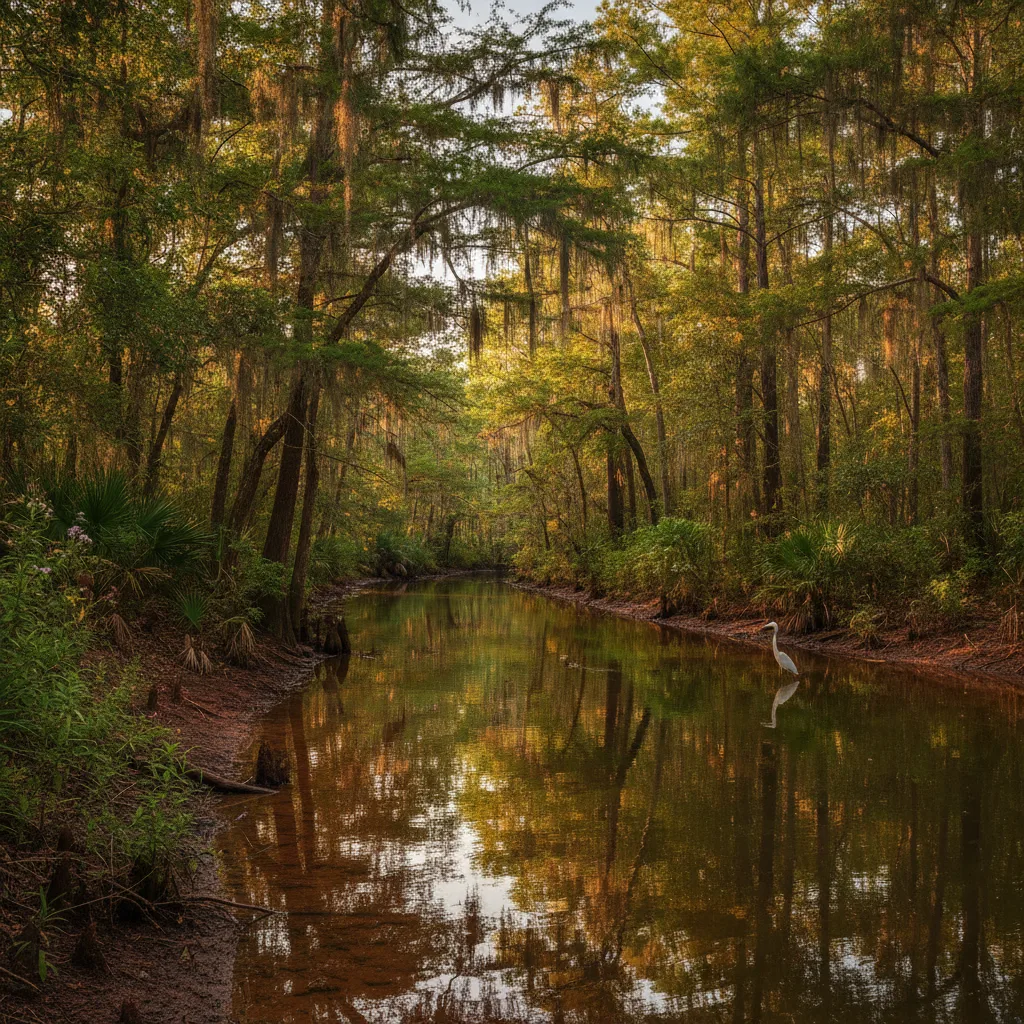
Our Big Thicket National Preserve guide covers practical planning for Big Thicket National Preserve Texas — best time to visit, getting there, and what to do on the ground.
As the Roam States editorial team, we’ve explored countless natural wonders across the United States, but few places capture the essence of raw biodiversity quite like Big Thicket National Preserve Texas. This isn't your typical national park with towering peaks or dramatic canyons; instead, it's a living, breathing mosaic of nine distinct ecosystems, a true biological crossroads where eastern hardwood forests, Gulf Coast wetlands, pine savannas, and prairie ecosystems converge. Encompassing over 113,000 acres across Southeast Texas, Big Thicket offers an unparalleled opportunity to immerse yourself in a landscape teeming with life, from carnivorous plants to migratory birds. Our team believes it's a destination that rewards the curious and adventurous, providing a unique blend of hiking, paddling, and wildlife observation that stands apart from more conventional park experiences.
Why Visit Big Thicket National Preserve
For those questioning "is Big Thicket National Preserve worth visiting," our answer is an unequivocal yes—especially if you approach it with a spirit of discovery. This preserve isn't about grand, iconic landmarks; it's about the intricate details of nature, the subtle shifts in ecosystems, and the sheer volume of life supported within its boundaries. It’s a place where you can witness the delicate balance of nature firsthand, observing four of the five known types of carnivorous plants in the U.S. and spotting over 300 bird species that either reside here or pass through on their migratory journeys.
Our team finds that the preserve's value lies in its incredible biodiversity. It’s a place where you can hike through towering longleaf pine forests in one unit, then paddle serene cypress-lined bayous in another, all within a short drive. The quiet solitude and the chance to truly disconnect from the hustle and bustle make Big Thicket an exceptional escape. If you're a hiker, birder, or paddler, we firmly believe Big Thicket National Preserve is worth visiting for its unique ecological significance and the profound sense of wilderness it offers.
Who It's Best For
Big Thicket National Preserve caters to a diverse range of outdoor enthusiasts, but it particularly shines for those with specific interests. Our team recommends it highly for:
- **Hikers and Backpackers:** With over 40 miles of hiking trails, ranging from short boardwalk loops to challenging multi-day treks, the preserve offers ample opportunities to explore its varied landscapes on foot.
- **Paddlers and Kayakers:** The preserve's six water corridors, including Village Creek and the Neches River, provide miles of peaceful paddling trails, perfect for canoeing or kayaking. Ranger-led canoe trips are also available, though they often require reservations.
- **Birdwatchers:** Positioned at the intersection of the Central and Mississippi migratory flyways, Big Thicket is a premier birding destination, especially from mid-April to mid-May.
- **Nature Photographers:** The diverse ecosystems, unique plant life (like carnivorous plants), and abundant wildlife offer endless subjects for stunning photography.
- **Families with a Sense of Adventure:** While not a "playground" park, Big Thicket offers educational and engaging experiences for children, especially through ranger programs and easy nature walks.
- **Anyone Seeking Solitude and Connection with Nature:** The preserve's expansive and often remote units provide a true wilderness experience, allowing visitors to escape crowds and immerse themselves in the natural world.
If your idea of a perfect trip involves quiet exploration, wildlife spotting, and discovering unique ecosystems rather than seeking out grand monuments, then Big Thicket National Preserve is an ideal destination for you. It's truly a place for those who appreciate the subtle beauty and ecological importance of a truly wild landscape.
Getting There & Parking
Navigating to Big Thicket National Preserve requires a bit of planning, as its 113,000+ acres are spread across nine land units and six water corridors in Southeast Texas. The main hub and our recommended first stop is the **Big Thicket National Preserve Visitor Center**, located at 6102 FM 420, Kountze, TX 77625. This is approximately 30 miles north of Beaumont and 7 miles north of Kountze, situated at the intersection of US 69/287 and FM 420.
For those wondering how to get to Big Thicket National Preserve, the most common approach is by car. From Houston, it's about a 75-mile drive northeast to the Kountze area. Major highways like US 69/287 provide direct access to the vicinity of the preserve's various units. We always recommend inputting the Visitor Center address into your GPS as your initial destination, as rangers there can provide up-to-date information on trail conditions and unit access.
Once you arrive, parking is generally straightforward. There are ample parking areas at the Visitor Center and at the trailheads for the various units. Our team found that parking is typically free throughout the preserve. While reservations are not needed to visit Big Thicket National Preserve itself, it's wise to check the official National Park Service website for any specific alerts or temporary closures before heading out. For instance, as of early 2026, the bridge over Menard Creek on FM 2610 is closed for construction, impacting access to the Birdwatchers Trail from the north, though it remains accessible from the south through Romayor. Additionally, Timber Slough Road in the Jack Gore Baygall Unit is unpaved and can become impassable due to mud. Always consult current conditions to ensure smooth travel.
Top Things to Do
Big Thicket National Preserve offers a wealth of activities that allow visitors to truly engage with its unique ecosystems. Our team has compiled the top things to do at Big Thicket National Preserve, ensuring you experience the best of this biodiverse region.
Explore the Visitor Center
Your journey into the Big Thicket should always begin at the Visitor Center in Kountze. Here, you can watch an orientation film, pick up free maps, and chat with knowledgeable rangers about current conditions, trail recommendations, and ranger-led programs. It's an essential first step to understanding the preserve's vast and fragmented nature.
Hiking Big Thicket National Preserve Hiking Trails
With over 40 miles of Big Thicket National Preserve hiking trails, exploring on foot is one of the most rewarding ways to experience the preserve. The trails range from short, accessible boardwalks to longer, more strenuous routes. Here are some of our favorites:
- **Kirby Nature Trail (Turkey Creek Unit):** This is one of the most popular Big Thicket National Preserve hiking trails and an excellent introduction to the preserve's diverse habitats. It offers multiple loops (Inner, Outer, and Cypress Loop) through cypress sloughs and pine forests, with distances up to 2.5 miles. It's family-friendly and showcases the convergence of ecosystems.
- **Pitcher Plant Trail (Turkey Creek Unit):** A short, easy 1-mile boardwalk loop, this trail is famous for its carnivorous pitcher plants. It's a must-see, especially when the plants are most active. No reservations are required for this nature walk.
- **Turkey Creek Trail (Turkey Creek Unit):** For more serious backpackers, this trail extends up to 17 miles out and back, offering a deeper dive into the preserve's wilderness with meandering creeks and opportunities for solitude.
- **Big Sandy Trail (Big Sandy Creek Unit):** This 2.5-mile loop takes you through a unique sandhill ecosystem, complete with prickly pear cacti and longleaf pines.
- **Sundew Trail:** Another spot to observe carnivorous plants, particularly sundews, this trail is accessible in the same general area as the Pitcher Plant Trail.
When tackling Big Thicket National Preserve hiking trails, our team advises wearing pants and closed-toe shoes, bringing plenty of water, and applying bug repellent, as mosquitoes, horse flies, and ticks are common.
Paddling the Waterways
The preserve's bayous, creeks, and the Neches River provide excellent opportunities for canoeing and kayaking. Village Creek is designated as a Texas State Paddling Trail and is a favorite among paddlers for trips ranging from a few hours to overnight. You can launch your own boat or join ranger-led canoe trips, which often require reservations made two weeks in advance. These guided trips, including daytime, sunset, and even trash clean-up options, offer a unique perspective on the preserve's aquatic ecosystems.
Birdwatching
Big Thicket is a birder's paradise. With over 300 species recorded, it's a prime location for spotting migratory and resident birds. The period from mid-April to mid-May is particularly excellent for birdwatching. Bring your binoculars and keep an eye out for everything from colorful warblers to majestic raptors.
Backcountry Camping
For those seeking a truly immersive experience, backcountry camping is available throughout much of the preserve's lands and waterways. There are no developed campgrounds, so you'll need to hike or paddle in with all your supplies. A free permit is required and can be obtained at the Visitor Center. Remember that camping is prohibited within 500 feet of roads, trails, and the park boundary, and certain areas have seasonal closures during hunting season.
Ranger-Led Programs
Throughout the year, rangers offer a variety of free programs, including nature walks, night hikes, and canoe trips. These programs are an excellent way to learn about the preserve's ecology, history, and wildlife from experts. Check the park's calendar of events for schedules and reservation requirements.
Best Time to Visit
Choosing the best time to visit Big Thicket National Preserve can significantly impact your experience. Our team generally recommends visiting during the cooler months, from **October through April**.
- **Fall (October - November):** This is arguably the sweet spot. Temperatures are pleasant, humidity is lower, and the fall foliage can be quite beautiful. Bugs are also less prevalent during this time.
- **Winter (December - February):** Winter offers the coolest temperatures and the fewest insects, making it ideal for hiking and extended outdoor activities. While some areas may have camping restrictions due to hunting seasons, the overall conditions for exploration are excellent.
- **Spring (March - April):** Early spring brings wildflowers and renewed activity among wildlife. Birdwatching is particularly excellent from mid-April to mid-May as migratory birds pass through. However, as temperatures rise, so do humidity and insect populations.
- **Summer (May - September):** Summers in Southeast Texas are hot and humid, with high chances of mosquitoes and other biting insects. While the tree canopy provides some shade, our team advises starting activities early in the day if visiting during this period. Ranger-led programs are still available, but prepare for the heat.
Regardless of when you visit, always check the park's official website or call the Visitor Center for the most up-to-date information on weather, trail conditions, and any alerts or closures.
Where to Stay Nearby
While Big Thicket National Preserve itself does not feature developed campgrounds, offering only primitive backcountry camping, visitors have several excellent options for Big Thicket National Preserve lodging in the surrounding communities. Our team always recommends staying in nearby towns to access amenities and a comfortable night's rest after a day of exploration.
For Big Thicket National Preserve lodging, you'll find hotels, motels, and vacation rentals in towns such as Kountze, Lumberton, Woodville, Silsbee, Coldspring, and Livingston. These towns offer a range of accommodations to suit different preferences and budgets. For instance, in Lumberton, you might consider the La Quinta Inn & Suites by Wyndham Lumberton. Woodville offers options like The Stagecoach Inn of Woodville and Woodville Inn, known for their charm and friendly staff. If you prefer something closer to the preserve's main Visitor Center, the Relax Inn Motel in Kountze is a cozy and convenient option.
For those looking for a more rustic experience with facilities, several state parks and private campgrounds are located near the preserve's units. Martin Dies, Jr. State Park Campground, for example, offers tent, RV, cabin, and glamping options year-round with water views. Other nearby campgrounds include Magnolia Ridge, Sandy Creek, and B.A. Steinhagen Lake Campground, which often provide electric hookups, boat access, and picnic facilities. Some private RV parks, like Triple Creek RV Music Park and Overland RV Park, also cater to visitors looking for developed sites.
When planning your Big Thicket National Preserve lodging, consider your itinerary and which units you plan to explore most. Lumberton and Kountze are generally central to many of the preserve's popular hiking and paddling areas. Always book in advance, especially during peak seasons, to secure your preferred accommodation.
Sample 2-Day Itinerary
To truly appreciate the diverse ecosystems of Big Thicket National Preserve, our team suggests dedicating at least two full days. This itinerary balances popular spots with deeper dives into the preserve's unique offerings.
Day 1: Visitor Center & Iconic Trails
Morning (9:00 AM - 12:00 PM): Arrival and Orientation
- Start your day at the **Big Thicket National Preserve Visitor Center** in Kountze. Watch the orientation film, pick up detailed maps, and chat with a ranger about current trail conditions and any special programs. This is crucial for understanding the preserve's scattered units.
- Afterward, head to the nearby **Turkey Creek Unit**.
Lunch (12:00 PM - 1:00 PM): Picnic Lunch
- Enjoy a packed lunch at one of the picnic areas near the Visitor Center or a trailhead.
Afternoon (1:00 PM - 5:00 PM): Hiking the Kirby Nature Trail & Pitcher Plant Trail
- Hike the **Kirby Nature Trail**. Choose between the Inner, Outer, or Cypress Loops (up to 2.5 miles) to experience cypress sloughs, pine forests, and the diversity along Village Creek.
- Next, drive to the **Pitcher Plant Trail** boardwalk. This easy 1-mile loop is a highlight, offering a chance to see carnivorous pitcher plants in their natural bog habitat.
Evening: Dinner & Relaxation
- Head back to your lodging in Kountze or Lumberton for dinner.
Day 2: Paddling & Deeper Exploration
Morning (9:00 AM - 1:00 PM): Paddling Village Creek
- Embark on a paddling adventure on **Village Creek**, a designated Texas State Paddling Trail. You can rent canoes or kayaks from local outfitters (check with the Visitor Center for recommendations) or bring your own. Access points are available for trips ranging from a few hours to a full day. Alternatively, check the park calendar for ranger-led canoe trips, which require reservations in advance.
Lunch (1:00 PM - 2:00 PM): Riverside Picnic
- Enjoy a picnic lunch along the creek or at a designated stop.
Afternoon (2:00 PM - 5:00 PM): Big Sandy Creek Unit or Birdwatching
- If you prefer more hiking, explore the **Big Sandy Creek Unit** and hike the 2.5-mile Big Sandy Trail loop, traversing sandhill ecosystems.
- Alternatively, focus on birdwatching. Big Thicket is on two major migratory flyways, making it an excellent spot for avian observation. Ask rangers for current hot spots.
Evening: Departure or Further Exploration
- Enjoy a final dinner in the area or begin your journey home. Consider extending your trip to explore other best places in Texas, such as The Alamo or the San Antonio River Walk.
Our team's expert verdict: This itinerary provides a solid introduction to Big Thicket National Preserve. Remember to pack plenty of water, bug spray, and wear appropriate clothing for outdoor activities. Always verify hours and conditions with the Visitor Center before you go.
Frequently Asked Questions
Big Thicket National Preserve camping
Big Thicket National Preserve offers primitive backcountry camping exclusively; there are no developed campgrounds within its boundaries. To camp, you'll need a free permit, which can be obtained at the Visitor Center upon arrival or up to 14 days in advance. Camping is permitted at least 500 feet from roads, trails, and the park boundary, and paddlers can camp on sandbars along certain waterways. Vehicle camping at trailheads or roadsides is prohibited. During fall and winter (October 1–February 28), camping is limited to areas that do not allow hunting. For those seeking developed campgrounds with amenities, several options are available nearby, including Martin Dies, Jr. State Park, Magnolia Ridge, and Sandy Creek campgrounds.
Things to do in Southeast Texas
Southeast Texas, with Big Thicket National Preserve at its heart, offers a diverse array of attractions. Beyond the preserve, our team recommends exploring the city of Beaumont, which boasts a fascinating collection of museums like the Art Museum of Southeast Texas, the Edison Museum, and the Fire Museum of Texas. History buffs will enjoy the Spindletop Gladys City Boomtown Museum, showcasing the region's oil boom history. Nature lovers can visit the Beaumont Botanical Gardens or the Cattail Marsh Scenic Wetlands & Boardwalk for birdwatching. For family fun, Gator Country provides an opportunity to see alligators up close. The region also offers unique cultural experiences, blending Texas and Cajun influences.
Big Thicket National Preserve with kids
Visiting Big Thicket National Preserve with kids can be a fantastic educational and adventurous experience. Our team suggests starting at the Visitor Center, where children can engage with exhibits and potentially earn a Junior Ranger badge. Easy and engaging trails like the Kirby Nature Trail and the Pitcher Plant Trail are perfect for families, offering boardwalks and opportunities to spot unique plants and wildlife. Ranger-led programs, such as nature walks and night hikes, are often designed to be family-friendly and provide interactive learning opportunities. The annual Junior Ranger Day, held on April 11, 2026, is a free event at the visitor center with activities for all ages, including learning about park rangers and hiking. Paddling on calm waterways like Village Creek can also be an exciting activity for older children.
Best hotels near Big Thicket National Preserve
When searching for the best hotels near Big Thicket National Preserve, our team looks for comfortable and convenient options in the surrounding towns. Popular choices include the La Quinta Inn & Suites by Wyndham Lumberton and Days Inn by Wyndham Lumberton, both offering reliable accommodations. In Woodville, The Stagecoach Inn of Woodville and Woodville Inn provide charming stays. For closer proximity to the Visitor Center, the Relax Inn Motel in Kountze is a practical choice. Other options can be found in Coldspring, such as the Coldspring Inn, and Livingston, including the Holiday Inn Express Hotel & Suites Livingston. Many of these hotels are within a reasonable driving distance of the preserve's various units, typically ranging from a few miles to about an hour's drive, providing a comfortable base for your explorations.
Big Thicket National Preserve tips
To make the most of your visit to Big Thicket National Preserve, our team offers these essential tips: Always make your first stop the Visitor Center in Kountze to get maps, current conditions, and expert advice from rangers. Since the preserve has no entrance fee, it’s a budget-friendly destination, but some activities like backcountry camping and hunting require free permits. Dress appropriately for the outdoors: wear long pants and closed-toe shoes, and bring plenty of water, especially during warmer months. Bug repellent is a must, as mosquitoes, horse flies, and ticks are common. The best time to visit is from October to April for cooler weather and fewer bugs. While reservations aren't needed for entry, some ranger-led programs, particularly canoe trips, do require advance booking. Finally, be aware that some roads and bridges within the preserve may have closures or be impassable due to weather, so always check alerts before heading out.
Where to stay near Big Thicket National Preserve
Finding where to stay near Big Thicket National Preserve is key to a successful trip. Our team recommends looking at accommodations in the nearby towns that serve as gateways to the preserve's various units. Kountze, Lumberton, Woodville, Silsbee, Coldspring, and Livingston all offer a range of hotels, motels, and vacation rentals. For example, you'll find options like La Quinta Inn & Suites by Wyndham Lumberton or The Stagecoach Inn of Woodville. For those preferring to camp, while the preserve itself only allows primitive backcountry camping (with a free permit), numerous developed campgrounds are available in surrounding state parks and private facilities, such as Martin Dies, Jr. State Park or Sandy Creek. These nearby options provide amenities like RV sites, tent camping, and sometimes cabins, giving you a comfortable base to return to after a day of exploring the Big Thicket.
Big Thicket National Preserve stands as a testament to the incredible ecological diversity of Southeast Texas. Our team wholeheartedly recommends this unique destination for anyone seeking an authentic connection with nature, away from the crowds of more famous parks. Whether you're hiking its varied trails, paddling its serene waterways, or spotting its abundant birdlife, the preserve offers a profound experience for the curious and adventurous traveler. We hope this guide helps you plan an unforgettable journey into the biological crossroads of North America.
Last updated: 2026-07-07 by the Roam States team.