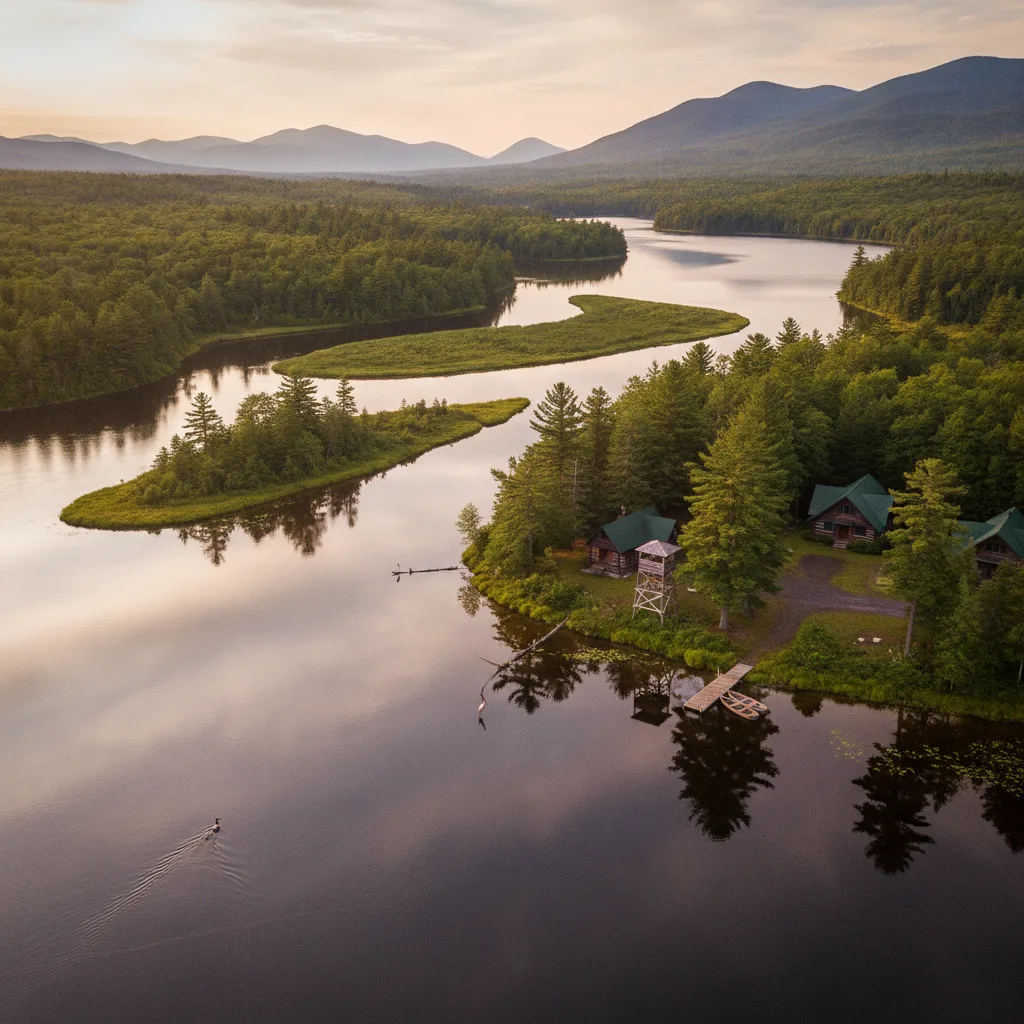
Our Lake Umbagog National Wildlife Refuge guide covers practical planning for Lake Umbagog National Wildlife Refuge New Hampshire — best time to visit, getting there, and what to do on the ground.
For those of us at Roam States who seek out the wild, untamed corners of America, Lake Umbagog National Wildlife Refuge New Hampshire stands as a true gem. Straddling the border with Maine, this expansive refuge is a haven for migratory birds and other wildlife, particularly known for its nesting ospreys and bald eagles. It offers unparalleled opportunities for paddling, fishing, and wildlife viewing, immersing visitors in a landscape that feels truly remote and untouched. Our team has explored the region to bring you the definitive guide to experiencing this remarkable natural sanctuary.
Why Visit Lake Umbagog National Wildlife Refuge
The allure of Lake Umbagog National Wildlife Refuge lies in its pristine wilderness and incredible biodiversity. This 20,500-acre property, encompassing the 7,000-acre Lake Umbagog, serves as a critical ecological transition zone between northern boreal forests and southern deciduous forests, creating a unique habitat for a vast array of species. We’ve witnessed firsthand the sheer abundance of wildlife here, from the majestic moose wading in the shallows to the soaring bald eagles and ospreys that dominate the skies. Over 220 bird species have been documented on the property, with 137 known to breed here, including 24 varieties of warblers and numerous songbirds.
Beyond the birds, the refuge's wetlands and rivers teem with beaver, mink, muskrat, and river otter, while the upland areas provide refuge for black bear, white-tailed deer, bobcats, and martens. It's a place where you can truly disconnect from the everyday and reconnect with nature on its own terms. The shallow, seven-mile-long lake, with an average depth of only 15 feet, makes it an ideal environment for wildlife observation, especially from the quiet vantage point of a canoe or kayak. For those passionate about conservation and experiencing nature in its purest form, Lake Umbagog National Wildlife Refuge offers an unforgettable journey into the heart of New England's wild north.
Who It's Best For
Lake Umbagog National Wildlife Refuge is an ideal destination for a specific type of traveler – those who prioritize raw, unspoiled nature over manicured attractions. Our team wholeheartedly recommends it for:
- Serious Birdwatchers: With over 220 documented bird species and a significant breeding population of bald eagles, ospreys, and various waterfowl, this refuge is a premier birding spot.
- Paddling Enthusiasts: The best way to explore the refuge's marshes, waterways, and remote campsites is by canoe or kayak. Motorized boating is allowed on the lake, but non-motorized craft offer the most intimate experience.
- Anglers: The lake and its rivers offer excellent fishing opportunities for bass, pickerel, and landlocked salmon.
- Wildlife Photographers: The opportunities to capture stunning images of moose, eagles, loons, and other animals in their natural habitat are abundant.
- Backcountry Campers: While camping isn't permitted directly within the NWR, the adjacent Umbagog Lake State Park offers remote, boat-in campsites and cabins that provide a true wilderness experience within the refuge's embrace.
- Families Seeking Quiet Adventures: While not a theme park, families who enjoy quiet outdoor activities like paddling, gentle hiking, and wildlife spotting will find this a rewarding destination.
If your idea of a perfect getaway involves bustling towns and paved trails, this might not be your ideal destination. But if you crave solitude, the thrill of spotting rare wildlife, and the peace of a truly wild landscape, then Lake Umbagog National Wildlife Refuge is calling your name.
Getting There & Parking
Reaching Lake Umbagog National Wildlife Refuge requires a journey into New Hampshire's Great North Woods, but the scenic drive is part of the adventure. Our team finds that understanding the access points is key to a smooth arrival.
For those wondering how to get to Lake Umbagog National Wildlife Refuge, the primary access is via Route 26 and Route 16. The refuge headquarters is located at 2756 Dam Road, Errol, NH 03579.
- From Boston, MA/Manchester, NH: We recommend taking I-93 North through Franconia Notch. From Exit 35, follow Route 3 North towards Twin Mountain, then turn right onto Route 115. Take Route 115 to U.S. Route 2 East towards Gorham, NH. In Gorham, turn left at the traffic light onto Route 16 North. Continue on Route 16 North to Errol, NH. In Errol, turn right onto Route 26 East, then left onto Route 16 North again (also known as Dam Road) through town. The Refuge HQ will be approximately 5.5 miles up Route 16 North on your right.
- From Portland, ME: Head west on Airport Access Road, then left onto I-95 North (Maine Turnpike North) toward Lewiston/Augusta. Merge onto I-495 North (portions toll) and take Exit 11 toward Gray, ME. Keep right at the ramp fork, merge onto US Route 202, then turn left onto ME 26. Make a slight left onto Railroad Street, then a sharp right onto US Route 2. Turn left onto Route 26 and follow it to Errol, NH (approximately 25 miles). In Errol, turn right onto Route 16 North at Eames Garage (Dam Road). The Refuge HQ is 5.5 miles up Route 16 North on the right.
Parking:
For visitors to the Umbagog Lake State Park, which borders the refuge, parking is available at individual campsites, in a trailer parking lot near the park's entrance, and in additional lots near the beach and behind the visitor center. For direct access to the refuge's Magalloway River, there's a parking area for approximately 12 vehicles (including those with trailers) located across from the refuge headquarters on Route 16. We advise parking rental or government vehicles across the street from the headquarters. Always be mindful of designated parking areas to protect the delicate ecosystem.
Top Things to Do
When considering things to do at Lake Umbagog National Wildlife Refuge, the focus is squarely on immersion in nature. Our team finds that the best experiences here revolve around quiet observation and active exploration of the lake and its surroundings.
Paddling the Wild Waters
Undoubtedly, the premier activity here is paddling. The Umbagog National Wildlife Refuge encompasses the shorelines of over 10 miles of the Magalloway and Androscoggin Rivers, their backwaters, and much of the 7,000-acre Lake Umbagog itself, offering ample opportunity for exploration by canoe, kayak, or boat. We highly recommend bringing your own canoe or kayak, or renting one from local outfitters, as this allows for the most intimate wildlife encounters. Non-motorized boating is permitted, but be aware that motorized boats are also allowed on the main lake.
Paddlers should be prepared for rapidly changing weather conditions, as Umbagog is a large, shallow lake that can become challenging in moderate to high winds. Always keep an eye on the sky and avoid large expanses of open water if conditions are questionable. During nesting and breeding season (April-July), we advise staying in the center of river channels and avoiding the backs of coves to minimize disturbance to nesting birds.
Popular water routes include exploring Big Island and Thurston Cove, or venturing into Harper's Meadow and Sweat Meadows along the Androscoggin River. Sweat Meadows, in particular, is known for nesting bald eagles but is seasonally closed to boaters from April to August.
Exceptional Wildlife Viewing
Lake Umbagog National Wildlife Refuge is renowned for its wildlife. The refuge's diverse habitats provide ample opportunity to observe everything from moose to migratory birds. We consistently spot bald eagles and ospreys fishing in the lake, and common loons are a frequent sight, their haunting calls echoing across the water. Patient observers may also see American bittern, common snipe, and northern harriers in the marshes.
For moose viewing, a long stretch of muddy area about 1.5 miles north of the refuge headquarters on Route 16 is an excellent spot, as is the 13-Mile Woods area between Errol and Pontook Reservoir. Remember to practice wildlife observation etiquette: view animals from a distance, avoid disturbing nests, and never feed wildlife.
Fishing
The lake and its rivers provide an excellent fishery, attracting bald eagles, ospreys, and great blue herons, in addition to anglers. The lake supports good populations of bass, pickerel, and landlocked salmon. Fishing is permitted in appropriate seasons with the necessary state licenses.
Lake Umbagog National Wildlife Refuge Hiking Trails
While the refuge is primarily water-oriented, there are a few notable Lake Umbagog National Wildlife Refuge hiking trails that offer opportunities to stretch your legs and explore the terrestrial habitats. Our team particularly recommends these:
- Magalloway River Trail: This universally accessible, approximately 1.3-mile trail network offers an easy walk through a spruce-fir forest to an observation platform overlooking the backwaters of the Magalloway River. It's an excellent spot for viewing moose, boreal birds, and waterfowl. The trailhead is about 1.5 miles north of the Refuge headquarters on Route 16.
- Roost Trail: Located on Route 16 across from the refuge canoe launch, this out-and-back trail is 0.6 miles in length each way. It's a moderately steep, forested trail that culminates at the top of a cliff, offering superb views overlooking the refuge and the mountains of western Maine. You'll observe glacial erratics, vernal pools, and conifer forests along the way.
These Lake Umbagog National Wildlife Refuge hiking trails provide a different perspective of the refuge's diverse landscapes and offer a chance to spot wildlife away from the water.
Best Time to Visit
Choosing the best time to visit Lake Umbagog National Wildlife Refuge depends entirely on your priorities. Our team has experienced the refuge in various seasons, each offering a distinct charm.
- Late Spring (May-Early June): This is an excellent time for birdwatching as migratory birds return and nesting activity begins. The black flies can be intense, so come prepared with repellent and appropriate clothing. Umbagog Lake State Park's base camp typically opens mid-May, with remote sites following shortly after.
- Summer (July-August): Summer is prime time for boating, swimming (at Umbagog Lake State Park's beach), and fishing. Daytime highs are comfortable, usually in the mid-60s to mid-70s Fahrenheit, with nights dropping into the 40s-50s. Loons are highly visible during these months. However, be aware that some remote campsites are closed until July 20 for loon nesting, and Sweat Meadows is closed to boaters until August for bald eagle nesting. Weekend crowds can build, but solitude is still easy to find, especially on the water.
- Fall (September-Mid-October): The fall foliage draws photographers and hikers when the hardwood slopes around Mount Hastings turn brilliant. Wildlife viewing remains excellent, and the cooler temperatures mean fewer insects. The base camp at Umbagog Lake State Park closes mid-October, and remote sites close early October.
- Winter (November-April): The refuge sees limited visitor activity in winter, and many facilities at the state park close. While snowshoeing is possible, it's generally not recommended for first-time visitors due to the remote nature and lack of staffed services.
We generally recommend late spring or early fall for the best balance of wildlife activity, comfortable weather, and fewer crowds. If you plan a summer visit, be sure to make camping reservations well in advance, as they can be booked up to 11 months ahead via ReserveAmerica.
Where to Stay Nearby
While Lake Umbagog National Wildlife Refuge itself does not offer lodging, the adjacent Umbagog Lake State Park and the surrounding towns provide a range of options for Lake Umbagog National Wildlife Refuge lodging. Our team has scoped out the best choices to ensure your stay is comfortable and convenient.
Camping at Umbagog Lake State Park
For those seeking to truly immerse themselves in the natural environment, camping is the most authentic option. Umbagog Lake State Park, located right next to the refuge, offers diverse camping experiences.
- Base Campground: The park's base campground offers 27 developed sites with electric and water hookups, modern restrooms with showers, a dump station, and a camp store. These sites can accommodate tents and RVs (20-40 feet) and include fire pits and picnic tables. Leashed pets are permitted in the base campground area. The base camp operates from May 15 through October 18.
- Remote Campsites & Cabins: What truly sets Umbagog apart are its 33 remote campsites and 4 remote cabins, accessible only by boat. Scattered along the lake's undeveloped shoreline within the Umbagog National Wildlife Refuge, these primitive sites offer true backcountry solitude, complete with fire rings, picnic tables, and pit toilets. Remote sites are open from May 22 through October 11, though some are closed until July 20 for loon nesting. Pets are prohibited in certain remote campsites within the NWR during bird breeding season (April-July) and are not allowed in cabins. The park offers canoe and kayak rentals, as well as boat transportation for remote site campers.
Camping at Umbagog Lake State Park is by reservation only, available up to 11 months in advance via ReserveAmerica or the NH State Parks website. Cabins have specific reservation requirements (Monday-Thursday or Friday-Sunday stays).
Nearby Hotels and Rentals
If camping isn't your style, several hotels and vacation rentals are available within a reasonable driving distance, offering comfortable Lake Umbagog National Wildlife Refuge lodging options:
- The Inn at OxBow Acres: Located about 14.4 miles (23.2 km) from Lake Umbagog, this 3.5-star B&B in Milan offers free breakfast and parking, providing a romantic, nature-themed experience.
- Town and Country Inn & Resort: While a bit further afield, this resort in Shelburne receives good reviews and offers a more traditional hotel experience.
- Jordan Hotel and Snow Cap Inn: These are 3-star retreats located around 22-24 miles from Lake Umbagog, offering options for those looking for a blend of relaxation and adventure, often associated with skiing and golf.
- Vacation Rentals: Numerous cabins and vacation homes are available in nearby towns like Errol, Cambridge, and Wentworth's Location. Websites like Expedia and Travelocity list options such as "Cozy Cottage in the Great North Woods" or "Cozy Lake Front home for Boating, fishing, winter sports, and gorgeous views". Many offer amenities like hot tubs, game rooms, and mountain views.
We recommend booking accommodations well in advance, especially during peak summer and fall foliage seasons, as options can be limited in this remote region.
Sample 2-Day Itinerary
To help you make the most of your visit to Lake Umbagog National Wildlife Refuge, our team has crafted a sample 2-day itinerary focused on experiencing the best of this wild landscape.
Day 1: Paddling and Birding Immersion
- Morning (8:00 AM - 12:00 PM): Arrive at Umbagog Lake State Park. If you're camping, set up your base. If staying nearby, head to the park's boat launch. Rent a canoe or kayak, or launch your own. We suggest a paddling excursion into the northern part of Umbagog Lake, exploring the undeveloped shorelines and backwaters within the refuge. Keep an eye out for bald eagles, ospreys, and common loons. Remember to maintain a respectful distance from any nesting birds.
- Lunch (12:00 PM - 1:00 PM): Pack a picnic lunch to enjoy on a secluded shoreline or back at your campsite.
- Afternoon (1:00 PM - 5:00 PM): Continue your paddling adventure, perhaps venturing into Thurston Cove or along the Magalloway River. Alternatively, take a guided pontoon boat wildlife tour if available through local outfitters, offering a different perspective and expert insights into the refuge's ecosystem.
- Evening (5:00 PM onwards): Enjoy a campfire dinner at your campsite (if permitted) or dine at a local eatery in Errol. As dusk settles, listen for the calls of loons and owls, and perhaps try some stargazing, far from city lights.
Day 2: Hiking and Terrestrial Wildlife
- Morning (8:00 AM - 12:00 PM): Start your day with a hike on one of the refuge's trails. We recommend the Magalloway River Trail (1.3 miles), which is universally accessible and offers excellent opportunities to spot moose, boreal birds, and waterfowl from its observation platform. Alternatively, for a more challenging trek with rewarding views, tackle the Roost Trail (0.6 miles each way), which climbs to a cliff overlooking the refuge.
- Lunch (12:00 PM - 1:00 PM): Enjoy another picnic lunch or grab a bite in Errol.
- Afternoon (1:00 PM - 4:00 PM): Explore the 13-Mile Woods Scenic Area along Route 16 between Errol and Pontook Reservoir, which is known as an excellent place to see moose. You could also visit Dixville Notch State Park, located about 14 miles from Lake Umbagog, for its stunning scenery and short walks.
- Departure: Begin your journey home, carrying memories of New Hampshire's wild heart.
Our Expert Verdict: This itinerary balances active exploration with quiet observation, allowing you to fully appreciate the diverse ecosystems of Lake Umbagog National Wildlife Refuge. Remember to bring binoculars, a camera, insect repellent, and plenty of water, regardless of the season.
Is It Worth Visiting?
As the Roam States editorial team, we can confidently say: yes, Lake Umbagog National Wildlife Refuge is absolutely worth visiting for the right traveler. If your travel philosophy aligns with seeking out genuine wilderness, abundant wildlife, and peaceful solitude, then this refuge offers an unparalleled experience in New Hampshire.
What makes Lake Umbagog National Wildlife Refuge worth visiting is its unique character as a vast, protected area where nature truly takes center stage. We've seen few places that offer such consistent opportunities to observe iconic New England wildlife like moose, bald eagles, and loons in their natural habitat. The extensive network of waterways provides endless possibilities for paddling, making it a paddler's paradise. It’s a place to slow down, listen to the sounds of the wild, and witness the intricate balance of an undisturbed ecosystem.
However, it's crucial to manage expectations. This is not a destination with visitor centers on every corner, paved walking paths for miles, or numerous dining and entertainment options. Its charm lies in its remoteness and rugged beauty. If you're prepared for an experience that prioritizes nature over amenities, and you're willing to embrace the elements (including potential bugs!), then Lake Umbagog National Wildlife Refuge will reward you with an unforgettable adventure and a profound connection to the wild heart of New Hampshire.
FAQ
Lake Umbagog National Wildlife Refuge camping
While camping is not allowed directly within the Lake Umbagog National Wildlife Refuge boundaries, the adjacent Umbagog Lake State Park offers extensive camping options that provide direct access to the refuge's natural beauty. The state park features a base campground with 27 sites offering electric and water hookups, modern restrooms, and showers. More uniquely, it also boasts 33 remote campsites and 4 remote cabins, all accessible only by boat, scattered along the undeveloped shoreline within the wildlife refuge itself. These remote sites offer a true backcountry experience with fire rings, picnic tables, and pit toilets. Camping reservations are mandatory and can be made up to 11 months in advance through ReserveAmerica or the NH State Parks website. Pets are permitted in the base campground but are restricted from cabins, the beach-front day-use area, and specific remote campsites within the NWR during bird breeding season (April-July).
things to do in Cambridge
When considering things to do in Cambridge, New Hampshire, it's important to note that Cambridge is a very small, rural town primarily known for being home to Umbagog Lake State Park and its proximity to the Lake Umbagog National Wildlife Refuge. Therefore, the main activities revolve around outdoor recreation within these natural areas. Our team suggests focusing on what the refuge and state park offer: paddling on Lake Umbagog, fishing, wildlife viewing (especially for moose, bald eagles, and loons), and hiking the Magalloway River Trail or Roost Trail. The state park also offers a swimming beach and boat launch. For a broader range of activities, visitors often venture to nearby towns like Errol or explore other natural attractions in the Great North Woods region.
Lake Umbagog National Wildlife Refuge with kids
Visiting Lake Umbagog National Wildlife Refuge with kids can be a fantastic experience for families who enjoy nature and outdoor adventures. Our team recommends focusing on activities that are engaging and manageable for younger visitors. Paddling in a canoe or kayak is a highlight, offering a unique perspective and chances to spot wildlife like loons, eagles, and moose. The universally accessible Magalloway River Trail is an excellent option for a family-friendly hike, providing an easy walk to an observation platform. The Umbagog Lake State Park also has a swimming beach and a playground at its base campground, which can be a welcome break for children. Remember to pack insect repellent, snacks, and plenty of water, and prepare them for a more rustic, nature-focused experience rather than typical tourist attractions.
best hotels near Lake Umbagog National Wildlife Refuge
For those seeking the best hotels near Lake Umbagog National Wildlife Refuge, options are generally found in surrounding towns, as direct lodging within the refuge is limited to state park camping. Our team has identified several highly-rated choices. The Inn at OxBow Acres in Milan, about 14.4 miles (23.2 km) away, is a popular 3.5-star B&B known for its free breakfast and parking. Other well-regarded options include the Town and Country Inn & Resort in Shelburne and various vacation rentals or cabins listed on sites like Expedia and Travelocity, many of which offer lakefront access or mountain views. For a slightly further but still accessible option, the Jordan Hotel and Snow Cap Inn are around 22-24 miles away. Given the remote nature of the area, we strongly advise booking accommodations in advance, especially during peak seasons.
Lake Umbagog National Wildlife Refuge tips
To ensure a smooth and enjoyable trip to Lake Umbagog National Wildlife Refuge, our team offers these essential tips: 1. **Plan Ahead:** This is a remote area, so check weather forecasts, road conditions, and make camping reservations well in advance, especially for remote sites. 2. **Bug Protection:** Be prepared for insects, particularly black flies in late spring and mosquitoes in summer. Bring strong repellent, head nets, and long-sleeved clothing. 3. **Boat Access is Key:** The best way to explore the refuge is by boat. Bring your own canoe or kayak, or plan to rent one locally. 4. **Wildlife Etiquette:** Maintain a respectful distance from wildlife, avoid disturbing nesting areas (especially April-August for eagles and loons), and never feed animals. 5. **Pack Essentials:** Carry plenty of water, snacks, a map, compass or GPS, and a first-aid kit. Cell service can be spotty. 6. **Respect Regulations:** Adhere to all refuge and state park rules, including pet policies and fishing/hunting regulations. 7. **Explore Beyond:** Consider combining your visit with nearby attractions like Dixville Notch State Park or other areas in New Hampshire's Great North Woods.
where to stay near Lake Umbagog National Wildlife Refuge
When considering where to stay near Lake Umbagog National Wildlife Refuge, your primary options will be the adjacent Umbagog Lake State Park and various hotels or vacation rentals in nearby towns. The state park offers both developed campsites with hookups and remote, boat-in campsites and cabins that provide an immersive experience within the refuge's natural setting. For those preferring traditional lodging, the Inn at OxBow Acres in Milan is a highly recommended bed and breakfast. Other hotels like the Town and Country Inn & Resort in Shelburne, or the Jordan Hotel and Snow Cap Inn further away, offer comfortable stays. Additionally, numerous private vacation rentals, including cozy cabins and lakefront homes, are available in the region, providing diverse choices for your visit. We always recommend booking early, particularly for summer and fall trips, to secure your preferred accommodations.
Last updated: 2026-07-07 by the Roam States team.