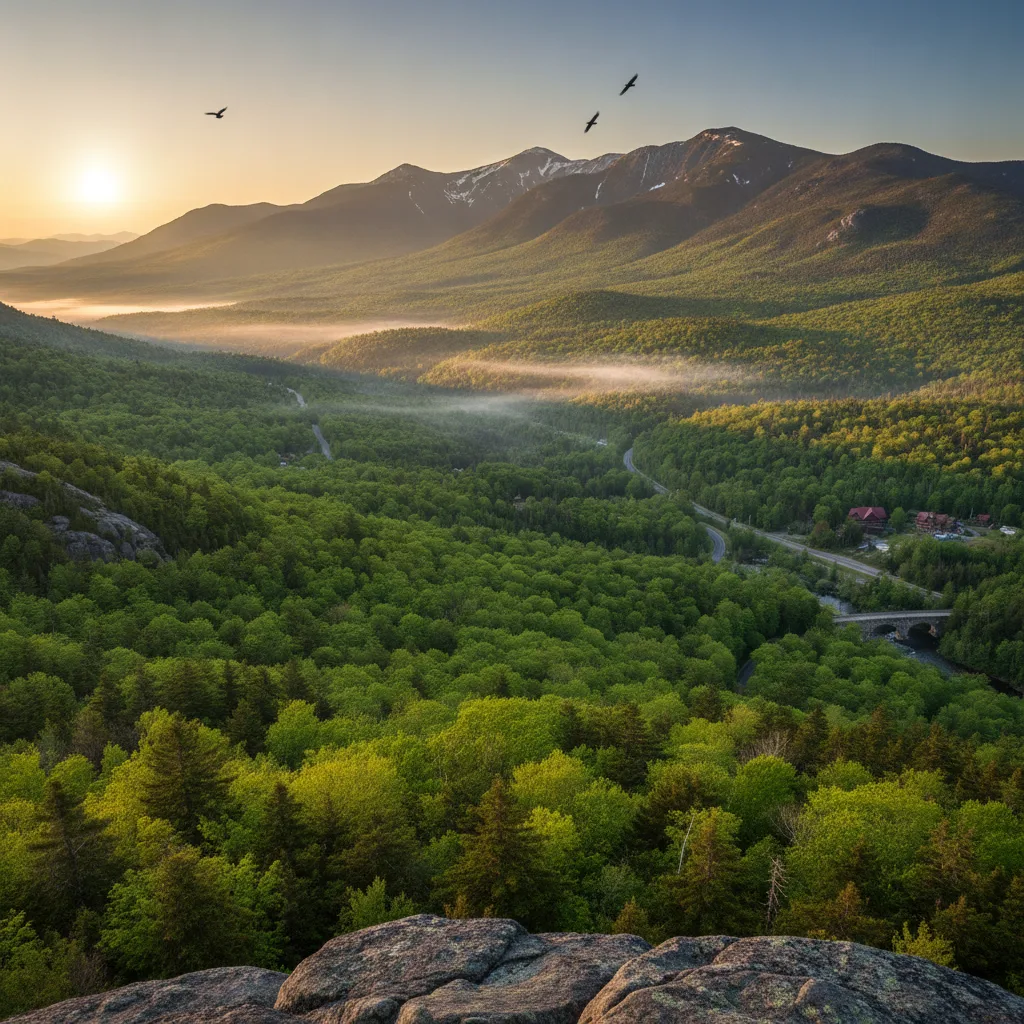
Our White Mountain National Forest guide covers practical planning for White Mountain National Forest New Hampshire — best time to visit, getting there, and what to do on the ground.
Encompassing over 800,000 acres, the White Mountain National Forest New Hampshire offers extensive hiking trails, camping, and scenic drives through rugged mountains and pristine wilderness. Visitors can explore diverse ecosystems and enjoy outdoor recreation year-round. Our team at Roam States has compiled this comprehensive guide to help you plan an unforgettable adventure in one of New England's most cherished natural treasures.
Why Visit White Mountain National Forest
The White Mountain National Forest is a destination that truly captivates, offering a unique blend of accessible wilderness and breathtaking vistas. We believe it's a must-visit for anyone seeking an escape into nature, whether you're a seasoned outdoors enthusiast or simply looking for a scenic drive. The sheer scale of the forest, with its mountainous hardwood forests and majestic alpine peaks, provides a diverse backdrop for countless activities. From the vibrant hues of autumn foliage, which are world-renowned, to the serene beauty of snow-covered landscapes in winter, the forest transforms with each season, presenting new opportunities for exploration.
Beyond its aesthetic appeal, the White Mountain National Forest serves as a vital ecological haven, preserving diverse ecosystems and offering a chance to observe wildlife in their natural habitat. It's a place where you can truly disconnect from the everyday and reconnect with the natural world, whether you're tackling a challenging summit or simply enjoying a peaceful picnic by a waterfall. The extensive network of trails, scenic byways, and well-maintained facilities ensures that there's something for everyone, making it an ideal destination for creating lasting memories.
Who It's Best For
The White Mountain National Forest truly offers something for everyone, making it an incredibly versatile destination. Our team finds it particularly well-suited for:
- Hikers of All Levels: With over 1,200 miles of non-motorized trails, from easy strolls to challenging climbs above treeline, the forest caters to every hiking ability. Whether you're aiming for a 4,000-footer or a gentle walk to a waterfall, you'll find your perfect path here.
- Nature Enthusiasts: Those who appreciate stunning natural beauty, diverse ecosystems, and opportunities for wildlife viewing will be in their element. The forest's clear mountain lakes, streams, and pristine wilderness are a constant draw.
- Families: Many trails are family-friendly, and attractions like the Flume Gorge offer boardwalk trails suitable for all ages. There are also numerous campgrounds that provide a fantastic base for family adventures.
- Scenic Drivers: The White Mountain National Forest is home to some of the most spectacular scenic drives in New England, including the famed Kancamagus Highway. These routes offer breathtaking views without ever leaving your vehicle.
- Winter Sports Enthusiasts: When the snow falls, the forest transforms into a winter wonderland, offering exceptional opportunities for cross-country skiing, snowmobiling, and other cold-weather activities.
- Campers: With 21 developed campgrounds and numerous backcountry sites, the forest provides a range of camping experiences, from fully equipped sites to more primitive options.
Essentially, if you love the outdoors and crave adventure, tranquility, or simply stunning scenery, the White Mountain National Forest is worth visiting.
Getting There & Parking
Understanding how to get to White Mountain National Forest and navigating parking is crucial for a smooth trip. The forest is primarily accessed by car, with major interstates leading to its various entry points.
By Car
The most common and flexible way to reach the White Mountain National Forest is by car. We recommend following I-93 to US 3 to reach the Franconia Notch area, a popular entry point. From Boston, the drive typically takes around 3 hours and 46 minutes. If you're coming from Burlington, Vermont, a bus and drive combination can take about 3 hours and 12 minutes, or a direct drive of about 131 miles.
Once you're in the region, scenic drives like the Kancamagus Highway (Route 112) cut through the heart of the forest, offering stunning views and access to many trailheads and attractions. Keep in mind that electric vehicle (EV) charging infrastructure is currently limited, primarily found in more populated areas like Lincoln-Woodstock and North Conway.
Public Transportation
While less direct, public transportation options exist, though they often require additional connections. The Appalachian Mountain Club (AMC) operates a White Mountain Hiker Shuttle service that connects AMC destinations, key trailheads, and transit hubs, including direct links to Concord Coach Lines. This shuttle is a great way to explore without the hassle of a car, with daily service from July 5 to September 7, 2026, and Friday through Sunday service from June 5 to July 5 and September 11 to October 25, 2026. A one-way trip on the shuttle costs $20 for AMC members and $24 for non-members, and reservations are strongly recommended. Concord Coach Lines also offers bus services to towns like Lincoln, Gorham, and North Conway, from which you can potentially utilize the AMC shuttle or local taxi services to reach trailheads.
Parking & Fees
Parking within the White Mountain National Forest often requires a recreation pass. As of May 23, 2026, new trailhead parking fees are in effect: $5 for a seven-consecutive-day permit or $20 per year. These passes are required at many developed sites and trailheads, though most White Mountain National Forest lands are open and free of charge. You can purchase passes at Forest Service offices, local vendors, or online through Recreation.gov. Self-serve pay stations are also available at some sites. It's always a good idea to check the White Mountain National Forest website or contact a ranger district office for the most current information on specific site requirements and any temporary closures. For instance, the Saco Ranger District Office at 33 Kancamagus Highway in Conway is open Wednesday-Saturday, 8:00 am-4:30 pm. The Androscoggin Ranger District Office in Gorham operates Monday, Tuesday, Thursday, and Friday from 9:00 am to 4:00 pm, remaining closed on Wednesdays.
Top Things to Do
When considering things to do at White Mountain National Forest, the options are as vast and varied as the landscape itself. Our team has explored many of these, and we can confidently say there's an adventure waiting for every type of traveler. Here are our top recommendations for things to do at White Mountain National Forest:
Hiking & Backpacking
With over 1,200 miles of trails, hiking is undoubtedly one of the premier activities in the White Mountain National Forest. You can embark on easy walks to stunning waterfalls like Sabbaday Falls or Flume Gorge, which features a picturesque boardwalk trail. For those seeking more challenging White Mountain National Forest hiking trails, options include the strenuous Mount Lafayette and Franconia Ridge Trail Loop, offering incredible panoramic views. We also recommend exploring trails within Franconia Notch State Park, which offers some of the best scenic routes in the Northeast. Be aware of current closures; for example, the Lincoln Woods Trail is closed from June 15 through November 2026 for restoration work, impacting routes like the Pemi Loop and access to Owl's Head and 13 Falls. Always remember to carry the 10 essentials and check weather forecasts, as mountain conditions can change rapidly.
Scenic Drives
For those who prefer to experience the beauty from the comfort of their vehicle, the White Mountain National Forest offers spectacular scenic drives. The Kancamagus Highway (Route 112) is a world-renowned 34-mile scenic byway that cuts through the forest, providing breathtaking views, especially during fall foliage season. Another dramatic drive is the Crawford Notch Scenic Byway (Route 302). These drives are perfect for soaking in the expansive mountain scenery and accessing various overlooks and trailheads.
Camping & Cabins
Immerse yourself fully in the wilderness by camping in the White Mountain National Forest. There are 21 developed campgrounds, with options ranging from full facilities to more primitive backcountry sites. Reservations for developed campgrounds should be made through Recreation.gov or by calling (877) 444-6777, with a minimum 4-day advance reservation required. First-come, first-served sites are available for shorter notice. Backcountry camping is also permitted, but be aware of specific rules, such as prohibitions on camping within 200 feet of trails and water bodies, and a new requirement for hard-sided, bear-resistant food canisters for overnight campers in the Pemigewasset Wilderness effective May 1, 2026.
Water Activities
The region's rivers and lakes provide ample opportunities for water-based recreation. You can enjoy swimming, kayaking, and paddleboarding, especially at places like Echo Lake in Franconia Notch State Park, where kayak and canoe rentals are available (reservations may be needed for beach access). Tubing down the Pemigewasset River is another popular activity during warmer months.
Wildlife Viewing & Moose Tours
The White Mountain National Forest is home to a variety of wildlife. Keep an eye out for moose, especially in the Great North Woods region. Guided moose tours are also available, increasing your chances of spotting these magnificent creatures in their natural habitat.
Winter Sports
During the colder months, the forest transforms into a hub for winter sports. Opportunities abound for cross-country skiing, snowmobiling, and ice skating. Some campgrounds, like Barnes Field and Hancock, remain open year-round, though with limited services.
Attractions & Family Fun
Beyond the trails, the White Mountains offer numerous attractions. Consider a ride on the Conway Scenic Railroad or exploring Flume Gorge. For families, nearby attractions like Story Land Amusement Park and Clark's Bears offer additional entertainment.
Best Time to Visit
Determining the best time to visit the White Mountain National Forest depends largely on the experience you're seeking. Our team has found that each season offers its own unique charm and set of activities.
Summer (June - August)
Summer is peak season for a reason, offering warm weather, fully accessible hiking trails, and strong-running waterfalls. Daytime temperatures typically range from the mid-70s to mid-80s, creating ideal conditions for hiking, swimming, kayaking, and exploring. Family attractions are in full operation, and swimming holes like Lower Ammonoosuc Falls and Echo Lake Beach are at their best. However, popular areas like the Kancamagus Highway can be crowded, so we recommend early mornings or weekday visits to avoid the busiest times.
Fall (September - October)
The White Mountains are world-renowned for their stunning fall foliage, a spectacle that draws millions of visitors each year. The leaves begin to change color in mid-September, with peak foliage typically occurring from late September through the second week of October, depending on elevation and weather conditions. The northernmost parts of the White Mountains, such as Pittsburg and Colebrook, tend to see color changes first, spreading west, then east, and south. Driving the Kancamagus Highway or hiking to viewpoints like Cathedral Ledge offers unparalleled views of the vibrant reds, yellows, and oranges. While breathtaking, this is also a very popular time, so expect crowds and book accommodations well in advance.
Winter (November - March)
Winter transforms the White Mountain National Forest into a serene, snow-covered landscape, offering exceptional opportunities for winter sports like skiing, snowmobiling, and snowshoeing. Many forest roads close seasonally due to snow and ice, but dedicated winter trails and activities are available. Some campgrounds also remain open year-round with limited services. If you're prepared for cold weather and enjoy winter recreation, this season offers a quiet and beautiful experience.
Spring (April - May)
Spring is a transitional period. While some lower elevation trails become accessible, higher elevations may still have snow and ice. It's a quieter time to visit before the summer crowds, and you can witness the awakening of the forest. However, be prepared for unpredictable weather and potential mud on trails. Always check trail conditions and alerts before heading out.
Where to Stay Nearby
When planning your trip, finding suitable White Mountain National Forest lodging is key to a comfortable and convenient experience. The region offers a wide array of options, from luxury resorts to cozy inns and robust camping facilities. Our team recommends considering locations like Lincoln, North Conway, and Jackson for their proximity to attractions and diverse lodging choices.
Hotels & Resorts
For those seeking comfort and amenities, there are many excellent hotels and resorts near the White Mountain National Forest. The Omni Mount Washington Resort & Spa in Carroll, for example, is a highly-rated 4-star option known for its stunning mountain views and proximity to skiing and snowshoeing. In Lincoln, you'll find options like Woodwards White Mountain Resort, BW Signature Collection, a 3-star resort offering indoor and outdoor pools and free parking. The Holiday Inn Express & Suites Lincoln East - White Mountains by IHG is another budget-friendly choice in Lincoln, located about 9 miles from the forest.
North Conway is another popular hub with numerous White Mountain National Forest lodging choices, including the North Conway Grand Hotel and the Comfort Inn & Suites North Conway, both offering breakfast options. The Glen House Hotel, located near Mount Washington State Park, also comes highly recommended for its excellent staff and mountain views. Prices for hotels near White Mountain National Forest can vary, with 2-star hotels starting around $63 per night and 4-star options from $120 per night.
Campgrounds & Cabins
For a more immersive outdoor experience, camping within the White Mountain National Forest is an excellent choice. There are 21 developed campgrounds, with options ranging from basic sites to those with more amenities. Popular campgrounds include Dolly Copp Campground, Big Rock Campground, and Hancock Campground. Reservations for developed campgrounds are managed through Recreation.gov and generally require a minimum of 4 days advance booking. For last-minute trips, some first-come, first-served sites are available.
Backcountry camping is also permitted in many areas, but specific rules apply, including prohibitions on fires and camping within 200 feet of trails and water bodies. A significant update for 2026 is the requirement for all overnight campers in the Pemigewasset Wilderness to store food and scented items in hard-sided, bear-resistant canisters, effective May 1st, 2026. This is a crucial safety measure that our team strongly endorses. Additionally, cabins like Black Mountain Cabin and Doublehead Cabin offer a rustic yet comfortable stay.
Vacation Rentals & Hostels
Beyond traditional hotels and campgrounds, vacation rentals, including condos, chalets, and private homes, are widely available in towns surrounding the forest, particularly in North Conway and Lincoln. These can be ideal for families or groups seeking more space and self-catering options. For budget-conscious travelers or those looking for a communal atmosphere, hostels like The Notch Hostel and Campsites at CoHo: Conway Hostel offer a unique lodging experience.
Sample 2-Day Itinerary
To help you make the most of your visit to White Mountain National Forest, our team has crafted a sample 2-day itinerary, blending scenic beauty with invigorating activities. This itinerary assumes you have a car for flexibility.
Day 1: Franconia Notch & Kancamagus Highway Exploration
- Morning (8:00 AM - 1:00 PM): Franconia Notch State Park Adventures. Begin your day early at Franconia Notch State Park. We recommend starting with a visit to the Flume Gorge, a picturesque 800-foot chasm with boardwalks and cascading waterfalls. Allow 2-3 hours. Afterward, head to the Old Man of the Mountain Historic Site and then take the Cannon Mountain Aerial Tramway for panoramic views of the White Mountains (check operating hours and fees for 2026). For a moderate hike, consider the Artists Bluff Trail for stunning views of Echo Lake and Cannon Mountain.
- Lunch (1:00 PM - 2:00 PM): Picnic by Echo Lake. Grab some sandwiches and enjoy a picnic by Echo Lake, or find a local eatery in nearby Lincoln.
- Afternoon (2:00 PM - 6:00 PM): Kancamagus Highway Scenic Drive. Embark on a leisurely drive along the Kancamagus Highway (Route 112), one of New England's most spectacular scenic drives. Stop at various overlooks and short trails. Don't miss Sabbaday Falls, an easy walk to a beautiful waterfall. Consider a quick stop at Rocky Gorge and the Russell-Colbath House.
- Evening: Dinner & Relaxation in Lincoln/North Conway. Head to Lincoln or North Conway for dinner. These towns offer a range of dining options and are excellent bases for White Mountain National Forest lodging.
Day 2: Presidential Range & Mount Washington Area
- Morning (8:00 AM - 1:00 PM): Mount Washington or Lower Elevation Hike. For the adventurous, consider a strenuous hike up Mount Washington via trails like the Ammonoosuc Ravine Trail or the Tuckerman Ravine Trail (for experienced hikers only, and always check weather conditions). Alternatively, for a less strenuous but equally rewarding experience, explore the trails around Pinkham Notch, such as the Glen Ellis Falls Trail.
- Lunch (1:00 PM - 2:00 PM): At a Ranger Station or Local Cafe. Grab a bite at the Pinkham Notch Visitor Center or a cafe in a nearby town like Gorham or Jackson.
- Afternoon (2:00 PM - 5:00 PM): Explore Crawford Notch or a Family Attraction. Drive through Crawford Notch, another incredibly scenic area. You might visit Arethusa Falls, New Hampshire's tallest waterfall (moderate 2.6-mile trail). If traveling with kids, consider a visit to Story Land or Clark's Bears for some family-friendly fun.
- Evening: Farewell Dinner. Enjoy a final dinner in the White Mountains, perhaps trying a local specialty.
Expert Verdict: This itinerary balances iconic sights, active exploration, and scenic drives, providing a comprehensive taste of the White Mountain National Forest New Hampshire. Remember to check current trail conditions, weather forecasts, and any reservation requirements for attractions or campgrounds before your visit.
Last updated: 2026-07-07 by the Roam States team.