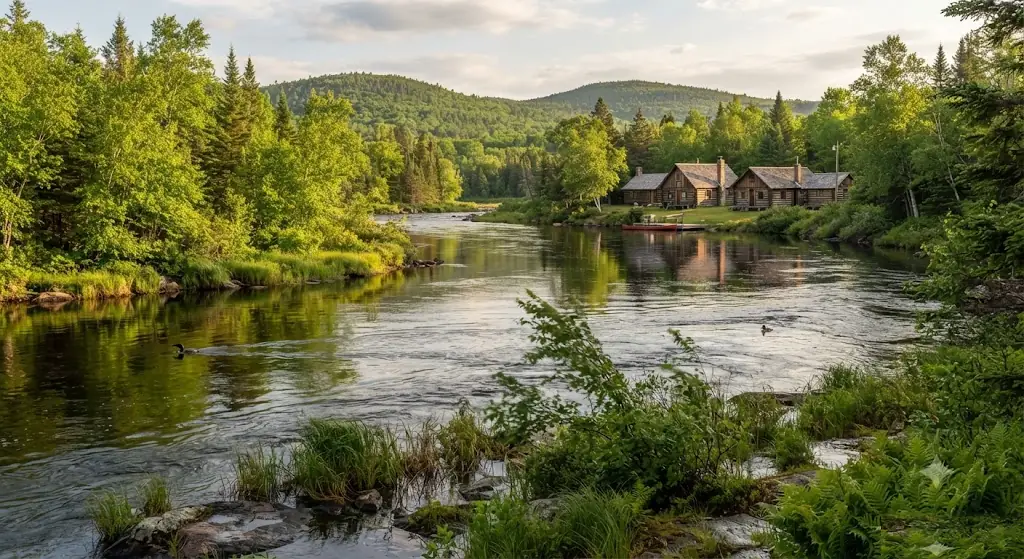
Our Allagash Wilderness Waterway guide covers practical planning for Allagash Wilderness Waterway Maine — best time to visit, getting there, and what to do on the ground.
The Allagash Wilderness Waterway Maine is not just a destination; it's an experience, a journey into the heart of one of the East's last truly wild places. This protected 92-mile ribbon of lakes, ponds, rivers, and streams offers unparalleled canoeing and kayaking in a pristine wilderness setting. Designated a National Wild and Scenic River in 1970, the AWW embodies the spirit of raw, untamed nature, inviting adventurers to disconnect and immerse themselves in its timeless beauty.
Why Visit Allagash Wilderness Waterway
For those seeking genuine solitude and an authentic connection with nature, the Allagash Wilderness Waterway offers an escape unlike any other. We find that visitors are drawn to its remote character, where the sounds of civilization fade, replaced by the calls of loons and the rustling of leaves. This is a place where bald eagles soar overhead, moose graze along the shores, and the night sky blazes with an intensity rarely seen elsewhere.
The waterway's designation as a National Wild and Scenic River ensures its preservation, maintaining its undeveloped nature and offering a unique opportunity to paddle through a landscape largely unchanged for centuries. It's a chance to follow in the paddle strokes of generations of adventurers, including Henry David Thoreau, who explored this region over 150 years ago. Beyond the stunning scenery, the Allagash provides a physical challenge and a mental reset, fostering self-reliance and a deep appreciation for the natural world.
The Allagash Wilderness Waterway is also a living museum of Maine's logging history. Along its banks, you'll discover remnants of a bygone era, from abandoned locomotives to derelict dams and logging tools, offering a fascinating glimpse into the past. This blend of natural splendor and historical intrigue makes the Allagash a truly compelling destination for those looking to explore the best places in Maine.
Who It's Best For
The Allagash Wilderness Waterway is primarily a paddler's paradise, best suited for canoeists and kayakers of all skill levels, from beginners to advanced. Whether you're seeking a multi-day wilderness expedition or a shorter, focused paddle, the waterway offers varied experiences. Those with some paddling experience will particularly enjoy sections like Chase Rapids, a Class II whitewater stretch downstream of Churchill Dam.
It's an ideal destination for families looking to introduce children to wilderness camping and paddling, as many outfitters offer family-friendly trips. Anglers will find the Allagash a bucket-list destination, with prime fishing for brook trout, lake trout, and whitefish. Wildlife enthusiasts, photographers, and anyone yearning for profound solitude will also find the AWW deeply rewarding. However, it's crucial to understand that cell service is virtually nonexistent along the waterway, so visitors must be prepared for self-reliance and off-grid communication.
Getting There & Parking
Accessing the Allagash Wilderness Waterway requires careful planning due to its remote location within the North Maine Woods. The primary way to get to Allagash Wilderness Waterway involves driving on private logging roads, which are managed by North Maine Woods, Inc. Visitors must pass through checkpoints and pay fees for both day use and camping. These fees, which include a 9% Maine lodging tax, are collected by North Maine Woods, Inc. and transferred to the Maine Bureau of Parks and Lands.
As of 2026, camping fees are $6.54 per person per night for Maine residents and $13.08 per person per night for non-residents, with children under 10 camping free. Private road use fees are $13 for Maine residents and $18 for non-residents for a one-day fee, with those under 18 and over 70 free. Payment is typically by cash or check at the checkpoints.
There are several maintained motor-vehicle access points to the Allagash Wilderness Waterway, including Chamberlain Thoroughfare Bridge, Churchill Dam, Umsaskis Lake Thoroughfare, Henderson Brook Bridge, Michaud Farm, and Twin Brooks. These points are crucial for planning your put-in and take-out locations. Parking is generally available at these designated access points, often with free parking offered by outfitters for the duration of your trip if you use their shuttle services. Vehicle parking outside the restricted zone is permitted at Chamberlain Thoroughfare, Henderson Brook Bridge, and Indian Stream. Parking within the restricted zone is allowed only at designated areas such as Churchill Dam, Umsaskis Thoroughfare, Ramsay Ledge, Michaud Farm, and Finley Bogan.
For those wondering how to get to Allagash Wilderness Waterway without personal vehicle logistics, many outfitters in the region, such as Northwoods Outfitters, Katahdin Outfitters, and Tylor Kelly Camps, offer shuttle services. These services can transport you and your gear to your put-in location and move your vehicle to your take-out point, saving you time and wear and tear on your own vehicle. Some outfitters even offer airport transportation from Bangor and Portland. It's important to note that Johns Bridge, south of Churchill Lake, will be closed from 8:00 AM on Tuesday, May 26th, to 5:00 PM on Friday, May 29th, 2026, for project completion, with no crossing allowed during this period.
Top Things to Do
The Allagash Wilderness Waterway is a haven for outdoor enthusiasts, offering a range of things to do that center around its pristine aquatic environment and surrounding wilderness. Our team emphasizes that the primary activity here is paddling. The entire 92-mile waterway, from Chamberlain Lake to Allagash Village, typically takes 7-10 days to complete. Shorter trips can be planned by starting at popular points like Churchill Lake, Umsaskis Lake, or Round Pond.
Paddling the Allagash
Canoeing and kayaking are the quintessential things to do at Allagash Wilderness Waterway. The river offers diverse paddling experiences, from serene lakes and meandering quietwater sections to the exhilarating Class II whitewater of Chase Rapids, located downstream of Churchill Dam. Outfitters like Allagash Canoe Trips provide quality canoes, paddles, PFDs, and dry bags, ensuring you have the right gear for your journey. It's important to be aware of watercraft restrictions: on Allagash Lake and Allagash Stream, only canoes and kayaks without motors are permitted. On Telos and Chamberlain Lakes, personal watercraft, hovercraft, airboats, racing boats, and pontoon boats are prohibited, though motor size is unlimited for other permitted vessels. From Lock Dam North to West Twin Brook, only canoes and kayaks with motors not exceeding 10 horsepower can be used. Inflatable watercraft are generally prohibited, except on Telos and Chamberlain Lakes.
Wildlife Viewing and Photography
The Allagash is teeming with wildlife, making it an exceptional destination for viewing and photography. Moose sightings are common, especially at dawn and dusk, as they feed in the river or swim between islands. Bald eagles are frequently spotted nesting in towering pines, and you'll likely hear the iconic calls of loons over the water. Other wildlife includes beaver and black bear. To maximize wildlife encounters, we recommend getting on the water early and keeping a quiet presence.
Fishing
For anglers, the Allagash River system is a premier destination. The waterway is known for its brook trout, lake trout, and whitefish. Fishing is particularly good in the spring when the water is cold and picks up again in the fall. A Maine fishing license is required, which can be purchased online or through outfitters. Specific fishing laws apply to certain waters within the Allagash Wilderness Waterway, so it's crucial to consult the 2026 Maine Inland Fishing Laws. For instance, on Allagash Lake, all brook trout must be released alive at once, and there's a minimum length limit of 16 inches for landlocked salmon.
Camping and Exploring Historic Sites
Camping is an integral part of the Allagash experience, with 80 designated campsites along the waterway, each equipped with fire rings, picnic tables, and outhouses. These are first-come, first-served, so securing a site by mid-day is advisable, especially during peak season. Crews have recently made improvements to several campsites and surrounding trails, including East Twin Brook and sites on Chamberlain Lake, focusing on improving tenting pads and access paths.
The waterway's rich history is evident in sites like the "Ghost Trains" on Eagle Lake, remnants of the logging era that are fascinating to explore. The Thoreau Campsite on Pillsbury Island in Eagle Lake also offers a historical connection to one of America's most famous naturalists.
Allagash Wilderness Waterway Hiking Trails
While the Allagash Wilderness Waterway is primarily a paddling route, there are a number of short but rewarding Allagash Wilderness Waterway hiking trails available for those who wish to stretch their legs and explore the land. It's important to note that the development and maintenance of foot trails within the AWW are generally prohibited, with specific exceptions. These exceptions include several established trails:
- The Allagash Mountain trail, connecting Allagash Lake and Allagash Mountain.
- The Carry Trail, between Round Pond (T7-R14) and the south end of Allagash Lake.
- The Johnson Pond Outlet trail, between Johnson Pond and Allagash Stream (T8-R14).
- The portage trail between Telos Dam and Webster Lake (T6-R11).
- The trail between Otter Pond and Allagash Lake (T8-R14).
- The Indian Stream trail, along Indian Stream to Eagle Lake (T7-R12).
- The trail to the locomotives (T8-R13), offering a unique historical excursion.
- The Pumphandle Trail (T8-R13).
- The Sandy Point Trail (T11-R13).
- The Round Pond Mountain trail to the Round Pond Mountain Tower (T13-R12).
- The Tramway trail between Chamberlain and Eagle Lakes.
- The trail to the Ice Caves from Allagash Lake.
- Portage trails at Little Allagash Falls, Lock Dam, and Allagash Falls, as well as the portage trail between Churchill Dam and Big Eddy.
These Allagash Wilderness Waterway hiking trails often lead to scenic overlooks, historical artifacts, or provide necessary portages around rapids or dams. Recent improvements have been made to campsites and surrounding trails, enhancing the experience for visitors. We recommend consulting a detailed map of the Waterway, such as the "Allagash Wilderness Waterway Map and Guide," which lists suggested itineraries and access information, to plan your hiking excursions.
Best Time to Visit
The best time to visit the Allagash Wilderness Waterway is generally from mid-May through mid-September. However, each part of this window offers a slightly different experience:
- Late May to Early June: This period often sees higher water levels, which can make for faster paddling and more reliable river flow, typically between 700-2400 CFS (cubic feet per second) for optimum canoeing. Fishing is also at its best when the water is cold. The second and third week of May are often before the peak of insect season.
- Late June to Mid-July: This is generally considered the height of bug season, though it gradually decreases throughout the summer. While popular, securing campsites might require arriving earlier in the day.
- July and August: These are the most popular months, characterized by warmer days and fewer bugs than early summer. However, this also means more people on the river, particularly around holidays like the Fourth of July. Campsites are first-come, first-served, so arriving by mid-day is crucial to find an open spot. Water levels can vary, and levels below 500 CFS may expose gravel bars and slow progress.
- September to Early October: Early fall is an excellent time to visit, offering fewer people, minimal bugs, and the beginning of stunning fall foliage. Trout fishing picks up again as the water cools. If you're lucky, you might even catch a glimpse of the Northern Lights.
We recommend avoiding holiday weekends if you prefer more solitude, as the waterway can become quite busy. Planning a mid-week put-in can also help avoid crowds. Always check current water levels and conditions before your trip, as these can significantly impact your paddling experience.
Where to Stay Nearby
Given the remote nature of the Allagash Wilderness Waterway, lodging options directly on the waterway are limited to primitive campsites and a few historic sporting camps. However, there are various options for Allagash Wilderness Waterway lodging and accommodations in nearby towns and within the North Maine Woods region that cater to visitors before or after their paddling adventures.
Camping on the Waterway
The AWW offers 80 designated campsites, all of which are first-come, first-served and cannot be reserved in advance. Each site is equipped with a picnic table, fire pit, and outhouse, providing a rustic but comfortable wilderness experience. Camping fees apply: $6.54 per person per night for Maine residents and $13.08 per person per night for non-residents, with children under 10 free. Recent improvements have been made to tenting pads and access paths at several campsites, including those on Chamberlain Lake.
Sporting Camps and Lodges
For those seeking a more structured lodging experience near Allagash Wilderness Waterway, traditional sporting camps and lodges offer a blend of comfort and wilderness immersion:
- Nugent's Camps and Jalbert's Camps: These are two historic, commercial camps leased by the state along the AWW that are open for reservations.
- Allagash Headwaters Lodge: Located in the heart of the North Maine Woods, this lodge in T7 R11 (Northeast Piscataquis County) offers quality meals and lodging, with on-site fuel, making it a gateway for canoe trippers, ice fisherman, and snowmobilers. It's more than 60 miles from the closest town, emphasizing its remote wilderness setting.
- Morgan's Allagash Wilderness Camps: These camps offer rustic cabins and well-appointed rooms designed for comfort after outdoor adventures, providing an authentic wilderness living experience.
- Red River Camps: Less than a mile from the Deboullie trailhead, these traditional sporting camps cater to outdoor enthusiasts looking to truly get away from it all.
Nearby Towns for Allagash Wilderness Waterway Lodging
For those preferring to stay in a town with more amenities, several communities offer hotels, motels, and vacation rentals. These can serve as a base before or after your AWW adventure. We recommend these areas for Allagash Wilderness Waterway lodging:
- Greenville: Located near Moosehead Lake, Greenville is a hub for many Allagash outfitters, offering lodging options and free parking for those using shuttle services. It's also a good starting point for exploring Moosehead Lake itself.
- Millinocket: This town is a major access route to the Allagash Waterway area and Baxter State Park. Katahdin Outfitters, based here, provides canoe rentals, equipment, and shuttle services. Millinocket is an excellent base for visiting Baxter State Park & Mt. Katahdin.
- Presque Isle: Further east, Presque Isle offers more conventional hotel options like the SureStay Hotel by Best Western Presque Isle and the Aroostook Hospitality Inn, which are suitable for those looking for standard accommodations before heading into the wilderness.
- Saint Francis, Winterville, and Northwest Aroostook: These areas are closer to the northern end of the waterway. Saint Francis offers cozy cabins and access to the Allagash Wilderness, while Winterville provides kayak rentals and is good for outdoor enthusiasts. Northwest Aroostook offers a mix of charming accommodations. For first-time visitors, Saint Francis is often recommended for its welcoming atmosphere and proximity to nature.
- Fort Kent: Located further north along the St. John River, Fort Kent has options like the Love Hotels St John River by OYO, offering free WiFi and self-parking.
When planning your trip, consider booking accommodations well in advance, especially during peak season, as options can be limited in this remote region.
Sample 2-Day Itinerary
While the full Allagash Wilderness Waterway experience typically spans 7-10 days, a shorter 2-day trip can still offer a taste of its wild beauty and paddling adventure. This sample itinerary focuses on a popular section, assuming a put-in at Churchill Dam and a take-out further downstream, utilizing an outfitter's shuttle service.
Day 1: Churchill Dam to Umsaskis Lake
- Morning (8:00 AM - 12:00 PM): Arrive at your chosen outfitter's base (e.g., in Greenville or Millinocket) for final preparations, gear check, and shuttle to Churchill Dam. After a safety briefing and ensuring all permits and fees are handled, launch your canoe or kayak onto Churchill Lake.
- Late Morning/Early Afternoon (12:00 PM - 3:00 PM): Begin your paddle across Churchill Lake. This section offers calm waters and excellent opportunities for wildlife viewing, especially moose along the shorelines. You'll soon encounter the start of Chase Rapids, a Class II whitewater section. Depending on your skill level and water conditions, you can paddle through the rapids for an exhilarating experience or opt for the portage around them.
- Afternoon (3:00 PM - 5:00 PM): Continue paddling through quieter stretches of the Allagash River as it flows north towards Umsaskis Lake. Keep an eye out for bald eagles and other birdlife.
- Late Afternoon/Evening (5:00 PM onwards): Arrive at Umsaskis Lake. Begin looking for an available campsite among the designated, first-come, first-served sites. Set up camp, prepare dinner over a campfire, and enjoy the serene wilderness evening. Remember to carry in and carry out all refuse. There is no cell service, so embrace the digital detox.
Day 2: Umsaskis Lake to Round Pond (T13 R12) or Henderson Brook Bridge
- Morning (7:00 AM - 12:00 PM): Wake up early to catch the sunrise and potentially spot more wildlife. Enjoy a hearty breakfast at your campsite. Break down camp and pack your gear. Launch back onto Umsaskis Lake, paddling north.
- Late Morning/Early Afternoon (12:00 PM - 3:00 PM): Paddle through Umsaskis Lake and into Long Lake. These broad lakes offer expansive views and opportunities for fishing. You might choose to stop for a short hike on one of the designated Allagash Wilderness Waterway hiking trails if time permits, such as a short trail leading to a scenic point.
- Afternoon (3:00 PM - 5:00 PM): Continue your paddle towards Round Pond (T13 R12) or the Henderson Brook Bridge area, depending on your planned take-out point and the duration of your trip. Enjoy the final stretches of the waterway, soaking in the remote beauty.
- Late Afternoon (5:00 PM onwards): Reach your designated take-out point. Your outfitter will meet you here for vehicle retrieval and transportation back to their base. Reflect on your wilderness adventure and the unparalleled tranquility of the Allagash.
This itinerary is a suggestion and can be customized based on your interests, paddling speed, and the specific services offered by your chosen outfitter. Always consult detailed maps and current conditions before embarking on your journey.
Is It Worth Visiting?
Absolutely, we confidently affirm that the Allagash Wilderness Waterway is worth visiting for anyone seeking a true wilderness paddling experience. This 92-mile stretch of lakes, ponds, rivers, and streams is a National Wild and Scenic River, a designation that speaks to its unparalleled natural beauty and commitment to preservation.
The allure of the Allagash Wilderness Waterway lies in its ability to transport you to a place where time slows down, and the rhythm of nature dictates your pace. We believe that the opportunity to disconnect from modern life, with virtually no cell service, and immerse yourself in an environment teeming with wildlife—moose, bald eagles, and loons are common sights—is a rare and invaluable experience. The chance to paddle through tranquil waters, navigate exciting rapids, and camp at primitive, first-come, first-served sites under one of New England's darkest night skies is truly special.
For paddlers, anglers, and nature photographers, the Allagash offers a unique blend of adventure and serenity. The historical remnants of Maine's logging era add another layer of intrigue, allowing visitors to connect with the past while experiencing the present wilderness. While it requires careful planning and a degree of self-sufficiency, the rewards of an Allagash trip far outweigh the logistical considerations. The memories forged on this iconic waterway—the quiet mornings, the wildlife encounters, the camaraderie around a campfire—make it an unforgettable journey. Therefore, we wholeheartedly recommend that the Allagash Wilderness Waterway is worth visiting for those craving an authentic and profound connection with the wild heart of Maine.
Last updated: 2026-07-13 by the Roam States team.