Badlands National Park Travel Guide — South Dakota
Welcome to Roam States, your trusted resource for exploring America's most captivating destinations. Our team is dedicated to providing confident, specific, and actionable advice, steering clear of generic travel fluff. This comprehensive guide focuses on Badlands National Park South Dakota, an otherworldly landscape that promises an unforgettable adventure. We'll cover everything from navigating its unique terrain to finding the perfect spot to rest after a day of exploration, ensuring your trip is as seamless as it is spectacular.
Why Visit Badlands National Park
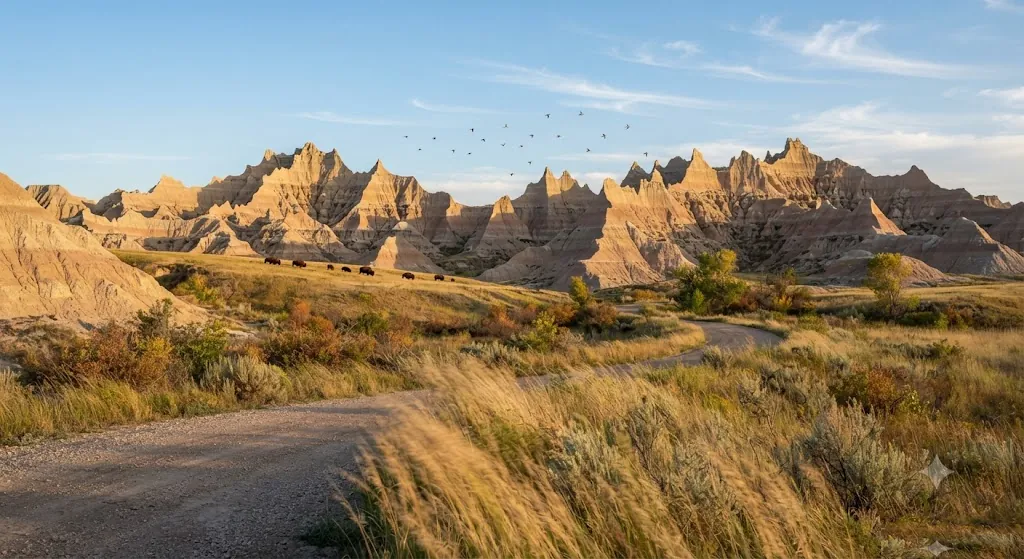
Badlands National Park offers a truly unique American experience, a dramatic contrast to the rolling prairies that surround it. We believe Badlands National Park is worth visiting for its unparalleled geological formations, rich fossil beds, and abundant wildlife. The park showcases a mesmerizing tapestry of sharply eroded buttes, pinnacles, and spires, carved over millions of years by wind and water. It's a landscape that feels ancient and alive, providing a profound sense of geological time. Beyond the striking scenery, it’s also one of the world's richest fossil beds, offering a glimpse into prehistoric life with ongoing paleontological discoveries.
The park is a haven for wildlife enthusiasts, home to bison, bighorn sheep, pronghorn, and prairie dogs, which can often be spotted roaming freely across the mixed-grass prairie. For those seeking solitude and stunning night skies, the Badlands delivers some of the darkest skies in North America, perfect for stargazing and astrophotography. Whether you're a nature photographer, a history buff, or simply looking for an awe-inspiring natural escape, the question of "is Badlands National Park worth visiting" is unequivocally answered with a resounding yes.
Who It's Best For
Badlands National Park caters to a diverse range of travelers, making it an ideal destination for many. It's particularly well-suited for:
- Road Trippers: With the Badlands Loop Road (Highway 240) offering breathtaking scenic drives and numerous overlooks, it's perfect for those exploring South Dakota by car.
- Nature Photographers: The dramatic landscapes, colorful rock formations, and abundant wildlife provide endless opportunities for stunning photography, especially during sunrise and sunset.
- Families with Children: Many short, accessible trails and the Junior Ranger program at the Ben Reifel Visitor Center make it engaging for younger visitors. The Fossil Preparation Lab is also a big hit.
- Hikers of All Levels: From easy boardwalk strolls to challenging backcountry excursions, the park offers a variety of hiking experiences.
- Wildlife Enthusiasts: Opportunities to spot bison, bighorn sheep, and prairie dogs are plentiful, especially along the Sage Creek Rim Road.
- Stargazers: The park's remote location and minimal light pollution create exceptional conditions for observing the night sky.
- History Buffs: The park's paleontological significance and the cultural history of the Lakota people offer deep insights into the region's past.
Getting There & Parking
Understanding how to get to Badlands National Park is straightforward, with the primary access points conveniently located off Interstate 90. The closest major airport is Rapid City Regional Airport (RAP), about an hour's drive west of the park.
The main route through the park is the Badlands Loop Road (State Highway 240), which forms a scenic drive through the North Unit. You can access this loop from I-90 via Exit 131 (near Wall) or Exit 110 (near Cactus Flat and Interior). The town of Wall, home to the famous Wall Drug Store, is a popular gateway for supplies and fuel. The town of Interior is located near the park's southeast entrance.
For those wondering how to get to Badlands National Park's more remote areas, the Sage Creek Rim Road, a gravel road, offers access to the Sage Creek Wilderness Area and Sage Creek Campground. Be aware that this road can close due to weather conditions.
Parking: Ample parking is available at all major overlooks, trailheads, and visitor centers throughout the park. During peak summer months, parking lots, especially at popular spots like the Ben Reifel Visitor Center, can fill up, so we recommend arriving early or later in the day to secure a spot.
Top Things to Do
There are countless things to do at Badlands National Park, offering experiences for every interest and energy level. Our team recommends focusing on these key activities to fully immerse yourself in the park's splendor:
- Drive the Badlands Loop Road (Highway 240): This scenic byway is a must-do, offering numerous overlooks with panoramic views of the eroded landscape. Allow at least three hours to enjoy the drive and stop at various viewpoints. Highlights include the Pinnacles Overlook, Yellow Mounds Overlook, and Roberts Prairie Dog Town.
- Visit the Ben Reifel Visitor Center: Located at park headquarters, this is an excellent starting point for any visit. Here, you can get maps, speak with rangers, explore museum exhibits, and visit the working Fossil Preparation Lab. The visitor center is open daily, with summer hours (May 4–October 4, 2026) from 8:00 AM to 5:00 PM and winter hours (October 5–May 3, 2027) from 9:00 AM to 4:00 PM.
- Explore the White River Visitor Center: Located in the park's South Unit on the Pine Ridge Indian Reservation, this center focuses on Lakota culture and is typically open seasonally during the summer.
- Wildlife Viewing: Keep an eye out for bison, bighorn sheep, pronghorn, and prairie dogs, especially along the Sage Creek Rim Road and in the prairie areas.
- Attend Ranger-Led Programs: During the summer, the park offers various ranger-led activities, including Geology Walks, Fossil Talks, Evening Prairie Walks, Evening Ranger Programs, and Night Sky Programs. Check the Ben Reifel Visitor Center for schedules.
- Stargazing: With its exceptionally dark skies, Badlands National Park is a prime location for stargazing. We recommend staying late or camping to experience the Milky Way in all its glory.
- Photography: Capture the dramatic contrasts of the Badlands, especially during the golden hours of sunrise and sunset when the layers of rock glow with vibrant colors.
These things to do at Badlands National Park provide a comprehensive experience of its natural beauty and unique features.
Badlands National Park Hiking Trails
Badlands National Park is an "open hike" park, meaning you're generally free to explore off-trail, provided you adhere to backcountry rules, such as staying a half-mile from roads or trails and out of sight. However, for most visitors, the established Badlands National Park hiking trails offer the best and safest way to experience the park's diverse landscapes.
All hiking trails in Badlands National Park are open year-round, weather permitting. We recommend checking current conditions at the Ben Reifel Visitor Center before heading out.
- Door Trail (0.75 miles, easy): A boardwalk leads to a "doorway" through the Badlands Wall, opening up to an off-trail route into a badlands formation. It's a great introduction to the landscape.
- Window Trail (0.25 miles, easy): A short, accessible boardwalk leads to a natural "window" in the Badlands Wall, offering a stunning view of the formations.
- Notch Trail (1.5 miles, moderate): This popular trail involves climbing a log ladder and traversing a ledge with great views of the White River Valley. It can be challenging for those with a fear of heights.
- Fossil Exhibit Trail (0.25 miles, easy, paved): An accessible boardwalk trail with exhibits detailing the park's paleontological history. Ranger-led fossil talks are often held here during summer.
- Cliff Shelf Nature Trail (0.5 miles, moderate): A boardwalk and dirt trail through a juniper forest, offering views of the Badlands formations and a chance to spot bighorn sheep.
- Medicine Root Trail (4 miles, moderate): Connects the Saddle Pass and Castle Trails, offering a longer prairie hike with views of the formations.
- Castle Trail (5 miles one-way, moderate): The longest designated trail in the park, connecting the Door/Window parking area to the Fossil Exhibit Trailhead and the Ben Reifel Visitor Center. It offers expansive views and a sense of solitude.
- Saddle Pass Trail (0.25 miles, strenuous): A steep climb up a gully to the top of the Badlands Wall, connecting to the Castle and Medicine Root Trails.
When tackling Badlands National Park hiking trails, always carry plenty of water, wear sturdy shoes, and be mindful of the weather, especially during summer when temperatures can be extreme.
Badlands National Park Camping
For those seeking an immersive experience, Badlands National Park camping offers two distinct options within the park, plus numerous choices just outside. Sleeping under the vast, star-filled Badlands sky is an unforgettable part of any visit.
Cedar Pass Campground: Located near the Ben Reifel Visitor Center and Cedar Pass Lodge, this developed campground is open seasonally from late March through mid-October (specifically March 27 – October 19, 2026, or April 3 – October 11, 2026, depending on the source). It offers 96 sites, with 23 sites providing electric hook-ups (30/50 amp) for RVs. Reservations are required for Cedar Pass Campground and can be made through Recreation.gov. As of 2026, tent and non-electric RV sites are $37 per night, while electric RV sites are $47 per night. Group sites are also available for $47 per night, accommodating up to 10 people. Amenities include flush toilets, running water, and pay showers nearby at Cedar Pass Lodge during the summer. Campfires are not permitted due to fire danger, but portable propane grills are allowed.
Sage Creek Campground: Situated on the unpaved Sage Creek Rim Road in the western part of the North Unit, this is a primitive, free, first-come, first-served campground with 22 sites. It's open year-round, though access can be limited by weather. Here, you'll find pit toilets and covered picnic tables, but no water, so you must bring your own. Motorhomes and pull-behind trailers over 18 feet are prohibited due to the road conditions. This is an excellent spot for wildlife viewing, with bison often roaming through the area.
Backcountry Camping: Badlands National Park allows backcountry camping without a permit in much of the park, though registering your plans at a visitor center is recommended. You must camp at least a half-mile from any road or trail and out of sight. Popular backcountry areas include Deer Haven.
Outside the Park: For additional options, the Travel South Dakota website lists several private campgrounds and lodging in nearby towns like Interior and Wall. Badlands/White River KOA Holiday Campground, located just 5 miles from the park, is open from April 26 through October 13, 2026, offering RV sites, lodging, and tent sites. Other options include Sleepy Hollow Campground & RV Park in Wall, open May 1 – October 15, 2026.
Best Time to Visit
Choosing the best time to visit Badlands National Park largely depends on your priorities, as each season offers a distinct experience. Our team generally recommends the shoulder seasons for the most comfortable visit.
- Spring (Mid-April to May): This is an excellent time to visit. Temperatures are mild, wildflowers begin to bloom on the prairie, and wildlife is active. It's ideal for hiking and exploring without the intense summer heat.
- Fall (September to Early October): Similar to spring, fall offers pleasant temperatures, fewer crowds, and beautiful light for photography. The weather is generally stable, making it perfect for outdoor activities.
- Summer (June to August): While popular, summer brings high temperatures, often reaching 100°F, and the possibility of violent thunderstorms, hailstorms, and even tornadoes. If you visit in summer, plan hikes for early morning or late evening to avoid the midday heat. Ranger-led programs are most abundant during this season.
- Winter (November to Mid-April): Winter offers a stark, quiet beauty and minimal crowds. The badlands can be dusted with snow, creating stunning photographic opportunities. However, be prepared for subzero temperatures and 12 to 24 inches of snowfall. Some park roads may close due to ice or snow, and in-park accommodations and dining are typically closed.
The park is open 24 hours a day, year-round, so you can enter even if entrance stations are unstaffed. However, visitor center hours vary seasonally. The Ben Reifel Visitor Center is open from 8:00 AM to 5:00 PM during summer (May 4–October 4, 2026) and 9:00 AM to 4:00 PM during winter (October 5–May 3, 2027).
Where to Stay Nearby
While Badlands National Park offers camping within its boundaries, many visitors prefer to stay in nearby towns for more amenities and diverse lodging options. Our team recommends considering these locations:
- Interior, South Dakota: This small town is located right at the park's southeast entrance. It offers a few lodging options, including the Cedar Pass Lodge within the park (seasonal) and the Badlands/White River KOA Holiday Campground.
- Wall, South Dakota: Just north of the park on I-90, Wall is famous for Wall Drug Store, a sprawling roadside attraction. It has a wider selection of motels, restaurants, and services, making it a convenient base. Options include Sleepy Hollow Campground & RV Park.
- Rapid City, South Dakota: Approximately an hour's drive west of the park, Rapid City is the largest city in the area and offers the most extensive range of hotels, restaurants, and attractions. It's a great hub if you plan to explore other nearby destinations like Mount Rushmore National Memorial, Custer State Park, and Black Hills National Forest.
For a unique experience, consider staying at a private campground on the edge of Buffalo Gap National Grassland, which offers dispersed camping with stunning views of the badlands formations.
Sample 2-Day Itinerary
To help you make the most of your visit to Badlands National Park South Dakota, our team has crafted a sample 2-day itinerary, balancing scenic drives, hiking, and wildlife viewing. This plan assumes you're staying in or near Wall or Interior.
Day 1: North Unit Highlights & Sunset Views
- Morning (8:00 AM - 12:00 PM): Arrival & Visitor Center
- Arrive at Badlands National Park via the Northeast Entrance (Exit 131 from I-90).
- Head straight to the Ben Reifel Visitor Center. Pick up maps, chat with a ranger about current conditions and programs, and explore the museum exhibits and Fossil Preparation Lab.
- Hike the easy Door Trail (0.75 miles) and Window Trail (0.25 miles) starting near the visitor center for an immediate immersion into the badlands formations.
- Lunch (12:00 PM - 1:00 PM): Picnic or Lodge
- Enjoy a picnic lunch at one of the park's covered picnic areas, or grab a meal at Cedar Pass Lodge near the visitor center.
- Afternoon (1:00 PM - 5:00 PM): Scenic Loop Drive & Short Hikes
- Drive the Badlands Loop Road (Highway 240) westbound, stopping at key overlooks like Big Badlands Overlook, Yellow Mounds Overlook, and Panorama Point.
- Consider a moderate hike like the Notch Trail (1.5 miles) for adventurous views, or the Cliff Shelf Nature Trail (0.5 miles) for wildlife spotting.
- Keep an eye out for bighorn sheep at Pinnacles Overlook.
- Evening (5:00 PM onwards): Wildlife & Sunset
- Continue on the Badlands Loop Road towards the Pinnacles Entrance, then turn onto Sage Creek Rim Road. This gravel road is excellent for spotting bison, pronghorn, and prairie dogs at Roberts Prairie Dog Town.
- Find a scenic spot along the Sage Creek Rim Road or a return overlook on the Loop Road for a spectacular Badlands sunset.
- If camping at Cedar Pass Campground, attend an Evening Ranger Program.
Day 2: Deeper Exploration & Paleontology
- Morning (8:00 AM - 12:00 PM): Prairie & Longer Trails
- Start your day with an early morning drive along Sage Creek Rim Road for prime wildlife viewing as animals are most active.
- For a longer hike, tackle a portion of the Castle Trail (up to 5 miles one-way) or the Medicine Root Trail (4 miles), accessible from various trailheads along the Loop Road.
- Alternatively, if you're interested in paleontology, join a Ranger-led Fossil Talk (check schedules at the Ben Reifel Visitor Center).
- Lunch (12:00 PM - 1:00 PM): Wall Drug or Interior
- Exit the park via the Pinnacles Entrance and head to Wall for lunch and a classic American roadside experience at Wall Drug Store.
- Or, if staying in Interior, enjoy a meal there.
- Afternoon (1:00 PM - 5:00 PM): South Unit or Nearby Attractions
- Option 1 (South Unit): Explore the more remote Stronghold Unit and visit the White River Visitor Center for insights into Lakota culture (check seasonal hours). Be aware that access to some areas on the Pine Ridge Indian Reservation may require permission from landowners. Note that the South Unit is closed to alcohol possession and consumption.
- Option 2 (Nearby): Head west towards the Black Hills region to visit the Minuteman Missile National Historic Site Visitor Center, which is less than 30 miles from the Badlands/White River KOA.
- Evening (5:00 PM onwards): Stargazing
- Return to the park for a final evening of stargazing. The Badlands offer some of the best dark skies. Look for designated pull-offs or return to a quiet overlook for an unobstructed view of the Milky Way. Night Sky Programs are offered seasonally.
FAQ
What are some things to do in Interior?
Interior, South Dakota, serves as a gateway town to Badlands National Park. Beyond accessing the park itself, things to do in Interior include visiting the Cedar Pass Lodge for dining and souvenirs, or staying at the Badlands/White River KOA Holiday Campground. It's a small community, so its primary draw is its immediate proximity to the park's southeast entrance.
Is Badlands National Park good with kids?
Yes, Badlands National Park is excellent for kids! We recommend it for families due to its accessible trails, engaging Junior Ranger program (available at the Ben Reifel Visitor Center), and abundant wildlife viewing opportunities. Kids will love spotting prairie dogs, bison, and bighorn sheep, and the Fossil Preparation Lab at the visitor center is a fascinating stop for budding paleontologists. Many of the shorter hikes, like the Door Trail and Fossil Exhibit Trail, are perfect for little legs.
What are some Badlands National Park tips for first-time visitors?
Our top Badlands National Park tips for first-time visitors include:
- Plan for the Weather: Temperatures can be extreme, so pack layers, plenty of water, and sun protection.
- Start at the Visitor Center: The Ben Reifel Visitor Center offers maps, ranger advice, and exhibits to orient you.
- Drive the Loop Road: The Badlands Loop Road (Highway 240) is essential for seeing the park's highlights.
- Look for Wildlife: Drive the Sage Creek Rim Road for the best chances to see bison and other animals.
- Stay for Sunset and Stargazing: The park's dark skies are incredible.
- Go Cashless: The park does not accept cash for entrance fees or campground payments.
- Wear Sturdy Shoes: Even short trails can be uneven.
What are the Badlands National Park parking options?
Badlands National Park parking is generally plentiful and free at all designated overlooks, trailheads, and visitor centers. The Ben Reifel Visitor Center has a large parking lot, which can accommodate most vehicles. During busy summer months, popular parking areas may fill up, so arriving early or later in the day is advisable. There are no reservations required for general parking.
What is the best time to visit Badlands National Park?
The best time to visit Badlands National Park is during the shoulder seasons: mid-April through May or September through early October. During these months, the weather is typically mild and pleasant for hiking and exploring, and the crowds are smaller than in summer. Summer brings heat and potential thunderstorms, while winter offers stark beauty but very cold temperatures and possible road closures.
What are the Badlands National Park hours and fees?
Badlands National Park is open 24 hours a day, seven days a week, year-round. Entrance fees are collected year-round and are cashless (credit/debit card only). As of 2026, the standard 7-day pass costs $30 per vehicle, $25 for a motorcycle, or $15 per person (on foot or bicycle). An annual Badlands National Park pass is $55. The Ben Reifel Visitor Center has varying hours: Summer (May 4–October 4, 2026) 8:00 AM–5:00 PM; Winter (October 5–May 3, 2027) 9:00 AM–4:00 PM, and is closed on Thanksgiving, Christmas, and New Year's Day.
In conclusion, Badlands National Park South Dakota is a destination that truly lives up to its name, offering a rugged, beautiful, and profoundly unique experience. We encourage you to plan your trip, embrace the wild beauty, and discover why this national park is a jewel of the American West.
Last updated: 2026-07-13 by the Roam States team.