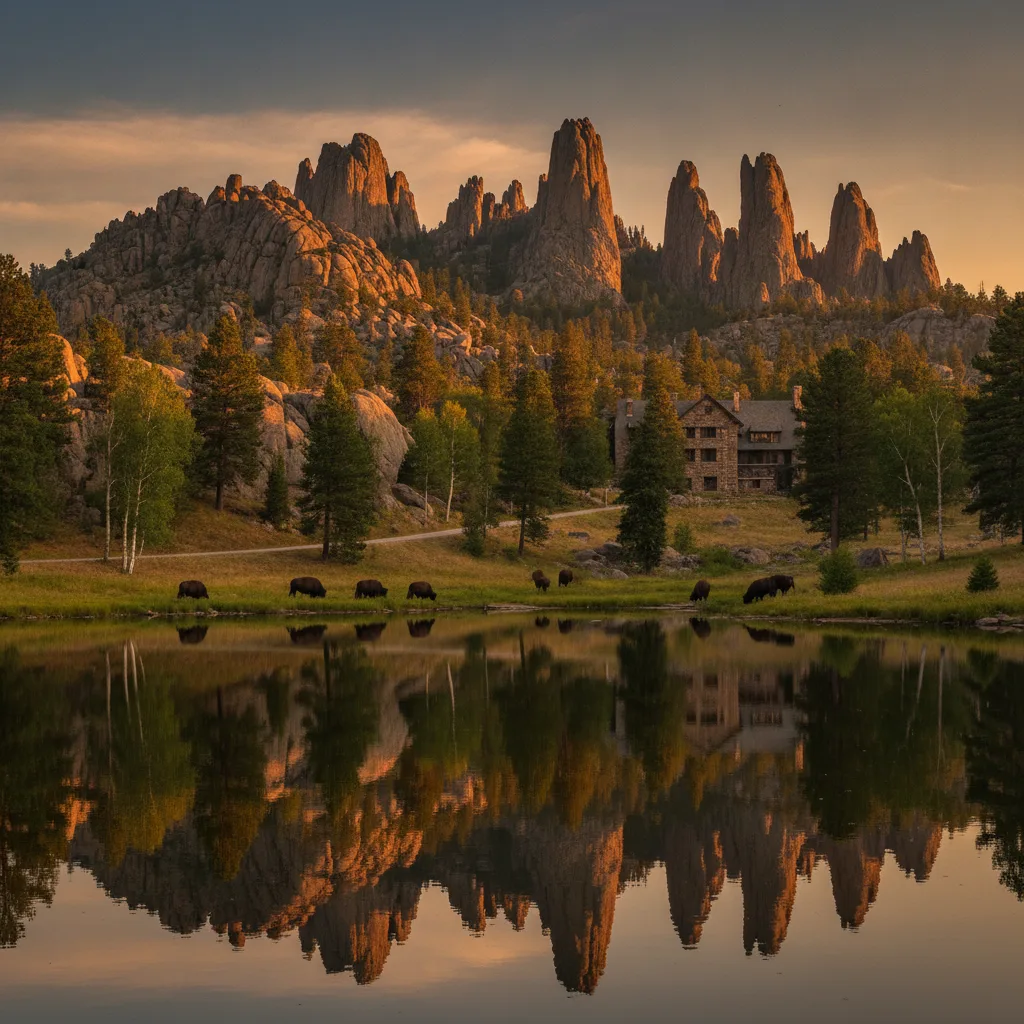
Welcome to our comprehensive guide to Custer State Park South Dakota, a true jewel in the heart of the Black Hills. Our team at Roam States has explored countless destinations, and we confidently say that Custer State Park stands out as an unparalleled experience for nature lovers, adventurers, and families alike. This 71,000-acre wildlife preserve offers a unique blend of rugged granite peaks, rolling prairies, pristine lakes, and abundant wildlife, rivaling many national parks in its scope and beauty.
Why Visit Custer State Park
Custer State Park is more than just a park; it's an immersive journey into the wild heart of South Dakota. We believe it's a must-visit for its stunning natural beauty, diverse ecosystems, and the sheer abundance of wildlife. Imagine driving alongside a herd of bison, navigating through tunnels carved into granite, or hiking to the highest point east of the Rockies. This park offers all of that and more.
The park's unique landscape, shaped by ancient geological forces, presents dramatic vistas at every turn. From the iconic Needles Highway, with its towering granite spires, to the tranquil waters of Sylvan Lake, the scenery is simply breathtaking. Beyond the visual spectacle, Custer State Park provides endless opportunities for outdoor recreation, whether you're seeking a strenuous hike, a peaceful paddle, or an exhilarating wildlife safari. It's a place where you can truly disconnect from the everyday and reconnect with nature's grandeur.
Who It's Best For
Custer State Park caters to a remarkably wide range of travelers. Our team finds it particularly ideal for:
- **Families:** With easy hiking trails, abundant wildlife viewing opportunities (including the famous "begging burros"), and various educational programs, it's a fantastic destination for all ages. Kids will especially love the chance to see bison, prairie dogs, and other animals up close.
- **Outdoor Enthusiasts:** Hikers, bikers, climbers, and paddlers will find a paradise here. The park boasts numerous trails ranging from easy lakeside strolls to challenging mountain ascents, along with opportunities for fishing, swimming, and horseback riding.
- **Wildlife Photographers & Nature Lovers:** The chance to observe large herds of bison, along with elk, pronghorn, deer, and bighorn sheep in their natural habitat, is a major draw. Early mornings and late evenings offer the best chances for prime wildlife viewing.
- **Scenic Drive Aficionados:** The park is home to some of the most iconic scenic byways in the country, including Needles Highway, Wildlife Loop Road, and Iron Mountain Road. These drives offer unparalleled views and unique engineering marvels like "pigtail" bridges and rock tunnels.
In our expert opinion, Custer State Park truly offers something for everyone, making it a versatile and rewarding destination for almost any type of traveler.
Getting There & Parking
Understanding how to get to Custer State Park is straightforward, as it's conveniently located in the Black Hills, making it an excellent hub for exploring the region. The closest major airport is Rapid City Regional Airport (RAP), approximately 37 miles north of the park.
From Rapid City, the most direct route is via Highway 16 South, which takes about 40-50 minutes. Alternatively, for a more scenic approach, you can take portions of the Peter Norbeck Scenic Byway, which includes Needles Highway and Iron Mountain Road, connecting areas near Mount Rushmore to Custer State Park.
Custer State Park is easily accessible from several nearby towns: it's about a 15-minute drive from Crazy Horse Memorial, 20 minutes from Wind Cave National Park, and roughly 35 minutes from Mount Rushmore National Memorial.
When it comes to parking, you'll find designated areas at visitor centers, trailheads, and popular attractions like Sylvan Lake. During peak season (June-August), popular spots like Sylvan Lake can fill up by 9 AM, so arriving early is always a good strategy. An entrance license is required for all park visitors, with a 1-7 day pass costing $25 per vehicle or $20 per motorcycle. An annual pass is available for $60 for non-residents.
For those wondering how to get to Custer State Park and navigate within it, a personal vehicle is highly recommended due to the park's expansive size and the distances between attractions. Be aware that some scenic roads, like Needles Highway and Iron Mountain Road, have narrow tunnels and are subject to seasonal closures, typically in winter.
Top Things to Do
The array of things to do at Custer State Park is truly impressive, ensuring that every visitor finds an adventure to suit their style. Our team has curated the absolute best experiences within this magnificent park.
Scenic Drives: A Journey Through the Black Hills
The park's scenic drives are legendary, offering breathtaking vistas and unique engineering marvels. We highly recommend dedicating ample time to these routes, as they are not just roads but destinations in themselves. Speeds are generally recommended at 25 mph or slower to truly appreciate the scenery.
- Wildlife Loop Road: This 18-mile paved loop is your best bet for spotting the park's famous inhabitants. We've often seen bison herds, pronghorn antelope, prairie dogs, and the beloved "begging burros" here. The best times for wildlife viewing are early morning or late evening when animals are most active. Allow at least 45 minutes to an hour, but often longer if you stop for wildlife.
- Needles Highway (SD-87): A 14-mile marvel, this road winds through pine forests, meadows, and dramatic granite spires, including the iconic Needles Eye Tunnel. It's an unforgettable drive, though vehicles over a certain height/width may have difficulty with the narrow tunnels. This road is typically closed in winter.
- Iron Mountain Road (US-16A): Connecting Custer State Park to Mount Rushmore, this 18-mile road features three wooden "pigtail" bridges and three one-lane tunnels, specifically aligned to frame Mount Rushmore as you approach from the south. Like Needles Highway, it's generally closed in winter.
- Peter Norbeck Scenic Byway: This 68-mile loop encompasses the Needles Highway, Iron Mountain Road, and a portion of the Wildlife Loop, offering a comprehensive tour of the park's highlights and even a view of Mount Rushmore. Allow a full day for this route.
Lakes and Water Activities
The park's pristine lakes provide a refreshing contrast to the rugged mountains.
- Sylvan Lake: Often called the "Crown Jewel" of Custer State Park, Sylvan Lake is perfect for swimming, kayaking, paddleboarding, or simply relaxing by the shore. You can rent watersport equipment seasonally at Sylvan Lake Lodge. The Sylvan Lake Shore Trail is an easy, scenic walk around the lake.
- Legion Lake, Center Lake, and Stockade Lake: These lakes also offer opportunities for fishing, swimming, and picnicking, each with its own charm.
Wildlife Viewing
Beyond the Wildlife Loop, keep your eyes peeled throughout the park. Bison, elk, deer, pronghorn, bighorn sheep, and even mountain goats can be spotted. The Custer State Park Visitor Center and Wildlife Station Visitor Center are excellent resources for current wildlife sightings.
Custer State Park Hiking Trails
For those who prefer to explore on foot, the Custer State Park hiking trails offer a diverse range of experiences, from gentle strolls to challenging ascents. With over a dozen trails, there's something for every skill level.
- Black Elk Peak Trail: Leading to the highest point east of the Rockies (7,242 feet), this strenuous hike offers unparalleled panoramic views. Multiple routes lead to the summit, including the popular trail starting near Sylvan Lake.
- Sylvan Lake Shore Trail: An easy, 1-mile loop around Sylvan Lake, taking about 26 minutes to complete, with minimal elevation gain. It's perfect for a leisurely walk and stunning lake views.
- Cathedral Spires Trail: A moderate to strenuous 1.5-mile one-way trail that treks through ponderosa pines and leads to impressive granite spires. It can also be combined with the Black Elk Peak Trail.
- Prairie Trail: A 3-mile loop that explores the park's rolling prairie grasslands, offering excellent birdwatching opportunities and a chance to see buffalo.
- French Creek Nature Area Trail: A more challenging, 12-mile one-way trail where you might spot bighorn sheep. Be prepared for creek crossings, as the trail disappears in some sections.
When exploring Custer State Park hiking trails, always carry water, wear appropriate footwear, and be aware of wildlife. Trail maps are available at visitor centers or on the Custer State Park website.
Other Activities
- Buffalo Roundup: If you're visiting in late September (typically the last Friday), don't miss the annual Custer State Park Buffalo Roundup, where cowboys and cowgirls gather the park's 1,300+ bison herd. It's a spectacular event that draws thousands of spectators.
- Horseback Riding: Enjoy scenic trail rides through the park's beautiful landscapes. Blue Bell Stables offers guided tours.
- Visitor Centers: The Custer State Park Visitor Center, Wildlife Station Visitor Center, and Peter Norbeck Outdoor Education Center offer valuable information, exhibits, and educational programs. The main visitor center features a 20-minute film, "Spirit of Tatanka," narrated by Kevin Costner.
These are just some of the many things to do at Custer State Park, ensuring a memorable visit for every traveler.
Best Time to Visit
Determining the best time to visit Custer State Park largely depends on your priorities, as each season offers a unique experience.
May to September: Peak Season & Best Weather
We generally recommend visiting between May and September for the best weather and full access to all park facilities and activities. During these months, average highs are around 83 degrees Fahrenheit and lows around 65 degrees Fahrenheit.
- June & Early September: Our Top Pick. These shoulder months offer comfortable temperatures, fewer crowds than mid-summer, and all attractions are typically open. Needles Highway is usually open by mid-May.
- July & August: Warmest & Busiest. This is peak season, with everything open and running full schedules. However, expect significant crowds, especially in July and early August (due to the Sturgis Motorcycle Rally, August 7-16, 2026). Parking at popular spots like Sylvan Lake fills up early.
- Late September/Early October: Fall Colors & Buffalo Roundup. The Black Hills come alive with fall foliage, and the weather remains pleasant. The annual Custer State Park Buffalo Roundup typically occurs in late September (Friday, September 25, 2026), a spectacular event drawing thousands.
Spring (March-May): Variable Weather & Fewer Crowds
Spring can be unpredictable, with temperatures ranging from chilly to mild, and even late snow is possible in March. However, it offers thinner crowds, lower lodging prices, and beautiful wildflowers. Some roads, like Needles Highway, may still be closed until mid-May.
Winter (October-April): Solitude & Winter Activities
For peace and solitude, winter is ideal. While some roads and facilities close, the park remains open year-round. You can enjoy snowshoeing, ice fishing, and even a romantic dinner at the State Game Lodge. Temperatures range from 0-30 degrees Fahrenheit, so pack warm.
Ultimately, the best time to visit Custer State Park depends on whether you prioritize warm weather and full accessibility (summer) or fewer crowds and unique seasonal events (spring/fall/winter).
Where to Stay Nearby
When planning your trip to Custer State Park, you have excellent options for lodging both inside and just outside the park boundaries. Our team recommends considering what kind of experience you're looking for.
Staying Inside Custer State Park
For the most immersive experience, we suggest staying at one of the four historic lodges within Custer State Park Resort: State Game Lodge, Sylvan Lake Lodge, Blue Bell Lodge, and Legion Lake Lodge. These lodges offer a range of accommodations, from historic rooms to modernized cabins, and provide convenient access to park attractions. They also feature restaurants, guided wildlife activities, and often have seasonal specials.
Custer State Park Camping
Custer State Park camping offers nine campgrounds, providing a variety of scenic sites for tents, RVs, and even horse camps. Reservations are highly recommended, especially during peak season, and can be made online or by calling 1.800.710.2267.
Camping fees vary by type:
- Tent-only sites (no electricity): $16 per night.
- Campsites with electric hookup: $27-$34 per night.
- Center Lake Campground: $23 per night (same-day reservations only).
- French Creek Horse Camp: $37 per night (horses required).
- Camping cabins: $60 per night.
Many campgrounds offer amenities such as flush toilets, showers, and drinking water, though some water systems may be closed between October 1 and April 30. Popular campgrounds include Sylvan Lake Campground, Blue Bell Campground, and Game Lodge Campground.
Nearby Towns for Lodging
If you prefer to stay outside the park, several charming towns offer a wide range of hotels, motels, and vacation rentals, often just a short drive away.
- Custer, SD: Just 5 miles from the park, the town of Custer is an excellent base with numerous services, restaurants, and accommodations. It's also close to Crazy Horse Memorial.
- Hill City: Known as the "Heart of the Hills," Hill City offers a quaint atmosphere and is centrally located for exploring the Black Hills.
- Keystone: Closest to Mount Rushmore, Keystone provides easy access to the park's eastern entrances and the scenic Iron Mountain Road.
- Rapid City: As the largest nearby city, Rapid City offers the widest selection of lodging, dining, and amenities, though it's about a 40-50 minute drive to the park.
No matter your preference, you'll find comfortable and convenient options to enhance your Custer State Park adventure.
Sample 2-Day Itinerary
To truly experience the best of Custer State Park, our team recommends a minimum of two full days. This allows you to explore the major scenic drives, enjoy some hiking, and soak in the wildlife. Here's a sample itinerary we've crafted:
Day 1: Scenic Drives & Wildlife Encounters
- Morning (8:00 AM - 12:00 PM): Wildlife Loop Road & Visitor Centers
- Start your day early at the Custer State Park Visitor Center (open year-round, typically 8 AM - 8 PM in summer). Grab a map, chat with rangers for current wildlife sightings, and watch the "Spirit of Tatanka" film.
- Embark on the 18-mile Wildlife Loop Road. Drive slowly, keep your camera ready, and look for bison, pronghorn, prairie dogs, and burros. Consider stopping at the Bison Center for more insights into the herd.
- Lunch (12:00 PM - 1:00 PM): Park Lodge Dining
- Enjoy lunch at one of the park's lodges, such as the State Game Lodge or Blue Bell Lodge, which offer seasonal dining options.
- Afternoon (1:00 PM - 5:00 PM): Iron Mountain Road & Mount Rushmore
- Drive Iron Mountain Road (US-16A), marveling at the pigtail bridges and tunnels that frame Mount Rushmore.
- Consider a side trip to Mount Rushmore National Memorial, which is just a short drive from the park. [/destinations/mount-rushmore-national-memorial-south-dakota]
- Evening (5:00 PM onwards): Sunset & Relaxation
- Head back into the park, perhaps for another drive on the Wildlife Loop as animals become more active at dusk.
- Enjoy dinner at your lodge or a restaurant in the nearby town of Custer.
Day 2: Lakes, Peaks & Iconic Formations
- Morning (8:00 AM - 12:00 PM): Sylvan Lake & Hiking
- Begin at Sylvan Lake, often considered the most picturesque lake in the park.
- Hike the easy 1-mile Sylvan Lake Shore Trail. For a more challenging adventure, embark on the Black Elk Peak Trail (allow 5-6 hours) or the Cathedral Spires Trail (allow 2-3 hours), both accessible from the Sylvan Lake area.
- Lunch (12:00 PM - 1:00 PM): Picnic or Lakeside Dining
- Pack a picnic to enjoy by Sylvan Lake, or dine at the Sylvan Lake Lodge.
- Afternoon (1:00 PM - 5:00 PM): Needles Highway & Exploration
- Drive the spectacular Needles Highway, navigating its famous tunnels and admiring the granite spires. Take your time to stop at overlooks and take photos.
- Explore other areas of the park, perhaps visiting the Gordon Stockade or the Badger Clark Historic Cabin.
- Evening (5:00 PM onwards): Depart or Relax
- Depending on your onward travel plans, you can depart from the park or enjoy a final evening in one of the lodges or nearby towns.
This itinerary is a suggestion, and we encourage you to tailor it to your interests and pace. Remember to check park conditions and hours, especially for seasonal road closures and visitor center timings.
Is It Worth Visiting?
Our resounding answer to "is Custer State Park worth visiting?" is an unequivocal yes. This park consistently ranks among the top state parks in the country, and in our experience, it offers a level of natural beauty, wildlife density, and recreational opportunities that often surpasses many national parks.
The combination of its dramatic Black Hills scenery, including granite spires and ponderosa pine forests, with the open grasslands teeming with bison, elk, and pronghorn, creates a truly unique environment. The scenic drives alone—Needles Highway, Wildlife Loop Road, and Iron Mountain Road—are world-class and provide unforgettable vistas and close encounters with nature.
Beyond the drives, the diverse Custer State Park hiking trails cater to all abilities, leading to serene lakes, historic sites, and the commanding views from Black Elk Peak. The opportunity to witness the annual Buffalo Roundup is a bucket-list experience for many.
For families, the park offers engaging wildlife viewing and accessible activities. For adventurers, there are challenging hikes and climbing opportunities. For those seeking tranquility, the quiet beauty of Sylvan Lake or a secluded campsite provides the perfect escape.
Considering its accessibility from major Black Hills attractions like Mount Rushmore [/destinations/mount-rushmore-national-memorial-south-dakota], Crazy Horse Memorial [/destinations/crazy-horse-memorial-south-dakota], and Wind Cave National Park [/destinations/wind-cave-national-park-south-dakota], Custer State Park serves as an ideal base for exploring the entire region. Its value is undeniable, offering an exceptional blend of adventure, natural beauty, and wildlife that makes it an absolutely essential stop on any South Dakota itinerary. So, if you're asking "is Custer State Park worth visiting?", our team confidently says, without a doubt, it is.
FAQ
things to do in Custer
Beyond Custer State Park, the town of Custer, South Dakota, offers a charming base for your adventures. You can explore local shops, art galleries, and restaurants. It's also a gateway to other Black Hills attractions like the Crazy Horse Memorial (just 15 minutes away) [/destinations/crazy-horse-memorial-south-dakota], Jewel Cave National Monument [/destinations/jewel-cave-national-monument-south-dakota], and Wind Cave National Park [/destinations/wind-cave-national-park-south-dakota].
Custer State Park with kids
Custer State Park is fantastic for kids! Our team recommends the Wildlife Loop Road for guaranteed animal sightings, especially the "begging burros." Sylvan Lake is perfect for swimming and easy walks. The park's visitor centers offer educational exhibits and films. Many hiking trails are family-friendly, like the Sylvan Lake Shore Trail. Consider a Buffalo Safari Jeep Tour for an exciting guided experience.
Custer State Park tips
Our top tips for visiting Custer State Park include: arrive early for popular spots like Sylvan Lake and the Wildlife Loop, especially during peak season. Drive slowly on scenic roads to appreciate the views and watch for wildlife. Carry plenty of water, especially when hiking. Always maintain a safe distance from wildlife, particularly bison, and never feed them. Check the park's website or visitor centers for current road conditions, closures, and wildlife locations.
Custer State Park parking
Parking is available at various points throughout Custer State Park, including visitor centers, trailheads, and near major attractions and lodges. During summer months (June-August), popular areas like Sylvan Lake can fill up early in the day, sometimes by 9 AM, so plan to arrive early or visit during off-peak hours. An entrance license is required for vehicle access.
best time to visit Custer State Park
The best time to visit Custer State Park for pleasant weather and full access to all activities is typically from May to September. Early June and late September offer a sweet spot with comfortable temperatures and fewer crowds. Late September is also when the annual Buffalo Roundup occurs.
Custer State Park hours and fees
Custer State Park is open year-round. The park entrance fee for 2026 is $25 per vehicle for a 1-7 day temporary license, or $20 per motorcycle. An annual pass costs $40 for residents and $60 for non-residents. Vehicles traveling non-stop through the park on US Highway 16A are exempt from the fee. Visitor center hours vary seasonally, so it's best to check the official park website for current timings.
As the Roam States editorial team, we are confident that a trip to Custer State Park will leave you with lasting memories of South Dakota's wild beauty. From the thunder of hooves on the Wildlife Loop to the serene reflections in Sylvan Lake, this park is a testament to the enduring allure of the American West. We encourage you to plan your adventure, embrace the open road, and discover why Custer State Park is truly one of our nation's most cherished natural treasures. For more South Dakota travel inspiration, be sure to explore our guide to the Best Places in South Dakota, and consider extending your trip to nearby Badlands National Park for a contrasting landscape of rugged beauty. You can also find more resources to Plan Your US Trip.
Last updated: 2026-07-07 by the Roam States team.