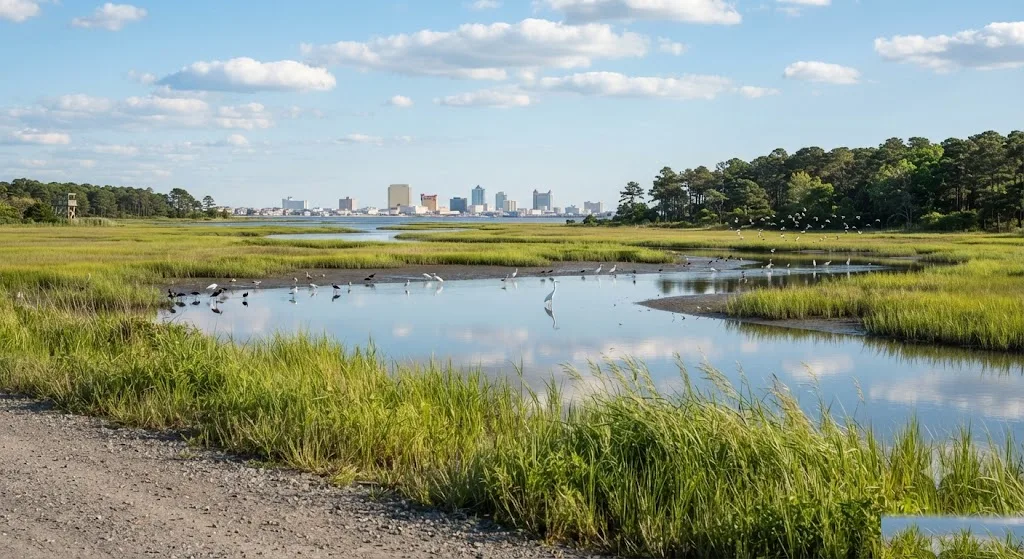
Our Edwin B. Forsythe National Wildlife Refuge guide covers practical planning for Edwin B. Forsythe National Wildlife Refuge New Jersey — best time to visit, getting there, and what to do on the ground.
As independent US travel authorities, our Roam States team has extensively explored the country's most vital natural spaces. Among them, the Edwin B. Forsythe National Wildlife Refuge New Jersey stands out as a critical jewel along the Atlantic Flyway. This isn't just another pretty landscape; it's a dynamic, living ecosystem, meticulously managed to provide crucial habitat for migratory birds and a diverse array of coastal wildlife. Our team has compiled this comprehensive guide to ensure your 2026 visit is as enriching and seamless as possible, steering clear of generic fluff to deliver confident, specific, and actionable advice.
Why Visit Edwin B. Forsythe National Wildlife Refuge
The Edwin B. Forsythe National Wildlife Refuge protects over 48,000 acres of southern New Jersey's coastal habitats, with more than 82% consisting of wetlands, primarily salt marsh interspersed with shallow coves and bays. This vast expanse makes it an indispensable stopover for tens of thousands of migratory birds during their spring and fall journeys along the Atlantic Flyway. We consider it a must-visit for anyone passionate about wildlife, particularly birdwatching and nature photography.
The refuge's strategic location ensures a spectacular display of avian life. Here, you can witness vast numbers of sandpipers, plovers, ducks, geese, and swans in their natural wetland environment. Beyond the birds, the diverse habitats support upland species like songbirds, woodcock, white-tailed deer, and box turtles. It's a place where the raw beauty of nature is on full display, offering a profound connection to the delicate balance of our ecosystems.
Who It's Best For
Edwin B. Forsythe National Wildlife Refuge is ideally suited for birdwatchers, nature photographers, and anyone seeking a tranquil escape into the wild. Families with an interest in environmental education will find the Visitor Information Center and various trails engaging. Solo travelers looking for quiet contemplation and avid hikers who appreciate easy, flat terrain will also enjoy the refuge. While pets are permitted on some trails, they are prohibited in sensitive nesting areas like Holgate and Little Beach Island, and must always be on a short leash where allowed. This ensures minimal disturbance to the fragile habitats and their inhabitants.
Getting There & Parking
The Edwin B. Forsythe National Wildlife Refuge headquarters and main public use area are located at 800 Great Creek Road, Oceanville, New Jersey, 08231.
- By Car:
- From US Route 9: If traveling on US Route 9 northbound, follow it to the traffic light at Great Creek Road. Turn right onto Great Creek Road, which leads directly to the refuge entrance.
- From US Routes 30 or 40: Turn left onto US Route 9 northbound, then follow the directions above.
- From Garden State Parkway (Southbound): Take Exit 48. You will exit onto US Route 9 South. Follow Route 9 for several miles, then turn left on Moss Mill Road. Follow it until it curves sharply left, then take the next right immediately after the curve and follow the road to the end. Alternatively, from Parkway Exit 48, you'll exit onto US Route 9 South. The refuge entrance is at the 3rd traffic light (Great Creek Road). Turn left on Great Creek Road, which ends at the Refuge.
- From Garden State Parkway (Northbound): Use the Atlantic City Service Center's access ramp to Jimmie Leeds Road. Turn right on Jimmie Leeds Road. Go to the traffic light at US Route 9 and turn left (north). Drive past the first set of lights. Shortly, you will come upon a V in the road. Take the right fork which is Leeds Point Road. Take it to the T intersection, then turn right.
- Public Transportation: NJ Transit Bus No. 559 (Lakewood/Atlantic City route) stops at Route 9 and Leeds Point Road. From there, walk 0.1 mile south on Route 9 and turn left onto Great Creek Road, continuing for 0.8 miles to the refuge entrance.
Parking: Ample parking is available at the Visitor Information Center, Leeds Eco-Trail, and other trailheads. The Wildlife Drive also has designated pull-offs for viewing.
Fees: Entrance to the Wildlife Drive is $4 per car, or $2 per pedestrian or bicyclist. Children under 16 are admitted free. Entrance passes can be purchased at the Visitor Information Center (cash or check only) or online via RecAccess. Fee-free days in 2026 include President's Day (February 16), Memorial Day (May 25), Flag Day/President Trump's birthday (June 14), Independence Day weekend (July 3-5), 110th Birthday of the National Park Service (August 25), Constitution Day (September 17), First Sunday of National Wildlife Refuge Week (October 11), Theodore Roosevelt's birthday (October 27), and Veteran's Day (November 11). Note that the fee waiver does not cover concessionaire or permit fees for activities like hunting or special tours.
Reservations: Generally, reservations are not required for general entry to the refuge. However, organized groups are requested to contact the refuge to register their visits in advance. Special activities like guided jitney tours may require advance registration. Hunting on the refuge is managed through an online lottery system, with lottery entry for deer hunts beginning July 14, 2026, and closing August 11, 2026.
Top Things to Do
The Edwin B. Forsythe National Wildlife Refuge offers a wealth of activities centered around its incredible natural beauty and abundant wildlife.
- Wildlife Drive Exploration: The highlight for many visitors is the 8-mile self-guided Wildlife Drive. This one-way auto tour takes you through diverse habitats, including saltwater marsh, freshwater habitat, and upland forest. It's internationally recognized as a birding hotspot, allowing you to spot shorebirds, waterfowl, and other coastal wildlife from the comfort of your car. There are observation towers at Gull Pond and Turtle Cove for enhanced viewing.
- Birdwatching: This is, without a doubt, one of the top things to do at Edwin B. Forsythe National Wildlife Refuge. With 322 species of birds observed, the refuge is a birder's paradise. Early mornings and late afternoons are best for bird activity. During migration seasons, the impoundments along the drive become a spectacle of shorebirds and waterfowl. The Visitor Information Center often has updates on recent sightings.
- Edwin B. Forsythe National Wildlife Refuge Hiking Trails: The refuge boasts over 8 miles of hiking trails, spanning from the deCamp Wildlife Trail in Brick Township to the Leeds Eco-Trail at headquarters in Galloway Township. These trails offer varied experiences through woodlands and wetlands.
- Akers Woodland Trail: A 0.4-mile loop, excellent for spotting migrating warblers and nesting birds.
- Leeds Eco-Trail & Boardwalk: This trail, accessible from the headquarters, includes a boardwalk extending over the salt marsh with views of the Atlantic City skyline.
- Bristow Trail (formerly Songbird Trail): Near the end of the auto tour, this trail spurs off around a small pond and connects to a longer, more intensive hike.
- Cedar Bonnet Island Trail: A 1.5-mile loop trail in Manahawkin, featuring wildflowers and good for all skill levels.
- Photography: The refuge offers incredible opportunities for nature and wildlife photography, from close-ups of birds to expansive landscape shots of the marshes and bays. Sunrise and sunset provide particularly stunning light.
- Kayaking and Canoeing: Non-motorized boat launches are available on Lily Lake, and motorized boat access at Scotts Landing boat launch, about 10 minutes north of refuge headquarters.
- Hunting and Fishing: These activities are permitted in designated locations in accordance with state and federal regulations, and specific refuge regulations. An Annual Refuge Hunting Permit is required for hunting.
- Visitor Information Center: Open Wednesday to Sunday, 10 AM to 2 PM (closed on federal holidays), the center offers interactive displays, an introductory film, and the Friends of Forsythe Gift Shop. You can also purchase passes here and get updated information on trails and the Wildlife Drive.
Best Time to Visit
The Edwin B. Forsythe National Wildlife Refuge is a year-round destination, but the best time to visit largely depends on what you hope to see.
- Spring (March-May): This is a prime time for birdwatching, as thousands of shorebirds use the refuge during their spring migration. Warblers can be found in the forested uplands. Ospreys, beach nesting birds, and purple martins are also active.
- Fall (September-November): Another peak migration season, with tens of thousands of birds stopping to rest and feed. The first two weeks of November often see over 100,000 ducks and geese filling the ponds and marshes. The absence of high humidity means fewer biting insects.
- Winter (December-February): Excellent for viewing waterfowl, including Black Ducks, Atlantic Brant, Buffleheads, and Common Goldeneyes. Bald Eagles are also present, and occasionally, Snowy Owls visit (though not every year). You can often view many species from your warm car along the Wildlife Drive.
- Summer (June-August): While still good for birding (Eastern Kingbirds, Great Blue Herons, Egrets, Tree Swallows, Cormorants are common), be prepared for biting insects, especially from mid-May through mid-October. Early mornings are recommended to avoid both the heat and the worst of the insects.
Always check the local weather forecast and the refuge's official website for any seasonal updates, road closures, or temporary changes before your visit.
Where to Stay Nearby
While there is no camping directly within the Edwin B. Forsythe National Wildlife Refuge, numerous lodging options are available in nearby towns, catering to various preferences and budgets. Our team recommends considering accommodations in Absecon, Galloway, Tuckerton, and Atlantic City.
For those seeking convenience and proximity to the refuge, towns like Absecon and Galloway offer several choices. The Atlantic City Boardwalk, while a bit further, provides a vibrant nightlife and dining scene, making it a popular base for visitors to the region.
- Absecon/Galloway: These towns are excellent choices for easy access to the refuge.
- Village Inn & Suites - Smithville: Located in Absecon, this guesthouse is within a 10-minute walk of Historic Smithville and Village Green. It offers free self-parking and complimentary wireless internet access.
- Comfort Suites Atlantic City North: Also in Absecon, this hotel offers an indoor pool, fitness center, and complimentary continental breakfast.
- Seaview, A Dolce Hotel: A 4-star option located 2.4 miles from the refuge, featuring a golf view restaurant, spa, outdoor tennis, and indoor pool.
- Holiday Inn Manahawkin/Long Beach Island: A 3-star hotel located 1.5 miles from the refuge.
- Tuckerton/Long Beach Island Area: For a more coastal or quaint experience, consider options further north.
- The Inn at LBI National: Located in Tuckerton, this is one of the closest options to the refuge.
- Hotel LBI: A charming 3.5-star hotel about a 10-minute walk from the refuge, offering an indoor pool, hot tub, and rooftop terrace.
- The Boulevard Hotel & Spray Beach Oceanfront Hotel: These options in Beach Haven (Long Beach Island) are further out but offer oceanfront amenities.
- Atlantic City: If you're looking to combine your nature retreat with entertainment, Atlantic City provides numerous hotels and resorts, though it's about a 20-30 minute drive from the refuge. Options include Ocean Casino Resort, Harrah's Resort Atlantic City, and Tropicana Atlantic City.
Prices for lodging near Edwin B. Forsythe National Wildlife Refuge can range from $160 to $706 per night, depending on location, time of year, and amenities. We recommend booking in advance, especially during peak migration seasons, to secure the best rates and availability.
For more ideas on where to stay and what to explore in the wider region, check out our guide to Best places in New Jersey or delve into the charm of The Jersey Shore.
Sample 2-Day Itinerary
Here’s how our team would plan a fulfilling two-day visit to the Edwin B. Forsythe National Wildlife Refuge New Jersey, maximizing wildlife viewing and exploration.
Day 1: Immersion in the Refuge
- Morning (Sunrise - 12:00 PM): Wildlife Drive & Key Trails
- Sunrise Start: Arrive at the refuge shortly after sunrise. Head directly to the 8-mile Wildlife Drive. The early morning light is ideal for photography, and wildlife is most active.
- Auto Tour & Photography: Drive slowly, utilizing the designated pull-offs. Keep your binoculars and camera ready. Focus on the impoundments for shorebirds, ducks, and geese. Don't miss the observation towers at Gull Pond and Turtle Cove.
- Leeds Eco-Trail: After the drive, park at the Visitor Information Center and walk the Leeds Eco-Trail and its boardwalk. This offers a different perspective of the salt marsh and potential views of the Atlantic City skyline.
- Lunch (12:00 PM - 1:00 PM): Picnic at the Refuge
- Pack a picnic lunch and enjoy it at one of the designated picnic areas near the Visitor Information Center. Facilities are limited on the drive itself, so come prepared with snacks and water.
- Afternoon (1:00 PM - 5:00 PM): Woodland Trails & Visitor Center
- Akers Woodland Trail: Explore this 0.4-mile loop trail, excellent for spotting migrating warblers and other woodland birds.
- Visitor Information Center: Spend time in the Visitor Information Center (open Wednesday-Sunday, 10 AM-2 PM) to learn more about the refuge's ecosystems through interactive displays and films. Browse the Friends of Forsythe Gift Shop.
- Evening: Dinner & Relaxation
- Head to a nearby town like Absecon or Galloway for dinner. Consider options like the Historic Smithville area for a charming evening.
Day 2: Further Exploration or Nearby Attractions
- Morning (Sunrise - 12:00 PM): Kayaking or Additional Trails
- Option A (Kayaking): Launch a non-motorized boat on Lily Lake for a peaceful paddle and unique water-level wildlife viewing.
- Option B (Hiking): Explore a different section of the refuge, such as the Bristow Trail for a longer, more intensive hike, or the Cedar Bonnet Island Trail for wildflowers.
- Lunch (12:00 PM - 1:00 PM): Local Eatery
- Enjoy lunch at a local restaurant in Oceanville or a neighboring town.
- Afternoon (1:00 PM - 5:00 PM): Nearby Attractions
- Option A (Coastal Charm): Head south to explore the Atlantic City Boardwalk for a change of pace, enjoying the ocean air and iconic attractions.
- Option B (History & Culture): Visit Historic Smithville and Village Green, a quaint shopping village with a rich history, offering a delightful contrast to the refuge's wilderness.
- Option C (Family Fun): If traveling with kids, consider Storybook Land in Egg Harbor Township, especially if there's a special event happening.
- Evening: Departure or Extended Stay
- Enjoy a final dinner in the area or begin your journey home, refreshed by your time in nature.
Last updated: 2026-07-08 by the Roam States team.