Bombay Hook NWR Travel Guide — Delaware
Our team at Roam States is dedicated to bringing you the most accurate and insightful travel guides for America's natural wonders. This guide focuses on Bombay Hook NWR Delaware, a critical stop on the Atlantic Flyway and a premier destination for wildlife enthusiasts. We’ve meticulously gathered the latest 2026 information on hours, fees, and activities to help you plan an unforgettable visit to this remarkable refuge.
Why Visit Bombay Hook NWR
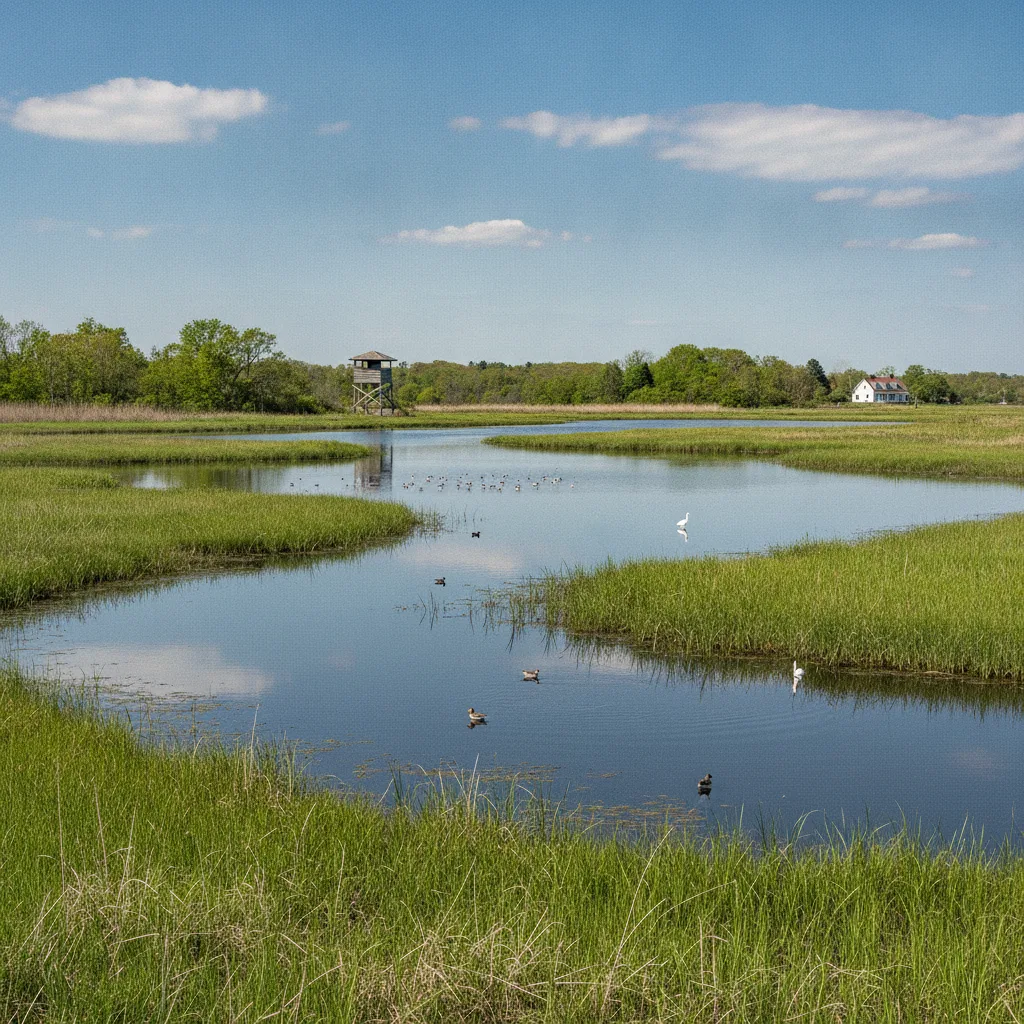
Is Bombay Hook NWR worth visiting? Absolutely. Bombay Hook National Wildlife Refuge, established in 1937, is a sprawling 16,251-acre sanctuary nestled along the Delaware Bay in Smyrna, Delaware. It stands as one of the largest remaining expanses of tidal salt marsh in the mid-Atlantic region, making it an indispensable habitat for migratory birds and diverse wildlife. The refuge's commitment to conservation has earned it recognition as a Ramsar Wetland of International Importance and a Globally Important Bird Area, highlighting its crucial role in the Atlantic Flyway. For those seeking an immersive natural experience, Bombay Hook offers unparalleled opportunities for birdwatching, wildlife photography, and a deep connection with nature.
The landscape itself is a testament to natural diversity, comprising not only vast tidal salt marshes but also freshwater impoundments, upland forests, brushy thickets, and grassy fields. This mosaic of habitats supports an incredible array of animal life, including over 278 species of migratory birds that feed and nest here. Beyond the avian spectacle, visitors can also spot white-tailed deer, beaver, muskrat, red fox, river otter, and woodchuck, particularly during the early morning and evening hours. The refuge’s 12-mile wildlife drive, coupled with observation towers and walking trails, ensures that whether you're a seasoned birder or a casual observer, you'll find ample opportunities to witness wildlife in its natural setting.
Who It's Best For
Bombay Hook NWR is a haven for nature lovers of all stripes, but it particularly shines for birdwatchers, wildlife photographers, and families looking for an accessible outdoor adventure. The refuge's reputation as "Delaware's single best-known birding site" is well-deserved, attracting enthusiasts from around the globe eager to witness the spectacular migrations of shorebirds, waterfowl, and raptors.
For photographers, the diverse habitats and abundant wildlife provide endless subjects, from sweeping landscapes of the salt marsh to intimate portraits of individual birds and mammals. The 12-mile wildlife drive allows for easy access to various viewing points, making it convenient to photograph from your vehicle or short walks to observation towers.
Families with children will find Bombay Hook NWR to be an engaging and educational destination. The drive-through aspect of the refuge is ideal for those with small children who may not be able to walk long distances. The interpretive exhibits at the visitor center and the easy walking trails offer opportunities for kids to learn about local ecosystems and wildlife up close. Just remember to prepare for insects, especially in warmer months, to ensure a comfortable visit for everyone.
Getting There & Parking
To reach Bombay Hook NWR, our team recommends setting your GPS to 2591 Whitehall Neck Road, Smyrna, DE 19977. The refuge is conveniently located about 10 miles from Dover, making it an easy drive from the state capital. If you're traveling from the west across the Chesapeake Bay Bridge, anticipate a drive of approximately an hour and 15 minutes.
Regarding parking, visitors will find ample space available at the visitor center and along the wildlife drive. The refuge is designed to be explored by car, with designated pull-offs and parking areas near trailheads and observation towers. This accessibility makes it easy to stop, observe, and photograph wildlife without extensive walking if desired. There are no specific reservation requirements for general entry or parking at Bombay Hook NWR.
Entrance Fees:
- Automobile or motorcycle and occupants: $4.00 per day.
- Hiking or bicycling: $2.00 per day (under 16 years old are free).
- Commercial van & bus tours: $20.00/vehicle with 20 people or less, $30.00 for a vehicle with more than 20 people.
- Bombay Hook Refuge Annual Pass: $12.00 per year.
- Active Duty Military Pass: FREE (must be issued by staff).
Bombay Hook also honors Federal Duck Stamps and Interagency Annual, Senior, and Access passes for federal recreational lands. It's important to note that all fees must be paid using cash or check, as credit and check cards are not accepted for fee payment. You can purchase passes at the refuge Visitor Center or conveniently online before your visit via Recreation.gov.
The refuge occasionally offers fee-free days in recognition of certain holidays and observances. In 2026, these include Independence Day Weekend (July 3-5), the 110th Birthday of the National Park Service (August 25), Constitution Day (September 17), the First Sunday of National Wildlife Refuge Week (October 11), Theodore Roosevelt's Birthday (October 27), and Veterans Day (November 11).
Refuge Hours:
- The wildlife drive is open daily from half an hour before sunrise to half an hour after sunset, year-round.
- The Visitor Center is open weekdays all year from 8:00 a.m. to 4:00 p.m.
- On weekends, the Visitor Center is open from 9:00 a.m. to 5:00 p.m. from early March to late June and from early September to mid-December, depending on volunteer availability.
- The Visitor Center is closed on Federal Holidays and on weekends during July, August, mid-December, January, and February.
It's always a good idea to check the refuge's website or call ahead for any potential road closures due to bad weather or hunting season, as certain areas may be temporarily inaccessible.
Top Things to Do
When planning your visit to Bombay Hook NWR, you'll discover a wealth of activities centered around its incredible natural beauty and abundant wildlife. Our team highly recommends focusing on these top things to do at Bombay Hook NWR:
The 12-Mile Wildlife Drive
The cornerstone of any visit to Bombay Hook is the 12-mile (approximately 8.5-mile loop) auto tour route. This scenic drive winds through diverse habitats, including freshwater impoundments, tidal salt marshes, woodlands, and fields, offering continuous opportunities for wildlife viewing right from your vehicle. Drive slowly, keep your windows down, and have your camera ready, as wildlife can appear at any moment. Many visitors find that multiple trips around the loop at different times of day yield new and exciting sightings.
Wildlife Observation and Birding
Bombay Hook is a premier birding destination, with 278 species identified on or near the refuge. From the auto tour route and observation towers, you can spot thousands of migrating shorebirds, ducks, geese, and wading birds like herons and egrets. Keep an eye out for bald eagles, especially around Shearness Pool, where they often nest. Beyond birds, the refuge is home to red foxes, beavers, muskrats, and white-tailed deer. Early mornings and late afternoons are generally the best times for spotting active animals.
Bombay Hook NWR Hiking Trails & Observation Towers
While the wildlife drive is a highlight, exploring the Bombay Hook NWR hiking trails offers a more intimate experience with the refuge's ecosystems. There are five main walking trails, two of which are handicapped accessible, and three observation towers located along the wildlife drive.
- Parsons Point Trail: A 1-mile walking trail through freshwater marsh and forest. Fox kits are often seen near their dens by this trailhead in spring.
- Bear Swamp Trail: A 0.25-mile accessible loop trail leading to a 30-foot observation tower and a floating platform, offering superb views of Bear Swamp Pool and the surrounding hardwood forest.
- Boardwalk Trail: Approximately 0.5 miles long and handicapped-accessible, this trail provides a unique opportunity to explore the tidal salt marsh, which covers 80% of the refuge. Look for fiddler crabs and shorebirds here.
- Forest Discovery Tree Trail: A 2.7-mile interpretive trail that guides visitors through old and new growth forests, with numbered trees along the route.
- Raymond Pool Trail: A short trail from the parking lot leads to the southern shore of Raymond Pool, where a 30-foot observation tower provides commanding views of the pool and surrounding woods.
These Bombay Hook NWR hiking trails range from easy to moderate and provide excellent opportunities for closer wildlife encounters. Remember to bring insect repellent, especially during warmer months, and wear appropriate clothing.
Wildlife Photography
Bombay Hook NWR is a prime location for wildlife photography. The diverse habitats and abundant wildlife, particularly birds, offer endless subjects. The brackish pools (Raymond, Shearness, Bear Swamp) are well-lit by the morning sun, while the tidal salt marsh to the east is best in the afternoon. Our team recommends bringing a zoom lens for distant subjects and a landscape lens for capturing sunrises over the marsh. Always adhere to refuge guidelines to avoid disturbing wildlife.
Allee House
Along the wildlife drive, you'll find the Allee House, a pre-Revolutionary War farmhouse listed on the National Register of Historic Places. While access may be limited, it offers a glimpse into the area's rich history and is a stop on Delaware's Coastal Heritage Greenway.
Best Time to Visit
The best time to visit Bombay Hook NWR largely depends on your interests, as the refuge offers unique experiences throughout the year. However, for peak wildlife concentrations, our team recommends visiting during the spring and fall migration seasons.
- Spring (March - May): This is a fantastic time for observing northbound migratory shorebirds, waterfowl, and songbirds. March sees a second peak for waterfowl, while April brings early shorebird migrants and the emergence of reptiles and amphibians. Shorebird concentrations are highest in May and June, coinciding with horseshoe crab egg-laying, a critical food source.
- Fall (September - November): Considered generally the most interesting period for visitors, as waterfowl populations, including over 100,000 ducks and geese, reach their peak. Southbound migrating shorebirds also visit the refuge during late summer and early fall.
- Summer (June - August): Wading birds like herons, egrets, and glossy ibis are most numerous during the summer months. However, be prepared for significant insect activity, especially mosquitoes and biting flies, which can be fierce in July and August. Visiting on windy days can help suppress fly activity.
- Winter (December - February): Offers opportunities to see large numbers of wintering waterfowl, including snow geese. The stark landscape can also provide unique photographic opportunities.
Regardless of the season, early mornings and late afternoons are prime times for spotting active animals and enjoying softer light for photography. Always check the refuge's website for any seasonal closures or special events before your visit.
Where to Stay Nearby
While Bombay Hook NWR camping is not available within the refuge itself, there are plenty of comfortable lodging options in nearby towns, particularly Smyrna and Dover, which serve as excellent bases for exploring the area. Our team recommends considering these locations for your stay:
Smyrna, Delaware
Smyrna is the closest town to Bombay Hook NWR, offering convenience and a local charm. You'll find a few hotel options here, providing easy access to the refuge for early morning or late afternoon wildlife viewing.
- Quality Inn Smyrna: A budget-friendly option in Smyrna with good guest ratings.
- Relax Inn Smyrna: Another option for those looking for straightforward accommodation in Smyrna.
In Smyrna, you can also find local dining options to fuel your adventures.
Dover, Delaware
Dover, the state capital, is located about 10-15 miles south of Bombay Hook NWR and offers a wider range of accommodations, from budget-friendly to more upscale hotels. It's a convenient hub with numerous restaurants and amenities.
- Comfort Inn & Suites Dover near Speedway: A popular choice, especially for families, located about 7 miles from the refuge.
- Microtel Inn & Suites by Wyndham Dover: A budget-friendly option approximately 10 miles from Bombay Hook.
- Red Roof Inn & Suites Dover Downtown: Another budget-friendly hotel about 7 miles from the refuge.
- Bally's Dover Casino Resort: For those seeking more amenities and entertainment, this resort is a well-regarded option.
- Hilton Garden Inn Dover / Home2 Suites Dover / Residence Inn Dover: These offer more extended stay or higher-end options.
Many hotels in Dover offer free parking and complimentary breakfast. When booking, look for hotels with "Fully refundable property" options for flexibility.
Camping Near Bombay Hook NWR
As mentioned, direct Bombay Hook NWR camping is not permitted within the refuge itself. However, nearby state parks offer excellent camping facilities for those who prefer an outdoor lodging experience:
- Killens Pond State Park: Located in Felton, about 30 minutes southwest of Bombay Hook, Killens Pond offers campsites for tents and RVs, as well as cabins. It also features a popular waterpark for summer fun.
- Cape Henlopen State Park: Further south near Lewes, approximately an hour's drive, this park offers beautiful beachfront camping and is ideal for those looking to combine a refuge visit with coastal activities.
- Trap Pond State Park: Located in Laurel, about an hour southwest, this park is known for its bald cypress trees and offers camping, glamping, and cabin rentals.
We recommend checking the Delaware State Parks website for current camping availability and to make reservations well in advance, especially during peak seasons.
Sample 2-Day Itinerary
To help you make the most of your visit to Bombay Hook NWR and the surrounding area, our team has crafted a sample 2-day itinerary. This plan balances wildlife viewing with other local attractions, offering a comprehensive Delaware experience.
Day 1: Immersion in Bombay Hook NWR
- Morning (Sunrise - 12:00 PM): Wildlife Drive & Birding
- Start your day early, ideally half an hour before sunrise, to catch the most active wildlife along the 12-mile Wildlife Drive. This is an excellent time for photography as well.
- Make frequent stops at the various impoundments (Raymond, Shearness, Bear Swamp Pools) and observation towers to scan for diverse bird species and other mammals.
- Spend time at the Visitor Center (open weekdays 8 AM - 4 PM, some weekends 9 AM - 5 PM) to pick up a map, learn about current sightings, and explore the interpretive exhibits.
- Lunch (12:00 PM - 1:30 PM): Picnic or Local Fare
- Enjoy a packed lunch at one of the refuge's designated picnic areas, or head into Smyrna for a quick bite. Food and drink are not available within the refuge, so plan accordingly.
- Afternoon (1:30 PM - 5:00 PM): Hiking & Deeper Exploration
- Choose one or two of the Bombay Hook NWR hiking trails, such as the Boardwalk Trail for a salt marsh experience or the Forest Discovery Tree Trail for an upland forest walk.
- Revisit a favorite spot along the Wildlife Drive, as animal activity can change throughout the day.
- Evening (5:00 PM onwards): Dinner & Relaxation in Dover
- Drive south to Dover (approx. 15 minutes) for dinner. Options range from casual eateries to more formal restaurants.
- Check into your accommodation in Dover.
Day 2: Local History, Aviation, and Coastal Charm
- Morning (9:00 AM - 12:00 PM): Air Mobility Command Museum
- After breakfast in Dover, immerse yourselves in aviation history at the Air Mobility Command Museum. See over 30 aircraft and, if visiting on the third Saturday from late April through October, enjoy "Open Cockpit Day" for an interactive experience.
- Lunch (12:00 PM - 1:30 PM): Downtown Dover
- Grab lunch in Historic Downtown Dover. You might explore the Dover Green & Heritage Park area.
- Afternoon (1:30 PM - 5:00 PM): Coastal Exploration or State Park Adventure
- Option A (Coastal): Head east towards the Delaware Bay for a different perspective of the coastal environment. While swimming is prohibited in Bombay Hook's impoundments, nearby launch spots allow for kayaking or canoeing in Delaware Bay. Alternatively, explore the charming coastal town of Lewes Beach & Historic Town, about an hour's drive south.
- Option B (Nature): For more natural beauty, consider a visit to Bellevue State Park (near Wilmington, about an hour north) or Brandywine Creek State Park for hiking and scenic views.
- Evening: Farewell Dinner
- Enjoy a final Delaware dinner, perhaps trying some local seafood if you're near the coast, before heading home or to your next destination.
This itinerary for Bombay Hook NWR Delaware provides a robust experience, but feel free to adjust it based on your interests and the season of your visit. For more ideas on places to visit in the state, check out our guide to the Best Places in Delaware.
Last updated: 2026-07-13 by the Roam States team.