Our team has thoroughly researched and visited the sites to bring you the most accurate and insightful information for your journey into a pivotal moment in American history.
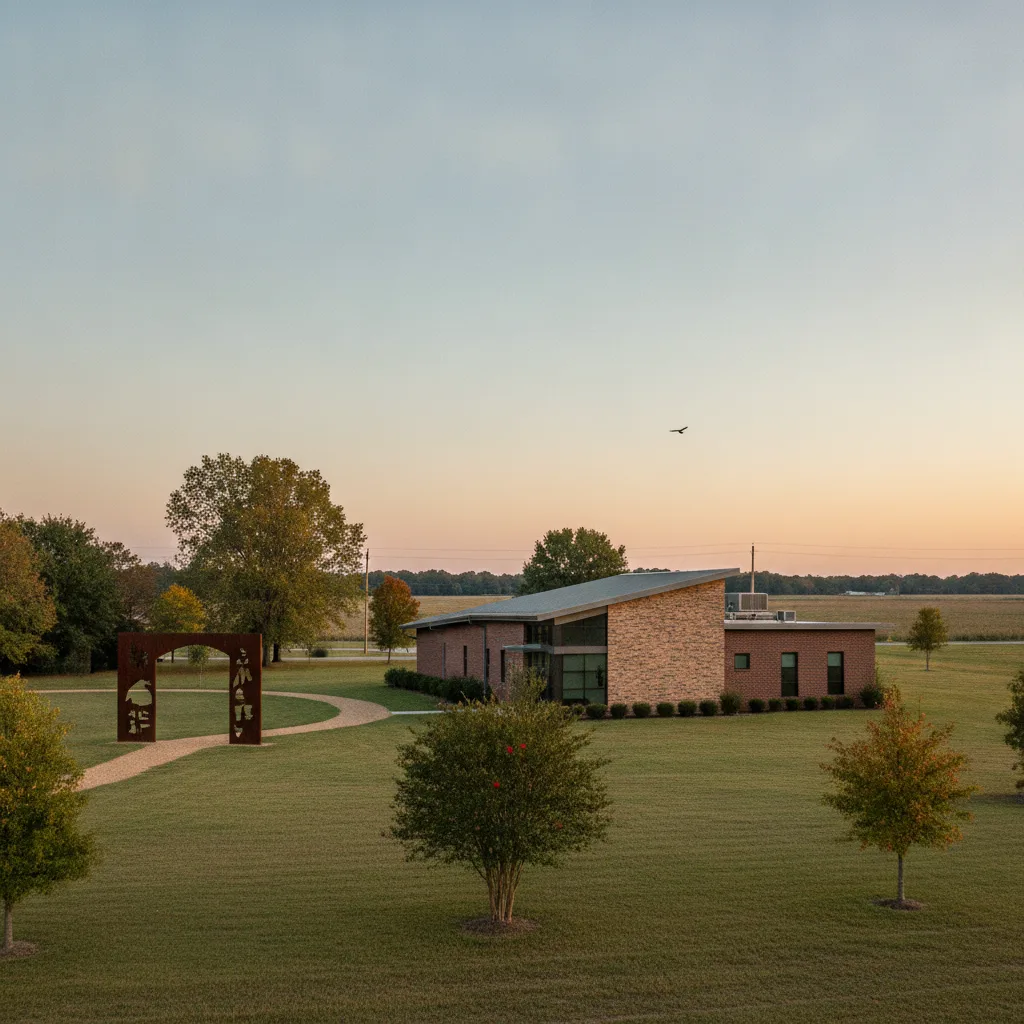
The Emmett Till Interpretive Center in Sumner, Mississippi, stands as a profound testament to a tragedy that ignited the Civil Rights Movement. It is more than just a museum; it's a beacon for restorative justice, dedicated to preserving the story of Emmett Till and his mother, Mamie Till-Mobley, and inviting visitors to confront the realities of 1955.
Why Visit Emmett Till Interpretive Center
Visiting the Emmett Till Interpretive Center is an essential pilgrimage for anyone seeking to understand the roots of the Civil Rights Movement and the enduring struggle for racial justice in America. This isn't a passive experience; it's an immersive journey into a dark chapter of history, handled with profound respect and a commitment to truth-telling. The center, an official nonprofit partner of the Emmett Till and Mamie Till-Mobley National Monument, works to break the silence surrounding the 1955 Emmett Till tragedy, promoting racial healing and reconciliation.
The exhibits and narratives compel visitors to engage with the story, not just as historical fact, but as a living legacy that continues to shape our present. We believe that by understanding the past, we are better equipped to pursue a future rooted in truth, dignity, and democratic values.
Who It's Best For
The Emmett Till Interpretive Center is best for history enthusiasts, civil rights advocates, students, educators, and anyone with a deep commitment to social justice and understanding America's complex racial history. It offers a powerful and often somber experience that resonates deeply. While the subject matter is heavy, the center's approach is educational and geared towards fostering dialogue and inspiring action. It's particularly impactful for those seeking to connect with the human stories behind the headlines of the Civil Rights era. We recommend it for individuals and groups who are prepared for a reflective and emotionally challenging, yet ultimately enlightening, visit.
How to Get There & Parking
The Emmett Till Interpretive Center is located in Sumner, Mississippi, a small town in the Mississippi Delta. Understanding how to get to Emmett Till Interpretive Center is crucial for planning your visit to this significant historical site. Sumner is approximately 83.5 miles from Memphis, Tennessee, and 116.2 miles from Jackson, Mississippi.
Driving Directions:
- From Memphis, Tennessee (approximately 2 hours): Travel south on I-55. Take exit 227 toward Highway 32 W. In Charleston, turn left on Clay Street (MS-35 S/Highway 32). After 1.6 miles, turn right to stay on Highway 32. In Webb, make another right turn onto US Highway 49 E after 16.8 miles before making a right onto Westbrooks Ave. in Sumner. Follow Westbrooks Ave. to S Railroad Ave. and then turn right onto N. Court St. The Emmett Till Interpretive Center will be on your left.
- From Jackson, Mississippi (approximately 3 hours): Take US-49 E all the way to Sumner, Mississippi. Make a right on S Railroad Ave. Then turn right on N Court St., where the Emmett Till Interpretive Center will be on your left.
Parking:
Parking at the Emmett Till Interpretive Center in Sumner, Mississippi, is generally available on-site or along the street. The center is located at 158 N Court St, Sumner, MS 38957. When visiting other associated sites within the Emmett Till and Mamie Till-Mobley National Monument, such as Graball Landing, expect limited roadside parking. We always recommend checking the official website or calling ahead for the most current parking information, especially for large groups or during special events, to ensure a smooth arrival. Knowing how to get to Emmett Till Interpretive Center and where to park will help you focus on the important experience ahead.
Top Things to Do
When you visit the Emmett Till Interpretive Center, you're embarking on a journey through a pivotal moment in American history. Our team has identified the top things to do at Emmett Till Interpretive Center and in the surrounding area to ensure a comprehensive and impactful experience.
- Explore the Interpretive Center: The main interpretive center in Sumner offers powerful exhibits that delve into Emmett Till's life, his brutal murder, and his mother Mamie Till-Mobley's courageous fight for justice. The "Let the World See Exhibit" is particularly moving, documenting Emmett's story and Mamie's activism. This is where the narrative truly comes alive, through artifacts, photographs, and poignant storytelling.
- Tour the Tallahatchie County Courthouse: Directly across the street from the Interpretive Center is the historic Tallahatchie County Courthouse, where the infamous trial of Emmett Till's alleged murderers took place in 1955. Restored to its 1955 appearance, the courthouse offers a powerful glimpse into the past, allowing visitors to stand in the very courtroom where injustice unfolded. Tours of the courthouse are often booked through the Interpretive Center.
- Visit Graball Landing: A short drive from Sumner, Graball Landing in Glendora is believed to be the site where Emmett Till's body was recovered from the Tallahatchie River. This quiet, reflective spot, now part of the National Monument, features a historic marker and offers a somber connection to the tragic event.
- Discover the Emmett Till Historic Intrepid Center (ETHIC) in Glendora: While the Interpretive Center focuses on the trial and Mamie Till-Mobley's legacy, the ETHIC in Glendora provides further context, including exhibits about Till's life and death and the Civil Rights Movement. It's housed in the building that held the gin from which Till's killers reportedly took the fan and wire used to weigh down his body. You can also see a replica of Bryant's Grocery here.
- Utilize the Self-Guided Tour App: The Emmett Till Interpretive Center offers a free smartphone app for a self-guided tour of other related sites. This is an excellent way to explore the broader landscape of the Emmett Till story at your own pace.
Beyond the immediate historical sites, there are other things to do in Sumner and the surrounding Mississippi Delta region. Sumner itself is a small, quiet town, but its significance is immense. Exploring the town square around the courthouse provides a sense of the community at the time of the trial. For a broader understanding of Mississippi's civil rights history, consider extending your trip to Jackson to visit the Mississippi Civil Rights Museum. We highly recommend dedicating ample time to fully absorb the weight and importance of these sites, making the most of the things to do at Emmett Till Interpretive Center and its related locations.
Best Time to Visit
The best time to visit the Emmett Till Interpretive Center is during the spring (March to May) or fall (September to November). During these seasons, the weather in the Mississippi Delta is typically mild and pleasant, making it more comfortable for exploring both indoor exhibits and outdoor historical markers. Summers can be very hot and humid, with temperatures often exceeding 90°F (32°C), which might detract from the experience, especially when visiting sites like Graball Landing. Winters are generally mild but can be damp and chilly.
The center is open Tuesday through Saturday, from 12 PM to 5 PM CT. It is closed on Sundays and Mondays. We recommend planning your visit during these hours to ensure full access to the exhibits and the opportunity to participate in guided tours of the courthouse. Keep in mind that appointments are needed for groups of 10 or more, with 24 hours advance notice.
Where to Stay Nearby
Sumner, Mississippi, is a small town, and direct lodging options are limited. For visitors to the Emmett Till Interpretive Center, we recommend looking for accommodations in nearby towns that offer a greater selection of hotels and amenities. Clarksdale, approximately 20 miles north, is a popular choice, known for its rich blues history and a range of hotels, including some charming boutique options and chain hotels like the Clarksdale Inn.
Other nearby towns that might offer lodging include Tutwiler (about 5 miles away) or Charleston (about 18 miles away), though options may be more limited. If you prefer a larger city with more amenities and dining choices, Memphis, Tennessee, is about a two-hour drive north, and Jackson, Mississippi, is about a three-hour drive south. These cities offer a full spectrum of accommodations, from budget-friendly to luxury hotels. When planning your trip, consider your comfort level with driving to and from Sumner each day.
Sample 2-Day Itinerary
To fully immerse yourself in the profound history surrounding the Emmett Till Interpretive Center, our team has crafted a sample 2-day itinerary. This plan balances reflection at the main sites with exploration of the broader Mississippi Delta's historical and cultural landscape.
Day 1: The Heart of the Story in Sumner and Glendora
- Morning (12:00 PM - 3:00 PM): Emmett Till Interpretive Center & Tallahatchie County Courthouse. Begin your visit at the Emmett Till Interpretive Center in Sumner. Dedicate ample time to explore the exhibits, which vividly recount Emmett Till's story and Mamie Till-Mobley's courageous advocacy. Afterwards, take a guided tour of the adjacent Tallahatchie County Courthouse, restored to its 1955 appearance, where the trial of Till's murderers took place. This courtroom experience is deeply impactful.
- Late Afternoon (3:00 PM - 5:00 PM): Graball Landing & Emmett Till Historic Intrepid Center (ETHIC). Drive south to Glendora (approx. 10-15 minutes). First, visit Graball Landing on the Tallahatchie River, the somber site where Emmett Till's body was discovered. Then, proceed to the Emmett Till Historic Intrepid Center (ETHIC) in Glendora for additional exhibits and context, including a replica of Bryant's Grocery.
- Evening: Dinner and Reflection in Clarksdale. Head to Clarksdale (approx. 20-minute drive from Glendora). Enjoy dinner at a local restaurant. Clarksdale offers a range of dining options and is an excellent base for exploring the Delta.
Day 2: Mississippi Delta Civil Rights & Cultural Immersion
- Morning: Clarksdale Blues & History. Start your day in Clarksdale, a city steeped in blues history. Visit the Delta Blues Museum to understand the cultural backdrop of the region. Consider a drive along the Mississippi Blues Trail markers scattered throughout the area.
- Late Morning/Early Afternoon: Money, Mississippi. Drive to Money, Mississippi (approx. 30 minutes south of Sumner). While there is no formal interpretive center here, historical markers denote the site of Bryant's Grocery, where Emmett Till allegedly whistled at Carolyn Bryant. This site is a powerful, though often unsettling, reminder of the incident that led to his murder.
- Afternoon: Further Civil Rights Exploration. Depending on your interest and time, you have a few options:
- Option A (Closer): Explore more of the local Civil Rights Trail sites in the Delta.
- Option B (Further): Drive to Jackson (approx. 2.5-3 hours from Money) to visit the Mississippi Civil Rights Museum, which offers a comprehensive overview of the movement across the state and features original doors from Bryant's Grocery.
- Evening: Departure or Extended Stay. Depart from the Delta, or if you chose to visit Jackson, consider staying overnight there to explore more of Mississippi's capital city. For those interested in other significant Mississippi destinations, consider adding a visit to Vicksburg National Military Park or the historic homes of Natchez to your broader Plan Your US Trip itinerary.
Our team at Visit America firmly believes that the Emmett Till Interpretive Center Mississippi is worth visiting. It is a profoundly important site that demands our attention and reflection. The center meticulously preserves a critical, painful, and ultimately transformative moment in American history. By confronting the realities of 1955 and understanding the bravery of Mamie Till-Mobley, visitors gain invaluable insight into the ongoing fight for civil rights and racial justice. The interpretive center, alongside the Tallahatchie County Courthouse and other related sites, offers an unparalleled educational experience that fosters empathy and inspires action. If you are seeking a destination that offers deep historical significance and encourages personal growth and understanding, the Emmett Till Interpretive Center Mississippi is absolutely worth visiting. It’s an experience that stays with you long after you leave, cementing its place as an essential stop on any journey through America’s Civil Rights story.
FAQ
Emmett Till Interpretive Center tips
We recommend dedicating at least 2-3 hours for a thorough visit to the Emmett Till Interpretive Center and the Tallahatchie County Courthouse. Wear comfortable shoes as you'll be doing some walking. Be prepared for a deeply emotional experience; the exhibits are powerful and unflinching. Consider visiting during off-peak hours (earlier in the day or later in the afternoon) for a more contemplative experience. Always check the official website for current hours, any special events, or temporary closures before your visit.
Emmett Till Interpretive Center parking
Parking is available at the Emmett Till Interpretive Center, located at 158 N Court St, Sumner, MS 38957. Generally, visitors can find parking on-site or along the street in the vicinity of the center and courthouse. For other sites within the Emmett Till and Mamie Till-Mobley National Monument, such as Graball Landing, parking may be limited to roadside availability. Large groups should contact the center in advance to inquire about specific parking arrangements.
best time to visit Emmett Till Interpretive Center
The best time to visit the Emmett Till Interpretive Center is during the spring (March-May) or fall (September-November) when the weather in the Mississippi Delta is most agreeable. Summers can be excessively hot and humid. The center is open Tuesday through Saturday, 12 PM to 5 PM CT. Visiting earlier in the afternoon on a weekday might offer a less crowded experience.
Emmett Till Interpretive Center hours and fees
The Emmett Till Interpretive Center is open Tuesday through Saturday, from 12 PM to 5 PM CT. It is closed on Sundays and Mondays. As of 2026, there is no entrance fee required to access the Emmett Till and Mamie Till-Mobley National Monument, which includes the Interpretive Center and the Tallahatchie County Courthouse. However, some tours, particularly guided tours of the Tallahatchie County Courthouse, may have a small fee, typically around $5. Group visits (10 or more people) require an appointment 24 hours in advance.
Emmett Till Interpretive Center travel guide
Our comprehensive travel guide to the Emmett Till Interpretive Center emphasizes its role as a critical historical and cultural site in Sumner, Mississippi. We recommend planning your visit during spring or fall for comfortable weather. The center is open Tuesday-Saturday, 12 PM-5 PM CT, with no entrance fee for the National Monument sites. Allow at least 2-3 hours for the Interpretive Center and courthouse. Consider staying in nearby Clarksdale for more lodging and dining options. Don't miss Graball Landing and the Emmett Till Historic Intrepid Center in Glendora for a complete understanding of the Till story. Utilize the self-guided tour app for additional context.
Emmett Till Interpretive Center itinerary
A recommended itinerary for the Emmett Till Interpretive Center involves dedicating your first day to the core sites: the Interpretive Center itself, the Tallahatchie County Courthouse in Sumner, Graball Landing, and the Emmett Till Historic Intrepid Center in Glendora. On a second day, explore the broader Mississippi Delta, including the blues history of Clarksdale and the historical markers in Money, Mississippi. For a deeper dive into civil rights, consider extending your trip to the Mississippi Civil Rights Museum in Jackson. This approach ensures a thorough and reflective experience of the profound legacy of Emmett Till.
Last updated: 2026-07-05 by the Visit America team.