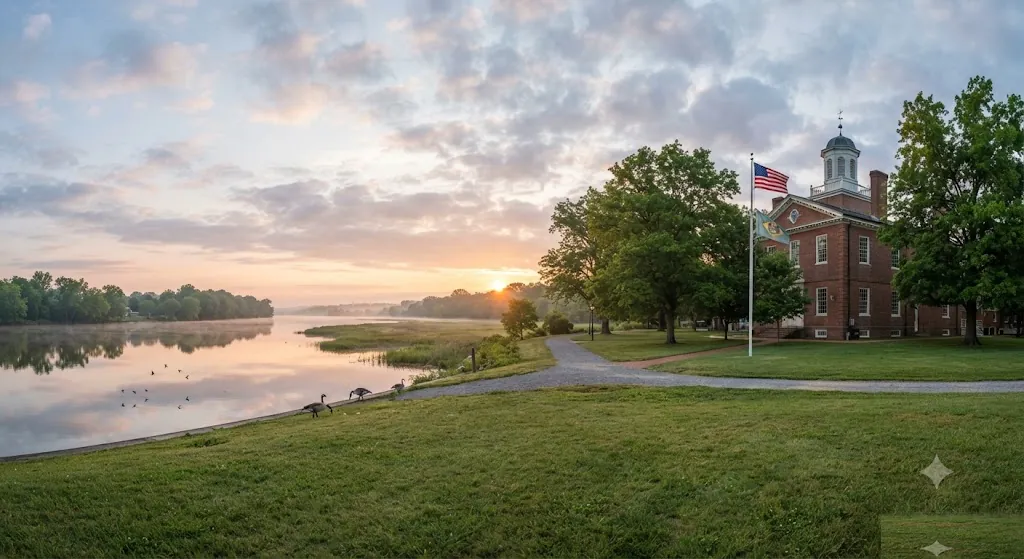
Our First State National Historical Park guide covers practical planning for First State National Historical Park Delaware — best time to visit, getting there, and what to do on the ground.
First State National Historical Park Travel Guide — Delaware
Delaware holds a unique place in American history as the first state to ratify the U.S. Constitution, and the First State National Historical Park Delaware beautifully commemorates this pivotal role. Unlike traditional national parks with a single, expansive wilderness, this park is a collection of historic sites spread across the state, each telling a distinct part of Delaware's journey from early European settlement to becoming the "First State." Our team finds that this dispersed nature offers a fascinating road-trip style exploration, allowing visitors to delve into centuries of history while experiencing diverse landscapes, from the rolling hills of the Brandywine Valley to the charming coastal town of Lewes. We've compiled this guide to help you navigate the various units, understand their significance, and plan a memorable trip.
Why Visit First State National Historical Park
Is First State National Historical Park worth visiting? Absolutely. For history enthusiasts, it's an unparalleled opportunity to walk in the footsteps of the nation's founders and witness the places where crucial decisions were made. The park offers a deep dive into the colonial and revolutionary periods, showcasing Delaware's unique contributions to the birth of the United States. We recommend it for anyone interested in American history, from the early Swedish and Dutch settlements to the ratification of the Constitution. The park's diverse sites, including the New Castle Court House Museum and the John Dickinson Plantation, provide a rich, multifaceted narrative that brings history to life. It's a journey through time that truly underscores the significance of the First State National Historical Park.
Who It's Best For
First State National Historical Park caters to a wide range of visitors. History buffs will revel in the detailed exhibits and preserved sites, offering a tangible connection to the past. Families with school-aged children will find the park an engaging educational experience, with many sites providing interpretive programs and the opportunity to earn a Junior Ranger badge. The distributed nature of the park, with short drives between sites, helps keep younger visitors engaged and prevents "museum fatigue". Nature lovers and outdoor enthusiasts will appreciate the Brandywine Valley unit, which offers extensive trails for hiking, biking, and horseback riding through scenic woodlands and meadows. We also find it ideal for those who enjoy a leisurely pace, combining historical exploration with charming small-town experiences in places like Historic New Castle and Dover.
Getting There & Parking
Understanding how to get to First State National Historical Park requires recognizing its unique structure: it's not a single destination but a collection of sites across Delaware. The park units are primarily located in New Castle, Kent, and Sussex counties. We recommend planning your route to each specific site, as distances can vary significantly. For those flying in, Philadelphia International Airport (PHL) is a convenient gateway to the northern units, while Baltimore/Washington International Thurgood Marshall Airport (BWI) or Salisbury Regional Airport (SBY) can serve as entry points for the central and southern sites. Driving is essential for exploring the park, as public transportation between units is limited.
Parking at First State National Historical Park Units:
- Sheriff's House Welcome Center (Historic New Castle): This central welcome center has parking available in Historic New Castle. We recommend exploring the town on foot once you've parked.
- New Castle Court House Museum: Parking is available on Delaware Street, with approximately 30 spaces.
- Fort Christina (Wilmington): Free parking is available across the road from the park at the Kalmar Nyckel Foundation's large parking lot at 1124 East 7th Street, Wilmington, DE 19801. Park entry is free.
- Old Swedes Church (Wilmington): Parking for Old Swedes Historic Site is available on the right in a cobblestone parking lot on Church Street.
- Brandywine Valley (Woodlawn Property): This unit offers several parking lots, including the Smith Bridge parking lot (82 Brandywine Creek Rd, Wilmington, DE 19803), which is the largest within the park and provides access to picnic areas and Brandywine Creek. Parking in the Brandywine Valley is free, though lots can fill quickly on weekends from Memorial Day to Labor Day.
- The Dover Green: The Green is surrounded by street parking and several public lots.
- John Dickinson Plantation (Dover): Ample free parking is available on-site.
- Ryves Holt House (Lewes): Parking is typically available in the historic district of Lewes.
We always advise checking the official National Park Service website for the most current information regarding specific site addresses, parking regulations, and any potential road closures before your visit. Understanding how to get to First State National Historical Park is the first step to a seamless historical exploration.
Top Things to Do
Exploring the diverse units of First State National Historical Park offers a rich tapestry of experiences, from walking through colonial streets to stepping inside centuries-old buildings. Our team has curated a list of the absolute must-do activities to ensure you make the most of your visit to this unique park. These are the core things to do at First State National Historical Park, each offering a distinct window into Delaware's pivotal role in American history. We recommend allowing at least an hour or two at each major site to fully absorb the history and atmosphere. Remember to check individual site websites or the NPS site for the most up-to-date operating hours and any potential reservation requirements for 2026.
- Explore Historic New Castle: This perfectly preserved colonial town is often cited as a highlight. Wander the cobblestone streets, visit the New Castle Court House Museum (open Wednesday-Saturday, 10 AM-3:30 PM; Sunday 1:30 PM-4:00 PM; closed Monday and Tuesday), where Delaware declared independence and Caesar Rodney began his famous ride. Admission to the New Castle Court House Museum is free. Tour the Sheriff's House Welcome Center (open Thursday-Saturday, 9:00 AM-4:30 PM), which provides exhibits and staff to offer details about visiting partner sites. The Read House & Gardens, while not officially part of the national park, is a stunning Federal-period estate nearby that complements the experience beautifully (check their website for 2026 hours and fees, as they are managed by the Delaware Historical Society). For more on this charming area, see our guide to Historic New Castle.
- Stroll the Dover Green: The heart of Delaware's capital, the Dover Green, is where the U.S. Constitution was ratified. The Green is open daily from sunrise to sunset. Visit The Old State House (open Wednesday-Sunday from 10:00 AM-3:00 PM, with guided tours on the hour; admission is free), and imagine the debates that took place within its walls. Guided walking tours of historic downtown Dover, starting at the John Bell House (43 The Green), are offered Thursday-Saturday at 11:00 AM and 2:00 PM for $6.50 per person (children 8 and under are free). On the first Saturday of every month, these guided walking tours are offered at no cost. The surrounding area offers a charming glimpse into colonial life. For a deeper dive into this area, check out our guide to Dover Green & Heritage Park.
- Discover the John Dickinson Plantation: Step back in time at the John Dickinson Plantation (visitor center and grounds open Wednesday-Saturday, 10:00 AM-4:00 PM; closed Monday and Sunday, with outdoor visitation only on Tuesdays), the preserved home of one of the nation's key Founding Fathers, known as the "penman of the Revolution". Admission is free. Guided tours of the mansion are available at 10:30 AM, 11:30 AM, 1:30 PM, 2:30 PM, and 3:30 PM. Explore the manor house, outbuildings, and slave quarters to understand the complexities of 18th-century life and the path to revolution.
- Visit Old Swedes Church and Fort Christina: In Wilmington, experience the nation's oldest church still in its original foundation, Old Swedes Church (Holy Trinity Church). The Old Swedes Historic Site is open Thursdays, Fridays, and Saturdays from 10:00 AM to 3:00 PM. Tours are available by reservation and have a small fee: Adult $12, Student (6-15) $7, under 6 free. Note that the site is closed from January 1 to March 5, 2026. Nearby, Fort Christina National Memorial marks the landing site of the first Swedish settlers in 1638. The park is open from Memorial Day through Labor Day, Tuesday–Sunday, 10:00 AM to 4:00 PM, with reduced hours on Saturdays and Sundays through October. Park entry to Fort Christina is free.
- Experience the Ryves Holt House: Located in Lewes, the Ryves Holt House is believed to be the oldest surviving house in Delaware. While privately managed, it offers a glimpse into early European settlement on the coast. We recommend checking their website for 2026 hours and fees.
First State National Historical Park Hiking Trails
While First State National Historical Park is not primarily a wilderness park, several units offer excellent opportunities for outdoor recreation. The Brandywine Valley unit, also known as the Woodlawn property, is a highlight for those seeking First State National Historical Park hiking trails. This 1,100-acre area features over 18 miles (29 kilometers) of recreational trails through woodlands and along the Brandywine Creek. These trails are generally open from sunrise to sunset and are free to access. We find these First State National Historical Park hiking trails to be perfect for a leisurely stroll, a brisk walk, or even horseback riding and biking, offering a natural counterpoint to the historical sites. Another option for First State National Historical Park hiking trails can be found around the John Dickinson Plantation, with interpretive paths that weave through the historic landscape. The park is actively developing a long-range trails plan to accommodate diverse user groups and highlight cultural and natural resources. We recommend wearing appropriate clothing, bringing water, and being prepared for varied terrain, including hills, rocks, roots, and potential mud. Parking for the Brandywine Valley trails is available at various lots, including the Smith Bridge Picnic Area. For more information on outdoor activities in the state, consider our guide to Best places in Delaware.
Best Time to Visit
The best time to visit First State National Historical Park largely depends on your priorities. Spring (April-May) and Fall (September-October) offer the most pleasant weather for exploring the outdoor sites and walking through historic towns like New Castle and Dover. The Brandywine Valley is particularly beautiful during these seasons, with blooming flowers in spring and vibrant foliage in fall. Temperatures are mild, making it comfortable for extended periods outdoors.
Summer (June-August) is popular, especially for families, but can bring higher temperatures and humidity. Many sites, particularly Fort Christina, operate extended hours during the summer season. If you visit in summer, we recommend starting your day early to beat the heat and crowds. Winter (November-March) can be quiet, with fewer crowds, but some outdoor programming may be limited, and Old Swedes Historic Site is closed from January 1 to March 5, 2026. Always check individual site hours before your visit, as they can vary seasonally.
Where to Stay Nearby
Given the dispersed nature of First State National Historical Park, choosing the right base for First State National Historical Park lodging is crucial. We recommend staying in areas that offer convenient access to multiple park units and a good selection of amenities. Here are our top recommendations for First State National Historical Park lodging:
- Wilmington: For visitors focusing on the northern units (Fort Christina, Old Swedes Church, Brandywine Valley), Wilmington makes an excellent base. It offers a wide range of hotels, from budget-friendly to upscale, along with diverse dining options and cultural attractions. You can also easily access other nearby attractions like the Hagley Museum and Library or Nemours Estate.
- Historic New Castle: For a truly immersive historical experience, consider staying in or near Historic New Castle. This charming town offers a few boutique inns and bed-and-breakfasts that provide a unique colonial ambiance. It's perfect for those who want to wander cobblestone streets and enjoy the historic atmosphere after the day-trippers leave.
- Dover: If your itinerary leans heavily towards the central units (Dover Green, John Dickinson Plantation), Dover is the logical choice. As the state capital, it has a good selection of chain hotels and local eateries. It also provides a central point for exploring other central Delaware attractions like the Air Mobility Command Museum.
- Lewes/Coastal Delaware: For those who want to combine history with a beach vacation, staying in Lewes or nearby coastal towns like Rehoboth Beach or Bethany Beach is an option. Lewes itself is historic and home to the Ryves Holt House. This allows for a blend of historical exploration and relaxation by the ocean, though it requires more driving to reach the northern park units.
When considering First State National Historical Park lodging, we always advise booking your accommodations in advance, especially during peak seasons (summer and fall) to ensure availability and secure the best rates.
Sample 2-Day Itinerary
To truly appreciate the breadth of First State National Historical Park, we recommend dedicating at least two full days. This itinerary balances historical immersion with scenic drives, allowing you to experience the park's diverse offerings. Remember to verify operating hours and any reservation requirements for 2026 for each specific site before your visit. For a more relaxed trip, consider extending your stay to three days, allowing more time at each location and for exploring other Delaware attractions like Winterthur Museum & Estate or Hagley Museum and Library.
Day 1: Northern Delaware – Wilmington & New Castle
- Morning (9:00 AM - 12:00 PM): Swedish Roots in Wilmington. Begin your day in Wilmington. Visit Old Swedes Church (Holy Trinity Church), the nation's oldest church in continuous use on its original foundation. Allow an hour to explore the church and its historic graveyard. Head to Fort Christina National Memorial, a short drive away, marking the landing site of the first Swedish colonists. Spend 30-45 minutes here, taking in the monument and riverside setting.
- Lunch (12:00 PM - 1:00 PM): Enjoy lunch at a local eatery in Wilmington.
- Afternoon (1:00 PM - 5:00 PM): Colonial New Castle. Drive south to Historic New Castle (approx. 20-minute drive). Park your car and spend the afternoon exploring this remarkably preserved colonial town on foot. Tour the New Castle Court House Museum (free admission), where Delaware declared independence. Visit the Sheriff's House adjacent to the courthouse. Wander the cobblestone streets, admire the historic architecture, and consider a self-guided walking tour of the town. If time permits, visit the Read House & Gardens (check for 2026 hours/fees), a grand Federal-period estate.
- Evening: Enjoy dinner in New Castle or return to Wilmington for more dining options.
Day 2: Central & Southern Delaware – Dover & Lewes
- Morning (9:00 AM - 12:30 PM): Dover – The First State Capital. Drive south to Dover (approx. 45-60 minutes from New Castle/Wilmington). Begin at the Dover Green, the historic heart of the city. Tour The Old State House (free admission), where the U.S. Constitution was ratified. Allow 1-1.5 hours for the tour and exploring the Green. Drive to the John Dickinson Plantation (approx. 15 minutes southeast of downtown Dover). Spend 1.5-2 hours exploring the plantation, manor house, and outbuildings (free admission).
- Lunch (12:30 PM - 1:30 PM): Have lunch in Dover.
- Afternoon (1:30 PM - 5:00 PM): Coastal History in Lewes. Continue your drive south to Lewes (approx. 60-75 minutes from Dover). Visit the Ryves Holt House, believed to be Delaware's oldest surviving house (check for 2026 hours/fees). Explore the charming town of Lewes, perhaps taking a stroll along Lewes Beach. Consider visiting nearby Cape Henlopen State Park for scenic views and a walk on the beach.
- Evening: Enjoy dinner in Lewes or another coastal town.
FAQ
First State National Historical Park camping
First State National Historical Park itself does not offer camping facilities within its units. As a collection of historic sites, the focus is on cultural and historical interpretation rather than wilderness camping. However, visitors looking to camp near the park have several excellent options in Delaware. Nearby state parks like Cape Henlopen State Park in Lewes, Killens Pond State Park in Felton, and Lums Pond State Park in Bear offer tent and RV camping, cabins, and yurts. These state parks provide a natural setting and amenities, often within a reasonable driving distance of the historical park units. We recommend booking well in advance, especially for summer and fall weekends, as Delaware's state park campgrounds are very popular.
things to do in Various locations including Wilmington, New Castle, Dover
Beyond the direct units of First State National Historical Park, Wilmington, New Castle, and Dover offer a wealth of additional attractions. In Wilmington, consider visiting the Wilmington Riverfront for dining and entertainment, or exploring the Brandywine Creek State Park for more outdoor activities. New Castle boasts numerous historic homes and charming shops along its cobblestone streets. Dover, as the state capital, offers tours of Legislative Hall (free guided tours available Wednesday-Friday, 10 AM-1 PM, and on First Saturdays). You can also visit the Air Mobility Command Museum, which is a short drive from downtown Dover. For a comprehensive overview of the state, be sure to check out Visit Delaware.
First State National Historical Park with kids
Visiting First State National Historical Park with kids can be a rewarding educational experience. Many of the sites, particularly the New Castle Court House Museum and The Old State House in Dover, offer engaging exhibits and interpretive programs designed to appeal to younger audiences. The John Dickinson Plantation provides a hands-on look at 18th-century farm life. We find that the distributed nature of the park, with short drives between sites, helps break up the day and keep children engaged. The open spaces at Fort Christina and the Dover Green also provide room for kids to run around. Don't forget to ask about the Junior Ranger program at visitor centers, which offers a fun way for children to learn and earn a badge.
best hotels near First State National Historical Park
The best hotels near First State National Historical Park depend on which units you plan to visit most extensively. For the northern units (Wilmington, New Castle, Brandywine Valley), we recommend staying in Wilmington, which offers a wide range of national chain hotels and boutique options. Historic New Castle also has charming bed-and-breakfasts for a more intimate experience. For the central units (Dover Green, John Dickinson Plantation), Dover provides various hotel choices, including well-known brands. If you plan to visit the Ryves Holt House in Lewes and enjoy the coast, hotels in Lewes, Rehoboth Beach, or Bethany Beach would be ideal. Always consider the driving distances between sites when selecting your accommodation.
First State National Historical Park tips
Our top tips for visiting First State National Historical Park include planning your itinerary carefully due to the dispersed nature of the sites. We highly recommend wearing comfortable walking shoes, as you'll be doing a fair amount of walking, especially in New Castle and Dover. Always check the official National Park Service website or individual site websites for the most current 2026 operating hours, any entrance fees (many sites are free, but some associated attractions may charge), and specific parking information. Consider packing snacks and water, especially when traveling between units. Finally, embrace the road trip aspect of this park; the drives between locations offer a chance to see more of Delaware's diverse landscapes and charming towns. For more general travel advice, consult our Plan Your US Trip guide or our USA Road Trip Planner.
where to stay near First State National Historical Park
When deciding where to stay near First State National Historical Park, we suggest considering the geographical clusters of the park's units. For sites in northern Delaware, such as Fort Christina, Old Swedes Church, and the Brandywine Valley, Wilmington provides the most comprehensive selection of hotels and dining. If you prefer a more historic and quaint atmosphere, staying directly in or around Historic New Castle is an excellent choice. For the central Delaware sites like The Dover Green and John Dickinson Plantation, the city of Dover offers convenient lodging options. Lastly, if your visit includes the Ryves Holt House in Lewes and you wish to enjoy Delaware's beautiful coastline, consider accommodations in Lewes or nearby beach towns. Planning your base strategically will minimize travel time and enhance your overall experience.
Conclusion
First State National Historical Park offers a profoundly enriching journey through the foundational history of the United States, anchored in Delaware's crucial role as the first state to ratify the Constitution. From the colonial charm of New Castle to the revolutionary spirit of the Dover Green and the early settlements in Wilmington, each unit provides a unique window into America's past. Our team encourages you to embrace the multi-site nature of this park, planning your visits thoughtfully to maximize your historical immersion and appreciation for Delaware's diverse heritage. It's a testament to the enduring legacy of the "First State," and a destination we wholeheartedly recommend for any traveler seeking a deeper understanding of American origins.
Last updated: 2026-07-13 by the Roam States team.