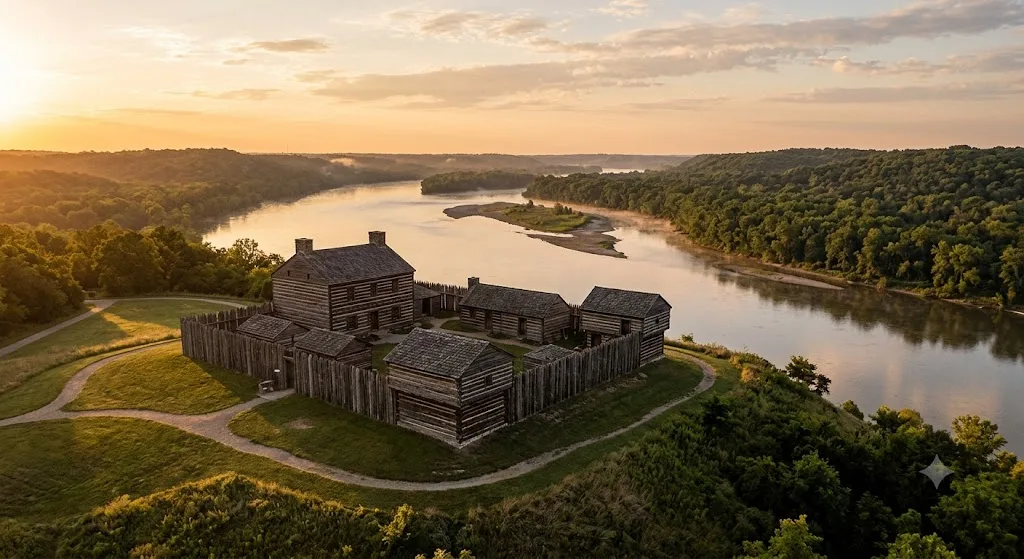
Fort Osage National Historic Landmark Travel Guide — Missouri
Our Fort Osage National Historic Landmark guide covers practical planning for Fort Osage National Historic Landmark Missouri — best time to visit, getting there, and what to do on the ground.
For those eager to step back in time and immerse themselves in the rich tapestry of early American frontier life, Fort Osage National Historic Landmark Missouri offers an unparalleled experience. This meticulously reconstructed 1808 fort and trading post provides a vivid window into the lives of soldiers, traders, and Native American populations who shaped the Missouri River frontier. Our team at Roam States has thoroughly explored this historic gem to bring you an independent guide, ensuring your visit is both enriching and seamless. We cut through the generic fluff to deliver confident, specific advice on making the most of your journey to this significant landmark.
Why Visit Fort Osage National Historic Landmark
Visiting Fort Osage National Historic Landmark isn't just a trip; it's an immersive journey into the past, offering a unique perspective on the pivotal role this site played in American expansion. Established in 1808 under the direction of William Clark of the Lewis and Clark Expedition, Fort Osage served a dual purpose: a military garrison to secure the frontier and a vital government trade center for Native American tribes. This strategic location on the bluffs overlooking the Missouri River made it a critical outpost for trade and political stability in the Louisiana Purchase territory.
What truly sets Fort Osage apart is the dedication to living history. Authentically attired historical interpreters bring the 19th-century frontier to life, offering insights into the daily routines of soldiers, civilians, and Native Americans. We find that these interactions are far more engaging than simply reading plaques, allowing visitors to truly grasp the challenges and triumphs of early American frontier life. The fort's Education Center further enhances the experience with a 4,000-square-foot museum featuring exhibits, videos, audio, and interactive displays that delve into the history, cultures, and environment connected to the region.
Beyond the historical immersion, the fort offers breathtaking scenic views of the Missouri River. It's a place where history and natural beauty converge, providing a serene backdrop for reflection on the past. For anyone interested in the Lewis and Clark Expedition, military history, Native American studies, or simply a fascinating day out, Fort Osage National Historic Landmark is a must-see destination in Missouri. It's a testament to the foresight of its founders and the enduring spirit of the American frontier.
Who It's Best For
Fort Osage National Historic Landmark is a remarkably versatile destination, appealing to a broad spectrum of travelers. Our team confidently recommends it for several types of visitors:
- History Enthusiasts: If you're captivated by early American frontier life, the Lewis and Clark Expedition, or the intricacies of the fur trade, this fort is a goldmine. The detailed reconstructions and knowledgeable interpreters offer a deep dive into the 19th century.
- Families with Children: The living history demonstrations and hands-on activities, such as hearth cooking, tomahawk throwing, blacksmithing, and archery, make history engaging and accessible for younger visitors. The Education Center's interactive exhibits are also a hit with kids, making it an educational and fun outing.
- Educators and Students: The fort offers curriculum-based field trips designed for various grade levels, providing a visual education about the lives of soldiers and tradespeople. It's an excellent resource for understanding westward expansion, Native American history, and colonial times.
- Nature Lovers and Photographers: The scenic views overlooking the Missouri River are truly stunning, especially from the fort's blockhouses. It's a picturesque setting for capturing beautiful landscapes and historical architecture.
- Day Trippers from Kansas City: Located just 14 miles northeast of Independence, MO, Fort Osage is an easy and rewarding day trip from the greater Kansas City area. It offers a peaceful escape with a rich historical narrative.
- Travelers Seeking Authentic Experiences: Unlike some overly commercialized attractions, Fort Osage maintains a strong sense of authenticity, focusing on historical accuracy and immersive interpretation.
Whether you're planning a solo historical exploration, a family adventure, or an educational excursion, Fort Osage National Historic Landmark delivers a rich and rewarding experience for all.
Getting There & Parking
Reaching Fort Osage National Historic Landmark is straightforward, whether you're coming from nearby Kansas City or further afield. The fort is situated at 105 Osage Street, Sibley, MO 64088, on the bluffs of the Missouri River.
How to Get There
- From Kansas City: Our team recommends taking US Highway 24 East. Drive to Buckner, Missouri (approximately 22 miles from downtown Kansas City). Once in Buckner, turn north onto Sibley Street (BB Highway). Continue for about 2-3 miles, keeping an eye out for directional signs. Follow these signs through Sibley directly to Fort Osage National Historic Landmark. Another route from Kansas City involves taking Interstate 70 to Exit 17, then heading north on Little Blue Parkway, right onto Missouri Highway 76, left onto Missouri Highway 7, right onto US Highway 24, and finally left onto Buckner-Tarsney Road.
- From St. Louis: Take Interstate 70 to Exit 37, then go north on Missouri Highway 131, and make a left onto US Highway 24.
The drive is scenic, especially as you approach the river, and well-marked, ensuring a smooth arrival to Fort Osage National Historic Landmark.
Fort Osage National Historic Landmark parking
You'll be pleased to know that ample on-site parking is available at Fort Osage National Historic Landmark. Our team found the parking facilities to be convenient and easily accessible, making your arrival stress-free. There's plenty of space for both cars and larger vehicles like buses or RVs. This eliminates any worries about finding a spot, allowing you to quickly transition from your vehicle to exploring the historic grounds. The visitor center and education center are just a short walk from the parking area, ensuring a smooth start to your visit.
Top Things to Do
Fort Osage National Historic Landmark offers a rich array of activities that transport visitors directly to the early 19th-century frontier. Our team highlights these essential experiences to ensure you make the most of your visit:
- Explore the Reconstructed Fort: Step through the gates and wander the authentically reconstructed fort, which vividly portrays life as it was in 1812. The fort grounds are meticulously maintained, offering a true sense of stepping back in time.
- Engage with Living History Interpreters: This is arguably one of the best things to do at Fort Osage National Historic Landmark. Authentically attired interpreters bring the fort's history to life, sharing stories and demonstrating daily activities of military personnel, civilians, and Native Americans. We found their knowledge and passion truly captivating.
- Visit the Education Center and Museum: The 4,000-square-foot Education Center houses a modern museum with informative exhibits, videos, and interactive experiences detailing the fort's rich past, geology, Native Peoples, the Lewis and Clark Expedition, and military history. It's an excellent complement to the outdoor fort experience. Don't miss the gift shop for unique souvenirs and books.
- Witness Demonstrations and Workshops: Depending on the day, you might encounter demonstrations of hearth cooking, blacksmithing, musket firing, tomahawk throwing, archery, atlatl dart throwing, flintknapping, and textile spinning. Check the fort's event calendar for scheduled workshops like leatherworking, paper marbling and quill writing, Kriegsspiel (wargame), and candle making. These hands-on activities are particularly popular things to do at Fort Osage National Historic Landmark for families.
- Enjoy Scenic Missouri River Views: From the fort's strategic vantage points, especially the blockhouses, you'll be treated to breathtaking vistas of the Missouri River. It’s a perfect spot for photography and quiet contemplation.
- Attend Special Events: Fort Osage hosts various special events throughout the year, such as "Fun on the Bluff" in June, featuring family-friendly activities, and a "Candlelight Tour" in December, offering a unique evening guided tour and a glimpse into 19th-century holiday celebrations. These events often include additional demonstrations and activities.
- Picnic by the River: A picnic area is available on the patio of the Education Center, or at nearby Hayes Park, offering a pleasant spot to relax and enjoy the surroundings.
Every corner of Fort Osage National Historic Landmark offers a chance to connect with history, making it a truly memorable destination.
Best Time to Visit
Timing your visit to Fort Osage National Historic Landmark can significantly enhance your experience. Our team has a few recommendations:
- Spring (April-May) and Fall (September-October): These seasons generally offer the most pleasant weather for exploring the outdoor fort and grounds. The temperatures are mild, and the natural scenery, whether blooming in spring or adorned with autumn colors, is beautiful. Many special events and living history demonstrations are scheduled during these periods.
- Summer (June-August): Summer is popular, especially for families, due to school breaks. While it can be warm, the fort often hosts a variety of engaging programs and events, like "Fun on the Bluff" in June, which are great for kids. We recommend arriving earlier in the day to beat the heat and potential crowds.
- Winter (November-March): While colder, a winter visit can offer a unique, quieter experience, particularly if you catch a special event like the "Candlelight Tour" in December. The fort is open year-round, Tuesday through Sunday, from 9:00 a.m. to 4:30 p.m.
- Weekdays vs. Weekends: For a more peaceful and personal interaction with the interpreters, our team suggests visiting on a weekday. Weekends, especially during special events, can be busier.
- Check the Event Calendar: Always consult the official Jackson County Parks + Rec historic sites event calendar before your trip. This will allow you to plan your visit around specific demonstrations, workshops, or festivals that align with your interests, such as "Food on the Missouri Frontier" in May or "Regency Ball at the Fort" in September.
Regardless of when you choose to go, we advise checking the weather forecast and dressing appropriately, as much of the experience is outdoors.
Where to Stay Nearby
While Sibley itself is a small rural community, there are no hotels directly adjacent to Fort Osage National Historic Landmark lodging. However, excellent options are available in nearby towns, particularly Independence and Blue Springs, offering convenient access and a range of amenities. Our team recommends considering these areas for your Fort Osage National Historic Landmark lodging needs:
- Independence, MO: As a historically significant city itself (home to President Harry S. Truman's home and library), Independence is a fantastic base. It's approximately a 15-20 minute drive from Fort Osage. You'll find a wide selection of hotels, from budget-friendly to more upscale, along with numerous dining and other historical attractions. Many visitors praise hotels like Stoney Creek Hotel Kansas City - Independence for its excellent reviews.
- Blue Springs, MO: Located slightly southwest of Fort Osage, Blue Springs offers a good selection of modern hotels and is a convenient drive. Options like the Courtyard by Marriott Kansas City East/Blue Springs or La Quinta Inn & Suites by Wyndham Blue Springs are well-regarded for their comfort and amenities.
- Eastern Kansas City, MO: For those who prefer a broader range of city amenities, staying in the eastern part of Kansas City provides access to more dining, shopping, and entertainment, while still being within a reasonable driving distance of Fort Osage National Historic Landmark lodging. Hotels such as Hotel Lotus Kansas City Stadium or Best Western Plus Kansas City Sports Complex Hotel are popular choices.
When searching for Fort Osage National Historic Landmark lodging, we suggest looking for properties in Independence or Blue Springs for the best balance of proximity and amenities. Always check recent reviews and consider your preferred travel style and budget when making your selection. Many hotels offer fully refundable rates, providing flexibility for your travel plans.
Sample 2-Day Itinerary
To truly immerse yourself in the history and charm of the area, we've crafted a sample 2-day itinerary for your visit to Fort Osage National Historic Landmark and its surroundings:
Day 1: Frontier Life at Fort Osage
- Morning (9:00 AM - 1:00 PM): Fort Osage Exploration
- Arrive at Fort Osage National Historic Landmark shortly after opening to take advantage of quieter mornings.
- Begin at the Education Center. Explore the 4,000-square-foot museum with its interactive exhibits, videos, and gift shop. This provides essential context for the fort itself.
- Head into the reconstructed fort. Spend ample time engaging with the authentically attired historical interpreters. Ask questions about their daily lives, the fort's purpose, and the challenges of frontier existence.
- Witness any scheduled demonstrations, such as musket firings, blacksmithing, or hearth cooking. These are highlights of the Fort Osage National Historic Landmark experience.
- Enjoy the panoramic views of the Missouri River from the blockhouses.
- Lunch (1:00 PM - 2:00 PM): Picnic or Local Fare
- Pack a picnic to enjoy at the picnic area on the Education Center patio or nearby Hayes Park.
- Alternatively, drive a short distance to Sibley or Buckner for a casual lunch.
- Afternoon (2:00 PM - 4:30 PM): Deeper Dive or Nature Walk
- Revisit any areas of the fort that particularly captured your interest, or participate in a scheduled workshop if available.
- Consider a leisurely walk around the fort's perimeter or a short nature walk if trails are accessible, taking in more of the river bluffs.
- Evening: Dinner and Relaxation in Independence
- Drive to Independence, MO, and check into your chosen Fort Osage National Historic Landmark lodging.
- Enjoy dinner at one of Independence's local restaurants.
Day 2: Independence History & Beyond
- Morning (9:00 AM - 12:00 PM): Harry S. Truman Presidential Library & Museum
- Start your day by exploring the Harry S. Truman Presidential Library & Museum in Independence. This offers a fascinating look into the life and presidency of Missouri's only president.
- Lunch (12:00 PM - 1:00 PM): Independence Dining
- Grab lunch in Independence, perhaps trying some local BBQ or a classic American diner.
- Afternoon (1:00 PM - 5:00 PM): Historic Independence or Missouri Town
- Choose between further exploring Independence's historic sites, such as the Harry S. Truman Home, the Vaile Mansion, or the 1859 Jail and Marshal's Home.
- Alternatively, for more living history, visit Missouri Town Living History Museum, also operated by Jackson County Parks + Rec. It's a reconstructed 1850s farming community with period buildings and interpreters, offering a different slice of 19th-century Missouri life.
- Evening: Departure or Kansas City Exploration
- Depending on your travel plans, you can begin your journey home or head into Kansas City for an evening of dining and entertainment. Consider visiting the Country Club Plaza or the Power and Light District.
Is It Worth Visiting?
Our team at Roam States unequivocally agrees: Fort Osage National Historic Landmark is absolutely worth visiting. It stands out as a premier historical attraction in Missouri, offering a depth of experience that goes far beyond a typical museum visit.
What makes Fort Osage National Historic Landmark so compelling is its commitment to authenticity and immersion. The reconstructed fort, built under the direction of William Clark, provides a tangible connection to the early 19th-century frontier. More importantly, the dedicated and knowledgeable costumed interpreters are the heart of the experience. They don't just recite facts; they embody the roles of soldiers, traders, and civilians, engaging visitors with stories and demonstrations that bring history to vibrant life. We consistently hear praise for the staff's ability to make history accessible and exciting for all ages.
Beyond the living history, the fort offers a comprehensive Education Center with a modern museum, providing valuable context and a deeper understanding of the region's history, from Native American cultures to the Lewis and Clark Expedition. The stunning views of the Missouri River from the fort's bluffs also add a beautiful, serene dimension to the visit. Whether you're a serious history buff, a family seeking an educational outing, or simply looking for a unique and engaging day trip, Fort Osage National Historic Landmark delivers. It's an affordable, family-friendly adventure that truly allows you to step back in time and appreciate the foundational stories of America's westward expansion.
How to Get There
Getting to Fort Osage National Historic Landmark is relatively straightforward, and we want to ensure you have the clearest directions. The fort is located at 105 Osage Street, Sibley, MO 64088. It's a manageable drive from the greater Kansas City metropolitan area, making it an ideal day trip destination.
- From Kansas City, Missouri: The most common route and the one our team recommends for ease is to take US Highway 24 East. Follow US-24 E for approximately 22 miles until you reach the town of Buckner, Missouri. In Buckner, turn north onto Sibley Street, which is also designated as BB Highway. Continue on Sibley Street for about 2-3 miles. You'll see clear directional signs guiding you through the small town of Sibley and directly to Fort Osage National Historic Landmark. An alternative, though slightly more complex, route from Kansas City involves I-70 to Exit 17, then a series of turns onto Little Blue Parkway, MO-76, MO-7, US-24, and finally Buckner-Tarsney Road.
- From Independence, Missouri: Fort Osage National Historic Landmark is conveniently located about 14 miles northeast of Independence. You would generally follow similar directions as from Kansas City, heading east on US-24 and then north on Sibley Street/BB Highway.
- From St. Louis, Missouri: If you're coming from further east, take Interstate 70 West. At Exit 37, head north on Missouri Highway 131, then turn left onto US Highway 24.
We advise using a GPS for real-time navigation, but these general directions for how to get to Fort Osage National Historic Landmark should set you on the right path. The roads are well-maintained, and the journey offers a glimpse of Missouri's scenic countryside.
Top Things to Do in Sibley
While Fort Osage National Historic Landmark is undoubtedly the main draw, the charming rural area around Sibley offers a few complementary experiences for visitors looking to extend their exploration. Our team has identified some additional things to do in Sibley and its immediate vicinity:
- Sibley Orchards & Cider Mill: Depending on the season, a visit to Sibley Orchards & Cider Mill can be a delightful stop. It's a local favorite, offering fresh produce, ciders, and a taste of rural Missouri life. Check their operating hours and seasonal offerings before your visit.
- Missouri River Access: For those interested in the natural environment, the Missouri River itself offers opportunities for appreciation. While Fort Osage provides stunning views, more direct access points for fishing or simply observing the river can be found nearby. The Fort Osage access ramp is a take-out point for a 30-mile paddling trip from Kaw Point in Kansas City.
- Hayes Park: Located near Fort Osage, Hayes Park offers additional green space and picnic facilities. It's a good option if you're looking for more room to spread out for a picnic lunch or for children to play after exploring the fort.
- Exploring the Small Town Charm: Sibley is a small community with a population of approximately 367, offering a glimpse into rural life in Jackson County. A short drive through the town can be a pleasant, low-key experience.
- Nearby Buckner: Just a few miles south of Sibley, the "Little Village In The Valley" of Buckner offers suburban simplicity and a few more basic services or dining options if needed.
While the list of things to do in Sibley itself is modest, these options provide a nice balance to the historical immersion of Fort Osage National Historic Landmark, allowing you to experience the broader local flavor of this part of Missouri.
Fort Osage National Historic Landmark with kids
Fort Osage National Historic Landmark is an excellent destination for families with children. Our team highly recommends it for an engaging and educational experience. Kids will particularly enjoy the interactive living history demonstrations, which often include activities like hearth cooking, tomahawk throwing, blacksmithing, archery, and musket firing. These hands-on elements make history come alive in a way that textbooks can't. The 4,000-square-foot Education Center also features a museum with interactive exhibits, videos, and a gift shop, providing a fun and informative indoor component. The wide, even pathways make the fort accessible for strollers, and modern restrooms are available in the Education Center and within the fort. We suggest checking the event calendar for family-friendly special events like "Fun on the Bluff," which often include additional crafts and games. Allow plenty of time for exploration and encourage your children to ask questions of the costumed interpreters for a truly memorable visit.
best hotels near Fort Osage National Historic Landmark
When searching for the best hotels near Fort Osage National Historic Landmark, our team advises looking at accommodations in the nearby cities of Independence and Blue Springs, Missouri. While Sibley itself does not offer direct lodging, these towns provide excellent options within a short driving distance. In Independence, highly-rated choices include Stoney Creek Hotel Kansas City - Independence and Hotel Lotus Kansas City Stadium. For Blue Springs, consider the Courtyard by Marriott Kansas City East/Blue Springs or La Quinta Inn & Suites by Wyndham Blue Springs, both offering comfortable stays. These hotels typically offer a range of amenities, from free breakfast to pools, and are conveniently located near dining and other attractions, ensuring a comfortable base for your visit to Fort Osage National Historic Landmark.
Fort Osage National Historic Landmark tips
To make your visit to Fort Osage National Historic Landmark as enjoyable as possible, our team offers these practical tips: 1. **Check the Event Calendar:** Always look at the official Jackson County Parks + Rec historic sites event calendar online before you go. Special events, workshops, and demonstrations can significantly enhance your experience. 2. **Visit on a Weekday:** For a quieter visit and more personal interaction with the interpreters, weekdays are generally less crowded. 3. **Dress for the Outdoors:** Much of the fort experience is outdoors, so wear comfortable shoes and dress in layers, considering the weather. 4. **Allow Ample Time:** We recommend dedicating at least 2-3 hours to explore the fort, the Education Center, and engage with the interpreters. 5. **Bring Water and Snacks:** While refreshments might be available during events, it's wise to bring your own, especially on warmer days. Picnic areas are available. 6. **Ask Questions:** The costumed interpreters are incredibly knowledgeable and eager to share their insights. Don't hesitate to ask them about frontier life. 7. **Accessible Facilities:** The site has wide, even pathways and modern restrooms in the Education Center and within the fort, making it accessible for most visitors.
where to stay near Fort Osage National Historic Landmark
For visitors planning a trip to Fort Osage National Historic Landmark, we recommend seeking accommodations in the nearby towns of Independence and Blue Springs, Missouri. Sibley, where the fort is located, is a very small community and does not have hotels. Independence, approximately 15-20 minutes away, offers a variety of lodging options and is rich in its own historical attractions, including the Harry S. Truman Presidential Library & Museum. Blue Springs, also a short drive, provides modern hotel choices and convenient access. Both locations offer a good balance of proximity to the fort, dining options, and other amenities, making them ideal bases for exploring Fort Osage National Historic Landmark.
Fort Osage National Historic Landmark parking
Visitors to Fort Osage National Historic Landmark will find ample on-site parking available. Our team confirms that the parking area is spacious and easily accessible, accommodating both cars and larger vehicles like buses or RVs. This eliminates any concern about finding a spot upon arrival, allowing for a smooth start to your historical exploration. The parking is conveniently located a short walk from the Education Center and the fort grounds, ensuring a hassle-free experience.
best time to visit Fort Osage National Historic Landmark
The best time to visit Fort Osage National Historic Landmark largely depends on your preferences for weather and crowd levels. Our team suggests spring (April-May) and fall (September-October) for the most comfortable temperatures and beautiful scenery. These seasons often coincide with special events and living history demonstrations. Summer (June-August) is also popular, especially for families, though it can be warmer; arriving earlier in the day is advisable. The fort is open year-round, Tuesday through Sunday, from 9:00 a.m. to 4:30 p.m. For a more serene experience and enhanced interaction with interpreters, we recommend a weekday visit. Always check the official event calendar to align your visit with any specific programs or festivals you wish to attend.
Conclusion
Fort Osage National Historic Landmark offers an unparalleled journey into the heart of early American frontier life. From the meticulously reconstructed fort and the engaging living history interpreters to the informative Education Center and stunning Missouri River views, every aspect of this destination is designed to transport you back to 1808. Our team at Roam States confidently asserts that it is a truly worthwhile and enriching experience for history buffs, families, and anyone seeking an authentic glimpse into America's past. Whether you're exploring the fort's strategic importance, witnessing a musket firing demonstration, or simply enjoying the serene bluffs, Fort Osage provides a deep connection to the spirit of exploration and trade that shaped the nation. We encourage you to plan your visit, immerse yourself in its stories, and discover why this Missouri gem holds such a significant place in our shared heritage. Don't forget to explore more of what Missouri has to offer, from the iconic Gateway Arch to the thrilling Silver Dollar City, and delve deeper into the state's diverse attractions on our Best places in Missouri guide.
Last updated: 2026-07-06 by the Roam States team.