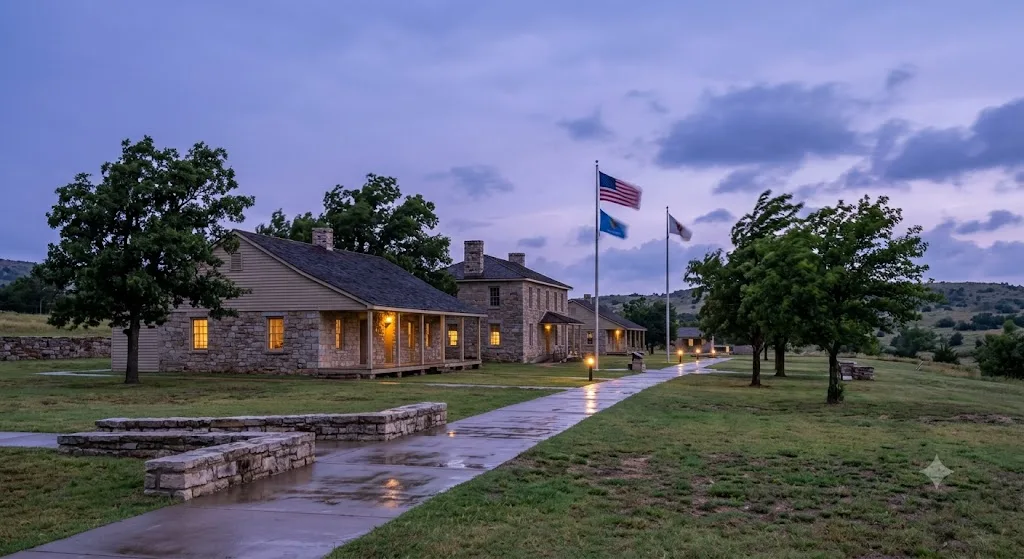
Our Fort Sill National Historic Landmark and Museum guide covers practical planning for Oklahoma, including the best time to visit, getting there, and what to do on the ground at Fort Sill National Historic Landmark and Museum Oklahoma.
As the Roam States editorial team, we pride ourselves on delivering confident, specific, and genuinely helpful travel advice, steering clear of generic fluff. When it comes to a destination as historically rich and uniquely situated as Fort Sill National Historic Landmark and Museum Oklahoma, detailed planning is essential. This isn't just another roadside attraction; it's an active U.S. Army post and a sprawling National Historic Landmark, offering a deep dive into military and Native American history.
Why Visit Fort Sill National Historic Landmark and Museum
Visiting Fort Sill National Historic Landmark and Museum is an immersive journey into a pivotal chapter of American history. We recommend it for anyone seeking to understand the complexities of the American frontier, the evolution of military artillery, and the significant role played by Native American tribes in the region. This isn't a passive museum experience; the fort itself, with its dozens of original 19th-century buildings, serves as the exhibit. You can walk through the same barracks and officer quarters that soldiers and notable figures like Geronimo once inhabited, offering a tangible connection to the past.
The fort, established by General Philip Sheridan in 1869, was a key site during the Indian Wars, and later became the home of the U.S. Field Artillery Center and School. Its strategic importance and enduring legacy are palpable, making it a compelling destination for history enthusiasts. Beyond the structures, the narratives of the Buffalo Soldiers, who helped construct the post in the 1870s, and the Apache leader Geronimo, who spent his final years here and is buried in the Post Cemetery, add profound layers to the experience.
Who It's Best For
Fort Sill National Historic Landmark and Museum caters to a diverse range of visitors, each seeking a different facet of its storied past. We find it particularly appealing to:
- **History Buffs:** Those with a keen interest in military history, the American West, and Native American culture will find an unparalleled wealth of information and authentic sites to explore. The Fort Sill National Historic Landmark and Museum's mission focuses on military, social, political, cultural, and economic history from 1834 to 1920.
- **Military Families:** For families with connections to the U.S. Army, especially those associated with the Fires Center of Excellence or Basic Combat Training, visiting offers a chance to connect with the heritage of the institution.
- **Educators and Students:** The fort provides an exceptional outdoor classroom for learning about frontier life, military strategy, and the complex relationships between the U.S. government and Native American tribes.
- **Road Trippers:** As a unique stop in Southwest Oklahoma, it offers a distinct historical experience for those exploring the region, perhaps as part of a larger USA Road Trip Planner.
Getting There & Parking
Accessing Fort Sill, an active military installation, requires specific procedures for civilian visitors. We want to be clear: you can't just drive onto the base. All visitors aged 18 and older, and any drivers aged 16 or 17, who do not possess a current DoD ID card, must obtain a visitor pass.
The **Visitor Control Center (VCC)** is located just south of Bentley Gate on Sheridan Road. If you have a REAL ID-compliant driver's license, you can pre-register for your pass online in advance at sill-www.army.mil/vcc. This is a highly recommended step to expedite your entry. If you do not have a REAL ID, you will need to appear in person at the VCC with two valid forms of identification.
Once you have your pass, you'll typically enter via Bentley Gate. From Lawton, take Sheridan Road North to reach Bentley Gate. After passing through, continue on Sheridan Road until Randolph Road (you'll pass a Geronimo stop light). Turn left onto Randolph Road, then right onto Chickasha Road, and an immediate left onto Quanah Road. The Fort Sill National Historic Landmark and Museum Visitor Center is on your left, Building 435.
Parking at the Fort Sill National Historic Landmark and Museum is free, with designated handicapped parking available. Bus and motorcoach parking are also accommodated. We advise arriving early, especially during peak seasons or around graduation periods, as visitor pass processing can take time. Plan to arrive at least 30 minutes early during graduation periods.
Top Things to Do
The Fort Sill National Historic Landmark and Museum offers a wealth of experiences, both within its historic grounds and in the surrounding Lawton area. To truly appreciate the history and culture, we recommend dedicating ample time to this unique destination.
At Fort Sill National Historic Landmark and Museum
When planning things to do at Fort Sill National Historic Landmark and Museum, prioritize exploring the historic post itself. The complex comprises approximately 50 original 19th-century buildings, with 46 still in use and in excellent condition.
- **Explore the Post Quadrangle:** This central area features historic homes, the Post Chapel, and various museum buildings. It's a living testament to frontier army life.
- **Visit the Fort Sill Museum:** Housed in some of the fort's oldest buildings, the Fort Sill Museum offers a deep dive into the military, social, political, cultural, and economic history of Fort Sill from 1834 to 1920. It features documents, photographs, and military objects, including interactive exhibits.
- **Discover the U.S. Army Field Artillery Museum:** Although a separate entity, this museum is a must-see for anyone visiting Fort Sill. It showcases the history of artillery from 1775 to the present, with over 70 guns and artillery pieces. Fort Sill has been the home of the U.S. Field Artillery Center and School since 1911.
- **Pay Respects at Geronimo's Grave:** The grave of the famous Apache leader Geronimo is located in the Post Cemetery at Chief's Knoll, a significant pilgrimage site for many visitors. Other Native American notables, including Quanah Parker, are also buried here.
- **See the Quartermaster Corral:** Built in 1870 to protect livestock after a Kiowa horse-stealing raid, this historic structure offers another glimpse into the fort's early days.
Self-guided tours are available with an audio guide or brochure, allowing you to explore at your own pace.
Beyond the Gates: Things to Do in Lawton and Beyond
The Lawton area, adjacent to Fort Sill, offers additional attractions that complement a historical visit. Here are some things to do in Lawton and the surrounding region:
- **Wichita Mountains Wildlife Refuge:** Just a short drive northwest of Lawton, this refuge spans over 59,000 acres and is home to free-range bison, Texas Longhorn cattle, prairie dogs, deer, and elk. We highly recommend driving Mount Scott Road for wildlife viewing and scenic vistas. The refuge is open sunrise to sunset daily, with the visitor center open from 9 AM to 5 PM, and admission is free. You can also enjoy over 30 miles of hiking trails.
- **Comanche National Museum and Cultural Center:** Explore the history, culture, and art of the Comanche people through engaging exhibits.
- **Museum of the Great Plains:** This museum explores the human history of the Great Plains through interactive exhibits. However, please note that most areas of the museum will close to the public in mid-August 2026 for major building repairs and are anticipated to reopen in April 2028.
- **Holy City of the Wichitas:** Located within the Wichita Mountains Wildlife Refuge, this unique area features stone structures and hosts an annual Easter Pageant.
- **Historic Mattie Beal Home:** Tour the beautifully preserved home of Mattie Beal, a prominent early 20th-century Lawton resident.
- **Elmer Thomas Park:** A large urban park in Lawton offering disc golf, splash pads, and often hosting local events.
- **Lawton Farmers Market:** From April 1 to October 31, experience local produce and goods.
- **TravelOK.com:** For more ideas on things to do in Lawton and across Oklahoma, the official state tourism site is an excellent resource.
Best Time to Visit
To make the most of your visit to Fort Sill National Historic Landmark and Museum, we recommend considering the weather and potential crowd levels. Southwest Oklahoma experiences hot summers and mild winters, with pleasant spring and fall seasons.
- **Spring (March-May):** This is arguably the best time to visit. Temperatures are comfortable, wildflowers bloom in the nearby Wichita Mountains Wildlife Refuge, and outdoor exploration is enjoyable.
- **Fall (September-November):** Similar to spring, fall offers mild temperatures and often clear skies, perfect for exploring the fort and surrounding natural areas.
- **Winter (December-February):** While generally mild, winter can bring colder temperatures. However, crowds are typically smaller, offering a more serene experience. Be sure to check for any holiday closures at the museums.
- **Summer (June-August):** Summers can be very hot, with temperatures often exceeding 90°F (32°C). If visiting during this time, we suggest planning indoor activities during the hottest parts of the day and staying hydrated.
Keep in mind that Fort Sill is an active military post, and events like Basic Combat Training graduations can increase visitor traffic. While the Fort Sill National Historic Landmark and Museum is generally open Tuesday through Saturday from 9 AM to 5 PM, we always advise checking the official Fort Sill website or calling the museum directly for the most current operating hours and any potential closures before your trip.
Where to Stay Nearby
For visitors seeking Fort Sill National Historic Landmark and Museum lodging, the neighboring city of Lawton, Oklahoma, offers a wide array of options to suit various budgets and preferences. You won't find luxury resorts directly on the base, as the focus is on supporting military personnel and their guests.
The most convenient areas for Fort Sill National Historic Landmark and Museum lodging are those parts of Lawton adjacent to the main gates of Fort Sill, as well as the central part of the city where infrastructure, restaurants, and shops are concentrated. Booking your accommodation in advance is highly recommended, especially if your visit coincides with high-demand periods like base graduation ceremonies.
Here are some of the best hotels near Fort Sill National Historic Landmark and Museum:
- **Apache Casino Hotel:** A popular choice offering entertainment and comfortable rooms.
- **MySuites Lawton:** Highly rated for its wonderful service.
- **Extended Stay America Suites Lawton Fort Sill:** Ideal for longer stays, offering amenities like kitchens.
- **La Quinta Inn & Suites by Wyndham Lawton / Fort Sill:** Known for good breakfast and friendly staff.
- **Hampton Inn & Suites Lawton:** Offers reliable comfort and amenities.
- **Sleep Inn & Suites Lawton Near Fort Sill:** Praised for easy check-in, clean rooms, and complimentary breakfast.
- **Comfort Suites Lawton Near Fort Sill:** A well-regarded option for a comfortable stay.
- **Hilton Garden Inn Lawton-Fort Sill:** Located in Lawton's business district, close to the base and Central Mall.
These options provide a good range of choices for Fort Sill National Historic Landmark and Museum lodging, ensuring a comfortable base for your historical exploration.
Sample 2-Day Itinerary
To fully immerse yourself in the history of Fort Sill National Historic Landmark and Museum and explore the surrounding area, we suggest a focused two-day itinerary:
Day 1: Deep Dive into Fort Sill History
- **Morning (9:00 AM - 1:00 PM): Fort Sill National Historic Landmark and Museum:** Arrive at the Visitor Control Center early to secure your pass. Begin your exploration at the Fort Sill Museum, delving into the exhibits covering the fort's military and cultural history. Spend time walking the Post Quadrangle, visiting the historic buildings, and imagining life on the frontier.
- **Lunch (1:00 PM - 2:00 PM): On-Post Dining or Picnic:** Grab a quick bite at an on-post eatery if available, or pack a picnic to enjoy on the grounds (check base regulations for picnic areas). Alternatively, head back into Lawton for a local restaurant.
- **Afternoon (2:00 PM - 5:00 PM): U.S. Army Field Artillery Museum & Geronimo's Grave:** Dedicate your afternoon to the impressive U.S. Army Field Artillery Museum, showcasing centuries of artillery development. Afterwards, make a poignant visit to Chief's Knoll in the Post Cemetery to see Geronimo's grave and other Native American burial sites.
- **Evening: Lawton Dining:** Head into Lawton for dinner. We recommend exploring local favorites or one of the many chain restaurants available.
Day 2: Nature and Local Culture
- **Morning (9:00 AM - 1:00 PM): Wichita Mountains Wildlife Refuge:** Drive to the nearby Wichita Mountains Wildlife Refuge. Start at the Quanah Parker Nature and Visitor Center for an overview, then drive or hike one of the many trails. Don't miss the scenic drive up Mount Scott for panoramic views. Keep an eye out for bison and longhorn cattle.
- **Lunch (1:00 PM - 2:00 PM): Medicine Park or Lawton:** Enjoy lunch in the charming historic resort town of Medicine Park, located at the eastern edge of the refuge, or return to Lawton.
- **Afternoon (2:00 PM - 5:00 PM): Comanche National Museum and Cultural Center & Historic Mattie Beal Home:** Immerse yourself in the rich heritage of the Comanche people at their cultural center. Later, step back in time with a tour of the Historic Mattie Beal Home in Lawton.
- **Evening: Leisure or Local Event:** Depending on the season, check for local events in Lawton, such as the Lawton Farmers Market (April-October) or a performance by the Lawton Philharmonic Orchestra.
Is It Worth Visiting?
We firmly believe that Fort Sill National Historic Landmark and Museum is absolutely worth visiting for anyone with an interest in American history, military heritage, or Native American culture. Its status as an active military post combined with its designation as a National Historic Landmark creates a truly unique and educational experience.
The opportunity to walk through original 19th-century buildings, explore extensive museum collections, and visit the final resting place of figures like Geronimo offers a tangible connection to the past that few other sites can provide. The Fort Sill National Historic Landmark and Museum effectively brings to life the stories of soldiers, Native Americans, and settlers who shaped this region. While the requirement for a visitor pass adds a step to the planning process, the depth of history and the quality of the exhibits make it a worthwhile endeavor. The fact that admission is free further enhances its value as a destination.
However, we must also address a recent development: as of July 2025, there are plans to continue downsizing or potentially close the Fort Sill National Historic Landmark Museum due to Army-wide modernization and resource alignment efforts. While the museum's primary mission of Soldier education will continue, the public access aspect could be impacted. Therefore, we strongly advise checking the official Fort Sill website or contacting the museum directly for the most current operational status before planning your trip to confirm that Fort Sill National Historic Landmark and Museum is indeed open for public visitation.
How to Get There
Reaching Fort Sill National Historic Landmark and Museum involves travel to Southwest Oklahoma, specifically the Lawton area. We've outlined the most common approaches:
- **By Air:** The most convenient airport is **Lawton-Fort Sill Regional Airport (LAW)**, located just 9.1 km (about a 15-20 minute drive) from Fort Sill. This is a regional hub with limited flight options. For more extensive flight choices, **Will Rogers World Airport (OKC)** in Oklahoma City is approximately 111.5 km (about a 1 hour 15 minute drive) away. From either airport, you will need to arrange for a rental car, taxi, or ride-sharing service to reach Lawton and Fort Sill.
- **By Car:** Driving is the most flexible way to get to Fort Sill National Historic Landmark and Museum and explore the surrounding region.
- **From Oklahoma City:** Take I-44 South towards Lawton. You can then take Rogers Lane (Route 62) to Sheridan Road North to reach the Bentley Gate and Visitor Control Center.
- **From Dallas/Fort Worth, Texas:** Take US-287 North, which merges with I-44 North as you approach Lawton. Follow signs for Fort Sill.
- **From Tulsa:** Take I-44 West/South towards Oklahoma City, then continue on I-44 South towards Lawton.
Remember, once you arrive in the vicinity of Fort Sill National Historic Landmark and Museum, you will need to go through the Visitor Control Center to obtain a pass for base access, as detailed in our "Getting There & Parking" section. This process is crucial for how to get to Fort Sill National Historic Landmark and Museum. We recommend consulting a USA Road Trip Planner for detailed routes if you're coming from further afield.
Frequently Asked Questions
Fort Sill National Historic Landmark and Museum with kids
Visiting Fort Sill National Historic Landmark and Museum with kids can be a highly educational and engaging experience, especially for older children interested in history. The sprawling grounds and historic buildings offer ample space for exploration, and the museums provide visual and interactive exhibits. Children aged 16 and older who are driving a vehicle will need to go through the Visitor Control Center for a background check and pass, just like adults. Younger children typically do not require a pass. We recommend focusing on the outdoor areas and the U.S. Army Field Artillery Museum, which often captivates younger audiences with its large exhibits. The nearby Wichita Mountains Wildlife Refuge also offers excellent family-friendly activities like wildlife viewing and easy hiking trails.
Best hotels near Fort Sill National Historic Landmark and Museum
The best hotels near Fort Sill National Historic Landmark and Museum are found in Lawton, offering a range of comfort and amenities. Top recommendations include the Apache Casino Hotel, MySuites Lawton, Extended Stay America Suites Lawton Fort Sill, La Quinta Inn & Suites by Wyndham Lawton / Fort Sill, Hampton Inn & Suites Lawton, Sleep Inn & Suites Lawton Near Fort Sill, Comfort Suites Lawton Near Fort Sill, and Hilton Garden Inn Lawton-Fort Sill. These establishments are conveniently located for accessing the fort and other local attractions, providing comfortable Fort Sill National Historic Landmark and Museum lodging options.
Fort Sill National Historic Landmark and Museum tips
Our top Fort Sill National Historic Landmark and Museum tips for a smooth visit include:
- **Get Your Pass in Advance:** Pre-register online at sill-www.army.mil/vcc for your visitor pass if you have a REAL ID. This saves significant time upon arrival.
- **Allow Ample Time:** Fort Sill is a large area with multiple museums and historic sites. Don't rush your visit; plan for at least a half to full day.
- **Check Hours and Status:** Verify the current operating hours for the museums and the Visitor Control Center, and check for any potential closures or changes in public access, especially given recent discussions about downsizing.
- **Wear Comfortable Shoes:** You'll be doing a lot of walking across the historic post.
- **Bring Water and Snacks:** While amenities are available, having your own provisions is always a good idea, especially during warmer months.
Where to stay near Fort Sill National Historic Landmark and Museum
For those wondering where to stay near Fort Sill National Historic Landmark and Museum, the city of Lawton, Oklahoma, is your primary hub. It offers numerous hotels, motels, and extended-stay options. We recommend focusing your search on hotels along Interstate 44 or near the main gates of Fort Sill for the most convenient access. Options like La Quinta Inn & Suites by Wyndham Lawton / Fort Sill, Hilton Garden Inn Lawton-Fort Sill, and Comfort Suites Lawton Near Fort Sill are consistently well-regarded and provide excellent Fort Sill National Historic Landmark and Museum lodging.
Fort Sill National Historic Landmark and Museum parking
Parking at Fort Sill National Historic Landmark and Museum is available and free of charge for visitors. There are designated handicapped parking spots, and bus/motorcoach parking is also provided. The crucial step for parking at Fort Sill National Historic Landmark and Museum is first obtaining your visitor pass from the Visitor Control Center (VCC) located near Bentley Gate. Once you have your pass and are on base, follow the signs to the museum's visitor center (Building 435 on Quanah Road) for parking.
Best time to visit Fort Sill National Historic Landmark and Museum
The best time to visit Fort Sill National Historic Landmark and Museum is during the spring (March-May) or fall (September-November). These seasons offer mild and pleasant temperatures, ideal for exploring the outdoor historic areas and nearby natural attractions like the Wichita Mountains Wildlife Refuge. Summers can be very hot, and winters can be chilly, though both offer fewer crowds. Always check the museum's specific hours of operation, which are typically Tuesday through Saturday, 9 AM to 5 PM, before your trip.
Our team at Roam States concludes that a visit to Fort Sill National Historic Landmark and Museum Oklahoma is an enriching experience, offering a unique window into American military and cultural history. While the base access procedures require some advance planning, the rewards of exploring this active post and its extensive historical sites are substantial. We encourage travelers to embrace this opportunity to connect with the past and discover the vibrant heritage of Southwest Oklahoma.
Last updated: 2026-07-