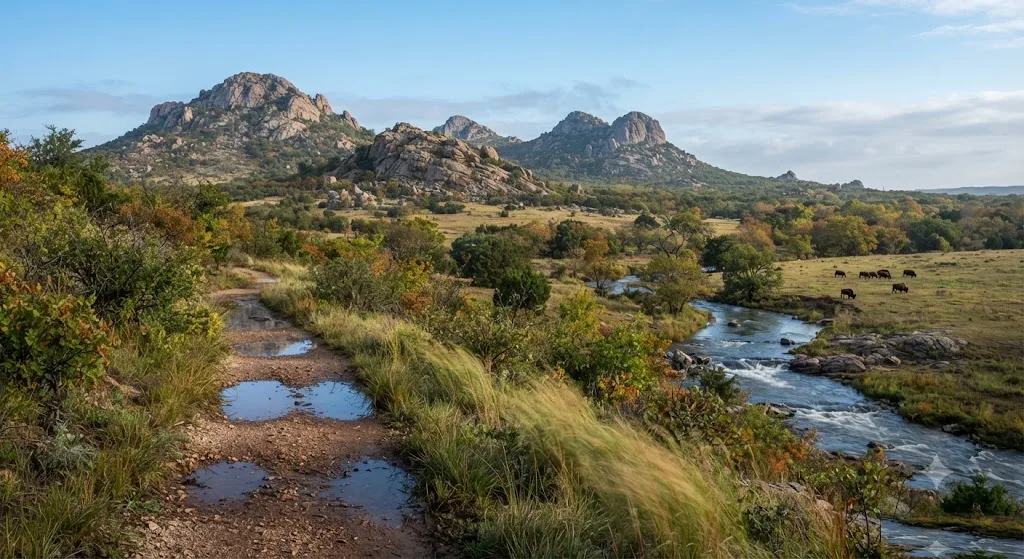
Welcome to our definitive guide to the Wichita Mountains Wildlife Refuge Oklahoma. As the Roam States editorial team, we've explored this remarkable corner of the Sooner State to bring you an independent, confident, and specific travel resource. Forget generic fluff; we're here to equip you with everything you need for an unforgettable adventure in one of America's oldest and most unique wildlife refuges.
Why Visit Wichita Mountains Wildlife Refuge
The Wichita Mountains Wildlife Refuge offers a truly unexpected landscape in Oklahoma. Imagine ancient granite mountains, some over 550 million years old, rising dramatically from vast mixed-grass prairies. This isn't the flat Oklahoma you might envision; it's a rugged, beautiful expanse spanning approximately 60,000 acres, dedicated to the protection and conservation of iconic American species.
We believe it's a must-visit for its unparalleled wildlife viewing opportunities. The refuge is home to free-roaming herds of American bison, Texas longhorn cattle, and Rocky Mountain elk, alongside deer, prairie dogs, and a rich diversity of bird species. Beyond the charismatic megafauna, the refuge boasts over 50 species of mammals, 240 species of birds, 64 species of reptiles and amphibians, 36 fish species, and 806 species of plants. The chance to witness these animals in their natural habitat, often from the roadside, is a powerful and memorable experience.
Moreover, the refuge provides a stunning backdrop for outdoor recreation, from scenic drives and challenging hikes to rock climbing and fishing. It's a place where history and nature intertwine, offering a glimpse into efforts to save American bison from extinction, initiated by President Theodore Roosevelt. The unique geology, with its striking red granite boulders and picturesque reservoirs, creates a visually arresting environment that photographers and nature enthusiasts will adore.
Who It's Best For
The Wichita Mountains Wildlife Refuge caters to a wide array of visitors, making it an ideal destination for:
- Wildlife Enthusiasts: With its free-roaming bison, longhorn, and elk, it's a prime location for wildlife photography and observation.
- Hikers and Backpackers: From easy, accessible trails to strenuous wilderness routes, there's a hike for every skill level. The Charon's Garden Wilderness Area, in particular, offers a rugged backcountry experience.
- Outdoor Adventurers: Rock climbing, rappelling, fishing, canoeing, and kayaking are all popular activities within the refuge.
- Families: Many areas are easily accessible by car, allowing families to enjoy scenic drives, visit prairie dog towns, and have picnics. The Visitor Center offers educational exhibits. Ranger-led programs for youth groups and schools are also available.
- Photographers: The dramatic landscapes, unique rock formations, and abundant wildlife offer endless opportunities for stunning imagery, especially at sunrise or sunset from Mount Scott.
Whether you're seeking solitude in the wilderness or a memorable family outing, the refuge provides a diverse and engaging experience for anyone looking to connect with nature.
Getting There & Parking
Understanding how to get to Wichita Mountains Wildlife Refuge is straightforward, as it's well-connected to major routes in southwest Oklahoma. The refuge is located northwest of Lawton, Oklahoma.
Driving Directions:
- From I-44: Take Exit 45 (Highway 49). Drive west for approximately 7 miles to reach the refuge gate, or continue about 14 miles to the Visitor Center.
- From Highway 62: Take Highway 115 (Cache exit) north to the refuge gate.
The Visitor Center's coordinates are 34.710644 and -98.623426. Leaflet dispensers at each refuge gate provide maps and information upon entry. The drive from Oklahoma City takes about 1.5 hours, and from Dallas, Texas, it's approximately 3 hours.
Parking:
Parking is generally available at trailheads, picnic areas, and popular attractions like the Mount Scott summit. The refuge is free to enter, and there are no specific parking fees. We always recommend arriving early, especially on weekends or during peak seasons, to secure a spot at popular locations. Be aware that the Mt. Scott Road is closed to vehicles at certain times to allow for pedestrian and cyclist access.
Our team advises that cell reception can be limited within the refuge, so download offline maps and any essential information before you arrive.
Top Things to Do
There are countless things to do at Wichita Mountains Wildlife Refuge, ensuring every visitor finds an activity to suit their interests. Here are our top recommendations:
- Drive to the Summit of Mount Scott: This iconic peak, at 2,464 feet, offers breathtaking 360-degree panoramic views of the refuge and the surrounding plains. A paved road leads directly to the summit, making it accessible for all. It's particularly stunning at sunrise or sunset. Note that the road is open to pedestrians and cyclists only from 6 AM to 9:30 AM.
- Explore Prairie Dog Town: A favorite for families, this bustling colony allows you to observe black-tailed prairie dogs in their natural habitat. It's a lively and entertaining stop.
- Wildlife Viewing: Keep your eyes peeled for bison, longhorn, and elk roaming freely. The scenic byway and various driving routes offer excellent opportunities for spotting these majestic animals.
- Visit the Holy City of the Wichitas: This unique historical site, nestled within the mountains, features striking architecture and hosts an annual Easter Passion Play.
- Go Fishing: Lakes like Elmer Thomas, Quanah Parker Lake, and Jed Johnson Lake offer year-round fishing opportunities.
- Scenic Drives: Beyond Mount Scott, simply driving through the refuge on routes like Highways 49 and 115 offers continuous opportunities for wildlife spotting and enjoying the dramatic scenery. The Wichita Mountains Scenic Byway is a designated route for experiencing the area's natural beauty.
- Rock Climbing: The refuge is renowned for its world-class granite climbing and bouldering, particularly in areas like Charon's Garden and Mount Scott. Climbers should adhere to "minimum impact" ethics and refuge regulations, including no bolting without prior approval.
These things to do at Wichita Mountains Wildlife Refuge offer a diverse range of experiences, from serene nature observation to thrilling outdoor sports.
Best Time to Visit
The Wichita Mountains Wildlife Refuge is open year-round, but the best time to visit largely depends on your priorities.
- Spring (March-May): Our team considers spring an excellent time to visit. The weather is generally mild, wildflowers are in bloom, and you might spot baby bison and other young wildlife.
- Fall (September-November): Fall offers pleasant temperatures for hiking and exploring. While the refuge's foliage doesn't boast vibrant autumn colors like some regions, the changing grasses and cooler air are inviting.
- Winter (December-February): Winters are mild with minimal snowfall. This can be a peaceful time to visit, with fewer crowds and unique photographic opportunities, especially if there's a light dusting of snow.
- Summer (June-August): Summers can be long, hot, dry, and windy. Due to extreme heat, temporary hiking restrictions are in place starting July 1, 2026, until further notice, allowing hiking only from sunrise until 10 AM daily. Refuge roads remain open to motorized vehicles and bicycles, and Doris Campground, fishing, and picnicking continue during normal operating hours, but backcountry camping is not allowed during these restrictions.
For optimal comfort and to avoid heat-related restrictions, we recommend spring and fall for most activities, especially if hiking is a priority.
Where to Stay Nearby
While the Wichita Mountains Wildlife Refuge offers camping, many visitors prefer to stay in nearby towns. Lawton, Oklahoma, is the closest major city and provides a range of accommodations and dining options.
- Lawton, Oklahoma: Located approximately 25 miles southeast of the refuge, Lawton offers numerous hotels, including familiar chains like Extended Stay America Suites - Lawton - Fort Sill, La Quinta Inn & Suites by Wyndham Lawton / Fort Sill, Quality Inn Lawton near Fort Sill, and Fairfield by Marriott Inn & Suites Lawton. You'll find a variety of restaurants and amenities here.
- Medicine Park, Oklahoma: This charming cobblestone village, nestled at the edge of the refuge, offers a more unique and quaint experience. You can find cabins, lodges, and local eateries here. It's a great base for exploring the refuge and enjoying a meal after a day of hiking.
- Cache, Oklahoma: A smaller town closer to some refuge entrances, Cache also has some lodging options, including cabins.
For those seeking a more immersive nature experience, consider the Wichita Mountains Wildlife Refuge camping options detailed in the next section.
Sample 2-Day Itinerary
To make the most of your visit to the Wichita Mountains Wildlife Refuge Oklahoma, we've crafted a sample 2-day itinerary:
Day 1: Iconic Sights & Scenic Views
- Morning (Sunrise - 10 AM): Start your day early with a drive or hike up Mount Scott. The paved road offers stunning panoramic views, especially at sunrise. Remember, hiking is restricted after 10 AM during summer months.
- Late Morning: Head to the Visitor Center (open 9 AM - 5 PM daily) to gather maps, learn about the refuge's history, and view exhibits on local wildlife.
- Lunch: Enjoy a picnic at one of the refuge's designated picnic areas or grab a casual meal in nearby Medicine Park.
- Afternoon: Drive through the main scenic routes, keeping an eye out for bison and longhorn. Stop at Prairie Dog Town for an entertaining wildlife encounter.
- Late Afternoon/Evening: Explore the Holy City of the Wichitas, a unique historical and architectural site. Enjoy dinner in Lawton or Medicine Park.
Day 2: Hiking & Wilderness Exploration
- Morning (Sunrise - 10 AM): Dedicate your morning to exploring one of the Wichita Mountains Wildlife Refuge hiking trails. Options range from the challenging Elk Mountain Trail to the scenic Charon's Garden Trail (see dedicated hiking section below for details).
- Late Morning/Early Afternoon: For those interested in rock climbing, explore some of the bouldering or roped climbing areas. Alternatively, enjoy some fishing or kayaking on one of the refuge's lakes.
- Lunch: Pack a lunch to enjoy amidst the trails or find a spot near one of the lakes.
- Afternoon: Consider a visit to the Forty Foot Hole, a natural depression with waterfalls (best after rainfall). Or, if time allows, explore more of the scenic byway, perhaps heading towards the Forty-Foot Hole and Bison Crossing Area.
- Departure: Reflect on your incredible journey through this unique Oklahoma landscape.
This itinerary is flexible. Always check the official refuge website for current conditions, closures (like the Mt. Scott Service Road closure for vegetation removal from July 2, 2026, for two weeks or feral swine control closures from July 6-10, 2026), and temporary hiking restrictions before your visit.
Wichita Mountains Wildlife Refuge Hiking Trails
The Wichita Mountains Wildlife Refuge boasts a fantastic network of hiking trails, catering to all experience levels. During summer, from July 1, 2026, hiking is restricted to sunrise until 10 AM daily due to extreme heat. All hikers must exit trails by 10 AM.
Here are some of the most notable Wichita Mountains Wildlife Refuge hiking trails:
- Elk Mountain Trail: Located in the Charon's Garden Wilderness Area, this 1.1-mile (one way) trail is considered difficult due to its rocky terrain and seemingly endless stone stairs. It offers expansive summit views.
- Charon's Garden Trail: A longer, more rugged option within the wilderness area, this trail is about 2.4 miles (one way) and requires good preparation, including plenty of water and a map. It's known for granite rocks, flourishing vegetation, and wildlife.
- Little Baldy Trail: A shorter, 0.8-mile (one way) hike that involves some scrambling to the top of a bald mountain, rewarding hikers with beautiful views of Quanah Parker Lake and surrounding peaks.
- Bison Trail (Dog Run Hollow Trail System): This 6.1-mile moderate trail offers a great chance to see bison. It traverses rolling hills, boulder formations, and includes river and lake views.
- Narrows Trail: An adventurous 2.7-mile route through narrow granite canyons and pools. It's a favorite for experienced hikers who enjoy scrambling and route-finding, but not recommended after heavy rain.
- Forty Foot Hole Trail: This trail leads to a picturesque natural depression with waterfalls, often considered one of the prettiest spots in Oklahoma.
- Mount Scott Nature Trail: Offers a unique opportunity to explore the rugged, boulder-strewn landscape, with sweeping views.
For any of the Wichita Mountains Wildlife Refuge hiking trails, especially those in the wilderness areas, we strongly advise carrying plenty of water, wearing appropriate footwear, and being aware of your surroundings.
Wichita Mountains Wildlife Refuge Camping
For those who wish to extend their stay and fully immerse themselves in the refuge's natural beauty, Wichita Mountains Wildlife Refuge camping options are available.
- Doris Campground: This is the primary developed campground within the refuge, centrally located for easy access to various attractions like Mount Scott and Prairie Dog Town. Doris Campground is situated along the shoreline of Quanah Parker Lake, offering opportunities for fishing, canoeing, and kayaking. It provides 47 tent sites, 23 RV sites with electric hookups, and 20 walk-in sites. During the temporary hiking restrictions (July 1, 2026, onwards), Doris Campground remains open for normal operating hours.
- Backcountry Camping: Backcountry camping is permitted within the Charon's Garden Wilderness Area, offering a more primitive and secluded experience. However, please note that backcountry camping is not allowed during the temporary hiking restrictions implemented due to extreme heat (from July 1, 2026, until further notice). A permit is required for backcountry camping.
When planning your Wichita Mountains Wildlife Refuge camping trip, always check the latest regulations and conditions on the official refuge website or by contacting the Visitor Center. Remember to practice Leave No Trace principles to preserve the pristine environment for future visitors.
Is It Worth Visiting?
Without a doubt, our team confidently states that the Wichita Mountains Wildlife Refuge Oklahoma is absolutely worth visiting. It stands as one of Oklahoma's most significant and captivating natural treasures, offering a unique blend of ancient landscapes, abundant wildlife, and diverse recreational opportunities.
From the moment you witness a herd of bison grazing against a backdrop of rugged granite peaks to the panoramic views from Mount Scott, the refuge delivers experiences unlike any other in the Southern Plains. It's a place where you can truly disconnect and immerse yourself in the wild, whether you're an avid hiker tackling challenging trails or a family enjoying a scenic drive and wildlife spotting. The conservation story here, particularly with the American bison, adds a layer of historical significance that enriches the visit.
For those still pondering, "is Wichita Mountains Wildlife Refuge worth visiting?", we encourage you to experience its dramatic beauty and serene wilderness firsthand. It's a testament to Oklahoma's hidden natural wonders and a destination that consistently exceeds expectations.
Frequently Asked Questions
What are things to do in Lawton?
Lawton, Oklahoma, serves as a gateway to the Wichita Mountains Wildlife Refuge and offers its own attractions. Visitors can explore the Museum of the Great Plains, learn about local military history at Fort Sill, or enjoy performances at the Lawton Community Theatre. The city also hosts annual events like the Lawton Balloon Festival. For dining, Lawton has a variety of options, from classic American to international cuisine. We also recommend a visit to the nearby Medicine Park, a charming cobblestone town with unique shops and restaurants.
Is Wichita Mountains Wildlife Refuge good for kids?
Yes, the Wichita Mountains Wildlife Refuge is excellent for kids! Our team finds that children particularly enjoy spotting the free-roaming bison, longhorn, and prairie dogs. The scenic drives are perfect for little ones, and there are several easy, accessible trails suitable for families, such as the Elmer Thomas Accessible Trail. The Visitor Center offers educational exhibits, and ranger-led programs are sometimes available. Remember to check for temporary hiking restrictions during summer due to heat.
What are some Wichita Mountains Wildlife Refuge tips?
Our top tips for visiting Wichita Mountains Wildlife Refuge include:
- Arrive Early: Especially for popular spots like Mount Scott or during peak seasons, to avoid crowds and secure parking.
- Check for Current Conditions: Always verify hours, closures, and any temporary restrictions (like summer hiking limitations) on the official refuge website before your visit.
- Bring Water and Snacks: Services are limited within the refuge, so come prepared.
- Wear Appropriate Footwear: Even easy trails can be rocky.
- Respect Wildlife: Maintain a safe distance from all animals and never feed them. Bison and longhorn can be dangerous.
- Download Offline Maps: Cell reception can be spotty.
- Obey Speed Limits: Speeds are strictly enforced to protect wildlife.
Is there parking at Wichita Mountains Wildlife Refuge?
Yes, there is ample parking available throughout the Wichita Mountains Wildlife Refuge. You'll find designated parking areas at the Visitor Center, trailheads, picnic spots, and at the summit of Mount Scott. The refuge does not charge an entrance or parking fee. During busy times, popular spots may fill up, so arriving earlier in the day is always a good strategy.
What is the best time to visit Wichita Mountains Wildlife Refuge?
The best time to visit Wichita Mountains Wildlife Refuge is generally in the spring (March-May) or fall (September-November). These seasons offer pleasant temperatures for hiking and wildlife viewing, with spring showcasing wildflowers and baby animals, and fall providing comfortable conditions. Summers (June-August) can be very hot, with hiking restricted to mornings only (sunrise until 10 AM) from July 1, 2026, due to extreme heat. Winters are mild and offer a quieter experience.
What are the Wichita Mountains Wildlife Refuge hours and fees?
The Wichita Mountains Wildlife Refuge is free to enter and is generally open 365 days a year. The Visitor Center is open daily from 9 AM to 5 PM. However, specific areas and activities have varying hours and temporary restrictions. For example, during summer 2026, hiking is only permitted from sunrise until 10 AM daily due to extreme heat. The paved road to Mount Scott's peak is open to pedestrians and cyclists from 6 AM to 9:30 AM. Always check the official refuge website for the most current information on hours, fees, and any temporary closures or restrictions before your visit.
Conclusion
Our team at Roam States hopes this comprehensive guide inspires your journey to the Wichita Mountains Wildlife Refuge Oklahoma. This remarkable destination offers a profound connection to nature, a chance to witness majestic wildlife, and opportunities for adventure that defy Oklahoma's flatland stereotypes. From the ancient granite peaks and rolling prairies to the free-roaming bison and challenging trails, it's a place that leaves a lasting impression. We encourage you to plan your trip, embrace the wild, and discover the unexpected beauty that awaits in the Wichita Mountains. For more incredible destinations across the state, explore our guide to Best places in Oklahoma. You might also be interested in the profound history of the Oklahoma City National Memorial or the rich heritage at the National Cowboy & Western Heritage Museum.
Last updated: 2026-07-08 by the Roam States team.