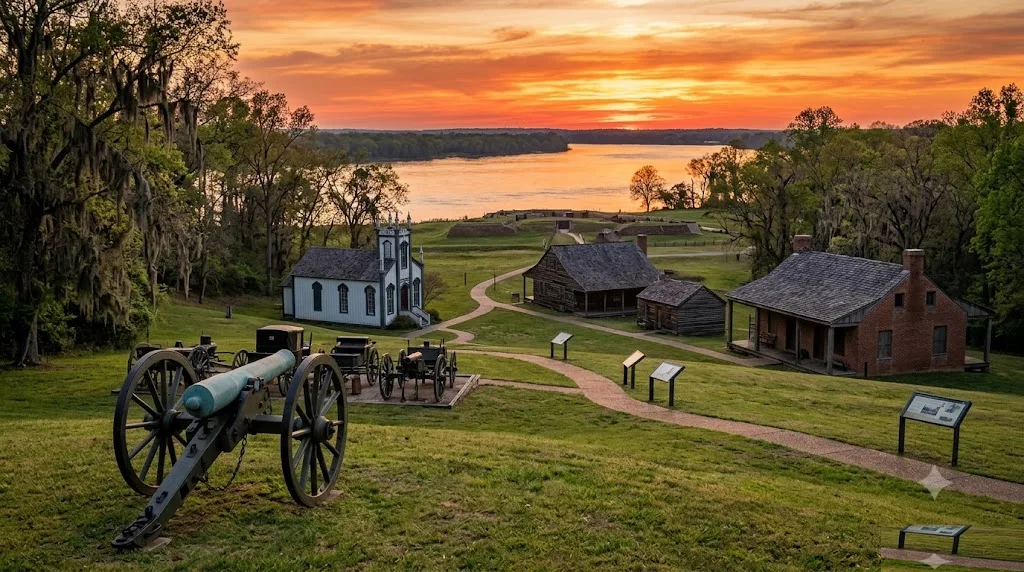
Grand Gulf Military Park Travel Guide — Mississippi
Our Grand Gulf Military Park guide covers practical planning for Grand Gulf Military Park Mississippi — best time to visit, getting there, and what to do on the ground. As independent US travel authorities, our team has thoroughly researched this historic site to provide you with confident, specific recommendations, ensuring your trip is rich with discovery and free from generic travel fluff.
Why Visit Grand Gulf Military Park
For history enthusiasts, nature lovers, and anyone seeking a profound connection to America's past, Grand Gulf Military Park offers an unparalleled experience. Preserving the site of a significant Civil War battle, this park features a museum, fortifications, and historic buildings that transport visitors back to a pivotal moment in the nation's history. We believe Grand Gulf Military Park is worth visiting for its unique blend of preserved history and natural beauty, offering a quieter, more intimate encounter with the Civil War than some of the larger, more crowded national military parks.
The park is dedicated to commemorating the Battle of Grand Gulf, a crucial engagement on April 29, 1863, during Union Major General Ulysses S. Grant's Vicksburg Campaign. Confederate forces, led by Brigadier General John S. Bowen, successfully repelled an initial Union naval attack, preventing Grant from landing his troops directly at Grand Gulf. While the Union forces eventually landed elsewhere, Grand Gulf became Grant's base of operations after the Battle of Port Gibson.
Beyond its battlefield significance, the park also preserves the remnants of Grand Gulf, once a bustling 19th-century river port town that ultimately became a ghost town due to the Civil War's destruction and a shift in the Mississippi River's course. This dual focus—on both military history and the story of a lost town—makes for a compelling visit. The 400-acre landmark is listed on the National Register of Historic Places and is recognized as a Mississippi Landmark. If you're wondering, "is Grand Gulf Military Park worth visiting?" our answer is unequivocally yes, particularly for those who appreciate history presented in a serene, reflective setting.
Who It's Best For
Grand Gulf Military Park caters to a diverse range of visitors, though certain groups will find it particularly rewarding. It's an essential stop for serious Civil War historians and casual history buffs alike, offering a detailed look at a lesser-known but strategically vital battle. The preserved earthworks of Fort Cobun and Fort Wade, along with the extensive museum, provide rich educational opportunities.
Families with older children who have an interest in history will appreciate the interactive elements of the museum and the ability to explore the fortifications firsthand. While younger children might enjoy the open spaces and some of the historic buildings, the depth of the historical interpretation is best suited for those who can engage with the narratives of the past. Nature enthusiasts and hikers will also find plenty to appreciate, with scenic trails winding through the property. Campers, both RV and tent, will find well-equipped facilities, making it an excellent base for exploring the region.
Our team finds Grand Gulf Military Park ideal for those seeking a tranquil, immersive historical experience away from the crowds. It's a place for reflection, learning, and connecting with the land where significant events unfolded.
Getting There & Parking
Grand Gulf Military Park is situated in an unincorporated area northwest of Port Gibson, Mississippi, approximately seven to eight miles west of U.S. Highway 61 on Grand Gulf Road. This location places it conveniently between the larger historic cities of Vicksburg and Natchez, making it an excellent day trip destination from either.
For those traveling from the Natchez Trace Parkway, exit at milepost 41 onto Mississippi Highway 18. Turn left (south) onto US 61 and drive into Port Gibson. From the courthouse area in Port Gibson, take Anthony Street northwest, which becomes Oil Mill Road. Oil Mill Road dead-ends into Grand Gulf Road; turn left and follow it to the park. If you're wondering how to get to Grand Gulf Military Park, a car is essential, as public transportation options are not available to this somewhat remote location.
Upon arrival at Grand Gulf Military Park, you'll find ample parking available for day visitors. The museum serves as the first stop for information and to pay admission fees. For those staying overnight, the park offers two campgrounds with full hook-up sites for RVs and designated areas for tent camping. Parking at individual campsites is included with your camping fee. There are no separate parking fees for day visitors beyond the general admission to the museum and grounds. Our team recommends checking the official Grand Gulf Military Park website or calling ahead for any specific parking instructions or potential closures, though generally, parking is straightforward and readily available.
Top Things to Do
There's a wealth of history and natural beauty to explore at Grand Gulf Military Park. Our team has identified several key attractions that truly highlight the park's significance and offer a comprehensive experience.
- Explore the Museum: Your visit should begin at the park's museum, which was completed in 1967. It serves as the primary information hub and the place to pay admission. The museum houses a fascinating collection of artifacts, tracing the history of Grand Gulf from prehistoric times (including a Mastodon bone found in the county) through its boom as a river town, and extensively covering the Civil War era. You'll find Civil War uniforms, cannonballs, muskets, maps detailing the Battle of Grand Gulf, and even a homemade submarine said to have transported bootleg liquor during Prohibition.
- Visit Fort Cobun and Fort Wade: These are the preserved Confederate earthworks that played a crucial role in repelling Grant's initial assault on Grand Gulf. Fort Wade's ammunition magazine has been excavated, and a Union heavy mortar found in the area is on display at the site. Fort Cobun, located on higher ground, boasts well-preserved parapets and earthworks. Walking these grounds allows you to truly imagine the fierce fighting that took place here.
- Climb the Observation Tower: Ascend the 75-foot observation tower to gain panoramic views of the surrounding landscape, including the Mississippi River. It offers a unique perspective on the battlefield and the strategic importance of Grand Gulf's location.
- Wander Through the Historic Buildings: The park features several restored buildings that offer a glimpse into the town's past. These include the Spanish House (built in the late 1790s and one of only two original buildings left of old Grand Gulf), the Sacred Heart Roman Catholic Church (moved from Rodney, Mississippi, and restored in 1983), and a Dog Trot House. The Carriage House displays a Civil War ambulance, an old fire engine, a blacksmith shop, and the original Town of Grand Gulf Jail.
- Reflect at Grand Gulf Cemetery: This historic cemetery is the final resting place for residents of the old town of Grand Gulf and soldiers who died in battle. With over 200 graves and 160 tombstones, it's a poignant reminder of the lives touched by the town's history and the Civil War.
- Hike the Trails: For those who enjoy the outdoors, Grand Gulf Military Park offers scenic hiking trails winding through its 400-acre property. These trails provide an opportunity to explore the natural environment and discover hidden corners of the park. While specific lengths aren't always highlighted, the trails allow for quiet contemplation amidst the historical landscape. Our team finds that exploring the Grand Gulf Military Park hiking trails offers a different dimension to the visit, connecting you with the terrain that soldiers once traversed. You can spend hours just in the museum, or many more exploring the Grand Gulf Military Park hiking trails and battlefields.
- Enjoy a Picnic: With designated picnic areas, the park is a lovely spot to enjoy a meal outdoors amidst history.
These are the core things to do at Grand Gulf Military Park, ensuring a rich and memorable visit.
Best Time to Visit
The best time to visit Grand Gulf Military Park largely depends on your priorities, but generally, spring and fall offer the most pleasant weather for exploring the outdoor attractions. Mississippi experiences warm, humid summers and mild winters.
- Spring (March-May): The weather is typically mild and comfortable, ideal for walking the battlefields, exploring the historic buildings, and enjoying the hiking trails. The foliage is lush, and the temperatures are not yet oppressively hot. This is also when the "Taste of Port Gibson Festival" typically occurs in nearby Port Gibson, adding a local cultural element to your trip.
- Fall (September-November): Similar to spring, fall brings cooler temperatures and often clear skies, making it excellent for outdoor activities. The changing leaves can add a beautiful backdrop to the historic landscape.
- Winter (December-February): Winters are mild, making the park accessible year-round. While some outdoor activities might be chilly, it's a good time to avoid crowds and enjoy a more solitary experience.
- Summer (June-August): Summers can be very hot and humid in Mississippi, which might make extended outdoor exploration less comfortable. If visiting in summer, we recommend arriving early in the morning or later in the afternoon and focusing on the air-conditioned museum during the hottest parts of the day.
Regardless of the season, weekdays generally see fewer visitors, allowing for a more peaceful and reflective experience. Our team advises checking the local weather forecast before your trip to pack appropriately and plan your activities accordingly.
Where to Stay Nearby
While Grand Gulf Military Park offers excellent camping facilities, many visitors prefer the comfort of a hotel. The immediate vicinity of Grand Gulf and Port Gibson has limited lodging options, so we typically recommend looking slightly further afield to Vicksburg or Natchez for a wider selection of hotels and amenities.
Port Gibson: This charming town, known as the "town too beautiful to burn" during the Civil War, is the closest community to the park. While it offers a quaint atmosphere and some historic homes, hotel options are sparse. If you find lodging here, you'll be immersed in local history and just a short drive from Grand Gulf Military Park. Finding specific Grand Gulf Military Park lodging within Port Gibson itself can be challenging, often requiring booking well in advance.
Vicksburg: Located about 40 minutes north of Port Gibson, Vicksburg is a larger city with a wide array of hotels, restaurants, and its own significant Civil War history, including the Vicksburg National Military Park. Options here range from budget-friendly motels to more upscale hotels and casino resorts. Popular choices include the Red Roof Inn PLUS+ & Suites Vicksburg, WaterView Casino & Hotel, Days Inn & Suites by Wyndham Vicksburg, La Quinta Inn & Suites by Wyndham Vicksburg, Hampton Inn & Suites Vicksburg, and Comfort Suites Vicksburg. This is often the most practical choice for Grand Gulf Military Park lodging for those seeking traditional hotel accommodations.
Natchez: Approximately 50 minutes south of Port Gibson, Natchez is Mississippi's oldest continuously inhabited settlement and is renowned for its stunning antebellum homes and rich cultural heritage. Staying in Natchez offers a different historical perspective and a charming downtown area. You can explore Natchez Historic Homes and enjoy its vibrant culinary scene. While a bit further, the scenic drive along US 61 is pleasant, and the city provides a luxurious base for exploring the region.
When planning your trip, consider your itinerary and whether you prefer being closer to the park or having more dining and entertainment options. We always advise booking accommodations in advance, especially during peak travel seasons.
Sample 2-Day Itinerary
To fully immerse yourself in the history and beauty of Grand Gulf Military Park and its surroundings, we recommend a two-day itinerary. This allows for in-depth exploration without feeling rushed.
Day 1: Grand Gulf Military Park Immersion
- Morning (9:00 AM - 1:00 PM): Arrive at Grand Gulf Military Park. Start your visit at the museum, taking ample time to explore its extensive collection of Civil War artifacts, local history exhibits, and maps detailing the Battle of Grand Gulf. Afterward, head to the Carriage House to see the Civil War ambulance, old fire engine, blacksmith shop, and town jail.
- Lunch (1:00 PM - 2:00 PM): Enjoy a picnic lunch at one of the park's designated picnic areas, or if you prefer, pack snacks and head into Port Gibson for a quick bite at a local eatery.
- Afternoon (2:00 PM - 5:00 PM): Dedicate the afternoon to exploring the battlefield and historic structures. Walk the grounds of Fort Wade and Fort Cobun, imagining the intense fighting that occurred here. Climb the Observation Tower for panoramic views of the park and the Mississippi River. Visit the Spanish House, Sacred Heart Roman Catholic Church, and the Dog Trot House. Conclude your day with a contemplative walk through the Grand Gulf Cemetery.
- Evening: Check into your chosen accommodation in Port Gibson or Vicksburg. Enjoy dinner at a local restaurant.
Day 2: Regional History & Exploration
- Morning (9:00 AM - 12:00 PM): Embark on a deeper dive into the region's Civil War history. Drive to the nearby A.K. Shaifer House, where the first shot of the Battle of Port Gibson was fired. Then, visit the hauntingly beautiful Windsor Ruins, the remains of a once-stately antebellum mansion.
- Lunch (12:00 PM - 1:00 PM): Have lunch in Port Gibson, perhaps exploring some of its historic downtown architecture.
- Afternoon (1:00 PM - 5:00 PM): Choose your adventure:
- Option A (More Civil War History): Head north to Vicksburg and spend the afternoon at Vicksburg National Military Park, a sprawling site commemorating the Siege of Vicksburg.
- Option B (Antebellum Charm): Drive south to Natchez to explore its magnificent Natchez Historic Homes, take a self-guided walking tour, or visit the Natchez Museum of African American History and Culture.
- Option C (Nature & Scenic Drive): Explore a section of the Natchez Trace Parkway, perhaps visiting the Sunken Trace at milepost 41.5.
- Evening: Enjoy dinner and reflect on the rich history you've experienced. Consider exploring more of Best places in Mississippi on your continuing journey.
Last updated: 2026-07-06 by the Roam States team.