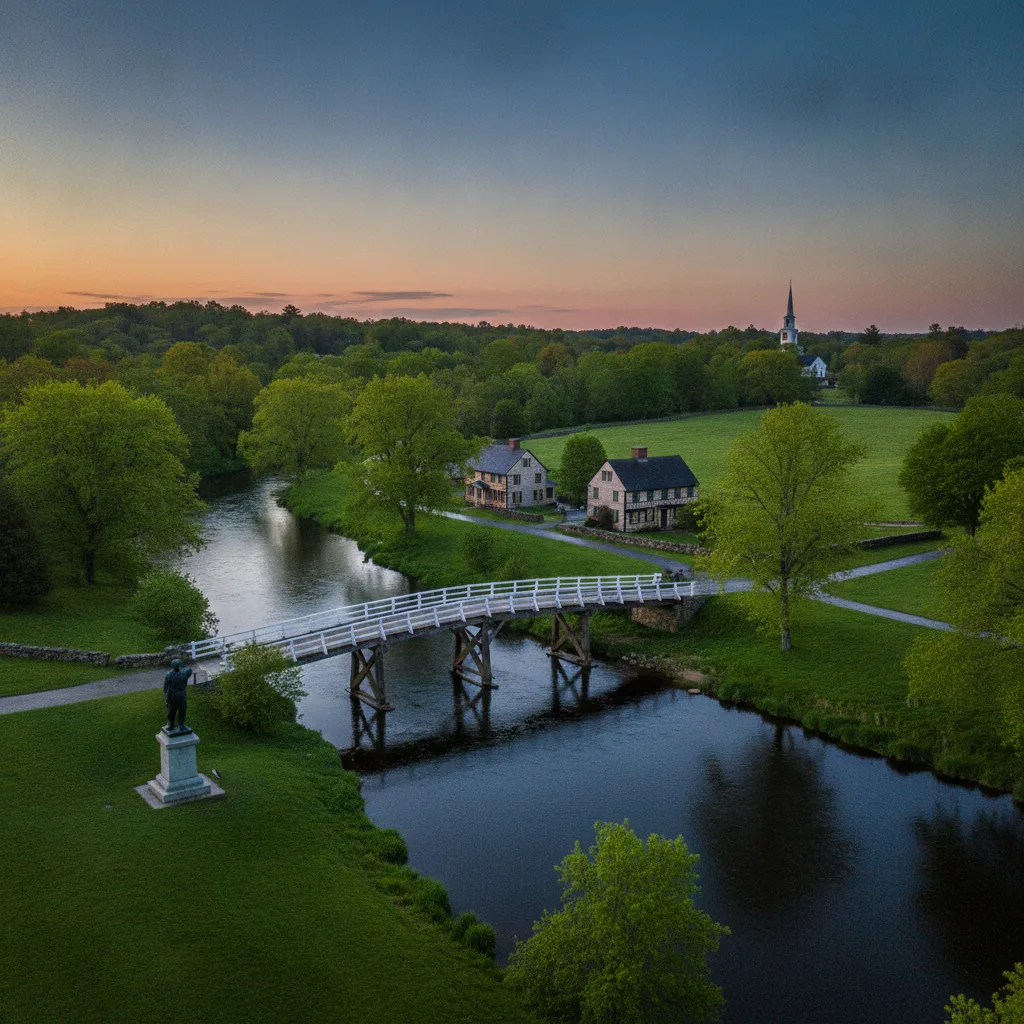
For travelers seeking to immerse themselves in the foundational moments of American liberty, a trip to Lexington & Concord Massachusetts is an essential journey. This isn't just a collection of historical markers; it's where the very spirit of the American Revolution took root, echoing with the "shot heard 'round the world" and the determined stand of colonial militias. Our team at Roam States has meticulously researched and compiled this guide to help you navigate these hallowed grounds, ensuring a confident and specific exploration of the sites that shaped a nation. Forget generic travel advice; we're here to provide the insights you need for a truly impactful visit to these iconic towns.
Why Visit Lexington & Concord
Lexington & Concord offer a profound connection to the birth of the United States. It's here, on April 19, 1775, that the American Revolution truly began, marking the first armed conflicts between British regulars and colonial militia. Visiting these towns allows you to walk in the footsteps of patriots like Paul Revere, William Dawes, and Samuel Prescott, and stand on the very ground where ordinary citizens made an extraordinary stand for freedom. Beyond the pivotal events of that fateful day, Lexington & Concord also boast a rich literary heritage, having been home to transcendentalist giants such as Ralph Waldo Emerson, Henry David Thoreau, and Louisa May Alcott. This unique blend of revolutionary history and literary legacy provides a multifaceted experience that resonates deeply with visitors of all ages.
Is It Worth Visiting?
Absolutely, is Lexington & Concord worth visiting? Our unequivocal answer is yes. For anyone with an interest in American history, literature, or simply the enduring human spirit of self-determination, these towns offer an unparalleled experience. Unlike static museum exhibits, the historic sites here are largely preserved landscapes and buildings, allowing for a tangible connection to the past. The Minute Man National Historical Park, for instance, spans miles of preserved battlefield, offering a vivid sense of the events of April 19, 1775. The ability to explore these sites, often with interpretive guides or ranger programs, brings the history to life in a way few other destinations can. The serene beauty of Walden Pond, the intellectual gravitas of Emerson's home, and the poignant stories at Orchard House all contribute to a visit that is both educational and deeply moving. If you're wondering is Lexington & Concord worth visiting, prepare to be inspired.
Who It's Best For
Lexington & Concord caters to a diverse range of travelers. History buffs, particularly those fascinated by the American Revolution, will find themselves in their element, with numerous battle sites, monuments, and museums to explore. Literary enthusiasts will appreciate the homes and haunts of transcendentalist authors, offering a glimpse into their lives and inspirations. Families with school-aged children will discover that the engaging stories and interactive elements at many sites make history accessible and exciting. The towns also appeal to those who enjoy scenic walks and outdoor exploration, with the Battle Road Trail and Walden Pond offering beautiful natural settings. While a strong interest in history or literature will certainly enhance the experience, the sheer significance of these locations makes them a compelling destination for anyone seeking a deeper understanding of American identity.
Getting There & Parking
Understanding how to get to Lexington & Concord is crucial for a smooth visit. Both towns are easily accessible from Boston, making them an ideal day trip or a multi-day excursion. By car, Lexington is approximately a 30-minute drive northwest of Boston, and Concord is another 10-15 minutes further west. We recommend using GPS for the most direct routes. For those wondering how to get to Lexington & Concord without a car, public transportation options are available, though they require a bit more planning. You can take the MBTA Commuter Rail Fitchburg Line from Boston's North Station to Concord. From the Concord station, many key sites are within walking or a short taxi/rideshare distance, or you can utilize local visitor center tours. To reach Lexington by public transport, you can take the MBTA Red Line subway to Alewife Station in Cambridge, then connect to an MBTA bus (Routes 76 or 78) to Lexington Center.
Parking in both towns is generally available, though it can be limited, especially during peak season or special events like Patriots' Day. At the Minute Man National Historical Park, there are several parking areas along the Battle Road Trail and at the North Bridge Visitor Center. The Lexington Visitors Center, located at 1875 Massachusetts Avenue, offers bus parking and is a good starting point for exploring Lexington Battle Green and nearby attractions. In Concord, the Concord Visitor Center at 58 Main Street also provides information and is a hub for walking tours, with public restrooms available daily from 7 a.m. to 7 p.m.. On-street parking is often available near attractions like the Ralph Waldo Emerson House. We advise arriving early, particularly on weekends or holidays, to secure convenient parking spots.
Top Things to Do
When planning your trip, you'll find a wealth of things to do at Lexington & Concord, each offering a unique window into history and culture. Our team has curated the essential experiences:
- Lexington Battle Green: This hallowed ground is where the first shots of the American Revolution were fired. We recommend taking a guided tour offered by the Lexington Visitors Center, often led by costumed interpreters, to truly understand the events of April 19, 1775. The Lexington Visitors Center is open daily from 8:30 a.m. to 4:30 p.m., except on Thanksgiving Day, Christmas Day, and New Year's Day.
- Minute Man National Historical Park: Spanning five miles, this park preserves the Battle Road, where colonial militia engaged British troops. There is no entrance fee to access Minute Man National Historical Park. We suggest walking or biking the Battle Road Trail to experience the landscape as it was during the conflict. The park grounds, trails, and parking areas are open daily from sunrise to sunset. The Minute Man Visitor Center offers a 22-minute multi-media presentation, "The Road to Revolution," which is highly recommended for context and plays every half hour.
- Old North Bridge (Concord): The site of "the shot heard 'round the world," this iconic bridge is a must-see. It's part of the Minute Man National Historical Park, and the North Bridge Visitor Center is nearby. The grounds are open from sunrise to sunset.
- Concord Museum: This museum is the gateway to Concord's rich revolutionary and literary history. It houses an impressive collection, including one of Paul Revere's lanterns and Henry David Thoreau's desk from Walden Pond. The museum is open Tuesday through Sunday from 10:00 a.m. to 4:00 p.m. during summer hours, and is closed on Easter Sunday, Thanksgiving Day, Christmas Eve, and Christmas Day. General admission for adults is $16, seniors/students $13, and youth (6-17) $8. We recommend allowing 1-2 hours for your visit.
- Louisa May Alcott's Orchard House: The beloved home where Louisa May Alcott wrote "Little Women." Guided tours offer a fascinating look into the lives of the Alcott family. The house is open year-round, with varying hours by season. From April 1st through October 31st, it's open weekdays and Saturdays from 10 am to 5 pm, and Sundays from 11 am to 5 pm. From November 1st through March 31st, hours are weekdays from 11 am to 3:30 pm, Saturdays from 10 am to 5 pm, and Sundays from 1 to 5 pm. Admission is charged, and timed-entry tickets are encouraged to guarantee admission, though walk-ins may be accommodated.
- Ralph Waldo Emerson House: Explore the home of the influential transcendentalist philosopher and essayist. The house is open for guided tours from late April through October, typically Thursday through Saturday from 10 a.m. to 4 p.m. and Sunday from 1 p.m. to 4 p.m.. Tours last approximately 45 minutes and are offered on a walk-in basis. Admission is $15 for adults, $12 for older adults (62+), and $8 for youths (7-17).
- Walden Pond State Reservation: Experience the tranquil setting that inspired Henry David Thoreau's seminal work. The pond offers opportunities for swimming, boating, and hiking. While there is no entrance fee, there is a parking fee during peak season. You can find more information about Walden Pond at Mass.gov/locations/walden-pond-state-reservation.
- Sleepy Hollow Cemetery (Concord): The final resting place for many notable figures, including the Alcotts, Emersons, and Thoreaus, in an area known as "Authors Ridge." The grounds are open daily from 8:30 a.m. to 4:30 p.m.. Guided walking tours are available on weekends from May through September, with advance tickets required.
These are just some of the many things to do in Lexington & Concord that our team highly recommends for a comprehensive historical and cultural experience.
Visiting With Kids
Exploring Lexington & Concord with kids can be an incredibly enriching experience, bringing history to life in a tangible way. We understand that keeping younger travelers engaged is key, and these historic towns offer several ways to do just that. The Minute Man National Historical Park, with its expansive grounds and the Battle Road Trail, provides ample space for children to run and explore while learning about the conflict. Many areas have interpretive signs and even reenactments during special events, which can captivate young imaginations. The Lexington Visitors Center offers "Battle Green 360" tours with expert guides in colonial dress, making the story of the first shots more engaging for children.
Louisa May Alcott's Orchard House, while a house museum, often hosts family-friendly programs and events, and the story of "Little Women" resonates with many children. The Concord Museum also offers interactive stations and scavenger hunts designed to encourage discovery for young visitors. When planning your visit to Lexington & Concord with kids, consider incorporating a picnic at one of the scenic spots within Minute Man National Historical Park or a leisurely walk around Walden Pond. The blend of outdoor activity and engaging historical narratives makes for a memorable family adventure.
Best Time to Visit
The best time to visit Lexington & Concord largely depends on your priorities. Spring and fall offer the most pleasant weather and stunning scenery. April is particularly significant due to Patriots' Day reenactments, which typically occur around the third Monday of the month. This is a vibrant but very crowded time, requiring early booking for accommodations and an expectation of larger crowds. Summer (June-August) brings warmer weather and longer daylight hours, ideal for exploring outdoor sites like the Battle Road Trail and Walden Pond. However, it's also peak tourist season, so expect more visitors and potentially higher prices. The Concord Museum offers "Summer Hours" from 10:00 a.m. to 4:00 p.m., Tuesday through Sunday. Orchard House also has extended hours until 7 pm monthly from April to October. Fall (September-October) provides beautiful foliage and comfortable temperatures, making it another excellent choice for a visit. Winter (November-March) is the quietest season, offering a more contemplative experience, though some attractions may have reduced hours or be closed. The Lexington Visitors Center is closed on Thanksgiving Day, Christmas Day, and New Year's Day. We recommend checking individual site websites for specific 2026 hours of operation before your trip.
Where to Stay Nearby
While Lexington & Concord are often visited as day trips from Boston, staying overnight allows for a more in-depth exploration of the area. Both towns offer a selection of charming inns and hotels. In Concord, the historic Concord's Colonial Inn is a popular choice, with prices for rooms potentially starting around $132/night. Another option is the North Bridge Inn B&B. Hotel prices in Concord can vary significantly depending on seasonality, with February often being the cheapest month.
For a wider range of accommodations, consider staying in nearby towns like Lexington, or even extending your search to the western suburbs of Boston such as Waltham or Burlington, which offer more chain hotel options. If you prefer to base yourself in a larger city with easy access to public transportation, Boston remains an excellent choice, allowing you to combine your historic visit with other attractions like the Boston Public Library or Faneuil Hall/Quincy Market. For a comprehensive list of places to stay in Massachusetts, refer to our guide on the Best places in Massachusetts.
Sample 2-Day Itinerary
To fully experience the rich history and literary heritage of Lexington & Concord, we recommend a two-day itinerary:
Day 1: Lexington's Revolutionary Beginnings
- Morning: Begin your day at the Lexington Visitors Center (1875 Massachusetts Avenue). Pick up maps and information, then join a Battle Green 360 walking tour led by a costumed guide to understand the events of April 19, 1775. Explore the Lexington Battle Green and visit the Minuteman Statue.
- Lunch: Enjoy lunch at a local eatery in Lexington Center.
- Afternoon: Drive or take a short ride to the Minute Man National Historical Park. Start at the Minute Man Visitor Center for the "Road to Revolution" film. Then, walk or drive a portion of the Battle Road Trail, stopping at historical markers and sites like the Paul Revere Capture Site.
- Evening: Check into your accommodation in Lexington or Concord. Enjoy dinner at a local restaurant.
Day 2: Concord's Literary & Revolutionary Legacy
- Morning: Start your day at the Old North Bridge within Minute Man National Historical Park, reflecting on "the shot heard 'round the world." Afterwards, head to the Concord Museum (53 Cambridge Turnpike) to see artifacts from the Revolution and literary figures. Allow 1-2 hours for the museum.
- Lunch: Have lunch in Concord Center, perhaps at a cafe or the historic Concord's Colonial Inn.
- Afternoon: Immerse yourself in Concord's literary heritage. Visit Louisa May Alcott's Orchard House (399 Lexington Road) for a guided tour. Then, proceed to the Ralph Waldo Emerson House (28 Cambridge Turnpike) for another insightful tour. Conclude your literary exploration with a visit to Sleepy Hollow Cemetery, especially Authors Ridge, where many literary giants are buried.
- Optional Extension: If time allows, drive to Walden Pond State Reservation for a peaceful walk around the pond, connecting with Henry David Thoreau's legacy.
- Evening: Enjoy a final dinner in Concord before heading back to your next destination.
Lexington & Concord tips
Our top tips for visiting Lexington & Concord include wearing comfortable walking shoes, as many sites involve walking. We recommend starting your day early, especially during peak season, to avoid crowds and secure parking. Consider purchasing a Patriot Pass for discounted admission to the Concord Museum and a historic walking tour. Always check the official websites for specific 2026 hours and any special event schedules before your visit, as these historic sites can have seasonal variations and closures.
Lexington & Concord parking
Parking is available at various locations throughout Lexington and Concord. In Lexington, the Visitors Center at 1875 Massachusetts Avenue has parking, including bus parking. For the Minute Man National Historical Park, there are multiple parking lots along the Battle Road Trail and near the North Bridge. In Concord, the Concord Visitor Center at 58 Main Street is a good starting point with public restrooms, and on-street parking can be found near many attractions. We advise arriving early, especially on weekends or Patriots' Day, as parking can fill up quickly.
best time to visit Lexington & Concord
The best time to visit Lexington & Concord is during the spring (late April to early June) or fall (September to October). Spring offers pleasant weather and the excitement of Patriots' Day reenactments, though it can be crowded. Fall provides beautiful foliage and comfortable temperatures. Summer is also popular but can be warm and more crowded. Winter is quieter, but some attractions may have reduced hours or be closed. The Concord Museum is open Tuesday through Sunday from 10:00 a.m. to 4:00 p.m. during summer hours.
Lexington & Concord hours and fees
Hours and fees for attractions in Lexington & Concord vary. The Minute Man National Historical Park has no entrance fee, and its grounds, trails, and parking areas are open daily from sunrise to sunset. The Lexington Visitors Center is open daily from 8:30 a.m. to 4:30 p.m., closed on major holidays. The Concord Museum is open Tuesday through Sunday, 10:00 a.m. to 4:00 p.m., with adult admission at $16. Louisa May Alcott's Orchard House is open year-round with varying seasonal hours and charges admission, encouraging timed-entry tickets. The Ralph Waldo Emerson House is open late April through October, Thursday-Sunday, with adult admission at $15. Always check individual site websites for the most current 2026 information.
Lexington & Concord itinerary
A recommended Lexington & Concord itinerary includes dedicating one day to Lexington's revolutionary sites, starting with the Battle Green and the Minute Man National Historical Park. The second day can focus on Concord's literary and revolutionary heritage, visiting the Old North Bridge, Concord Museum, Orchard House, Ralph Waldo Emerson House, and Sleepy Hollow Cemetery. This allows for a comprehensive exploration of both towns' significant contributions to American history and culture.
Lexington & Concord travel guide
This Lexington & Concord travel guide aims to provide independent travelers with confident, specific, and non-generic information for planning a trip to these historic Massachusetts towns. We cover why to visit, who it's best for, how to get there, top things to do, the best time to visit, where to stay, and a sample itinerary. Our team emphasizes verifying 2026 facts regarding hours, fees, and parking to ensure accuracy for your trip planning. For more Massachusetts adventures, check out our guides to Cape Ann and the Cape Cod National Seashore.
Our team at Roam States believes that a visit to Lexington & Concord is more than just a historical excursion; it's an opportunity to connect with the very essence of American independence and intellectual thought. From the solemn grounds of the Battle Green to the tranquil paths surrounding Walden Pond, these towns offer a powerful and inspiring journey. We are confident that with this guide, you will experience the profound legacy of Lexington & Concord Massachusetts firsthand.
Last updated: 2026-07-13 by the Roam States team.