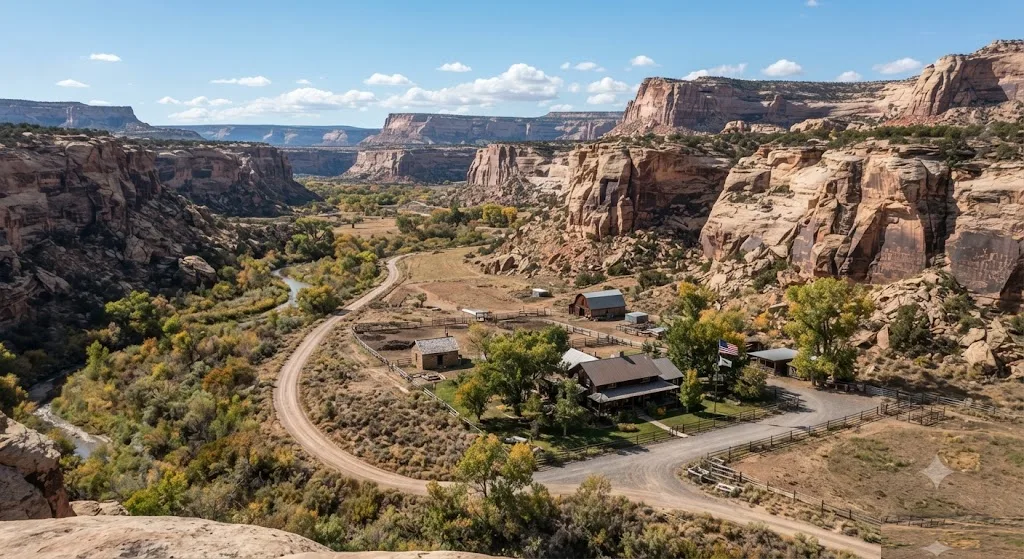
Our Nine Mile Canyon guide covers practical planning for Nine Mile Canyon Utah — best time to visit, getting there, and what to do on the ground. Often called 'the world's longest art gallery,' this canyon is renowned for its extensive collection of Native American petroglyphs and pictographs. It offers a fascinating glimpse into ancient cultures.
Why Visit Nine Mile Canyon
For those of us at Roam States, Nine Mile Canyon Utah represents a truly unparalleled journey into the past. This isn't just another scenic drive; it's an immersive experience into a vast open-air museum, showcasing thousands of rock art panels left by the ancient Fremont people and later the Ute, Shoshoni, and Paiute. We're talking about more than 10,000 cataloged images etched and painted onto the canyon walls, spanning an incredible 8,000 years of human history.
The sheer volume and preservation of the petroglyphs and pictographs here are astounding, making it a top destination for anyone with an interest in archaeology, history, or simply the profound beauty of human expression. From intricate hunting scenes and abstract designs to depictions of animals and human figures, each panel tells a story, offering a direct window into the beliefs and daily lives of these ancient cultures. We've found that every visit reveals new details, a faint outline previously missed, or a spiral pattern catching the light just so, proving that Nine Mile Canyon remains a place of continuous discovery.
Beyond the rock art, the canyon itself is a testament to the rugged beauty of eastern Utah. The drive through the canyon, which is actually about 46 miles long despite its name, is a journey through layered rock formations, sparse vegetation, and the winding Nine Mile Creek. You'll also encounter remnants of pioneer history, including old homesteads, stagecoach stations, and even a telegraph line, adding another layer to the canyon's rich narrative. It’s a place where the old blends wonderfully with the new, and you might even find yourself waiting for cattle to amble across the road.
Who It's Best For
Our team believes Nine Mile Canyon is an ideal destination for history buffs, archaeology enthusiasts, and anyone captivated by Native American cultures. If you appreciate the quiet solitude of a remote landscape and the thrill of discovering ancient art, this canyon will deeply resonate with you. It’s perfect for travelers who enjoy scenic drives combined with short interpretive walks, allowing for close-up viewing of the rock art without requiring strenuous backcountry excursions.
Families with curious children will find the "world's longest art gallery" to be an engaging and educational experience, akin to a real-life scavenger hunt for ancient treasures. Photographers will be particularly drawn to the unique light and textures of the canyon, offering endless opportunities for stunning shots of the rock art and the dramatic landscape. However, those seeking bustling tourist amenities or extensive modern facilities should adjust their expectations; Nine Mile Canyon offers a more rugged, self-sufficient adventure.
Getting There & Parking
Understanding how to get to Nine Mile Canyon is crucial, as it’s a remote destination with limited services. The most common approach, and the one we recommend, is from Wellington, Utah. From Wellington, travel east on US-191 (Main Street). Approximately two miles from the main town, you'll find a Chevron Station on your left with an informational sign for Nine Mile Canyon. The road to Nine Mile Canyon begins south of the Chevron as Soldier Creek Road. We advise resetting your odometer at the junction of US-191 and Soldier Creek Road and heading north on Soldier Creek Road.
Alternatively, from the north (near Myton), you can access the canyon via Highway 40/191, one mile west of Myton. This route involves a paved highway through Pleasant Valley, with the final descent into Nine Mile Canyon via Gate Canyon. However, the final six miles of Gate Canyon should only be attempted in dry weather due to potential flash floods and road conditions.
The main road through Nine Mile Canyon itself is about 46 to 50 miles long. While much of the main canyon road was paved in 2014, making it easily traversable by passenger cars, some sections are graded dirt. We strongly recommend checking local road conditions before your trip, especially during or after inclement weather. You can call the Castle Country Travel Council at (435) 637-3009 for the latest updates.
Parking throughout Nine Mile Canyon is generally at designated pull-offs along the roadside. Many of the major rock art sites are visible directly from these pull-offs, with some even featuring metal tubes to aid in spotting the art on the canyon walls. When stopping to view rock art or scenery, always pull fully off the road, as large gas and timber trucks frequently use these roads. There are no fees to enter Nine Mile Canyon itself, and no reservations are required for general access. However, if you plan to stay at Nine Mile Ranch, reservations are necessary for lodging and meals.
Top Things to Do
When planning your visit to Nine Mile Canyon, prepare for a day, or even two, filled with discovery. The main draw, of course, are the thousands of rock art panels. To truly maximize your experience and find the best things to do at Nine Mile Canyon, we recommend picking up a map from nearby Price or Helper. Many sites are easily accessible from roadside pull-outs, but some require short walks. Remember to bring binoculars for better viewing of panels located higher on the canyon walls.
- Driving the "World's Longest Art Gallery": The primary activity is driving the 46-mile (or up to 50-mile, depending on the source) canyon road, stopping at numerous marked sites. Allow 4-6 hours for the main sites, or a full day to explore more thoroughly. Key sites include the First Panel, Daddy Canyon Complex, Great Hunt Panel, Balanced Rock, Owl Panel, and the Historic Nutter Ranch.
- Exploring Nine Mile Canyon Hiking Trails: While extensive backpacking trails are not the focus here, several sites offer short, interpretive walks to get closer to the rock art. The Daddy Canyon Complex, for instance, has a short loop trail of about a mile roundtrip, leading to numerous rock art images, including the impressive Elk Hunt panel. Always follow marked trails and respect private land. Remember, public lands in Nine Mile Canyon are generally closed to camping, so dedicated Nine Mile Canyon hiking trails for overnight trips are not prevalent within the canyon itself.
- Photography: Capture the ancient artistry and the rugged beauty of the canyon. The interplay of light and shadow on the rock art can be particularly striking.
- Picnicking: Pack a picnic and enjoy it at one of the designated picnic areas. Cottonwood Glen Picnic Area and Daddy Canyon Complex both offer picnic tables and toilets for day use. There are no services in the canyon, so bring plenty of water and food.
- Wildlife Viewing: Keep an eye out for local wildlife, including deer, elk, coyotes, and wild turkeys, especially during early morning hikes.
- Visiting Harper Ghost Town: Explore the remnants of this historic settlement, offering a glimpse into the canyon's pioneer past.
- Nine Mile Ranch: Stop at the privately-owned Nine Mile Ranch, the only lodging and campground within the canyon. They offer cabins, campsites, and can provide assistance with recreational activities.
Remember, the slogan for visiting historic sites applies here: "take nothing but pictures, and leave nothing but footprints." Touching the artwork or climbing on structures is strictly prohibited to preserve these irreplaceable treasures.
Best Time to Visit
Our team recommends visiting Nine Mile Canyon during the spring and fall for the most pleasant experience. These seasons offer mild temperatures, making for comfortable driving and exploring. Spring brings blooming wildflowers, while fall showcases beautiful autumn colors against the canyon's backdrop.
Summers in Nine Mile Canyon can be extremely hot, with temperatures often exceeding 100 degrees Fahrenheit. While the high desert setting means little rainfall, isolated and intense thunderstorms can occur, potentially affecting road conditions, especially the unpaved sections and stream bed crossings. If you visit in summer, we advise starting early to avoid the midday heat and carrying ample water. Winters can be a lovely time to visit if there isn't heavy snow on the ground, but some areas may become icy.
The canyon is generally accessible year-round, but road conditions can fluctuate. It's always a good idea to check local forecasts and road reports before heading out. For example, the Nine Mile Ranch campground is open from mid-March to mid-November.
Where to Stay Nearby
For Nine Mile Canyon lodging, your options are limited within the canyon itself, but several towns nearby offer accommodations. The most unique and immersive experience is staying directly within the canyon at Nine Mile Ranch.
- Nine Mile Ranch: This is the only lodging and campground located within Nine Mile Canyon. It's a working cattle ranch offering rustic cabins (rebuilt original settler cabins), bed and breakfast rooms in the ranch house, and 18-24 campsites along Nine Mile Creek. The ranch provides functional showers and bathrooms, and some lodging options include breakfast. This is an excellent base for exploring the canyon and experiencing its solitude. Reservations are required for meals and recommended for lodging, especially during peak season.
Outside the canyon, the towns of Wellington and Price offer more conventional lodging options. These towns are located off US-6/191, providing convenient access to the canyon entrance.
- Wellington: Located closer to the southern entrance of Nine Mile Canyon, Wellington has a few motel options. The National 9 Inn Wellington is a common choice, offering an indoor swimming pool, free Wi-Fi, and an on-site restaurant. It's a convenient stopping point on your way to or from the canyon.
- Price: As a larger town, Price offers a broader selection of hotels and amenities, including restaurants and gas stations. The Greenwell Inn in Price is a 3-star hotel with a fitness center and free Wi-Fi. The Legacy Inn, just seven miles from the Nine Mile Canyon entrance, also provides free Wi-Fi and continental breakfast. Staying in Price allows for easier access to supplies before heading into the canyon, where services are non-existent.
When considering Nine Mile Canyon lodging, remember that the canyon itself is remote. Plan to fill up your gas tank and stock up on supplies in Wellington or Price before heading into the canyon.
Sample 2-Day Itinerary
To truly appreciate the depth of Nine Mile Canyon Utah, we recommend dedicating at least two days. This allows for a more relaxed pace and deeper exploration of the rock art and historical sites.
Day 1: Arrival and Southern Canyon Exploration
- Morning (8:00 AM - 12:00 PM): Travel and Initial Exploration
- Depart from your chosen base (e.g., Salt Lake City, approximately 3 hours away). Drive to Wellington, Utah, and fill up on gas and supplies.
- Head north on Soldier Creek Road towards Nine Mile Canyon. Reset your odometer at the US-191/Soldier Creek Road junction.
- Your first major stop will be around Mile Marker 20-22, where you'll begin to see the first rock art panels.
- Explore the initial sites, including the First Panel and Cottonwood Glen Picnic Area. Enjoy a packed lunch here.
- Afternoon (1:00 PM - 5:00 PM): Mid-Canyon Wonders
- Continue deeper into the canyon, stopping at sites like Harper Ghost Town (around MM 31) and Balanced Rock (around MM 32).
- Spend time viewing the various panels in the Harmon/Trail/Currant Canyons area.
- Evening (5:00 PM onwards): Check-in at Nine Mile Ranch
- Arrive at Nine Mile Ranch (around MM 24, but located within the canyon itself, you pass it early on the drive in, so you'll need to backtrack or plan to reach it later if coming from Myton). Check into your cabin or campsite.
- Enjoy a quiet evening, perhaps with a Dutch oven dinner available at the ranch (reservations required). Stargazing here is exceptional due to the remote location.
Day 2: Northern Canyon, Deeper Hikes, and Departure
- Morning (8:00 AM - 12:00 PM): Iconic Panels and Hiking
- After breakfast at Nine Mile Ranch, head further into the canyon.
- Focus on the more remote and significant sites like the Historic Nutter Ranch (around MM 38), Rasmussen Cave (around MM 43), and the Daddy Canyon Complex (around MM 44).
- Take the short hiking trail at Daddy Canyon Complex to see the Elk Hunt panel and other rock art up close. This is one of the best opportunities for Nine Mile Canyon hiking trails.
- Afternoon (1:00 PM - 3:00 PM): The Great Hunt and Departure
- Continue to the northernmost accessible sites, including the renowned Great Hunt Panel (around MM 46), one of the best-preserved rock art sites in Utah.
- Begin your drive out of the canyon, either returning the way you came or, if conditions allow and you're heading north, taking the Gate Canyon route towards Myton.
- Late Afternoon: Journey Home
- Allow ample time for your drive back to your next destination. Consider visiting nearby attractions like the Prehistoric Museum in Price if time permits.
Our team's verdict: Nine Mile Canyon is an essential Utah experience for those drawn to ancient history and raw natural beauty. It’s a journey that rewards patience and a keen eye, offering insights into cultures that shaped this land millennia ago. While remote, the effort to get there is undoubtedly worth it for the profound connection to the past you'll find.
Last updated: 2026-07-09 by the Roam States team.