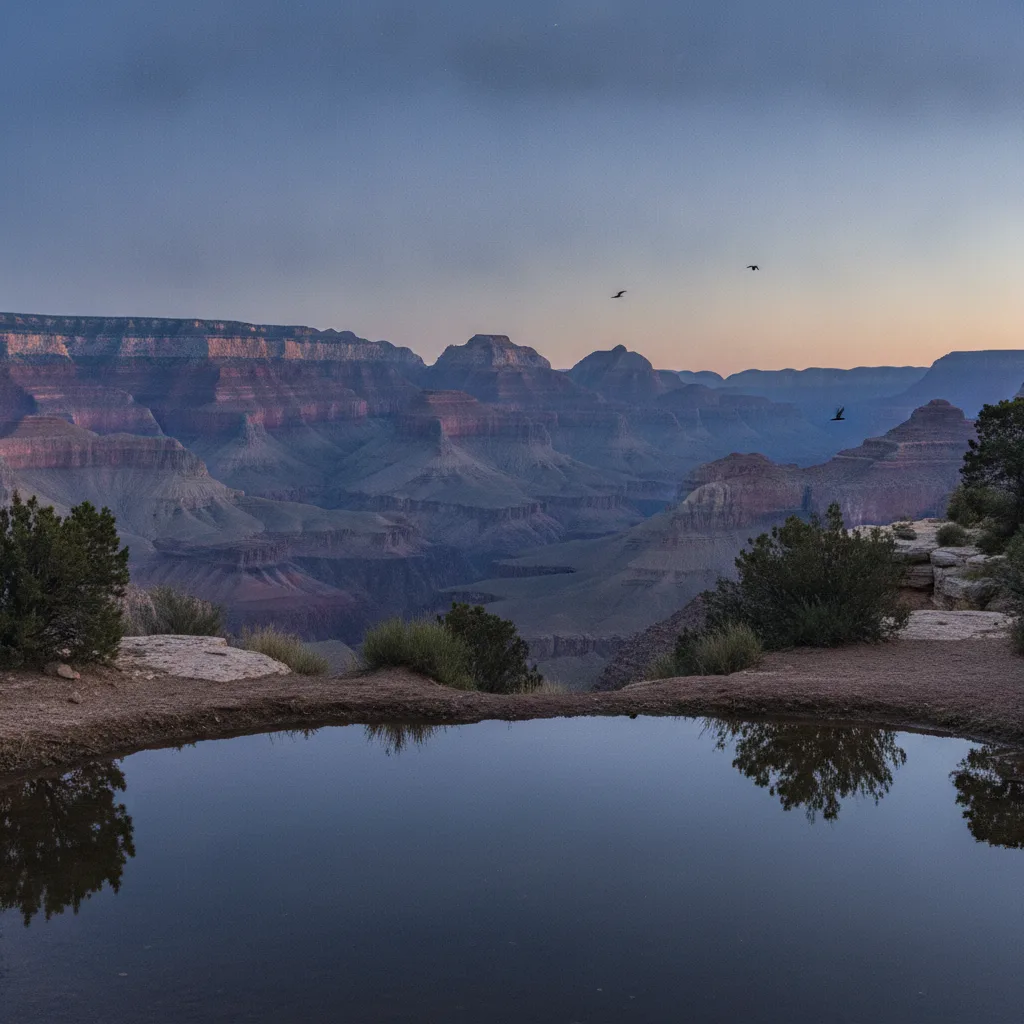
Welcome to our essential guide for navigating one of America's most iconic natural wonders. Our team at Roam States has meticulously compiled this resource to ensure your visit to Grand Canyon National Park Arizona is nothing short of spectacular. We cut through the noise, offering confident and specific advice that goes beyond generic travel fluff. From understanding the latest 2026 park regulations to uncovering the best viewpoints and trails, we're here to help you plan an unforgettable journey into the heart of the canyon.
Why Visit Grand Canyon National Park
The Grand Canyon is more than just a massive hole in the ground; it's a geological masterpiece, a testament to millions of years of natural forces at work. We believe every American traveler should experience its grandeur at least once. The sheer scale is impossible to comprehend until you stand on the rim, gazing into an abyss of vibrant reds, oranges, and purples that shift with the sun's movement. It's a place that inspires awe, fosters introspection, and offers unparalleled opportunities for adventure and connection with nature.
Beyond the breathtaking vistas, Grand Canyon National Park Arizona offers a rich tapestry of ecosystems, from the ponderosa pine forests of the South Rim to the desert flora of the inner canyon. The park is also steeped in cultural history, with evidence of human habitation dating back thousands of years. We find that the combination of natural beauty, geological significance, and cultural heritage makes it a truly profound destination.
Who It's Best For
The Grand Canyon truly offers something for everyone, making it a versatile destination for various types of travelers:
- First-Time National Park Visitors: Its accessibility and well-developed infrastructure on the South Rim make it an excellent introduction to the National Park system.
- Families: With numerous overlooks, ranger programs, and relatively easy rim trails, families with children of all ages will find engaging activities.
- Hikers & Backpackers: From challenging rim-to-river treks to multi-day backcountry adventures, the Grand Canyon National Park hiking trails cater to all levels of experience.
- Photographers: The ever-changing light, vast landscapes, and dramatic geological formations provide endless photographic opportunities, especially at sunrise and sunset.
- Road Trippers: Conveniently located in northern Arizona, it's a perfect stop on a larger Western US road trip. Consider combining it with other Arizona gems like Sedona & Oak Creek Canyon or Antelope Canyon.
- Nature Enthusiasts: Wildlife viewing, stargazing, and bird watching are popular activities, especially away from the busiest viewpoints.
Whether you're seeking a leisurely scenic drive or a strenuous physical challenge, the Grand Canyon delivers an experience tailored to your interests.
Getting There & Parking
Understanding how to get to Grand Canyon National Park and navigate its parking situation is key to a smooth visit.
How to Get There
The Grand Canyon National Park is primarily accessed via two rims: the South Rim and the North Rim. The South Rim is open year-round, while the North Rim is seasonal, typically from May 15 to October 15.
- By Car:
- South Rim: The most popular and accessible rim. You can reach it via Highway 64 (from Williams or Flagstaff) or Highway 180 (from Flagstaff). The gateway town of Tusayan, just south of the entrance, offers services and accommodations.
- North Rim: Accessible via Highway 67, which closes seasonally due to snow. The North Rim reopens for the 2026 season on May 15.
- By Air: The closest major airports are Phoenix Sky Harbor International Airport (PHX) and Las Vegas McCarran International Airport (LAS). Smaller regional airports include Flagstaff Pulliam Airport (FLG) and Grand Canyon National Park Airport (GCN) in Tusayan.
- By Train: The Grand Canyon Railway offers daily service from Williams, Arizona, to the South Rim, providing a historic and scenic alternative to driving.
Parking at Grand Canyon National Park
Parking inside Grand Canyon National Park is free, though you still need to pay the park entrance fee or show a valid pass. Entrance stations are cashless, so be prepared to pay by credit/debit card.
- South Rim:
- Visitor Center Lots (1-4): These are ideal for first-time visitors but tend to fill up by late morning, especially during peak season. Lot 1 has pull-through spaces for RVs and trailers.
- Market Plaza Lot B and Village Lot D: These serve as primary overflow lots.
- Shuttle System: We highly recommend utilizing the free shuttle bus system, especially on the South Rim. This allows you to park once and access many viewpoints and trailheads without moving your car.
- The Village (Blue) Route connects the Visitor Center Plaza with lodges, campgrounds, and Market Plaza. In summer 2026 (May 23-September 11), it runs from 6:30 AM to 9:30 PM, with buses every 10-15 minutes.
- The Kaibab Rim (Orange) Route provides direct service to the South Kaibab Trailhead, Yaki Point, and Yavapai Geology Museum. During summer 2026 (May 23-September 11), it operates from 5 AM to one hour after sunset, every 12-15 minutes.
- The Hermits Rest (Red) Route travels a scenic 7-mile road with numerous overlooks. From March 1 through November 30, 2026, Hermit Road is closed to private vehicles, with access only by shuttle or commercial tours. During summer 2026 (May 23-September 11), it runs from 8 AM to one hour after sunset.
- The Tusayan (Purple) Route offers park-and-ride service from the gateway community of Tusayan to the Grand Canyon Visitor Center during busy seasons, running every 45 minutes from 8 AM to 9 PM.
- RV and Trailer Parking: RVs and trailers should arrive very early or use the Tusayan park-and-ride in summer.
- North Rim: All paved roadways, including Highway 67, Cape Royal, and Point Imperial Roads, have reopened for the 2026 season as of May 15. Parking is available at viewpoints and trailheads, but services are limited, and no in-park overnight lodging is available during the 2026 season.
Top Things to Do
When considering things to do at Grand Canyon National Park, the options are as vast as the canyon itself. Our team recommends a mix of iconic experiences and lesser-known adventures to truly appreciate this natural wonder.
Iconic Viewpoints and Scenic Drives
No visit to Grand Canyon National Park Arizona is complete without soaking in the panoramic views. The South Rim offers the most accessible and numerous viewpoints:
- Mather Point: Often the first stop for many, offering expansive views and a great introduction to the canyon's scale.
- Yavapai Point & Geology Museum: Provides excellent interpretive exhibits explaining the canyon's formation, along with stunning views.
- Desert View Watchtower: Located at the East Entrance, this historic stone tower offers a unique perspective and sweeping views of the canyon and the Colorado River. The Desert View area is open, and visitors can view the Colorado River from this point.
- Lipan Point: Known for its wide-angle views, showcasing several rock layers and the river below. Note that Lipan Point and Lipan Point Road will be closed from June 22 through December 23, 2026, for rehabilitation work.
- Hermit Road: A scenic 7-mile drive with multiple overlooks, accessible by free shuttle bus from March 1 through November 30, 2026.
On the North Rim, which reopened May 15, 2026, following fire recovery efforts, visitors can access scenic drives like Cape Royal Road and Point Imperial Road, leading to viewpoints such as Point Imperial, Cape Royal, Roosevelt Point, Walhalla Overlook, and Angels Window.
Things to Do at Grand Canyon National Park: Beyond the Rim
- Mule Trips: For a truly unique perspective, consider a mule trip into the canyon. These popular excursions require advance reservations, often booked a year or more in advance.
- Rafting the Colorado River: Multi-day white-water rafting trips offer an immersive experience deep within the canyon. These are highly sought-after and booked through a lottery system or authorized concessionaires.
- Helicopter Tours: For a bird's-eye view, helicopter tours depart from Grand Canyon National Park Airport or Las Vegas, providing unparalleled aerial perspectives of the canyon.
- Stargazing: The Grand Canyon is an International Dark Sky Park. On clear nights, the celestial display is incredible. Join ranger-led astronomy programs or find a quiet spot away from artificial light.
- Ranger Programs: The National Park Service offers a variety of free ranger-led talks and walks, providing insights into the canyon's geology, ecology, and history. Check the park's schedule upon arrival for current offerings.
Grand Canyon National Park Hiking Trails
Exploring the Grand Canyon National Park hiking trails is an experience of a lifetime, offering perspectives impossible to gain from the rim. Whether you're looking for a short stroll or a challenging descent, there's a trail for you. Day hikes do not require permits, but any overnight trip below the rim requires a backcountry permit.
South Rim Trails
- Rim Trail: This mostly paved, relatively flat trail stretches for miles along the South Rim, connecting many of the major viewpoints. It's perfect for a leisurely walk, offering continuous canyon views with varying distances. You can walk as much or as little as you like, utilizing the free shuttle buses to hop on and off.
- Bright Angel Trail: One of the most famous Grand Canyon National Park hiking trails, Bright Angel offers a well-maintained path into the canyon. It provides shade and water stops (seasonal availability, check current conditions). We recommend hiking to the 1.5-Mile Resthouse or 3-Mile Resthouse for day hikes, turning around before you overexert yourself. Remember, going down is optional, but coming back up is mandatory!
- South Kaibab Trail: Known for its dramatic views and steep descent, the South Kaibab Trail offers little shade or water. It's a popular choice for day hikers aiming for Cedar Ridge (3 miles round trip) or Skeleton Point (6 miles round trip). Access to the South Kaibab Trailhead is by the Kaibab Rim (Orange) Route shuttle bus only.
- Hermit Trail: A more strenuous and less maintained trail than Bright Angel or South Kaibab, offering a rugged backcountry experience for experienced hikers. Access is via the Hermits Rest (Red) Route shuttle bus.
North Rim Trails
The North Rim offers a different hiking experience, generally steeper and less crowded. The North Kaibab Trail has reopened for foot traffic only as of May 15, 2026, though stock use is suspended for the season. Hikers should anticipate temporary closures or delays due to ongoing maintenance and post-fire conditions. Note that the North Kaibab Trail will be closed from the Redwall Bridge to Cottonwood Campground beginning October 15, 2026, making a traditional Rim-to-Rim hike impossible after that date.
- Bright Angel Point Trail: A short, paved path leading to a spectacular viewpoint. Note that this trail is currently closed due to impacts from the Dragon Bravo Fire.
- Widforss Trail: A longer, forested trail offering glimpses of the canyon and a quieter experience. This trail is also currently closed due to fire impacts.
- Cape Final Trail: A relatively flat trail leading to a secluded viewpoint with expansive eastern canyon views.
Always check the National Park Service website for current trail conditions, water availability, and any closures before embarking on any Grand Canyon National Park hiking trails. Remember to carry plenty of water, wear appropriate footwear, and be aware of the signs of heat exhaustion, especially in the inner canyon.
Best Time to Visit
Choosing the best time to visit Grand Canyon National Park depends on your priorities regarding weather, crowds, and accessibility.
- Spring (April-May) & Fall (September-October): We consider these the ideal seasons for most visitors. The weather is generally mild, with comfortable temperatures for hiking and sightseeing. Crowds are manageable compared to summer, and all South Rim services are typically open. The North Rim reopens on May 15, making late spring and early fall excellent for exploring both sides.
- Summer (June-August): This is peak season, meaning larger crowds and higher temperatures, especially in the inner canyon. Monsoon season, with afternoon thunderstorms, typically runs from early July through September. While the South Rim is bustling with activity and all services are fully operational, we recommend booking accommodations and activities well in advance.
- Winter (November-March): The South Rim remains open 24/7, 365 days a year. Winter offers a unique, serene experience with fewer crowds and the possibility of snow blanketing the canyon, creating a truly magical landscape. However, some services may be reduced, and inner canyon hiking can be challenging due to ice. The North Rim is closed to vehicle traffic during winter.
For the South Rim, the Grand Canyon Visitor Center is open daily from 8 AM to 4 PM beginning May 3, 2026. The Grand Canyon Conservancy Park Store is open daily from 8 AM to 8 PM.
Where to Stay Nearby
Accommodations around Grand Canyon National Park range from rustic camping to historic lodges. We recommend booking well in advance, especially for in-park options.
Inside Grand Canyon National Park
- South Rim Lodging:
- Historic Lodges: El Tovar Hotel, Bright Angel Lodge, Kachina Lodge, Thunderbird Lodge, and Phantom Ranch (at the bottom of the canyon) offer unique experiences. Phantom Ranch requires a lottery system for reservations.
- Modern Lodging: Yavapai Lodge and Maswik Lodge provide more contemporary options.
- North Rim Lodging: Note that overnight lodging is not available on the North Rim during the 2026 season due to ongoing recovery efforts. Visitors will need to seek accommodations outside the park.
Outside Grand Canyon National Park
- Tusayan, Arizona: Located just a few miles south of the South Rim entrance, Tusayan offers a variety of hotels, restaurants, and services. It's a convenient base for exploring the South Rim.
- Williams, Arizona: About an hour's drive south of the South Rim, Williams is a historic Route 66 town that serves as the gateway to the Grand Canyon Railway.
- Flagstaff, Arizona: Approximately 1.5 hours southeast of the South Rim, Flagstaff is a larger city with more extensive dining, shopping, and lodging options. It's also a great base for exploring other Northern Arizona attractions like Sedona and the Petrified Forest National Park.
- Jacob Lake, Arizona: The closest option for the North Rim, offering a lodge and campground.
Sample 2-Day Itinerary
To maximize your experience at Grand Canyon National Park, we've crafted a sample 2-day itinerary focusing on the accessible and popular South Rim.
Day 1: South Rim Highlights & Sunset
- Morning (Arrival & Orientation): Arrive at the South Rim and head to the Grand Canyon Visitor Center. Park in one of the designated lots (1-4). Grab a park map and check out the exhibits. Take the short, paved walk to Mather Point for your first awe-inspiring views.
- Late Morning (Geology & Views): Walk or take the Kaibab Rim (Orange) Route shuttle to Yavapai Point & Geology Museum. Spend some time learning about the canyon's formation and enjoying the views.
- Afternoon (Village Exploration & Lunch): Take the Village (Blue) Route shuttle to Grand Canyon Village. Explore historic buildings like El Tovar Hotel and Bright Angel Lodge. Enjoy lunch at one of the village restaurants or a picnic with a view.
- Late Afternoon (Rim Trail Walk): Walk a section of the paved Rim Trail between Grand Canyon Village and Mather Point, stopping at various overlooks like Hopi Point or Powell Point.
- Evening (Sunset Spectacle): Take the Hermits Rest (Red) Route shuttle (from March 1 to November 30, 2026, private vehicles are not allowed on Hermit Road) to Hopi Point or Pima Point for an unforgettable Grand Canyon sunset. Be prepared for crowds and allow ample time for the shuttle back.
Day 2: Inner Canyon Glimpse & Desert View
- Morning (Inner Canyon Day Hike): Start early with a day hike down the Bright Angel Trail. We recommend hiking to the 1.5-Mile Resthouse or 3-Mile Resthouse, soaking in the unique perspective of being below the rim. Remember to carry plenty of water and snacks, and turn around before you are too tired to ascend. Alternatively, take the Kaibab Rim (Orange) Route shuttle to the South Kaibab Trailhead and hike to Cedar Ridge.
- Lunch: Return to Grand Canyon Village for lunch.
- Afternoon (Desert View Drive): Drive east along Desert View Drive (Highway 64) towards the East Entrance. Stop at overlooks like Grandview Point and Moran Point.
- Late Afternoon (Desert View Watchtower): Your final stop is the Desert View Watchtower, a historic structure offering panoramic views of the canyon and the Colorado River. The area is open, and visitors can view the Colorado River from this point.
- Evening: Depart from the East Entrance or return to your accommodation.
Is It Worth Visiting?
Without a doubt, the question "is Grand Canyon National Park worth visiting?" can be answered with a resounding yes from our team. This natural wonder consistently ranks among the top travel destinations for a reason. Its immense scale, vibrant colors, and profound sense of geological time offer an experience that few other places on Earth can match.
We understand that planning a trip to such a popular destination can feel overwhelming, but the rewards far outweigh any logistical challenges. The park's infrastructure, particularly on the South Rim, is well-developed to accommodate visitors, offering a range of services, accommodations, and transportation options. While the North Rim has limited services in 2026 due to fire recovery, its reopening still provides a unique, quieter experience for those seeking a more remote adventure. From the ease of scenic drives and shuttle access to the challenge of backcountry hiking, the Grand Canyon caters to a diverse array of interests and fitness levels. The opportunity to witness a sunrise or sunset over the canyon, to hike below the rim, or simply to stand in silent awe of its vastness, makes it an absolutely essential stop on any US travel itinerary. So, if you're asking yourself "is Grand Canyon National Park worth visiting?", our expert verdict is a definitive yes – prepare to be amazed.
Expert Verdict
The Grand Canyon is a monumental testament to nature's power and beauty, and we confidently declare it an essential American experience. Its sheer scale and geological artistry are unmatched, offering profound moments of awe and adventure. Don't let the crowds deter you; strategic planning ensures an unforgettable journey into its depths. This is not just a destination; it's a pilgrimage.
Grand Canyon National Park Camping
For many, the ultimate way to experience the Grand Canyon is by spending a night under its vast, star-filled sky. Grand Canyon National Park camping offers a range of options, from developed campgrounds on the rim to rugged backcountry sites deep within the canyon.
Developed Campgrounds
Reservations for all in-park campgrounds are highly recommended and can be made up to six months in advance through Recreation.gov.
- South Rim:
- Mather Campground: Located in Grand Canyon Village, Mather is the largest and most popular campground on the South Rim, open year-round. It accommodates both tents and RVs (up to 30 feet, no hookups). Each site includes a campfire ring/cooking grate and picnic table. Flush toilets and potable water are available, and coin-operated showers and laundry facilities are at the Camper Services building near the entrance. Reservations are strongly recommended from March through November. There are also 15 first-come, first-served campsites available daily at the campground office at 8 AM.
- Desert View Campground: Situated near the East Entrance, about 23 miles (37 km) east of Grand Canyon Village, Desert View Campground offers a more peaceful setting with 49 campsites. It's open seasonally from April 11 through October 18, 2026, and requires advanced reservations through Recreation.gov, which can be made up to six months in advance. Sites accommodate tents or smaller RVs/trailers up to 30 feet (no hookups). Flush toilets and potable water are available.
- Trailer Village RV Campground: The only in-park campground with full hookups for RVs, located in Grand Canyon Village and open year-round.
- North Rim:
- North Rim Campground: This campground reopened on June 1, 2026, for the season. Reservations are available through Recreation.gov. However, potable water is not available at the campground, though it can be purchased at the nearby General Store. Campground showers and laundry facilities will remain closed for the 2026 season. No RV hookups are available. Due to fire restrictions, campfires, charcoal fires, and all other open flames are prohibited, with outdoor smoking only allowed within an enclosed vehicle.
Backcountry Grand Canyon National Park Camping
Overnight camping below the rim requires a backcountry permit. These permits are highly competitive and obtained through an early access lottery via Recreation.gov, typically five months in advance. The application fee is a non-refundable $10 per lottery entry, with an additional $15 per person, per night fee if approved. Be aware that Rim-to-Rim hiking will not be possible from October 15, 2026, through approximately February 2027 due to a partial closure of the North Kaibab Trail for Transcanyon Waterline repair work.
Last updated: 2026-07-12 by the Roam States team.