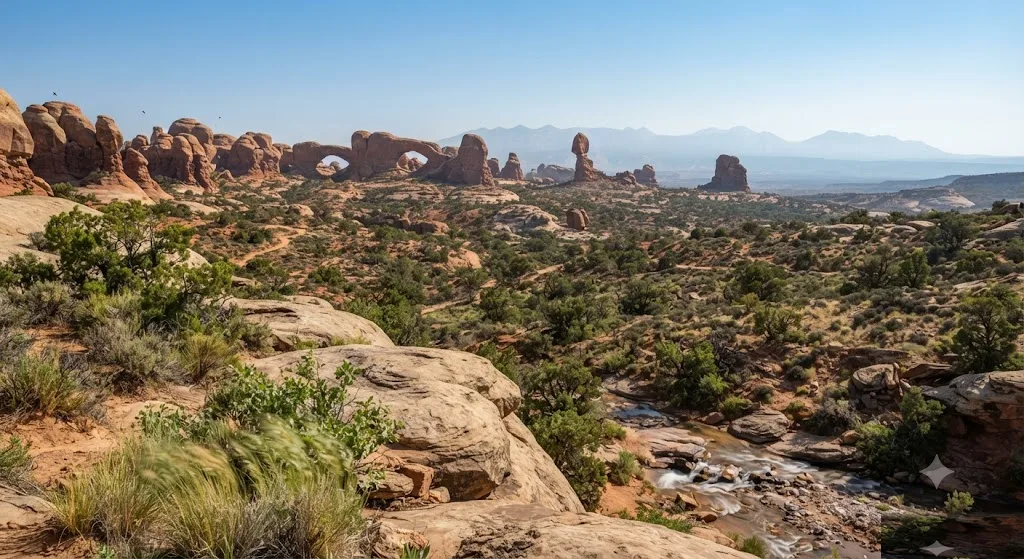
Welcome to our essential guide for planning an unforgettable trip to Arches National Park Utah. Our team at Roam States has explored the red rock wonders, hiked the iconic trails, and gathered all the crucial details you need to navigate this extraordinary national park. Forget the generic travel advice; we’re here to provide confident, specific insights to ensure your visit is nothing short of spectacular, from securing reservations to finding the best viewpoints.
Why Visit Arches National Park
Arches National Park is a geological marvel, a landscape sculpted by millions of years of wind and water into an astounding collection of over 2,000 natural sandstone arches, towering pinnacles, and balanced rocks. We believe the sheer scale and unique beauty of this park make it a truly essential stop on any Utah road trip. From the delicate grace of Delicate Arch, famously gracing Utah license plates, to the immense span of Landscape Arch, the park offers a visual feast unlike anywhere else on Earth. Every turn reveals another breathtaking vista, challenging your imagination and offering unparalleled photographic opportunities. So, is Arches National Park worth visiting? Absolutely. Its unique geological formations and stunning desert landscapes provide an experience that resonates long after you've left. We find that the dramatic contrasts of the red rock against the often-blue desert sky are simply mesmerizing, making Arches National Park worth visiting for anyone seeking natural beauty and adventure.
Who It's Best For
Arches National Park truly offers something for everyone, making it an ideal destination for a wide range of travelers. It's perfect for families with children, as many of the shorter trails are easily accessible and lead to spectacular arches that will ignite young imaginations. Photographers will find endless inspiration in the dramatic landscapes, especially during sunrise and sunset when the light paints the sandstone in fiery hues. Adventure seekers and hikers will revel in the numerous trails, from easy strolls to more challenging routes that require scrambling and navigating primitive paths. Even those who prefer to experience nature from the comfort of their vehicle will find plenty to enjoy along the scenic drive, with numerous pull-offs offering stunning views. We've seen everyone from solo backpackers to multi-generational families enjoying the park's wonders, proving its universal appeal.
Getting There & Parking
Arches National Park is located just five miles north of Moab, Utah, making it incredibly accessible. The main entrance is directly off US-191. If you're wondering how to get to Arches National Park, the most common approach is by car. The nearest major airports are Grand Junction Regional Airport (GJT) in Colorado, about 1.5 hours away, and Salt Lake City International Airport (SLC), roughly a 3.5 to 4-hour drive. We always recommend renting a car, as public transportation to the park is non-existent, and having your own vehicle gives you the freedom to explore at your own pace.
Parking within Arches National Park can be extremely challenging, especially during peak season (spring and fall) and popular times of day. Many trailheads, such as Delicate Arch, Devils Garden, and Balanced Rock, have limited parking lots that fill up quickly, often before 8:00 AM. If you arrive and a lot is full, you may need to wait for a space to open up or return at a less busy time. The park does not currently operate a shuttle system. We strongly advise arriving early in the morning or later in the afternoon to avoid the worst of the crowds and parking woes. Understanding how to get to Arches National Park and managing parking expectations is key to a smooth visit.
Timed Entry Reservation System: For 2026, Arches National Park continues to implement a timed entry reservation system during its busiest months to manage congestion. From April 1 through October 31, 2026, visitors will need a timed entry reservation to enter the park between 7:00 AM and 4:00 PM. Reservations are released in monthly blocks three months in advance, with additional tickets released one day in advance at 6:00 PM MT. We cannot stress enough the importance of securing your reservation well in advance, as they often sell out within minutes. Without a timed entry reservation during these hours, you will be denied entry unless you have a Devils Garden Campground reservation, a Fiery Furnace permit, or a special use permit.
Top Things to Do
The list of things to do at Arches National Park is extensive, catering to all energy levels and interests. From scenic drives to challenging backcountry hikes, our team has curated the must-see experiences.
- Scenic Drive: The 18-mile (one-way) Arches Scenic Drive is your gateway to the park's major attractions. We recommend stopping at numerous viewpoints along the way, including Park Avenue, Balanced Rock, and the Windows Section.
- Delicate Arch Viewpoint Trail: The iconic Delicate Arch can be seen from two viewpoints. The Lower Delicate Arch Viewpoint is an easy 0.5-mile roundtrip walk to see the arch from a distance. For a closer, more rewarding experience, the Upper Delicate Arch Viewpoint offers a slightly longer walk.
- Windows Section: This easily accessible area features several massive arches, including North Window, South Window, and Turret Arch. The trails here are relatively flat and family-friendly, making it one of our favorite things to do at Arches National Park for all ages.
- Double Arch: Located near the Windows Section, Double Arch is a spectacular formation consisting of two arches that share a common footing. It's a short, easy walk from the parking lot.
- Landscape Arch: Found in the Devils Garden area, Landscape Arch boasts the longest span of any natural arch in North America. The trail to reach it is mostly flat and well-maintained.
Arches National Park Hiking Trails
For those eager to lace up their boots, Arches National Park hiking trails offer incredible opportunities to get up close with the park's geological wonders. We consider hiking the best way to truly experience the park's unique beauty. Remember to carry plenty of water, wear sturdy shoes, and start early to avoid the midday heat.
- Delicate Arch Trail: This strenuous 3.2-mile roundtrip hike (elevation gain 480 feet) leads directly to the base of Delicate Arch. It involves a steady uphill climb on a slickrock surface, but the reward of standing beneath this majestic arch is unparalleled. We highly recommend this for experienced hikers.
- Devils Garden Trail: This is one of the most popular Arches National Park hiking trails, offering access to several arches. The first section to Landscape Arch is relatively easy (1.6 miles roundtrip). Beyond that, the Primitive Trail offers a more challenging 7.8-mile loop that requires scrambling over slickrock and navigating narrow ledges to see arches like Double O Arch and Private Arch.
- Park Avenue Trail: A relatively easy 2-mile roundtrip hike that descends into a canyon resembling a city skyline, with massive rock formations towering on either side.
- Balanced Rock Trail: A short, paved 0.3-mile loop trail around the base of the iconic Balanced Rock.
Best Time to Visit
The best time to visit Arches National Park is during the spring (April to May) and fall (September to October). During these seasons, temperatures are mild, ranging from 60-80°F (15-27°C) during the day, making hiking and outdoor activities much more enjoyable. However, these are also the busiest times, requiring advance planning for timed entry reservations and accommodation. We find that the vibrant colors of the desert flora in spring or the crisp air of fall enhance the park's beauty.
Summer (June to August) brings intense heat, with daytime temperatures often exceeding 100°F (38°C). While the park is open, we advise against strenuous hiking during midday hours. If you visit in summer, plan activities for early mornings and late evenings. Winter (November to March) offers a unique, serene experience with fewer crowds and the possibility of snow dusting the red rocks, creating a stunning contrast. Temperatures can be cold, and some trails may be icy, but it's a magical time for photography and solitude.
Where to Stay Nearby
While there is only one campground within Arches National Park, the nearby town of Moab, Utah, serves as the primary gateway and offers a wide array of accommodation options, from budget-friendly motels to upscale hotels and vacation rentals. Moab is a vibrant outdoor adventure hub, providing amenities, restaurants, and shops just a short drive from the park entrance.
For those looking to explore more of Utah's incredible landscapes, Moab is also an excellent base for visiting Canyonlands National Park, which is just a short drive away. We often combine visits to both parks due to their proximity.
Arches National Park Camping
The only campground within Arches National Park is the Devils Garden Campground. It offers 51 individual sites and two group sites, nestled among juniper trees and sandstone fins. We consider Arches National Park camping at Devils Garden to be an immersive experience, allowing you to wake up surrounded by the park's stunning scenery. Reservations are highly competitive and essential, especially during peak season. From March 1 to October 31, 2026, all campsites must be reserved in advance through Recreation.gov up to six months ahead of time. During the off-season (November 1 to February 28), sites are available on a first-come, first-served basis. There are no hookups for RVs, but potable water and flush toilets are available.
If you miss out on Devils Garden, numerous private and Bureau of Land Management (BLM) campgrounds are available just outside the park near Moab. These often provide more amenities and can be a great alternative for Arches National Park camping.
Sample 2-Day Itinerary
To help you make the most of your visit, our team has put together a sample 2-day itinerary for Arches National Park. This plan balances popular sights with opportunities for hiking and photography.
Day 1: Iconic Arches & Scenic Views
- Morning (7:00 AM - 12:00 PM): Arrive early with your timed entry reservation. Head directly to the Devils Garden area. Hike the Devils Garden Trail to Landscape Arch, Pine Tree Arch, and Tunnel Arch. If you're up for a challenge, continue on the Primitive Trail to Double O Arch.
- Lunch (12:00 PM - 1:00 PM): Enjoy a packed lunch at a scenic viewpoint or return to your car for a break.
- Afternoon (1:00 PM - 5:00 PM): Explore the Windows Section. Hike the easy loops to North Window, South Window, Turret Arch, and Double Arch. These are excellent for families and offer incredible photo opportunities.
- Evening (5:00 PM onwards): Drive to the Delicate Arch Viewpoint. For the best experience, hike the 3.2-mile roundtrip trail to the base of Delicate Arch for sunset. The light on the arch at this time is truly magical. Alternatively, visit the Lower Delicate Arch Viewpoint for a shorter walk.
Day 2: Hidden Gems & Departure
- Morning (7:00 AM - 12:00 PM): Start your day with a hike to Park Avenue. Then, explore the Balanced Rock loop. Consider a visit to Courthouse Towers or the La Sal Mountains Viewpoint for panoramic vistas.
- Lunch (12:00 PM - 1:00 PM): Head into Moab for lunch and to stock up on any supplies.
- Afternoon (1:00 PM - 4:00 PM): Depending on your interest and energy, you could revisit a favorite spot, explore a lesser-known trail like the Tower Arch Trail (requiring a 4x4 for part of the access road), or enjoy some of the activities in Moab. Consider a scenic drive along the Colorado River.
- Late Afternoon: Depart Arches National Park, perhaps heading south towards Monument Valley Navajo Tribal Park or west to explore more of Utah's incredible national parks like Zion National Park or Bryce Canyon National Park.
Last updated: 2026-07-08 by the Roam States team.