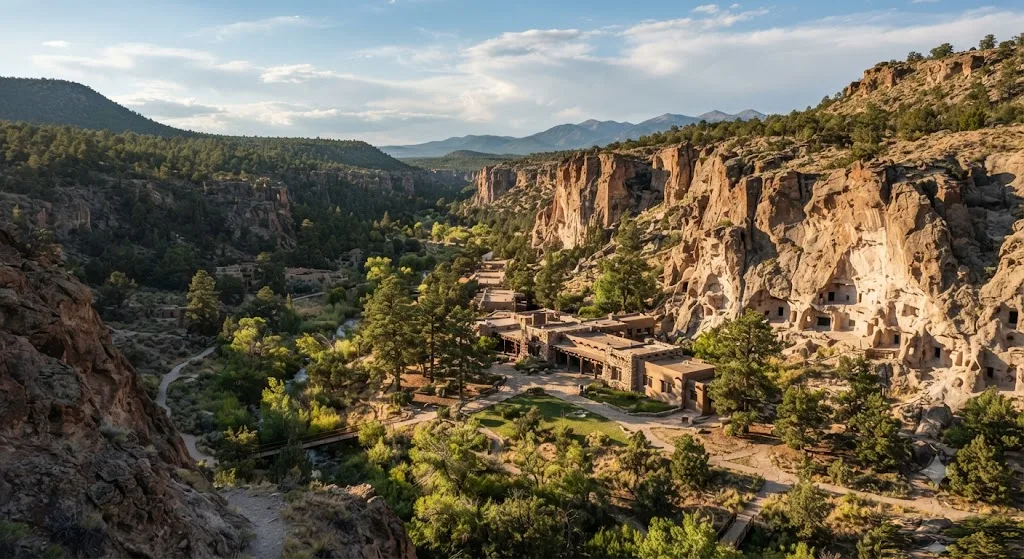
Our team at Roam States understands that planning a trip to a significant historical and natural site requires precise, up-to-date information. That's why we’ve compiled this comprehensive guide to ensure your visit to Bandelier National Monument New Mexico is nothing short of exceptional. This remarkable national monument preserves the ancestral Puebloan cliff dwellings and petroglyphs carved into volcanic tuff, offering a profound glimpse into a vibrant past. We aim to cut through the generic travel fluff to provide you with confident, specific recommendations for an unforgettable experience.
Why Visit Bandelier National Monument
Bandelier National Monument stands as a testament to human ingenuity and resilience, protecting over 33,000 acres of rugged canyon and mesa country. For more than 11,000 years, people have called this area home, leaving behind a rich tapestry of petroglyphs, dwellings carved directly into the soft volcanic tuff cliffs, and impressive masonry pueblos. Our team recommends a visit here for anyone seeking a deep connection with ancient cultures and breathtaking natural beauty.
The primary draw is undoubtedly the Ancestral Puebloan cliff dwellings, some of the most accessible ruins in the Southwest. These unique structures, often carved into the volcanic rock, offer a tangible link to the communities that thrived here between 1150 and 1550 CE. Beyond the archaeological wonders, Bandelier also encompasses thousands of acres of designated wilderness, with over 70 miles of trails catering to various skill levels. It's a place where history, geology, and ecology converge, providing a truly immersive experience for every traveler.
Moreover, Bandelier National Monument holds significant historical value beyond its ancient inhabitants. The Civilian Conservation Corps (CCC) played a crucial role in developing the monument during the Great Depression, constructing roads, trails, and buildings that are now part of a National Historic Landmark district. The monument also briefly housed staff from the Manhattan Project during World War II, adding another layer to its multifaceted history.
Who It's Best For
Bandelier National Monument is an ideal destination for a diverse range of visitors, from history buffs and avid hikers to families seeking an educational adventure. We believe it's particularly well-suited for:
- History and Archaeology Enthusiasts: Those fascinated by ancient cultures will find the well-preserved cliff dwellings, cavates, and petroglyphs incredibly rewarding. The opportunity to climb into some of these dwellings offers a unique, hands-on historical experience.
- Hikers and Outdoor Adventurers: With trails ranging from easy loops to challenging backcountry routes, Bandelier appeals to all levels of hikers. The diverse landscapes, from canyon floors to mesa tops, provide stunning scenery and opportunities for solitude.
- Families with Curious Kids: The accessible nature of many sites, combined with the thrill of climbing ladders into ancient homes, makes Bandelier National Monument with kids a fantastic and engaging educational trip.
- Nature Photographers: The dramatic canyons, unique geological formations, and diverse plant and animal life offer endless photographic opportunities, especially during the golden hours of dawn and dusk.
- Those Seeking a Cultural Immersion: Bandelier protects the ancestral lands of at least 23 tribal nations, offering a chance to learn about the enduring legacy of Puebloan peoples.
While the monument offers a partially accessible main loop trail, visitors with significant mobility challenges should be aware that many trails, particularly those leading to cliff dwellings requiring ladders, do not meet ADA standards. However, the visitor center and its exhibits are fully accessible.
Getting There & Parking
Understanding how to get to Bandelier National Monument and navigate its parking situation is key to a smooth visit. The monument is situated near Los Alamos, New Mexico, approximately 40 miles northwest of Santa Fe, making it a popular day trip destination.
Directions to Bandelier National Monument
From Santa Fe, we recommend taking US-84/285 North, then turning onto NM-502 West towards Los Alamos. Continue on NM-502, then take NM-4 South for about 12 miles to reach the monument entrance. From Albuquerque, head north on I-25 towards Santa Fe, then take exit 276 for NM-502 West towards Los Alamos. Continue on NM-502 West for approximately 30 miles, then take NM-4 South for about 12 miles to the monument entrance. Be aware that cell service can be limited in the canyon, particularly for non-Verizon users, so downloading maps beforehand is advisable. Services like Uber and Lyft can drop you off, but securing a ride out might be difficult without prior arrangements.
Parking at Bandelier National Monument
The main parking lot is located at the visitor center in Frijoles Canyon. Our team strongly advises arriving early, ideally before 9:00 AM, especially during peak seasons, to secure a parking spot. The canyon parking lot is relatively small and fills up quickly.
Seasonal Shuttle Service (2026)
For 2026, Bandelier National Monument operates a free seasonal shuttle service from March 19 through October 14. This shuttle runs intermittently on weekends and holidays, starting at 10:30 a.m.. Unlike previous years, the shuttle is not mandatory unless the parking lots in Frijoles Canyon are full. The shuttle boards at the Frey Trail Parking Lot and drops off at the park Visitor Center, running every 30 minutes. It's important to note that the shuttle does not take you directly to the archaeological sites, but rather to the visitor center, from which you can access the trails. If you plan to use the shuttle, be aware that pets are not allowed on the bus. We recommend checking the official Bandelier National Monument website for the most current shuttle schedule and any operational changes before your visit.
Top Things to Do
There are countless things to do at Bandelier National Monument, offering a blend of historical exploration, scenic hikes, and opportunities for quiet reflection. Our team has curated a list of must-do activities to help you make the most of your trip.
Explore Frijoles Canyon's Main Loop Trail
The Main Loop Trail, also known as the Pueblo Loop Trail, is where most visitors begin their exploration. This 1.2-mile loop trail starts directly from the visitor center and provides easy access to excavated archaeological sites, including the iconic cliff dwellings and cavates (small rooms carved into the cliffs). We highly recommend purchasing a trail guide at the visitor center to enhance your understanding of the 21 interpretive stops along the way. While partially accessible, some sections have steep grades and pinch points.
Ascend to Alcove House (formerly Ceremonial Cave)
For those comfortable with heights and climbing ladders, the journey to Alcove House is a definite highlight. This natural recess in the cliff face, located about a half-mile past the Main Loop Trail, once housed 25 Ancestral Puebloans. Reaching it involves climbing four long wooden ladders and a series of stone steps, ascending approximately 140 feet. The reward is an intimate experience within a significant dwelling and panoramic views of the canyon. This is one of the most unique things to do at Bandelier National Monument.
Hike the Frey Trail
The Frey Trail offers an alternative, more strenuous route into Frijoles Canyon. This 1.5-mile trail follows the historic (pre-1930s) route, descending from the mesa top near the Frey Trail Parking Lot to the visitor center. It provides breathtaking views and a different perspective of the canyon's grandeur. If you're taking the shuttle, you can ride it to the visitor center and then hike up the Frey Trail, or vice versa.
Visit the Tsankawi Unit
For a quieter, more adventurous experience, our team suggests exploring the detached Tsankawi Prehistoric Sites. Located along NM-4, about 14.5 miles northeast of the main monument, this 1.5-mile loop trail takes visitors across a mesa top and through centuries-old pathways worn into the volcanic tuff by Ancestral Pueblo people. Here, you'll discover cavates, petroglyphs, and sweeping views of the Pajarito Plateau. The trail includes ladders and uneven terrain, offering a more rugged exploration. Please note that the Tsankawi Unit was temporarily closed for a trails and visitor improvement project in early March 2026, so always check for current conditions.
Backcountry Hiking and Camping
Bandelier National Monument boasts 23,000 acres of designated wilderness and over 70 miles of trails beyond the main canyon. For experienced hikers seeking solitude, backcountry trails lead to more remote ruins and stunning natural landscapes. Wilderness permits are required for overnight stays and must be obtained by phone at the visitor center.
Things to Do in Los Alamos
Just a short drive from Bandelier, Los Alamos offers a fascinating contrast of history and science. Known as the secret city of the Manhattan Project, it provides unique attractions for visitors. Here are some things to do in Los Alamos:
- Bradbury Science Museum: Delve into the history of the atomic bomb and the ongoing research at Los Alamos National Laboratory. It's a highly engaging and educational experience for all ages.
- Manhattan Project National Historical Park: Explore sites related to the top-secret World War II project, including historic buildings and exhibits that tell the story of the scientists who changed the world.
- Los Alamos History Museum: Discover the rich history of the Pajarito Plateau, from Ancestral Puebloans to the homesteaders and the early days of Los Alamos.
- Los Alamos Nature Center: Enjoy interactive exhibits, a planetarium, and various nature trails that showcase the local flora and fauna.
Best Time to Visit
Choosing the best time to visit Bandelier National Monument can significantly impact your experience. Our team recommends considering the weather, crowd levels, and shuttle operations.
Spring (March to May)
Spring offers pleasant temperatures, typically in the 70s, making it excellent for hiking. Wildflowers begin to bloom, adding vibrant colors to the landscape. However, be prepared for unpredictable weather, as spring can also bring sudden snowstorms and temperatures in the 40s. The seasonal shuttle service begins in mid-March, which can help manage parking congestion.
Summer (June to August)
Summer is a popular time to visit, but it can be hot and crowded. June is usually the hottest month, and July, August, and September often see afternoon thunderstorms with heavy rain and lightning. We advise starting your hikes early in the morning or later in the afternoon to avoid the midday heat. The shuttle operates throughout the summer, often intermittently on weekends and holidays, and may become mandatory if canyon parking lots fill up. Stage II fire restrictions have been implemented in the region as of June 26, 2026, which may affect activities like campfires. Bring plenty of water, sun protection, and be aware of active bees.
Fall (September to November)
Fall is often considered one of the best times to visit Bandelier National Monument. The weather is typically sunny with clear blue skies, warm days, and cool nights. The crowds begin to thin after Labor Day, and the changing foliage adds another layer of beauty to the canyons. The shuttle service continues through mid-October.
Winter (December to February)
Winter offers a quieter, more serene experience. Average snowfall is around 25 inches, and snow and ice can occasionally close trails and roads. While the monument is open year-round (except Christmas Day or during heavy snow), the park restaurant is closed from November to March. If you enjoy solitude and don't mind bundling up, winter can be a magical time to see the cliff dwellings dusted with snow.
Where to Stay Nearby
While there is no longer in-park lodging at Bandelier National Monument (the Frijoles Canyon Lodge closed in the 1980s), several nearby communities offer a range of accommodation options. Our team recommends considering these locations based on your preferences and travel style.
Camping within Bandelier National Monument
For an immersive experience, camping inside the monument is an excellent choice. Juniper Family Campground is open year-round with 52 campsites, some accommodating RVs up to 40 feet (though no hook-ups are available). Campsites are $20 per night, with discounts for Interagency Senior and Lifetime Access passes. Each site includes food storage lockers, picnic tables, and fire rings. Ponderosa Group Campground is available by reservation only for groups of 10-20 people and is for tent camping, though one RV or trailer is permitted per site. Reservations for group campsites can be made up to 12 months in advance. Potable water is available year-round at Juniper Campground, and a seasonal RV dump station operates from mid-April through October. Please remember that pets are allowed in campgrounds but not on trails.
Los Alamos and White Rock
These towns are the closest to Bandelier National Monument, offering convenient access. Los Alamos, about 12 miles away, provides a selection of hotels and restaurants. White Rock is also a good option, especially if you plan to utilize the shuttle service during peak times (though the shuttle does not pick up from the White Rock Visitor Center itself, but from within the park). Staying here allows you to easily explore the scientific and historical attractions of Los Alamos in addition to Bandelier.
Santa Fe
Approximately 41 miles from Bandelier, Santa Fe offers a wider array of lodging, from historic inns to luxury resorts, along with world-class dining and a vibrant arts scene. It's a fantastic base for exploring Northern New Mexico, allowing you to combine your Bandelier visit with other cultural experiences like the Georgia O'Keeffe Museum or Santa Fe Plaza. You can discover more of the best places in New Mexico from this central location.
Española
Located about 25 miles north of Bandelier, Española provides more budget-friendly lodging options. It's a good choice if you're looking for a less expensive alternative to Santa Fe while still being within a reasonable driving distance.
Sample 2-Day Itinerary
To truly appreciate the depth and beauty of Bandelier National Monument and its surroundings, our team recommends a two-day itinerary. This allows for thorough exploration without feeling rushed.
Day 1: Bandelier National Monument Exploration
Morning (8:00 AM - 12:00 PM): Ancestral Puebloan Wonders
- Arrive at Bandelier National Monument early to secure parking in Frijoles Canyon, or plan to take the shuttle if parking is full.
- Head straight to the Visitor Center. Pick up a trail guide and get oriented with the park's history and layout.
- Embark on the 1.2-mile Pueblo Loop Trail. Take your time exploring the cavates, cliff dwellings, and the reconstructed kiva.
- Continue from the Pueblo Loop Trail to Alcove House. Climb the ladders to experience this unique dwelling and enjoy the views.
Lunch (12:00 PM - 1:00 PM): Picnic in the Canyon
- Enjoy a packed lunch at one of the picnic areas near the visitor center, or grab a bite at the park restaurant (open seasonally, closed November-March).
Afternoon (1:00 PM - 5:00 PM): Canyon Trails and Rim Views
- For a moderate hike, explore a portion of the Falls Trail (partially accessible) or the Frey Trail for different perspectives of Frijoles Canyon.
- Consider a ranger-led program if available, offering deeper insights into the monument's cultural and natural history.
- Browse the Western National Park Association (WNPA) store at the visitor center for books and souvenirs.
Evening: Stargazing and Local Dining
- If staying at Juniper Campground, enjoy stargazing under New Mexico's dark skies.
- Alternatively, head to Los Alamos for dinner.
Day 2: Los Alamos History & Tsankawi Adventure
Morning (9:00 AM - 12:00 PM): Science and History in Los Alamos
- Start your day in Los Alamos. Visit the Bradbury Science Museum to learn about the Manhattan Project and current scientific research.
- Explore the Los Alamos History Museum and the sites of the Manhattan Project National Historical Park.
Lunch (12:00 PM - 1:00 PM): Los Alamos Fare
- Dine at one of Los Alamos's local restaurants.
Afternoon (1:00 PM - 4:00 PM): Tsankawi Unit Exploration
- Drive to the Tsankawi Unit of Bandelier National Monument (check for any closures before visiting).
- Hike the 1.5-mile loop trail, experiencing the ancient pathways, cavates, and petroglyphs in a more secluded setting.
Late Afternoon/Evening: Departure or Further Exploration
- Depending on your schedule, you can depart from the area or continue exploring other nearby New Mexico attractions, such as the Chaco Culture National Historical Park or the Petroglyph National Monument. For more ideas, consult our Plan Your US Trip guide or consider a wider USA Road Trip Planner. You might even consider a trip to the Albuquerque International Balloon Fiesta if your visit aligns with October.
Is It Worth Visiting?
Our team unequivocally believes that Bandelier National Monument is worth visiting. This site offers a unique and profound opportunity to connect with the past, explore stunning natural landscapes, and gain a deeper appreciation for the Ancestral Puebloan people who once thrived here. It is far from generic, providing a distinct experience that sets it apart from other historical sites.
The accessibility of the main ruins, allowing visitors to climb into cavates and experience the dwellings firsthand, creates an incredibly engaging and memorable visit. The dramatic Frijoles Canyon, carved by volcanic activity and erosion, provides a breathtaking backdrop for both historical exploration and outdoor recreation. Whether you're captivated by archaeology, drawn to scenic hikes, or simply seeking a peaceful escape into nature, Bandelier delivers. The combination of cultural significance, geological wonder, and diverse recreational opportunities makes Bandelier National Monument a standout destination in New Mexico.
Furthermore, the monument's proximity to Los Alamos and Santa Fe allows for easy integration into a broader New Mexico itinerary, providing a rich blend of history, science, and art. We highly recommend adding Bandelier to your travel plans for an enriching and unforgettable adventure.
FAQs About Bandelier National Monument
Bandelier National Monument tips
Our top tips for visiting Bandelier National Monument include arriving early to secure parking or utilize the shuttle, bringing plenty of water and sun protection, especially in summer, and wearing sturdy shoes for hiking. We also recommend purchasing a trail guide at the visitor center for an enhanced experience and checking the official park website for current alerts, such as fire restrictions or temporary closures, before your visit.
Bandelier National Monument parking
Parking is available at the Frijoles Canyon visitor center, but it fills up quickly during peak seasons. For 2026, a free seasonal shuttle service runs from March 19 through October 14, starting at 10:30 a.m. from the Frey Trail Parking Lot to the visitor center. The shuttle is only mandatory if the canyon parking lots are full. Arriving before 9:00 AM is generally your best bet for direct canyon parking.
best time to visit Bandelier National Monument
The best time to visit Bandelier National Monument is typically in the spring (March-May) or fall (September-November) for comfortable temperatures and fewer crowds. Summer (June-August) can be hot with afternoon thunderstorms, requiring early morning or late afternoon visits. Winter offers solitude but may have snow and ice closures.
Bandelier National Monument hours and fees
Bandelier National Monument is open year-round from dawn to dusk, except for Christmas Day or during emergencies like heavy snow or fire. The visitor center is generally open from 9 a.m. to 5 p.m., with extended summer hours (8 a.m. to 6 p.m. from Memorial Day to Labor Day). A 7-day auto entry pass costs $25.00, a motorcycle pass is $20.00, and an individual pass is $15.00. An annual Bandelier Pass is $45.00, and America the Beautiful passes are honored. The monument is cashless and accepts digital passes or credit cards.
Bandelier National Monument travel guide
Our Bandelier National Monument travel guide emphasizes the monument's ancestral Puebloan cliff dwellings and petroglyphs carved into volcanic tuff. We highlight key attractions like the Pueblo Loop Trail and Alcove House, provide details on the seasonal shuttle and parking, and suggest nearby activities in Los Alamos. We also cover essential planning information regarding hours, fees, and the best times to visit for an optimal experience.
Bandelier National Monument itinerary
A recommended Bandelier National Monument itinerary includes dedicating a full day to exploring Frijoles Canyon, focusing on the Pueblo Loop Trail and Alcove House. A second day can be spent exploring the Bradbury Science Museum and Manhattan Project sites in Los Alamos, followed by a visit to the more secluded Tsankawi Unit for additional Ancestral Puebloan ruins and petroglyphs. This allows for a comprehensive cultural and historical immersion.
Last updated: 2026-07-13 by the Roam States team.