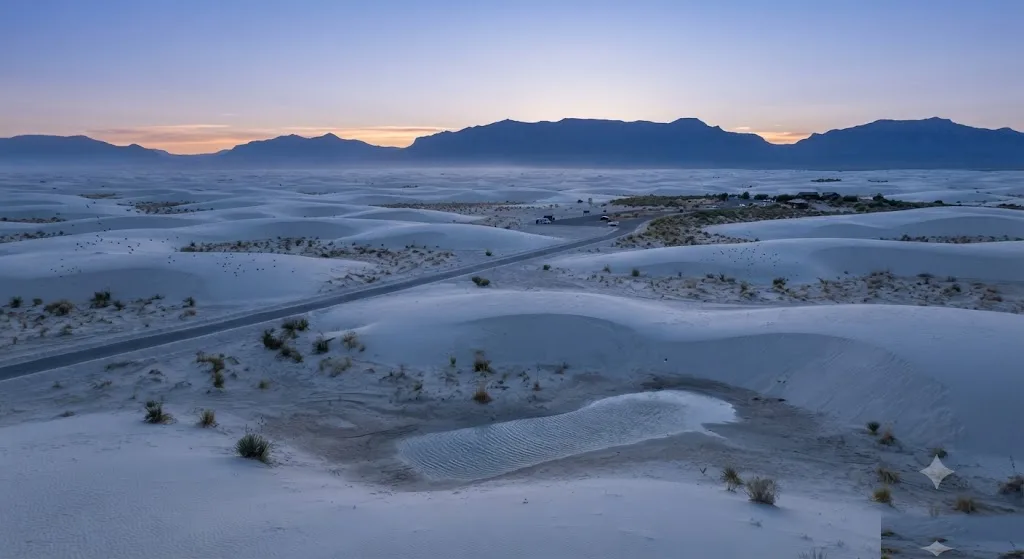
White Sands National Park Travel Guide — New Mexico
Welcome to our comprehensive guide for White Sands National Park New Mexico, where we cut through the generic travel fluff to bring you the confident, specific insights you need for an unforgettable trip. As the Roam States editorial team, we've explored the world's largest gypsum dune field firsthand, and we're here to share our expert recommendations, ensuring your visit to this otherworldly landscape is nothing short of spectacular. Forget vague advice; we provide actionable information on everything from navigating the dunes to securing your spot for a coveted ranger-led program.
Why Visit White Sands National Park
There are places that capture your imagination, and then there's White Sands National Park New Mexico. We've seen countless natural wonders across the US, but the sheer scale and ethereal beauty of these glistening white dunes are truly unique. Imagine endless waves of pure white gypsum, stretching to the horizon under the vast New Mexico sky. It's a landscape that feels more like a dreamscape or another planet, offering a profound sense of peace and wonder that's hard to find elsewhere. Beyond the visual spectacle, White Sands provides an unparalleled opportunity for recreation, from exhilarating dune sledding to serene sunset strolls. It's a place where you can truly disconnect and immerse yourself in an environment unlike any other on Earth, making it a must-see for any discerning traveler.
Who It's Best For
White Sands National Park caters to a surprisingly diverse range of travelers. Our team has observed that it's an ideal destination for:
- **Families with Children:** The soft, cool gypsum sand is perfect for play, and sledding down the dunes is an absolute blast for all ages. The easy-to-moderate trails provide accessible outdoor fun.
- **Photographers and Artists:** The constantly shifting light, stark contrasts, and unique textures offer endless creative inspiration. Sunrise and sunset, in particular, paint the dunes in breathtaking hues.
- **Outdoor Enthusiasts:** Hikers, even those looking for a leisurely stroll, will find marked trails and ample opportunities for off-trail exploration (with proper navigation). The open space is also fantastic for picnicking and enjoying nature.
- **Couples and Romantics:** The serene beauty of the dunes, especially during sunset or under a full moon, creates an incredibly romantic backdrop for quiet moments and shared experiences.
- **Stargazers:** As an International Dark Sky Park, White Sands offers exceptional opportunities for viewing the night sky, free from light pollution.
Getting There & Parking
Understanding how to get to White Sands National Park is straightforward, as it's conveniently located in southern New Mexico, directly off Highway US-70. The park entrance and visitor center are situated between Alamogordo (about 15 miles west) and Las Cruces (approximately 52 miles east). If you're flying in, the closest major airport is El Paso International Airport (ELP) in Texas, which is about 85 miles from the park. From there, you'll need to rent a car, as there is no public transportation serving the park. We strongly advise filling up your gas tank in Alamogordo or Las Cruces before heading to the park, as there are no fuel or electric vehicle charging facilities within White Sands National Park itself.
Upon arrival, you'll find the visitor center and the start of Dunes Drive, the 8-mile scenic road that takes you deep into the heart of the gypsum dunes. When considering how to get to White Sands National Park, also factor in potential military test closures. The park is adjacent to the White Sands Missile Range, and for visitor safety, Dunes Drive and sometimes even US Highway 70 can be closed for periods of up to three hours during missile tests. We always recommend checking the park's official closure webpage or calling White Sands Missile Range at (575) 678-1178 for highway closure updates the day before your visit to confirm hours of operation.
Parking at White Sands National Park
Parking at White Sands National Park is available at the visitor center and at various pullouts along Dunes Drive. The visitor center has two parking lots: a main lot (south of the visitor center) and a back lot (north). Limited space for recreational vehicles (RVs) and oversized vehicles is available in the front (south) parking lot, but RVs should not park in the back (north) lot. There is no parking for tractor-trailers anywhere in the park. Along Dunes Drive, you'll find numerous designated parking areas where you can stop to explore the dunes, picnic, or access trailheads. Remember, driving or parking on the dunes or outside established parking areas is strictly prohibited.
Top Things to Do
White Sands National Park offers a myriad of activities that truly allow you to immerse yourself in its unique environment. Our team has curated a list of the top things to do at White Sands National Park, ensuring you make the most of your visit to this stunning landscape.
Sledding Down the Dunes
One of the most iconic and exhilarating things to do at White Sands National Park is sledding. The smooth, cool gypsum sand provides perfect conditions for sliding down the towering dunes, much like snow. You can purchase plastic saucer sleds at the park's gift shop or in nearby Alamogordo. We recommend waxing the bottom of your sled for the best experience. Find a dune with a gentle slope, hike up, and enjoy the ride down – it's fun for all ages and a truly memorable experience.
Scenic Drives
Even if you prefer to stay in your vehicle, the 8-mile (13 km) Dunes Drive offers a spectacular journey into the heart of the dunefield. The first four miles are paved, transitioning to a packed gypsum sand road that is well-maintained and suitable for most vehicles. Along the way, you'll find numerous pullouts and picnic areas, allowing you to stop, take photos, and soak in the views. This drive is an excellent way to see a lot of the park, especially if you have limited time.
Picnicking Amidst the Dunes
White Sands provides a magical setting for a picnic. There are designated picnic areas at the visitor center and three more established sites within the sand dunes along Dunes Drive. We suggest packing a lunch and finding a secluded spot to enjoy your meal surrounded by the pristine white landscape. Just remember to pack out everything you pack in, leaving no trace behind.
Ranger-Led Programs
To deepen your understanding of the park, we highly recommend participating in a ranger-led program. These include Sunset Strolls, Full Moon Nights, Moonlight Hikes, and Lake Lucero Tours. Many of these programs require advance reservations through Recreation.gov and can sell out quickly, so plan ahead. For example, the 2026 Moonlight Hikes are offered once a month from March to November and follow the moderate Dune Life Nature Trail. These guided experiences offer unique insights into the park's ecology, geology, and nocturnal life.
Photography and Stargazing
The stark white dunes against the vibrant New Mexico sky create an incredible canvas for photography. Golden hour (sunrise and sunset) offers particularly dramatic lighting. After dark, White Sands transforms into an International Dark Sky Park, providing exceptional opportunities for stargazing and astrophotography, free from urban light pollution.
White Sands National Park Hiking Trails
Exploring the White Sands National Park hiking trails is one of the most rewarding ways to experience the park's unique beauty. Our team consistently finds that getting out on foot allows for a deeper connection with this extraordinary landscape. There are five marked White Sands National Park hiking trails, catering to various fitness levels.
-
Dune Life Nature Trail
This one-mile (1.6 km) loop trail is rated as moderate and is an excellent introduction to the park's ecosystem. It's particularly family-friendly, featuring 14 trailside signs that introduce you to the animals and plants that thrive in this seemingly barren environment. The trail starts on the desert plain and includes climbing two steep dunes, offering a good workout in the soft sand. This trail is also the route for the popular Moonlight Hikes.
-
Interdune Boardwalk
For those seeking an accessible experience, the Interdune Boardwalk is usually a fantastic option, offering a paved pathway over the dunes. However, as of July 2026, the Interdune Boardwalk is currently closed. We recommend checking the park's current conditions page for updates on its reopening.
-
Playa Trail
An easy 0.5-mile (0.8 km) loop, the Playa Trail leads to a small, ancient lakebed (playa) that occasionally fills with water after rain. It's a great option for a short, informative walk.
-
Alkali Flat Trail
Don't let the name fool you; this 4.6-mile (7.4 km) loop trail is challenging and leads you across the dried-up lakebed of ancient Lake Otero, offering expansive, uninterrupted views of the dunes. It's rated as moderate to strenuous due to the distance and walking entirely on soft sand, which can be taxing. This trail is for experienced hikers prepared for desert conditions.
-
Backcountry Camping Trail
This trail leads to the primitive backcountry campsites. While backcountry camping is currently closed, when open, the trail is marked by orange posts and ranges from 0.4 to 1.1 miles from the trailhead parking lot.
When embarking on any of the White Sands National Park hiking trails, always carry plenty of water (at least one gallon per person per day is recommended), wear sun protection, and be aware of changing weather conditions. The sand reflects the sun, so sunscreen is essential even in winter. Look for the next trail marker before continuing, as blowing sand can obscure the path.
White Sands National Park Camping
For those dreaming of a night under the stars amidst the gypsum dunes, White Sands National Park camping offers a truly unique experience. However, our team must emphasize a critical update for 2026: **backcountry camping within White Sands National Park is currently closed indefinitely for site rehabilitation.** This means that, as of now, no overnight stays are allowed inside the park, and no permits are being issued.
When White Sands National Park camping is available, it consists solely of 10 primitive backcountry sites. These sites are reachable by hiking at least a mile into the sand dunes from the trailhead. They are completely primitive, meaning no shade, no water, and no fire rings. Campers must pack in all their gear and water (at least one gallon per person per day) and pack out all waste. Permits are typically issued on a first-come, first-served basis on the day of your stay at the park entrance station. No advance reservations are possible for these sites.
Since in-park White Sands National Park camping is unavailable, we recommend exploring nearby options. Just 15-30 minutes outside the park, you'll find developed campgrounds at Oliver Lee Memorial State Park, offering amenities like water, showers, and electric hookups. There are also private RV parks in nearby Alamogordo and Las Cruces, as well as free dispersed camping opportunities on public lands surrounding the park. These alternatives provide a comfortable base camp while still keeping you close to the natural beauty of the area.
Best Time to Visit
Choosing the best time to visit White Sands National Park significantly impacts your experience. Based on our extensive travel, we generally recommend the cooler months for the most comfortable exploration.
-
Fall (September to November)
This is arguably the best time to visit. Temperatures are pleasant, ranging from the 70s during the day to cool evenings. The intense summer heat has subsided, making hiking and outdoor activities much more enjoyable. The light is often beautiful for photography, and the crowds are generally thinner than in spring.
-
Spring (March to May)
Spring offers comfortable temperatures, similar to fall, making it another excellent choice. Wildflowers can sometimes bloom at the edges of the dunes, adding a touch of color. However, spring can also bring stronger winds, which can lead to blowing sand and less pleasant conditions. It's also a popular time, so expect more visitors.
-
Winter (December to February)
Winter days are often clear and mild, with temperatures in the 50s and 60s Fahrenheit. Nights can be quite cold, dropping below freezing. This is an ideal time for hiking without the intense sun, and the stark white dunes against a crisp blue sky are stunning. Crowds are typically at their lowest, except around holidays. The park is closed on Thanksgiving and Christmas Day.
-
Summer (June to August)
We advise caution when visiting in summer. Temperatures frequently soar into the 90s and can exceed 100°F (38°C), making outdoor activities challenging and potentially dangerous. If you must visit in summer, plan your activities for early mornings or late afternoons, carry excessive amounts of water, and seek shade whenever possible. The park closes one hour after sunset during summer (May 22 - September 7, 2026).
Regardless of when you visit, always check the weather forecast and the park's official website for current conditions and any missile test closures, which can occur year-round.
Where to Stay Nearby
Since there are no lodging options or developed campgrounds within White Sands National Park, our team recommends staying in one of the nearby towns. This offers a range of accommodations and amenities to suit different preferences and budgets.
-
Alamogordo, New Mexico
Located just 15 miles (24 km) east of the park, Alamogordo is the closest and most convenient town for lodging and services. Here, you'll find a variety of hotels, motels, and vacation rentals, along with restaurants, grocery stores, and gas stations. It serves as an excellent base for exploring White Sands and other local attractions like the New Mexico Museum of Space History. Several private RV parks are also available in Alamogordo.
-
Las Cruces, New Mexico
About 52 miles (84 km) west of the park, Las Cruces is a larger city offering a wider selection of hotels, dining, and shopping options. If you prefer a more urban setting with more amenities and activities, Las Cruces is a good choice, though it requires a longer drive to and from the park each day. It also offers more electric car charging locations.
-
Oliver Lee Memorial State Park
For those who prefer camping with amenities, Oliver Lee Memorial State Park is a fantastic option. Located south of Alamogordo, it offers developed campsites with water, showers, and electric hookups, providing a comfortable base while still being close to nature.
-
Dispersed Camping
Public lands surrounding White Sands National Park offer opportunities for free dispersed camping (boondocking) for self-sufficient campers. This can be a great way to save money and experience more solitude, but requires careful planning and adherence to Leave No Trace principles.
When planning your trip, consider your desired level of comfort and proximity to the park. We often find that a stay in Alamogordo offers the best balance for most visitors focusing on White Sands.
Sample 2-Day Itinerary
To help you maximize your visit, our team has crafted a sample 2-day itinerary for White Sands National Park. This plan balances exploration with relaxation, ensuring you experience the highlights without feeling rushed.
Day 1: Arrival & Dune Immersion
-
Morning (Arrival & Visitor Center)
Arrive at White Sands National Park in the late morning. Head straight to the Visitor Center (open 9 AM - 5 PM daily, except Thanksgiving and Christmas Day) to pick up a map, check for any current alerts (like missile test closures), and purchase your entrance pass ($25 per vehicle, valid for 7 days). You can also buy sleds and wax here. Spend about 30 minutes exploring the exhibits and watching the orientation film to learn about the park's unique geology and ecology.
-
Midday (Dune Drive & Picnic)
Drive along Dunes Drive, stopping at various pullouts. We recommend finding a picnic spot among the dunes for lunch. Enjoy the surreal landscape as you eat. Remember to pack out all trash.
-
Afternoon (Sledding & Short Hike)
Find a good dune for sledding. Spend an hour or two enjoying the thrill of sliding down the gypsum hills. Afterward, take a leisurely walk on the Dune Life Nature Trail (1-mile loop, moderate difficulty) to learn about the desert's flora and fauna.
-
Evening (Sunset & Stargazing)
Stay for sunset. The colors reflecting off the white sands are truly spectacular. After dark, if conditions allow, enjoy some stargazing. White Sands is an International Dark Sky Park, offering incredible views of the night sky. Head back to your accommodation in Alamogordo or Las Cruces.
Day 2: Deeper Exploration & Nearby Attractions
-
Morning (Alkali Flat Trail)
Start your day early to beat the heat, especially if visiting during warmer months. Embark on the challenging Alkali Flat Trail (4.6-mile loop, moderate to strenuous). This hike offers a profound sense of solitude and expansive views of the ancient lakebed. Carry plenty of water and wear appropriate sun protection.
-
Midday (Alamogordo Exploration)
After your hike, head back to Alamogordo. Have lunch and explore some of the town's attractions. We suggest visiting the New Mexico Museum of Space History, which includes the International Space Hall of Fame and the Clyde W. Tombaugh IMAX Dome Theater. You could also visit the Alameda Park Zoo.
-
Afternoon (Optional Ranger Program or Relaxation)
Depending on the season and availability, consider booking an advance reservation for a ranger-led program like a Lake Lucero Tour or a Moonlight Hike (if you didn't do one on Day 1). Alternatively, if you're looking for a change of scenery, consider a visit to Oliver Lee Memorial State Park for some additional hiking in a different desert environment.
-
Evening (Departure or Extended Stay)
Enjoy a final New Mexico dinner before departing or continuing your journey through the state. For those exploring more of New Mexico, we highly recommend a visit to Carlsbad Caverns National Park for another incredible underground experience, or venturing north to cultural sites like Taos Pueblo and the vibrant city of Santa Fe. New Mexico offers a wealth of diverse experiences, and you can find more inspiration on our Best places in New Mexico guide.
Is It Worth Visiting?
From our perspective as seasoned travelers, the question "is White Sands National Park worth visiting?" can be answered with an emphatic and resounding yes. We've traversed national parks across the country, and few offer such a genuinely unique and visually stunning experience. The sheer scale of the gypsum dunes, the way the light plays across the landscape, and the opportunities for both serene reflection and active recreation combine to create a destination that truly stands apart.
The value proposition of White Sands goes beyond its Instagrammable moments. It's a place that fosters a sense of wonder, where the natural world presents itself in an unexpected and breathtaking form. Whether you're sliding down a dune, hiking a quiet trail, or simply marveling at a sunset that paints the white sand in pastel hues, the experiences here are deeply memorable. While the park's remote location requires some planning, and the current closure of backcountry camping is a consideration, the rewards far outweigh any logistical hurdles. If you're seeking an extraordinary encounter with nature that will leave a lasting impression, then White Sands National Park is absolutely worth visiting. It's an iconic piece of the American Southwest that we believe every traveler should experience at least once.
FAQ
What are things to do in Alamogordo?
Alamogordo, the closest major town to White Sands National Park, offers several attractions. You can visit the New Mexico Museum of Space History, which includes the International Space Hall of Fame and the Clyde W. Tombaugh IMAX Dome Theater. The Alameda Park Zoo is another family-friendly option. Additionally, Alamogordo provides all essential services like restaurants, grocery stores, and various lodging options. For those interested in outdoor activities, Oliver Lee Memorial State Park, just south of Alamogordo, offers hiking and camping.
Is White Sands National Park with kids a good idea?
Absolutely! White Sands National Park is an excellent destination for families with kids. The soft, cool gypsum sand is perfect for playing, and the main draw for children is undoubtedly sledding down the dunes. The Dune Life Nature Trail is a family-friendly, interpretive hike that engages young explorers. The open spaces provide ample room for kids to run and play. Just be sure to bring plenty of water, sun protection, and keep a close eye on them, especially on the larger dunes. Pets are also allowed on a leash, making it a great family outing.
What are some White Sands National Park tips?
Our top White Sands National Park tips include:
- **Hydrate:** Carry at least one gallon of water per person per day, especially during warmer months.
- **Sun Protection:** The white sand reflects the sun, so wear sunscreen, a hat, and sunglasses year-round.
- **Check Closures:** Always verify park hours and check for missile test closures on the official park website or by calling (575) 678-1178 before your visit.
- **Sledding:** Purchase plastic saucer sleds (and wax!) in advance from Alamogordo or at the park's gift shop.
- **Footwear:** While the sand is cool, wear comfortable closed-toe shoes for hiking to prevent blisters and sand accumulation.
- **Photography:** Visit during sunrise or sunset for the best lighting and fewer crowds.
- **Ranger Programs:** Book interpretive programs like Moonlight Hikes or Lake Lucero Tours in advance on Recreation.gov, as they sell out quickly.
- **Pets:** Pets are welcome but must be on a leash no longer than six feet and under physical control at all times.
What about White Sands National Park parking?
White Sands National Park parking is available at the Visitor Center and at numerous pullouts along Dunes Drive. The Visitor Center has a main lot (south) with limited space for RVs and oversized vehicles, and a smaller back lot (north) where RVs are not permitted. There is no parking for tractor-trailers. Along the 8-mile Dunes Drive, you'll find designated parking areas to access trails, picnic sites, and scenic viewpoints. Always park in designated spots and never drive or park on the dunes themselves.
When is the best time to visit White Sands National Park?
The best time to visit White Sands National Park is generally during the **fall (September to November)** and **spring (March to May)**. These seasons offer pleasant temperatures, making outdoor activities like hiking and sledding much more enjoyable. Winter (December to February) also provides mild daytime temperatures and fewer crowds. We advise caution during summer (June to August) due to extreme heat, with temperatures often exceeding 90°F (32°C). Always check the weather forecast before your trip.
What are the White Sands National Park hours and fees?
For 2026, White Sands National Park is open daily year-round, except for Thanksgiving and Christmas Day. Park operating hours vary seasonally, generally from 7 AM to sunset. From May 22 to September 7, 2026, the park closes one hour after sunset. The Visitor Center is open daily from 9 AM to 5 PM.
The entrance fees for White Sands National Park are:
- **Private Vehicle:** $25, valid for seven consecutive days.
- **Motorcycle:** $20, valid for seven consecutive days.
- **Per Person (walk-in or cyclist):** $15, valid for seven consecutive days. Children 15 and under are free.
Last updated: 2026-07-08 by the Roam States team.