National Parks & Nature

Black Hills National Forest Travel Guide

Western SD, South Dakota

By Roam States Team · Updated July 2026 · 42 min read

Jump to section

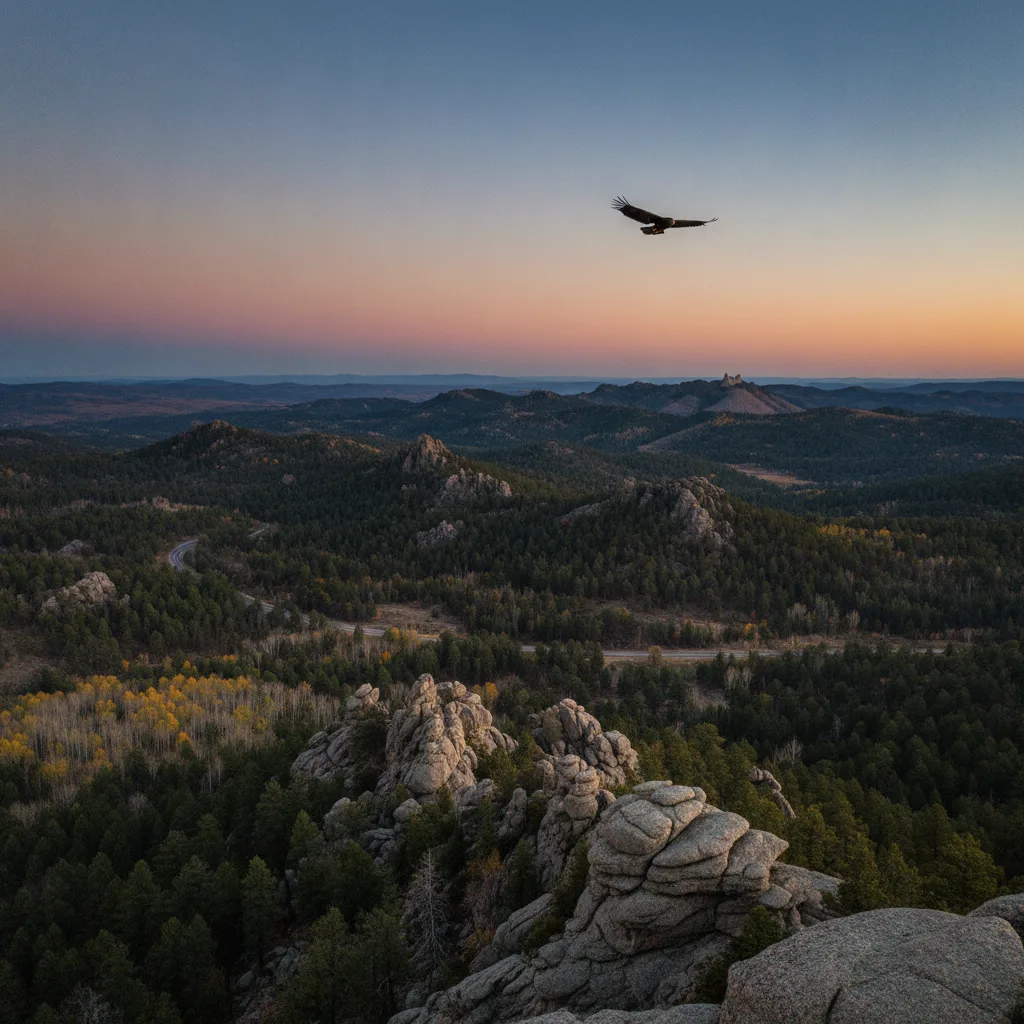
Welcome to our comprehensive guide for exploring the magnificent Black Hills National Forest South Dakota. Our team at Roam States has spent countless hours traversing its winding roads, hiking its granite peaks, and discovering its hidden gems to bring you the most confident and specific advice for your trip. A massive ponderosa pine forest encompassing numerous distinct geological features and reservoirs, the Black Hills National Forest is a destination unlike any other, offering a unique blend of natural beauty, rich history, and thrilling adventure.

Why Visit Black Hills National Forest

The Black Hills National Forest isn't just a patch of trees; it's a sprawling, 1.2-million-acre island of mountains rising dramatically from the Great Plains, a landscape steeped in Lakota history and geological wonder. We find its allure lies in the sheer diversity packed into a relatively compact area. Here, you'll discover towering granite spires, deep limestone canyons, crystal-clear lakes, and dense ponderosa pine forests that gave the "Paha Sapa" (Black Hills) their name. It's a place where you can witness abundant wildlife—bison, elk, deer, and mountain goats—roaming freely, often just a short distance from scenic byways. Unlike many national parks, the Black Hills National Forest offers a more permissive environment for exploration, allowing for a broader range of activities, from dispersed camping to off-highway vehicle adventures. This flexibility, combined with its proximity to world-famous landmarks like Mount Rushmore and Custer State Park, makes it an unparalleled destination for those seeking both rugged wilderness and accessible attractions. We believe it's the perfect blend of adventure and accessibility, offering something for every type of traveler.

Who It's Best For

The Black Hills National Forest truly caters to a wide spectrum of travelers, making it an ideal destination for families, adventure seekers, history buffs, and those simply looking to reconnect with nature. For families, the numerous developed campgrounds, accessible trails, and opportunities for wildlife viewing provide a safe and engaging environment for all ages. Kids will love spotting bison in Custer State Park or exploring the interpretive exhibits at visitor centers. Adventure enthusiasts will find their stride on challenging hiking trails, rock climbing routes, and the extensive network of motorized trails. The forest's diverse terrain offers everything from serene kayaking on a quiet lake to thrilling ATV rides. History aficionados will appreciate the deep cultural significance of the Black Hills to the Lakota people, as well as the nearby historic mining towns like Deadwood and the iconic Crazy Horse Memorial. Even those simply seeking tranquility will find solace in the peaceful beauty of the forest's many lakes and secluded picnic spots. Whether you're planning a rugged backcountry expedition or a leisurely scenic drive, the Black Hills National Forest provides the perfect backdrop.

How to Get There

Navigating to and around the Black Hills National Forest is straightforward, with excellent access points and well-maintained roads. The primary gateway for most visitors is Rapid City, South Dakota, home to the Rapid City Regional Airport (RAP). From there, you're within an hour's drive of many major attractions within the forest and its surrounding areas. Interstate 90 runs along the northern edge of the forest, providing easy access from both east and west. Major US Highways like 16, 385, and 85 crisscross the region, making it simple to explore the various districts of the forest.

Driving and Access

To get to Black Hills National Forest, your best bet is often flying into Rapid City and renting a car, or driving directly if you're coming from a neighboring state. Major access points include Rapid City (eastern entrance), Spearfish (northern entrance), and Newcastle, Wyoming (western entrance). The forest itself is open 24 hours a day, year-round, though some roads and facilities may close seasonally due to snow.

Parking in the Black Hills National Forest

Parking within the Black Hills National Forest varies depending on your destination. Many trailheads, picnic areas, and undeveloped recreation sites offer free parking. However, some developed day-use areas, particularly those with amenities like trash receptacles, water, and restrooms, may charge a fee. For instance, a day-use fee of $5 per vehicle is common at many sites, while Pactola North and South Boat Ramps and Spring Creek Picnic Area charge $7 per vehicle. If you plan on frequenting these concessionaire-managed fee areas during the late spring, summer, and early fall, an annual day-use pass from the concessionaire, Red Ridge Adventures Hospitality, is available for $50. It's important to note that this pass is transferable between single-family vehicles but not rental cars or business vehicles, and it does not cover overnight camping or pet fees.

For those visiting nearby national park sites, parking rules and fees are separate. Mount Rushmore National Memorial, for example, does not have an entrance fee, but requires a parking fee of $10 for cars, motorcycles, and RVs (valid for one year). Seniors (62+) pay $5, and active military park for free. No reservations are needed for parking at Mount Rushmore. For Wind Cave National Park, there are no fees for parking or general park entrance, but cave tours require a fee and reservations are highly recommended.

When considering how to get to Black Hills National Forest and its attractions, we always recommend checking the specific site's official page for the most up-to-date information on parking availability and any potential fees or restrictions, especially during peak season or for oversized vehicles. Be aware that Highway 385 south of the Pactola Visitor Center is under construction in 2026, which may cause sporadic delays during summer and early fall.

Top Things to Do

The Black Hills National Forest is a treasure trove of experiences, offering an incredible array of things to do that cater to every interest. Our team has explored many of these, and we're confident you'll find plenty to fill your itinerary.

Scenic Drives & Byways

No visit to the Black Hills National Forest is complete without embarking on its iconic scenic drives. The **Needles Highway** (SD Highway 87) within Custer State Park is a marvel, threading through narrow tunnels and past towering granite spires. The **Spearfish Canyon Scenic Byway** offers a different kind of beauty, winding through a deep limestone canyon dotted with waterfalls like Bridal Veil Falls and Roughlock Falls. These drives are particularly stunning in the fall when the foliage bursts with color. For a taste of history and breathtaking views, the **Peter Norbeck Scenic Byway** combines several of these routes into one unforgettable loop. These are truly some of the best things to do at Black Hills National Forest.

Lakes & Reservoirs

The forest is dotted with numerous pristine lakes and reservoirs perfect for water-based activities. **Pactola Lake**, the largest reservoir in the Black Hills, is a hub for boating, fishing, swimming, and kayaking. The Pactola Visitor Center, expected to reopen in 2026 after highway construction, offers interpretive exhibits. Smaller, tranquil spots like **Sheridan Lake** and **Deerfield Lake** also offer excellent opportunities for swimming, fishing, and paddling, with Sheridan Lake being particularly popular with families due to its amenities.

Exploring Caves

The Black Hills are famous for their intricate cave systems. While **Wind Cave National Park** and **Jewel Cave National Monument** are technically separate entities, they are integral to the Black Hills experience. At Wind Cave, ranger-guided tours reveal rare boxwork formations. Reservations for cave tours are highly recommended, especially during the summer, and can be made up to 30 days in advance via Recreation.gov. Specialty tours like the Candlelight and Wild Cave tours require phone reservations up to one month ahead. Jewel Cave, the third-longest cave in the world, offers various tours, from easy walks to strenuous crawling adventures.

Nearby Attractions

The Black Hills National Forest serves as the backdrop for some of America's most iconic landmarks. We always recommend combining your forest exploration with visits to:

  • Mount Rushmore National Memorial: An absolute must-see, featuring the colossal carvings of four U.S. presidents. Remember, there's no entrance fee, but a parking fee of $10 for cars is required.
  • Custer State Park: Encompassing 71,000 acres, this state park is renowned for its abundant wildlife, including a large bison herd, and scenic drives like the Wildlife Loop Road and Needles Highway. A daily entrance license costs $25 per vehicle.
  • Crazy Horse Memorial: A colossal mountain carving in progress, honoring the Lakota leader Crazy Horse.
  • Wind Cave National Park: Explore one of the longest and most complex cave systems in the world, alongside a beautiful mixed-grass prairie.
  • Deadwood Historic District: Step back in time to the Old West in this National Historic Landmark, famous for its gold rush history and legendary figures.

These diverse things to do at Black Hills National Forest and its surroundings ensure a packed and memorable trip.

Black Hills National Forest hiking trails

For those who love to explore on foot, the Black Hills National Forest hiking trails offer an incredible variety of terrain and scenery. With over 700 miles of designated trails, ranging from easy lakeside strolls to challenging climbs up granite peaks, there's a path for every skill level. Our team considers hiking one of the most rewarding ways to experience the forest's natural beauty.

  • Black Elk Peak Trail: As the highest point in the United States east of the Rocky Mountains (7,242 feet), the hike to Black Elk Peak (formerly Harney Peak) is a quintessential Black Hills experience. The most popular route starts near Sylvan Lake in Custer State Park, offering stunning panoramic views from the stone fire tower at the summit. This is a strenuous but incredibly rewarding hike.
  • Centennial Trail: Stretching 111 miles from Bear Butte State Park to Wind Cave National Park, the George S. Mickelson Trail offers a diverse long-distance hiking and biking experience, passing through various landscapes including forests, prairies, and old railroad tunnels. It's an excellent option for day hikes or multi-day backpacking trips.
  • Roughlock Falls Nature Area Trails: Located within Spearfish Canyon, these easy trails lead to the picturesque Roughlock Falls, a multi-tiered waterfall. It's a fantastic spot for a leisurely walk and photography.
  • Hell Canyon Trail: Found in the southern part of the Black Hills National Forest, this 5.5-mile loop trail descends into a scenic canyon, offering a moderate challenge and beautiful views.
  • Sylvan Lake Shore Trail: An easy, scenic loop around one of the most iconic lakes in the Black Hills, perfect for families and those seeking a gentle stroll with stunning views of the lake and granite formations.

Important Hiking Tips

When planning your Black Hills National Forest hiking trails adventure, always carry plenty of water, wear appropriate footwear, and be prepared for changing weather conditions. Cell service can be spotty in some remote areas, so download offline maps or carry a physical map. We also recommend being aware of wildlife, especially bison and elk, and maintaining a safe distance. Check with a local ranger station for current trail conditions, closures, and any fire restrictions before heading out. The National Forests & Grasslands app is a useful tool for offline maps and safety alerts.

Black Hills National Forest camping

One of the most immersive ways to experience the Black Hills National Forest is by camping under its vast, star-filled skies. Our team finds that the forest offers a wide range of camping options, from developed campgrounds with amenities to secluded dispersed sites, making Black Hills National Forest camping accessible for every preference.

Developed Campgrounds

The Black Hills National Forest boasts over 30 developed campgrounds, offering more than 682 individual campsites. Many of these are operated by a concessionaire, and while Forest Recreation Management (FRM) concluded its operations at the end of 2025, a new concessionaire is expected to take over in May 2026. This transition means that FRM's seasonal passes will not be available for the 2026 summer season. Campground fees typically range from $6 to $21 per night, depending on the specific site and season. Most developed campgrounds provide water and flush or vault toilets, and some even offer electric hookups.

Popular developed campgrounds include:

  • Pactola Reservoir Campground: Offers 84 sites near the largest lake in the Black Hills, with some electric hookups available. It provides access to boat ramps and fishing areas.
  • Sheridan Lake Campground: Features two camping areas (North Shore and South Shore) with a total of 129 sites, many with electric hookups, flush toilets, showers, and a dump station. It's ideal for families due to its amenities and proximity to a swimming beach.
  • Cook Lake Recreation Area: A quiet setting for camping, fishing, kayaking, and hiking.
  • Bismark Lake Campground: Offers walking paths to the nearby day-use area.

Reservations for Black Hills National Forest camping are highly recommended, especially during peak season (May to September), and can be made through Recreation.gov or by calling 1-877-444-6777. Check individual facility pages for specific booking windows and availability.

Dispersed Camping

For those seeking a more rustic experience, dispersed camping (also known as backcountry camping) is permitted in much of the Black Hills National Forest without a special permit. This allows you to find your own secluded spot away from developed campgrounds. However, it's crucial to be aware of and adhere to Forest Service regulations, including current fire restrictions, which can change rapidly based on weather conditions. The maximum stay limit for dispersed camping is 14 consecutive days in one location, and a total of 28 days within any 60-day period across the forest. Always practice Leave No Trace principles to minimize your impact on the environment.

Best Time to Visit

The Black Hills National Forest offers distinct experiences throughout the year, and the best time to visit largely depends on your preferred activities. Our team has explored the region in all seasons, and we can confidently say there's no single "wrong" time, only different adventures.

Summer (June – August)

Summer is peak season in the Black Hills, and for good reason. The weather is generally warm and sunny, making it ideal for hiking, camping, boating, and exploring all the attractions. All roads and trails are typically open, and visitor services are in full swing. However, this also means larger crowds, especially at popular spots like Mount Rushmore and Custer State Park. Lodging and campgrounds fill up quickly, so reservations are essential months in advance. Be aware that the Sturgis Motorcycle Rally, usually held in early August, dramatically increases visitor numbers and can make finding accommodation challenging across the entire region.

Spring (April – May) & Fall (September – October)

These shoulder seasons are our personal favorites for visiting the Black Hills National Forest. The crowds are thinner, the weather is often pleasant, and the scenery is spectacular. In spring, wildflowers begin to bloom, and wildlife is active. In fall, the ponderosa pines contrast beautifully with the golden aspens and oaks, creating breathtaking landscapes, especially along scenic byways like Spearfish Canyon. Most facilities are still open, though some may operate on reduced hours as you get closer to winter. Some higher elevation roads, like Needles Highway, typically close in November.

Winter (November – March)

Winter transforms the Black Hills into a serene, snow-covered wonderland. While many roads and some facilities close, opportunities for cross-country skiing, snowshoeing, and snowmobiling abound. The forest is open 24/7, but visitor center hours are typically reduced. If you're seeking solitude and a peaceful, picturesque escape, winter can be a magical time, but be prepared for cold temperatures and potential road closures due to snow.

Ultimately, the best time to visit Black Hills National Forest depends on your priorities. For full access and warm weather, summer is ideal if you plan ahead. For fewer crowds and stunning scenery, spring and fall are excellent choices.

Where to Stay Nearby

While Black Hills National Forest camping offers an immersive experience, many visitors prefer the comfort and amenities of towns surrounding the forest. The region offers a variety of lodging options, from charming B&Bs to full-service hotels, all providing convenient access to the forest and its many attractions.

  • Custer: Centrally located, Custer is an excellent base for exploring the southern Black Hills, including Custer State Park, Mount Rushmore, and Wind Cave National Park. It offers a good selection of hotels, motels, and cabin rentals.
  • Hill City: Known as the "Heart of the Hills," Hill City is another fantastic central option. It's home to the 1880 Train and provides easy access to Sylvan Lake, Black Elk Peak, and numerous trailheads.
  • Keystone: Situated just minutes from Mount Rushmore, Keystone is perfect for visitors prioritizing this iconic memorial. It's a bustling tourist town with many hotels, restaurants, and souvenir shops.
  • Spearfish: Located on the northern edge of the forest, Spearfish is the gateway to Spearfish Canyon and offers a more relaxed atmosphere. It's a great base for exploring the northern Black Hills and the historic town of Deadwood.
  • Rapid City: As the largest city in the region, Rapid City offers the widest range of lodging, dining, and shopping options. It's about a 30-60 minute drive to most major attractions but provides the most amenities and airport access.
  • Deadwood: For a unique historical experience, staying in Deadwood puts you right in the heart of an Old West town, with casinos, historic sites, and entertainment.

No matter where you choose to stay, we strongly recommend booking your accommodations well in advance, especially if you're planning a summer visit or during special events like the Sturgis Motorcycle Rally, when the entire region experiences high demand.

Sample 2-Day Itinerary

To help you make the most of your visit, our team has crafted a sample 2-day itinerary for the Black Hills National Forest and its surrounding highlights. This plan balances scenic drives, outdoor activities, and iconic landmarks.

Day 1: Southern Hills Exploration

  • Morning (8:00 AM - 12:00 PM): Needles Highway & Sylvan Lake

    Start your day with a breathtaking drive along the Needles Highway (SD Hwy 87) within Custer State Park. This engineering marvel winds through granite spires and narrow tunnels. Stop at scenic overlooks and take short walks to appreciate the unique rock formations. Head to Sylvan Lake, often called the "Crown Jewel" of Custer State Park. Enjoy an easy stroll around the lake on the Sylvan Lake Shore Trail.

  • Lunch (12:00 PM - 1:00 PM): Picnic or Custer State Park Lodge

    Pack a picnic to enjoy by Sylvan Lake or grab a meal at one of Custer State Park's historic lodges, like the Sylvan Lake Lodge or Blue Bell Lodge.

  • Afternoon (1:00 PM - 5:00 PM): Black Elk Peak Hike or Wildlife Loop

    For the adventurous, embark on the challenging but rewarding hike to Black Elk Peak, starting from the Sylvan Lake area. This will take several hours. If you prefer a more relaxed afternoon, drive the Wildlife Loop Road in Custer State Park, keeping an eye out for bison, pronghorn, elk, and the famous "begging burros."

  • Evening: Dinner & Stargazing in Custer or Hill City

    Enjoy dinner in the town of Custer or Hill City. Consider a night of stargazing, as the dark skies of the Black Hills offer incredible views of the Milky Way.

Day 2: Northern Hills & Iconic Landmarks

  • Morning (8:00 AM - 12:00 PM): Mount Rushmore National Memorial & Crazy Horse Memorial

    Begin your day at the iconic Mount Rushmore National Memorial. Arrive early to avoid crowds. Take in the grandeur of the presidential carvings, explore the visitor center, and walk the Presidential Trail. Remember to pay the $10 parking fee upon entry. Afterward, drive to the nearby Crazy Horse Memorial, an impressive mountain carving still in progress, offering a different perspective on monumental sculpture and Native American history.

  • Lunch (12:00 PM - 1:00 PM): Keystone or Hill City

    Grab lunch in Keystone or Hill City, both offering various dining options.

  • Afternoon (1:00 PM - 5:00 PM): Spearfish Canyon Scenic Byway & Deadwood

    Head north to the Spearfish Canyon Scenic Byway. Drive through the picturesque canyon, stopping to admire Bridal Veil Falls and Roughlock Falls. Enjoy short walks to these waterfalls. Continue to the historic town of Deadwood Historic District. Explore its Old West charm, visit a casino, or take a historical walking tour.

  • Evening: Dinner in Deadwood or Rapid City

    Conclude your trip with dinner in Deadwood or head back to Rapid City for more dining choices.

This itinerary provides a solid foundation, but we encourage you to tailor it to your interests. Don't forget to check current hours, fees, and any reservation requirements for specific attractions. For more ideas on how to plan your US trip, visit our Plan Your US Trip page.

Is It Worth Visiting?

After countless trips and extensive exploration, our team can unequivocally state: yes, the Black Hills National Forest is absolutely worth visiting. This isn't just another forest; it's a dynamic landscape that serves as the heart of one of America's most unique and historically rich regions. The sheer concentration of natural wonders and iconic landmarks within and around the forest is astounding. From the towering granite formations of the Needles Highway to the serene waters of Pactola Lake, the Black Hills offer a diverse tapestry of outdoor experiences that few other destinations can match.

Beyond the natural beauty, the Black Hills provide a deep dive into American history and culture, from the sacred lands of the Lakota to the pioneering spirit of the Old West. Where else can you hike a majestic peak in the morning, marvel at a presidential monument by midday, and explore an intricate cave system in the afternoon? The accessibility of these attractions, combined with the option for both developed and dispersed Black Hills National Forest camping, makes it an incredibly versatile destination. Whether you're a solo adventurer, a couple seeking a romantic getaway, or a family on an epic road trip, we are confident that the Black Hills National Forest will leave you with lasting memories. So, if you're asking "is Black Hills National Forest worth visiting?", our answer is a resounding yes – start planning your trip today!

FAQ

What are things to do in Western SD?

Western South Dakota is packed with attractions. Beyond the Black Hills National Forest, you can visit Mount Rushmore National Memorial, Custer State Park (with its famous Wildlife Loop and Needles Highway), Crazy Horse Memorial, Wind Cave National Park, Jewel Cave National Monument, and the historic town of Deadwood Historic District. You're also within a couple of hours' drive of Badlands National Park to the east.

Can you visit Black Hills National Forest with kids?

Absolutely! The Black Hills National Forest is an excellent family destination. There are numerous kid-friendly activities, including easy hiking trails, swimming and fishing at lakes like Sheridan Lake, wildlife viewing opportunities in Custer State Park, and interpretive programs at visitor centers. Many campgrounds are well-equipped for families, and nearby attractions like Mount Rushmore and various cave tours are engaging for children of all ages.

What are some Black Hills National Forest tips for visitors?

Our top tips include:

  1. **Plan Ahead**: Especially for summer visits, book accommodations and popular tours (like cave tours) well in advance.
  2. **Embrace the Outdoors**: Pack for hiking, water activities, and varying weather.
  3. **Stay Flexible**: While an itinerary is helpful, be open to spontaneous detours.
  4. **Respect Wildlife**: Maintain a safe distance from animals, especially bison.
  5. **Understand Fees**: While the forest itself is free, many developed recreation sites and nearby attractions (Mount Rushmore parking, Custer State Park entrance, cave tours) have separate fees.
  6. **Download Maps**: Cell service can be unreliable; use offline maps or physical maps.

What are the Black Hills National Forest parking rules?

Many areas within the Black Hills National Forest offer free parking. However, developed day-use sites with amenities (like picnic grounds, boat launches, and swim beaches) may charge a fee, typically $5 or $7 per vehicle. An annual day-use pass is available for $50 for frequent visitors to concessionaire-managed sites. Parking for nearby attractions like Mount Rushmore National Memorial has its own separate fee ($10 per car, valid for one year). Always check signage at your specific destination for current rules and fees.

What is the best time to visit Black Hills National Forest?

The best time to visit depends on your preferences. **Summer (June-August)** offers the warmest weather and full access to all activities, but also the largest crowds and highest demand for lodging. **Spring (April-May)** and **Fall (September-October)** provide fewer crowds, pleasant temperatures, and beautiful scenery (wildflowers in spring, fall foliage in autumn). **Winter (November-March)** is ideal for solitude and winter sports, though many roads and facilities are closed. [cite: 7

Welcome to our comprehensive guide for exploring the magnificent Black Hills National Forest South Dakota. Our team at Roam States has spent countless hours traversing its winding roads, hiking its granite peaks, and discovering its hidden gems to bring you the most confident and specific advice for your trip. A massive ponderosa pine forest encompassing numerous distinct geological features and reservoirs, the Black Hills National Forest is a destination unlike any other, offering a unique blend of natural beauty, rich history, and thrilling adventure.

Why Visit Black Hills National Forest

The Black Hills National Forest isn't just a patch of trees; it's a sprawling, 1.2-million-acre island of mountains rising dramatically from the Great Plains, a landscape steeped in Lakota history and geological wonder. We find its allure lies in the sheer diversity packed into a relatively compact area. Here, you'll discover towering granite spires, deep limestone canyons, crystal-clear lakes, and dense ponderosa pine forests that gave the "Paha Sapa" (Black Hills) their name. It's a place where you can witness abundant wildlife—bison, elk, deer, and mountain goats—roaming freely, often just a short distance from scenic byways. [cite: 13, 16, 18, 24] Unlike many national parks, the Black Hills National Forest offers a more permissive environment for exploration, allowing for a broader range of activities, from dispersed camping to off-highway vehicle adventures. This flexibility, combined with its proximity to world-famous landmarks like Mount Rushmore and Custer State Park, makes it an unparalleled destination for those seeking both rugged wilderness and accessible attractions. We believe it's the perfect blend of adventure and accessibility, offering something for every type of traveler.

Who It's Best For

The Black Hills National Forest truly caters to a wide spectrum of travelers, making it an ideal destination for families, adventure seekers, history buffs, and those simply looking to reconnect with nature. For families, the numerous developed campgrounds, accessible trails, and opportunities for wildlife viewing provide a safe and engaging environment for all ages. Kids will love spotting bison in Custer State Park or exploring the interpretive exhibits at visitor centers. [cite: 16, 24] Adventure enthusiasts will find their stride on challenging hiking trails, rock climbing routes, and the extensive network of motorized trails. [cite: 20] The forest's diverse terrain offers everything from serene kayaking on a quiet lake to thrilling ATV rides. History aficionados will appreciate the deep cultural significance of the Black Hills to the Lakota people, as well as the nearby historic mining towns like Deadwood and the iconic Crazy Horse Memorial. Even those simply seeking tranquility will find solace in the peaceful beauty of the forest's many lakes and secluded picnic spots. Whether you're planning a rugged backcountry expedition or a leisurely scenic drive, the Black Hills National Forest provides the perfect backdrop.

How to Get There

Navigating to and around the Black Hills National Forest is straightforward, with excellent access points and well-maintained roads. The primary gateway for most visitors is Rapid City, South Dakota, home to the Rapid City Regional Airport (RAP). From there, you're within an hour's drive of many major attractions within the forest and its surrounding areas. [cite: 13] Interstate 90 runs along the northern edge of the forest, providing easy access from both east and west. Major US Highways like 16, 385, and 85 crisscross the region, making it simple to explore the various districts of the forest. [cite: 7]

Driving and Access

To get to Black Hills National Forest, your best bet is often flying into Rapid City and renting a car, or driving directly if you're coming from a neighboring state. Major access points include Rapid City (eastern entrance), Spearfish (northern entrance), and Newcastle, Wyoming (western entrance). [cite: 7] The forest itself is open 24 hours a day, year-round, though some roads and facilities may close seasonally due to snow. [cite: 7]

Parking in the Black Hills National Forest

Parking within the Black Hills National Forest varies depending on your destination. Many trailheads, picnic areas, and undeveloped recreation sites offer free parking. However, some developed day-use areas, particularly those with amenities like trash receptacles, water, and restrooms, may charge a fee. For instance, a day-use fee of $5 per vehicle is common at many sites, while Pactola North and South Boat Ramps and Spring Creek Picnic Area charge $7 per vehicle. [cite: 3] If you plan on frequenting these concessionaire-managed fee areas during the late spring, summer, and early fall, an annual day-use pass from the concessionaire, Red Ridge Adventures Hospitality, is available for $50. [cite: 3] It's important to note that this pass is transferable between single-family vehicles but not rental cars or business vehicles, and it does not cover overnight camping or pet fees. [cite: 3]

For those visiting nearby national park sites, parking rules and fees are separate. Mount Rushmore National Memorial, for example, does not have an entrance fee, but requires a parking fee of $10 for cars, motorcycles, and RVs (valid for one year). Seniors (62+) pay $5, and active military park for free. [cite: 14, 22, 25] No reservations are needed for parking at Mount Rushmore. [cite: 14, 21, 22] For Wind Cave National Park, there are no fees for parking or general park entrance, but cave tours require a fee and reservations are highly recommended. [cite: 5, 11]

When considering how to get to Black Hills National Forest and its attractions, we always recommend checking the specific site's official page for the most up-to-date information on parking availability and any potential fees or restrictions, especially during peak season or for oversized vehicles. Be aware that Highway 385 south of the Pactola Visitor Center is under construction in 2026, which may cause sporadic delays during summer and early fall. [cite: 4]

Top Things to Do

The Black Hills National Forest is a treasure trove of experiences, offering an incredible array of things to do that cater to every interest. Our team has explored many of these, and we're confident you'll find plenty to fill your itinerary.

Scenic Drives & Byways

No visit to the Black Hills National Forest is complete without embarking on its iconic scenic drives. The **Needles Highway** (SD Highway 87) within Custer State Park is a marvel, threading through narrow tunnels and past towering granite spires. [cite: 13, 18] The **Spearfish Canyon Scenic Byway** offers a different kind of beauty, winding through a deep limestone canyon dotted with waterfalls like Bridal Veil Falls and Roughlock Falls. [cite: 7, 13] These drives are particularly stunning in the fall when the foliage bursts with color. For a taste of history and breathtaking views, the **Peter Norbeck Scenic Byway** combines several of these routes into one unforgettable loop. These are truly some of the best things to do at Black Hills National Forest.

Lakes & Reservoirs

The forest is dotted with numerous pristine lakes and reservoirs perfect for water-based activities. **Pactola Lake**, the largest reservoir in the Black Hills, is a hub for boating, fishing, swimming, and kayaking. [cite: 7, 28, 34] The Pactola Visitor Center, expected to reopen in 2026 after highway construction, offers interpretive exhibits. [cite: 4, 7, 28] Smaller, tranquil spots like **Sheridan Lake** and **Deerfield Lake** also offer excellent opportunities for swimming, fishing, and paddling, with Sheridan Lake being particularly popular with families due to its amenities. [cite: 28]

Exploring Caves

The Black Hills are famous for their intricate cave systems. While **Wind Cave National Park** and **Jewel Cave National Monument** are technically separate entities, they are integral to the Black Hills experience. At Wind Cave, ranger-guided tours reveal rare boxwork formations. Reservations for cave tours are highly recommended, especially during the summer, and can be made up to 30 days in advance via Recreation.gov. [cite: 5, 6, 11] Specialty tours like the Candlelight and Wild Cave tours require phone reservations up to one month ahead. [cite: 8, 9] Jewel Cave, the third-longest cave in the world, offers various tours, from easy walks to strenuous crawling adventures.

Nearby Attractions

The Black Hills National Forest serves as the backdrop for some of America's most iconic landmarks. We always recommend combining your forest exploration with visits to:

  • Mount Rushmore National Memorial: An absolute must-see, featuring the colossal carvings of four U.S. presidents. Remember, there's no entrance fee, but a parking fee of $10 for cars is required. [cite: 10, 25]
  • Custer State Park: Encompassing 71,000 acres, this state park is renowned for its abundant wildlife, including a large bison herd, and scenic drives like the Wildlife Loop Road and Needles Highway. [cite: 16, 18, 24] A daily entrance license costs $25 per vehicle. [cite: 16, 18, 24]
  • Crazy Horse Memorial: A colossal mountain carving in progress, honoring the Lakota leader Crazy Horse.
  • Wind Cave National Park: Explore one of the longest and most complex cave systems in the world, alongside a beautiful mixed-grass prairie. [cite: 5]
  • Deadwood Historic District: Step back in time to the Old West in this National Historic Landmark, famous for its gold rush history and legendary figures.

These diverse things to do at Black Hills National Forest and its surroundings ensure a packed and memorable trip.

Black Hills National Forest hiking trails

For those who love to explore on foot, the Black Hills National Forest hiking trails offer an incredible variety of terrain and scenery. With over 700 miles of designated trails, ranging from easy lakeside strolls to challenging climbs up granite peaks, there's a path for every skill level. [cite: 20] Our team considers hiking one of the most rewarding ways to experience the forest's natural beauty.

  • Black Elk Peak Trail: As the highest point in the United States east of the Rocky Mountains (7,242 feet), the hike to Black Elk Peak (formerly Harney Peak) is a quintessential Black Hills experience. The most popular route starts near Sylvan Lake in Custer State Park, offering stunning panoramic views from the stone fire tower at the summit. [cite: 13] This is a strenuous but incredibly rewarding hike.
  • Centennial Trail: Stretching 111 miles from Bear Butte State Park to Wind Cave National Park, the George S. Mickelson Trail offers a diverse long-distance hiking and biking experience, passing through various landscapes including forests, prairies, and old railroad tunnels. [cite: 13, 32] It's an excellent option for day hikes or multi-day backpacking trips.
  • Roughlock Falls Nature Area Trails: Located within Spearfish Canyon, these easy trails lead to the picturesque Roughlock Falls, a multi-tiered waterfall. It's a fantastic spot for a leisurely walk and photography. [cite: 13]
  • Hell Canyon Trail: Found in the southern part of the Black Hills National Forest, this 5.5-mile loop trail descends into a scenic canyon, offering a moderate challenge and beautiful views. [cite: 32]
  • Sylvan Lake Shore Trail: An easy, scenic loop around one of the most iconic lakes in the Black Hills, perfect for families and those seeking a gentle stroll with stunning views of the lake and granite formations. [cite: 32]

Important Hiking Tips

When planning your Black Hills National Forest hiking trails adventure, always carry plenty of water, wear appropriate footwear, and be prepared for changing weather conditions. Cell service can be spotty in some remote areas, so download offline maps or carry a physical map. We also recommend being aware of wildlife, especially bison and elk, and maintaining a safe distance. Check with a local ranger station for current trail conditions, closures, and any fire restrictions before heading out. The National Forests & Grasslands app is a useful tool for offline maps and safety alerts. [cite: 20]

Black Hills National Forest camping

One of the most immersive ways to experience the Black Hills National Forest is by camping under its vast, star-filled skies. Our team finds that the forest offers a wide range of camping options, from developed campgrounds with amenities to secluded dispersed sites, making Black Hills National Forest camping accessible for every preference.

Developed Campgrounds

The Black Hills National Forest boasts over 30 developed campgrounds, offering more than 682 individual campsites. [cite: 23, 29] Many of these are operated by a concessionaire, and while Forest Recreation Management (FRM) concluded its operations at the end of 2025, a new concessionaire is expected to take over in May 2026. [cite: 15] This transition means that FRM's seasonal passes will not be available for the 2026 summer season. [cite: 15] Campground fees typically range from $6 to $21 per night, depending on the specific site and season. [cite: 29] Most developed campgrounds provide water and flush or vault toilets, and some even offer electric hookups. [cite: 29]

Popular developed campgrounds include:

  • Pactola Reservoir Campground: Offers 84 sites near the largest lake in the Black Hills, with some electric hookups available. It provides access to boat ramps and fishing areas. [cite: 28]
  • Sheridan Lake Campground: Features two camping areas (North Shore and South Shore) with a total of 129 sites, many with electric hookups, flush toilets, showers, and a dump station. It's ideal for families due to its amenities and proximity to a swimming beach. [cite: 28]
  • Cook Lake Recreation Area: A quiet setting for camping, fishing, kayaking, and hiking. [cite: 23]
  • Bismark Lake Campground: Offers walking paths to the nearby day-use area. [cite: 3]

Reservations for Black Hills National Forest camping are highly recommended, especially during peak season (May to September), and can be made through Recreation.gov or by calling 1-877-444-6777. [cite: 23, 26, 29] Check individual facility pages for specific booking windows and availability.

Dispersed Camping

For those seeking a more rustic experience, dispersed camping (also known as backcountry camping) is permitted in much of the Black Hills National Forest without a special permit. [cite: 13, 28] This allows you to find your own secluded spot away from developed campgrounds. However, it's crucial to be aware of and adhere to Forest Service regulations, including current fire restrictions, which can change rapidly based on weather conditions. [cite: 28] The maximum stay limit for dispersed camping is 14 consecutive days in one location, and a total of 28 days within any 60-day period across the forest. [cite: 28] Always practice Leave No Trace principles to minimize your impact on the environment.

Best Time to Visit

The Black Hills National Forest offers distinct experiences throughout the year, and the best time to visit largely depends on your preferred activities. Our team has explored the region in all seasons, and we can confidently say there's no single "wrong" time, only different adventures.

Summer (June – August)

Summer is peak season in the Black Hills, and for good reason. The weather is generally warm and sunny, making it ideal for hiking, camping, boating, and exploring all the attractions. All roads and trails are typically open, and visitor services are in full swing. [cite: 13] However, this also means larger crowds, especially at popular spots like Mount Rushmore and Custer State Park. Lodging and campgrounds fill up quickly, so reservations are essential months in advance. [cite: 13, 26] Be aware that the Sturgis Motorcycle Rally, usually held in early August, dramatically increases visitor numbers and can make finding accommodation challenging across the entire region. [cite: 13]

Spring (April – May) & Fall (September – October)

These shoulder seasons are our personal favorites for visiting the Black Hills National Forest. The crowds are thinner, the weather is often pleasant, and the scenery is spectacular. In spring, wildflowers begin to bloom, and wildlife is active. In fall, the ponderosa pines contrast beautifully with the golden aspens and oaks, creating breathtaking landscapes, especially along scenic byways like Spearfish Canyon. [cite: 13] Most facilities are still open, though some may operate on reduced hours as you get closer to winter. Some higher elevation roads, like Needles Highway, typically close in November. [cite: 17]

Winter (November – March)

Winter transforms the Black Hills into a serene, snow-covered wonderland. While many roads and some facilities close, opportunities for cross-country skiing, snowshoeing, and snowmobiling abound. The forest is open 24/7, but visitor center hours are typically reduced. [cite: 7] If you're seeking solitude and a peaceful, picturesque escape, winter can be a magical time, but be prepared for cold temperatures and potential road closures due to snow. [cite: 7, 17]

Ultimately, the best time to visit Black Hills National Forest depends on your priorities. For full access and warm weather, summer is ideal if you plan ahead. For fewer crowds and stunning scenery, spring and fall are excellent choices.

Where to Stay Nearby

While Black Hills National Forest camping offers an immersive experience, many visitors prefer the comfort and amenities of towns surrounding the forest. The region offers a variety of lodging options, from charming B&Bs to full-service hotels, all providing convenient access to the forest and its many attractions.

  • Custer: Centrally located, Custer is an excellent base for exploring the southern Black Hills, including Custer State Park, Mount Rushmore, and Wind Cave National Park. It offers a good selection of hotels, motels, and cabin rentals.
  • Hill City: Known as the "Heart of the Hills," Hill City is another fantastic central option. It's home to the 1880 Train and provides easy access to Sylvan Lake, Black Elk Peak, and numerous trailheads.
  • Keystone: Situated just minutes from Mount Rushmore, Keystone is perfect for visitors prioritizing this iconic memorial. It's a bustling tourist town with many hotels, restaurants, and souvenir shops.
  • Spearfish: Located on the northern edge of the forest, Spearfish is the gateway to Spearfish Canyon and offers a more relaxed atmosphere. It's a great base for exploring the northern Black Hills and the historic town of Deadwood.
  • Rapid City: As the largest city in the region, Rapid City offers the widest range of lodging, dining, and shopping options. It's about a 30-60 minute drive to most major attractions but provides the most amenities and airport access.
  • Deadwood: For a unique historical experience, staying in Deadwood puts you right in the heart of an Old West town, with casinos, historic sites, and entertainment.

No matter where you choose to stay, we strongly recommend booking your accommodations well in advance, especially if you're planning a summer visit or during special events like the Sturgis Motorcycle Rally, when the entire region experiences high demand. [cite: 13]

Sample 2-Day Itinerary

To help you make the most of your visit, our team has crafted a sample 2-day itinerary for the Black Hills National Forest and its surrounding highlights. This plan balances scenic drives, outdoor activities, and iconic landmarks.

Day 1: Southern Hills Exploration

  • Morning (8:00 AM - 12:00 PM): Needles Highway & Sylvan Lake

    Start your day with a breathtaking drive along the Needles Highway (SD Hwy 87) within Custer State Park. This engineering marvel winds through granite spires and narrow tunnels. Stop at scenic overlooks and take short walks to appreciate the unique rock formations. Head to Sylvan Lake, often called the "Crown Jewel" of Custer State Park. Enjoy an easy stroll around the lake on the Sylvan Lake Shore Trail. [cite: 13, 32]

  • Lunch (12:00 PM - 1:00 PM): Picnic or Custer State Park Lodge

    Pack a picnic to enjoy by Sylvan Lake or grab a meal at one of Custer State Park's historic lodges, like the Sylvan Lake Lodge or Blue Bell Lodge.

  • Afternoon (1:00 PM - 5:00 PM): Black Elk Peak Hike or Wildlife Loop

    For the adventurous, embark on the challenging but rewarding hike to Black Elk Peak, starting from the Sylvan Lake area. This will take several hours. If you prefer a more relaxed afternoon, drive the Wildlife Loop Road in Custer State Park, keeping an eye out for bison, pronghorn, elk, and the famous "begging burros." [cite: 16, 18, 24]

  • Evening: Dinner & Stargazing in Custer or Hill City

    Enjoy dinner in the town of Custer or Hill City. Consider a night of stargazing, as the dark skies of the Black Hills offer incredible views of the Milky Way.

Day 2: Northern Hills & Iconic Landmarks

  • Morning (8:00 AM - 12:00 PM): Mount Rushmore National Memorial & Crazy Horse Memorial

    Begin your day at the iconic Mount Rushmore National Memorial. Arrive early to avoid crowds. Take in the grandeur of the presidential carvings, explore the visitor center, and walk the Presidential Trail. Remember to pay the $10 parking fee upon entry. [cite: 10, 25] Afterward, drive to the nearby Crazy Horse Memorial, an impressive mountain carving still in progress, offering a different perspective on monumental sculpture and Native American history.

  • Lunch (12:00 PM - 1:00 PM): Keystone or Hill City

    Grab lunch in Keystone or Hill City, both offering various dining options.

  • Afternoon (1:00 PM - 5:00 PM): Spearfish Canyon Scenic Byway & Deadwood

    Head north to the Spearfish Canyon Scenic Byway. Drive through the picturesque canyon, stopping to admire Bridal Veil Falls and Roughlock Falls. Enjoy short walks to these waterfalls. Continue to the historic town of Deadwood Historic District. Explore its Old West charm, visit a casino, or take a historical walking tour.

  • Evening: Dinner in Deadwood or Rapid City

    Conclude your trip with dinner in Deadwood or head back to Rapid City for more dining choices.

This itinerary provides a solid foundation, but we encourage you to tailor it to your interests. Don't forget to check current hours, fees, and any reservation requirements for specific attractions. For more ideas on how to plan your US trip, visit our Plan Your US Trip page.

Is It Worth Visiting?

After countless trips and extensive exploration, our team can unequivocally state: yes, the Black Hills National Forest is absolutely worth visiting. This isn't just another forest; it's a dynamic landscape that serves as the heart of one of America's most unique and historically rich regions. The sheer concentration of natural wonders and iconic landmarks within and around the forest is astounding. From the towering granite formations of the Needles Highway to the serene waters of Pactola Lake, the Black Hills offer a diverse tapestry of outdoor experiences that few other destinations can match. [cite: 7, 13]

Beyond the natural beauty, the Black Hills provide a deep dive into American history and culture, from the sacred lands of the Lakota to the pioneering spirit of the Old West. Where else can you hike a majestic peak in the morning, marvel at a presidential monument by midday, and explore an intricate cave system in the afternoon? The accessibility of these attractions, combined with the option for both developed and dispersed Black Hills National Forest camping, makes it an incredibly versatile destination. Whether you're a solo adventurer, a couple seeking a romantic getaway, or a family on an epic road trip, we are confident that the Black Hills National Forest will leave you with lasting memories. So, if you're asking "is Black Hills National Forest worth visiting?", our answer is a resounding yes – start planning your trip today!

FAQ

What are things to do in Western SD?

Western South Dakota is packed with attractions. Beyond the Black Hills National Forest, you can visit Mount Rushmore National Memorial, Custer State Park (with its famous Wildlife Loop and Needles Highway), Crazy Horse Memorial, Wind Cave National Park, Jewel Cave National Monument, and the historic town of Deadwood Historic District. You're also within a couple of hours' drive of Badlands National Park to the east. [cite: 13, 32]

Can you visit Black Hills National Forest with kids?

Absolutely! The Black Hills National Forest is an excellent family destination. There are numerous kid-friendly activities, including easy hiking trails, swimming and fishing at lakes like Sheridan Lake, wildlife viewing opportunities in Custer State Park, and interpretive programs at visitor centers. Many campgrounds are well-equipped for families, and nearby attractions like Mount Rushmore and various cave tours are engaging for children of all ages. [cite: 28]

What are some Black Hills National Forest tips for visitors?

Our top tips include:

  1. **Plan Ahead**: Especially for summer visits, book accommodations and popular tours (like cave tours) well in advance. [cite: 5, 26]
  2. **Embrace the Outdoors**: Pack for hiking, water activities, and varying weather.
  3. **Stay Flexible**: While an itinerary is helpful, be open to spontaneous detours.
  4. **Respect Wildlife**: Maintain a safe distance from animals, especially bison. [cite: 16, 24]
  5. **Understand Fees**: While the forest itself is free, many developed recreation sites and nearby attractions (Mount Rushmore parking, Custer State Park entrance, cave tours) have separate fees. [cite: 3, 10, 16]
  6. **Download Maps**: Cell service can be unreliable; use offline maps or physical maps. [cite: 20]

What are the Black Hills National Forest parking rules?

Many areas within the Black Hills National Forest offer free parking. However, developed day-use sites with amenities (like picnic grounds, boat launches, and swim beaches) may charge a fee, typically $5 or $7 per vehicle. [cite: 3] An annual day-use pass is available for $50 for frequent visitors to concessionaire-managed sites. [cite: 3] Parking for nearby attractions like Mount Rushmore National Memorial has its own separate fee ($10 per car, valid for one year). [cite: 10, 22] Always check signage at your specific destination for current rules and fees.

What is the best time to visit Black Hills National Forest?

The best time to visit depends on your preferences. **Summer (June-August)** offers the warmest weather and full access to all activities, but also the largest crowds and highest demand for lodging. [cite: 13] **Spring (April-May)** and **Fall (September-October)** provide fewer crowds, pleasant temperatures, and beautiful scenery (wildflowers in spring, fall foliage in autumn). [cite: 13] **Winter (November-March)** is ideal for solitude and winter sports, though many roads and facilities are closed. [cite: 7

Build your trip

Planning a South Dakota road trip?

Use our interactive planner for stop-by-stop routes, 2026 fuel and lodging budgets, and a printable before-you-go checklist.

Plan your visit

Book stays, tours, and road-trip essentials for Black Hills National Forest.

Some links on this page are affiliate links. If you book through them, we may earn a commission at no extra cost to you.

Official resources

More in South Dakota

Browse all National Parks & Nature guides →