Blackwater National Wildlife Refuge Travel Guide — Maryland
For those seeking an authentic encounter with nature on Maryland's Eastern Shore, our team at Roam States confidently recommends a visit to Blackwater National Wildlife Refuge Maryland. This expansive 30,000-acre sanctuary, established in 1933, is a vital haven for migratory birds and diverse wildlife, offering a rich tapestry of tidal marsh, forests, and managed wetlands. We've compiled this comprehensive guide to ensure your trip is as rewarding as the refuge itself, focusing on practical 2026 details and insider recommendations.
Why Visit Blackwater National Wildlife Refuge
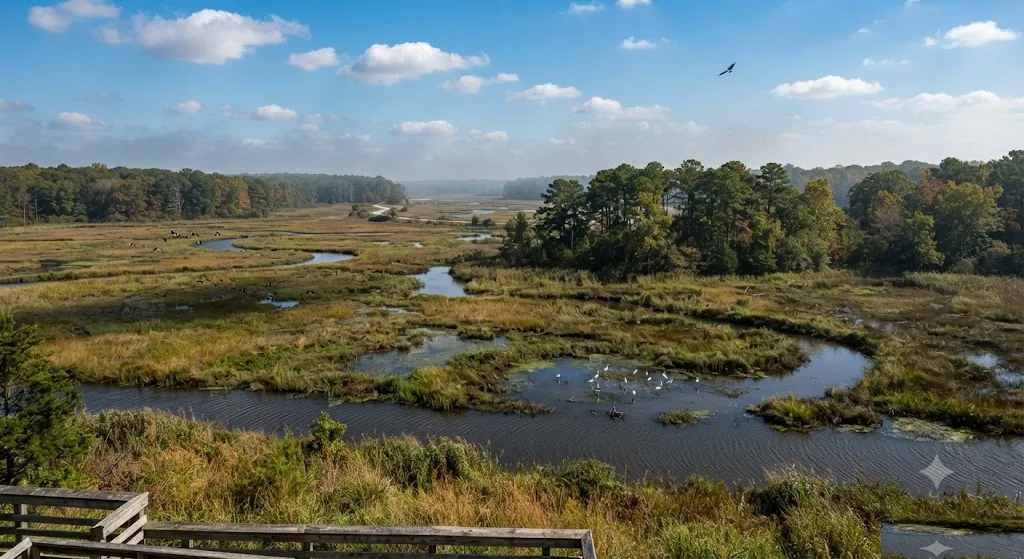
Blackwater National Wildlife Refuge stands out as a premier destination for wildlife enthusiasts and nature photographers. It's not just another park; it's a critical stopover along the Atlantic Flyway, making it one of the chief wintering areas for migrating ducks and Canada geese. Beyond waterfowl, the refuge boasts the largest breeding population of American bald eagles on the East Coast north of Florida, and it's home to the largest natural population of the formerly endangered Delmarva peninsula fox squirrel. We find the sheer biodiversity here to be astounding, with over 280 bird species recorded. The dynamic landscape, shaped by water, offers ever-changing scenes of open marsh, shallow pools, and forest edges, providing endless opportunities for observation and photography.
The refuge's commitment to conservation is evident in its meticulously managed habitats, which support a vibrant ecosystem. Visiting Blackwater National Wildlife Refuge allows you to witness these conservation efforts firsthand and connect with a truly wild side of Maryland. For those interested in the broader natural heritage of the region, we also recommend exploring other Maryland gems like Assateague Island, known for its wild horses and pristine beaches.
Who It's Best For
Blackwater National Wildlife Refuge caters to a wide range of visitors, but it particularly shines for:
- Birdwatchers: With hundreds of species, including bald eagles, various waterfowl, and migratory songbirds, it's a paradise for avid birders and casual observers alike. Bring your binoculars and spotting scopes!
- Nature Photographers: The diverse landscapes, abundant wildlife, and stunning sunrises and sunsets over the marsh offer unparalleled photographic opportunities.
- Families: The Wildlife Drive provides excellent opportunities for viewing wildlife from the comfort of your car, making it accessible for all ages and mobility levels. The Visitor Center also offers exhibits and programs for kids.
- Hikers and Cyclists: Over 5 miles of hiking trails and a 3.6-mile (or 4-mile, depending on source) Wildlife Drive suitable for cycling offer active ways to explore the refuge.
- Paddlers: With 17 miles of paddling trails, kayakers and canoers can get an intimate look at the tidal marshes and waterways.
- History Enthusiasts: The refuge is located in an area rich with history, including sites related to Harriet Tubman. Blackwater Adventures, for example, offers guided tours that share Harriet Tubman's landscape.
If you're looking for a destination that offers a peaceful escape and a deep connection with the natural world, Blackwater National Wildlife Refuge is an exceptional choice.
Getting There & Parking
Understanding how to get to Blackwater National Wildlife Refuge and where to park is crucial for a smooth visit. The refuge is located approximately 12 miles south of Cambridge, Maryland.
For GPS users, we recommend using the physical address of the Visitor Center: 2145 Key Wallace Drive, Cambridge, Maryland, 21613. It's important to note that using "Blackwater National Wildlife Refuge" in GPS may lead to incorrect directions.
Directions from Easton, Maryland (and the Chesapeake Bay Bridge): Follow Route 50 East through Easton and continue south over the Senator Frederick C. Malkus, Jr. Bridge into Cambridge. Continue on Route 50 for about 4 miles through several traffic lights until you see a brown sign for the refuge just past the Dorchester Square Shopping Center. Turn right onto Route 16 West (Church Creek Road). Follow Route 16 straight through a traffic light at Maple Dam Road. At the blinker light, turn left onto Egypt Road. Follow Egypt Road for approximately 7 miles until it dead ends at Key Wallace Drive. Turn left onto Key Wallace Drive for the Wildlife Drive entrance, or turn right for the Refuge Office and Visitor Center.
Parking: Parking is readily available at the Visitor Center, which is free to access. For those utilizing the Wildlife Drive, there are many pull-offs for wildlife viewing. Port-o-lets are available in three locations: the Visitor Center parking lot, the entrance to Wildlife Drive, and the Woods Trail parking lot.
When considering how to get to Blackwater National Wildlife Refuge, remember that the area's flat, low-traffic roads also make it excellent for cycling, with many scenic routes available in southern Dorchester County.
Top Things to Do
There's a wealth of things to do at Blackwater National Wildlife Refuge, ensuring every visitor finds an activity to connect with nature.
Explore the Wildlife Drive
The 3.6-mile (or 4-mile) Wildlife Drive is arguably the most popular attraction, offering exceptional opportunities for wildlife viewing from your vehicle, bicycle, or on foot. This paved route winds through diverse habitats, including tidal marshland, forest, and ponds. We recommend bringing binoculars to spot bald eagles, great blue herons, egrets, ospreys, and the elusive Delmarva fox squirrel. The drive features two short walking trails, an elevated observation platform, and a photo blind, along with numerous pull-offs. A daily pass for the Wildlife Drive costs $3 per vehicle or $1 per pedestrian or cyclist, which can be purchased online at Recreation.gov or at a self-service kiosk at the entrance. Federal Recreational Lands Passes and valid Duck Stamps also grant free entry.
Visit the Blackwater NWR Visitor Center
The Visitor Center, open Tuesday through Sunday from 10:00 AM to 4:00 PM (closed Mondays and federal holidays), is an excellent starting point for your visit. Here, you'll find wildlife exhibits, an authentic eagle's nest, and live video feeds from the Osprey Cam and Eagle Cam. The second floor features a bird-watchers' observatory with spotting scopes for enhanced viewing of the Blackwater River and marsh. Don't miss the beautiful Butterfly and Beneficial Insect Garden outside. All public areas outside the Wildlife Drive, including the Visitor Center, are free of charge.
Paddling the Water Trails
For a more immersive experience, we highly recommend exploring the refuge's 17 miles of paddling trails. These trails offer a unique perspective of the tidal marshes and waterways, bringing you closer to bald eagles, ospreys, herons, and muskrats. Blackwater Adventures, located near the refuge, offers kayak and canoe rentals, as well as guided paddling tours. Potomac Paddlesports also offers guided kayak safaris with 2026 dates available in September.
Wildlife Photography
Blackwater National Wildlife Refuge is a renowned spot for wildlife photography. The diverse habitats concentrate movement and offer clear visibility. Sunrise and sunset provide the best light, and the refuge is particularly active during these times. The observation platforms and pull-offs along the Wildlife Drive are excellent locations for capturing stunning shots of birds and other animals.
These are just some of the top things to do at Blackwater National Wildlife Refuge, each offering a unique way to experience this incredible natural treasure.
Blackwater National Wildlife Refuge Hiking Trails
For those who prefer to explore on foot, the Blackwater National Wildlife Refuge offers several well-maintained hiking trails that immerse you in its diverse ecosystems. The refuge boasts over 5 miles of hiking trails.
The Blackwater National Wildlife Refuge currently has four main land trails:
- Marsh Edge Trail: This 1/3-mile paved trail is fully accessible and runs along the confluence of the Little Blackwater River and Blackwater River, offering excellent views of the open water. It features an observation boardwalk, benches, and a toilet. Note that this trail may be closed from mid-winter through mid-summer to protect nesting eagles and herons.
- Woods Trail: With loops of 1/4, 1/2, and 1 mile, the Woods Trail provides an opportunity to see the endangered Delmarva Peninsula fox squirrel. This area is managed specifically to provide habitat for these squirrels, which prefer mature forests with little undergrowth.
- Key Wallace Trail: Approximately 2.75 miles long, this trail takes about two hours to hike and allows visitors to observe timber stand improvement areas, wildlife, and birds. Portions of it pass through some of the refuge's oldest trees. Be aware that sections may be closed during hunting season.
- Tubman Road Trail: This trail is about 2 miles long and takes approximately 1.5 hours to complete. It winds through mixed pine and hardwood forests, sloughs, marshes, and reforested fields, offering opportunities to observe forest management techniques, small mammals, birds, and amphibians.
Trails at Blackwater National Wildlife Refuge are generally open daily from dawn to dusk. We recommend downloading PDF maps of the refuge trails from the official website, which can be used with geospatial PDF apps for navigation. During the fall and winter, some trails, including the Tubman Road Trail, may be periodically closed for deer management hunts, so it's wise to check the refuge's status webpage in advance. When planning your Blackwater National Wildlife Refuge hiking trails adventure, remember to dress appropriately, as some trails can be wet, and bring insect repellent during warmer months.
Blackwater National Wildlife Refuge Camping
For visitors hoping to stay overnight directly within the Blackwater National Wildlife Refuge, it's important to note that the refuge itself does not offer camping facilities. However, there are several options for Blackwater National Wildlife Refuge camping and lodging in the surrounding area.
For those seeking a private camping experience close to the refuge, options like "Levin's Waterfront Paradise @ Blackwater Refuge" on Airbnb offer private, quiet campsites with sunset views over the refuge, suitable for tents or campers (16 ft or less). These sites typically offer a fire pit, picnic table, and outhouse, but no water, electric, or sewer hook-ups. Another nearby option is the "Blackwater Snakehead Campsite," located only 4.5 miles from the refuge, which also provides a rustic camping experience with a picnic table, fire pit, and composting toilet. These private sites are ideal for "getting off the grid" while remaining close to the refuge and Cambridge amenities.
If you prefer established campgrounds, two private options near the refuge are Taylor's Island Campground (410-397-3275) and Madison Bay Campground (410-228-4111). Taylor's Island Campground has a few sites specifically for tents and is located on the Chesapeake Bay, though it primarily caters to RVs. Madison Bay Campground is predominantly an RV park.
For more extensive tent camping facilities, we recommend looking into Maryland State Parks, though these are typically an hour to an hour and a half away from the refuge. Nearby state parks offering camping include Tuckahoe State Park and Martinak State Park. Tuckahoe State Park offers 51 family campsites, with 33 having electric hookups, and a central bathhouse with showers. Each site has a camping pad, picnic table, and fire ring, with potable water conveniently located. Pets are allowed on leash in the campground. Martinak State Park provides 63 campsites, 30 with electric hook-ups, and similar amenities. Reservations for state parks can typically be made through the Maryland Department of Natural Resources website or by calling 1-888-432-CAMP (2267).
When planning your Blackwater National Wildlife Refuge camping trip, especially during peak seasons, we advise making reservations well in advance.
Best Time to Visit
Choosing the best time to visit Blackwater National Wildlife Refuge largely depends on your interests, particularly what wildlife you hope to see. The refuge offers unique experiences throughout the year.
- Fall and Winter (Mid-October to Mid-March): This is widely considered the prime time for viewing waterfowl, including massive flocks of snow geese, Canada geese, and over 20 species of ducks like mallards, black ducks, and pintails. Bald eagle numbers also increase significantly during the colder months as migrants arrive from the north, making eagle sightings very common. The landscape simplifies visually with less vegetation, enhancing wildlife observation.
- Spring (Late March to May): Spring brings strong bird diversity, with waves of warblers and shorebirds passing through during migration. Many marsh birds return by mid-April, and eaglets grow quickly in their nests. Osprey, wild turkey, and northern bobwhite also begin to nest.
- Summer (June to September): While quieter for large waterfowl concentrations, summer is still productive, especially at dawn and dusk. Bald eagles can be seen throughout the year, nesting from January through July. However, visitors during warmer months should be prepared for insects and bring repellent.
For specific events, the refuge hosts an Annual Eagle Festival in March (March 14, 2026) and a Youth Fishing Fun Day in June (June 6, 2026). Guided birding tours are also offered regularly during the winter and spring months.
Keep in mind that parts of the Wildlife Drive and refuge trails may be closed periodically for deer management hunts during the fall and winter (e.g., 2025-26 hunting season), so checking the refuge's website for closure updates is advisable.
Where to Stay Nearby
While Blackwater National Wildlife Refuge camping is not available directly within the refuge, the nearby city of Cambridge, Maryland, offers a variety of lodging options to suit different preferences and budgets. Cambridge is located about 10-12 miles from the refuge.
For a luxurious stay, the Hyatt Regency Chesapeake Bay Golf Resort, Spa and Marina is a highly-rated 4-star option, offering a private beach, golf course, marina, and family-friendly amenities. It's a serene choice just 10 miles from the refuge.
Mid-range and budget-friendly hotels in Cambridge include:
- Comfort Inn & Suites Cambridge: A budget-friendly hotel with good ratings, located about 10 miles from the refuge.
- Days Inn & Suites by Wyndham Cambridge: Another practical and comfortable budget-friendly option, also around 10 miles away.
- Holiday Inn Express Cambridge by IHG: A reliable choice for comfort and cleanliness, located in Cambridge.
- Cambridge Inn: A more economical option in Cambridge.
Many of these hotels offer amenities such as free parking, free breakfast, and pools. For those interested in exploring more of Maryland's charm, consider extending your stay to nearby towns or visiting other unique destinations like the Chesapeake Bay Maritime Museum in St. Michaels or the Harriet Tubman National Historical Park, which is also in Dorchester County.
We recommend checking hotel websites or booking platforms like Travelocity, Expedia, or Orbitz for current rates and availability, especially during peak wildlife viewing seasons.
Sample 2-Day Itinerary
To help you make the most of your visit to Blackwater National Wildlife Refuge, we've crafted a sample 2-day itinerary, focusing on key experiences and nearby attractions.
Day 1: Wildlife Drive, Visitor Center & Hiking
- Morning (Dawn to Noon): Begin your day early at the Wildlife Drive. This is one of the best things to do at Blackwater National Wildlife Refuge, offering prime wildlife viewing opportunities as animals are most active. Drive, bike, or walk the 3.6-mile loop, stopping at pull-offs and observation platforms. Keep an eye out for bald eagles, various waterfowl, and the Delmarva fox squirrel. Remember to purchase your daily pass online at Recreation.gov or at the self-service kiosk.
- Lunch: Head into Cambridge for lunch. The town offers a selection of casual eateries and local restaurants.
- Afternoon (1:00 PM - 4:00 PM): Explore the Blackwater National Wildlife Refuge Visitor Center. Browse the exhibits, watch the live wildlife cams, and utilize the bird-watchers' observatory. Afterward, take a leisurely hike on the Marsh Edge Trail, a paved 1/3-mile accessible loop with excellent river views.
- Late Afternoon/Evening: If time and energy permit, consider a longer hike on the Woods Trail or Key Wallace Trail to delve deeper into the refuge's forests. Enjoy dinner in Cambridge.
Day 2: Paddling, History & Local Exploration
- Morning (Early): Experience the refuge from the water with a guided kayak or canoe tour. Blackwater Adventures offers rentals and tours, providing an intimate perspective of the marshes and waterways. This is another one of the essential things to do at Blackwater National Wildlife Refuge for active visitors.
- Late Morning/Lunch: After your paddle, explore more of Dorchester County's rich history. Visit the Harriet Tubman Underground Railroad National Historical Park and Visitor Center, which is closely tied to the landscape surrounding Blackwater.
- Afternoon: Depending on your interests, you might visit the Chesapeake Bay Maritime Museum in St. Michaels (about an hour drive) or explore the charming downtown area of Cambridge, with its shops and waterfront. For a broader Maryland experience, consider visiting the American Visionary Art Museum in Baltimore, though this would require a longer drive.
- Evening: Enjoy a final dinner in Cambridge, perhaps at a waterfront restaurant.
This itinerary provides a robust experience of Blackwater National Wildlife Refuge and its surroundings. Remember to check current hours and any reservation requirements for tours or specific attractions.
Is It Worth Visiting?
We unequivocally believe that Blackwater National Wildlife Refuge is worth visiting. As an independent US travel authority, our team rarely encounters a destination that so perfectly balances accessibility with profound natural beauty and ecological significance. For anyone with an appreciation for wildlife, particularly birds, or simply seeking a tranquil escape into an unspoiled landscape, the refuge offers an unparalleled experience.
The sheer abundance of wildlife, from the impressive bald eagle population to the migratory waterfowl that blanket the marshes in cooler months, makes every visit a unique adventure. The variety of ways to experience the refuge—from the convenient Wildlife Drive to the immersive hiking and paddling trails—ensures that it caters to diverse interests and physical abilities. The commitment to conservation here is palpable, offering visitors a chance to connect with vital ecosystems and learn about ongoing efforts to protect endangered species like the Delmarva peninsula fox squirrel.
Beyond the wildlife, the serene beauty of the tidal marshes, forests, and waterways provides a calming backdrop for reflection and photography. While there are no Blackwater National Wildlife Refuge camping facilities directly on site, the nearby town of Cambridge offers comfortable lodging and dining options, making it easy to plan a multi-day trip. In our expert verdict, if you're wondering, "is Blackwater National Wildlife Refuge worth visiting?", the answer is a resounding yes. It's a truly special place that leaves a lasting impression, a testament to Maryland's rich natural heritage.
FAQ
things to do in Cambridge
Beyond Blackwater National Wildlife Refuge, Cambridge, Maryland, offers a charming historic downtown with shops, art galleries, and waterfront dining. You can explore the Choptank River Lighthouse, visit the Harriet Tubman Museum and Educational Center, or enjoy local seafood. The city also serves as a gateway to the Visit Maryland Eastern Shore, with easy access to other attractions and the Chesapeake Bay.
Blackwater National Wildlife Refuge with kids
Blackwater National Wildlife Refuge is excellent for kids. The Wildlife Drive allows children to spot animals from the car, and the Visitor Center has engaging exhibits and live wildlife cams. Shorter, paved trails like the Marsh Edge Trail are easy for little legs or strollers. The refuge also hosts an Annual Youth Fishing Fun Day in June. Remember to bring binoculars and insect repellent, especially in warmer months.
Blackwater National Wildlife Refuge tips
For the best experience, visit during fall or winter for peak waterfowl and bald eagle viewing. Arrive at dawn or dusk for increased wildlife activity. Bring binoculars, a camera, and insect repellent (essential in warmer seasons). Check the refuge's website for any closures due to deer management hunts. Purchase your Wildlife Drive pass online at Recreation.gov in advance. When stopping along roads to view wildlife, pull over safely and use hazard lights.
Blackwater National Wildlife Refuge parking
Parking is available at the Visitor Center, which is free of charge. For the Wildlife Drive, there are numerous pull-offs along the route for viewing wildlife. Port-o-lets are located at the Visitor Center parking lot, the Wildlife Drive entrance, and the Woods Trail parking lot. For GPS, use the Visitor Center's physical address: 2145 Key Wallace Drive, Cambridge, Maryland, 21613.
best time to visit Blackwater National Wildlife Refuge
The best time to visit Blackwater National Wildlife Refuge for viewing large concentrations of waterfowl and bald eagles is from mid-October through mid-March. Spring offers excellent bird diversity with migratory warblers and shorebirds. Summer is quieter but still good for dawn and dusk viewing, though insects are more prevalent.
Blackwater National Wildlife Refuge hours and fees
The refuge's outdoor public areas, including the Wildlife Drive and trails, are open daily from dawn to dusk, year-round. The Visitor Center is open Tuesday through Sunday, 10:00 AM to 4:00 PM, and is closed on Mondays and all federal holidays. Access to the Visitor Center and all public areas outside the Wildlife Drive is free. An entrance pass is required for the Wildlife Drive: $3 per vehicle, or $1 per pedestrian or cyclist. Federal Recreational Lands Passes and valid Duck Stamps grant free entry. Digital passes can be purchased via Recreation.gov.
Conclusion
Our team at Roam States wholeheartedly recommends Blackwater National Wildlife Refuge Maryland as an essential destination for anyone seeking to immerse themselves in the natural splendor of the Eastern Shore. This remarkable sanctuary offers a dynamic and accessible wildlife experience, from the majestic bald eagles soaring overhead to the vast flocks of migratory waterfowl that grace its marshes. With well-maintained trails, a scenic Wildlife Drive, and abundant opportunities for paddling, it’s a place where every visit reveals new wonders. We encourage you to plan your trip, embrace the wild beauty, and discover why Blackwater National Wildlife Refuge holds such a special place in Maryland’s natural landscape.
Last updated: 2026-07-13 by the Roam States team.