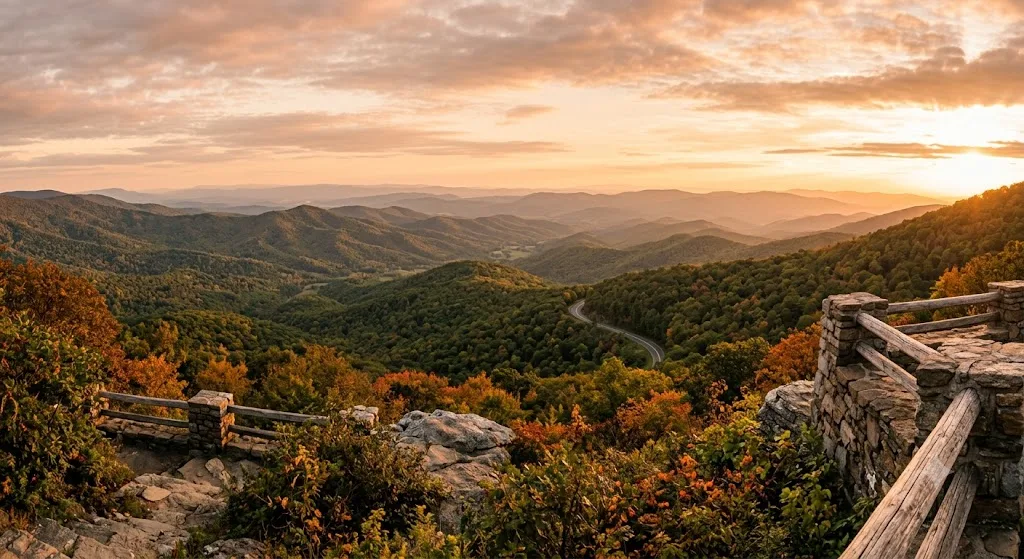
Our team at Roam States has extensively researched and compiled this comprehensive Shenandoah National Park travel guide. When planning a trip to Shenandoah National Park Virginia, travelers are seeking more than just a destination; they're looking for an immersive experience in the heart of the Blue Ridge Mountains. This guide cuts through the generic advice to deliver confident, specific, and actionable insights for an unforgettable visit. We focus on the essential details—from navigating the iconic Skyline Drive to discovering hidden trails and securing the best accommodations—ensuring your adventure is seamless and truly memorable.
Why Visit Shenandoah National Park
If you're wondering, "is Shenandoah National Park worth visiting?", our answer is an unequivocal yes. This sprawling national treasure, located just 75 miles west of Washington, D.C., offers a breathtaking escape into the natural beauty of Virginia's Blue Ridge Mountains. Spanning over 200,000 acres, the park is a sanctuary of diverse landscapes, from dense forests and cascading waterfalls to open fields of wildflowers and stunning vistas.
Shenandoah National Park is defined by its 105-mile-long Skyline Drive, which winds along the crest of the mountains, offering nearly 75 scenic overlooks that provide panoramic views of the Shenandoah Valley to the west and the Piedmont to the east. Beyond the scenic drive, the park boasts over 500 miles of hiking trails, including a significant portion of the legendary Appalachian Trail. Visitors in 2026 can expect opportunities for wildlife viewing, with black bears, white-tailed deer, and over 200 bird species calling the park home. The park also qualifies as a legitimate dark-sky destination, making stargazing from spots like Big Meadows or Hogback Overlook a truly spectacular experience on a moonless night. Whether you seek challenging hikes, serene nature walks, or simply a picturesque drive, Shenandoah National Park delivers a rich and varied outdoor adventure.
Who It's Best For
Shenandoah National Park caters to a wide array of visitors, making it an ideal destination for various travel styles. It's particularly well-suited for nature enthusiasts and outdoor adventurers, offering hundreds of miles of trails for all skill levels, from easy strolls to strenuous climbs. Families with children will appreciate the accessible trails and ranger programs designed to engage young naturalists. Wildlife photographers and birdwatchers will find ample opportunities to capture the park's diverse fauna, including black bears and deer. Couples seeking a romantic getaway will enjoy the scenic drives, stunning sunsets, and cozy lodging options within the park. Even those looking for a peaceful retreat will find solace in the quiet overlooks and serene natural settings. The park is also notably pet-friendly, with leashed dogs welcome on approximately 480 of its 500 miles of trails, making it a premier park for hiking with your canine companion.
However, visitors expecting extensive commercial development or bustling nightlife might find the park's focus on natural preservation a bit too quiet. Those with mobility challenges should be aware that while some trails are accessible, much of the park's terrain is rugged. We recommend reviewing specific trail difficulties and accessibility information before your visit.
Getting There & Parking
Understanding how to get to Shenandoah National Park is crucial for a smooth arrival. The park is conveniently located about 75 miles west of Washington, D.C., and is primarily accessed via Skyline Drive. There are four main entrance stations to Shenandoah National Park, each offering a distinct starting point for your adventure:
- Front Royal Entrance Station (Mile 0.6): The most northern entrance, accessible via US-340. This is often the closest option for visitors coming from the D.C. metro area.
- Thornton Gap Entrance Station (Mile 31.5): Located between Luray and Sperryville, accessible via US-211. This entrance provides good access to the park's central district.
- Swift Run Gap Entrance Station (Mile 65.7): Accessible via US-33, located east of Elkton.
- Rockfish Gap Entrance Station (Mile 105.4): The most southern entrance, connecting directly to I-64 and US-250, and also serving as the northern terminus of the Blue Ridge Parkway.
When it comes to Shenandoah National Park parking, most overlooks, visitor centers, picnic areas, and trailheads along Skyline Drive offer designated parking spaces. It's important to park only in authorized locations to avoid towing. For those planning to hike Old Rag Mountain, a day-use ticket is required from March 1 through November 30, and reservations can be made on recreation.gov. The main parking lot for Old Rag Trailhead is undergoing infrastructure enhancements through November 2026, but visitors can still access the trailhead via existing overflow lots.
The park transitioned to a fully cashless fee system on July 1, 2025, accepting only mobile or electronic payments for entrance and campground fees. A standard entrance pass costs $30 per vehicle and is valid for seven consecutive days. Annual passes for Shenandoah National Park or America the Beautiful passes (covering all federal lands) are also available for frequent visitors. Several fee-free days are scheduled for 2026, including Presidents Day (February 16), Memorial Day (May 25), Independence Day weekend (July 3-5), and Veterans Day (November 11), among others.
Top Things to Do
There are countless things to do at Shenandoah National Park, ensuring every visitor finds an activity to suit their interests. Our team highly recommends focusing on these key experiences to truly capture the essence of the park:
- Drive Skyline Drive: This 105-mile scenic byway is the park's defining feature, offering breathtaking views from its 75 overlooks. It's an absolute must-do, especially during fall foliage season, though October is the busiest month.
- Go Hiking: With over 500 miles of trails, hiking is a cornerstone of the Shenandoah experience. From easy walks to challenging rock scrambles, there's a trail for everyone. Popular options include Old Rag Mountain (strenuous, requires a day-use ticket from March 1 to November 30), Dark Hollow Falls (scenic waterfall hike), and Stony Man Trail (easy-to-moderate with incredible views).
- Wildlife Viewing: Shenandoah is home to a diverse range of wildlife, including black bears, white-tailed deer, and numerous bird species. Big Meadows is a prime spot for wildlife watching, especially at dusk.
- Stargazing: The park's dark skies offer exceptional opportunities for stargazing. Big Meadows and Hogback Overlook are recommended spots for viewing the Milky Way.
- Attend a Ranger-Led Program: These programs, available from spring through fall, offer guided walks, talks, and campfire programs that delve into the park's natural and cultural history. Topics can range from wildlife to the Civilian Conservation Corps.
- Visit Rapidan Camp: Explore the historic summer retreat of President Herbert Hoover, offering a glimpse into early 20th-century presidential life.
- Horseback Riding: Experience the park's trails from a different perspective. Skyland Stables, open May 1 to October 25, 2026, offers guided rides (reservations required).
- Fishing: The park's native brook trout streams offer opportunities for fishing.
Our expert verdict: While driving Skyline Drive is essential, truly immerse yourself by stepping out onto the trails. Even a short walk to an overlook or waterfall will provide a deeper connection to the park's natural grandeur. Don't miss the chance to experience the park's dark skies if weather permits.
Best Time to Visit
The best time to visit Shenandoah National Park largely depends on your priorities, as each season offers a unique experience.
- Spring (April-May): Spring brings a vibrant display of wildflowers, making it a beautiful time for hiking. Temperatures are mild, and wildlife becomes more active. The park hosts its annual Wildflower Weekend, with guided hikes and programs, on May 2-3, 2026.
- Summer (June-August): Summer offers warm weather ideal for all outdoor activities, including hiking, camping, and ranger programs. However, it can also be crowded, especially on weekends and at popular trailheads.
- Fall (September-October): This is arguably the most popular time to visit, as the Blue Ridge Mountains explode with stunning fall foliage. The vibrant colors attract significant crowds, with October being the busiest month. If you plan to visit during this peak season, we recommend going in late September or early November for similar scenery with fewer crowds.
- Winter (November-March): While Skyline Drive may experience periodic closures due to inclement weather, the park itself remains open 24/7. Winter offers a serene, quiet experience with stark, beautiful landscapes and fewer visitors. Visitors can still enter the park on foot to hike even when Skyline Drive is closed to vehicles.
Most park facilities, including visitor centers, lodging, and waysides, generally operate from mid-March to late November, with some offering limited winter hours. For current conditions and facility operating dates in 2026, always check the official National Park Service website or text SHENALERTS to 888777 for real-time updates.
Where to Stay Nearby
For those planning a trip to Shenandoah National Park Virginia, a range of accommodation options are available both inside and outside the park, catering to different preferences and budgets. Our team recommends considering these choices:
In-Park Lodging
Staying within Shenandoah National Park offers unparalleled access to Skyline Drive and its many attractions. The park offers three main lodging options, managed by Delaware North Parks & Resorts for 2026:
- Skyland Resort (Mile 41.7 and 42.5 on Skyline Drive): Open March 30 - November 8, 2026, Skyland is the largest lodge, offering 179 rooms including motel-style units, family cabins, and historic cabins. It sits at the highest elevation on Skyline Drive, providing sweeping views of the Shenandoah Valley. Many rooms at Skyland offer better views compared to other in-park options. Pet-friendly rooms are available for an additional $30 per pet, per night.
- Big Meadows Lodge (Mile 51.2 on Skyline Drive): Listed on the National Register of Historic Places, Big Meadows Lodge is open May 4 - November 29, 2026. It features rooms in the main lodge, as well as cabins and units around the main building. Pet-friendly rooms are available with a $30 per pet, per night fee. Big Meadows is a central hub with a visitor center, campground, and various trailheads nearby.
- Lewis Mountain Cabins (Mile 57.5 on Skyline Drive): These rustic cabins are open April 10 - November 8, 2026, and offer a more secluded experience. All but the hikers' cabin have private bathrooms, and some feature sheltered outdoor grill pits.
Reservations for in-park lodging are highly recommended, especially during peak seasons like fall foliage. Both Skyland and Big Meadows Lodge feature restaurants with regional cuisine and taprooms.
Shenandoah National Park Camping
For those who prefer a more immersive nature experience, Shenandoah National Park camping offers several developed campgrounds. On July 1, 2025, the park transitioned to a fully cashless system for campground fees, accepting only mobile or electronic payments. Backcountry camping is also permitted with a permit, which can be obtained online or at kiosks in the park.
Campgrounds opening schedules for 2026 are as follows:
- Lewis Mountain Campground (Mile 57.5): Opens March 25, 2026.
- Big Meadows Campground (Mile 51.2): Opens March 26, 2026.
- Mathews Arm Campground (Mile 22.2): Opens May 5, 2026.
- Loft Mountain Campground (Mile 79.5): Opens May 5, 2026.
- Dundo Group Campground (Mile 83.7): Opens May 5, 2026.
RV and other overnight vehicle stays must be in one of the five campgrounds, as "boondocking" (car/RV parking) is prohibited along the road or in overlooks.
Nearby Towns and Cities
If you prefer to stay outside the park, several charming towns offer convenient access and a wider range of amenities. These include Front Royal (northern entrance), Luray (near Thornton Gap entrance), Elkton (near Swift Run Gap entrance), and Waynesboro/Charlottesville (near Rockfish Gap entrance). Options range from hotels and motels to vacation rentals and bed & breakfasts. Nearby cities like Harrisonburg also offer a variety of hotels.
For a broader exploration of the region, consider staying in Virginia and visiting other notable destinations like Luray Caverns, which is a popular day trip from Shenandoah.
Sample 2-Day Itinerary
To help you make the most of your visit to Shenandoah National Park Virginia, our team has crafted a sample 2-day itinerary, focusing on key experiences and efficient travel along Skyline Drive.
Day 1: Northern & Central District Highlights
- Morning (Front Royal to Thornton Gap): Enter the park at the Front Royal Entrance Station (Mile 0.6). Drive south on Skyline Drive, stopping at overlooks like Shenandoah Valley Overlook and Hogback Overlook (Mile 21) for panoramic views. Visit the Dickey Ridge Visitor Center (Mile 4.6), open May 1 - November 1, 2026, for maps, exhibits, and ranger assistance.
- Late Morning/Lunch (Elkwallow Wayside): Continue south to Elkwallow Wayside (Mile 24), open April 29 - November 8, 2026, for food services, gifts, and supplies. Enjoy a picnic or grab a quick bite.
- Afternoon (Hiking & Views): Head to the central district. We recommend the Bearfence Mountain Trail (Mile 56.4) for a rock scramble and 360-degree views, or the Stony Man Trail (Mile 41.7), an easy 1.6-mile hike to the park's second-highest point with stunning vistas.
- Evening (Big Meadows): Check into Big Meadows Lodge (Mile 51.2), open May 4 - November 29, 2026, or Big Meadows Campground (Mile 51.2), opening March 26, 2026. Enjoy dinner at the lodge. As dusk settles, keep an eye out for wildlife in the Big Meadows area. If skies are clear, Big Meadows is an excellent spot for stargazing.
Day 2: Central & Southern District Exploration
- Morning (Waterfalls & Highest Point): Start your day with a hike to Dark Hollow Falls (Mile 50.7), a popular 1.4-mile round trip waterfall hike. For a more challenging option, hike to Hawksbill Mountain (near Mile 46.7), the highest point in the park at 4,051 feet, offering a 2.9-mile loop with rewarding views.
- Late Morning (Rapidan Camp): Consider a ranger-led program or a self-guided visit to Rapidan Camp, President Hoover's historic summer retreat (check NPS website for program schedules and accessibility).
- Lunch (Lewis Mountain): Enjoy a picnic at Lewis Mountain Picnic Grounds (Mile 57.5), open year-round, or grab supplies from the Lewis Mountain Campstore (opening March 25, 2026).
- Afternoon (Southern Drive & Departure): Continue south on Skyline Drive, enjoying the quieter sections and numerous overlooks. The southern district offers longer scenic stretches and fewer crowds. Exit the park at the Rockfish Gap Entrance Station (Mile 105.4), which connects to the Blue Ridge Parkway, allowing for further scenic driving or easy access to I-64 for departure.
This itinerary is a suggestion, and we encourage you to tailor it to your interests and pace. Remember to check the National Park Service website for the most up-to-date information on operating hours, closures, and program schedules for 2026.
FAQ
things to do in Blue Ridge
The Blue Ridge Mountains, where Shenandoah National Park resides, offer a wealth of activities beyond the park boundaries. Visitors can explore charming small towns like Luray, Front Royal, and Waynesboro, which offer local shops, restaurants, and cultural attractions. The Luray Caverns, a spectacular natural wonder, is a popular nearby attraction. The Blue Ridge Parkway, which connects directly to Shenandoah's southern entrance, provides another 469 miles of scenic driving and outdoor recreation. Wine enthusiasts can visit numerous vineyards in the Shenandoah Valley. Additionally, the region is rich in history, with battlefields and historic sites like Manassas National Battlefield Park and Colonial Williamsburg within a reasonable drive, offering diverse experiences for every traveler.
Shenandoah National Park with kids
Shenandoah National Park is an excellent destination for families with kids. We recommend engaging in ranger-led programs, many of which are specifically designed for children, such as the Junior Ranger programs. Easy hiking trails like Limberlost Trail (1.4 miles, accessible path), Frazier Discovery Trail (2.2 miles), and Compton Peak Trail (1.7 miles) are perfect for little legs. Kids will also love spotting wildlife like deer and possibly black bears from Skyline Drive or overlooks. Picnic areas are abundant for family meals, and several campgrounds offer a fun overnight experience. Remember that pets are allowed on most trails (with a 6-foot leash), so your furry family members can join the adventure too!
Shenandoah National Park tips
Our top tips for visiting Shenandoah National Park include planning ahead, especially for lodging and popular hikes like Old Rag, which requires a day-use ticket from March 1 to November 30. The park is cashless for entrance and campground fees as of July 1, 2025, so bring a credit/debit card or pre-purchase passes online. Cell service can be spotty, so download maps and information beforehand. Dress in layers, as mountain weather can change quickly. Bring plenty of water and snacks, especially for hikes. Always stay on marked trails and practice Leave No Trace principles. For real-time updates on Skyline Drive conditions and park alerts, text SHENALERTS to 888777.
Shenandoah National Park parking
Shenandoah National Park parking is generally available at overlooks, visitor centers, picnic grounds, and trailheads along Skyline Drive. Overnight parking is allowed for backcountry campers with a permit, but "boondocking" (car/RV parking) along the road or in overlooks is prohibited; RVs must stay in designated campgrounds. The main parking lot for the Old Rag Trailhead is undergoing construction through November 2026, but overflow lots remain open, and day-use tickets are still required. Always park in designated areas to avoid towing.
best time to visit Shenandoah National Park
The best time to visit Shenandoah National Park truly depends on what you want to experience. For vibrant fall foliage, late September to early November offers stunning colors with potentially fewer crowds than peak October. Spring (April-May) is ideal for wildflowers and mild hiking weather. Summer provides warm conditions for all outdoor activities but can be busy. Winter offers a quiet, stark beauty, though Skyline Drive may close due to weather. Most park facilities operate from mid-March to late November.
Shenandoah National Park hours and fees
Shenandoah National Park is open 24 hours a day, 7 days a week, year-round. However, portions of Skyline Drive may close periodically due to inclement weather. Most visitor facilities, including visitor centers, lodges, and waysides, operate seasonally, typically from mid-March to late November, with some offering special winter hours. The entrance fee for a single vehicle is $30, valid for seven consecutive days. The park transitioned to a fully cashless fee system on July 1, 2025, accepting only mobile or electronic payments at entrance stations and for campground fees. Several fee-free days are observed in 2026, including Presidents Day (February 16), Memorial Day (May 25), and Veterans Day (November 11). Old Rag Mountain requires a separate day-use ticket from March 1 to November 30.
As the Roam States editorial team, we are confident that this guide provides the specific, non-generic information you need to plan an exceptional trip to Shenandoah National Park. From the winding beauty of Skyline Drive to the quiet solitude of its many trails, this Virginia gem promises an unforgettable encounter with nature.
Last updated: 2026-07-13 by the Roam States team.