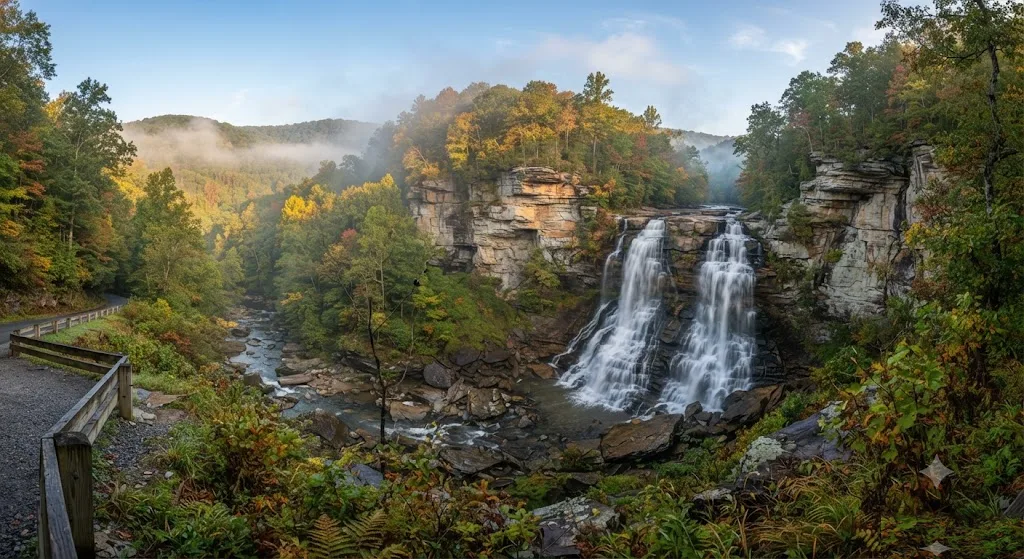
When we set out to explore the Mountain State, certain natural wonders consistently rise to the top of our must-see list. Among them is a cascade that truly lives up to its majestic name: Cathedral Falls West Virginia. Tucked away just off the historic Midland Trail, this stunning waterfall in Gauley Bridge offers an accessible and awe-inspiring experience that we believe every traveler should witness. Our team has compiled this comprehensive guide to help you plan an unforgettable visit to one of West Virginia's most cherished natural landmarks.
Why Visit Cathedral Falls
For us, the allure of Cathedral Falls isn't just in its impressive 60-foot drop, but in the entire experience it offers. As Cane Branch tumbles over layered sandstone and shale cliffs, it creates a dramatic, tiered cascade that feels almost otherworldly. The waterfall is nestled in a natural amphitheater, with moss-covered rock faces and the constant rush of water creating an atmosphere akin to a grand, natural sanctuary – hence its fitting name.
What truly sets Cathedral Falls West Virginia apart is its remarkable accessibility. Unlike many of West Virginia's hidden gems that demand strenuous hikes or off-road adventures, Cathedral Falls is easily viewed right from US Route 60, the scenic Midland Trail. This means visitors of all ages and abilities can appreciate its beauty without extensive effort. We've found that this ease of access makes it a perfect stop for families, older adults, or anyone simply looking for a relaxed encounter with nature's grandeur. It's more than just a quick stop; it's a place that inspires photographs, family memories, and a deep appreciation for the state's wild beauty.
The falls have been stopping travelers in their tracks for generations, serving as an unofficial gateway to the New River Gorge. Its popularity has endured, making it one of the best-known natural attractions along US Route 60. The sheer beauty and the feeling of stepping into a serene, natural cathedral are reasons enough for us to recommend a visit to Cathedral Falls West Virginia.
Who It's Best For
Our team believes Cathedral Falls is an ideal destination for a wide array of travelers. Its exceptional accessibility makes it perfect for families with young children or strollers, as well as older adults or those with mobility challenges. The paved path to the viewing bridge provides an excellent vantage point without any strenuous activity.
Photographers, both amateur and professional, will find endless inspiration here. The unique rock formations, the cascading water, and the surrounding foliage offer stunning photo opportunities, especially during the "golden hour" in the late afternoon or after a good rain when the water flow is most dramatic. It's a spot where you'd be hard-pressed to take a bad picture.
Beyond that, it's a fantastic stop for road trippers traversing the Midland Trail (US-60) or exploring the New River Gorge region. It offers a peaceful respite and a chance to stretch your legs amidst breathtaking scenery. Nature lovers seeking a quick, impactful dose of West Virginia's natural beauty will also find Cathedral Falls incredibly rewarding. It’s a place for quiet contemplation, a scenic picnic, or simply marveling at the power and artistry of water.
Getting There & Parking
Understanding how to get to Cathedral Falls is straightforward, as its roadside location is one of its greatest assets. Cathedral Falls is situated just off US Route 60 (the Midland Trail) near the town of Gauley Bridge in Fayette County, West Virginia.
If you're coming from Charleston, head east on US-60 for approximately 40 minutes. From Fayetteville, take Route 16 west to US-60, which will take about 20 minutes. If you're approaching from the Canyon Rim Visitor Center for New River Gorge National Park, take US-19 north, then exit to follow Highway 60 west through Ansted towards Gauley Bridge. In about 14.3 miles, you'll find a small parking lot on your right. Conversely, if you're following a waterfall tour from Kanawha Falls, continue west on Highway 60 through Gauley Bridge towards Ansted, and in about 2.7 miles, there will be a small parking lot on the left.
For those who prefer GPS, the coordinates for Cathedral Falls are approximately 38.15444N by 81.1788W.
Regarding Cathedral Falls parking, we want to be specific: the designated parking area is a small pull-off directly alongside US-60. It typically has room for only a few vehicles, often around eight cars. Due to its popularity, especially during peak seasons or weekends, we highly recommend arriving early in the morning or later in the evening to secure a spot. While the parking is free, its limited capacity means you might need to wait briefly for a space to open up. From the parking area, it’s just a short, easy walk to the falls.
Top Things to Do
While the primary draw is, of course, the magnificent waterfall itself, there are several things to do at Cathedral Falls and in the immediate vicinity that our team recommends for a fulfilling visit.
-
Admire and Photograph the Falls: The main activity here is soaking in the beauty of Cathedral Falls. From the parking area, a short, paved path leads to a bridge that offers excellent, accessible views of the cascading water. This is a prime spot for photographs, capturing the full 60-foot height and the unique tiered rock formations. For those seeking an even closer perspective, a short, unpaved dirt trail leads towards the base of the falls. We advise caution on this path, as it can be slippery and is not considered accessible. The "cathedral" like cove created by the falls is truly a sight to behold, and you'll want to take your time to appreciate the unique acoustics and the delicate butterflies that sometimes flutter around the water.
-
Enjoy a Picnic: The roadside park at Cathedral Falls features a couple of picnic tables, making it an ideal spot to enjoy a packed lunch amidst the sounds of rushing water. It's a peaceful setting despite its proximity to the road, perfect for a relaxing break.
-
Explore Nearby Waterfalls: Cathedral Falls is part of a region rich in waterfalls. Just two miles west on US-60, you'll find the wide and powerful Kanawha Falls. Heading east on US-60 for about six miles will lead you to Hawks Nest State Park, where you can discover Mill Creek Falls. The West Virginia Waterfall Trail highlights many of these natural wonders, and we encourage you to explore more of them during your trip.
-
Visit Hawks Nest State Park: A short drive from Cathedral Falls, Hawks Nest State Park offers spectacular panoramic views of the New River Gorge, a museum, and opportunities for tram rides (seasonal), hiking, and whitewater rafting. It’s a fantastic complement to your waterfall visit.
-
Discover New River Gorge National Park and Preserve: Cathedral Falls serves as a gateway to the incredible New River Gorge National Park and Preserve. This national park, just a short drive away, boasts world-class whitewater rafting, extensive hiking and biking trails, rock climbing, and the iconic New River Gorge Bridge. We highly recommend dedicating significant time to exploring this vast and adventurous park.
These things to do at Cathedral Falls and its surroundings offer a diverse range of experiences, from tranquil contemplation to thrilling outdoor adventure.
Cathedral Falls Hiking Trails
When discussing Cathedral Falls hiking trails, it's important to set expectations. The primary "trail" at Cathedral Falls itself is a very short, paved path leading from the parking area to a viewing bridge. This path is approximately 20 yards in length and is considered handicap-accessible. From the bridge, you get excellent views of the main cascade.
For those wanting a closer look, there is a short, unpaved dirt trail that continues beyond the bridge towards the base of the falls. However, our team advises caution here: this trail is not accessible, can be narrow, and is often slippery due to the mist and damp conditions. While it offers a more intimate perspective of the waterfall, it's not a traditional hiking trail in the sense of a longer, maintained path. Some visitors even find walking through the creek easier than navigating the slippery dirt path.
If you're looking for more extensive Cathedral Falls hiking trails, you'll need to venture beyond the immediate roadside park. The good news is that Cathedral Falls is perfectly situated near some of West Virginia's most spectacular hiking opportunities, particularly within the New River Gorge National Park and Preserve. The park offers hundreds of miles of trails ranging from easy strolls to challenging backcountry treks. Popular options include:
- Long Point Trail: A moderate 3.2-mile roundtrip hike leading to a stunning overlook of the New River Gorge Bridge.
- Endless Wall Trail: A more strenuous 2.4-mile loop (one way) offering dramatic cliff-edge views and access to the famous Endless Wall rock climbing area.
- Fayetteville Area Trails: Numerous trails around the charming town of Fayetteville, suitable for various skill levels.
Additionally, nearby Hawks Nest State Park also features several trails, providing more options for those eager to explore the region on foot. While the immediate Cathedral Falls hiking trails are brief, the surrounding area more than makes up for it with a wealth of scenic pathways.
Best Time to Visit
Our team often gets asked about the best time to visit Cathedral Falls, and the truth is, this waterfall offers something special in every season. However, we have a few recommendations to enhance your experience:
-
Spring: We consider spring to be an exceptional time. After heavy rains and snowmelt, the water flow over the falls is at its most dramatic and powerful. The surrounding forest bursts into vibrant greens, offering a lush backdrop for photographs. Spring also typically brings fewer crowds than the peak summer months.
-
Early Morning or Late Evening: To avoid crowds and capture the best light, we recommend visiting either in the early morning or later in the evening. The late afternoon, in particular, offers a "golden hour" glow on the falls, creating truly magical photo opportunities.
-
After a Good Rain: For the most impressive water flow, plan your visit for shortly after a significant rainfall. The falls will be at their most voluminous and spectacular.
-
Fall: West Virginia's autumn foliage is legendary, and Cathedral Falls is no exception. The vibrant reds, oranges, and yellows of the surrounding trees provide a breathtaking contrast to the white cascade. While it can be a popular time, the beauty is undeniable.
-
Winter: Don't discount a winter visit! When temperatures drop, the falls can form stunning icicles and the descending layers of rock formations become more noticeable against a blanket of snow. It creates a serene, almost wonderland-like atmosphere, often with fewer visitors.
Ultimately, the best time to visit Cathedral Falls depends on your priorities, but each season offers a unique and beautiful perspective on this West Virginia treasure.
Where to Stay Nearby
While Cathedral Falls itself is a roadside attraction, its proximity to the New River Gorge National Park and Preserve means there are excellent accommodation options nearby. Our team has explored the region extensively, and we recommend considering these areas for your stay:
-
Fayetteville: Often considered the adventure hub of the New River Gorge, Fayetteville is a charming town with a vibrant atmosphere. You'll find a range of lodging here, from cozy bed and breakfasts and boutique hotels to vacation rentals and cabins. It's an excellent base for exploring the national park, enjoying local restaurants, and accessing outdoor activities. Many outfitters for whitewater rafting and climbing are also located here.
-
Lansing: Just north of Fayetteville, Lansing offers a mix of accommodations, including several popular resorts and cabins that cater to outdoor enthusiasts. It's very close to the Canyon Rim Visitor Center and the New River Gorge Bridge.
-
Ansted: A historic town situated between Cathedral Falls and Fayetteville, Ansted offers a quieter alternative. It's home to Hawks Nest State Park, which has a lodge with stunning gorge views. Staying here provides easy access to both the falls and the state park's attractions.
-
Gauley Bridge: While a smaller town, Gauley Bridge itself offers a few local lodging options. It's the closest town to Cathedral Falls, making it convenient if you prioritize proximity to the waterfall. You might find smaller motels or guesthouses here.
-
Summersville: Located a bit further north, Summersville offers more chain hotels and dining options, particularly around Summersville Lake. It's a good choice if you're looking for more conventional lodging and easy access to the lake for boating or diving.
For a truly unique experience, consider staying at The Greenbrier Resort, an iconic luxury destination located a bit further east, offering a historic and opulent retreat. Or, for a different kind of natural beauty, explore options near Blackwater Falls State Park, though it's a longer drive from Cathedral Falls.
Cathedral Falls Camping
While there isn't any direct Cathedral Falls camping available right at the waterfall site, the surrounding New River Gorge region is a premier destination for campers. Our team understands the appeal of sleeping under the stars, and we can assure you that you'll find plenty of fantastic options nearby.
For those looking for established campgrounds, one notable option in the immediate vicinity of Gauley Bridge is the New River Campground, Inc. This provides a convenient base for exploring Cathedral Falls and the confluence of the New and Gauley Rivers.
However, for the most extensive and diverse Cathedral Falls camping experiences, we direct you to the New River Gorge National Park and Preserve. The National Park Service manages several primitive campgrounds within the park, many of which are free and operate on a first-come, first-served basis. These include:
-
Canyon Rim Campgrounds: These offer basic amenities and are generally close to the main attractions of the gorge.
-
Stone Cliff Campground: Located along the New River, offering scenic riverside spots.
-
Glade Creek Campground: Popular for its access to hiking and fishing along Glade Creek.
Beyond the national park, several private campgrounds in the Fayetteville and Lansing areas offer more amenities, such as RV hookups, bathhouses, and even cabins. These often cater to whitewater rafters and outdoor adventure groups. Examples include Adventures on the Gorge and ACE Adventure Resort, which offer a range of camping styles from primitive tent sites to deluxe cabins.
For a more rustic experience, backcountry camping is permitted in designated areas within the Monongahela National Forest, which is a bit further afield but offers true wilderness immersion. When planning your Cathedral Falls camping adventure, always check the latest regulations, especially concerning campfires and bear safety, with the relevant park or forest service.
Sample 2-Day Itinerary
To truly experience the beauty of Cathedral Falls West Virginia and its incredible surroundings, our team has crafted a sample 2-day itinerary. This plan balances relaxation with adventure, ensuring you get a comprehensive taste of the region.
Day 1: Waterfalls and Gorge Views
-
Morning (9:00 AM): Start your day at Cathedral Falls. Arrive early to enjoy the tranquility and capture stunning photographs without crowds. Spend about an hour here, taking the paved path to the bridge and, if comfortable, the short dirt trail to the base.
-
Late Morning (10:30 AM): Head a short distance west on US-60 to Kanawha Falls. This wide, powerful waterfall offers a different, yet equally impressive, spectacle. Allow 30-45 minutes for viewing and photos.
-
Lunch (12:00 PM): Drive to nearby Ansted or Gauley Bridge for a casual lunch at a local eatery. Alternatively, pack a picnic to enjoy at one of the tables at Cathedral Falls or a scenic overlook in Hawks Nest State Park.
-
Afternoon (1:30 PM): Explore Hawks Nest State Park. Take the aerial tramway down into the gorge (seasonal) for incredible views of the New River, visit the museum, and walk some of the shorter trails for panoramic overlooks.
-
Late Afternoon (4:00 PM): Drive to the Canyon Rim Visitor Center at New River Gorge National Park and Preserve. Walk the boardwalk to the iconic overlooks of the New River Gorge Bridge. This is a must-see for its engineering marvel and breathtaking scale.
-
Evening (6:00 PM onwards): Check into your accommodation in Fayetteville. Enjoy dinner at one of Fayetteville's highly-rated restaurants, known for their diverse culinary scene.
Day 2: Adventure and Exploration in the New River Gorge
-
Morning (9:00 AM): Embrace the adventure of the New River Gorge. Depending on your preference and the season, consider:
- Whitewater Rafting: Book a half-day or full-day rafting trip on the New River (or the Gauley River in fall) with one of the many reputable outfitters in Fayetteville.
- Hiking: Tackle a moderate hike like the Long Point Trail for spectacular bridge views, or the Endless Wall Trail for dramatic cliff scenery. These are excellent Cathedral Falls hiking trails alternatives for more strenuous activity.
- Bridge Walk: Experience the exhilarating Bridge Walk tour, traversing the catwalk beneath the New River Gorge Bridge.
-
Lunch (1:00 PM): Grab a casual lunch in Fayetteville or a packed meal to enjoy on your adventure.
-
Afternoon (2:30 PM): Continue your exploration of the national park. Drive a scenic loop, visit a historic coal town like Nuttallburg, or try another short hike. Consider a visit to the Gauley Bridge Welcome Center to learn about the confluence of the rivers.
-
Late Afternoon (5:00 PM): Enjoy some downtime, perhaps browsing the shops in Fayetteville or relaxing at your accommodation.
-
Evening (7:00 PM onwards): A final dinner in Fayetteville, reflecting on your West Virginia adventures. For those interested in more history, a visit to Harpers Ferry National Park could be a future trip, but it's too far for this itinerary.
This itinerary provides a robust experience, highlighting both the serene beauty of Cathedral Falls and the thrilling outdoor opportunities of the New River Gorge. For more ideas on exploring the state, check out our guide to Best places in West Virginia.
Is It Worth Visiting?
Our unequivocal answer is yes, Cathedral Falls is absolutely worth visiting. We consistently rank it among the top waterfalls in West Virginia, not just for its inherent beauty, but for the unique combination of factors that make it an exceptional stop for nearly every traveler.
First and foremost, the visual impact of the 60-foot cascade plunging over layered sandstone is truly captivating. The way the water carves through the rock, creating a natural amphitheater, gives it a majestic and almost spiritual quality that justifies its name. It’s a powerful reminder of nature’s artistry.
Secondly, the unparalleled accessibility is a major draw. In a state known for rugged terrain, the ability to experience such a dramatic waterfall with minimal effort is a rare gift. Whether you're a seasoned adventurer or traveling with young children or mobility limitations, the paved path to the viewing bridge ensures everyone can enjoy the spectacle. This ease of access has broadened its appeal far beyond the traditional outdoor recreation community.
Finally, its strategic location along the historic Midland Trail and as a gateway to the New River Gorge National Park and Preserve makes it more than just a standalone attraction. It’s a perfect launching point for further exploration, a scenic break on a longer journey, or a peaceful spot for contemplation. The fact that Cathedral Falls is free to visit and offers free parking further enhances its value as a destination. For all these reasons, we confidently say that asking "is Cathedral Falls worth visiting?" will be answered with a resounding "yes" once you experience it for yourself.
Things to do in Gauley Bridge
Beyond Cathedral Falls, the town of Gauley Bridge, West Virginia, offers a glimpse into local history and a gateway to outdoor recreation. Our team suggests visiting the Gauley Bridge Welcome Center, which marks the significant confluence of the New and Gauley Rivers, forming the Kanawha River. This historic spot played a strategic role during the Civil War. You can also explore the surrounding area for activities like fishing, kayaking, and paddleboarding on the rivers. Nearby attractions include Hawks Nest State Park and the expansive New River Gorge National Park and Preserve, both offering numerous recreational opportunities.
Cathedral Falls with kids
Cathedral Falls is an excellent destination for families visiting with kids. Its exceptional accessibility means even the youngest travelers or those in strollers can easily reach the main viewing bridge via a short, paved path. The impressive 60-foot waterfall is sure to capture their attention, and the peaceful setting provides a wonderful opportunity for children to connect with nature. We recommend supervising children closely, especially if venturing beyond the paved path onto the potentially slippery dirt trail closer to the falls. The picnic tables also make it a convenient spot for a family lunch break.
Cathedral Falls tips
To make the most of your visit to Cathedral Falls, our team offers these key tips: Arrive early in the morning or late in the evening to avoid crowds and secure parking, as the lot is small. Visit after a rainfall for the most dramatic water flow. Bring your camera, as photo opportunities are abundant. While the main path is paved, wear sturdy shoes if you plan to explore the short, unpaved trail to the base, as it can be slippery. Combine your visit with nearby attractions like Hawks Nest State Park or the New River Gorge National Park for a full day of exploration.
Cathedral Falls parking
Cathedral Falls parking is available in a small pull-off area directly alongside US Route 60. Our research indicates that this parking lot can accommodate approximately eight cars. Due to its popularity and limited space, we strongly advise arriving early in the day or later in the evening, especially during peak travel seasons, to increase your chances of finding a spot without a wait. Parking here is free of charge.
Best time to visit Cathedral Falls
The best time to visit Cathedral Falls depends on your preferences. For powerful water flow and lush scenery, we recommend spring, particularly after heavy rains. For stunning fall foliage, autumn offers a vibrant backdrop. To avoid crowds and enjoy the best light for photography, early morning or late afternoon (golden hour) are ideal. Winter provides a unique, serene experience with potential for ice formations. Ultimately, Cathedral Falls is beautiful year-round, but these times offer enhanced experiences.
Cathedral Falls hours and fees
Cathedral Falls is a natural roadside attraction, meaning there are no specific operating hours; it is generally accessible to the public at any time. We found no mention of any entry fees for Cathedral Falls. Similarly, parking at the designated pull-off area along US Route 60 is also free of charge. This makes it a wonderfully accessible and budget-friendly stop on any West Virginia itinerary.
From the Roam States editorial team, we hope this guide inspires you to discover the captivating beauty of Cathedral Falls. Its accessibility, stunning natural artistry, and proximity to the adventurous New River Gorge make it a truly essential stop on any West Virginia journey. We believe that experiencing this magnificent cascade firsthand will leave you with lasting memories and a deeper appreciation for the wild and wonderful Mountain State. Start planning your US trip today!
Last updated: 2026-07-08 by the Roam States team.