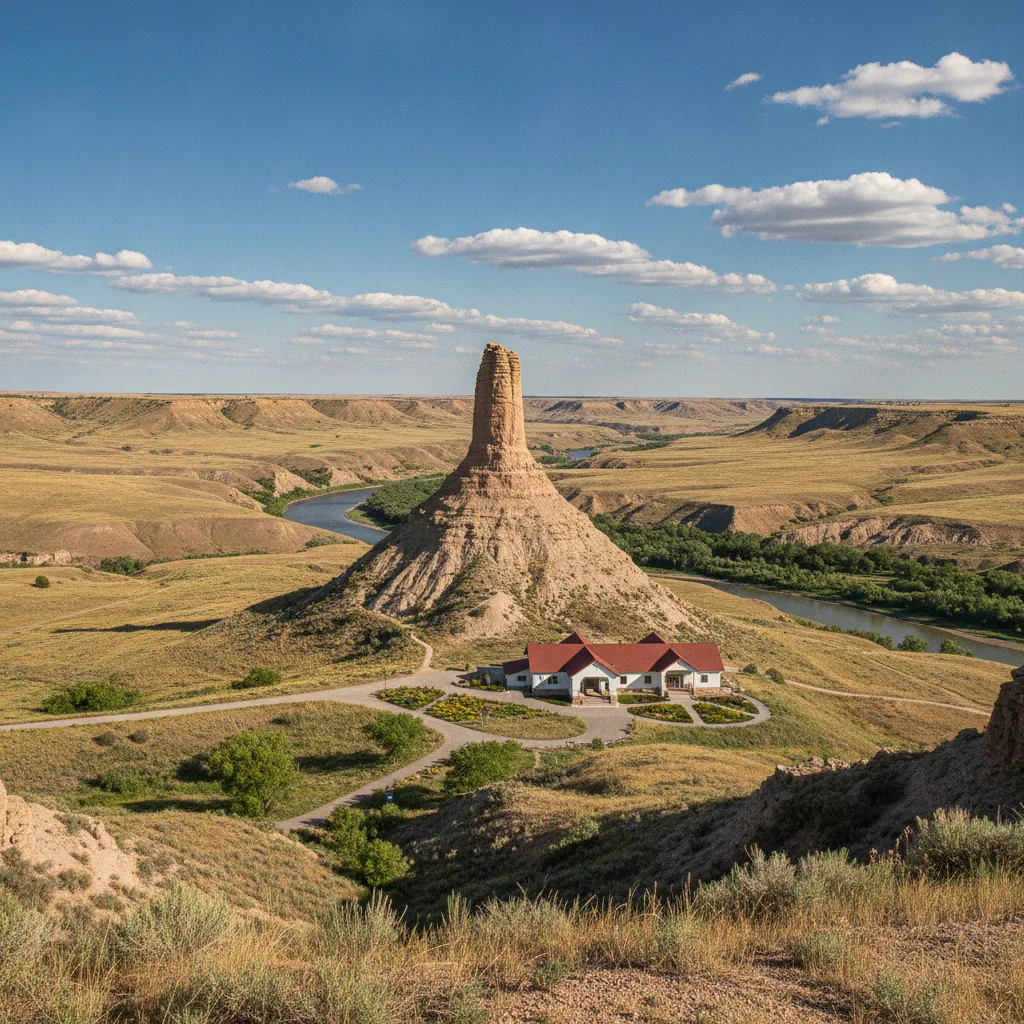
Chimney Rock National Historic Site Travel Guide — Nebraska
For generations, travelers crossing the vast plains of North America have sought out the unmistakable spire piercing the Nebraska sky. Our team at Roam States has compiled this comprehensive guide to ensure your visit to Chimney Rock National Historic Site Nebraska is as enriching and memorable as the experience of the pioneers who first gazed upon its grandeur. We cut through the noise to bring you confident, specific advice, helping you plan a trip that truly connects you with this iconic piece of American history.
Why Visit Chimney Rock National Historic Site
We often find ourselves drawn to places that tell a story, and few landmarks speak as profoundly as Chimney Rock. Rising dramatically from the North Platte River Valley, this geological marvel was not merely a natural wonder; it was a beacon, a milepost, and a symbol of hope for hundreds of thousands of emigrants journeying west along the Oregon, California, and Mormon Trails in the mid-19th century. Its distinctive silhouette, visible for miles across the flat prairie, signaled the end of plains travel and the daunting beginning of the rugged mountain passage ahead.
Visiting Chimney Rock National Historic Site Nebraska offers a tangible connection to this pivotal era of American expansion. It’s a place where you can stand in the footsteps of those who dreamed of new lives, faced unimaginable hardships, and found solace in the unchanging presence of this towering spire. The site preserves not just a rock formation, but the spirit of human endeavor and resilience. It was mentioned in more emigrant diaries than any other landmark on the Oregon Trail, a testament to its profound impact on those who saw it. Our team believes that understanding this historical context enriches any journey through the American West, making Chimney Rock an essential stop for anyone interested in the nation's pioneering past.
Beyond its historical significance, the sheer natural beauty of Chimney Rock is reason enough to visit. The formation itself, composed primarily of Brule clay interlayered with volcanic ash and Arikaree sandstone, stands approximately 286 to 300 feet above its surroundings, with its peak reaching 4,228 feet above sea level. While erosion has subtly altered its appearance over centuries, its majestic presence continues to inspire awe, just as it did for the early fur traders and pioneers.
Who It's Best For
Chimney Rock National Historic Site Nebraska caters to a diverse range of visitors, each seeking a unique experience. We've found it particularly appealing to:
- History Buffs: If you're fascinated by the American West, the Oregon Trail, or pioneer history, this site is a must-see. The Ethel and Christopher J. Abbot Visitor Center provides in-depth exhibits, historical accounts, and a video presentation that vividly brings the emigrant experience to life. You’ll appreciate the detailed information about the trails and the people who traversed them.
- Families with Children: As we detail in our "Visiting With Kids" section, the visitor center includes interactive exhibits designed to engage younger audiences, allowing them to imagine the challenges of an overland journey. The opportunity to see such a significant landmark firsthand can spark a lifelong interest in history and geology.
- Nature Enthusiasts and Photographers: The dramatic geological formation set against the vast Nebraska sky offers incredible photographic opportunities, especially during sunrise or sunset. The surrounding landscape, though seemingly simple, holds a unique beauty that speaks to the raw, untamed nature of the frontier.
- Road Trippers: For those traversing the scenic byways of Nebraska, Chimney Rock provides a compelling and easily accessible stop along U.S. Route 26 and Nebraska Highway 92. It serves as an excellent anchor for exploring other nearby historical and natural attractions, such as Scotts Bluff National Monument.
- Quiet Contemplators: While popular, the site still offers moments of quiet reflection, particularly on the outdoor trails. Standing beneath the towering spire, you can easily imagine the silence and scale of the landscape that greeted pioneers, offering a profound sense of connection to the past.
Getting There & Parking
Understanding how to get to Chimney Rock National Historic Site is straightforward, as it's a prominent landmark in western Nebraska. The site is located at 9822 County Road 75, Bayard, NE, 69334.
For most travelers, accessing the site involves driving. Chimney Rock is conveniently situated about 1.5 miles south of Highway 92 on Chimney Rock Road, near the town of Bayard. It's also readily visible for many miles from the east along U.S. Route 26. If you're approaching from the west, particularly after visiting Scotts Bluff National Monument, Chimney Rock is approximately 20 miles east.
Regarding parking, our team confirms that ample space is available at the Ethel and Christopher J. Abbot Visitor Center. There are no specific reservation requirements for general parking at the site. The visitor center serves as the primary access point, and from there, you can explore the museum and access the outdoor viewing areas. Even if you choose not to enter the museum, you can drive past the entrance for free access to trails that offer excellent views of the spire. We always recommend wearing sturdy footwear for exploring the trails, and being aware of potential wildlife like rattlesnakes, as signs often warn of their presence.
For those planning a longer journey through the region, Chimney Rock National Historic Site is easily integrated into a broader Nebraska itinerary. For instance, the drive from Scottsbluff to Chimney Rock National Historic Site is roughly 23 miles and takes about 26 minutes by car. This makes it an ideal stop in conjunction with other Western Nebraska attractions.
Top Things to Do
When you visit Chimney Rock National Historic Site Nebraska, you'll find a blend of historical interpretation and natural appreciation. Our team has identified the most impactful things to do at Chimney Rock National Historic Site and in the surrounding area of Bayard:
Explore the Ethel and Christopher J. Abbot Visitor Center
This is your essential first stop. The visitor center, operated by History Nebraska, houses a museum with engaging interpretive and interactive exhibits that delve into the natural history of Chimney Rock and the stories of the emigrant trails. You can watch a video presentation about the great westward migration, browse original artifacts from the Oregon Trail, and gain a deeper understanding of the challenges and triumphs faced by pioneers. There's also a gift shop where you can find unique souvenirs and books.
Hike the Trails for Panoramic Views
While the iconic spire is visible from a distance, we highly recommend taking the short, approximately one-mile round-trip trail that leads closer to the base of the monument. This allows for a more intimate perspective and offers excellent photographic opportunities, especially in the morning light when the rising sun illuminates the spire. It's a chance to truly immerse yourself in the landscape and reflect on the journey of those who passed this way centuries ago. Remember to wear comfortable walking shoes and be mindful of your surroundings, as rattlesnakes have been noted in the area.
Experience Chimney Rock at Night
For a truly unique perspective, consider visiting during the evening hours. Chimney Rock is endowed with lighting that makes for a great photo opportunity after dark, standing as a beacon in the night sky. This offers a different, often more contemplative, experience of the landmark.
Visit the Bayard Depot Museum
Beyond the historic site itself, there are other things to do in Bayard. The Bayard Depot Museum, a small community museum run by volunteers, offers a glimpse into the local history of the town. It's a charming stop to learn about the area's development beyond the pioneer trails.
Enjoy a Round at Chimney Rock Golf Course
If you're looking for a leisurely activity, the Chimney Rock Golf Course offers a public 9-hole course. It's a pleasant way to enjoy the Nebraska landscape with a different kind of challenge.
Explore Local Shops and Eateries
Bayard has a few local establishments that are worth exploring. The Heirloom Market | Mercantile Co. offers unique finds. For dining, you can find American diner fare at Corner Cafe or a small-town steakhouse experience at Bobbi Jo's Branding Iron. The Rock Brew & Bakery is a good spot for coffee and breakfast items.
Seasonal Fun at The Pumpkin Patch at BE Farm
If your visit aligns with the autumn season (late September to October), The Pumpkin Patch at BE Farm provides family-friendly activities like a corn maze, pumpkin bowling, and opportunities to purchase pumpkins. It’s a fun, local experience that adds a seasonal charm to your trip.
Best Time to Visit
Choosing the best time to visit Chimney Rock National Historic Site can significantly enhance your experience. Our team recommends considering the following factors:
Spring (April-May) and Fall (September-October)
These shoulder seasons are often ideal. The weather is generally mild and pleasant, making outdoor exploration and hiking more comfortable. You'll avoid the intense heat of summer and the colder temperatures of winter. The changing foliage in the fall can also add a beautiful dimension to the landscape, creating stunning photographic opportunities. Visiting during weekdays in these seasons can also help you avoid larger crowds.
Summer (June-August)
Summer is peak travel season, meaning the visitor center will be fully operational, and all amenities will be available. However, temperatures can be quite high, and the site may experience more visitors. If you visit in summer, we suggest arriving early in the morning to enjoy cooler temperatures and capture the iconic spire illuminated by the rising sun. This is also a good strategy to avoid crowds at the visitor center.
Winter (November-March)
While the visitor center remains open year-round (typically 9 AM to 5 PM in winter), winter visits can be challenging due to cold weather and potential snow. However, a winter visit can offer a starkly beautiful and solitary experience, with fewer crowds and a unique perspective on the landscape. Just be prepared for colder conditions and check local weather forecasts before you go.
Regardless of the season, we advise checking the official History Nebraska website for the most current operating hours and any potential alerts before your visit. The visitor center hours are generally 9 AM to 6 PM in the summer and 9 AM to 5 PM in the winter.
Where to Stay Nearby
While Bayard itself is a small community, several nearby towns offer convenient lodging options for visitors to Chimney Rock National Historic Site. Our team suggests looking at accommodations in Bridgeport, Gering, and Scottsbluff.
Bridgeport, Nebraska
Located roughly 12 miles from Chimney Rock, Bridgeport offers a few reliable choices. The Cobblestone Inn & Suites - Bridgeport is a highly-rated option that provides comfort and convenience, often featuring amenities like free breakfast and free parking. It's a solid choice for families and travelers seeking a comfortable stay relatively close to the historic site. Other options in Bridgeport include Meadow Park Motel on 385 and Los Tres Gallos, which are often budget-friendly and some are pet-friendly.
Gering and Scottsbluff, Nebraska
These twin cities, located about 20-25 miles west of Chimney Rock, offer a wider array of lodging, dining, and shopping options. They are also home to Scotts Bluff National Monument, making them a strategic base for exploring both major landmarks. You’ll find familiar hotel chains here, such as Cobblestone Hotel & Suites - Gering/Scottsbluff, Monument Inn & Suites, Quality Inn Scottsbluff, and Holiday Inn Express Hotel & Suites Scottsbluff-Gering. These options typically provide a broader range of amenities, including pools, fitness centers, and various dining choices.
Camping Options
For those who prefer to sleep under the stars, Pioneer Crossing Campground near Chimney Rock offers RV hookups during the summer season and tent grounds. It’s less than a mile from Chimney Rock and provides a unique opportunity for night photography of the illuminated spire. The city of Bayard also operates the Bayard RV Camp Ground, which requires permits for stays longer than two nights, available at the city office.
We recommend booking your accommodations in advance, especially during peak summer months, to ensure availability and secure the best rates. Many hotels in the region offer flexible booking options, which is always a plus for planning a trip.
Sample 2-Day Itinerary
To help you make the most of your visit to Chimney Rock National Historic Site Nebraska and the surrounding Western Nebraska area, we’ve crafted a sample 2-day itinerary:
Day 1: Immersion in Pioneer History
- Morning (9:00 AM - 12:00 PM): Chimney Rock National Historic Site. Arrive early at the Ethel and Christopher J. Abbot Visitor Center. Spend your morning exploring the museum exhibits, watching the informative video on westward migration, and browsing the gift shop. Take your time to absorb the stories and artifacts.
- Late Morning (12:00 PM - 1:00 PM): Hike to the Base. After the visitor center, take the short trail for a closer view of Chimney Rock. This allows for excellent photography and a moment of reflection on the pioneers' journey.
- Lunch (1:00 PM - 2:00 PM): Local Bayard Fare. Head into Bayard for lunch. The Corner Cafe offers classic American diner options, or try Bobbi Jo's Branding Iron for a steakhouse experience.
- Afternoon (2:30 PM - 5:00 PM): Scotts Bluff National Monument. Drive west approximately 20 miles to Scotts Bluff National Monument. This equally significant landmark on the Oregon Trail offers a scenic drive to the summit, panoramic views, and additional interpretive exhibits about the emigrant experience. Explore the trails and imagine the vastness of the prairie as the pioneers saw it.
- Evening: Dinner and Stargazing. Enjoy dinner in Scottsbluff or Gering. If staying at Pioneer Crossing Campground, consider night photography of Chimney Rock, which is often illuminated. The clear Nebraska skies can offer excellent stargazing opportunities.
Day 2: Western Nebraska Exploration
- Morning (9:00 AM - 12:00 PM): Courthouse and Jail Rocks. Begin your day with a visit to Courthouse and Jail Rocks near Bridgeport. These impressive rock formations were another important landmark for pioneers and offer fantastic hiking and photography opportunities.
- Lunch (12:00 PM - 1:00 PM): Picnic or Bridgeport Eatery. Pack a picnic to enjoy amidst the scenic beauty of Courthouse and Jail Rocks, or head back to Bridgeport for a casual meal.
- Afternoon (1:30 PM - 4:30 PM): Carhenge (Optional). For a quirky and uniquely Nebraskan experience, consider the drive to Carhenge near Alliance (approximately 40 miles north of Bayard). This replica of Stonehenge, made from vintage American automobiles, is a fun and memorable detour.
- Late Afternoon: Explore Bayard. If you prefer to stay closer, spend more time exploring Bayard. Visit the Bayard Depot Museum, or if it's autumn, check out The Pumpkin Patch at BE Farm.
- Evening: Departure or Relax. Enjoy a final dinner in the area, perhaps at The Rock Brew & Bakery for a lighter option, before heading to your next destination or relaxing at your accommodation.
This itinerary provides a robust exploration of the region, balancing historical learning with natural beauty and local charm. Remember to check specific operating hours and any reservation requirements for each attraction, especially for seasonal activities.
Is It Worth Visiting?
Our team unequivocally believes that is Chimney Rock National Historic Site worth visiting. This isn't just another roadside attraction; it's a profound historical landmark that offers a tangible connection to one of the most significant periods in American history. As the most frequently mentioned landmark in emigrant diaries along the Oregon Trail, its importance cannot be overstated.
For those wondering is Chimney Rock National Historic Site worth visiting, consider the powerful experience of standing in the same landscape that inspired awe, fear, and hope in hundreds of thousands of pioneers. The Ethel and Christopher J. Abbot Visitor Center does an excellent job of interpreting this history, providing context through engaging exhibits, artifacts, and multimedia presentations. The modest admission fee for the museum is a small price to pay for such a rich educational experience, and outdoor access to view the spire is free.
We find that visitors often praise Chimney Rock for its iconic status and the informative nature of its visitor center. Many appreciate the opportunity to walk the trails and feel a genuine connection to history. While some might find the museum itself to be compact, the value lies in the profound historical narrative it presents and the unparalleled view of the monument itself. It's a place that transcends a simple photo opportunity, inviting deeper reflection on the human spirit and the vastness of the American landscape. It’s a crucial stop for anyone tracing the historic trails or simply seeking to understand the foundational stories of the United States.
Visiting With Kids
Bringing the family to Chimney Rock National Historic Site Nebraska can be a highly educational and engaging experience. Our team has found several ways to make Chimney Rock National Historic Site with kids both fun and informative:
Interactive Exhibits at the Visitor Center
The Ethel and Christopher J. Abbot Visitor Center is designed with families in mind. It features interactive elements that are perfect for kids, allowing them to participate in the learning process rather than just observing. Children can explore historical images, learn about what pioneers packed for their journeys, and even get a tactile sense of what it might have been like to "carve" their names into the rock (without actually harming the monument). These hands-on activities help young minds grasp the realities of westward expansion in an accessible way.
Engaging Video Presentation
The visitor center's video presentation about pioneers and the migrations in the West is another excellent resource for children. It provides a visual and auditory narrative that can captivate their attention and help them understand the historical context of Chimney Rock.
Outdoor Exploration
The outdoor trails leading to closer views of Chimney Rock are suitable for most children and offer a chance to burn off some energy while appreciating the natural landscape. It’s a great opportunity for them to see the monument up close and imagine the vastness of the journey ahead for the pioneers. Just be sure to remind them to stay on marked paths and be aware of their surroundings, particularly for rattlesnakes, as noted by signs.
Pet-Friendly Trails
If you're traveling with your furry family members, you'll be pleased to know that leashed pets are welcome on the outdoor trails around Chimney Rock, making it a great stop for families with pets. This allows the whole family to enjoy the outdoor experience together.
We recommend encouraging children to keep a "trail journal" or sketchbook, much like the pioneers did, to record their observations and feelings about seeing Chimney Rock. This can deepen their connection to the history and make the visit to Chimney Rock National Historic Site with kids even more memorable.
Last updated: 2026-07-05 by the Roam States team.