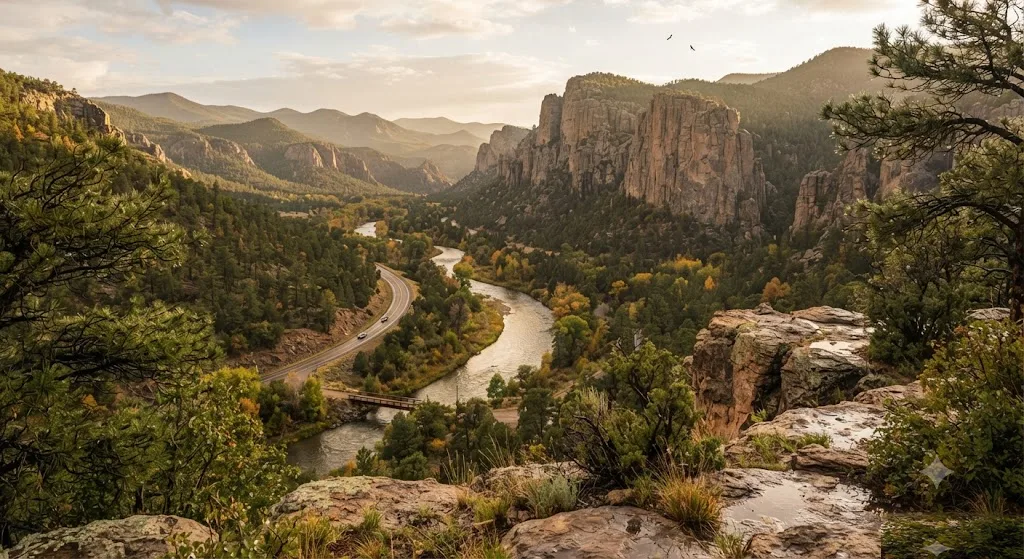
Our Cimarron Canyon State Park guide covers practical planning for Cimarron Canyon State Park New Mexico — best time to visit, getting there, and what to do on the ground.
Nestled deep within the majestic Sangre de Cristo Mountains, Cimarron Canyon State Park offers a quintessential New Mexico outdoor experience. Our team at Roam States has compiled this comprehensive guide to help you plan an unforgettable trip to this remarkable destination, renowned for its dramatic cliffs, the trout-filled Cimarron River, and abundant wildlife. From serene fishing spots to challenging hiking trails, we'll cover everything you need to know for your 2026 visit.
Why Visit Cimarron Canyon State Park
For those seeking an authentic mountain escape in the Land of Enchantment, Cimarron Canyon State Park New Mexico stands out as a prime choice. It's a place where the rugged beauty of the Sangre de Cristo Mountains meets the tranquil flow of the Cimarron River, creating a diverse ecosystem that beckons anglers, hikers, and wildlife enthusiasts alike. The park is a narrow, forested canyon, stretching for eight miles along US-64 between the villages of Eagle Nest and Ute Park, making it easily accessible yet feeling wonderfully remote.
Our team recommends Cimarron Canyon for its exceptional trout fishing, with both wild brown and stocked rainbow trout thriving in the river and its tributaries. Beyond fishing, the park offers a network of trails, from easy riverside strolls to more challenging climbs, providing ample opportunities to immerse yourself in nature. As part of the vast Colin Neblett Wildlife Area, the chances of spotting elk, deer, bears, and a variety of bird species are remarkably high, especially during dawn and dusk.
The dramatic Palisades Sill cliffs are a geological highlight, towering above the Cimarron River and providing a stunning backdrop to all your adventures. Unlike some busier destinations, Cimarron Canyon State Park offers a sense of quiet camping and peaceful recreation, allowing visitors to truly disconnect and appreciate the natural world.
Who It's Best For
Cimarron Canyon State Park New Mexico caters to a specific type of traveler, one who appreciates rugged natural beauty and outdoor pursuits over resort-style amenities. We find it's an ideal destination for:
- Anglers: With the Cimarron River's reputation as a premier trout fishery, fly fishermen and conventional anglers will find themselves in paradise. The river is regularly stocked and boasts healthy populations of wild brown trout.
- Hikers and Nature Walkers: From easy, family-friendly paths to more strenuous backcountry routes, the park offers a range of hiking trails suitable for various skill levels.
- Wildlife Enthusiasts and Bird Watchers: Being at the heart of the Colin Neblett Wildlife Management Area means abundant opportunities for wildlife viewing, including large mammals and diverse birdlife.
- Campers and RVers: The park provides several campgrounds for both tent and RV camping, offering a rustic experience amidst the canyon's beauty.
- Those Seeking Solitude: While popular, Cimarron Canyon still offers a sense of tranquility, especially in its quieter camping areas and on less-trafficked trails.
- Families with Older Children: The moderate hiking trails and fishing opportunities make it a great spot for families looking to introduce their children to outdoor adventures.
It's less suited for those seeking luxury accommodations, extensive dining options within the park, or those who prefer highly developed recreational facilities. The charm of Cimarron Canyon lies in its raw, untamed landscape and the focus on self-sufficient outdoor activities.
Getting There & Parking
Understanding how to get to Cimarron Canyon State Park is straightforward, as US-64 runs directly through the canyon. The park is situated between the villages of Eagle Nest and Ute Park.
- From the West (Taos): Take US-64 east for approximately 35-40 miles. The park entrance will be along this highway.
- From the Northeast (Raton): Exit I-25 at Exit 446 and take US-64 west for about 50 miles to reach the park.
- From the Southeast (Springer): Exit I-25 at Exit 418, take Highway 56 to Cimarron, then turn left onto US-64 and drive approximately 15 miles to the park.
The park follows US-64 for about seven to eight miles, with signed access points and parking areas located along the highway.
Parking & Fees (2026)
When planning your visit, be aware of the daily fees for parking. For 2026, the day-use fee is $10.00 per vehicle for non-residents. New Mexico residents pay $5.00 per vehicle, and are exempt from day-use fees from October 1st through April 30th. An annual pass is available for $40.00, which can be a cost-effective option for frequent visitors. Passes can be purchased at the park (including self-pay stations), by phone at 1-888-667-2757, or online through Reserve America.
For anglers, it's worth noting that there are four designated angler parking areas where parking is free, provided you have a current New Mexico fishing license.
It's important to remember that off-highway motor vehicles (OHVs) are strictly prohibited in New Mexico State Parks.
Top Things to Do
There are numerous things to do at Cimarron Canyon State Park, making it a fantastic destination for outdoor enthusiasts. Our team has highlighted the park's primary attractions:
Fishing the Cimarron River
The Cimarron River is arguably the crown jewel of Cimarron Canyon State Park for anglers. It's renowned as a premier trout venue, teeming with both wild brown trout and regularly stocked rainbow trout. The river flows for eight miles within the park, offering a diverse fishing experience with riffles, deep runs, bend pools, and undercut banks. As of July 8, 2026, the Cimarron River in Cimarron Canyon State Park was stocked with 2,424 rainbow trout.
Special regulations apply to the first mile of the river, which is designated as catch-and-release only, requiring artificial lures and single barbless hooks. Beyond this initial stretch, standard New Mexico fishing regulations are in effect. A current New Mexico fishing license is mandatory for all anglers. The Gravel Pit Lakes within Maverick Campground also offer popular fishing spots. The park even hosts a children's fishing derby every Mother's Day weekend.
Cimarron Canyon State Park Hiking Trails
For those who prefer to explore on foot, Cimarron Canyon State Park offers excellent hiking opportunities, allowing visitors to experience the canyon's stunning landscapes up close. The trails generally range from short, easy walks to moderate, more rugged ascents. Key Cimarron Canyon State Park hiking trails include:
- Clear Creek Trail: Perhaps the most popular trail, this three-mile, mostly level hike follows Clear Creek, leading past several picturesque waterfalls. It remains open even during seasonal backcountry closures.
- Cimarron Canyon Trail: A moderate, six-mile scenic hike along the Cimarron River, featuring forested sections, rocky terrain, and frequent wildlife viewing opportunities.
- Ponderosa Trail: An easy, family-friendly option, this 2.8-mile trail offers gentle grades and shaded forest, perfect for a relaxed nature walk.
- Bobcat Trail: A more rugged, moderate 3.9-mile trail that provides forest views and a chance to explore the park's higher canyon slopes.
It's important to note that access to many trails within the surrounding Colin Neblett Wildlife Management Area requires a park permit, a hunting or fishing license, or a Department of Game and Fish GAIN permit. Additionally, some backcountry trails, including Tolby and Maverick Trails, are closed from May 15 to July 31 for deer fawning and elk calving season.
Wildlife Viewing
As part of the 33,116-acre Colin Neblett Wildlife Management Area, Cimarron Canyon State Park is a haven for wildlife. Visitors have excellent opportunities to spot a variety of animals, including deer, elk, black bears, bobcats, and mountain lions. Birdwatchers can delight in seeing hummingbirds, songbirds, wild turkeys, Steller's jays, and many other species. The best times for wildlife viewing are typically at dawn and dusk. Remember to bring binoculars for a closer look and maintain a safe distance from all animals.
Camping and Picnicking
The park offers three main campgrounds—Maverick, Tolby, and Ponderosa—along with the Black Jack Tent Area, all situated along the Cimarron River. These campgrounds provide individual sites for both RV and tent camping. While they offer full bathrooms with potable water, electricity hookups are not available. Campfires are permitted, but always check for current fire restrictions with park rangers, as conditions can change rapidly. Reservations for camping are highly recommended and can be made through the New Mexico State Parks reservation website (Recreation.gov).
Designated picnic grounds are also available, perfect for enjoying a meal amidst nature's beauty.
Horseback Riding
Equestrian enthusiasts will find several areas suitable for horseback riding. The Tolby and Maverick Trails are open year-round, with the exception of May 15 to July 3, when they are closed for elk calving season. It's important to note that horses cannot be kept at campsites, but two pipe corrals are provided for overnight stays: one at the Tolby Canyon trailhead and another near Maverick campground.
Best Time to Visit
The best time to visit Cimarron Canyon State Park truly depends on your preferred activities, but generally, late spring through early fall offers the most favorable conditions.
- Late Spring (May-June): This period offers mild weather, and the river is often ideal for fishing before the peak summer crowds. Wildflowers begin to bloom, adding vibrant color to the canyon.
- Summer (July-August): Summer brings the warmest temperatures, typically ranging from 65-80°F during the day, with nights cooling into the 40s-50s. July and August often see afternoon monsoon storms, which keep the Cimarron River flowing strong, creating excellent conditions for trout fishing once spring runoff subsides. This is also a popular time for hiking and camping.
- Autumn (September-October): The fall foliage in the Sangre de Cristo Mountains is spectacular, making this a visually stunning time to visit. The weather remains mild, and fishing can still be excellent. However, be aware that Cimarron Canyon State Park will be closed from September 1st, 2026, until further notice, due to campground renovations and facility system upgrades. We recommend checking the New Mexico State Parks website for the most current information on reopening.
- Winter (November-April): While less popular for traditional hiking and camping, the park remains open for day use. Snowshoeing and cross-country skiing are possible on some trails, offering a serene, snowy landscape. Fishing can still be productive, though conditions will be colder.
Regardless of when you visit, mountain weather can change quickly, so we advise checking forecasts before your trip and packing layers.
Where to Stay Nearby
While Cimarron Canyon State Park offers excellent camping, many visitors also seek out traditional lodging options in the surrounding towns. When considering Cimarron Canyon State Park lodging, you'll find a range of choices in nearby communities, from quaint inns to larger resorts.
- Eagle Nest (approx. 6 miles from the park): This charming village is the closest community to the park. You'll find motels like the Econo Lodge Eagle Nest, which is budget-friendly and well-rated. There are also numerous cabin rentals and vacation homes available, many offering stunning mountain and lake views. Eagle Nest Lake State Park is also nearby, offering additional recreational opportunities.
- Ute Park (approx. 2 miles from the park): A small village offering breathtaking scenery and outdoor excitement, with some vacation rental options.
- Cimarron (approx. 15 miles from the park): The town of Cimarron offers a blend of historic sites and outdoor recreation. Here, you can find historic inns like the St. James Hotel and the Hikers Cimarron Inn & RV Park, which also provides comfortable rooms.
- Angel Fire (approx. 13-17 miles from the park): A larger resort town known for winter sports and year-round outdoor activities. Angel Fire Resort is a family-friendly option with various activities like snow tubing and mountain biking. Many vacation rentals and condos are also available here.
- Taos (approx. 35-40 miles from the park): For those who prefer a wider array of amenities, dining, and cultural experiences, Taos is a vibrant town within a reasonable driving distance. The Blake at Taos Ski Valley offers a luxurious 4-star experience, about 17 miles from the park, with convenient access to ski shuttles and lifts, as well as mountain biking and hiking.
Our team recommends booking your Cimarron Canyon State Park lodging well in advance, especially during peak seasons, as options can fill up quickly. Websites like Expedia and Airbnb list many cabin and vacation rental options in these areas.
Sample 2-Day Itinerary
To help you make the most of your visit to Cimarron Canyon State Park, we've crafted a sample 2-day itinerary:
Day 1: Fishing & Easy Exploration
- Morning (6:00 AM - 12:00 PM): Arrive early at Cimarron Canyon State Park. Secure your day-use pass (or display your annual pass). Head directly to a prime fishing spot along the Cimarron River. If you're a fly fisherman, target the first mile for catch-and-release with artificial lures. Otherwise, explore other stretches of the river or the Gravel Pit Lakes for rainbow and brown trout. Remember your New Mexico fishing license!
- Lunch (12:00 PM - 1:00 PM): Enjoy a picnic lunch at one of the park's designated picnic areas.
- Afternoon (1:00 PM - 5:00 PM): Take a leisurely hike on the Clear Creek Trail. This 3-mile, mostly level path offers beautiful views of the creek and several small waterfalls, making it a perfect post-lunch activity. Keep an eye out for birds and other wildlife.
- Evening (5:00 PM onwards): Head to your chosen campground (Maverick, Tolby, or Ponderosa) or check into your nearby lodging in Eagle Nest or Ute Park. Prepare dinner, perhaps enjoying a campfire if conditions allow. Spend some time stargazing; the clear mountain air provides excellent views of the night sky.
Day 2: Hiking, Wildlife & Scenic Drives
- Morning (7:00 AM - 12:00 PM): Start your day with an early morning hike on a more challenging trail, such as the Cimarron Canyon Trail (6 miles, moderate) or the Bobcat Trail (3.9 miles, moderate), for stunning canyon views and increased chances of wildlife sightings. Remember to bring a park permit or relevant license if venturing into the Colin Neblett Wildlife Management Area trails.
- Lunch (12:00 PM - 1:00 PM): Grab lunch in the nearby town of Eagle Nest, or pack another picnic to enjoy by the river.
- Afternoon (1:00 PM - 4:00 PM): Take a scenic drive along the Enchanted Circle Scenic Byway, which passes through the park. Consider a short detour to Eagle Nest Lake State Park for different views of the New Mexico landscape. Alternatively, visit the Vietnam Veterans Memorial State Park near Angel Fire for a moving and reflective experience.
- Late Afternoon (4:00 PM - 6:00 PM): Revisit a favorite spot in Cimarron Canyon for some final wildlife viewing as dusk approaches, or try a different fishing spot.
- Evening: Depart from the park, or enjoy a final night of camping or lodging, perhaps dining at one of the local restaurants in Angel Fire or Cimarron.
This itinerary is flexible and can be adapted based on your interests and the specific 2026 closures or fire restrictions in place. Always check the official New Mexico State Parks website for the most up-to-date information before and during your trip.
Last updated: 2026-07-14 by the Roam States team.