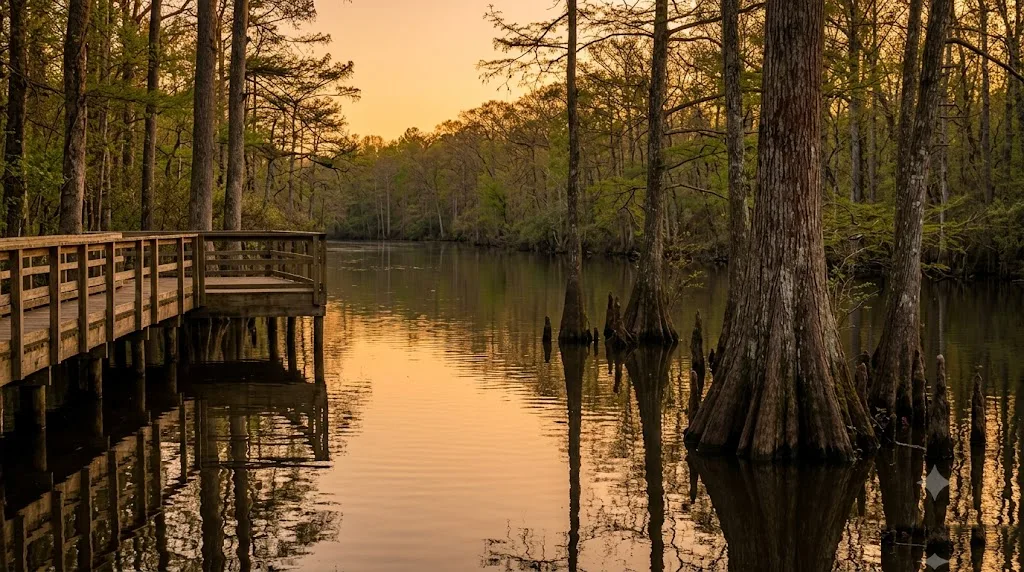
Dahomey Wildlife Refuge Travel Guide — Mississippi
Our Dahomey Wildlife Refuge guide covers practical planning for Dahomey Wildlife Refuge Mississippi — best time to visit, getting there, and what to do on the ground. As independent US travel authorities, we've compiled everything you need to know for a rewarding trip to this vital conservation area in the Mississippi Delta.
The Dahomey Wildlife Refuge Mississippi is a hidden gem for those seeking an authentic encounter with the natural beauty of the Mississippi Delta. This expansive refuge, managed by the U.S. Fish and Wildlife Service, protects a significant portion of the region's remaining bottomland hardwood forest, an ecosystem crucial for countless species. Our team considers it a must-visit for anyone with an appreciation for wildlife, especially migratory birds, and a desire to explore a tranquil, untouched landscape. From the quiet rustle of leaves underfoot to the vibrant calls of unseen birds, a visit here offers a profound sense of peace and connection to nature that's increasingly rare in our modern world. We aim to provide you with the most confident and specific information to plan your journey, ensuring you avoid generic travel fluff and instead focus on what truly matters for an enriching experience.
Why Visit Dahomey Wildlife Refuge
Visiting the Dahomey Wildlife Refuge offers a unique opportunity to immerse yourself in one of the most ecologically significant areas in the Mississippi Delta. This refuge is a critical haven for migratory birds, making it a premier destination for birdwatchers and nature photographers. The vast expanse of bottomland hardwood forest provides essential habitat for a diverse array of wildlife, including white-tailed deer, wild turkeys, and various reptiles and amphibians. For those looking to escape the hustle and bustle of city life, the refuge provides a serene environment perfect for quiet contemplation and outdoor exploration. Our team believes that the chance to witness such a vibrant ecosystem firsthand, and to understand the vital conservation efforts underway, is reason enough to plan a trip here. It’s a place where you can truly disconnect and reconnect with the natural world, far from the typical tourist trails. The refuge also plays a crucial role in flood control and water quality improvement for the region, adding another layer of importance to its existence.
Who It's Best For
The Dahomey Wildlife Refuge is ideally suited for a specific type of traveler: the nature enthusiast, the avid birder, the quiet hiker, and the wildlife photographer. If your idea of a perfect getaway involves spotting rare waterfowl, tracking animal signs, or capturing stunning landscapes through a lens, then this refuge is for you. It's an excellent destination for solo adventurers seeking solitude, couples looking for a peaceful retreat, or families with older children who have an interest in ecology and outdoor activities. We recommend it for those who appreciate undeveloped natural spaces and are comfortable with self-guided exploration. It’s not a destination for those seeking resort amenities, bustling attractions, or guided tours at every turn. Instead, it caters to visitors who are prepared to explore independently and respect the delicate balance of the natural environment. Educational groups and researchers will also find immense value in the refuge's rich biodiversity and pristine conditions.
Getting There & Parking
Reaching the Dahomey Wildlife Refuge requires a bit of planning, as it's situated in a more remote part of the Mississippi Delta. The refuge is located in Bolivar County, Mississippi, near the town of Boyle. The primary access point is typically via county roads off of major highways like US-61. For travelers coming from the north, you'll likely head south on US-61, while those from the south will travel north. We recommend using a reliable GPS system and downloading offline maps, as cell service can be spotty in some areas. The exact entrance points and road conditions can vary, so always check the official U.S. Fish and Wildlife Service website for the most current information before you depart. To get to Dahomey Wildlife Refuge, expect to drive on well-maintained gravel or dirt roads once you leave the main paved routes.
Regarding parking, the Dahomey Wildlife Refuge generally offers several designated parking areas at trailheads and access points. These are typically unimproved gravel lots, designed to accommodate visitors without impacting the natural landscape. As of 2026, there are no reported parking fees for day use within the refuge. We always advise arriving earlier in the day, especially during peak birdwatching seasons, to ensure you secure a spot, though overcrowding is rarely an issue here. Remember to always park in designated areas and avoid blocking gates or access roads. There are no reservations required for general entry or parking at Dahomey Wildlife Refuge, making spontaneous visits feasible.
Top Things to Do
The things to do at Dahomey Wildlife Refuge primarily revolve around appreciating its natural environment. This is a place for immersive outdoor experiences rather than structured attractions. Our team has identified the following as the most rewarding activities:
- Birdwatching: This is arguably the premier activity at the refuge. Dahomey is a critical stopover point for countless migratory bird species, especially during spring and fall migrations. Keep an eye out for various waterfowl, wading birds, raptors, and neotropical migrants. We recommend bringing a good pair of binoculars and a field guide.
- Hiking and Nature Walks: Explore the refuge's trails, which wind through the bottomland hardwood forests. These trails offer fantastic opportunities for quiet observation of wildlife and plant life. The flat terrain makes most trails accessible for a wide range of fitness levels.
- Wildlife Photography: With its abundant and diverse wildlife, the refuge is a dream for photographers. Patience is key, but you could capture stunning shots of deer, turkeys, various bird species, and the serene forest landscapes.
- Fishing: Permitted in designated areas, fishing can be a peaceful way to spend an afternoon. Be sure to check Mississippi state fishing regulations and any specific refuge rules before casting your line.
- Paddling: When water levels permit, particularly after heavy rains, some sloughs and waterways within the refuge can be explored by canoe or kayak, offering a unique perspective of the forest.
- Environmental Education: While there isn't a formal visitor center with exhibits, the refuge itself serves as a living classroom. Observing the ecosystem and reading interpretive signs (where available) offers valuable insights into conservation.
These things to do at Dahomey Wildlife Refuge provide ample opportunities for connection with nature. For a broader exploration of Mississippi's natural beauty, consider extending your trip to the best places in Mississippi, which include other state parks and natural areas.
Best Time to Visit
Choosing the best time to visit Dahomey Wildlife Refuge significantly enhances your experience, particularly if your primary interest is wildlife observation. Our team recommends focusing on the shoulder seasons and winter months for optimal conditions.
- Fall (October-November): This is an excellent time for birdwatching as migratory birds begin their southward journey. The weather is typically mild and pleasant, and the changing foliage adds a beautiful dimension to the landscape. Insect activity also starts to decrease.
- Winter (December-February): For serious birdwatchers, winter is arguably the best time. The refuge becomes a critical wintering ground for numerous waterfowl species, and the bare trees make it easier to spot birds. Temperatures are cooler, requiring appropriate layering, but the absence of dense foliage and fewer insects make for comfortable exploration.
- Spring (March-May): Spring brings another wave of migratory birds heading north, along with blooming wildflowers. However, this season also sees an increase in temperatures, humidity, and insect populations (mosquitoes, ticks). Early spring can still be very rewarding before the full heat and insect activity set in.
- Summer (June-September): We generally advise against visiting during the peak summer months unless you are well-prepared for intense heat, high humidity, and abundant insects. Wildlife activity can also be reduced during the hottest parts of the day, making sightings less frequent.
Always check local weather forecasts before your visit, regardless of the season. Conditions in the Delta can change rapidly, and heavy rains can sometimes lead to temporary closures or impassable roads within the refuge.
Where to Stay Nearby
When planning your visit to Dahomey Wildlife Refuge, understanding the lodging options is crucial, as the immediate vicinity is quite rural. The Dahomey Wildlife Refuge lodging scene is not one of luxury resorts or boutique hotels; instead, it focuses on practicality and proximity to the refuge. Our team recommends looking for accommodations in the small towns surrounding the refuge, which offer a range of basic hotels, motels, and potentially some local guesthouses.
The closest towns that offer reliable lodging options include:
- Cleveland, Mississippi: Located approximately 30-40 minutes east of the refuge, Cleveland is a larger town with more amenities. You'll find several chain hotels, local restaurants, and even some cultural attractions like the GRAMMY Museum Mississippi. This is often the most convenient and comfortable base for exploring the Dahomey Wildlife Refuge.
- Greenville, Mississippi: Situated to the west, Greenville is another significant Delta city, roughly an hour's drive from the refuge. It offers a wider selection of hotels, dining, and services, including access to the Mississippi River.
- Clarksdale, Mississippi: To the north, Clarksdale is famous for its blues heritage, home to the Delta Blues Museum and the B.B. King Museum. It's about an hour's drive from the refuge and provides a unique cultural experience alongside your nature exploration.
For those seeking Dahomey Wildlife Refuge lodging that offers a more rustic experience, primitive camping might be an option in nearby state parks or privately owned campgrounds, though direct camping within the refuge is generally not permitted (see FAQ below). We always advise booking your accommodation in advance, especially during peak birdwatching seasons, to ensure availability. For a broader perspective on planning your trip, consult our Plan Your US Trip guide.
Sample 2-Day Itinerary
To truly appreciate the Dahomey Wildlife Refuge, our team suggests a minimum of two days. This allows for ample exploration without feeling rushed. Here’s a sample itinerary:
Day 1: Arrival & Initial Exploration
- Morning (Arrival & Travel): Arrive in Cleveland, Mississippi, your recommended base. Check into your hotel and grab any last-minute supplies.
- Late Morning (Drive to Refuge & Overview): Drive to Dahomey Wildlife Refuge (approx. 30-40 minutes). Upon arrival, consult the refuge map (often available online or at kiosks) to get an overview of the main access roads and trailheads.
- Afternoon (Hiking & Birdwatching): Dedicate the afternoon to exploring one of the primary hiking trails. The flat terrain makes for easy walking, allowing you to focus on birdwatching and observing the bottomland hardwood forest. We recommend spending a few hours immersed in the quiet beauty.
- Late Afternoon (Photography & Sunset): Find a scenic spot for wildlife photography as the afternoon light softens. While direct sunset views might be limited by dense forest, the golden hour light filtering through the trees can be magical.
- Evening (Dinner & Relaxation): Head back to Cleveland for dinner at a local restaurant. Review your bird sightings and plan for the next day's adventures.
Day 2: Deeper Dive & Departure
- Early Morning (Prime Birdwatching): Return to the refuge early, ideally just after sunrise. This is often the most active time for birds and other wildlife. Explore a different section of the refuge or revisit a favorite spot from Day 1 for different light and activity.
- Late Morning (Further Exploration or Fishing): Depending on your interests, you might try another hiking trail, spend time fishing in a designated area (ensure you have a valid Mississippi fishing license), or simply find a quiet spot for extended birdwatching.
- Lunch (Picnic or Local Eatery): Enjoy a picnic lunch within the refuge (pack out all trash) or head to a nearby small town for a quick bite.
- Afternoon (Cultural Excursion or Departure): If time allows and you're interested in local culture, consider a visit to the B.B. King Museum in Indianola (about an hour south of Cleveland) or the GRAMMY Museum Mississippi in Cleveland before beginning your journey home.
This itinerary offers a balanced approach, allowing you to fully experience the natural wonders of Dahomey Wildlife Refuge while also providing comfort and opportunities for local cultural insights. For those planning a longer journey through the region, consider integrating this stop into a broader USA Road Trip Planner.
Is It Worth Visiting?
From our perspective as independent US travel authorities, the question "Is Dahomey Wildlife Refuge worth visiting?" receives a resounding yes, with a caveat. For the right traveler, it is absolutely worth visiting. If you are a dedicated birdwatcher, a passionate nature photographer, or simply someone seeking profound tranquility and an authentic encounter with the Mississippi Delta's natural heritage, then this refuge will exceed your expectations. It offers an unparalleled opportunity to witness a vital bottomland hardwood forest ecosystem and the incredible biodiversity it supports. The quiet, undeveloped nature of the refuge is its greatest asset, providing a stark contrast to more commercialized destinations.
However, if your travel preferences lean towards structured attractions, guided tours, or a wide array of amenities, then the Dahomey Wildlife Refuge might not be your ideal destination. There are no gift shops, elaborate visitor centers, or paved scenic drives. It demands a willingness to explore independently and appreciate nature on its own terms. For those who embrace this, the experience of Dahomey Wildlife Refuge is deeply rewarding and undeniably worth the journey. It's a place where the subtle beauty of the natural world takes center stage, offering a truly restorative escape. Other significant natural sites in the region include Tishomingo State Park in Mississippi or even venturing further to Great Smoky Mountains National Park in Tennessee for a different ecological experience.
Dahomey Wildlife Refuge Hiking Trails
Exploring the Dahomey Wildlife Refuge hiking trails is one of the most immersive ways to experience this unique ecosystem. The refuge primarily offers unimproved trails and old logging roads that wind through the dense bottomland hardwood forest. These trails are generally flat, making them accessible for most fitness levels, though conditions can vary depending on recent rainfall. Our team emphasizes that these are not manicured paths but rather natural routes that allow you to truly feel connected to the wilderness.
While specific named trails with elaborate signage are not the norm, visitors can expect a network of paths that crisscross the refuge. These routes provide excellent opportunities for birdwatching, wildlife observation, and photography. We recommend bringing a compass or using a GPS device, along with a downloaded map of the refuge, as some areas can feel quite remote. Always stay on marked or established paths to minimize disturbance to wildlife and avoid getting lost. The absence of extensive trail infrastructure means a more authentic, less-trafficked hiking experience. The Dahomey Wildlife Refuge hiking trails are open from sunrise to sunset, seven days a week, year-round. Remember to wear appropriate footwear, as trails can be muddy, especially after rain, and long pants are advisable to protect against insects and brush. For those interested in historical sites, consider a visit to the Beauvoir Estate or the Biloxi Lighthouse after your nature adventure.
FAQ Longtails
Dahomey Wildlife Refuge camping
As of 2026, primitive camping is generally not permitted directly within the Dahomey Wildlife Refuge itself. The refuge is managed primarily for wildlife conservation, and overnight stays are restricted to minimize human impact. However, visitors looking for camping options can find them in nearby state parks or private campgrounds in the broader Mississippi Delta region. We recommend checking with Mississippi State Parks for facilities that might be within a reasonable driving distance, such as Lake Washington State Park or Leroy Percy State Park, which offer designated campsites with varying amenities.
things to do in Boyle
Boyle, Mississippi, is a very small, rural community that serves as a gateway to Dahomey Wildlife Refuge rather than a destination with numerous attractions itself. The primary "things to do in Boyle" revolve around its proximity to the refuge and experiencing the quiet charm of a Delta town. You might find a local diner or small convenience store, but we recommend looking to larger nearby towns like Cleveland or Clarksdale for more extensive dining, shopping, and cultural experiences. Boyle offers a glimpse into authentic Delta life, but visitors should manage expectations regarding tourist amenities.
Dahomey Wildlife Refuge with kids
Visiting Dahomey Wildlife Refuge with kids can be a rewarding experience for families who enjoy nature and outdoor exploration. The flat hiking trails are suitable for younger children, and the opportunities for birdwatching and spotting other wildlife can be exciting. However, it's important to set expectations: there are no playgrounds, visitor centers with interactive exhibits, or structured children's programs. We recommend bringing binoculars, a field guide, and encouraging quiet observation. It's best for children who have an interest in nature and can appreciate the quiet beauty of the outdoors. Pack plenty of snacks, water, and insect repellent, and plan for shorter excursions to keep younger children engaged. For families seeking more interactive historical experiences, consider the Elvis Presley Birthplace or the Mississippi Civil Rights Museum elsewhere in the state.
best hotels near Dahomey Wildlife Refuge
The best hotels near Dahomey Wildlife Refuge are predominantly found in the town of Cleveland, Mississippi, approximately 30-40 minutes away. Cleveland offers several reputable chain hotels such as the Holiday Inn Express & Suites, Hampton Inn, and Quality Inn. These establishments provide comfortable accommodations, standard amenities like complimentary breakfast and Wi-Fi, and are a reliable base for exploring the refuge. For those seeking a bit more character, Clarksdale, an hour north, offers unique boutique hotels and guesthouses tied to its blues heritage. We recommend booking in advance, especially during peak travel seasons, to secure your preferred lodging.
Dahomey Wildlife Refuge tips
Our team offers these essential Dahomey Wildlife Refuge tips for a successful visit: 1. **Prepare for the Outdoors:** Wear sturdy, closed-toe shoes, long pants, and layers of clothing suitable for changing weather. 2. **Insect Protection:** Bring strong insect repellent, especially during warmer months, as mosquitoes and ticks can be prevalent. 3. **Water & Snacks:** Carry ample water and snacks, as there are no concessions within the refuge. 4. **Navigation:** Download offline maps and consider a GPS device, as cell service can be unreliable. 5. **Leave No Trace:** Pack out everything you pack in, including all trash, to preserve the pristine environment. 6. **Respect Wildlife:** Observe animals from a distance and avoid disturbing their natural behaviors. 7. **Check Conditions:** Before your visit, check the U.S. Fish and Wildlife Service website for any alerts, closures, or specific regulations. 8. **Binoculars & Camera:** Essential for birdwatching and wildlife photography. 9. **Patience:** Wildlife viewing often requires patience and quiet observation. For more general travel advice, our Plan Your US Trip guide offers comprehensive resources.
where to stay near Dahomey Wildlife Refuge
For those wondering where to stay near Dahomey Wildlife Refuge, the most practical and recommended option is the town of Cleveland, Mississippi. It provides the closest concentration of modern amenities, including a selection of hotels, restaurants, and gas stations, all within a reasonable driving distance of about 30-40 minutes. Other viable, though slightly further, options include Greenville to the west and Clarksdale to the north, both offering more extensive services and unique cultural experiences. We advise against relying on accommodations directly adjacent to the refuge, as they are virtually nonexistent. For a comprehensive list of places to stay, we recommend checking resources like Visit Mississippi.
The Dahomey Wildlife Refuge stands as a testament to the enduring natural beauty and ecological importance of the Mississippi Delta. Our team hopes this guide equips you with the confidence and specific information needed to plan an unforgettable visit. Whether you're drawn by the allure of migratory birds, the tranquility of ancient forests, or the simple joy of connecting with nature, Dahomey offers a profound and authentic experience. It's a place that reminds us of the critical role conservation plays in preserving these vital habitats for future generations. We encourage you to explore this unique corner of Mississippi and discover its quiet wonders for yourself.
Last updated: 2026-07-12 by the Roam States team.