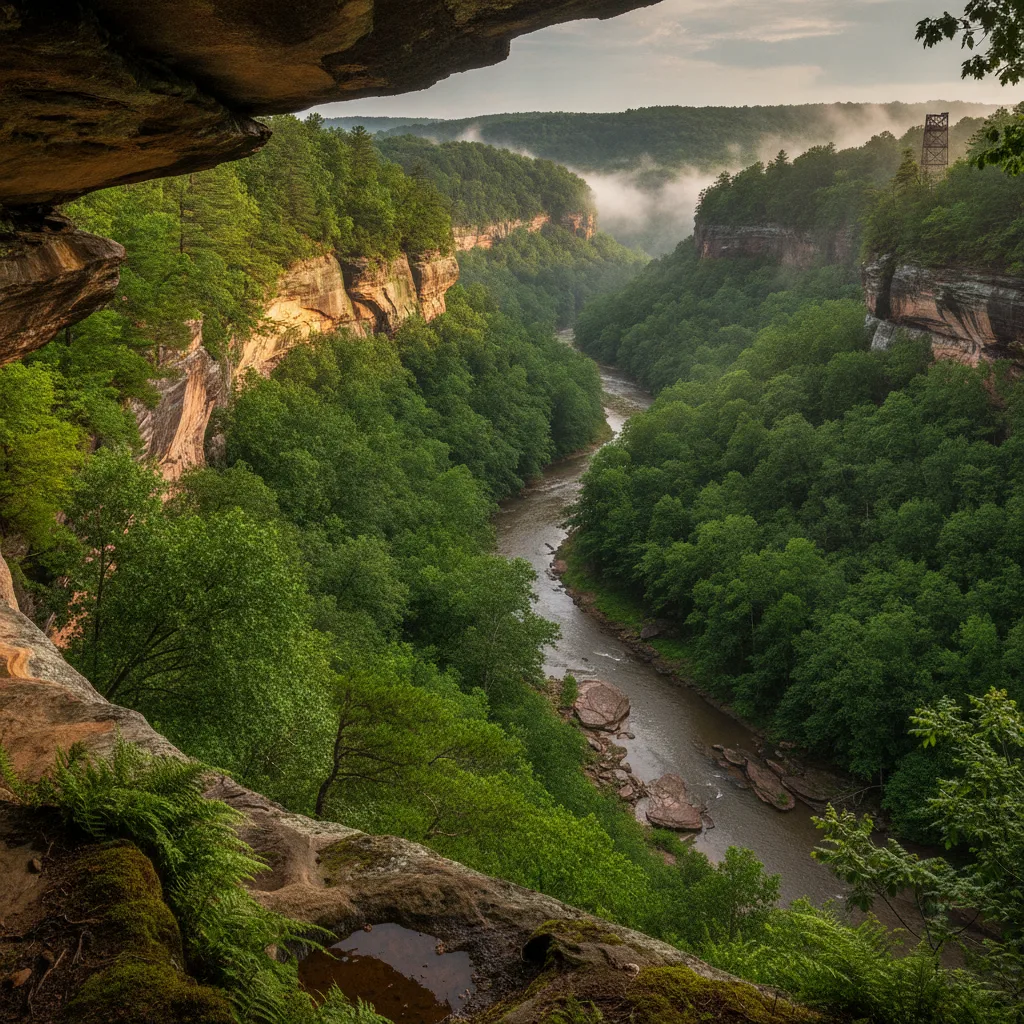
Our Daniel Boone National Forest guide covers practical planning for Daniel Boone National Forest Kentucky — best time to visit, getting there, and what to do on the ground.
Daniel Boone National Forest Travel Guide — Kentucky
The Daniel Boone National Forest Kentucky is a sprawling, rugged landscape that beckons adventurers with its ancient mountains, lush forests, and winding waterways. Spanning over 21 counties in eastern Kentucky, this magnificent forest offers extensive hiking, camping, and water activities, including the scenic Sheltowee Trace National Recreation Trail. Our team at Roam States has compiled this comprehensive guide to help you navigate its vast wilderness, ensuring your trip is as rewarding as it is memorable.
Why Visit Daniel Boone National Forest
For travelers seeking genuine outdoor adventure, the Daniel Boone National Forest stands as a premier destination in the eastern United States. We recommend it for its sheer scale and diversity, offering everything from tranquil lakeside retreats to challenging backcountry expeditions. The forest is a mosaic of sandstone cliffs, narrow ravines, and an abundance of natural arches, making it a unique geological wonder. Beyond its striking scenery, it provides a vital habitat for diverse wildlife, offering opportunities for birdwatching, wildlife photography, and a deep connection with nature. If you're wondering if Daniel Boone National Forest is worth visiting, we confidently say yes. Its vastness ensures that whether you're a seasoned outdoors enthusiast or a family looking for a memorable escape, there's always something new to discover. We find that the raw, untamed beauty of this region truly sets it apart, making Daniel Boone National Forest worth visiting for anyone craving an authentic wilderness experience.
Who It's Best For
The Daniel Boone National Forest caters to a wide spectrum of visitors, making it an ideal destination for various travel styles. It’s perfect for avid hikers and backpackers who relish challenging trails and multi-day excursions into the wilderness. Rock climbers will find world-class routes, particularly in the Red River Gorge Geological Area, which is nestled within the forest's boundaries. Families with children will appreciate the numerous accessible trails, picnic areas, and opportunities for swimming and fishing in designated recreation areas. Water enthusiasts, including kayakers, canoeists, and anglers, will find endless possibilities on the forest's rivers, lakes, and streams. Additionally, those seeking a peaceful retreat to reconnect with nature, away from the hustle and bustle of city life, will find solace in its quiet campgrounds and scenic overlooks. We believe it's an excellent choice for anyone looking to immerse themselves in Kentucky's natural beauty, whether for an adrenaline-pumping adventure or a serene escape.
Getting There & Parking
Accessing the Daniel Boone National Forest is relatively straightforward, though its vastness means there are multiple entry points depending on your desired destination within the forest. The forest spans a significant portion of eastern Kentucky, with major interstates like I-75 and I-64 providing primary access routes to its various districts. To get to Daniel Boone National Forest, we recommend consulting a detailed map of the specific area you plan to visit, as roads can be winding and less developed in more remote sections. Key towns bordering the forest, such as Morehead, London, Stanton, and Stearns, serve as excellent gateways, offering services and amenities before you venture deeper into the wilderness. For example, the Red River Gorge area is typically accessed via Slade, Kentucky, off the Bert T. Combs Mountain Parkway.
Parking throughout the Daniel Boone National Forest is generally available at trailheads, campgrounds, and recreation sites. Many popular areas, especially within the Red River Gorge, may require a parking fee. For instance, a Red River Gorge parking pass, which is often a daily or multi-day pass, is typically required for many trailheads and recreation sites in that specific area. We advise checking the official U.S. Forest Service website for the Daniel Boone National Forest or contacting a local ranger district office for the most current information on fees and specific parking regulations for 2026. While some areas offer free parking, others, particularly those with high demand, may have designated paid lots. We always recommend arriving early, especially on weekends and holidays, to secure a spot, as popular trailheads can fill up quickly. Always ensure your vehicle is parked legally and does not obstruct any roads or emergency access points. To get to Daniel Boone National Forest, a reliable vehicle is essential, and we recommend downloading offline maps as cell service can be spotty in remote areas.
For most areas of the Daniel Boone National Forest, parking at trailheads or designated recreation sites is generally free. However, in popular areas like the Red River Gorge/Indian Creek area, a parking pass is required for overnight use. As of 2026, a daily pass typically costs around $5, a three-day pass $7, and an annual pass $50. These passes can be purchased at Daniel Boone National Forest district offices or from local vendors, such as gas stations in towns like Slade. Day visitors parking at trailheads in the Red River Gorge do not need a pass. We strongly recommend checking the official Daniel Boone National Forest website for the most current information on fees and where to purchase passes before your trip. The Gladie Visitor Center, located in the Red River Gorge, is open Thursday through Monday from 10:00 a.m. to 5:00 p.m. (closed on federal holidays) and sells maps and passes.
Top Things to Do
When planning your visit to the Daniel Boone National Forest, you'll discover an abundance of activities that cater to every interest and fitness level. Our team has identified the top things to do at Daniel Boone National Forest, ensuring you make the most of your time in this incredible natural playground.
Daniel Boone National Forest Hiking Trails
Hiking is undoubtedly one of the most popular things to do at Daniel Boone National Forest. With over 600 miles of trails, the forest offers everything from easy strolls to strenuous multi-day backpacking trips. The crown jewel for many hikers is the Sheltowee Trace National Recreation Trail, which stretches for over 300 miles through the forest, offering a long-distance adventure for experienced backpackers. For day hikers, the Red River Gorge Geological Area, an enclave within the forest, boasts some of the most iconic Daniel Boone National Forest hiking trails. Here, you can explore trails leading to stunning natural arches and rock shelters. Popular options include the Natural Bridge Trail (located within Natural Bridge State Resort Park, which is surrounded by the forest), the Auxier Ridge Trail, and the Gray's Arch Trail. We recommend picking up a detailed map at a visitor center, like the Gladie Visitor Center, to plan your routes effectively and check for any trail closures or conditions. Remember to carry plenty of water and be prepared for varying terrain. The diversity of Daniel Boone National Forest hiking trails means there's always a new vista or challenge awaiting.
Rock Climbing
The Red River Gorge, a geological area within the Daniel Boone National Forest, is internationally renowned as a premier rock climbing destination. Its towering sandstone cliffs offer thousands of routes for climbers of all skill levels, from beginner-friendly crags to challenging overhangs. We recommend that climbers familiarize themselves with local regulations and ethical climbing practices to preserve this unique environment. Many local guide services offer instruction and guided climbs for those new to the sport or looking to enhance their skills.
Water Activities
The Daniel Boone National Forest is crisscrossed by numerous rivers, streams, and lakes, providing ample opportunities for water-based recreation. Cave Run Lake, often called "Kentucky's Only National Forest Lake," is a popular spot for boating, fishing, and swimming. Laurel River Lake also offers clear waters for similar activities, including scuba diving. Kayaking and canoeing are popular on the Red River and other waterways, offering a unique perspective of the forest's beauty. Fishing enthusiasts will find abundant populations of bass, crappie, and catfish. Always check current water levels and conditions before heading out, and be aware of any specific regulations for fishing or boating.
Camping
Camping is a quintessential part of visiting the Daniel Boone National Forest. Developed campgrounds, often managed by the Forest Service, provide amenities like potable water, vault toilets, and picnic tables. Popular options include Twin Knobs Campground (near Cave Run Lake), Holly Bay Campground (on Laurel River Lake), and Koomer Ridge Campground within the Red River Gorge area. Backcountry camping is also permitted in many areas, offering a more primitive experience, though specific regulations and permits (especially for overnight parking in the Red River Gorge) may apply. Reservations for developed sites are highly recommended, especially during peak season, and can often be made through Recreation.gov.
Scenic Drives and Overlooks
For those who prefer to experience the forest's beauty from the comfort of their vehicle, several scenic drives offer breathtaking views. The Nada Tunnel, a historic 900-foot tunnel carved through solid rock, provides a dramatic entrance to the Red River Gorge area. Sky Bridge Road offers access to several overlooks and trailheads. We recommend taking your time on these drives, stopping at designated overlooks to soak in the panoramic vistas of the rugged terrain and dense forest canopy.
Wildlife Viewing and Photography
The diverse ecosystems of the Daniel Boone National Forest support a rich array of wildlife. Keep an eye out for white-tailed deer, wild turkeys, and a variety of bird species. The forest is also home to black bears, so practicing bear-aware safety is crucial. Photography opportunities abound, from sweeping landscapes to intricate close-ups of flora and fauna. We encourage visitors to bring binoculars and a telephoto lens to capture the beauty of the forest's inhabitants respectfully.
Best Time to Visit
The Daniel Boone National Forest offers unique experiences throughout the year, but the best time to visit largely depends on your preferred activities. Our team has found that each season presents its own charm and considerations.
Spring (April to May): Spring brings a burst of new life to the forest. Wildflowers carpet the forest floor, and the trees begin to leaf out, creating vibrant green hues. Temperatures are generally mild and pleasant for hiking and other outdoor activities. However, spring can also bring unpredictable weather, including rain and sudden temperature drops, so come prepared with layers and waterproof gear. Water levels in rivers and streams are often higher, making it an excellent time for paddling.
Summer (June to August): Summer is peak season, especially for families and water activities. The weather is warm to hot, ideal for swimming, boating, and enjoying the lakes. While the forest canopy provides welcome shade on trails, humidity can be high. Popular areas, particularly the Red River Gorge and major campgrounds, can get crowded, so we recommend making reservations well in advance. Thunderstorms can occur, so always check the forecast.
Fall (September to October): Fall is arguably the most spectacular time to visit the Daniel Boone National Forest. The foliage transforms into a breathtaking display of reds, oranges, and yellows, making it a prime destination for scenic drives and photography. Temperatures are cool and comfortable, perfect for hiking and rock climbing. Crowds can still be significant, especially on weekends during peak leaf season, but the beauty is undeniable. This is our team's top recommendation for general visitation.
Winter (November to March): Winter offers a serene and solitary experience for those seeking tranquility. While some services and roads may be closed or have limited access due to snow and ice, the stark beauty of the bare trees and frozen waterfalls is captivating. Hiking can still be enjoyed, often with fewer crowds, but requires appropriate winter gear and caution. Backcountry camping can be particularly rewarding for experienced winter campers. Always check for closures and road conditions before venturing out in winter.
Where to Stay Nearby
Finding the right accommodations is key to a comfortable and enjoyable trip to the Daniel Boone National Forest. While primitive camping within the forest is a popular choice, our team recognizes that not everyone prefers roughing it. Therefore, we've explored various Daniel Boone National Forest lodging options, from cozy cabins to convenient hotels, both within and just outside the forest boundaries.
Camping Within the Forest
As mentioned, camping is a quintessential part of visiting the Daniel Boone National Forest. Developed campgrounds, often managed by the Forest Service, provide amenities like potable water, vault toilets, and picnic tables. Popular options include Twin Knobs Campground (near Cave Run Lake), Holly Bay Campground (on Laurel River Lake), and various smaller campgrounds within the Red River Gorge area, such as Koomer Ridge Campground. Reservations for developed sites are highly recommended, especially during peak season, and can often be made through Recreation.gov. Backcountry camping is also generally permitted and free in most areas, offering a more primitive experience, though specific regulations and permits (especially for overnight parking in the Red River Gorge) may apply.
Cabins and Vacation Rentals
For a more comfortable stay that still keeps you close to nature, numerous cabins and vacation rentals are available, particularly around the Red River Gorge area. Towns like Slade, Stanton, and Campton offer a wide range of options, from rustic log cabins to modern homes with amenities like hot tubs and Wi-Fi. These rentals are ideal for families or groups and provide a perfect base for exploring the forest during the day and relaxing in comfort at night. We recommend booking these well in advance, especially during peak fall foliage season or summer weekends.
Hotels and Motels
If you prefer the convenience of traditional hotel accommodations, several towns surrounding the Daniel Boone National Forest offer a variety of options. London, Morehead, and Berea are excellent choices, providing a range of hotels and motels to suit different budgets. These towns also offer dining options, grocery stores, and other services. While staying further from the immediate forest, these locations provide easy access to different sections of the Daniel Boone National Forest and other regional attractions like Berea Historic Artisan Village.
Unique Stays
For those seeking something a bit different, some unique lodging options can be found near the forest. These might include treehouses, yurts, or boutique guesthouses that offer a distinctive experience. Searching for "Daniel Boone National Forest lodging" on various booking platforms will reveal these charming alternatives that can add an extra layer of adventure to your trip.
Sample 2-Day Itinerary
To help you make the most of your visit, our team has crafted a sample 2-day itinerary for exploring the Daniel Boone National Forest. This itinerary focuses on the popular Red River Gorge area, offering a blend of hiking, scenic views, and relaxation.
Day 1: Arches and Overlooks
Morning (8:00 AM - 12:00 PM): Natural Bridge State Resort Park & Iconic Arches
- Start your day early at Natural Bridge State Resort Park, an enclave within the Daniel Boone National Forest.
- Take the Sky Lift up (check 2026 operating hours and fees; typically open from April to October, with adult round-trip tickets around $15) or hike the moderate one-mile Original Trail to Natural Bridge.
- Spend time admiring this impressive sandstone arch, one of the largest in the region.
- From Natural Bridge, connect to the Rock Garden Trail or other paths to explore additional arches like Fat Man's Squeeze and Lover's Leap.
Lunch (12:00 PM - 1:00 PM): Picnic or Local Eatery
- Enjoy a packed lunch at a scenic overlook or head to a local eatery in Slade for a quick bite.
Afternoon (1:00 PM - 5:00 PM): Auxier Ridge & Gray's Arch Trails
- Drive to the Auxier Ridge Trailhead. This loop trail offers breathtaking panoramic views of the Gorge, including Courthouse Rock and Double Arch.
- Alternatively, hike to Gray's Arch, a magnificent natural bridge accessible via a moderate trail.
- Visit the Gladie Visitor Center (check 2026 operating hours; typically open Thursday through Monday, 10 AM to 5 PM) to learn more about the forest's history, geology, and ecology. Pick up maps and ask rangers for current conditions.
Evening (5:00 PM onwards): Dinner & Stargazing
- Enjoy dinner at a local restaurant or cook a meal at your campsite/cabin.
- If the sky is clear, find a dark spot for stargazing; the forest offers some of the darkest night skies in Kentucky.
Day 2: Waterways and Wilderness
Morning (8:00 AM - 12:00 PM): Cave Run Lake or Red River Paddling
- Head to Cave Run Lake for a morning of water activities. Rent a kayak, canoe, or stand-up paddleboard, or simply enjoy swimming at a designated beach area.
- Alternatively, if you have your own gear and experience, embark on a paddling trip down a section of the Red River.
Lunch (12:00 PM - 1:00 PM): Lakeside Picnic
- Pack a picnic to enjoy by the lake or along the riverbank.
Afternoon (1:00 PM - 4:00 PM): Sheltowee Trace or Smaller Trails
- Hike a section of the Sheltowee Trace National Recreation Trail, perhaps a segment that offers different scenery from Day 1.
- Explore one of the many shorter, less-trafficked trails in a different district of the forest, such as those around London or Morehead, to experience more of the Daniel Boone National Forest Kentucky.
Evening (4:00 PM onwards): Departure or Relaxation
- Begin your journey home or enjoy a final evening in the forest, perhaps with a relaxing campfire or a visit to a local eatery.
This itinerary is just a suggestion; feel free to customize it based on your interests, fitness level, and the specific section of the Daniel Boone National Forest you wish to explore. Remember to always check current conditions, weather forecasts, and any alerts from the U.S. Forest Service before and during your trip.
Last updated: 2026-07-13 by the Roam States team.