Discovery Park Travel Guide — Washington
As the Roam States editorial team, we know that planning a trip to a new destination requires reliable, in-depth information. That’s why we’ve curated this comprehensive guide to help you navigate one of Seattle’s most treasured natural escapes. This urban wilderness provides a genuine Pacific Northwest experience without ever leaving the city limits, making it a must-visit for any traveler seeking both tranquility and adventure. We’re here to ensure you make the most of your visit to this extraordinary park.
Why Visit Discovery Park
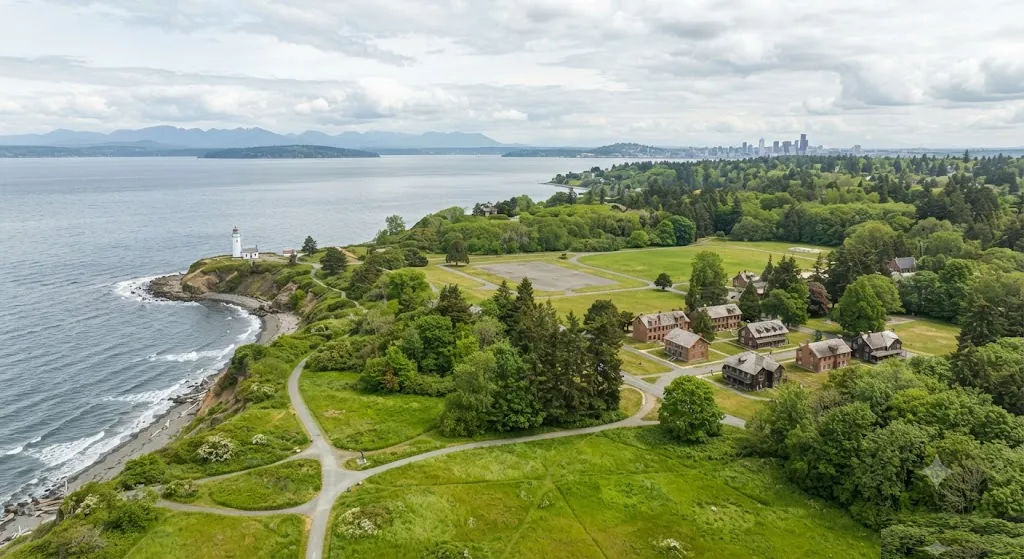
For those seeking an authentic Pacific Northwest experience within an urban setting, Discovery Park stands unparalleled. Spanning 534 acres, it is Seattle's largest park and a masterclass in ecosystem diversity. Here, towering Douglas firs give way to wind-sculpted coastal bluffs, and open meadows burst with wildflowers in spring. We recommend Discovery Park for its dramatic sea cliffs, two miles of protected tidal beaches, and the iconic West Point Lighthouse, all framed by breathtaking views of Puget Sound, the Olympic Mountains, and on clear days, even Mount Rainier and the Cascade Mountains.
Beyond its scenic beauty, Discovery Park is a vital wildlife refuge. Designated an Important Bird Area, it hosts over 270 bird species, making it a paradise for birdwatchers. You might spot great blue herons, pileated woodpeckers, or even bald eagles soaring overhead. Harbor seals, sea lions, and river otters are common sights along the beaches, and if you’re lucky, you could even witness orca, gray, or humpback whales passing through Puget Sound. This genuine wildness, despite its city location, is what truly sets Discovery Park apart, offering a sanctuary for both wildlife and weary travelers.
Who It's Best For
Discovery Park caters to a wide array of visitors, making it a versatile destination for nearly everyone. We find it particularly ideal for:
- **Nature Enthusiasts:** With its diverse ecosystems—from temperate rainforests to sandy beaches—and abundant wildlife, it's a haven for those who appreciate the natural world.
- **Hikers and Walkers:** Over 11 miles of trails, ranging from easy loops to more challenging descents to the beach, provide ample opportunities for all fitness levels to explore.
- **Families:** The park offers open spaces for children to play, opportunities for beachcombing, and educational programs (when the Environmental Learning Center is open).
- **Photographers:** The dramatic landscapes, sweeping vistas, and diverse wildlife present endless photographic opportunities, especially during sunrise or sunset.
- **History Buffs:** The historic West Point Lighthouse and areas with military history, like the 500 Area Loop Trail, offer a glimpse into the past.
- **Those Seeking Solitude:** Despite its popularity, the park's vastness allows for moments of quiet and tranquility, especially during off-peak hours.
Whether you're planning a Seattle itinerary as a first-time visitor or a local seeking a weekend adventure, Discovery Park delivers experiences that feel worlds away from the urban bustle.
Getting There & Parking
Understanding how to get to Discovery Park and where to park is crucial for a smooth visit. Located on Magnolia Bluff, the park is easily accessible from downtown Seattle. The address for the park is 3801 Discovery Park Blvd, Seattle, WA 98199.
Driving & Parking
For those driving, Discovery Park offers several free parking options, a refreshing change from many city parks. The main parking areas include:
- **Visitor Center Lot (East Lot):** Located at the official entrance on Discovery Park Boulevard, this is the primary parking area with approximately 100 spaces.
- **North Parking Lot:** A smaller lot with about 30 spaces, accessed from the north end of the park.
- **South Lot:** Limited overflow parking near the south meadow entrance, accessible from 43rd Ave W & W Emerson St.
While parking is free, we've found that these lots can fill up quickly, especially on nice weekend days or during summer months. If the main lots are full, street parking along Discovery Park Boulevard or nearby residential streets may be available, though we advise observing all posted signs. It's important to note that general parking past the East Lot on Discovery Park Boulevard is restricted, and parking at the beach level without an ADA placard or permit is not allowed and may result in a citation or towing. The Visitor Center is currently closed until Summer 2027, and as such, beach parking permits are not being issued.
Public Transportation & Shuttle Service
To avoid potential parking challenges, we recommend considering public transportation. Several King County Metro bus routes, such as Route 24 and 33, serve the area around Discovery Park, dropping you off near park entrances.
During the peak summer season, a free shuttle bus service is available, making it even easier to navigate the park. For 2026, the Discovery Park Summer Beach Shuttle operates on Thursdays, Fridays, Saturdays, and Sundays from June 20 through September 5. The shuttle runs from 11 AM to 5:30 PM, with the last departure from the beach at 5:15 PM, and arrives at each stop approximately every 30-45 minutes. It loops between the Visitor Center/East parking lot, the Daybreak Star Cultural Center, the North parking lot, and the Beach parking lot. The shuttle accommodates people, service animals, and strollers, but pets, coolers, surfboards, paddleboards, and other bulky items are not permitted. This service is a fantastic option for visitors, especially on busy days, and donations are accepted to support its operation.
Top Things to Do
Discovery Park offers a wealth of activities, ensuring there are plenty of things to do at Discovery Park for every interest. Our team highlights these essential experiences:
- **Hike the Loop Trail:** This 2.8-mile trail is a fantastic introduction to the park, offering diverse scenery from dense forests to open meadows with panoramic views of Puget Sound and the Olympic Mountains. It's generally considered easy to moderate with gentle elevation changes.
- **Visit West Point Lighthouse:** The historic West Point Lighthouse is a quintessential Discovery Park landmark. Reaching it involves a scenic descent to the beach, offering stunning coastal views along the way.
- **Beachcombing:** Spend time exploring the park's two miles of protected tidal beaches. It's a great spot to look for interesting shells, driftwood, and marine life at low tide.
- **Wildlife Viewing & Birdwatching:** Discovery Park is Seattle's most significant wildlife refuge. Keep an eye out for over 270 bird species, including eagles and herons, as well as harbor seals and sea lions offshore.
- **Explore the Daybreak Star Indian Cultural Center:** Located within the park, this center is a land base for Native Americans in the Seattle area. It features the Sacred Circle Gallery and gift shop and hosts cultural events.
- **Enjoy the Views from the Bluffs:** The dramatic coastal bluffs offer some of the most commanding vistas of Puget Sound, the Olympic Mountains, and the distant Cascade Mountains.
- **Picnic with a View:** Designated picnic areas provide perfect spots to enjoy an outdoor meal amidst the park's natural beauty.
- **Attend an Event:** Check local listings for events like GreenStage's Shakespeare in the Park, which has performances at Discovery Park in July and August 2026.
These things to do at Discovery Park showcase the park's incredible natural and cultural offerings, providing a memorable experience for all visitors.
Discovery Park Hiking Trails
The network of Discovery Park hiking trails is one of its greatest assets, offering diverse landscapes and experiences for all skill levels. With over 11 miles of walking trails, you can traverse lush forests, open meadows, and sandy beaches.
Here are some of the most popular Discovery Park hiking trails:
- **The Loop Trail:** This 2.8-mile trail is a well-maintained path that circumnavigates much of the park, offering a comprehensive overview. It features a crushed rock or dirt surface and has gentle elevation changes totaling about 300 feet, making it easy to moderate. We recommend it for those looking for a good workout with varied scenery.
- **Beach Trail to West Point Lighthouse:** This is arguably the most popular route, descending from the main park area to the beach and the iconic lighthouse. The descent involves switchbacks and an elevation loss of about 250 feet, which means a significant climb on the return. While well-maintained, the trail can be slippery after rain. The South Beach Trail, a 0.7-mile segment with a 280-foot vertical drop, is part of this route but is not ADA compliant due to five staircases.
- **Discovery Park and Lighthouse Loop Trail:** For a more extensive hike, this trail combines elements for a 5.2-mile (8.4 km) route with an elevation gain of 532 feet (162 meters), typically taking about 2 hours and 20 minutes to complete. It's rated as moderate and offers panoramic views of Puget Sound and the Olympic Mountains. Another "Lighthouse Loop" is described as 4 miles with a 465 ft climb, rated easy. We recommend consulting a park map to choose the best option for your desired length and difficulty.
- **North Beach Trail:** Starting near the Loop Trail, this 1.2-mile trail leads to the lighthouse and features steeper grades and three sets of stairs. Some sections can be muddy year-round.
- **Hidden Valley Trail:** A quieter option, this 0.8-mile trail meanders through dense forest with thick undergrowth.
When tackling Discovery Park hiking trails, we advise wearing appropriate footwear, especially as some sections can be muddy in winter or sandy near the water. Arriving earlier in the day is always a good strategy for a more serene experience.
Best Time to Visit
The best time to visit Discovery Park largely depends on what you hope to experience, as each season offers its unique charm:
- **Spring (April-May):** We consider spring an excellent time to visit. Wildflowers are in peak bloom, migrating birds arrive, and temperatures are mild. Weekday mornings offer the most solitude.
- **Summer (June-August):** This is the most popular season, with the warmest weather and best conditions for beach days. However, it also means larger crowds and potential parking issues, so we recommend arriving before 9 AM or after 5 PM to secure a spot. The free summer beach shuttle operates during this period, which can alleviate parking stress.
- **Fall (September-November):** Many locals consider fall the sweet spot. Crowds thin out, dramatic fall colors appear, and the hiking weather is often ideal.
- **Winter (December-March):** For those seeking solitude and dramatic, wild winter storms, this is the time to visit. Be prepared for rain and wind, and wear appropriate gear.
Regardless of the season, our team has learned that early morning visits generally offer the best wildlife viewing opportunities, optimal photography light, and guaranteed parking.
Where to Stay Nearby
While Discovery Park itself is a natural retreat, Seattle offers a wide range of accommodation options to suit every preference and budget. Staying in nearby neighborhoods provides convenient access to the park while also allowing you to explore other Seattle attractions.
- **Magnolia:** As the neighborhood where Discovery Park is located, Magnolia offers a more residential and quieter experience. You'll find charming local shops and eateries, and it provides the quickest access to the park's entrances. Accommodation here might include boutique hotels or vacation rentals.
- **Ballard:** Just north of Magnolia, Ballard is known for its vibrant maritime history, the Ballard Locks, and a lively dining and nightlife scene. It offers a mix of modern hotels and unique Airbnb options. It's a great choice for those who want to balance nature with urban amenities.
- **Queen Anne:** East of Magnolia, Queen Anne boasts stunning city views, elegant architecture, and proximity to downtown attractions like the Space Needle and Chihuly Garden and Glass. This area offers upscale hotels and charming bed-and-breakfasts.
- **Downtown Seattle:** For visitors who want to be in the heart of the action, downtown provides the widest selection of hotels, from luxury high-rises to budget-friendly options. From here, you'll have easy access to Pike Place Market, the Seattle Aquarium, and the Museum of Pop Culture (MoPOP), with a short drive or bus ride to Discovery Park.
We recommend booking accommodations in advance, especially during peak travel seasons, to secure the best rates and availability.
Discovery Park Camping
For those dreaming of pitching a tent under the stars within this urban oasis, we must clarify that traditional Discovery Park camping is not available for the general public. Discovery Park is a day-use park, designed for exploration and enjoyment from dawn until dusk. Its primary purpose is to serve as a natural sanctuary and recreational space for the city of Seattle, not an overnight wilderness campground.
However, the park does host various youth-focused programs, such as the "Discovery Park Summer Camps" or "Nature Adventure Trek" camps, which are day camps for children aged 6-12. These programs allow young campers to explore the park's diverse habitats—beach, pond, meadow, and forest—through activities, crafts, and games, but they do not involve overnight stays within the park. So, while children might have a "camp" experience, it's not Discovery Park camping in the traditional sense.
If you are looking for camping experiences in Washington, we encourage you to explore other incredible destinations such as Deception Pass State Park, Mount Rainier National Park, Olympic National Park, or North Cascades National Park, all of which offer designated campgrounds and a true overnight outdoor adventure. For more options, consult the official State of Washington Tourism website.
Sample 2-Day Itinerary
To help you maximize your visit, our team has crafted a sample 2-day itinerary for exploring Discovery Park and its surroundings.
Day 1: Immersion in Discovery Park
- **Morning (8:00 AM - 12:00 PM):** Arrive early to beat the crowds and secure parking. Begin your day with a hike on the 2.8-mile Loop Trail, starting from the East Lot near the (currently closed) Visitor Center. This will give you a comprehensive overview of the park's diverse landscapes, from dense forests to sweeping bluff views. Keep an eye out for wildlife.
- **Lunch (12:00 PM - 1:00 PM):** Enjoy a picnic lunch at one of the designated picnic areas, or head to a local eatery in the Magnolia neighborhood for a quick bite.
- **Afternoon (1:00 PM - 5:00 PM):** Take the Beach Trail down to the iconic West Point Lighthouse. Spend time exploring the tidal beaches, searching for shells and marine life. If visiting between June 20 and September 5, 2026, consider utilizing the free shuttle service for the return trip up the bluffs, especially if you're tired from hiking.
- **Evening:** Explore the Daybreak Star Indian Cultural Center, which houses the Sacred Circle Gallery. Afterwards, enjoy dinner in Ballard, known for its excellent restaurants and breweries.
Day 2: Seattle Highlights & Nature's Edge
- **Morning (9:00 AM - 12:00 PM):** Start your day with a visit to the Bloedel Reserve on Bainbridge Island, accessible via a scenic Washington State Ferry ride from downtown Seattle. This tranquil garden oasis offers a different kind of natural beauty.
- **Lunch (12:00 PM - 1:00 PM):** Grab lunch on Bainbridge Island or back in Seattle near your next destination.
- **Afternoon (1:00 PM - 5:00 PM):** Head to downtown Seattle to experience some of the city's iconic attractions. We recommend the Chihuly Garden and Glass for its stunning art installations, followed by a visit to the nearby Space Needle for panoramic views of the city and its surrounding natural wonders.
- **Evening:** Conclude your trip with a fresh seafood dinner at Pike Place Market, enjoying the bustling atmosphere and waterfront views.
This itinerary offers a balanced blend of Discovery Park's rugged beauty and Seattle's vibrant cultural scene, providing a comprehensive Washington experience. For more ideas, check out our guide to the Best places in Washington.
Is It Worth Visiting?
Without a doubt, our team confidently asserts that Discovery Park is worth visiting. It stands as a testament to Seattle’s commitment to preserving natural beauty within its urban fabric. For those wondering, "is Discovery Park worth visiting?", we can unequivocally say yes. It offers an unparalleled escape, a true wilderness experience just minutes from downtown.
The sheer diversity of landscapes—from towering forests and expansive meadows to dramatic sea cliffs and tidal beaches—provides a constantly changing backdrop for exploration. The opportunity to spot a bald eagle, watch harbor seals, or simply breathe in the fresh Puget Sound air is a rare luxury in a major city. The historic West Point Lighthouse adds a touch of charm and history to the rugged coastline. Whether you're an avid hiker seeking challenging trails, a family looking for a scenic picnic spot, or a birdwatcher hoping to add to your life list, Discovery Park delivers. Its free entry and parking further enhance its value, making it an accessible and rewarding destination for all. In our expert opinion, Discovery Park is worth visiting for anyone seeking a profound connection with nature and stunning Pacific Northwest vistas.
Last updated: 2026-07-13 by the Roam States team.