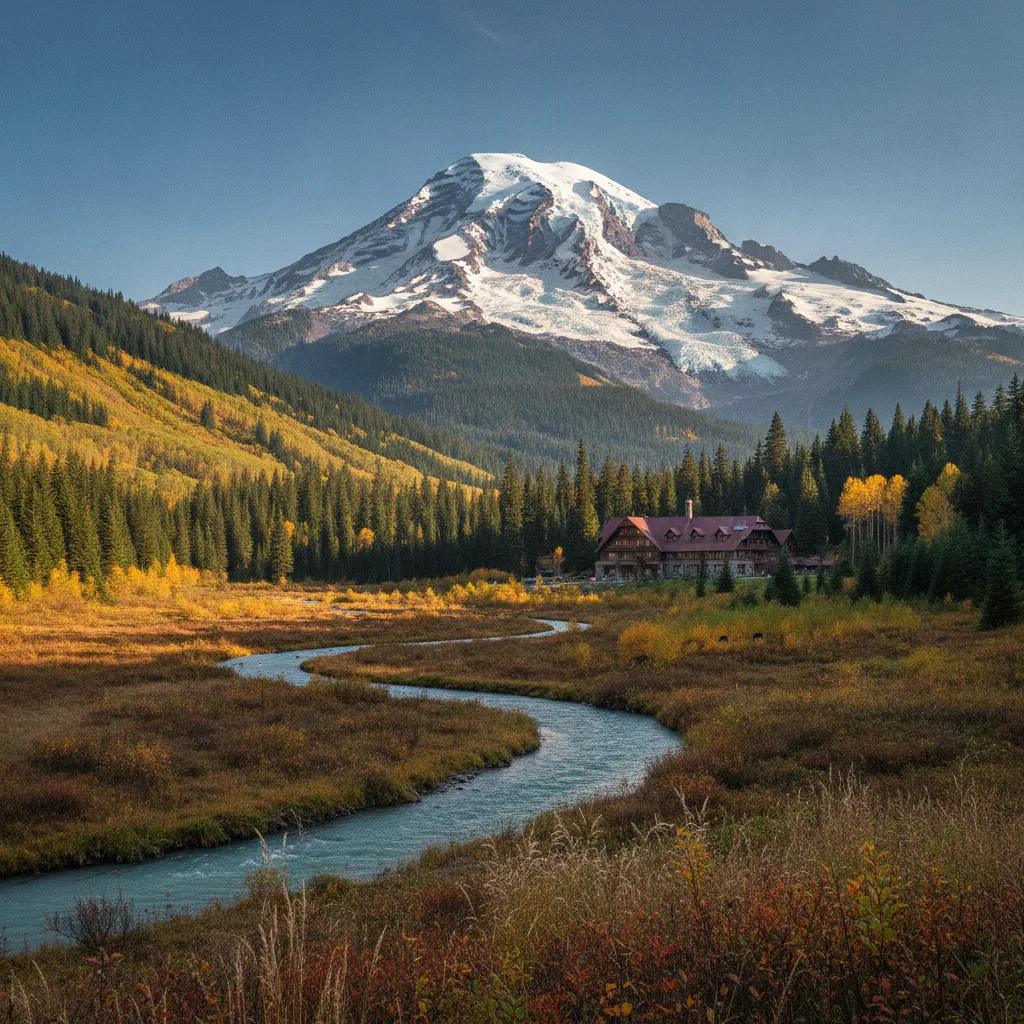
Mount Rainier National Park Travel Guide — Washington
As the Roam States editorial team, we are your independent US travel authority, and we're here to tell you that planning a trip to Mount Rainier National Park Washington is an unforgettable experience. This iconic national park, dominated by its namesake glacier-clad volcano, offers a diverse landscape of subalpine wildflower meadows, ancient forests, and cascading waterfalls. We've compiled this comprehensive guide to help you navigate the park's offerings, ensuring a confident and specific itinerary that avoids generic travel fluff.
Why Visit Mount Rainier National Park
Mount Rainier National Park stands as an undeniable icon in the Washington landscape, a destination we confidently recommend for its sheer natural grandeur. Ascending to 14,410 feet above sea level, Mount Rainier is the most glaciated peak in the contiguous U.S., giving rise to five major rivers and shaping a truly unique ecosystem. Visitors are consistently captivated by the dramatic scenery, from the vibrant subalpine wildflower meadows that burst into color in summer to the ancient forests that cloak the lower slopes.
Beyond its majestic centerpiece, the park offers a profound connection to the Pacific Northwest's natural beauty. Whether you're seeking challenging climbs, scenic drives, or family-friendly walks, Mount Rainier provides countless ways to immerse yourself in its diverse landscapes. The opportunity to witness glaciers up close, marvel at powerful waterfalls, and spot diverse wildlife like black bears, elk, deer, mountain goats, and marmots makes it a truly special place. We believe the ever-changing nature of Mount Rainier, from its snowy winters to its wildflower-filled summers, ensures a unique experience with every visit.
Who It's Best For
Mount Rainier National Park truly offers something for everyone, making it a versatile destination for a wide range of travelers. For avid hikers and mountaineers, the park presents a lifetime of discovery, including the challenging ascent of the mountain itself. Serious adventurers might spend a week or more exploring its extensive trail system and backcountry. For those who prefer a more relaxed pace, the park's scenic drives offer breathtaking vistas from the comfort of your vehicle, with numerous pullouts for photography and appreciation of the views.
Families with children will find Mount Rainier National Park to be exceptionally friendly. There are numerous short, easy trails perfectly suited for young explorers, along with engaging Junior Ranger programs and ranger-led activities. The park's diverse ecosystems also make it an excellent spot for wildlife viewing, particularly in the early morning and at dusk. Whether you're a seasoned outdoors enthusiast or a family looking for accessible natural beauty, we are confident Mount Rainier National Park will exceed your expectations.
Getting There & Parking
Understanding how to get to Mount Rainier National Park and managing parking are crucial for a smooth visit. The park is located in Washington State, approximately 50 miles south of Seattle, with the main Nisqually entrance about two hours from Seattle and one hour from Tacoma. We recommend planning your route carefully, as GPS systems can sometimes lead to incorrect entrances or closed gates, potentially adding hours to your travel time.
Mount Rainier National Park is open 24 hours a day, year-round. As of 2026, the park has cancelled its timed-entry reservation system, which was piloted in 2024 and 2025. This means entry to Paradise, Sunrise, and other areas is now on a first-come, first-served basis. However, parking remains the primary constraint during peak season, especially at popular areas like Paradise and Sunrise. We strongly advise arriving before 7 a.m. or after 4 p.m. to avoid the busiest times and increase your chances of finding a parking spot. Weekday visits are generally less crowded than weekends and holidays.
It's important to note that vehicle access to the Carbon River and Mowich Lake areas has been severely impacted. The Fairfax Bridge on SR 165, the only public road access to these sections, was permanently closed in April 2025 due to structural failure, making these areas inaccessible by car until at least 2031.
Entrance fees for Mount Rainier National Park in 2026 are $30 per vehicle, $25 per motorcycle, and $15 per person entering on foot or by bicycle for a 7-day pass. An annual pass for Mount Rainier National Park is $55, and the America the Beautiful Pass, which covers all national parks, is $80. The park operates on a cashless system at its entrance stations, so be prepared to pay with a debit or credit card.
For those planning to visit the Sunrise area, be aware that construction to replace the Fryingpan Creek Bridge on Sunrise Road is scheduled from 2026 through 2029. While one lane will remain open, expect delays of 20 to 30 minutes due to one-way traffic management.
Top Things to Do
There are countless things to do at Mount Rainier National Park, catering to all interests and energy levels. We recommend starting your exploration at the iconic Paradise area, renowned for its stunning subalpine meadows and unparalleled views of the mountain. Here, you can visit the Henry M. Jackson Visitor Center, which offers exhibits, a park film, and a gift shop. Paradise is also a fantastic spot for year-round snow play, even in summer.
Another must-see area for things to do at Mount Rainier National Park is Sunrise, the highest point in the park accessible by vehicle at 6,400 feet. From Sunrise, visitors are treated to commanding views of Mount Rainier and surrounding peaks. Both Paradise and Sunrise are prime locations for witnessing the spectacular wildflower blooms in July and August.
Beyond these popular hubs, we suggest exploring the ancient forests, marveling at the park's numerous waterfalls like Narada Falls and Christine Falls, and keeping an eye out for wildlife such as marmots, deer, and mountain goats. Capturing Mount Rainier reflected in one of its pristine lakes, such as Tipsoo Lake, is another highly recommended experience. For a deeper dive into the park's history, the Longmire Museum is open year-round and provides valuable insights into the area's past. Consider visiting /states/washington for more ideas on the best places to visit in the state.
Mount Rainier National Park Hiking Trails
For many, the heart of a visit to Mount Rainier National Park lies in exploring its extensive network of hiking trails. Our team has identified some of the most rewarding Mount Rainier National Park hiking trails, suitable for various skill levels.
For families or those seeking easier walks, the Nisqually Vista Trail at Paradise is an excellent choice. This 1.2-mile paved loop is accessible for kids, strollers, and wheelchairs, offering views of the Nisqually Glacier. Another kid-friendly option is the Trail of the Shadows near Longmire, a flat, 0.7-mile loop with bubbling springs and historical features. The Sunrise Nature Trail is also highly recommended for families, providing expansive views along a short paved loop.
For more moderate excursions among the Mount Rainier National Park hiking trails, we suggest the Silver Falls Loop Trail near Ohanapecosh, a deeply forested hike leading to a roaring waterfall. The Skyline Trail from Paradise, even if only hiked as an out-and-back to Myrtle Falls, offers immediate and grand views of Mount Rainier and wildflowers in season. While the full Skyline Trail can be strenuous, reaching Myrtle Falls is an achievable goal for many. Remember to always carry the Ten Essentials, including food, water, and extra layers, as weather can change rapidly on the mountain. Pets are generally not permitted on park trails.
Best Time to Visit
The best time to visit Mount Rainier National Park largely depends on what you hope to experience, as the park transforms dramatically with each season. We find that most visitors plan their trip for July and August, which is considered peak season. During these months, the weather is typically warm and dry, the snowpack has largely melted, and the subalpine meadows at Paradise and Sunrise erupt into spectacular wildflower displays. This is when most roads and high-elevation trails are fully open, allowing for maximum accessibility and outdoor activities. However, be prepared for crowds and potential traffic congestion, especially on weekends. To mitigate this, we advise visiting mid-week or arriving before 10 a.m. or after 2:30 p.m..
If you prefer fewer crowds and still desire pleasant conditions, early fall (September to early October) is an excellent alternative and often considered the ideal compromise. During this period, crowds thin significantly, skies are generally clear, and all major park roads usually remain open before the first major snowfall. The vibrant fall foliage, particularly the red vine maples and golden larches in the Sunrise area, offers a different kind of beauty. Spring (May to June) brings roaring waterfalls, snowmelt, and fewer people, though higher elevations may still be snow-covered. Winter, from November to April, turns the park into a snowy wonderland, ideal for snowshoeing and cross-country skiing, but access is more limited, primarily to the Nisqually Entrance and Paradise area.
Where to Stay Nearby
While the allure of Mount Rainier National Park is undeniable, finding the right accommodation is key to a comfortable trip. Inside the park, lodging options are limited but offer unparalleled access. For 2026, the National Park Inn at Longmire is open year-round, offering 25 rooms, with rates starting in the high $200s and climbing in peak summer. The historic Paradise Inn, with 121 rooms, is open from May 18 to September 30, 2026, with rates ranging from the low $300s in shoulder season to mid-$500s on peak summer weekends. Staying inside the park allows you to beat the day-use crowds and enjoy the park's tranquility before and after peak hours.
Outside the park, several gateway communities offer a wider range of accommodations. Ashford and Packwood are two of the best towns for visiting Rainier, providing various lodging options from hotels to cabins. We recommend booking accommodations well in advance, especially during the busy summer months. For those interested in exploring more of Washington, consider extending your trip to destinations like /destinations/bloedel-reserve-washington or /destinations/chihuly-garden-and-glass-washington, which offer unique cultural and natural experiences within a reasonable drive.
Sample 2-Day Itinerary
To help you make the most of your visit to Mount Rainier National Park, our team has crafted a sample 2-day itinerary, focusing on key experiences and manageable travel times.
Day 1: Paradise and the Nisqually Corridor
- **Morning (Arrive Early):** We recommend entering the park via the Nisqually Entrance (open year-round) and heading directly to the Paradise area. Arriving before 7 a.m. is crucial for securing parking during peak season.
- **Late Morning/Early Afternoon:** Explore the Henry M. Jackson Visitor Center at Paradise to learn about the park's geology and ecology. Then, embark on one of the iconic Mount Rainier National Park hiking trails in the area. We suggest the Nisqually Vista Trail (1.2-mile paved loop, easy, stroller-friendly) for views of the Nisqually Glacier, or a portion of the Skyline Trail to Myrtle Falls (1-mile round trip, easy to moderate) for stunning mountain and waterfall vistas.
- **Afternoon:** Enjoy a picnic lunch amidst the scenic beauty. Afterwards, take a leisurely drive down the Nisqually-Paradise Road, stopping at viewpoints like Narada Falls and Christine Falls. Consider a short, easy walk on the Trail of the Shadows (0.7-mile loop) near Longmire to explore old-growth forest and bubbling springs.
- **Evening:** Exit the park via the Nisqually Entrance and settle into your accommodation in a nearby town like Ashford.
Day 2: Sunrise and the Eastern Side
- **Morning (Early Start):** Drive to the Sunrise area, the highest point accessible by car in the park. Again, an early arrival is key for parking.
- **Late Morning/Early Afternoon:** Hike one of the rewarding Mount Rainier National Park hiking trails from Sunrise. The Sunrise Nature Trail (1.5-mile loop, easy) offers panoramic views of Mount Rainier, the Cascade Range, and subalpine meadows. For a slightly more challenging option, consider a portion of the Sourdough Ridge Trail.
- **Afternoon:** Explore the Sunrise Visitor Center. Enjoy the expansive views and keep an eye out for wildlife. Note that construction on the Fryingpan Creek Bridge on Sunrise Road may cause delays of 20-30 minutes.
- **Late Afternoon:** Drive along the scenic Stevens Canyon Road. While Ohanapecosh Campground and Visitor Center are closed for rehabilitation in 2026, you can still appreciate the old-growth forests in this section of the park.
- **Evening:** Depart Mount Rainier National Park, perhaps heading towards Seattle or continuing your exploration of Washington. For more trip planning resources, visit our /plan-your-trip page or explore our /plan-your-trip/usa-road-trip-planner.
Is It Worth Visiting?
As the Roam States editorial team, we unequivocally affirm that Mount Rainier National Park is worth visiting. This park is not just another national park; it's a monumental natural wonder that commands attention and offers an unparalleled experience in the Pacific Northwest. The sheer scale of Mount Rainier, an active volcano draped in glaciers, is breathtaking, and the diverse ecosystems it supports provide endless opportunities for discovery.
For those questioning is Mount Rainier National Park worth visiting, consider the vibrant subalpine wildflower meadows that bloom in summer, the ancient forests that invite peaceful contemplation, and the numerous waterfalls that punctuate the landscape. The park caters to a broad spectrum of visitors, from serious mountaineers to families with young children, ensuring that everyone can find an activity to suit their interests. While crowds can be a factor during peak summer months, strategic planning, such as visiting on weekdays or arriving early, can significantly enhance your experience. The absence of a timed-entry reservation system in 2026 further simplifies access, making it an ideal year to explore this magnificent destination.
Last updated: 2026-07-13 by the Roam States team.