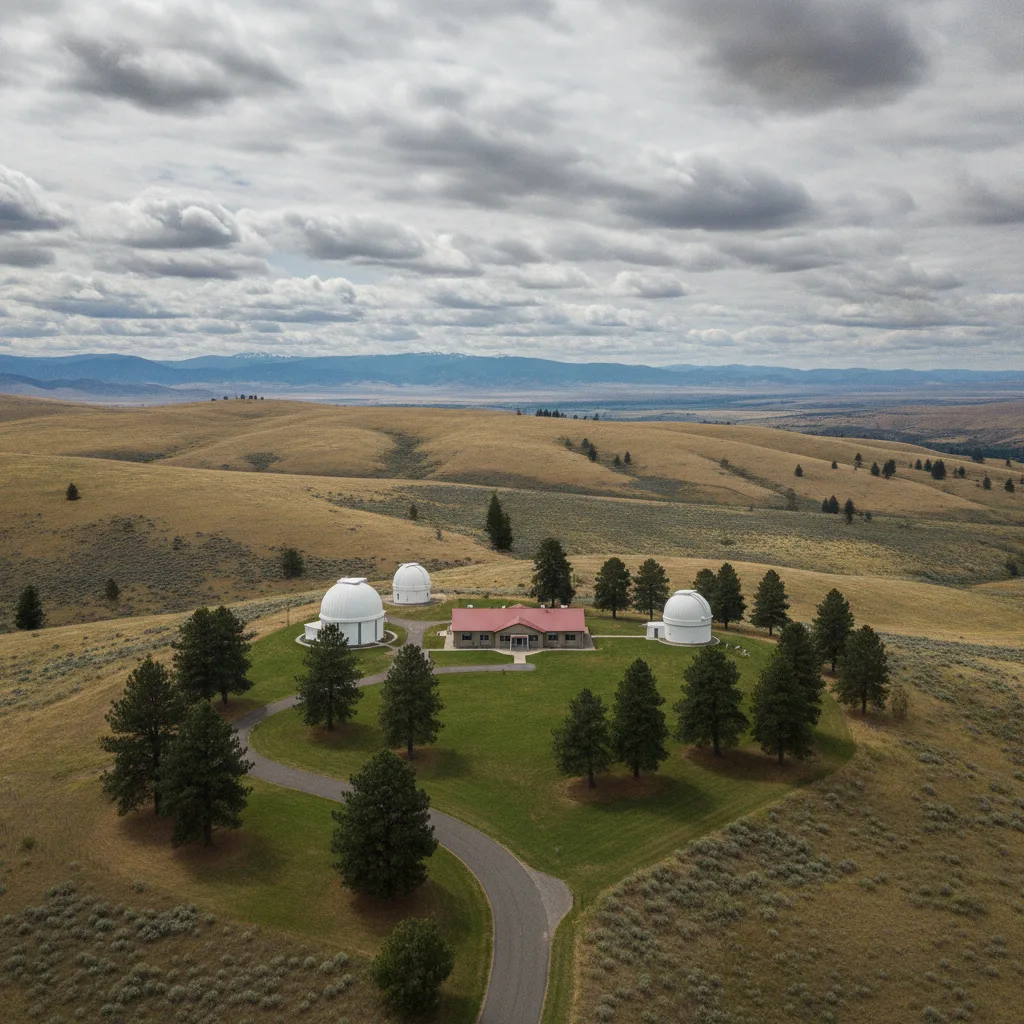
Our Goldendale Observatory State Park guide covers practical planning for Goldendale Observatory State Park Washington — best time to visit, getting there, and what to do on the ground.
As the Roam States editorial team, we’re constantly seeking out those truly exceptional American destinations that offer unique and unforgettable experiences. And when it comes to stargazing and astronomical discovery, few places in the Pacific Northwest shine as brightly as Goldendale Observatory State Park Washington. Perched at an elevation of 2,100 feet in the hills above the Columbia River, this facility houses one of the nation's largest publicly accessible telescopes, offering unparalleled views of the cosmos.
Having undergone a significant $6 million renovation, the observatory now boasts an upgraded main dome and telescope, along with a larger, more advanced learning center that has tripled its seating capacity. It’s a place where both amateur astronomers and curious families can delve into the wonders of the universe, thanks to its remote location far from city lights, ensuring exceptionally dark skies.
Why Visit Goldendale Observatory State Park
We recommend Goldendale Observatory State Park for anyone seeking a profound connection with the night sky. What truly sets this state park apart is its dedication to public education and access to powerful astronomical instruments. Unlike many observatories that are primarily research-focused, Goldendale is designed to share the stars with everyone.
The observatory's 24.5-inch Cassegrain reflector telescope is a marvel, large enough for scientific research yet entirely devoted to public viewing. This means you can peer through an instrument typically reserved for professionals, observing distant planets, nebulae, galaxies, and star clusters with incredible clarity.
Beyond the impressive hardware, the interpretive programs, both solar and nocturnal, are led by knowledgeable staff who make complex astronomical concepts accessible and exciting. The facility's recent upgrades include new self-guided interpretive exhibits, enhancing the learning experience even further. It's an opportunity to not just see, but truly understand the universe around us. The Goldendale area also boasts some of the darkest skies, earning a silver designation from the International Dark Sky Association.
Who It's Best For
Goldendale Observatory State Park is a fantastic destination for a diverse range of visitors:
- Stargazers and Astronomy Enthusiasts: This is an obvious fit. With one of the largest public telescopes and dark skies, it's a prime location for deep-sky observation.
- Families with Curious Kids: The educational programs are engaging for all ages, offering a hands-on way for children to learn about space. While young children do well during daytime shows, they might find it challenging to stay awake for the full evening program. The facility is also wheelchair accessible with accessible parking.
- Science Educators and Students: The observatory provides an excellent outdoor classroom, offering high-resolution views of the sun and expert-led discussions.
- Photographers: The dark skies offer incredible opportunities for astrophotography, capturing the Milky Way and other celestial phenomena.
- Nature Lovers: Even beyond the astronomy, the park offers panoramic views of the surrounding scenery, including the Columbia River Gorge.
Getting There & Parking
Understanding how to get to Goldendale Observatory State Park is crucial for a smooth trip. The observatory is located at 1602 Observatory Dr, Goldendale, WA 98620.
From Portland, Oregon, we recommend taking I-84 East to Exit 87 (Biggs Junction) and then US-97 North for approximately 12 miles into Goldendale. The total drive is about 115 miles, taking around 2 hours in normal traffic.
If you're coming from Seattle, take I-90 East to SR-821 or US-97 South. This route covers approximately 211 miles and typically takes about 3.5 hours. There is no bus or rail service directly to Goldendale.
When you arrive, parking is available on-site. However, a Washington State Parks Discover Pass is required to park your vehicle and must be displayed at all times. You can purchase a day pass for $10 or an annual pass for $45 at the facility. We advise arriving at least 15 minutes before your scheduled program, especially for solar programs, to ensure you find adequate parking. Carpooling is also recommended. Note that oversized vehicle parking is limited to drop-off only in the main lot; use designated areas. Also, for evening programs, remember to turn off your headlights in the main parking lot and avoid bright flashlights on campus to preserve night vision.
Top Things to Do
The primary draw and one of the top things to do at Goldendale Observatory State Park is, of course, the astronomical programs. Reservations are mandatory to enter the visitor center and observatory and attend programs, as unscheduled visitors will be turned away. You can book your free reservation online through the Washington State Parks calendar.
- Solar Programs: These daytime programs, held Friday through Sunday from 3 PM to 5 PM (April-September) or 2 PM to 4 PM (October-March), offer an insightful discussion on our sun. You'll get to enjoy high-resolution live solar viewing through specialized, safely-filtered telescopes, learning about sunspots, solar flares, and prominences.
- Night Programs: The "main event" that put Goldendale on the map, these evening sessions run Thursday through Sunday from 9 PM to midnight (April-September) or Friday through Sunday from 7 PM to 10 PM (October-March). During these programs, you'll view planets, nebulae, galaxies, and star clusters through the observatory's famous 24.5-inch telescope. Expert staff are on hand to answer all your questions about outer space.
- Self-Guided Interpretive Exhibits: The newly renovated learning center features self-guided exhibits throughout the campus, allowing you to explore astronomical concepts at your own pace.
- Panoramic Views: Even during the day, the park offers stunning panoramic views of the surrounding landscape, including the Columbia River Gorge.
- Special Events: Keep an eye on the observatory's calendar for special events, such as lunar eclipse viewings. For example, in 2026, the observatory hosted viewings for a total lunar eclipse in March and a partial lunar eclipse in August.
When considering things to do at Goldendale Observatory State Park, remember that programs include outdoor activities, and the domes are not heated, so dressing warmly is essential, even in summer.
Best Time to Visit
The best time to visit Goldendale Observatory State Park largely depends on what you hope to see. Generally, the observatory is open from Thursday to Sunday during the warmer months (April-September) and Friday to Sunday during the colder months (October-March).
- For Night Sky Viewing: The clearest, darkest skies are typically found during the new moon phase, as moonlight can significantly impact the visibility of dimmer deep-sky objects like the Milky Way. We recommend checking the observatory's "Weather & Moon" page for a clear sky chart and lunar calendar to plan your visit around crescent or new moon phases. Evenings can get surprisingly chilly, even in summer, so pack warm layers.
- For Solar Viewing: Daytime solar programs are available year-round on scheduled operating days. These are a fantastic way to observe the sun's features safely.
- Seasonal Considerations: While summer offers longer daylight hours and generally milder weather, it also means later start times for night programs. Fall and spring can offer excellent viewing conditions with cooler temperatures and potentially fewer crowds. Winter can be magical for stargazing due to crisp air, but weather can be less predictable.
Regardless of the season, consistently check the Goldendale Observatory website for the most up-to-date operating schedule, program times, and any special events or closures. Reservations are always required for programs.
Where to Stay Nearby
Finding comfortable Goldendale Observatory State Park lodging is an important part of planning your trip. While camping is not permitted directly at the observatory, there are several excellent options in and around Goldendale.
In Goldendale itself, you'll find a few reliable choices for Goldendale Observatory State Park lodging:
- Quality Inn & Suites Goldendale: This is often cited as a top choice, offering standard amenities and a grab-and-go breakfast. It's conveniently located and receives good reviews for its pleasant staff and comfortable rooms.
- Ponderosa Motel: An independent motel located at 775 E Broadway, it offers comfortable beds, free WiFi, microwaves, and fridges. It's a budget-friendly option with good reviews.
- Three Rivers Inn (Biggs Junction, OR): Located just across the Columbia River in Biggs Junction, Oregon, this motel is a well-rated option with a cozy atmosphere.
For those looking for something a bit different or wanting to be closer to nature, consider these options:
- Maryhill State Park Campground: Located about 12 miles south of Goldendale on the Columbia River, this campground offers tent and RV sites. It's a great option if you plan to visit the Maryhill Museum of Art and Stonehenge replica.
- Columbia Hills Historical State Park Campground: Situated by Horsethief Lake, this campground offers scenic views, though it can sometimes be windy.
- Brooks Memorial State Park: About 20 minutes from the observatory, this park offers camping with panoramic mountain views and starry skies. It has tent sites, full hookup RV sites, and even wall tents for reservation.
- Stargazers RV Resort: Located along US Highway 97 in Goldendale, this newly constructed RV park offers full hookup spaces with free Wi-Fi.
- Hipcamp Rentals: For unique cabin or glamping experiences, Hipcamp lists several top-rated options near Goldendale, ranging from rustic hideouts to modern setups, often with amenities like campfires and pet-friendly policies.
Many hotels are also available in nearby The Dalles, Oregon, which is about 21 miles from Goldendale. Options include Celilo Inn, Cousins Country Inn, and Holiday Inn Express & Suites The Dalles.
Sample 2-Day Itinerary
To truly immerse ourselves in the wonders of Goldendale Observatory State Park and the surrounding area, we recommend a two-day itinerary:
Day 1: Solar Exploration & Local Charm
- Morning: Arrival & Goldendale Exploration
Arrive in Goldendale, Washington. Check into your chosen Washington lodging, such as the Quality Inn & Suites Goldendale. Spend your morning exploring the charming downtown area of Goldendale, with its historic brick-lined streets and local shops. Consider a visit to the Presby Mansion and Historical Museum to step back in time and learn about Goldendale's pioneer heritage.
- Afternoon: Goldendale Observatory Solar Program
Head to Goldendale Observatory State Park for the afternoon Solar Program, typically held from 3 PM to 5 PM (April-September) or 2 PM to 4 PM (October-March). Remember to book your reservation in advance! You'll get incredible, safe views of the sun through specialized telescopes and learn about its fascinating features.
- Evening: Dinner & Relaxation
Enjoy dinner at a local Goldendale restaurant. Options like Ayutla's Family Mexican Restaurant or Simcoe Cafe offer local flavor. Return to your lodging for a restful night, preparing for the evening's stargazing.
Day 2: Cosmic Wonders & Columbia Gorge Delights
- Morning: Maryhill & Columbia Gorge
After breakfast, take a scenic drive south of Goldendale along US-97. Our team highly recommends a visit to the Maryhill Museum of Art, perched on a bluff overlooking the Columbia River. The museum houses an impressive collection, including works by Auguste Rodin, Native American art, and European paintings. Adjacent to the museum, explore the full-scale replica of Stonehenge, a poignant World War I memorial.
Consider a stop at Maryhill Winery for a tasting and to enjoy the stunning views of the Columbia River Gorge.
- Afternoon: Columbia Hills & Klickitat Trail
Explore Columbia Hills Historical State Park, home to ancient petroglyphs, including the famous Tsagaglalal (She Who Watches). Guided tours are available, or you can walk the self-guided interpretive trail. For those interested in Goldendale Observatory State Park hiking trails, the Klickitat Trail, a 31-mile rail-to-trail conversion along the Klickitat River canyon, offers excellent opportunities for hiking and mountain biking.
- Evening: Goldendale Observatory Night Program
Return to Goldendale Observatory State Park for the unforgettable Night Program, typically starting at 9 PM (April-September) or 7 PM (October-March). This is your chance to look through one of the world's largest public telescopes and witness distant celestial objects under exceptionally dark skies. Remember your reservation and warm clothing!
Last updated: 2026-07-08 by the Roam States team.