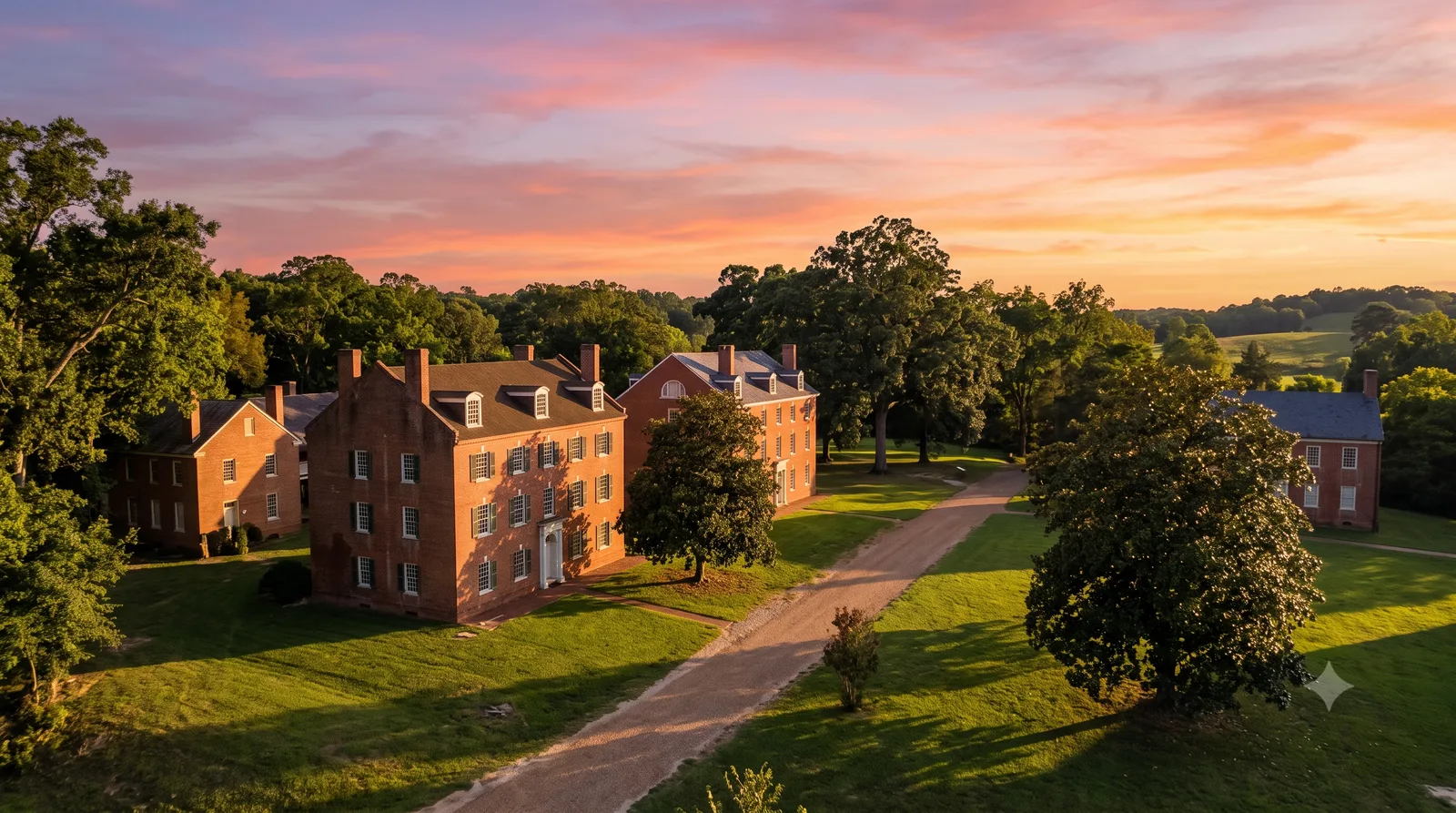
Our Historic Jefferson College guide covers practical planning for Historic Jefferson College Mississippi — best time to visit, getting there, and what to do on the ground. As the independent US travel authority Roam States, our team cuts through the noise to deliver confident, specific recommendations for your trip to this significant Mississippi landmark.
Why Visit Historic Jefferson College
For those drawn to the deep currents of American history and education, visiting Historic Jefferson College Mississippi offers a uniquely compelling experience. Chartered in 1802 as the first institution of higher learning in the Mississippi Territory, this site is more than just old buildings; it's a tangible link to the formative years of the state and the nation. We recommend a visit to immerse yourself in the stories of early American education, territorial politics, and the lives that shaped this corner of the South.
The college campus was also the birthplace of Mississippi statehood, hosting the first constitutional convention in 1817. Walking the grounds, you'll encounter original structures like the circa-1819 East Wing, the circa-1835 President's House, and the circa-1839 West Wing, each echoing with centuries of history. Beyond the architectural appeal, the site functions as a historic museum and park, operated by the Mississippi Department of Archives and History, offering a window into a pivotal era.
Recently, Historic Jefferson College Mississippi has taken on a new role, with plans announced in 2025 to transform it into a regional field school for historic preservation trades, in partnership with Mississippi State University. This ongoing revitalization means that visitors in 2026 are witnessing a living piece of history, actively being preserved and re-purposed for future generations. Furthermore, legislation is advancing in the U.S. Senate to designate the college as an affiliated area of the National Park Service, which would bring additional resources and visibility to its preservation. We believe these developments only enhance its significance and make it an even more worthwhile destination for history enthusiasts and curious travelers.
Who It's Best For
Historic Jefferson College Mississippi is an ideal destination for history buffs, educators, and anyone with an interest in early American and Southern history. Its appeal extends to architectural enthusiasts who appreciate Federal-style buildings and 19th-century campus design. Families with older children who can engage with historical narratives will find it enriching, especially those interested in the evolution of education and statehood.
The site's tranquil setting and nature trails also make it suitable for those seeking a peaceful outdoor experience combined with cultural enrichment. While it may not offer high-energy entertainment, its contemplative atmosphere is perfect for visitors who enjoy self-guided exploration and reading historical markers. We also find it particularly appealing to those on a broader USA road trip planner through the South, as it provides a distinct historical counterpoint to other regional attractions.
Getting There & Parking
To understand how to get to Historic Jefferson College, you'll first need to set your sights on Washington, Mississippi, an unincorporated community located just four miles north of Natchez. The college's address is 16 Old North Street, and it's conveniently situated just off Highway 61. For most travelers, arriving by car is the most practical option, offering the flexibility to explore the surrounding area at your own pace.
From Natchez, simply head north on Highway 61, and you'll find clear signage directing you to the historic site. If you're approaching from other parts of Mississippi, such as Jackson, you'll typically take US-61 South. The drive itself offers glimpses of the scenic Mississippi landscape, setting the tone for your historical immersion.
Regarding parking, our research indicates that ample on-site parking is available for visitors at Historic Jefferson College. No specific parking fees or complex permit requirements are mentioned for general visitors to the historic site. We always recommend checking the official Mississippi Department of Archives and History website for any last-minute updates on how to get to Historic Jefferson College or parking arrangements, though typically, historic state parks offer straightforward access.
Top Things to Do
When planning your visit, you'll discover a variety of engaging things to do at Historic Jefferson College. Our team suggests allocating at least half a day to fully appreciate the site's offerings.
- Explore Historic Buildings: Begin by touring the preserved 19th-century structures. The East Wing, completed around 1819, was the college's first permanent building, while the West Wing (circa-1839) and the President's House (circa-1835) offer further insights into campus life and architecture. Other notable buildings include the Steward's Building, East Kitchen, Raymond Hall, Prospere Hall, and Carpenter Hall, each with its own story. These buildings are open to the public as part of the historic site.
- Walk the T.J. Foster Nature Trails: For a blend of history and nature, explore the T.J. Foster Nature Trails. These trails wind through an old-growth hardwood forest, offering a peaceful respite and a chance to appreciate the natural beauty of the area. Distances range from 0.5 miles to 0.9 miles, suitable for a leisurely stroll.
- Visit the Museum Exhibits: The site features a museum that delves into the history of the college and the surrounding region. These exhibits provide context for the buildings and grounds, detailing the college's role in Mississippi's development and its transformation into a preservation field school.
- Attend Special Events or Field Schools: Keep an eye on the Mississippi Department of Archives and History calendar for special events. Historic Jefferson College is increasingly becoming a hub for preservation trades field schools and community meetings, offering unique opportunities to engage with ongoing restoration efforts and learn about traditional crafts.
Beyond the college grounds, there are a few things to do in Washington, Mississippi itself, though it is a small, unincorporated community. Washington was historically significant as the second and longest-serving capital of the Mississippi Territory. You can explore the general area, imagining it as the bustling center of territorial government. However, for a wider array of attractions, we highly recommend venturing the short distance to Natchez.
In Natchez, the options for things to do in Washington's vicinity expand considerably. You can tour magnificent Natchez Historic Homes like Stanton Hall or Longwood Mansion, or visit the St. Mary Basilica. The city offers a rich tapestry of antebellum history, riverfront views, and cultural experiences. Consider a visit to the Natchez National Historical Park or simply strolling along the Mississippi River bluffs. The proximity to Natchez makes Historic Jefferson College an excellent stop on a broader historical tour of the region.
Best Time to Visit
The best time to visit Historic Jefferson College Mississippi largely depends on your preference for weather and crowd levels. Our team generally recommends visiting in the spring (March to May) or fall (September to November). During these seasons, the weather is typically mild and pleasant, making it ideal for exploring the outdoor grounds and nature trails without the oppressive heat and humidity of summer.
Spring brings blooming flora, adding a vibrant touch to the historic landscape, while fall offers comfortable temperatures and often beautiful foliage. Both seasons are excellent for photography and leisurely walks. Summer (June to August) can be very hot and humid, which might detract from outdoor exploration, though indoor museum spaces offer relief. Winter (December to February) is generally cooler and less crowded, but some outdoor programming might be limited, and the landscape will be less vibrant.
Since no reservations are needed for general entry, you have flexibility in planning. If you're interested in specific field schools or community events, you'll need to align your visit with their schedule, which can be found on the Mississippi Department of Archives and History website. Overall, for a comfortable and comprehensive experience, spring and fall are our top picks.
Where to Stay Nearby
While Washington, Mississippi, is a small community, the nearby city of Natchez, just four miles south, offers an excellent range of Historic Jefferson College lodging options. Natchez is renowned for its historic charm and provides accommodations ranging from grand antebellum mansions converted into bed and breakfasts to modern hotels.
For a truly immersive experience, we suggest considering one of Natchez's historic inns. Options like Monmouth Historic Inns and Gardens offer luxurious stays in beautifully restored properties, often with a rich history of their own. The Guest House Historic Mansion and Weymouth Hall Historic Inn also provide unique, elegant lodging with a sense of place. These types of Historic Jefferson College lodging options allow you to extend your historical journey beyond the college grounds.
If you prefer more contemporary amenities or are traveling on a budget, Natchez also has several well-regarded hotels. The Natchez Grand Hotel & Suites on the River provides comfortable accommodations with views of the Mississippi River and is centrally located near downtown attractions. Other options include the Holiday Inn Express Hotel & Suites Natchez South. We recommend booking your lodging in advance, especially during peak tourist seasons or for special events in Natchez, to ensure the best availability and rates.
Sample 2-Day Itinerary
Our team has crafted a sample 2-day itinerary to help you make the most of your visit to Historic Jefferson College Mississippi and the surrounding Natchez area.
Day 1: Historic Jefferson College & Washington's Past
- Morning (9:00 AM - 1:00 PM): Arrive at Historic Jefferson College. Spend your morning exploring the historic campus buildings, including the East Wing, West Wing, and President's House. Delve into the museum exhibits to understand the college's role as Mississippi's first institution of higher learning and the birthplace of statehood. Take your time to absorb the history and architecture.
- Lunch (1:00 PM - 2:00 PM): Enjoy a picnic lunch on the college grounds, or head into Natchez for a casual meal at a local eatery.
- Afternoon (2:00 PM - 4:00 PM): Walk the T.J. Foster Nature Trails, winding through the old-growth hardwood forest. This offers a serene contrast to the historical buildings and a chance to appreciate the natural environment.
- Late Afternoon (4:00 PM - 5:30 PM): Explore the immediate vicinity of Washington, Mississippi, understanding its significance as the former territorial capital.
- Evening: Check into your chosen Mississippi lodging in Natchez. Enjoy dinner at one of Natchez's acclaimed restaurants, perhaps one offering traditional Southern cuisine.
Day 2: Natchez Historic Charm & River Views
- Morning (9:00 AM - 12:00 PM): Immerse yourself in Natchez's rich antebellum history. Take a guided tour of one or two of the city's iconic historic homes, such as Stanton Hall or the Rosalie Mansion. Consider a visit to the St. Mary Basilica for its architectural beauty.
- Lunch (12:00 PM - 1:00 PM): Dine at a cafe or restaurant in downtown Natchez.
- Afternoon (1:00 PM - 4:00 PM): Explore the Natchez National Historical Park, including Fort Rosalie, to learn more about the area's complex past. Alternatively, enjoy a leisurely stroll along the Natchez Bluffs, offering panoramic views of the Mississippi River. You might also consider a visit to the Delta Blues Museum for a taste of Mississippi's musical heritage, or the B.B. King Museum for another musical icon, though these are further afield.
- Late Afternoon (4:00 PM - 5:00 PM): Browse the unique shops and art galleries in downtown Natchez, perhaps picking up a souvenir.
- Evening: Enjoy a final dinner in Natchez. For those interested in other historical sites, consider a visit to the Beauvoir Estate or the Biloxi Lighthouse if extending your trip towards the coast.
Last updated: 2026-07-13 by the Roam States team.