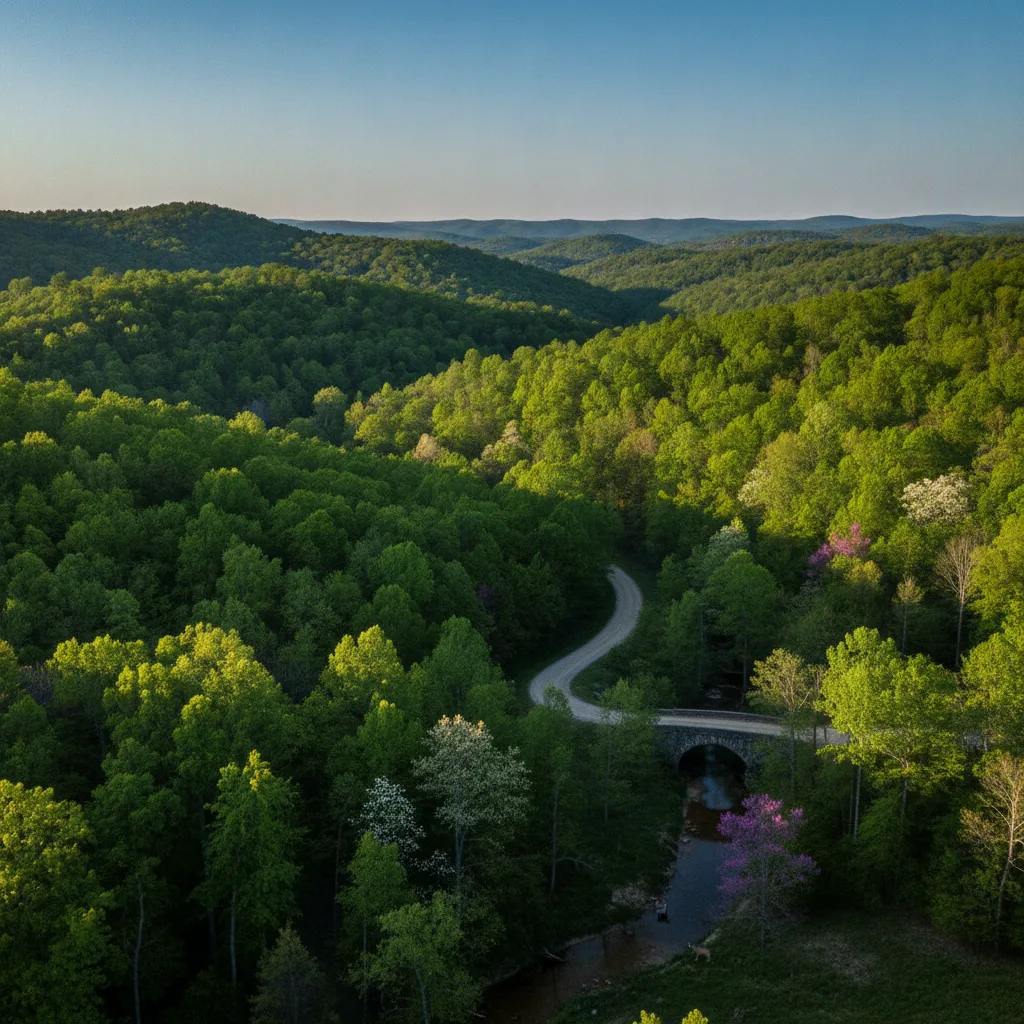
Hoosier National Forest Travel Guide — Indiana
Our Hoosier National Forest guide covers practical planning for Hoosier National Forest Indiana — best time to visit, getting there, and what to do on the ground. Spanning over 200,000 acres, this forest offers extensive opportunities for hiking, camping, and wildlife viewing. It protects diverse ecosystems and provides scenic beauty in southern Indiana. The Hoosier National Forest is a true gem, offering a peaceful respite and a wealth of nature activities to enjoy throughout the year.
Why Visit Hoosier National Forest
We believe the Hoosier National Forest stands out as a premier destination for those seeking genuine outdoor experiences in the Midwest. Unlike more developed parks, this forest offers a rugged, authentic encounter with nature, characterized by rolling hills, dense hardwood forests, and diverse ecosystems. It's a place where you can truly disconnect and immerse yourself in the natural world, whether you're exploring its extensive trail network or simply enjoying the quiet solitude. The forest is also home to Indiana's only federally designated wilderness area, the Charles C. Deam Wilderness, offering primitive, untamed landscapes for those seeking solitude.
Beyond its natural allure, the Hoosier National Forest plays a crucial role in protecting vital watersheds, including those feeding Monroe Lake, which serves as a water supply for hundreds of thousands of Hoosiers. This commitment to conservation ensures that the forest remains a haven for rich native biodiversity, supporting species like the endangered Cerulean Warbler and Northern Long-Eared Bat. Visiting the Hoosier National Forest isn't just a trip; it's an opportunity to experience and support a thriving, resilient ecosystem.
Who It's Best For
The Hoosier National Forest caters to a wide array of outdoor enthusiasts, making it a versatile destination for many types of travelers. Our team recommends it particularly for:
- **Hikers and Backpackers:** With over 260 miles of trails, ranging from short interpretive loops to challenging multi-day backpacking routes, the forest is a paradise for those who love to explore on foot.
- **Campers:** From developed campgrounds with amenities to remote dispersed camping, there are options for every style, including equestrian-friendly sites.
- **Wildlife Enthusiasts:** The diverse habitats support a variety of wildlife, offering excellent opportunities for birdwatching and nature photography. Keep an eye out for rare and endangered species that thrive in the forest's mature ecosystem.
- **Equestrians and Mountain Bikers:** Many trails are multi-use, allowing for horseback riding and mountain biking, providing a different perspective on the forest's beauty.
- **Families:** Developed recreation areas like Hardin Ridge offer amenities such as playgrounds, picnic areas, and swimming beaches, making it suitable for family outings.
- **Paddlers and Anglers:** With lakes like Monroe Lake and numerous rivers, water activities such as kayaking, canoeing, and fishing are popular.
Our expert verdict? The Hoosier National Forest is ideal for those who appreciate a less-manicured, more authentic wilderness experience. It's not about grand, dramatic vistas typical of Western national parks, but rather the subtle beauty found in its dense forests, unique karst topography, and the quiet solitude it offers.
Getting There & Parking
The Hoosier National Forest is conveniently located in south-central Indiana, making it accessible from several major Midwest cities. It's within a two-hour drive of Cincinnati, Evansville, Indianapolis, and Louisville. The Supervisor's Office is located in Bedford, Indiana, which can be a good starting point for general inquiries and maps.
To get to Hoosier National Forest, we recommend using GPS coordinates for specific recreation areas or trailheads, as the forest covers a vast and somewhat fragmented area. For instance, the Hardin Ridge Recreation Area, a popular spot on Monroe Lake, is about 30 minutes from downtown Bloomington. Digital maps for the Hoosier National Forest are available, and we advise checking the official USDA Forest Service website for the most current information, especially regarding Motor Vehicle Use Maps (MVUMs), which are reissued annually.
Parking at Hoosier National Forest
Parking is generally available at trailheads and recreation areas throughout the Hoosier National Forest. For popular spots like Hemlock Cliffs, you'll find ample parking lots. While there are no general entrance fees for the Hoosier National Forest itself, some developed recreation areas, particularly those operated by concessionaires like Hardin Ridge, Indian-Celina, and Tipsaw Recreation Areas, may charge a day-use fee. As of January 21, 2026, a day-use pass costs $8 per vehicle, or an annual day-use pass covering all three areas is available for $50.00. Interagency passes like the America the Beautiful Pass may offer discounts on base camping fees at these developed sites, though not on day-use fees for concession-managed areas. When planning how to get to Hoosier National Forest, always check the specific area you intend to visit for any applicable fees or parking regulations.
For those planning to explore by horse or mountain bike, a Hoosier National Forest Trail Use Permit is required for riders aged 17 and older on designated trails and horse camps. Off-road vehicles (OHVs) are not permitted on the Hoosier National Forest.
Top Things to Do
The Hoosier National Forest offers a wealth of activities, ensuring there's something for every outdoor enthusiast. Our team has curated a list of the top things to do at Hoosier National Forest:
Hiking, Backpacking & Trail Running
With over 260 miles of trails, hiking is undoubtedly one of the top things to do at Hoosier National Forest. Trails range from easy, short loops to challenging multi-day treks. We recommend carrying a map and being aware that forest boundaries are not always clearly marked, as national forest land is often interspersed with private property. Some popular options include:
- Hemlock Cliffs Loop: This 1.3-mile loop is more of a scenic adventure, featuring a box-shaped canyon, sandstone formations, and seasonal waterfalls. It's a family-friendly option and a popular day hike.
- Two Lakes Loop: A premiere hike in Southern Indiana, this nearly 16-mile trail around Indian and Celina Lakes is excellent for a 1-2 night backpacking trip. It offers frequent lake views and hidden campsites.
- Charles C. Deam Wilderness Trails: This wilderness area offers 36 miles across eight different trails, including Sycamore Trail, Grubb Ridge Loop, and Peninsula Trail, suitable for hiking, backpacking, and horseback riding.
- Pioneer Mothers Memorial Forest: Explore an 88-acre tract of old-growth forest on a 1.5-mile out-and-back trail, offering a glimpse into Indiana's ancient woodlands.
Camping & Cabin Rentals
Camping is a quintessential experience in the Hoosier National Forest. There are diverse options, from developed campgrounds with amenities to primitive dispersed camping. Developed campgrounds like Hardin Ridge, Indian-Celina Lake, and Tipsaw Lake Recreation Areas generally operate from mid-April to early October, though some may offer reduced amenities year-round at a lower rate. Many sites can be reserved online via Recreation.gov.
For those seeking a more rustic experience, dispersed camping is allowed throughout most of the forest, provided you are at least 200 feet from trails, roads, water sources, and historic structures. The Hoosier National Forest also offers two cabins for rent at Hardin Ridge Recreation Area, overlooking Monroe Lake, which can be reserved through Recreation.gov.
Water Activities
The forest's proximity to large bodies of water like Monroe Lake, the largest lake in Indiana, opens up numerous water-based activities. Visitors can enjoy swimming at designated beaches, such as those at Hardin Ridge Recreation Area, Indian Lake, Celina Lake, and Tipsaw Lake. Kayaking, canoeing, and paddleboarding are popular, with rentals available from local outfitters near Monroe Lake. Fishing is also a favored pastime, with opportunities to catch bass, catfish, crappie, bluegill, and sunfish in the lakes.
Horseback Riding & Mountain Biking
The Hoosier National Forest boasts over 200 miles of trails suitable for equestrian use. While the forest does not provide horses, visitors are welcome to bring their own or use a guided service. A Hoosier National Forest Trail Use Permit is required for riders aged 17 and older. Mountain biking is also popular on multi-use trails like the Hardin Ridge Trail and Trail 4 of the Hickory Ridge trail system.
Wildlife Viewing & Nature Photography
The diverse ecosystems of the Hoosier National Forest provide ample opportunities for wildlife viewing. Keep an eye out for various bird species, including bald eagles, and other forest inhabitants. The forest's rich biodiversity includes rare and endangered species that thrive in its mature forests.
Visiting Historic Sites
The Hoosier National Forest is dotted with historic sites, including old homesteads and primitive cemeteries. The Hickory Ridge Fire Tower, built in 1936, is the last remaining fire tower in the forest and offers panoramic views. The Brooks Cabin and Rickenbaugh House are preserved historic structures that offer interpretive insights into the area's past, though they are only open seasonally.
Best Time to Visit
The Hoosier National Forest offers distinct experiences throughout the year, allowing us to recommend a "best" time based on your preferred activities:
- Spring (April to May): We find spring to be a vibrant time to visit, as the forest awakens with lush greenery and abundant wildflowers. Temperatures are generally mild, making it excellent for hiking and exploring. Be prepared for potentially muddy trails, especially after rain, and bring bug spray as ticks and chiggers become active.
- Summer (June to August): Summer is popular for water activities on Monroe Lake and other bodies of water, as well as camping. Expect warmer temperatures and higher humidity. Reservations for developed campgrounds are highly recommended during peak season.
- Fall (September to October): Fall is arguably the most picturesque season, with stunning foliage displays across the hardwood forests. Cooler temperatures make for comfortable hiking, and the absence of dense foliage can improve wildlife viewing. This is a popular time, so plan accordingly.
- Winter (November to March): For experienced backcountry campers and those seeking solitude, winter offers a unique, desolate beauty. With fewer visitors, the forest becomes quiet and serene. Winter hiking can be challenging due to shorter daylight hours and potentially frozen streams, so proper gear and preparation are essential. Remember to wear blaze orange during hunting seasons for safety.
Ultimately, the best time to visit Hoosier National Forest depends on what you want to experience, but each season holds its own charm and opportunities for adventure.
Where to Stay Nearby
While the Hoosier National Forest offers ample camping opportunities, our team understands that some travelers prefer more traditional lodging. Fortunately, there are several towns and areas surrounding the forest that provide convenient access and a range of accommodations.
Hoosier National Forest Lodging Options:
- Bloomington: Located near the northern part of the forest, Bloomington is a vibrant college town with a wide selection of hotels, restaurants, and amenities. It's a great base for exploring the Charles C. Deam Wilderness and Monroe Lake, which is partially surrounded by the forest. We recommend exploring Bloomington & Monroe Lake for more detailed lodging information.
- French Lick & West Baden Springs: These historic resort towns, situated southwest of the forest, offer a blend of luxury and charm. You'll find grand hotels, casinos, and spas, along with more budget-friendly options. The Best Western Plus French Lick and Comfort Suites French Lick are noted for their proximity, being about 6-7 miles from the forest. For a unique experience, consider the historic French Lick & West Baden hotels.
- Paoli: A smaller town closer to the southern portions of the forest, Paoli offers a few lodging choices and is convenient for accessing areas like Hemlock Cliffs. You can find options ranging from hotels to charming vacation rentals.
- Bedford: As the location of the Hoosier National Forest Supervisor's Office, Bedford provides practical lodging options and is a central point for accessing different parts of the forest.
- Corydon: Indiana's original capital, Corydon, is about a half-hour drive from some southern trailheads, offering a quaint small-town experience with lodging options.
For those who prefer to stay within the forest, remember that Hoosier National Forest lodging includes developed campgrounds, primitive dispersed camping, and two cabins at Hardin Ridge Recreation Area, all reservable through Recreation.gov.
If you're looking for more extensive travel planning resources, our Plan Your US Trip guide can help you find the perfect accommodations across the country, and for broader exploration of the state, check out our guide to Best places in Indiana.
Sample 2-Day Itinerary
To help you make the most of your visit to Hoosier National Forest Indiana, our team has crafted a sample two-day itinerary:
Day 1: Northern Forest Exploration & Lake Monroe
- Morning (9:00 AM - 1:00 PM): Hiking in Charles C. Deam Wilderness. Start your day with a hike in Indiana's only wilderness area. We recommend the Grubb Ridge Loop (12.5 miles) or a shorter section of the Peninsula Trail (5.3 miles) for views of Lake Monroe. Be sure to grab a map and plan your route, as trails here are primitive.
- Lunch (1:00 PM - 2:00 PM): Picnic at Hardin Ridge Recreation Area. Head to Hardin Ridge, where you can find picnic areas with views of Monroe Lake. This is a developed area, so amenities are available.
- Afternoon (2:00 PM - 5:00 PM): Water Activities on Monroe Lake. Enjoy the largest lake in Indiana. Rent a kayak or paddleboard, or simply relax at the beach.
- Evening: Camping at Hardin Ridge or Lodging in Bloomington. Set up camp at Hardin Ridge Campground for a developed camping experience with amenities, or head to Bloomington for a wider range of dining and hotel options.
Day 2: Southern Forest Trails & Historic Charm
- Morning (9:00 AM - 12:00 PM): Hemlock Cliffs & Pioneer Mothers Memorial Forest. Drive south to explore the unique sandstone formations and seasonal waterfalls of Hemlock Cliffs (1.3-mile loop). Afterward, visit the ancient trees of Pioneer Mothers Memorial Forest for a short, reflective hike (1.5-mile out-and-back).
- Lunch (12:00 PM - 1:00 PM): Local Eatery in Paoli or Brown County. Grab lunch in a nearby charming town like Paoli, or consider a slight detour to Nashville, Indiana, near Brown County State Park, for local fare.
- Afternoon (1:00 PM - 4:00 PM): Scenic Drive & Historic Tower. Enjoy a scenic drive through the rolling hills of the forest. Stop at the Hickory Ridge Fire Tower, the last remaining fire tower in the Hoosier National Forest, for panoramic views.
- Late Afternoon: Explore French Lick. Head to French Lick for a taste of historic resort town elegance. Explore the French Lick Springs Hotel or West Baden Springs Hotel.
- Evening: Depart or Extend Your Stay. Enjoy dinner in French Lick before heading home, or extend your trip to explore more of Southern Indiana.
Is It Worth Visiting?
Absolutely, our team firmly believes that Hoosier National Forest is worth visiting for any traveler seeking an authentic outdoor experience in Indiana. It offers a unique blend of recreational opportunities and natural beauty that distinguishes it from other destinations. While it may not boast the dramatic mountainous landscapes of Western national parks, its charm lies in its extensive hardwood forests, serene lakes, and diverse trail systems.
For hikers, campers, and those interested in wildlife, the Hoosier National Forest provides hundreds of miles of trails and numerous camping options, including the secluded Charles C. Deam Wilderness. The opportunity to engage in activities like horseback riding, mountain biking, and water sports on Monroe Lake further enhances its appeal. Furthermore, its commitment to preserving critical ecosystems and biodiversity makes a visit here not just enjoyable, but also a chance to connect with and appreciate important conservation efforts. If you're looking for a genuine escape into nature, the Hoosier National Forest is worth visiting.
Hoosier National Forest camping
Hoosier National Forest offers a wide range of camping experiences to suit different preferences. You can choose from developed campgrounds, primitive dispersed camping, and even cabin rentals. Developed campgrounds such as Hardin Ridge, Indian-Celina Lake, and Tipsaw Lake Recreation Areas provide amenities like restrooms, water, and sometimes electric hookups, and are generally open from mid-April through early October. Reservations for these popular sites are highly recommended, especially during peak season, and can be made through Recreation.gov. For a more rustic experience, dispersed camping is permitted throughout most of the forest at no charge, provided your campsite is at least 200 feet away from trails, roads, and water sources. There are also equestrian-friendly campgrounds like Shirley Creek and German Ridge, some of which require a fee and designated sites. The forest also has two cabins available for rent at Hardin Ridge Recreation Area, offering views of Monroe Lake.
things to do in Bedford (Headquarters)
Bedford, Indiana, serves as the headquarters for the Hoosier National Forest, making it a convenient base for exploring the area. While the main draw is the forest itself, there are a few things to do in Bedford and the immediate vicinity. You can visit the Hoosier National Forest Supervisor's Office for maps, permits, and information about current conditions and activities. Bedford is also known as the "Limestone Capital of the World," so you might find opportunities to learn about the local quarrying industry. For more recreational options, the city offers local parks and dining establishments. It's a practical hub before or after your forest adventures.
Hoosier National Forest with kids
Visiting Hoosier National Forest with kids can be a fantastic outdoor adventure, especially if you focus on areas with family-friendly amenities and activities. We recommend the Hardin Ridge Recreation Area on Monroe Lake, which features a campground, a beach with a playground, picnic areas, and two easy interpretive trails: the 2-mile Hardin Ridge Trail and the 1-mile Ted T. Turtle Interpretive Trail. Indian-Celina Lake Campground also offers a playground and the 1-mile Celina Interpretive Trail. Easy hiking trails like the Hemlock Cliffs Loop (1.3 miles) are more of a scenic walk with interesting rock formations and seasonal waterfalls, making them engaging for younger explorers. Picnicking, swimming, and nature viewing are also great ways to enjoy the forest with children. Remember to pack plenty of water, snacks, and appropriate footwear, and be aware of hunting seasons by wearing bright colors.
best hotels near Hoosier National Forest
When searching for the best hotels near Hoosier National Forest, your ideal location often depends on which part of the expansive forest you plan to explore. For access to the northern sections and Monroe Lake, Bloomington offers numerous hotel options, from budget-friendly to upscale. If you're focusing on the southern part of the forest, including areas like Hemlock Cliffs and the historic French Lick and West Baden Springs, you'll find excellent choices there. The Best Western Plus French Lick and Comfort Suites French Lick are highly-rated options located approximately 6-7 miles from the forest, offering comfortable stays with amenities like complimentary breakfast and fitness centers. Other nearby towns like Paoli, Bedford, and Corydon also provide convenient lodging. For a unique resort experience, consider the French Lick Springs Hotel or West Baden Springs Hotel. We recommend checking current availability and booking in advance, especially during peak seasons.
Hoosier National Forest tips
To ensure a safe and enjoyable trip to Hoosier National Forest, our team offers these essential tips:
- **Plan Ahead:** Determine your activities and specific destinations within the forest in advance. Obtain detailed maps, as the forest is large and boundaries can be unclear.
- **Dress Appropriately:** Wear closed-toe shoes and layers, as terrain can be rugged and temperatures can vary. Waterproof footwear is recommended, especially after rain.
- **Stay Hydrated:** Always bring plenty of water, as forest streams do not meet safety standards for drinking.
- **Bug Protection:** Be prepared for mosquitoes, ticks, and chiggers, especially during warmer months.
- **Awareness of Hunting Seasons:** During hunting seasons, particularly in fall and winter, wear blaze orange for your safety.
- **Permits & Fees:** While there are no general entrance fees, some developed recreation areas and trail uses (horseback riding, mountain biking) require permits or day-use fees. Check Recreation.gov for details.
- **Leave No Trace:** Practice responsible recreation by packing out all trash and respecting wildlife and natural resources. Dispersed camping has specific rules, such as camping 200 feet from trails and water sources.
- **Respect Private Property:** National forest land is interspersed with private lands, so be mindful of boundaries.
- **Reservations:** Book developed campsites and cabins well in advance, especially for peak season visits.
where to stay near Hoosier National Forest
When considering where to stay near Hoosier National Forest, you have a variety of choices depending on your preferred level of comfort and access to amenities. For those who want to be immersed in nature, the forest offers numerous camping options, including developed campgrounds like Hardin Ridge and Indian-Celina Lake, as well as primitive dispersed camping. If you prefer a roof over your head, the two cabins at Hardin Ridge Recreation Area are a great option. Outside the forest, nearby towns provide diverse lodging. Bloomington, to the north, offers a wide range of hotels and is a vibrant city. To the southwest, French Lick and West Baden Springs are known for their historic resorts and additional hotel choices. Smaller towns like Paoli, Bedford, and Corydon also have hotels and vacation rentals that offer convenient access to different parts of the Hoosier National Forest. We recommend checking booking sites like Expedia or Travelocity for current hotel deals and availability in these areas.
The Hoosier National Forest, with its vast acreage and diverse offerings, remains a cornerstone of Indiana's natural heritage. Our team encourages you to explore its trails, enjoy its waters, and immerse yourself in the serene beauty of this vital forest. Whether you seek adventure or tranquility, the Hoosier National Forest Indiana promises an enriching experience.
Last updated: 2026-07-13 by the Roam States team.