Our Hot Creek guide covers practical planning for Hot Creek Nevada — best time to visit, getting there, and what to do on the ground. We're the Roam States editorial team, and we're here to cut through the noise and deliver the essential insights you need for an unforgettable trip to this extraordinary corner of the Eastern Sierra.
While technically located in California, the Hot Creek Geologic Site is a popular and accessible stop for those exploring the Eastern Sierra near the Nevada border, making it a key attraction for travelers venturing through the region. It's a place where the Earth's raw power is on vivid display, offering a unique natural spectacle that captivates every visitor. Our team has explored this geothermal wonderland firsthand, and we’re ready to share our expert advice.
Why Visit Hot Creek
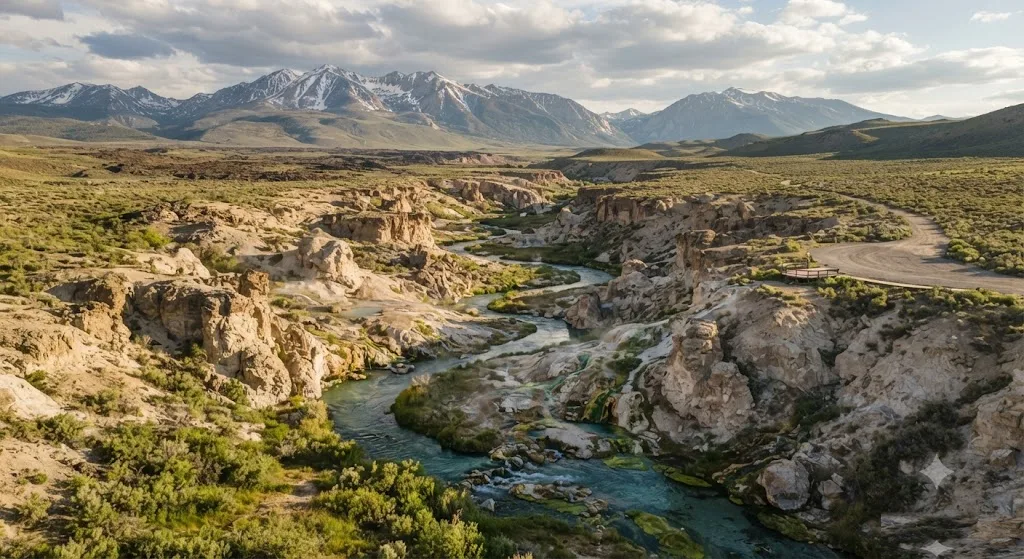
Visiting Hot Creek is an experience unlike any other, a chance to witness geology in action. We're talking about a landscape where superheated water forces its way to the surface through cracks in volcanic rock, mixing with the cold alpine stream below to fill the canyon with steam and vibrant colors.
Imagine turquoise mineral pools lining the banks, layers of travertine rimming active geothermal vents, and the constant hiss and bubble of boiling water. It's an otherworldly scene, often compared to a smaller-scale Yellowstone, right here in the Eastern Sierra. The site is a dynamic display of the Long Valley Caldera's active volcanic system, with a magma chamber lying just a few miles beneath your feet. This geological activity means the landscape is constantly changing, with new vents appearing and old ones going dormant annually, ensuring that each visit offers a fresh perspective.
Beyond the sheer geological marvel, Hot Creek offers a serene yet powerful connection to nature. It’s a place for quiet contemplation, stunning photography, and a deep appreciation for the Earth's incredible forces. We believe it's an essential stop for anyone traveling through the region, providing a dramatic and educational window into active geological processes.
Who It's Best For
Hot Creek is a destination that appeals to a diverse range of travelers. Our team finds it particularly ideal for:
- Nature Enthusiasts and Geologists: Those with a keen interest in natural phenomena and geological processes will be absolutely captivated by the active geothermal features, fumaroles, and occasional geyser eruptions. Interpretive signs throughout the site explain the volcanic history of the Long Valley area, enriching the experience.
- Photographers: The vibrant turquoise pools, the rising steam, the mineral-stained rocks, and the dramatic backdrop of the Eastern Sierra mountains create unparalleled photographic opportunities, especially during sunrise or sunset.
- Families with Older Children: While swimming is strictly prohibited due to safety concerns, the short, paved trail and the sheer spectacle of the geothermal activity make it an engaging and educational outing for families. It's a practical choice for families seeking geothermal scenery with an easy outing.
- Road Trippers along US-395: Hot Creek is an easy and free detour just off Highway 395, making it a perfect quick stop to stretch your legs and witness something truly unique on a longer journey.
- Anglers: While fishing is not allowed within the immediate geologic site, the surrounding Hot Creek area is renowned for catch-and-release fly fishing, attracting those looking to reel in wild trout.
The site is not wheelchair accessible for the descent into the gorge due to a steep paved trail, but visitors with limited mobility can still enjoy clear views from the upper parking lot overlook.
Is It Worth Visiting?
Absolutely, is Hot Creek worth visiting? Our unequivocal answer is yes. This site offers one of the most unique geothermal landscapes in the Eastern Sierra, easily accessible and truly unforgettable.
For a relatively short commitment of time – typically 30 to 60 minutes for sightseeing and short hikes – you're rewarded with a profound display of geological power and natural beauty. The vibrant colors of the mineral pools, the constant steam rising from the gorge, and the sheer unpredictability of the geysers create a captivating spectacle that stays with you long after you leave. We find that the blend of accessibility and dramatic scenery makes Hot Creek an exceptional value, especially since there are no entry or parking fees. It's a testament to the raw, untamed beauty of the region, offering a glimpse into the Earth's inner workings that few places can match. If you're pondering if is Hot Creek worth visiting, we encourage you to make the stop and judge for yourself; we're confident you won't be disappointed.
Getting There & Parking
Understanding how to get to Hot Creek is straightforward, making it an accessible natural wonder. The Hot Creek Geologic Site is located approximately 8 miles southeast of Mammoth Lakes, California. From the town of Mammoth Lakes, you'll head south towards U.S. Highway 395 on State Route 203. At the junction with US-395, merge right (south) and travel about 5.4 miles. Then, turn left (north) onto Hot Creek Hatchery Road, heading toward the Mammoth Lakes Airport. Continue on Hot Creek Hatchery Road for about 1.2 miles, passing Airport Road, and then take a right (east) to remain on Hot Creek Hatchery Road. You'll stay on this well-traveled road for another 3.6 miles as it transitions to gravel, with a slight left bend halfway through. The parking lot will be on your left.
Alternatively, from US-395, you can turn onto Hot Creek Hatchery Road approximately 3 miles south of the US-395/SR-203 junction near Mammoth Lakes, and drive roughly 3.5 miles to the parking area. The first mile or two of Hot Creek Hatchery Road is paved, with the remainder being a well-maintained gravel path. Our team has found that standard passenger vehicles can typically navigate this road under normal conditions.
Regarding Hot Creek parking, you'll find a large, ample parking lot at the main overlook, providing plenty of space for visitors. There is no parking fee to worry about. Vault toilets are available at the parking area, but remember to bring your own water as potable water is not available on site.
It's important to note that while the interpretive area is open from dawn to dusk year-round, road conditions, especially in winter, can prevent vehicle access. Heavy snowfall may close Hot Creek Hatchery Road, requiring visitors to reach the site on foot, snowshoes, or cross-country skis from the closure point, which adds approximately 2 miles each way to the journey. Always check local road conditions before you go, particularly during colder months, to ensure you know how to get to Hot Creek safely.
Top Things to Do
When you visit Hot Creek, the primary draw is the incredible geothermal spectacle itself. Our team recommends focusing on these key things to do at Hot Creek:
- Geothermal Viewing and Photography: This is the main event. From the parking lot, you can enjoy an incredible view of the gorge. A short, paved trail descends steeply into the gorge, taking about 5 to 10 minutes one way. Along the trail, interpretive markers explain the geology of the area. Witness the boiling pools, fumaroles, and steam rising from the creek. The pale blue color of the water and the steam escaping are truly unique. Remember, staying on designated paths and behind fences is crucial for safety, as water temperatures can change instantly and reach near-boiling levels.
- Short Hikes: The descent into the gorge and back is a short, invigorating hike, perfect for stretching your legs. The path is well-maintained, but the return climb can be steep.
- Fly Fishing (outside the geologic site): While fishing is prohibited within the immediate geologic site boundaries, Hot Creek outside this area is a renowned destination for catch-and-release fly fishing. Anglers come here for the wild trout, but be sure to check California's specific fishing regulations, which often include barbless hooks and artificial lures only.
- Picnicking: Picnic facilities are available at the parking area, offering a scenic spot to enjoy a packed lunch amidst the stunning views.
Beyond the immediate Hot Creek area, there are many fantastic things to do in Mammoth Lakes (near Nevada border) that our team highly recommends:
- Skiing and Snowboarding: Mammoth Lakes is famous for Mammoth Mountain Ski Resort, offering extensive slopes and a vibrant winter sports scene.
- Hiking and Mountain Biking: In warmer months, the Mammoth Lakes area boasts over 140 miles of trails within the Inyo National Forest, catering to all levels. The Mammoth Bike Park offers over 80 miles of singletrack.
- Lake Activities: Explore the numerous alpine lakes such as Convict Lake, Lake Mary, Twin Lakes, and Lake Crowley for boating, paddleboarding, kayaking, and fishing.
- Devils Postpile National Monument: A short drive away, this monument preserves a 60-foot wall of hexagonal basalt columns, a geological wonder sculpted by ancient lava flows and glaciers.
- Bodie State Historic Park: Venture an hour north along US-395 to explore the remarkably preserved ghost town of Bodie, offering a fascinating glimpse into California's gold rush history.
- Other Hot Springs: While Hot Creek itself is for viewing only, the Long Valley Caldera is dotted with other primitive hot springs like Shepherd Hot Springs, Crab Cooker Hot Springs, and Wild Willy's (Crowley Hot Springs) where soaking might be permitted (always verify current regulations and safety).
- Community Events: Check the Mammoth Lakes official website for events like Sierra Summer Nights, Park and Recreation Month activities, Bike Rodeo, and the Winter Recreation Expo, which often feature live music, vendors, and family-friendly fun throughout the year.
Whether you're exploring the geothermal wonders of Hot Creek or adventuring in the wider Mammoth Lakes region, there are countless things to do in Mammoth Lakes (near Nevada border) to fill your itinerary.
Best Time to Visit
Deciding on the best time to visit Hot Creek depends largely on what kind of experience you're seeking. Our team has visited in various seasons and can offer these insights:
- Spring (April-May): This is a transitional period. You might still encounter snow, especially early in the season, which could mean the access road is closed, requiring a hike, snowshoe, or cross-country ski in. However, as the snow melts, wildflowers begin to bloom, and the contrast of green against the steaming pools can be breathtaking. Crowds are generally lighter than in summer.
- Summer (June-August): Summer offers the easiest access, with clear roads and comfortable weather. This is when the site is most popular, so expect more visitors, especially on weekends. The vibrant blue hues of the pools are particularly striking under the bright summer sun. It's an excellent time for combining a Hot Creek visit with other outdoor activities in Mammoth Lakes.
- Fall (September-October): Many consider fall the best time to visit Hot Creek. The weather remains pleasant, and the crowds begin to thin out. The surrounding aspen trees turn brilliant shades of gold, creating a spectacular backdrop for the steaming gorge. Road access is typically still open and easy.
- Winter (November-March): Winter transforms Hot Creek into a magical, ethereal landscape. The steam rises more dramatically against the cold air and snow-covered ground, creating stunning photographic opportunities. While the interpretive area is open year-round, the access road may close due to heavy snowfall. If the road is closed, you can still reach the site by snowshoeing, cross-country skiing, or snowmobiling the additional 2 miles each way, offering a unique and adventurous experience.
Ultimately, there's no single "best" time, as each season offers a distinct charm. We recommend checking current road conditions and weather forecasts before your visit, especially in spring and winter. The interpretive area is open from dawn to dusk throughout the year.
Where to Stay Nearby
Finding comfortable and convenient Hot Creek lodging is easy, with Mammoth Lakes serving as the primary hub for accommodations. Located just 8 miles from Hot Creek, Mammoth Lakes offers a wide array of options to suit every budget and preference.
For those seeking luxury and amenities, our team recommends properties like The Village Lodge, The Westin Monache Resort, Mammoth, or the recently opened Limelight Mammoth. Limelight Mammoth, for instance, is steps from the Village Gondola and offers amenities like an outdoor pool, hot tub, and firepits, perfect for recharging after a day of exploration.
Mid-range options include Juniper Springs Resort, Outbound Mammoth, and Mammoth Mountain Inn, many offering family-friendly services and easy access to local activities. Outbound Mammoth, for example, is noted for its adventure and relaxation focus, with family-friendly amenities.
Budget-conscious travelers will find reliable choices such as Shilo Inns Mammoth Lakes and Motel 6 Mammoth Lakes, both located about 8 miles from Hot Creek. These provide clean rooms and convenient access to the area's attractions.
If you prefer a more rustic experience, Tamarack Lodge and Resort offers a classic lakeside retreat with private cabins and access to wilderness, just 15 minutes from Mammoth Mountain. Mammoth Lakes also features numerous campgrounds for those who prefer to sleep under the stars, though many close in winter, and summer bookings require advance reservations. Prices for hotels in Mammoth Lakes typically range from $100 to $500 per night, with campgrounds from $25 to $100 per night, varying by season.
Regardless of your choice, staying in Mammoth Lakes provides excellent access not only to Hot Creek but also to the myriad of outdoor adventures and dining options the region has to offer. When planning your trip, consider your desired level of comfort and proximity to other activities when selecting your Hot Creek lodging.
Sample 2-Day Itinerary
To help you make the most of your visit to Hot Creek and the surrounding Eastern Sierra, our team has crafted a sample 2-day itinerary:
Day 1: Geothermal Wonders & Mammoth Lakes Exploration
- Morning (9:00 AM): Arrive in Mammoth Lakes and check into your chosen lodging. We recommend an early start to maximize your time.
- Late Morning (10:30 AM): Head straight to the Hot Creek Geologic Site. Allow 1-2 hours to explore the interpretive area, descend the paved trail into the gorge, and marvel at the boiling pools, fumaroles, and steam vents. Remember to stay on marked paths for safety. This is your chance to truly appreciate the unique spectacle of Hot Creek Nevada.
- Lunch (12:30 PM): Enjoy a picnic lunch at the Hot Creek parking area (vault toilets available, bring your own water) or head back into Mammoth Lakes for dining options.
- Afternoon (2:00 PM): Explore the Mammoth Lakes Basin. Drive the scenic loop, stopping at popular spots like Twin Lakes, Lake Mary, and Lake George. Consider a short, easy hike around one of the lakes, or rent a paddleboard or kayak if the weather is warm.
- Late Afternoon (4:30 PM): Visit the Mammoth Lakes Welcome Center for local insights, maps, and information on current conditions and events.
- Evening (6:30 PM): Enjoy dinner at one of Mammoth Lakes' diverse restaurants, from casual eateries to fine dining.
Day 2: Mountain Adventures & Eastern Sierra Gems
- Morning (9:00 AM): Depending on the season, embark on a mountain adventure.
- Summer/Fall: Take the scenic gondola ride up Mammoth Mountain for panoramic views, or hit some of the renowned mountain biking trails. Alternatively, explore a section of the extensive hiking trails in the Inyo National Forest.
- Winter/Spring: Spend the day skiing or snowboarding at Mammoth Mountain Ski Resort. If you're not a skier, consider snowshoeing or cross-country skiing on designated trails.
- Lunch (12:30 PM): Grab lunch on the mountain or at a café in Mammoth Lakes Village.
- Afternoon (2:00 PM): Choose an iconic Eastern Sierra excursion:
- Option A (History Buffs): Drive north on US-395 to Bodie State Historic Park, a remarkably preserved ghost town that offers a captivating step back in time.
- Option B (Nature Lovers): Head to Devils Postpile National Monument (seasonal access via shuttle in summer) to witness its unique hexagonal basalt columns and hike to Rainbow Falls.
- Option C (Anglers): Dedicate time to fly fishing in the designated catch-and-release sections of Hot Creek (outside the geologic site) or other nearby renowned fishing spots like Convict Lake or Crowley Lake.
- Late Afternoon (5:00 PM): Enjoy some leisure time, perhaps a relaxing dip in one of the other natural hot springs in the Long Valley Caldera (always verify safety and regulations before entering any natural hot springs).
- Evening (7:00 PM): Savor a final dinner in Mammoth Lakes, reflecting on your adventurous Eastern Sierra getaway.
This itinerary offers a balanced blend of geothermal exploration, mountain activities, and cultural or natural excursions, ensuring you get a comprehensive taste of what the area has to offer. For further planning, explore our guides to the Best places in Nevada, including iconic destinations like The Las Vegas Strip and Hoover Dam, which can easily be incorporated into a larger Western road trip.
Expert Verdict from the Roam States Team
We've traveled extensively across the US, and Hot Creek stands out as a truly exceptional natural wonder. Its raw, untamed geothermal activity offers a powerful reminder of the Earth's dynamic nature. What truly impresses us is its accessibility combined with its dramatic beauty – it's not every day you can witness boiling pools and fumaroles with such ease. While the strict no-swimming rule is paramount for safety, the visual spectacle alone is worth the journey. We wholeheartedly recommend Hot Creek as a must-see stop for anyone exploring the Eastern Sierra, especially when paired with the vibrant outdoor culture of Mammoth Lakes. It’s a destination that sparks both awe and respect for our planet.
FAQ
Hot Creek with kids
Hot Creek is generally suitable for families with children, particularly older kids who can appreciate the geological spectacle and understand the safety rules. The paved trail down to the gorge is short and manageable, though steep on the return. The primary safety concern is the dangerously hot and unpredictable water, so it's crucial that children understand and adhere to the strict prohibition against entering the water and staying behind all fences and signs. There are vault toilets at the parking area. We recommend bringing plenty of water and snacks, as none are available on site.
Best hotels near Hot Creek
The best hotels near Hot Creek are located in Mammoth Lakes, approximately 8 miles away. Popular options include The Village Lodge, The Westin Monache Resort, Mammoth, and Limelight Mammoth for luxury. Mid-range choices like Juniper Springs Resort and Outbound Mammoth offer great amenities, while budget-friendly options include Shilo Inns Mammoth Lakes and Motel 6 Mammoth Lakes. These accommodations provide convenient access to Hot Creek and the broader Mammoth Lakes area.
Hot Creek tips
Our top tips for visiting Hot Creek include: always stay on designated paths and behind fences – entering the water is strictly prohibited due to extreme temperatures and unpredictable geyser activity. Bring plenty of water, as none is available on site. Wear proper footwear for the steep, paved trail. Visit during sunrise or sunset for the most dramatic lighting and photographic opportunities. Check road conditions, especially in winter, as the access road may close due to snow. Allow 30-60 minutes for your visit. Pets are allowed on leash.
Where to stay near Hot Creek
The most practical place to stay near Hot Creek is Mammoth Lakes, California. It's just an 8-mile drive and offers a comprehensive range of lodging options, from luxury hotels and resorts to budget-friendly motels and numerous campgrounds. Many hotels, like Tamarack Lodge, offer a blend of rustic charm and convenience. For specific recommendations on Hot Creek lodging, consider options like The Village Lodge or Shilo Inns Mammoth Lakes, depending on your budget and desired amenities.
Hot Creek parking
There is ample, free parking available at the Hot Creek Geologic Site's main overlook. The parking lot also provides vault toilets. The road leading to the parking area is paved for the first section and then turns to well-maintained gravel, generally passable for standard passenger vehicles in normal conditions. During winter, however, heavy snow can close the road, requiring visitors to park further away and access the site on foot.
Best time to visit Hot Creek
The best time to visit Hot Creek depends on your preference. Summer (June-August) offers easy access and warm weather, though with more crowds. Fall (September-October) provides pleasant temperatures, fewer visitors, and stunning autumn foliage. Winter (November-March) offers a magical, steamy landscape against snow, but requires checking road closures and potentially snowshoeing or cross-country skiing in. Spring (April-May) is a transitional period with melting snow and emerging wildflowers. The site is open dawn to dusk year-round.
The Hot Creek Geologic Site is a testament to the raw, untamed beauty of the Eastern Sierra. Our team at Roam States hopes this guide equips you with all the confidence and specific details needed to plan your visit to this incredible geothermal wonderland. Remember to prioritize safety, respect the natural environment, and prepare to be amazed by the Earth's power on display. For more inspiration for your US travels, explore our Plan Your US Trip guide.
Last updated: 2026-07-08 by the Roam States team.