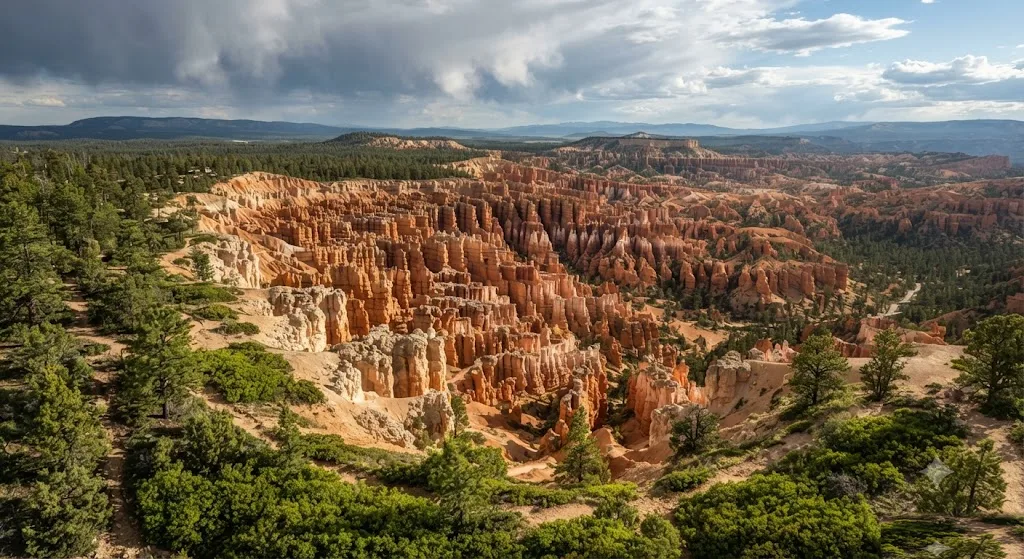
Bryce Canyon National Park Travel Guide — Utah
Our team at Roam States has explored countless national treasures, and few places capture the imagination quite like Bryce Canyon National Park Utah. With its otherworldly amphitheaters carved from vibrant red, orange, and white rock, studded with thousands of delicate hoodoos, it's a geological marvel that demands your attention. Forget generic travel advice; we're here to provide the confident, specific insights you need to plan an unforgettable trip to this unique corner of Utah.
Why Visit Bryce Canyon National Park
Bryce Canyon National Park isn't just another stop on a road trip; it's a destination that redefines natural beauty. What sets Bryce apart are its iconic hoodoos—tall, thin spires of rock sculpted by eons of frost-wedging and chemical weathering. These formations, particularly dense in the Bryce Amphitheater, create a landscape unlike anything else on Earth. We’ve seen many canyons, but none possess the sheer density and intricate artistry of Bryce. The park's high elevation, ranging from 8,000 to over 9,000 feet, also means crisp, clean air and some of the darkest night skies in North America, making it a prime spot for stargazing. Whether you're a seasoned hiker or simply looking for breathtaking views, Bryce Canyon offers a profound connection to the raw power of nature.
Who It's Best For
Bryce Canyon National Park truly offers something for everyone, making it an ideal destination for a diverse range of travelers. For families, the park provides accessible rim trails and engaging ranger programs that bring geology to life. Kids will be mesmerized by the fantastical hoodoo shapes, sparking their imaginations. Adventure seekers and avid hikers will find a network of trails descending into the canyon, offering challenging terrain and unparalleled close-up views of the formations. Photographers, both amateur and professional, will be in paradise with the ever-changing light painting the hoodoos in a spectrum of colors from sunrise to sunset. Even those seeking a quieter, more contemplative experience will find solace in the vast, silent landscapes and the incredible dark skies perfect for stargazing. While some national parks cater to specific interests, Bryce Canyon's unique blend of accessibility, adventure, and awe-inspiring scenery ensures a memorable visit for almost any traveler.
How to Get There
Reaching Bryce Canyon National Park is straightforward, whether you're driving from nearby states or flying into a regional airport. The park is located in south-central Utah, approximately 85 miles northeast of Zion National Park. Most visitors arrive by car, as this allows for the most flexibility in exploring the scenic drive and surrounding areas. From Salt Lake City, the drive is about 4-5 hours, while Las Vegas is roughly a 4-hour drive. The main park entrance is located off Highway 63.
Once you arrive at Bryce Canyon National Park, navigating the park is made easy by its layout and the excellent shuttle system. Parking at popular viewpoints within the Bryce Amphitheater (Sunrise, Sunset, Inspiration, and Bryce Points) can be extremely congested, especially during peak season from 10:00 AM to 5:00 PM. Our team highly recommends utilizing the free park shuttle to avoid frustration and contribute to preserving the park's natural beauty. The Bryce Canyon shuttle operates from April 3rd to October 18th in 2026, running approximately every 15 minutes. You can board the shuttle at the Shuttle Station in Bryce Canyon City or at the Visitor Center, and it provides service to the main amphitheater viewpoints. The shuttle does not, however, service the 18-mile Southern Scenic Drive, so you'll need your private vehicle for those more distant overlooks. For oversized vehicles (over 23 ft or 7 m), parking in the Bryce Amphitheater is restricted during shuttle hours, making the shuttle an even more practical choice.
Top Things to Do
When planning your visit to Bryce Canyon National Park, you'll discover a wealth of activities designed to immerse you in its unique landscape. Beyond the obvious scenic viewpoints, there are many things to do at Bryce Canyon National Park that cater to all energy levels and interests.
- Scenic Drive & Viewpoints: The 18-mile scenic drive offers numerous pull-offs with panoramic vistas. We recommend driving to Rainbow Point and Yovimpa Point at the southern end first, then stopping at the remaining viewpoints on your way back north. This strategy helps avoid left turns in front of oncoming traffic. Don't miss Sunrise Point, Sunset Point, Inspiration Point, and Bryce Point, all easily accessible via the park shuttle during its operating season.
- Ranger Programs: Engage with knowledgeable park rangers through various programs. These often include geology talks, rim walks, and highly popular astronomy programs that take advantage of Bryce Canyon's exceptional dark skies. Check the Visitor Center for a current schedule of things to do at Bryce Canyon National Park during your visit.
- Stargazing: As a certified Dark Sky Park, Bryce Canyon offers unparalleled opportunities for night sky viewing. On clear nights, the Milky Way is often visible to the naked eye. Consider attending a ranger-led astronomy program or a full moon hike for a truly magical experience.
- Horseback Riding: Experience the canyon from a different perspective by taking a guided horseback ride into the amphitheater. Concession-operated tours are available seasonally and offer a unique way to explore the trails below the rim.
- Biking: While bikes are not allowed on hiking trails, you can enjoy paved roads within the park. The 5.5-mile shared-use path connects Bryce Canyon City to Inspiration Point, offering a scenic and car-free option for cyclists.
- Winter Activities: If you visit during the colder months, Bryce Canyon transforms into a snowy wonderland. Cross-country skiing and snowshoeing along the rim are popular activities, offering a serene and beautiful experience. Temporary road closures may occur after heavy snowfall, but the Bryce Amphitheater area is typically plowed first.
Bryce Canyon National Park Hiking Trails
Exploring the unique geology of Bryce Canyon National Park is best done on foot, and the park offers a fantastic array of Bryce Canyon National Park hiking trails for all abilities. From easy rim strolls to strenuous treks into the hoodoo-filled amphitheaters, you'll find a path that suits your adventure level.
For those seeking iconic views without a steep descent, the Rim Trail offers relatively level walking with continuous panoramic vistas of the Bryce Amphitheater. You can walk segments between viewpoints like Sunrise and Sunset Points for an easier experience, or challenge yourself with longer sections. This is one of the most accessible Bryce Canyon National Park hiking trails.
To truly immerse yourself among the hoodoos, you’ll want to venture below the rim. The most popular combination is the Queen's Garden and Navajo Loop Trail. This moderate 3-mile loop descends into the canyon, offering close-up encounters with famous formations like Thor's Hammer and the Queen Victoria hoodoo. Be aware that the Wall Street section of the Navajo Loop is intermittently closed Monday through Thursday from 6:00 AM to 12:00 PM for trail stabilization work throughout the 2026 season. The Twin Bridges side of the loop remains open. Always check current conditions at the Visitor Center before heading out.
More strenuous options include the Peekaboo Loop Trail (5.5 miles, strenuous), which offers incredible views and passes through several arches, and the Fairyland Loop Trail (8 miles, strenuous), providing solitude and stunning scenery away from the main amphitheater. For those looking for multi-day adventures, the Under-the-Rim Trail (22.9 miles) and the Riggs Spring Loop Trail (8.8 miles) offer backcountry camping opportunities, requiring a permit.
Regardless of which Bryce Canyon National Park hiking trails you choose, we strongly recommend wearing sturdy hiking boots with good ankle support, bringing plenty of water, and layering clothing due to the high altitude and variable weather. Hats and sunscreen are also essential year-round.
Bryce Canyon National Park Camping
For those who wish to fully immerse themselves in the natural beauty of Bryce Canyon National Park, camping is an excellent option. The park offers two developed campgrounds, North Campground and Sunset Campground, both conveniently located near the Visitor Center, Bryce Canyon Lodge, and the iconic Bryce Amphitheater.
North Campground is open year-round, making it a viable option even for winter visits (though only Loops A & B are typically open from October to April). Sunset Campground, located about 1.5 miles south of the Visitor Center, is open seasonally from approximately April through October. For the 2026 season, both North and Sunset Campgrounds are reservation-only, which can be made 24 hours a day via recreation.gov. We highly advise booking well in advance, especially for peak season visits, as Bryce Canyon National Park camping is very popular. Each campground typically offers around 100 sites with potable water and flush toilets. While there are no sewer, water, or electrical hookups at individual sites, a dump station is available at North Campground during the summer.
It's important to note that during the 2026 season (expected June to November), Sunset Campground will be undergoing forest thinning work. Campers may experience chainsaw noise during the day (8:00 AM to 5:00 PM), though this work is crucial for wildfire protection and forest health. Additionally, as of June 26, 2026, Bryce Canyon is under Stage 2 Fire Restrictions, meaning campfires, charcoal fires, or other open fires are not allowed in the park, including campgrounds. Stoves fueled by petroleum or liquid propane gas are permitted.
For a more rugged and secluded experience, backcountry camping is available along the Under-the-Rim Trail and Riggs Spring Loop Trail. A $5 backcountry permit is required for any overnight trips and must be obtained in person at the Visitor Center. Dispersed camping and open fires are not permitted inside the park.
Best Time to Visit
Deciding the best time to visit Bryce Canyon National Park depends largely on what you hope to experience, as each season offers a distinct charm. However, our team generally recommends visiting during the shoulder seasons—April to June and September to October.
- Spring (April-May): The weather is moderate, with daytime highs ranging from 50s to 60s Fahrenheit. You’ll experience fewer crowds than in summer, and the possibility of lingering snow on the rim can create stunning contrasts with the red rock. The park shuttle typically begins operation in early April.
- Summer (June-August): This is the most popular time to visit, offering the warmest temperatures (daytime highs in the 70s and 80s Fahrenheit) and all park facilities and services fully operational. However, it also means larger crowds, especially at viewpoints and popular trails. Afternoon thunderstorms are common in mid to late summer, so plan your hikes for the mornings. The shuttle runs with extended hours during this period.
- Fall (September-October): Similar to spring, fall offers pleasant, moderate temperatures and fewer crowds than summer. The changing aspen leaves add a splash of golden color to the landscape, making for beautiful photographic opportunities. The shuttle typically runs through mid-October.
- Winter (November-March): While cold (daytime highs in the 30s and 40s Fahrenheit, often below freezing at night), winter offers a uniquely serene and breathtaking experience. The hoodoos capped with fresh snow are an unforgettable sight. Many services operate on reduced hours, and some roads, particularly the Southern Scenic Drive, may close temporarily after snowstorms until plowed. However, the Bryce Amphitheater area is usually accessible, and activities like cross-country skiing and snowshoeing are popular.
Ultimately, there isn't a "bad" time to visit Bryce Canyon National Park, but for comfortable hiking weather and manageable crowds, spring and fall are often the best choices.
Where to Stay Nearby
While the allure of Bryce Canyon National Park is undeniable, finding the right accommodation nearby can significantly enhance your experience. We’ve scouted the best options, both inside and just outside the park, to help you choose your ideal base.
Inside Bryce Canyon National Park:
- The Lodge at Bryce Canyon: This is the only lodging located within the park boundaries, offering an unparalleled immersive experience just steps from the canyon rim. The lodge offers a variety of rustic accommodations, including historic Western Cabins, Main Lodge Suites, and motel rooms. Reservations are highly recommended and should be made far in advance, especially for the 2026 operating dates (Main Lodge & Suites: March 1 - November 30; Sunrise Motel: March 27 - November 9; Sunset Motel: March 1 - November 30; Cabins: April 22 - October 15). Staying here means immediate access to trails and viewpoints, and a peaceful retreat without the distractions of Wi-Fi or TV in some units.
Outside Bryce Canyon National Park (Bryce Canyon City and Tropic):
Just outside the park entrance, Bryce Canyon City offers the closest concentration of hotels and services. This is where you'll find the main shuttle station, making it incredibly convenient for accessing the park's core.
- Ruby's Inn Resort (Best Western Plus Ruby's Inn): A long-standing and popular choice, Ruby's Inn is practically synonymous with Bryce Canyon lodging. It offers a wide range of accommodations, from hotel rooms to RV and tent camping, along with amenities like a general store, gift shop, and various activities.
- Best Western Plus Bryce Canyon Grand Hotel: For a slightly more upscale experience, this hotel offers comfortable rooms and excellent guest ratings.
- Bryce View Lodge, part of the Ruby's Inn Resort: A budget-friendly motel option that still provides good comfort and convenience, often including free breakfast.
A bit further afield, the charming town of Tropic (about 10 miles east) provides additional lodging options, often with a more secluded feel and unique B&Bs.
- Stone Canyon Inn: Located on the edge of Tropic, this inn backs up to the park boundary, offering a tranquil escape with various accommodations from rooms to cabins. It's a great choice if you appreciate solitude and potentially hiking directly into the park from the property.
- Other options in the area include Bryce Canyon Inn, Bryce Canyon Log Cabins, Bryce Pioneer Village, and Bryce Country Cabins for those seeking a cabin experience.
For those planning an extended trip through Utah, consider combining your Bryce Canyon adventure with visits to other incredible national parks like Zion National Park, Arches National Park, or Canyonlands National Park. Each offers a distinct experience of Utah's stunning red rock country. You can find more information on planning your broader Utah itinerary on our site.
Sample 2-Day Itinerary
To help you make the most of your visit to Bryce Canyon National Park, our team has crafted a sample 2-day itinerary designed to hit the highlights and give you a comprehensive experience of this incredible landscape.
Day 1: Bryce Amphitheater Immersion
- Morning (Sunrise to Mid-Morning): Start your day early with a breathtaking sunrise at Sunrise Point. The light hitting the hoodoos as the sun ascends is truly magical. After enjoying the view, embark on the iconic Queen's Garden and Navajo Loop Trail combination hike (approximately 2-3 hours, 3 miles). This loop takes you down into the Bryce Amphitheater, allowing you to walk among the hoodoos and experience formations like Thor's Hammer. Remember to check for any intermittent closures of the Wall Street section of Navajo Loop, especially if visiting Monday-Thursday mornings.
- Late Morning/Lunch: After your hike, head to the Bryce Canyon Visitor Center. Grab a map, check current conditions, and browse the exhibits. You can enjoy a packed lunch at one of the designated picnic areas or grab a bite at the Lodge at Bryce Canyon.
- Afternoon: Utilize the free park shuttle to visit Inspiration Point and Bryce Point. These viewpoints offer different perspectives of the vast amphitheater. Consider a leisurely walk along a section of the Rim Trail between Sunset Point and Inspiration Point for more stunning views without significant elevation changes.
- Evening: Enjoy dinner at one of the restaurants near the park entrance. As dusk settles, prepare for some world-class stargazing. Bryce Canyon is a certified Dark Sky Park, and a ranger-led astronomy program or simply finding a quiet spot to observe the Milky Way is an unforgettable way to end your day.
Day 2: Southern Scenic Drive & Beyond
- Morning: Drive the 18-mile Southern Scenic Drive. Since the park shuttle does not service this area, your private vehicle is necessary. We recommend driving straight to Rainbow Point and Yovimpa Point at the very end of the road. From here, you can take a short, easy hike like the Bristlecone Loop (1 mile) through an ancient forest.
- Late Morning/Lunch: On your way back north along the scenic drive, stop at other viewpoints like Agua Canyon, Ponderosa Canyon, and Natural Bridge. Each offers unique photographic opportunities. Enjoy lunch at a picnic area or in Bryce Canyon City.
- Afternoon: Depending on your energy levels and interests, you have a few options:
- More Hiking: If you're up for another challenge, consider the Fairyland Loop Trail (8 miles, strenuous) for a more secluded experience away from the main amphitheater.
- Mossy Cave Trail: A relatively easy and popular trail (less than 1 mile roundtrip) outside the main park entrance, leading to a small waterfall and a mossy grotto.
- Explore Nearby: Venture outside the park to Kodachrome Basin State Park for different geological formations and hiking opportunities, or explore sections of the vast Grand Staircase-Escalante National Monument.
- Evening: Enjoy a final dinner in the Bryce Canyon area, perhaps trying a different restaurant from the previous night. Reflect on the incredible landscapes and unique formations you've witnessed at Bryce Canyon National Park.
Is It Worth Visiting?
Without a doubt, our team confidently asserts that Bryce Canyon National Park is absolutely worth visiting. While often overshadowed by its more famous neighbor, Zion, Bryce offers a distinctly different and equally awe-inspiring experience that stands on its own merits. The sheer density of hoodoos, sculpted into an intricate natural amphitheater, creates a landscape that feels truly alien and magical. It’s a place where every turn reveals a new vista, and the vibrant colors of the rock shift dramatically with the changing light throughout the day.
For those wondering if Bryce Canyon National Park is worth visiting, consider these compelling reasons: it boasts some of the cleanest air and darkest night skies in the country, making it a premier destination for stargazing. The hiking opportunities, whether easy rim walks or challenging descents into the canyon, provide unparalleled access to these unique formations. Furthermore, the park's compact size and efficient shuttle system make it relatively easy to navigate and explore, even for shorter visits. The unique geology, the vibrant colors, the incredible night skies, and the diverse recreational activities all combine to create an unforgettable travel experience. We believe Bryce Canyon National Park is not just a geological wonder, but a profound testament to nature's artistry, and a must-see for any traveler exploring the American Southwest.
Frequently Asked Questions
What are the best things to do in Bryce?
The best things to do in Bryce include hiking among the hoodoos on trails like the Queen's Garden and Navajo Loop, driving the scenic park road to various viewpoints such as Inspiration and Bryce Points, attending ranger programs (especially astronomy talks), and experiencing the incredible dark skies for stargazing. During winter, snowshoeing and cross-country skiing are popular.
Is Bryce Canyon National Park with kids a good idea?
Yes, Bryce Canyon National Park with kids is an excellent idea! The fantastical hoodoo formations spark children's imaginations, making the landscape feel like a giant natural playground. Many easy, paved rim trails are suitable for strollers and young children, and junior ranger programs offer engaging activities. The park shuttle also makes getting around with kids much easier.
What are some essential Bryce Canyon National Park tips?
Essential Bryce Canyon National Park tips include: utilize the free park shuttle for the Bryce Amphitheater area to avoid parking congestion (April-October). Stay hydrated, especially when hiking, as the high altitude can be taxing. Wear layers of clothing, as temperatures can fluctuate dramatically. Book any in-park lodging or campground reservations well in advance. Always check current conditions for trail closures, especially for the Navajo Loop, and fire restrictions.
What should I know about Bryce Canyon National Park parking?
Bryce Canyon National Park parking can be very challenging at popular viewpoints within the Bryce Amphitheater, particularly between 10 AM and 5 PM during peak season. We highly recommend parking at the Shuttle Station in Bryce Canyon City or the Visitor Center and using the free park shuttle to access these areas. Oversized vehicles (over 23 ft) have restricted parking in the amphitheater during shuttle hours.
What is the best time to visit Bryce Canyon National Park?
The best time to visit Bryce Canyon National Park is during the shoulder seasons of April to June and September to October. During these months, temperatures are moderate, crowds are generally smaller than in summer, and most park services are fully operational. Summer offers warm weather but higher visitation, while winter provides a unique snowy landscape with fewer crowds, though some services and roads may be limited.
What are the Bryce Canyon National Park hours and fees for 2026?
Bryce Canyon National Park is open 24 hours a day, year-round. The Visitor Center has seasonal hours. Entrance fees for 2026 are $35 per private vehicle (valid for 7 days), $30 per motorcycle, and $20 per individual on foot or bicycle. All fees are cashless. As of January 1, 2026, a $100 per-person surcharge applies to non-U.S. residents aged 16 and older, in addition to the standard entrance fee, unless they possess an America the Beautiful Non-Resident Annual Pass ($250).
Conclusion
Bryce Canyon National Park stands as a testament to nature's extraordinary artistry, a place where the ordinary gives way to the truly spectacular. Our team at Roam States hopes this guide provides you with the confidence and specific details needed to plan your own adventure to this incredible Utah destination. From navigating the unique hoodoo landscapes to finding the perfect camping spot or lodging, we believe your journey to Bryce Canyon will be filled with unforgettable moments and breathtaking views. Embrace the vibrant colors, explore the intricate trails, and gaze upon the magnificent dark skies—Bryce Canyon is waiting to captivate you.
Last updated: 2026-07-08 by the Roam States team.