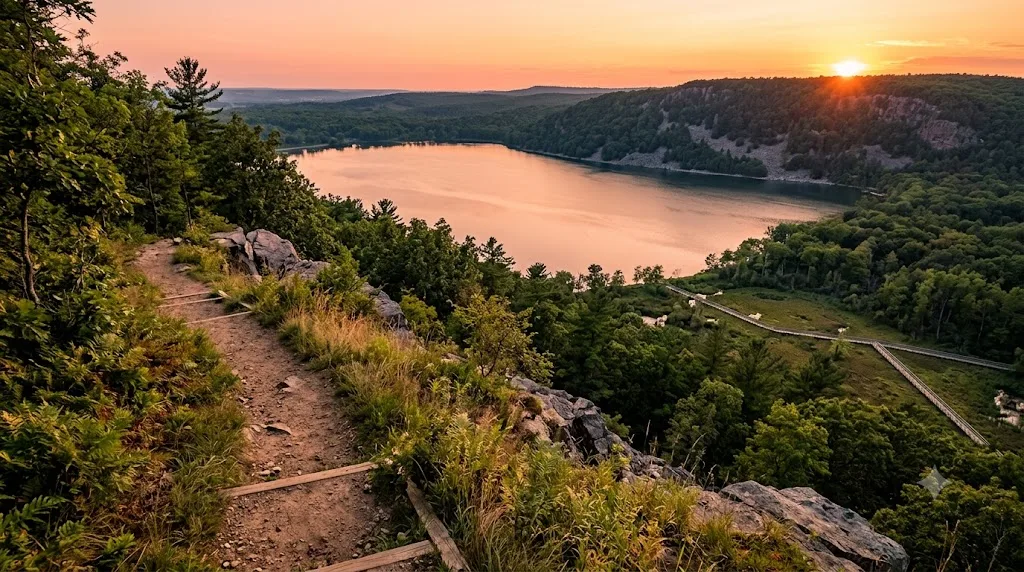
Our Ice Age National Scenic Trail guide covers practical planning for the Ice Age National Scenic Trail Wisconsin — best time to visit, getting there, and what to do on the ground.
The Ice Age National Scenic Trail Wisconsin is a truly remarkable thousand-mile footpath, entirely contained within the Badger State, that tells the dramatic story of our planet's past. We've explored its diverse landscapes, tracing the very edge of the last continental glacier that shaped this region over 12,000 years ago. This trail isn't just a path; it's a journey through an open-air museum of glacial features, offering unparalleled opportunities for hiking, backpacking, and connecting with nature.
Why Visit Ice Age National Scenic Trail
For those of us who appreciate the raw power of nature and the quiet beauty of a well-preserved landscape, the Ice Age National Scenic Trail is an absolute must-visit. What sets this trail apart is its unique focus on glacial geology. As you traverse its winding segments, you'll encounter a stunning array of landforms left behind by the retreating ice sheets: massive moraines, deep kettles, sinuous eskers, and unique potholes. It's a living textbook of the Ice Age, revealing how these ancient forces sculpted Wisconsin's terrain. Beyond the geological wonders, the trail meanders through a rich tapestry of ecosystems – from dense hardwood forests and serene prairies to tranquil wetlands and vibrant river valleys. It's a chance to immerse ourselves in Wisconsin's natural heritage, observe diverse wildlife, and find solitude away from the hustle and bustle. The trail is also a testament to human dedication, largely built and maintained by passionate volunteers, making every step feel like a shared endeavor.
Who It's Best For
The Ice Age National Scenic Trail truly offers something for everyone, from the casual day-hiker to the ambitious thru-hiker. We find it's particularly well-suited for:
- Hikers and Backpackers: With over 600 miles of completed trail and more continually being developed, it's a premier destination for those seeking long-distance adventures or challenging day hikes. The terrain varies from easy, level paths to more rugged, hilly sections, ensuring there's a suitable route for all skill levels.
- Nature Enthusiasts and Wildlife Observers: The trail winds through diverse habitats, making it an excellent spot for birdwatching, wildlife viewing, and enjoying Wisconsin's flora and fauna.
- Geology Buffs: If you're fascinated by the Earth's history, this trail is your playground. It's designed to highlight glacial features, offering interpretive signage and opportunities to see these formations firsthand.
- Families: Many segments are relatively flat and well-maintained, perfect for shorter walks with children. The educational aspect of the glacial landscape can also be very engaging for younger explorers.
- Silent Sport and Outdoor Enthusiasts: While primarily a hiking and backpacking trail, some sections are open for cross-country skiing and snowshoeing in winter, offering year-round enjoyment. Biking and snowmobiling are permitted on segments that share corridors with state rail trails.
In our experience, whether you're looking for a challenging multi-day trek or a peaceful afternoon stroll, the Ice Age National Scenic Trail provides an enriching and accessible outdoor experience.
Getting There & Parking
Given its thousand-mile length, knowing how to get to the Ice Age National Scenic Trail and where to park is essential. The trail spans 30 counties across Wisconsin, offering hundreds of trailheads and access points. This means you can often find an access point relatively close to your starting destination, whether you're coming from Milwaukee, Madison, or a smaller town. We recommend consulting the official Ice Age Trail Alliance website or their comprehensive Atlas and Guidebook for detailed maps, which pinpoint parking areas, toilets, and campgrounds for each segment.
While using the Ice Age National Scenic Trail itself is free of charge, visitors should be aware that some public lands, such as state and county parks that the trail traverses, may charge entrance or parking fees. For instance, a Wisconsin State Park Pass is typically required for parking and entry into state parks like Potawatomi State Park in Door County or Interstate State Park at the western terminus. Parking areas are generally well-marked at trailheads and within these parks. For day-hiking in Potawatomi State Park, long-term parking is available at the old ski hill. In Langlade County, parking is available at locations like Mueller Lake, Kettlebowl Recreation Area, and Camp Susan Recreation Area.
When planning how to get to Ice Age National Scenic Trail, consider which segment you wish to explore. For example, the western terminus is at Interstate State Park near St. Croix Falls, while the eastern terminus is at Potawatomi State Park in Door County. Many communities along the trail, such as Janesville and Antigo, are designated Ice Age Trail Communities, offering resources and welcoming hikers. Some areas, like Langlade County, even offer "Trail Angel Shuttles" provided by local volunteers, which can be invaluable for point-to-point hikes.
Top Things to Do
The Ice Age National Scenic Trail is a playground for outdoor enthusiasts, offering a wide variety of ways to experience Wisconsin's unique glacial landscape. When considering things to do at Ice Age National Scenic Trail, hiking is, of course, paramount, but there's much more to discover.
Ice Age National Scenic Trail Hiking Trails
Our team considers the Ice Age National Scenic Trail hiking trails to be among the best in the Midwest. With over 600 miles of completed trail, you can choose from short, easy loops to challenging multi-day backpacking excursions. The trail highlights glacial features like kames, eskers, and drumlins, making every hike a geological lesson. Popular segments include:
- Kettle Moraine State Forest (Northern and Southern Units): These areas offer some of the most iconic glacial topography, with rolling hills, deep kettles, and pristine lakes. The Ice Age Visitor Center in the Northern Unit provides excellent interpretive exhibits.
- Devil's Lake State Park: While not entirely on the Ice Age Trail, sections of the trail connect to this stunning park, known for its quartzite bluffs and beautiful lake. It’s a popular spot for hiking, rock climbing, and water activities.
- St. Croix Falls Segment: This is the western terminus of the trail, offering dramatic views of the Dalles of the St. Croix River and unique potholes formed by glacial meltwaters.
- Holy Hill Segment: Winding around Holy Hill Basilica, this segment offers beautiful views and a moderate elevation gain.
- Sturgeon Bay Segment: This easternmost section leads to Potawatomi State Park and offers a mix of rail-trail, urban hiking, and forested treks, culminating at the observation tower with views of Green Bay.
Beyond hiking, other things to do at Ice Age National Scenic Trail include:
- Backpacking: For those seeking a multi-day adventure, many segments offer primitive and dispersed camping options. Always check local regulations for permits and designated camping areas.
- Snowshoeing and Cross-Country Skiing: In winter, when conditions allow, many segments transform into serene snowshoeing and cross-country skiing routes. Note that some sections may be closed during Wisconsin's November 9-day gun deer hunting season, so always check conditions and wear blaze orange if hiking during this time.
- Wildlife and Bird Watching: The diverse habitats along the trail provide excellent opportunities to spot deer, various bird species, and other local wildlife.
- Geocaching: Many geocaches are hidden along the trail, adding a fun, treasure-hunt element to your hike.
- Photography: From sweeping vistas to intricate glacial features, the trail offers endless photographic opportunities throughout the seasons.
Remember that ATVs and other motorized vehicles are not permitted on any segment of the Ice Age National Scenic Trail.
Best Time to Visit
The Ice Age National Scenic Trail is open year-round, offering distinct experiences with each season. Our team has found that the "best" time to visit largely depends on your preferred activities and tolerance for weather conditions.
- Spring (April-May): As the snow melts and wildflowers emerge, spring offers a refreshing experience. The trails can be muddy, especially after rain, but the budding trees and returning migratory birds are a treat. Be aware of potential seasonal flooding in certain segments, like Tisch Mills.
- Summer (June-August): This is peak hiking season, with lush greenery and warmer temperatures. It's ideal for longer hikes and camping. However, trails can be busy, and insects (mosquitoes, ticks) are prevalent. Be prepared with appropriate repellent and sun protection.
- Fall (September-October): Many consider autumn the prime time to visit. The vibrant fall foliage is spectacular, and cooler temperatures make for comfortable hiking. Insect activity decreases significantly. This is also a popular time, so expect more fellow hikers on well-known segments.
- Winter (November-March): For those who embrace the cold, winter offers a stark, serene beauty. Snowshoeing and cross-country skiing are popular on suitable segments. However, some segments may be closed during Wisconsin's 9-day gun deer hunting season in November, and we strongly advise wearing blaze orange if hiking during this period. Always check trail conditions for ice or heavy snow before heading out.
It's always wise to check the National Park Service website for the Ice Age National Scenic Trail and the Ice Age Trail Alliance for current conditions, alerts, and any segment closures before your trip.
Where to Stay Nearby
Finding suitable Ice Age National Scenic Trail lodging can greatly enhance your experience, whether you prefer rustic camping or a comfortable hotel. Given the trail's extensive length, options vary widely along its route. We recommend planning your accommodations based on the specific segments you intend to explore.
Camping Along the Trail
For an immersive experience, camping is a popular choice. Opportunities for Ice Age National Scenic Trail camping are available in national, state, and county forests, as well as many state and county parks, and private campgrounds. Options range from primitive walk-in sites to facilities with electric hookups.
- State Parks and Forests: Many state parks and forests through which the trail passes offer developed campgrounds. Examples include Devil's Lake State Park and various units of the Kettle Moraine State Forest. Reservations are often recommended, especially during peak season.
- Dispersed Camping: A few State Ice Age Trail Areas offer dispersed camping, which means no facilities and no permits or reservations are required for long-distance hikers. These areas are specifically for thru-hikers and not for single-night out-and-back trips.
- Private Campgrounds: Numerous private campgrounds are located near various trail segments, offering a range of amenities. Some highly-rated options include Skillet Creek Campground near Baraboo, Dell Pines Campground near Wisconsin Dells, and Maple Street Retreat.
- Glamping: For a more comfortable outdoor experience, some glamping options are available near the trail, such as "Ice Age Glamping" or "Glamping in Southern Kettle Moraine," offering furnished canvas tents or campers.
Always check with local land managers for specific camping regulations, permit requirements, and fees before your visit. The Ice Age Trail Atlas and Guidebook also provide detailed camping and lodging information for all segments.
Hotels and Vacation Rentals
For those preferring traditional lodging, numerous hotels, motels, and vacation rentals can be found in towns and cities along the trail's route. Some popular areas for Ice Age National Scenic Trail lodging include:
- Madison Area: For exploring the central portions of the trail, Madison offers a wide range of hotels. Options like Comfort Suites Madison West, Best Western West Towne Suites, and AmericInn by Wyndham Madison West are well-regarded.
- Baraboo/Wisconsin Dells Area: Near popular Devil's Lake State Park, you'll find hotels such as AmericInn & Suites By Wyndham Baraboo Event Center, Quality Inn & Suites Lodi I-90, and Holiday Inn Express & Suites Sauk City. Vacation rentals near Devil's Lake State Park also offer excellent access to hiking.
- Merrimac: This area provides vacation rentals like Lake Wisconsin Resort and cozy waterfront cabins, often a short distance from trailheads.
- Sturgeon Bay (Door County): As the eastern terminus, Sturgeon Bay offers various accommodations, including hotels and charming inns, perfect for exploring the final segments of the trail and the wider Door County region. We highly recommend exploring other Door County attractions while you're there.
Many vacation rentals near the trail offer amenities like decks, fire pits, and fireplaces, ideal for relaxing after a day of hiking.
Sample 2-Day Itinerary
To help you plan your adventure on the Ice Age National Scenic Trail Wisconsin, we've put together a sample 2-day itinerary focusing on a popular and scenic region. This itinerary assumes you're based near the Baraboo/Devil's Lake area, offering a good mix of iconic glacial features and diverse hiking experiences.
Day 1: Devil's Lake State Park & Parfrey's Glen
- Morning (8:00 AM - 1:00 PM): Devil's Lake State Park Hiking
Start your day early at Devil's Lake State Park, a jewel of Wisconsin's state park system and a significant glacial landscape. We recommend tackling a portion of the Ice Age Trail that winds through or connects to the park. The East Bluff Trail offers stunning views of the lake and the quartzite bluffs, showcasing the dramatic impact of glacial erosion. You can combine this with sections of the Balanced Rock Trail or the Tumbled Rocks Trail for a varied experience. Allow ample time for photos and to simply soak in the breathtaking scenery. Remember that a state park entrance fee will apply.
- Lunch (1:00 PM - 2:00 PM): Picnic or Local Eatery
Enjoy a packed lunch at one of Devil's Lake's scenic picnic areas, or head into nearby Baraboo for a casual meal at a local restaurant.
- Afternoon (2:00 PM - 5:00 PM): Parfrey's Glen State Natural Area
Just a short drive from Devil's Lake, Parfrey's Glen is Wisconsin's first State Natural Area and a truly unique glacial feature. Hike the relatively easy trail through a gorge carved by glacial meltwater, leading to a beautiful waterfall. The glen's microclimate supports rare plants, making it a fascinating ecological spot. Be prepared for stream crossings, as the trail often follows the watercourse.
- Evening: Relax and Recharge
Return to your chosen Ice Age National Scenic Trail lodging in Baraboo, Sauk City, or Merrimac. Enjoy dinner at a local eatery, perhaps trying some regional Wisconsin cuisine, and prepare for another day of exploration.
Day 2: Kettle Moraine State Forest (Southern Unit) & Lapham Peak
- Morning (8:30 AM - 1:00 PM): Kettle Moraine State Forest - Southern Unit
Drive east to the Kettle Moraine State Forest Southern Unit, another prime example of glacial topography. This area is renowned for its classic kettle and kame formations, eskers, and drumlins. Hike a section of the Ice Age Trail here, such as the Lapham Peak Unit. The trail here offers varied terrain and excellent opportunities to see these geological features up close. Consider hiking to the observation tower at Lapham Peak for panoramic views of the surrounding glacial landscape.
- Lunch (1:00 PM - 2:00 PM): Trailside or Nearby Town
Pack a lunch to enjoy on the trail, or visit a nearby town like Delafield or Eagle for dining options.
- Afternoon (2:00 PM - 4:00 PM): Explore an Ice Age Trail Community or Interpretive Center
Depending on your interest and location, you could visit the Ice Age National Scenic Trail Center in Cross Plains (open Monday-Friday, 8:00 a.m. to 4:30 p.m.) or the Henry S. Reuss Ice Age Visitor Center in the Kettle Moraine State Forest Northern Unit (check 2026 hours, typically open Thursday-Sunday, 9 a.m. - 4 p.m. during summer). These centers offer valuable insights into the geology and history of the trail through exhibits and educational programs. Alternatively, explore one of the many charming best places in Wisconsin or Ice Age Trail Communities for local culture and amenities.
- Evening: Departure or Extended Stay
Conclude your trip or extend your stay to explore more of Wisconsin. Perhaps visit the Apostle Islands National Lakeshore for a different kind of natural beauty, or head to Door County for its coastal charm.
FAQ
Ice Age National Scenic Trail camping
Ice Age National Scenic Trail camping options are plentiful and varied. You can find campgrounds in national, state, and county forests and parks along the trail. These range from developed sites with amenities like electric hookups to more primitive, walk-in campsites. For long-distance hikers, a few State Ice Age Trail Areas offer dispersed camping, which means no facilities, permits, or reservations are required, provided you camp within sight of designated signs. Private campgrounds, such as Skillet Creek Campground near Baraboo, also offer excellent facilities. Always check with the specific land manager for the segment you plan to hike regarding regulations, fees, and reservation requirements. The Ice Age Trail Alliance's Atlas and Guidebook are invaluable resources for finding detailed camping information.
things to do in Across Wisconsin
Beyond the Ice Age National Scenic Trail, there are countless things to do in Across Wisconsin. From the natural beauty of the Apostle Islands National Lakeshore and the scenic bluffs of Door County to the family-friendly attractions of Wisconsin Dells Water Parks, the state offers diverse experiences. History buffs can explore the Harley-Davidson Museum or the architectural marvels of Taliesin, while art lovers will appreciate the Milwaukee Art Museum. For more ideas, consult our comprehensive guide to Best places in Wisconsin.
Ice Age National Scenic Trail with kids
Exploring the Ice Age National Scenic Trail with kids is a fantastic way to introduce them to nature and geology. Many segments of the trail are relatively flat and well-maintained, making them suitable for shorter family hikes. We recommend choosing segments within state parks like Devil's Lake or the Kettle Moraine State Forest, which often have visitor centers, restrooms, and other amenities. The geological features, like giant boulders and varied terrain, can spark children's imaginations. The National Park Service also offers an Ice Age Junior Ranger Program with an activity booklet to engage younger visitors. Always check for trail conditions and potential closures, especially during hunting season, and ensure kids wear appropriate gear.
best hotels near Ice Age National Scenic Trail
The best hotels near Ice Age National Scenic Trail depend on which section of the thousand-mile path you're exploring. For central Wisconsin segments, cities like Madison, Baraboo, and Sauk City offer excellent options. In Madison, consider Comfort Suites Madison West or Best Western West Towne Suites. Near Devil's Lake, hotels like AmericInn & Suites By Wyndham Baraboo Event Center or Holiday Inn Express & Suites Sauk City are popular choices. For the eastern terminus, Sturgeon Bay in Door County provides a range of accommodations. Many vacation rentals are also available, particularly near popular trailheads like those in Merrimac, offering comfortable and convenient bases for your hiking adventures.
Ice Age National Scenic Trail tips
Our top Ice Age National Scenic Trail tips for a successful trip include: always check current trail conditions and alerts on the National Park Service or Ice Age Trail Alliance websites before heading out, as segments can have closures due to logging, flooding, or construction. Carry detailed maps, such as those from the Ice Age Trail Atlas, as cell service can be spotty in remote areas. Be prepared for varying weather conditions and pack layers, plenty of water, and snacks. If hiking during Wisconsin's November gun deer hunting season, wear blaze orange for safety. Respect private property and stay on marked trails. For camping, verify local regulations and make reservations where required. Finally, embrace the "leave no trace" principles to help preserve this incredible natural resource for future generations. For broader trip planning, check out our Plan Your US Trip guide.
where to stay near Ice Age National Scenic Trail
When deciding where to stay near Ice Age National Scenic Trail, your options are diverse, ranging from rustic campsites to comfortable hotels and charming vacation rentals. For campers, opportunities abound in state parks (like Devil's Lake and Kettle Moraine State Forest), national forests, county parks, and private campgrounds. For those preferring indoor accommodations, major cities like Madison offer numerous hotels, while smaller towns closer to specific trail segments, such as Baraboo, Sauk City, Merrimac, and Sturgeon Bay, also provide a variety of lodging choices. Vacation rentals, especially near popular trailheads, can offer a home-away-from-home experience. Always cross-reference your chosen accommodation with the specific trail segments you plan to explore for optimal convenience.
Conclusion
The Ice Age National Scenic Trail Wisconsin is more than just a path; it's an invitation to explore the profound geological history and stunning natural beauty of our state. From the dramatic bluffs of Devil's Lake to the serene forests of the Kettle Moraine, each segment offers a unique glimpse into the legacy of the last glacier. We encourage you to plan your visit, whether for a challenging thru-hike or a peaceful day trip, and discover for yourself why this thousand-mile footpath is a national treasure. With careful planning and a spirit of adventure, your journey along the Ice Age National Scenic Trail will be an unforgettable experience.
Last updated: 2026-07-08 by the Roam States team.