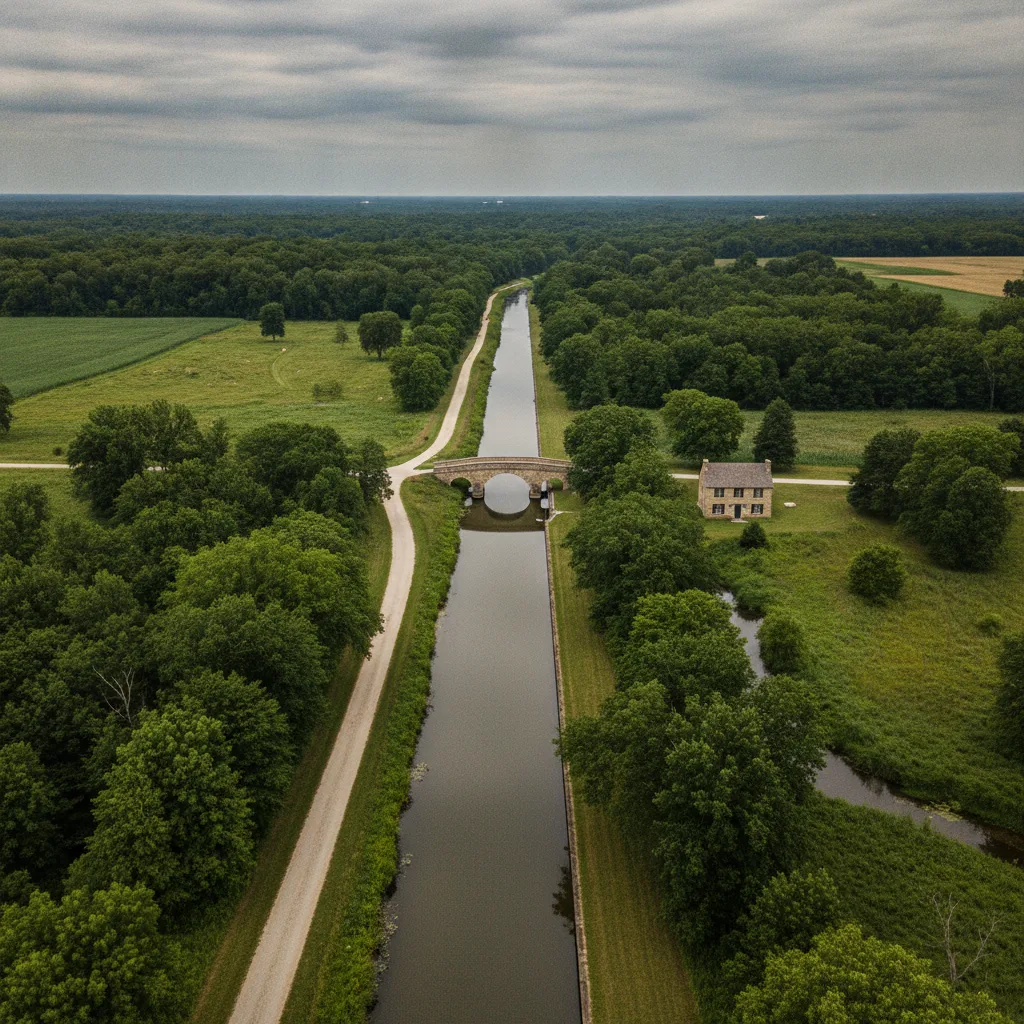
Our Illinois & Michigan Canal National Heritage Corridor guide covers practical planning for Illinois & Michigan Canal National Heritage Corridor Illinois — best time to visit, getting there, and what to do on the ground.
As the Roam States editorial team, we’ve explored countless corners of the US, but few destinations offer the unique blend of history, nature, and small-town charm quite like the Illinois & Michigan Canal National Heritage Corridor Illinois. This isn't just a stretch of waterway; it's a living museum, a recreational haven, and a testament to the ingenuity that shaped the American heartland. From its origins connecting the Great Lakes to the Illinois and Mississippi Rivers, paving the way for Chicago's rise, to its present-day role as a vibrant trail system, the I&M Canal offers an enriching experience for every traveler. We’re here to cut through the generic travel fluff and provide you with the confident, specific insights you need to plan an unforgettable trip.
Why Visit Illinois & Michigan Canal National Heritage Corridor
The Illinois & Michigan Canal National Heritage Corridor offers a compelling journey through a pivotal chapter of American history and an abundance of natural beauty. We believe it's a must-visit for anyone looking to understand the forces that shaped Illinois and the broader Midwest. This 96-mile hand-dug canal, opened in 1848, was an economic engine that transformed the region, connecting the burgeoning city of Chicago to the Illinois River and, ultimately, the Mississippi River and New Orleans. Its significance is hard to overstate; it directly contributed to Illinois becoming the most populous inland American state.
Beyond its historical weight, the Corridor today is a splendid living history museum of American enterprise, technological invention, ethnic diversity, and cultural creativity. You'll find a seamless blend of restored historical sites, charming canal towns, and expansive natural areas perfect for outdoor recreation. It’s a place where you can walk or bike along the same towpaths mules once trod, explore locktender houses, and discover museums that bring the canal era to life. The experience here is far from passive; it's an immersive dive into a landscape that tells a story of innovation, hard work, and the westward expansion of a young nation.
Who It's Best For
The Illinois & Michigan Canal National Heritage Corridor truly offers something for everyone, making it an ideal destination for a diverse range of travelers. Our team finds it particularly well-suited for:
- History Buffs: If you're fascinated by 19th-century American development, industrial history, or the story of how Chicago became a major city, this corridor is your playground. The numerous historical markers, museums, and preserved structures along the route offer deep dives into the canal's impact.
- Outdoor Enthusiasts: With miles of multi-use trails, the Corridor is perfect for hikers, bikers, and even kayakers. The I&M Canal State Trail provides a relatively flat and scenic route, ideal for long-distance cycling or leisurely strolls through diverse landscapes.
- Families with Curious Kids: The interactive exhibits at visitor centers, the opportunity to see historical locks, and the sheer scope of the canal can spark a child's imagination. Several towns along the canal offer family-friendly events and attractions, making it an educational and engaging trip for all ages.
- Nature Lovers: Beyond the historical aspects, the Corridor is home to diverse ecosystems. You’ll encounter various wildlife, from birds to aquatic species, especially in the less developed sections of the canal and nearby state parks like Starved Rock.
- Road Trippers Seeking Authentic Experiences: If you're looking to explore beyond the major cities and discover the heart of Illinois, the canal towns offer unique local culture, charming shops, and regional cuisine. It's a fantastic way to experience a different side of the state, away from the usual tourist traps.
Whether you're planning a solo adventure, a romantic getaway, or a family vacation, the Illinois & Michigan Canal National Heritage Corridor provides a rich and rewarding experience that caters to a wide array of interests.
Getting There & Parking
Navigating to and around the Illinois & Michigan Canal National Heritage Corridor is straightforward, primarily by car, with several entry points along its 96-mile stretch. For those wondering how to get to Illinois & Michigan Canal National Heritage Corridor, the Corridor generally runs southwest from the Chicago metropolitan area to LaSalle and Peru. The closest major airport is Chicago O'Hare International Airport (ORD), approximately a 1.5-hour drive to the Ottawa area.
Driving Directions
- **From Chicago:** The most common starting point is near Lockport, which is easily accessible via I-55 South or I-355 South, then connecting to local routes like IL-7 or IL-171.
- **From the South/West:** If approaching from downstate Illinois or states to the west, I-80 is your primary artery, with numerous exits leading to canal towns such as Joliet, Morris, Ottawa, and LaSalle.
Parking
Parking along the Illinois & Michigan Canal National Heritage Corridor is generally ample and often free, especially at state parks, visitor centers, and trailheads. We recommend checking specific locations for any potential fees or restrictions, though these are rare for general access points. For example, Starved Rock State Park, a popular nearby attraction, has extensive parking facilities.
- **Visitor Centers:** Major visitor centers, such as the Gaylord Building in Lockport and the I&M Canal Visitor Center in LaSalle, offer dedicated parking lots. The Gaylord Building in Lockport has free admission and parking.
- **Trailheads:** Numerous designated trailheads along the I&M Canal State Trail provide parking. These are typically well-marked and offer direct access to the canal path.
- **Canal Towns:** In smaller towns like Lockport, Morris, Seneca, Ottawa, and LaSalle, street parking is often available, as are municipal lots, especially near historical sites, restaurants, and shops.
While most areas are free, always keep an eye out for signage, especially in busier town centers, for any metered parking or time limits. When planning how to get to Illinois & Michigan Canal National Heritage Corridor, remember that the linear nature of the corridor means you might want to use two cars for point-to-point hikes or bike rides, or plan to return via the same route.
Top Things to Do
The Illinois & Michigan Canal National Heritage Corridor offers a wealth of activities that cater to every interest, from historical exploration to outdoor adventure. Our team has curated the top things to do at Illinois & Michigan Canal National Heritage Corridor to help you make the most of your visit.
Explore the I&M Canal State Trail
The backbone of the Corridor is the I&M Canal State Trail, a multi-use path that follows the historic towpath for much of its 61.5-mile length. It's perfect for hiking, running, or biking. We recommend bringing your own bike or checking for local rental options in towns like Ottawa or LaSalle. The trail is relatively flat, making it accessible for all skill levels. As you traverse the path, you'll encounter remnants of the canal's past, including original locktender houses and sections of the canal itself. Remember to stay on marked trails for safety and preservation.
Visit Historic Canal Towns
The charm of the Corridor lies in its vibrant canal towns, each with its own unique character and historical significance. Here are some of the top things to do in various cities along the canal:
- Lockport: Often considered the northern gateway, Lockport is home to the beautifully restored Gaylord Building, a National Trust Historic Site that served as a supply depot during the canal's construction. It now houses exhibits, a restaurant, and the Illinois State Museum Lockport Gallery. The building is open Monday-Saturday from 10 AM to 5 PM and Sunday from 11 AM to 5 PM, with special group tours by appointment. Admission to the Gaylord Building is free. Don't miss the "Cruisin' Into Lockport" car shows on Mondays during the summer, featuring themed nights for classic cars.
- Joliet: A larger city along the canal, Joliet offers a mix of urban attractions and historical sites. Explore the Joliet Iron Works Historic Site, which tells the story of the region's industrial past. The city also hosts various events, including the "Concerts on the Hill" series and the "City Square Celebration" with live entertainment.
- Ottawa: Situated at the confluence of the Illinois and Fox Rivers, Ottawa boasts a rich history, including being the site of the first Lincoln-Douglas Debate. Visit Washington Square Park, where the debate took place. The Illinois Waterway Visitor Center provides excellent views of the Starved Rock Lock & Dam and educational displays. For outdoor enthusiasts, guided kayak tours on the Illinois River are available from May through October.
- LaSalle: This historic town is home to the I&M Canal Visitor Center and Lock 16 Cafe & Gift Shop, offering insights into the canal's history. While mule-pulled boat tours on the replica 1840s canal boat, "The Volunteer," were a popular attraction, they are currently not operating in July 2026 due to regulatory requirements. However, visitors can still step aboard the docked boat to explore its interior and a new 18-panel exhibit on the history of the I&M Canal. The LaSalle County Historical Society & Museum in nearby Utica also offers a glimpse into local history and hosts events like the Canal Market.
Visit Nearby State Parks
The Corridor is a gateway to some of Illinois' most stunning natural areas, including:
- Starved Rock State Park: Voted the #1 attraction in Illinois, Starved Rock is renowned for its sandstone canyons, seasonal waterfalls, and over 13 miles of hiking trails. The park is open daily from 7 AM to sunset, and the Visitor Center is open from 9 AM to 4 PM. Note that some trails, including French Canyon, are undergoing construction in 2026 and may be closed.
- Matthiessen State Park: Located just a few miles from Starved Rock, Matthiessen offers a similar landscape of canyons, streams, and forests, but often with fewer crowds.
- Buffalo Rock State Park: Known for its bluff overlooking the Illinois River and a resident herd of bison, Buffalo Rock offers unique views and a chance to connect with nature.
Attend Local Events
Throughout the year, the canal towns host a variety of festivals and events. Lockport’s "Old Canal Days" in June (June 11-14, 2026) features a parade, artisan market, carnival rides, live music, and trolley tours. Joliet has events like the Juneteenth Rooftop Celebration at the Joliet Area Historical Museum (June 19, 2026). LaSalle also has a vibrant calendar, including the Hegeler Carus Mansion’s Third Thursday Concerts from May through September.
Best Time to Visit
The Illinois & Michigan Canal National Heritage Corridor offers distinct experiences throughout the year, but we generally recommend visiting in the **spring or fall** for the most comfortable weather and picturesque scenery.
- Spring (April-May): This is an excellent time to visit as the weather is mild, wildflowers are in bloom, and the seasonal waterfalls in nearby Starved Rock State Park are often at their fullest after spring rains. The trails are vibrant, and outdoor activities like hiking and biking are very pleasant.
- Summer (June-August): Summer brings warmer temperatures, ideal for boating, kayaking, and enjoying the many festivals and outdoor events in the canal towns. However, it can also be humid, and trails might be more crowded, especially on weekends. Starved Rock Guided Kayak Tours are available during this season.
- Fall (September-October): The Corridor truly shines in the fall when the foliage transforms into a spectacular array of colors. The crisp air is perfect for hiking and biking, and the crowds begin to thin. Mid-to-late October is typically when fall colors are most vivid in the Starved Rock area.
- Winter (November-March): While colder, winter offers a unique, serene beauty, especially after a snowfall. It's also prime time for bald eagle watching along the Illinois River. Some visitor centers and attractions may have reduced hours, and trails can be icy, so proper gear is essential. Starved Rock State Park's Visitor Center is closed on Federal and State holidays from November through February.
Ultimately, the best time to visit depends on your preferred activities, but for a balance of pleasant weather and stunning natural beauty, spring and fall are our top picks for the Illinois & Michigan Canal National Heritage Corridor.
Where to Stay Nearby
Finding the right Illinois & Michigan Canal National Heritage Corridor lodging is key to a comfortable and convenient trip. The Corridor is dotted with charming towns that offer a range of accommodations, from historic inns to modern hotels. We always recommend booking in advance, especially during peak seasons or when major local events are scheduled.
Hotels and Motels
For those seeking familiar comforts and amenities, several chain hotels are available in the larger towns along the Corridor:
- Joliet: As one of the larger cities, Joliet offers a good selection of hotels, including the Holiday Inn & Suites Joliet Southwest.
- Ottawa: You'll find options like the Hampton Inn Ottawa (Starved Rock Area), which is newly renovated and conveniently located off Interstate 80. Kayak Starved Rock Campground in Ottawa also offers cabin stays.
- LaSalle/Peru: This area provides easy access to the southern end of the Corridor and nearby state parks. Options include the Holiday Inn Express & Suites Peru and Fairfield Inn & Suites Peru.
- Minooka: For a location slightly off the main tourist path but still convenient, consider options like TownePlace Suites by Marriott Minooka or Hampton Inn & Suites Minooka.
Unique Stays and Local Charm
For a more distinctive Illinois & Michigan Canal National Heritage Corridor lodging experience, consider:
- Starved Rock Lodge (Utica): Located within Starved Rock State Park, this historic lodge provides a rustic yet comfortable setting with direct access to hiking trails and natural beauty. It's an excellent base for exploring the park and the surrounding canal area.
- Bed & Breakfasts: Many canal towns feature quaint B&Bs that offer personalized service and a taste of local hospitality. Check local tourism websites for specific listings in towns like Lockport, Morris, or Ottawa.
- Vacation Rentals: Platforms like Airbnb and Vrbo offer a variety of homes, cabins, and apartments for rent, which can be ideal for families or groups seeking more space and a home-away-from-home feel. For example, a 4-bedroom, 3-bathroom rental is available within 10 minutes of Starved Rock in LaSalle.
Camping
For those who prefer to sleep under the stars, camping is available at Starved Rock State Park. The campground offers Class A sites with 30-AMP service, and some with both 30 and 50-AMP service. Reservations can be made 4 days to 6 months in advance online. Quiet hours are from 10 PM to 7 AM, and the campground gate closes at 10 PM. Alcohol is prohibited.
Sample 2-Day Itinerary
To help you experience the best of the Illinois & Michigan Canal National Heritage Corridor, our team has crafted a sample 2-day itinerary, balancing history, outdoor activity, and local charm.
Day 1: Northern Gateway & Canal History
- Morning (9:00 AM - 12:00 PM): Explore Lockport's Heritage
- Start your day in Lockport, the northern gateway to the Corridor. Visit the Gaylord Building, a National Trust Historic Site, to delve into the canal's construction and impact through its exhibits. Admission is free.
- Stroll along the I&M Canal State Trail in Lockport, taking in the historical architecture and canal remnants.
- Lunch (12:00 PM - 1:30 PM): Local Fare in Lockport
- Enjoy lunch at the Public Landing Restaurant, located within the Gaylord Building, or choose from one of Lockport's local eateries.
- Afternoon (1:30 PM - 5:00 PM): Joliet's Industrial Past & Canal Views
- Drive south to Joliet (approx. 20-30 minutes). Explore the Joliet Iron Works Historic Site, offering a glimpse into the region's industrial heritage.
- Consider a visit to the Old Joliet Prison for a guided tour, if available and of interest.
- Evening (5:00 PM onwards): Dinner & Relaxation in Joliet
- Dine in Joliet, which has a variety of restaurants.
- Check for any evening events or concerts, especially at the new City Square.
- Overnight: Stay in Joliet or consider heading further south to Morris for a quieter evening.
Day 2: Natural Wonders & Southern Canal Towns
- Morning (8:30 AM - 1:00 PM): Starved Rock State Park Adventure
- Drive to Starved Rock State Park (approx. 45-60 minutes from Joliet/Morris). Arrive early to secure parking.
- Hike some of the park's renowned trails to discover its canyons and seasonal waterfalls. Popular trails include those leading to St. Louis Canyon or French Canyon (check for 2026 closures due to construction).
- Visit the Starved Rock Visitor Center for maps and information.
- Lunch (1:00 PM - 2:30 PM): Picnic or Lodge Dining
- Enjoy a picnic lunch amidst nature or dine at the Starved Rock Lodge.
- Afternoon (2:30 PM - 5:30 PM): Ottawa & LaSalle Exploration
- Head to Ottawa (approx. 15-20 minutes from Starved Rock). Visit Washington Square Park and the Illinois Waterway Visitor Center for views of the lock and dam.
- Continue to LaSalle (approx. 15-20 minutes from Ottawa). Explore the I&M Canal Visitor Center and step aboard the replica 1840s canal boat, "The Volunteer," to see its exhibits (note: boat tours are not operating in July 2026).
- Evening (5:30 PM onwards): Dinner & Departure
- Enjoy a farewell dinner in LaSalle or Ottawa, sampling local cuisine.
- Begin your journey home, or extend your stay to explore more of the region, perhaps visiting Matthiessen State Park or Buffalo Rock State Park.
This itinerary is a suggestion, and we encourage you to tailor it to your interests. Remember to wear comfortable shoes, bring water, and check the operating hours and any reservation requirements for specific attractions, especially for Starved Rock State Park, before your visit.
Last updated: 2026-07-06 by the Roam States team.