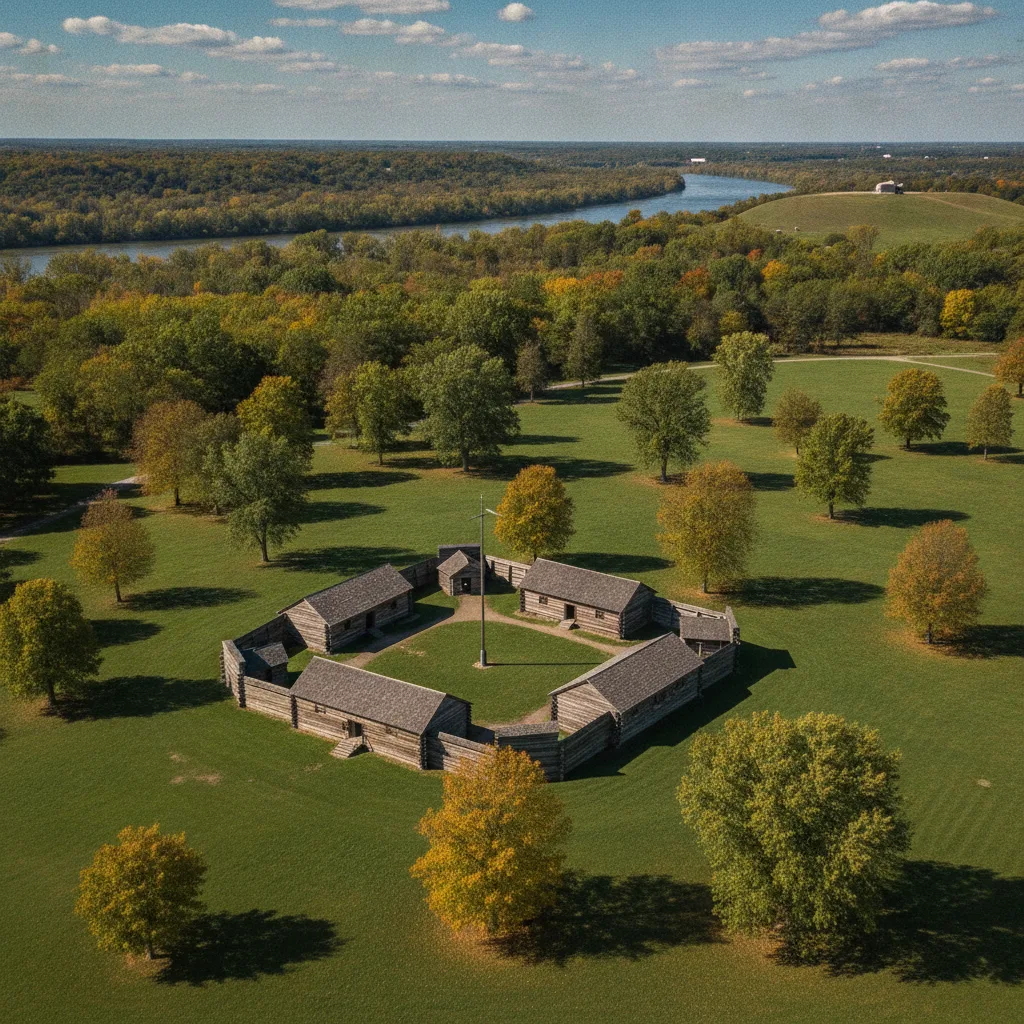
Our Lewis and Clark State Historic Site guide covers practical planning for Lewis and Clark State Historic Site Illinois — best time to visit, getting there, and what to do on the ground.
For any true American history enthusiast, or simply those curious about the monumental journey that shaped a nation, the Lewis and Clark State Historic Site Illinois is an essential pilgrimage. Our team at Roam States has thoroughly explored this pivotal location, where Meriwether Lewis and William Clark, along with their Corps of Discovery, spent the critical winter of 1803-1804 preparing for their epic westward expedition. This site, commemorating Camp Dubois, offers an unparalleled opportunity to step back in time and understand the immense undertaking that lay ahead for these intrepid explorers.
Why Visit Lewis and Clark State Historic Site
We consider the Lewis and Clark State Historic Site a foundational piece of American history, a place where the grand vision of westward expansion truly began to take shape. It was here, at Camp Dubois (also known as Camp River Dubois), near the confluence of the Mississippi and Missouri Rivers, that the Corps of Discovery transformed from a collection of individuals into a disciplined military unit ready to face the unknown. From December 12, 1803, to May 14, 1804, Captain William Clark and his men constructed their winter quarters, honed their skills, and meticulously gathered the vast array of supplies needed for their journey to the Pacific Ocean.
Visiting this site allows us to truly grasp the scale and ambition of the Lewis and Clark Expedition. The interpretive center vividly illustrates the preparations, the challenges, and the significance of their mission for today's America. You'll gain a profound appreciation for the detailed planning, the physical demands, and the sheer courage required to embark on such an endeavor. It's not just a collection of artifacts; it's an immersive experience that brings history to life, highlighting Illinois' crucial role in the expedition's ultimate success. The site serves as National Trail Site #1 on the Lewis and Clark National Historic Trail, marking the official "Point of Departure" for the Corps of Discovery.
Who It's Best For
The Lewis and Clark State Historic Site is a fantastic destination for a wide range of travelers, from serious history buffs to families seeking an educational and engaging outing. We find it particularly appealing to:
- **History Enthusiasts:** If you're captivated by early American history, the Louisiana Purchase, or the saga of exploration, this site is a must-see. The detailed exhibits and replica camp offer deep insights into the expedition's origins.
- **Families with School-Aged Children:** The hands-on exhibits, the full-scale keelboat replica, and the reconstructed fort provide an interactive learning experience that can spark a lifelong interest in history and geography. The Lewis and Clark National Historic Trail Junior Ranger program is also available for younger visitors.
- **Educators and Students:** The site is an invaluable resource for understanding the logistical, military, and scientific aspects of the expedition. Teachers in Illinois schools (grades pre-kindergarten through 12) can even apply for grant funds for field trips.
- **Outdoor Adventurers:** Located near the confluence of two mighty rivers and connected to bike trails, it's a great starting point for exploring the natural beauty of the Great Rivers & Routes region.
- **Travelers Exploring Illinois History:** As part of a broader trip through Illinois, this site complements other significant historical destinations like the Abraham Lincoln Presidential Library and Museum or Cahokia Mounds State Historic Site.
We believe the free admission makes it an especially smart stop for anyone looking for a meaningful and budget-friendly experience.
Getting There & Parking
Understanding how to get to Lewis and Clark State Historic Site is straightforward, as it's strategically located and well-signed. The site is situated in Hartford, Illinois, just a short drive from St. Louis, Missouri, making it easily accessible for many travelers.
By Car:
The Lewis and Clark State Historic Site lies on the western side of the intersection between Illinois Route 3 and New Poag Road.
- **From St. Louis, MO (South/West):** Take I-55 North to I-255 North. Continue on I-255 North for about 7 miles, then take the New Poag Road exit. Turn left (west) off the exit and travel approximately 3 miles until the road ends at the site's entrance. Alternatively, take I-270 East. Once you cross the Mississippi River into Illinois, take the first Illinois exit for Route 3 North. Travel about 3 miles, and the site will be at the first stoplight on your left.
- **From Springfield, IL (North):** Take I-55 South to I-270 West. Follow I-270 for about 10 miles, then exit onto Illinois Route 3 North. Travel approximately 3 miles, and you'll find the site at the first stoplight on your left.
- **From Alton, IL (North):** Get on Illinois-143 East and continue for about 4 miles. At the intersection with Route 3, turn right (south) and merge onto Route 3 South. Continue for 4 miles. At the intersection of Route 3 South and New Poag Road (just past the Confluence Tower), turn right into the site.
Should you get turned around or have trouble finding us, you can always call the Interpretive Center directly at (618) 251-5811 for assistance.
Parking at Lewis and Clark State Historic Site:
We are pleased to report that the Lewis and Clark State Historic Site offers ample and convenient parking. Visitors will find free asphalt parking available, including four accessible parking spaces. The accessible parking is located approximately 100 feet from the sidewalk, which has a ramp, and about 150 feet from the front door of the Interpretive Center, ensuring easy access for all guests.
The site is also integrated into the Madison County Transit Trails network, with the MCT Confluence Trail running directly through the site, making it accessible for cyclists as well.
Top Things to Do
When planning your visit, you'll find a wealth of engaging activities that truly bring the history of the Corps of Discovery to life. Our team recommends allocating at least half a day to fully immerse yourselves in the experiences here.
Things to Do at Lewis and Clark State Historic Site:
- **Explore the Interpretive Center:** This 14,000-square-foot facility is the heart of the Lewis and Clark State Historic Site. It features six galleries that meticulously outline the background, history, and enduring legacy of the Lewis and Clark Expedition. We especially appreciate the focus on the preparations for the journey and Illinois' vital role in its success.
- **Marvel at the Keelboat Replica:** One of the most striking exhibits is the full-scale, 55-foot replica of the keelboat used by the Corps of Discovery to ascend the Missouri River. One side is cut away, allowing us to peer inside and visualize how carefully the vessel was loaded with tons of provisions, from trade goods to rations and tools. This provides a tangible sense of the demanding conditions the crew faced.
- **Watch the Orientation Film:** The Convergence Theater offers a compelling 12-minute video presentation that uses high-impact visuals and surround sound to narrate the story of Camp River Dubois and the expedition's preparations. It's an excellent way to set the stage for your visit.
- **Wander Through the Reconstructed Camp Dubois:** Step outside and explore the reconstruction of the winter encampment, Camp River Dubois. Built to reflect 1803 U.S. Army regulations and based on William Clark's field notes, this replica fort features log structures and a layout that vividly portrays the rugged frontier life of the soldiers. While Camp River Dubois has been temporarily closed for repairs, tours of the cabins and the camp area are generally available.
- **Visit the Confluence Viewing Area:** A small memorial stone and interpretive panel overlook the modern meeting point of the Mississippi and Missouri rivers. This confluence viewing area, accessible during regular site hours, offers a powerful perspective on the natural landscape that defined the expedition's starting point.
- **Shop at the Store of Discovery:** Before you leave, browse the gift shop for books, videos, souvenirs, and replicas. Proceeds from your purchases directly benefit the site's educational materials and public programs.
- **Engage with the Junior Ranger Program:** For our younger visitors, the Lewis and Clark National Historic Trail Junior Ranger program is a fantastic way to make their visit even more interactive and memorable. Inquire at the front desk for details.
Things to Do in Hartford and the Surrounding Area:
Beyond the historic site itself, the Hartford area and the wider Great Rivers & Routes region offer additional attractions that complement your historical exploration. When considering things to do in Hartford, we highly recommend:
- **Ascend the Lewis & Clark Confluence Tower:** Just one mile from the Historic Site, this impressive 180-foot tower offers unparalleled panoramic views of the confluence of the Mississippi and Missouri Rivers. With three viewing platforms at 50, 100, and 150 feet, it provides a breathtaking perspective on the landscape that so captivated Lewis and Clark. The tower officially opens for the season on May 14, 2026, and is open Thursday through Sunday from 10 a.m. to 5 p.m. from May through October and in January. There is an admission fee of $10 per person, with children 5 and younger free.
- **Explore the Great Rivers & Routes Scenic Byway:** Hartford is the starting point for the Meeting of the Great Rivers Scenic Byway, a 33-mile stretch of the Great River Road Scenic Byway. This route is rich with natural beauty and historic wonders, perfect for a scenic drive or bike ride.
- **Enjoy Local Parks:** Hartford boasts community parks like the 17-acre 7th Street Park, offering softball/baseball fields, soccer, volleyball, basketball, a play structure, horseshoes, picnicking areas, and a walking/jogging path. Memorial Park provides a peaceful spot for reflection with memorial bricks, trees, and a gazebo.
- **Cycle the Confluence Bike Trail:** The Lewis and Clark State Historic Site is directly off the Confluence Bike Trail, part of the wider Madison County Trail Network. This network extends from St. Louis to Grafton, IL, offering excellent opportunities for cycling enthusiasts.
- **Visit Wood River:** The nearby community of Wood River features a Community Heritage Museum and the historic Vaughn Hill Cemetery, with grave sites from the Revolutionary War, War of 1812, and Civil War. The Wood River Aquatic Center is also a family-friendly option.
- **Discover Nearby Cahokia Mounds:** For a deeper dive into Illinois' ancient history, consider a trip to Cahokia Mounds State Historic Site in Collinsville, a UNESCO World Heritage Site and the largest pre-Columbian settlement north of Mexico.
Best Time to Visit
Choosing the best time to visit Lewis and Clark State Historic Site can significantly enhance your experience. Our team has found that the site offers different advantages depending on the season, but generally, spring and fall are ideal.
- **Spring (April-May):** We highly recommend spring. The weather is typically mild and pleasant, perfect for exploring the outdoor replica fort and the confluence viewing area. You'll avoid the intense heat and humidity of summer. Plus, the site often hosts special events, such as the annual Point of Departure Commemoration in early May, which features military demonstrators, historic artisans, and hands-on history displays, bringing the site to life with reenactments. The Lewis & Clark Confluence Tower also officially opens for the season in May.
- **Summer (June-August):** Summer offers the longest operating hours, with the site generally open seven days a week from Memorial Day to Labor Day, 9 a.m. to 5 p.m.. This is a great time for families on summer break. However, be prepared for potentially hot and humid weather, especially if you plan to spend extended time outdoors. The Confluence Tower is also fully operational during these months.
- **Fall (September-October):** Similar to spring, fall brings comfortable temperatures and beautiful foliage, making it another excellent time for a visit. The site typically operates on its fall/winter hours (Wednesday-Sunday, 9 a.m. to 5 p.m.). The crowds are usually lighter than in summer.
- **Winter (November-March):** While the outdoor elements might be less inviting, a winter visit can offer a quieter, more contemplative experience of the indoor interpretive center. The site maintains its Wednesday-Sunday, 9 a.m. to 5 p.m. hours during this period. The Confluence Tower is also open in January. Just be sure to check for any holiday closures or weather-related adjustments before your trip.
Regardless of the season, we always advise checking the official Lewis and Clark State Historic Site website or calling ahead for the most up-to-date hours of operation and any special event schedules, especially for 2026, as hours can vary.
Where to Stay Nearby
When considering Lewis and Clark State Historic Site lodging, you'll find several convenient options in the immediate vicinity and in nearby cities that cater to different preferences and budgets. While Hartford itself is a smaller community, its proximity to larger towns and the St. Louis metropolitan area means you're never far from comfortable accommodations.
Hartford and East Alton:
For the closest proximity to the Lewis and Clark State Historic Site, we recommend looking into options in Hartford or the adjacent community of East Alton. The **Lewis & Clark Motor Lodge** in East Alton is a practical choice, located just a short drive from the historic site. It offers standard room types and is approximately 4.7 miles from the Alton Amtrak Station and 25 miles from St. Louis Lambert International Airport. Please note that pets are generally not allowed at this particular lodge.
Alton, Illinois:
Just a short drive north of Hartford, Alton offers a wider selection of hotels, bed and breakfasts, and dining options. Alton is a charming historic river town known for its dramatic bluffs along the Mississippi River and its own rich history, including connections to Abraham Lincoln and the Underground Railroad. You'll find familiar chain hotels as well as unique local establishments here. This is often our preferred base for exploring the Great Rivers & Routes region.
Edwardsville, Illinois:
To the east, Edwardsville is a vibrant college town (home to Southern Illinois University Edwardsville) with a good selection of modern hotels, restaurants, and shops. It's a slightly larger community than Alton and offers a different atmosphere, often with newer lodging choices. It's also well-connected to the Madison County Transit Trails, which link to the Lewis and Clark State Historic Site via the Confluence Bikeway.
St. Louis, Missouri:
For those who prefer a metropolitan experience or are combining their visit with other attractions, downtown St. Louis is only about a half-hour drive from the Lewis and Clark State Historic Site. St. Louis offers an extensive range of accommodations, from luxury hotels to budget-friendly options, along with world-class dining, museums, and entertainment. Many visitors choose to stay in St. Louis and make a day trip to the historic site.
When planning your Lewis and Clark State Historic Site lodging, we always advise booking in advance, especially during peak travel seasons or if your visit coincides with special events in the area. Checking reviews and amenities will help you find the best fit for your travel style and budget. For further assistance with accommodations in the broader region, the Great Rivers & Routes Tourism Bureau is an excellent resource.
Sample 2-Day Itinerary
To truly appreciate the Lewis and Clark State Historic Site and its beautiful surroundings, we recommend a two-day itinerary. This allows for a deep dive into the expedition's history and time to explore the picturesque Great Rivers & Routes region.
Day 1: Immersion in History at the Lewis and Clark State Historic Site Illinois
- **Morning (9:00 AM - 1:00 PM): Lewis and Clark State Historic Site Exploration**
- Begin your day promptly at 9:00 AM at the Lewis and Clark State Historic Site. Head directly to the Interpretive Center.
- Watch the 12-minute orientation video in the Convergence Theater to gain an overview of Camp Dubois and the expedition's preparations.
- Spend ample time exploring the six exhibition galleries. We recommend focusing on the detailed exhibits about the Corps of Discovery's training, supplies, and the significance of Illinois to their mission.
- Don't miss the full-scale, cutaway replica of the keelboat. Take your time to visualize the cramped conditions and the vast amount of gear the explorers transported.
- After the indoor exhibits, head outside to tour the reconstructed Camp River Dubois. Walk through the replica log huts and imagine the daily life of the soldiers during their winter encampment.
- Visit the Confluence Viewing Area to see where the mighty Mississippi and Missouri Rivers meet, a truly symbolic spot for the expedition's beginning.
- Before leaving, browse the Store of Discovery for unique souvenirs and educational materials.
- **Lunch (1:00 PM - 2:00 PM): Local Fare in Hartford or East Alton**
- Grab a casual lunch at a local eatery in Hartford or nearby East Alton.
- **Afternoon (2:00 PM - 5:00 PM): Panoramic Views and Local Exploration**
- Drive just one mile to the **Lewis & Clark Confluence Tower**. Ascend to one of the three viewing platforms (50, 100, or 150 feet) for breathtaking panoramic views of the river confluence and the surrounding landscape. Remember, the tower is open May through October and in January, Thursday through Sunday, 10 a.m. - 5 p.m..
- Explore the interactive exhibit within the tower's visitor center, which details the history, wildlife, and communities along the Meeting of the Great Rivers National Scenic Byway.
- Consider a leisurely stroll or bike ride along a section of the Confluence Bike Trail, which runs through the historic site and connects to a larger network.
- **Evening: Dinner and Relaxation in Alton**
- Head to Alton, Illinois, for dinner. This historic river town offers a variety of dining options, from casual to more upscale.
- Check into your Lewis and Clark State Historic Site lodging in Alton or Edwardsville.
Day 2: Scenic Drives, Ancient History, or City Exploration
- **Morning (9:00 AM - 1:00 PM): Choose Your Adventure**
- **Option A: Scenic River Road Drive:** Drive north along the Meeting of the Great Rivers Scenic Byway towards Grafton and Pere Marquette State Park. Enjoy the stunning river views, consider a river cruise, or explore the park's hiking trails.
- **Option B: Ancient History at Cahokia Mounds:** Drive to Cahokia Mounds State Historic Site in Collinsville (approx. 30-40 minute drive). Explore this UNESCO World Heritage Site, marvel at Monks Mound, and learn about the advanced pre-Columbian civilization that once thrived here.
- **Option C: St. Louis City Exploration:** Head south to St. Louis, Missouri (approx. 30-minute drive). Visit the iconic Gateway Arch, explore the City Museum, or delve into the Missouri Botanical Garden.
- **Lunch (1:00 PM - 2:00 PM):**
- Enjoy lunch based on your chosen morning activity – either a charming cafe along the scenic byway, a casual spot near Cahokia Mounds, or one of St. Louis's diverse restaurants.
- **Afternoon (2:00 PM - 5:00 PM): Continue Exploring or Head Home**
- **If you chose Option A:** Continue exploring Grafton's antique shops, wineries, or enjoy more outdoor activities at Pere Marquette.
- **If you chose Option B:** Spend more time at Cahokia Mounds, or visit the nearby World's Largest Catsup Bottle in Collinsville for a quirky photo op.
- **If you chose Option C:** Continue your exploration of St. Louis, perhaps visiting the St. Louis Zoo (free admission) or the St. Louis Art Museum.
- **Evening:**
- Enjoy a final dinner in the region or begin your journey home.
Last updated: 2026-07-06 by the Roam States team.