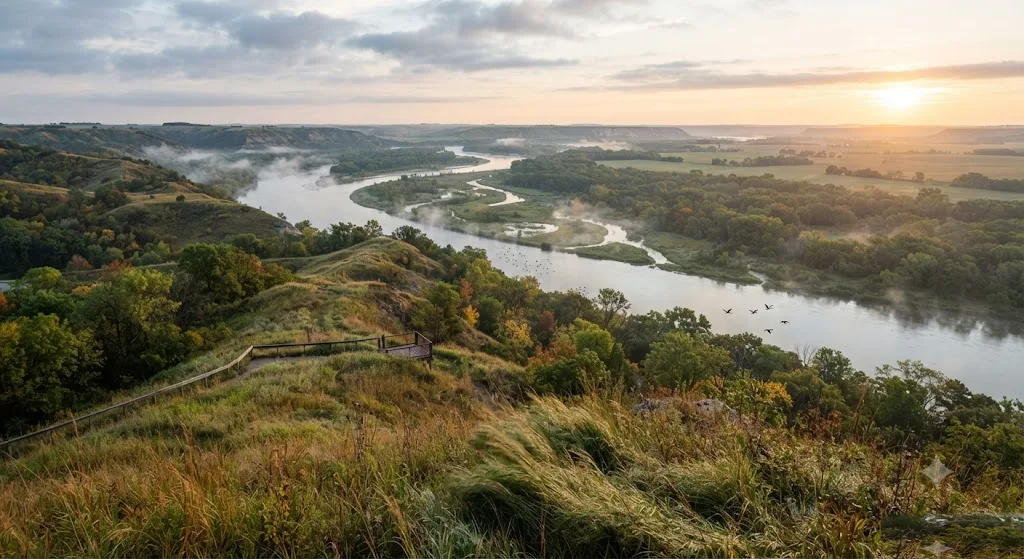
Lewis & Clark National Historic Trail Travel Guide — Iowa
Welcome to our comprehensive Lewis & Clark National Historic Trail travel guide, crafted by the Roam States editorial team. Our Lewis & Clark National Historic Trail guide covers practical planning for Lewis & Clark National Historic Trail Iowa — best time to visit, getting there, and what to do on the ground. We cut through the noise to bring you confident, specific recommendations for exploring this pivotal route through western Iowa, commemorating the epic journey of Meriwether Lewis and William Clark. From interpretive centers to scenic overlooks along the mighty Missouri River, we’ll help you navigate the best of what this historic pathway offers in 2026.
Why Visit Lewis & Clark National Historic Trail
The Lewis & Clark National Historic Trail offers a unique opportunity to step back in time and trace the footsteps of the Corps of Discovery. In Iowa, this trail isn't just about history; it's about connecting with the landscapes that shaped a nation. We believe it's a vital experience for anyone interested in American exploration, natural beauty, and the rich cultural heritage of the Missouri River Valley. The trail in Iowa provides numerous well-maintained interpretive sites that bring the expedition's challenges and discoveries to life, often with stunning views that haven't changed dramatically since 1804. It’s a chance to understand the sheer scale of their journey and the incredible resilience required to map an unknown continent.
Who It's Best For
The Lewis & Clark National Historic Trail is incredibly versatile, making it an excellent destination for a diverse range of travelers. It's ideal for history buffs who want to immerse themselves in the story of the Corps of Discovery, as well as nature enthusiasts eager to explore scenic riverfront areas and observe local wildlife. Families with school-aged children will find the interpretive centers engaging and educational, offering hands-on exhibits that make history accessible and fun. Outdoor adventurers will appreciate the opportunities for hiking, birdwatching, and photography along the Missouri River bluffs. Even casual road trippers passing through western Iowa will find compelling stops that offer a refreshing break and a dose of American heritage. If you appreciate a blend of education, natural beauty, and a tangible connection to the past, this trail is undoubtedly for you.
Getting There & Parking
Understanding how to get to Lewis & Clark National Historic Trail in Iowa is straightforward, as the trail generally follows the Missouri River on the western edge of the state. The primary access points are often through towns like Council Bluffs, Sioux City, and Onawa, which are easily reached via major interstates such as I-29. For those flying in, Eppley Airfield (OMA) in Omaha, Nebraska, offers the closest major airport, just across the river from Council Bluffs. From there, renting a car is essential for exploring the various sites along the trail. We recommend planning your route based on the specific interpretive centers or scenic overlooks you wish to visit, as the trail is not a single continuous path in Iowa but rather a series of connected sites. Each major site typically offers its own dedicated parking facilities. For instance, the Lewis & Clark National Historic Trail Headquarters and Visitor Center in Omaha, NE (a key starting point for understanding the Iowa section), provides ample free parking. Similarly, state parks and local museums along the Iowa portion, such as those in Sioux City or Council Bluffs, generally have free parking lots for visitors. We always advise checking individual site websites for any specific parking instructions or potential fees, though most trail-related parking in Iowa is complimentary. Knowing how to get to Lewis & Clark National Historic Trail is the first step to a memorable journey.
Our team recommends downloading offline maps before you go, as cell service can be spotty in some of the more rural sections of western Iowa.
Top Things to Do
When planning your visit, you'll find a wealth of things to do at Lewis & Clark National Historic Trail in Iowa. The experience is a blend of historical immersion and natural exploration. Here are some of our top recommendations:
- Explore the Lewis & Clark Interpretive Center (Sioux City): This is a must-visit. It offers engaging exhibits detailing the expedition's journey through the region, focusing on interactions with Native American tribes and the scientific discoveries made. Check their website for current operating hours, which are typically Tuesday through Saturday, 9:00 AM to 5:00 PM, and Sunday, 1:00 PM to 5:00 PM. Admission is free.
- Visit the Sergeant Floyd Monument (Sioux City): This towering obelisk commemorates Sergeant Charles Floyd, the only member of the Corps of Discovery to die during the expedition. It offers panoramic views of the Missouri River and the surrounding landscape. The monument grounds are accessible daily from 6:00 AM to 10:00 PM.
- Hike at Stone State Park (Sioux City): Adjacent to the Sergeant Floyd Monument, Stone State Park offers excellent opportunities for Lewis & Clark National Historic Trail hiking trails. With over 15 miles of trails, you can explore rugged bluffs and enjoy views of the Big Sioux and Missouri River valleys. The park is open year-round, from 4:00 AM to 10:30 PM, and requires an Iowa State Parks annual pass ($10 for Iowa residents, $15 for non-residents) or a daily entrance fee of $5 per vehicle.
- Discover the Lewis & Clark Monument Scenic Overlook (Council Bluffs): Perched atop the Loess Hills, this site provides breathtaking vistas of the Missouri River and downtown Omaha. It's a fantastic spot for photography and reflection, offering a sense of the vastness the explorers faced. The overlook is generally open from dawn to dusk.
- Experience the Loess Hills State Forest (near Onawa): While not directly an expedition site, the unique Loess Hills landscape was a significant feature encountered by Lewis and Clark. This area offers numerous Lewis & Clark National Historic Trail hiking trails through rare geological formations. The state forest is open during daylight hours, and specific trailheads may have varying accessibility.
- Visit the Harrison County Historical Village & Iowa Welcome Center (Missouri Valley): This site provides local history context and often has exhibits related to the Lewis and Clark Expedition's passage through Harrison County. It's a great stop for regional insights and travel information. Check their website for current hours, typically Monday through Friday, 9:00 AM to 4:00 PM, and Saturday, 10:00 AM to 2:00 PM.
These things to do at Lewis & Clark National Historic Trail provide a comprehensive experience, blending history, nature, and scenic beauty.
Best Time to Visit
The best time to visit the Lewis & Clark National Historic Trail in Iowa largely depends on your priorities, but we generally recommend the spring and fall months. From April to early June, the weather is pleasantly mild, wildflowers are in bloom, and the lush greenery makes for beautiful scenic drives and comfortable hiking. Fall, from September to late October, offers crisp air, vibrant foliage, and fewer crowds, creating an ideal atmosphere for exploration. Summer (July and August) can be hot and humid, with temperatures often exceeding 90°F (32°C), which might make extensive outdoor activities less enjoyable, though all sites remain open. Winter can be beautiful with snow-covered landscapes, but many outdoor activities become challenging due to cold temperatures and potential road closures, especially in more rural areas. Always check local weather forecasts and specific site hours before your trip, as some smaller, seasonal attractions may have reduced hours outside of peak season.
Where to Stay Nearby
Finding comfortable Lewis & Clark National Historic Trail lodging is straightforward, with options ranging from modern hotels to charming local inns. The larger cities along the trail's path in Iowa, such as Sioux City and Council Bluffs, offer the most extensive selection of accommodations. In Sioux City, you'll find a variety of chain hotels that cater to different budgets, many conveniently located near downtown attractions and the Lewis & Clark Interpretive Center. Options like the Hard Rock Hotel & Casino Sioux City provide a more upscale experience, while others like the Hilton Garden Inn or Courtyard by Marriott offer reliable comfort and amenities.
Council Bluffs, just across the river from Omaha, Nebraska, also boasts numerous hotels, making it an excellent base for exploring the southern Iowa portion of the trail. Here, you can find a wide array of lodging, from budget-friendly motels to full-service hotels with pools and dining options. The city's proximity to Omaha also opens up even more choices for Lewis & Clark National Historic Trail lodging, including boutique hotels and larger convention-style accommodations. For those seeking a more unique experience, consider looking for bed and breakfasts in smaller towns like Onawa or Missouri Valley, though these options may be more limited and require advance booking. We always recommend booking your accommodations in advance, especially if traveling during peak season or on weekends, to ensure the best availability and rates.
Sample 2-Day Itinerary
Here’s how we’d plan a focused 2-day trip along the Lewis & Clark National Historic Trail in Iowa:
Day 1: Sioux City Exploration
- Morning (9:00 AM - 12:00 PM): Begin your day at the Lewis & Clark Interpretive Center in Sioux City. Allow ample time to explore the comprehensive exhibits, watch the introductory film, and gain a foundational understanding of the expedition's significance in the region. Remember, admission is free.
- Lunch (12:00 PM - 1:00 PM): Enjoy lunch at a local eatery in downtown Sioux City.
- Afternoon (1:00 PM - 4:00 PM): Head to the Sergeant Floyd Monument, a short drive from the Interpretive Center. Take in the panoramic views of the Missouri River and reflect on the expedition's challenges. Afterwards, explore some of the Lewis & Clark National Historic Trail hiking trails within adjacent Stone State Park, enjoying the unique Loess Hills topography. Don't forget your Iowa State Parks pass or daily fee.
- Evening: Check into your Lewis & Clark National Historic Trail lodging in Sioux City. Enjoy dinner at one of Sioux City's diverse restaurants.
Day 2: Southern Iowa & Loess Hills
- Morning (9:00 AM - 12:00 PM): Drive south along I-29 towards Onawa and the Loess Hills State Forest. Spend the morning hiking and immersing yourself in the unique geological formations and natural beauty that defined much of the expedition's journey through this region.
- Lunch (12:00 PM - 1:00 PM): Grab a bite in a small town like Onawa or Missouri Valley.
- Afternoon (1:00 PM - 4:00 PM): Continue south to Council Bluffs. Visit the Lewis & Clark Monument Scenic Overlook for stunning views of the Missouri River and the Omaha skyline. Consider a stop at the Harrison County Historical Village & Iowa Welcome Center in Missouri Valley for additional regional context.
- Late Afternoon: If time allows, explore other attractions in Council Bluffs or cross into Omaha for more dining and entertainment options before heading home.
Consider extending your trip to explore other Iowa gems like the Field of Dreams Movie Site or the Grotto of the Redemption, both offering distinctly different but equally rewarding Iowa experiences. For a broader look at the state, check out our guide to Best Places in Iowa.
Last updated: 2026-07-08 by the Roam States team.