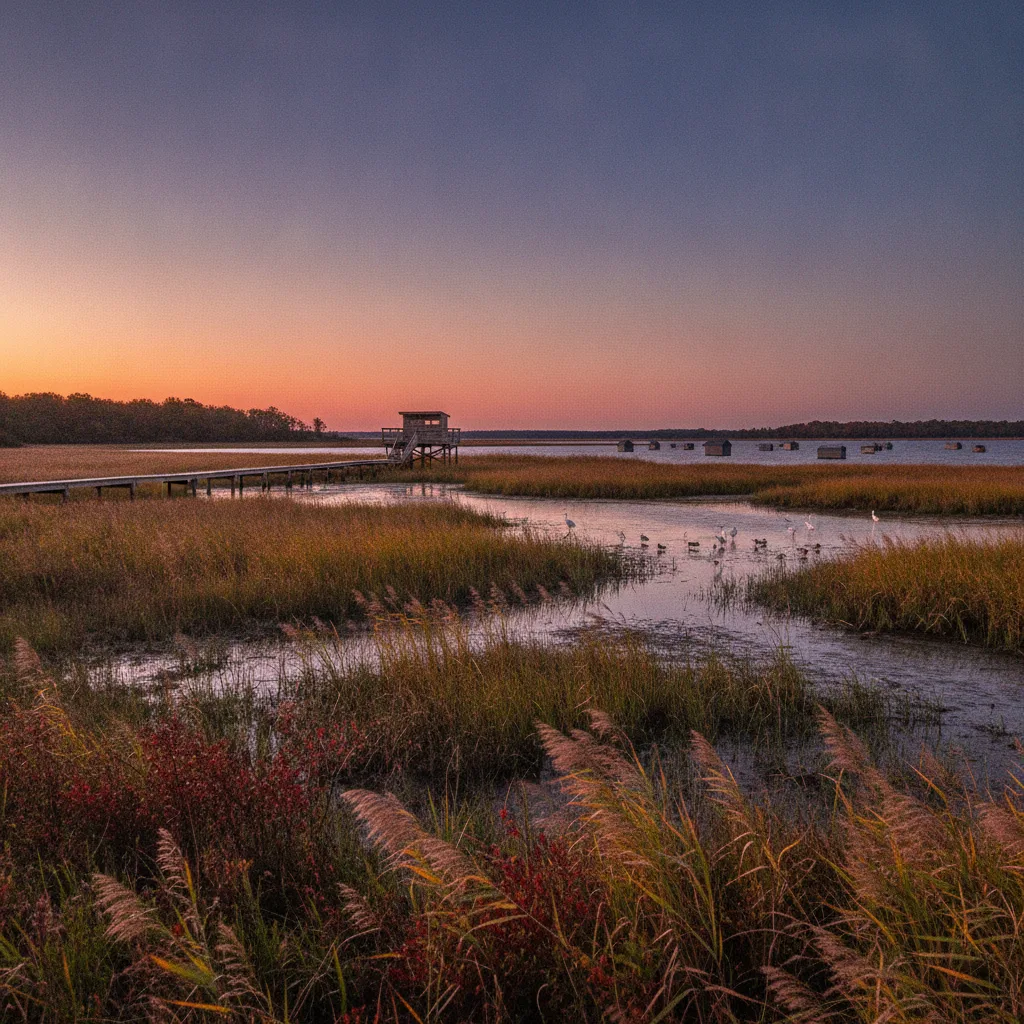
Our Little Creek Wildlife Area guide covers practical planning for Little Creek Wildlife Area Delaware — best time to visit, getting there, and what to do on the ground. We are the Roam States editorial team, and we’re here to give you the independent, specific advice you need to make the most of your trip to this incredible natural haven.
The Little Creek Wildlife Area Delaware is a sprawling expanse of over 4,700 acres, a true jewel for wildlife enthusiasts and outdoor adventurers alike. This protected area, managed by the Delaware Division of Fish and Wildlife, seamlessly blends tidal marshlands with agricultural fields, creating a diverse habitat that draws in a remarkable array of migratory birds and other wildlife, especially waterfowl. Our team finds this destination to be a prime spot for birdwatching, hunting, and fishing, offering an authentic natural setting that's a refreshing escape from the everyday.
Why Visit Little Creek Wildlife Area
We believe the primary draw of Little Creek Wildlife Area is its unparalleled biodiversity. As part of the Atlantic Flyway, it serves as a critical stopover for countless migratory bird species, making it a world-class destination for birdwatchers. The sheer volume and variety of waterfowl, shorebirds, and raptors you can observe here are truly astounding. Beyond birding, the area provides exceptional opportunities for regulated hunting and fishing, allowing visitors to engage with nature in a more active and immersive way.
It's a place where you can witness conservation efforts firsthand, learn about delicate ecosystems, and simply enjoy the tranquility of the Delaware Bay coastline. For those seeking a genuine outdoor experience, far removed from commercialized attractions, Little Creek Wildlife Area offers an authentic slice of Delaware's wild side. It's also a fantastic complement to a broader Delaware itinerary, providing a stark and beautiful contrast to the bustling beaches and historic towns.
Who It's Best For
Little Creek Wildlife Area truly caters to a diverse group of visitors, though certain interests will find it particularly rewarding. Our team highly recommends it for serious **birdwatchers and wildlife photographers** who will appreciate the observation tower and boardwalks, as well as the sheer abundance of species. It's also ideal for **hunters and anglers** who hold the necessary licenses and permits, offering well-managed public land access for deer, waterfowl, and small game. Families with older children who have an interest in nature or outdoor activities will find educational value and engaging experiences here, though younger children might find the focus on quiet observation less stimulating. It's not a destination for those seeking playgrounds or structured entertainment, but rather for those who appreciate the raw beauty of a natural ecosystem. Anyone looking to escape the crowds and immerse themselves in a peaceful, natural environment will find solace here.
Getting There & Parking
Navigating to Little Creek Wildlife Area is straightforward, though a bit off the beaten path, which is part of its charm. The main entrance and headquarters are located at 3010 Bayside Drive, Dover, DE 19901. From the intersection of Routes 8 & 9 north of Little Creek town, you can head south on Route 9 for about 1.6 miles, then turn left (east) at the Little Creek Wildlife Area sign.
When considering how to get to Little Creek Wildlife Area, remember that a vehicle is essential for exploring the expansive grounds. Parking is available at designated areas throughout the wildlife area. However, it’s crucial to adhere to regulations: parking in a manner that obstructs access to roads, trails, or boat ramps is strictly prohibited, and vehicles left unattended for over 24 hours may be towed.
A key piece of information for accessing the area is the **Conservation Access Pass (CAP)**. As of 2026, a CAP is required for any registered motor vehicle used to access designated Delaware State Wildlife Areas, including Little Creek, for any allowable activities such as hunting, birdwatching, hiking, and photography. This pass is available annually (valid July 1 through June 30) or as a three-day pass. If you purchase a Delaware hunting license, one annual CAP is issued free. Otherwise, it must be purchased separately. You can obtain passes online through Digital DNREC or from authorized license agents.
Top Things to Do
When planning your visit, you'll find there are many things to do at Little Creek Wildlife Area, catering to a range of outdoor interests. Our team has highlighted the most popular activities:
Birdwatching & Wildlife Photography
This is arguably the premier activity at Little Creek Wildlife Area. The area's diverse habitats—tidal marshes, impoundments, and upland fields—attract a spectacular variety of migratory birds, especially waterfowl. We recommend heading to the observation tower, accessible via a short boardwalk trail, for expansive views of the salt marsh. Early mornings and late afternoons are typically the best times for spotting active wildlife. Remember to bring binoculars, a telephoto lens, and a field guide to identify the many species you're likely to encounter.
Hunting
Little Creek Wildlife Area is a significant public hunting ground in Delaware. Hunters can pursue deer, waterfowl, and small game during their respective seasons. For the 2026-2027 season, Delaware has expanded Sunday hunting opportunities for all game species on designated public lands. Specific regulations, license requirements, and permits are essential. For instance, a Delaware hunting license (resident $39.50, non-resident $199.50 for ages 16-64, plus agent fees for 2025-2026/2026-2027) is required. Waterfowl hunters aged 16 and over also need a Delaware Waterfowl Stamp ($15) and a Federal Duck Stamp ($25), along with free HIP certification. Some waterfowl blinds and dove fields are allocated via lottery, so check the 2026-2027 Delaware Hunting & Trapping Guide for details and application deadlines.
Fishing
Anglers will find opportunities for both freshwater and saltwater fishing within the wildlife area. A valid Delaware fishing license is required for anyone aged 16 and over (residents aged 16-64 pay $8.50, non-residents $20.00 for an annual license, or $12.50 for a 7-day tourist license in 2026). Additionally, all anglers aged 16 or older must obtain a free Fisherman Information Network (FIN) number annually. Note that fishing in Division-managed ponds is generally prohibited from September 1 through January 31 and during the spring turkey season, with exceptions outlined in area-specific rules. Crabbing and clamming are also covered by the general fishing license.
Little Creek Wildlife Area Hiking Trails
While extensive, named Little Creek Wildlife Area hiking trails are not explicitly detailed, the area offers ample opportunities for walking and exploring. There's a short boardwalk trail leading to the observation tower, which is perfect for a leisurely stroll and offers excellent views. The unpaved service roads and dikes throughout the area can also be used for walking, providing access to different habitats for birdwatching and enjoying the scenery. Remember that horses and bicycles (including electric bicycles) are only permitted on roads or trails designated by the Division on current area maps. When exploring Little Creek Wildlife Area hiking trails, always be aware of hunting seasons and wear blaze orange during those times for safety.
Best Time to Visit
The optimal time to visit Little Creek Wildlife Area largely depends on your primary interest:
- Birdwatching: Fall and spring migrations (roughly September-November and March-May) are spectacular, with peak numbers of migratory waterfowl and shorebirds. Winter also offers excellent opportunities to see overwintering waterfowl.
- Hunting: This is highly seasonal, dictated by the specific game species. Deer seasons run from September through February, with various archery, crossbow, muzzleloader, and firearm seasons. Waterfowl seasons typically run from fall through winter. Small game seasons also vary. Always consult the official 2026-2027 Delaware Hunting & Trapping Guide for precise dates.
- Fishing: Spring and fall generally offer the best fishing conditions, though opportunities exist year-round, subject to specific area closures (e.g., ponds closed Sept 1 - Jan 31).
- General Exploration/Photography: Spring and fall offer pleasant temperatures and vibrant scenery, making them ideal for leisurely walks and photography. Summer can be hot and buggy, while winter, though chilly, provides unique stark beauty and excellent birding.
The wildlife area is generally open from ½ hour before sunrise to ½ hour after sunset, unless you are lawfully hunting, fishing, or boating.
Where to Stay Nearby
While camping is prohibited within Little Creek Wildlife Area itself, there are plenty of lodging options in the nearby city of Dover, just a short drive away. When considering Little Creek Wildlife Area lodging, you’ll find a range of hotels to suit different budgets and preferences. Our team suggests looking into these options:
- Bally's Dover Casino Resort: A larger option with amenities like multiple restaurants and a casino, offering a more resort-like experience.
- Microtel Inn & Suites by Wyndham Dover: A budget-friendly choice known for its clean rooms and helpful staff.
- Comfort Inn & Suites Dover near Speedway: Another well-regarded option offering good value and amenities.
- Home2 Suites by Hilton Dover, DE: Offers suites with kitchenettes, suitable for longer stays.
- MainStay Suites Dover: A good choice for extended stays, often pet-friendly.
- Days Inn by Wyndham Dover Downtown: A convenient and economical choice.
Many of these Little Creek Wildlife Area lodging options are also pet-friendly, which is a great bonus if you're traveling with your furry companions. For a broader selection of places to stay and things to do in the state, consult our guide to the Best places in Delaware.
Sample 2-Day Itinerary
Day 1: Birdwatching & Exploration
- Morning (Sunrise to Noon): Arrive at Little Creek Wildlife Area shortly after sunrise. Head directly to the observation tower via the boardwalk trail. Spend several hours birdwatching and photographing the diverse waterfowl and marsh birds. This is the prime time for activity.
- Lunch: Pack a picnic to enjoy at one of the designated picnic areas, or head into the town of Little Creek or Dover for a casual meal.
- Afternoon (1 PM - 5 PM): Explore some of the unpaved roads and dikes within the wildlife area for additional birding opportunities and to experience different habitats. Keep an eye out for raptors and other terrestrial wildlife. Remember your Conservation Access Pass for vehicle entry.
- Evening: Check into your chosen lodging in Dover. Enjoy dinner at a local restaurant.
Day 2: Hunting/Fishing or Dover Exploration
- Option A: Hunting/Fishing (Seasonal)
- Morning (Pre-dawn to early afternoon): If you have the necessary licenses and permits, engage in a hunting or fishing excursion. For waterfowl hunting, you might be participating in a lottery for blinds. For fishing, target tidal creeks or impoundments.
- Lunch: Enjoy a packed lunch in the field or return to Dover.
- Afternoon: Continue your hunting or fishing activity, or if finished, explore another section of the wildlife area for a different perspective.
- Option B: Dover Exploration
- Morning: Immerse yourself in the history of Delaware's capital. Visit the Dover Green & Heritage Park, explore the Old State House, and the Biggs Museum of American Art.
- Lunch: Dine at one of Dover's local eateries.
- Afternoon: Visit the Air Mobility Command Museum at Dover Air Force Base, which offers free admission and a fascinating collection of aircraft. On the third Saturday of April to October, you might even catch an "open cockpit day."
- Evening: Enjoy a final dinner in Dover before departing.
Frequently Asked Questions
Little Creek Wildlife Area camping
Camping is strictly prohibited within the Little Creek Wildlife Area and all other Delaware State Wildlife Areas. Visitors looking to stay overnight will need to find accommodations in nearby towns like Dover or explore other designated camping facilities in Delaware State Parks (though not within the wildlife area itself).
things to do in Dover
Dover, the capital of Delaware, offers a rich array of historical and cultural attractions. Our team suggests visiting the Old State House and the Biggs Museum of American Art, both located around the historic Dover Green. Aviation enthusiasts will love the free Air Mobility Command Museum at Dover Air Force Base. For entertainment, consider Dover International Speedway or Bally's Dover Casino Resort. The Dover Days Festival, typically held in May, also offers historical reenactments and local food. You can find more details in our Dover Green & Heritage Park guide.
Little Creek Wildlife Area with kids
Visiting Little Creek Wildlife Area with kids can be a rewarding experience for nature-loving families. The observation tower and boardwalk offer an accessible way for children to see birds and other wildlife. It's an excellent opportunity for kids to learn about ecosystems and conservation. However, the focus is on quiet observation, so it's best suited for children who can appreciate this type of activity. Activities like hiking on designated trails and fishing (with proper licenses) can also be engaging for older children. Ensure they are aware of hunting seasons and wear bright colors for safety if visiting during those times.
best hotels near Little Creek Wildlife Area
The best hotels near Little Creek Wildlife Area are primarily located in Dover, offering convenient access. Popular choices include Bally's Dover Casino Resort, Microtel Inn & Suites by Wyndham Dover, and Comfort Inn & Suites Dover near Speedway, all of which receive good reviews from travelers. Many of these options provide comfortable stays and amenities like free Wi-Fi and breakfast.
Little Creek Wildlife Area tips
Our top tips for visiting Little Creek Wildlife Area include: always bring your Conservation Access Pass for vehicle entry; check the official DNREC website for current hunting and fishing regulations, season dates, and lottery information before your visit; wear appropriate clothing, including layers and waterproof footwear, as conditions can change rapidly in marshy areas; bring binoculars and a camera for wildlife viewing; and always practice Leave No Trace principles, as it is a carry-in/carry-out area. During hunting seasons, it's advisable to wear blaze orange, even if not hunting yourself.
where to stay near Little Creek Wildlife Area
For visitors wondering where to stay near Little Creek Wildlife Area, the city of Dover provides the most comprehensive selection of accommodations. Options range from well-known hotel chains like Microtel Inn & Suites by Wyndham Dover and Comfort Inn & Suites Dover near Speedway, to larger resorts like Bally's Dover Casino Resort. These hotels offer a convenient base for exploring the wildlife area and other nearby attractions. For those seeking coastal experiences, the popular beach towns of Rehoboth Beach & Boardwalk and Cape Henlopen State Park are further south, offering additional lodging choices, though they are a longer drive from Little Creek.
The Little Creek Wildlife Area Delaware is a truly special place for anyone who appreciates the raw beauty of nature and the thrill of wildlife observation. Whether you're an avid birder, a dedicated hunter, or simply seeking a peaceful escape, this expansive area offers rewarding experiences. We encourage you to plan your visit with respect for its delicate ecosystem and the diverse activities it supports, ensuring a memorable and impactful journey.
Last updated: 2026-07-05 by the Roam States team.