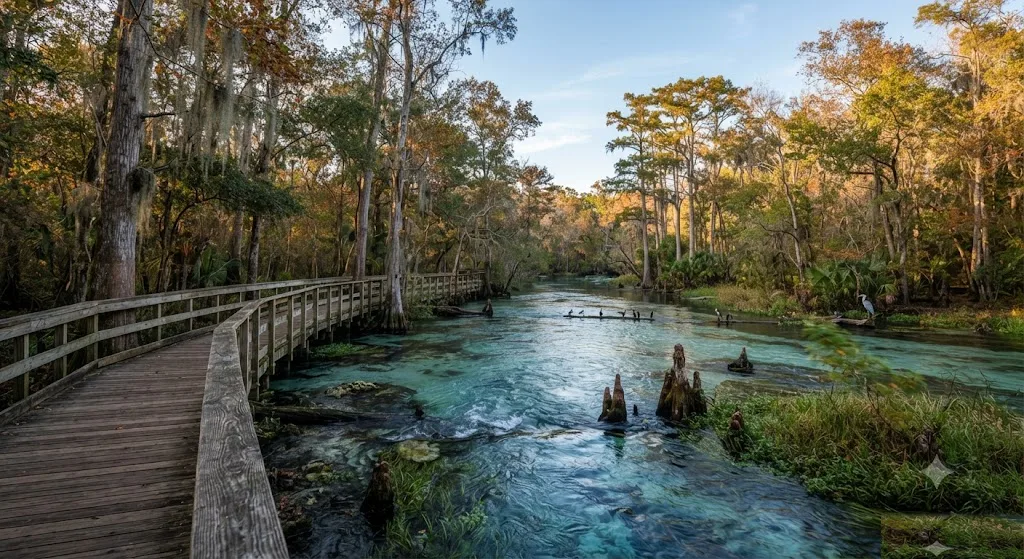
Our Manatee Springs State Park guide covers practical planning for Manatee Springs State Park Florida — best time to visit, getting there, and what to do on the ground.
Welcome to our comprehensive guide for Manatee Springs State Park Florida, a true gem nestled in the heart of Florida's Nature Coast. This first-magnitude spring is renowned for its crystal-clear waters, which attract West Indian manatees seeking warmth during the cooler months. We've compiled essential information to help you plan an unforgettable trip, whether you're looking to swim, snorkel, dive, or explore the extensive boardwalks and nature trails that wind through its ancient forests. Manatee Springs State Park is a destination that truly embodies the wild beauty of Old Florida.
Why Visit Manatee Springs State Park
Manatee Springs State Park offers a unique blend of natural beauty and recreational opportunities that set it apart. At its heart is one of Florida's largest first-magnitude springs, discharging an average of 100 million gallons of 72°F water daily. This constant temperature makes it a vital refuge for West Indian manatees from November through April, when the Suwannee River and Gulf waters become too cold.
Beyond the captivating manatee sightings, the park boasts a diverse ecosystem with 19 distinct natural communities, providing habitat for numerous imperiled plant and animal species, including the eastern indigo snake and gopher tortoise. Our team particularly appreciates the extensive network of trails, including a quarter-mile boardwalk that meanders through a cypress swamp to the Suwannee River, offering excellent wildlife viewing opportunities. The park's significance also extends to its 6.3 miles of mapped aquatic caves, making it a world-class destination for certified cave divers.
Who It's Best For
Manatee Springs State Park is a versatile destination appealing to a wide range of visitors. Families will find plenty to love, from the designated swimming area (open seasonally) to the playground and picnic facilities. Nature enthusiasts and wildlife photographers will be thrilled by the chance to observe manatees, diverse bird species, and other animals along the boardwalks and trails.
For those seeking aquatic adventures, the clear spring waters are ideal for swimming, snorkeling, and open-water diving. Certified cave divers are drawn to the park's extensive underwater cave system, which offers over 20,000 feet of explored passages. Paddlers can launch canoes and kayaks into the spring run to explore the Suwannee River, though seasonal closures apply to the spring run launch for manatee protection. Hikers and cyclists will appreciate the extensive trail system that winds through various natural communities.
Getting There & Parking
Manatee Springs State Park is conveniently located in Levy County, just six miles west of Chiefland, Florida. To get there, take State Road 320 (NW 115th Street) west from US 19/Alt US 27 in Chiefland directly into the park.
The park is open daily from 8 AM until sunset, 365 days a year. As for fees, the standard day-use entrance fee is $6 per vehicle for 2-8 people. Single-occupant vehicles are charged $4, and pedestrians and bicyclists pay $2. These fees grant access to the swimming area (when open), trails, and facilities. We recommend arriving early, especially on weekends and during peak seasons, as parking can fill up quickly. The park has 167 parking spaces available. Once inside, multiple parking areas are available near the campgrounds and trailheads. Please note that while the roads leading to the park are generally well-paved, some internal park roads may have potholes and bumpy gravel sections, so drive with caution.
Top Things to Do
There are numerous things to do at Manatee Springs State Park, catering to a wide array of interests. Our team finds that the crystal-clear waters are the main draw, offering exceptional opportunities for swimming, snorkeling, and open-water diving. The spring maintains a constant 72°F temperature year-round, providing a refreshing escape during Florida's warm summers. During the winter months (November through March), the spring basin is closed to swimmers to protect the manatees, but viewing platforms along the boardwalk offer excellent opportunities to see these gentle giants.
For certified divers, Manatee Springs State Park is a world-renowned destination for cave diving, with over 20,000 feet of mapped underwater passages. Divers must register at the ranger station, show proof of certification, and be out of the water by 5:00 p.m. The Catfish Hotel sinkhole is a popular entry point for both open-water and cave divers.
Paddling is another popular activity, with canoe and kayak rentals available seasonally at the park concession. You can launch into the spring run, which leads to the Suwannee River, offering scenic trips. During manatee season (December 1 to March 30), the spring run launch is closed, but paddlers can use a floating dock on the river or boat ramps just outside the park. Fishing is permitted in the Suwannee River, though a Florida freshwater fishing license may be required.
On land, visitors can enjoy picnicking with available grills and pavilions, and children can play at the park's playground. Seasonal interpretive programs and ranger-led activities, such as guided tours and paddling programs, are offered throughout the year. For more information on things to do at Manatee Springs State Park, we recommend checking the park's official website or calling ahead.
Manatee Springs State Park Hiking Trails
The Manatee Springs State Park hiking trails offer an immersive experience into Florida's diverse natural landscapes. The park features an extensive trail system totaling 8.5 miles, suitable for both hiking and biking. Our team particularly enjoys the variety, from lush cypress swamps to sandhills and hardwood hammocks.
The most popular trail is arguably the quarter-mile Suwannee River Boardwalk, which winds through a dense cypress forest and leads to an observation point along the Suwannee River. This boardwalk is an excellent spot for wildlife viewing, including manatees during cooler months.
For longer excursions, the North End Trails network stretches for 8.5 miles and offers several loop options. The Manatee Springs Scenic Trail, a 2-mile loop within the North End Trails, interprets the history of early settlers along the Suwannee River and showcases scenic karst features. Another option is the 4.7-mile Manatee Springs North End Trails Loop, which provides a comprehensive tour of the forested north end. The trails are generally flat and well-marked, making them accessible for most fitness levels. Remember to bring insect repellent, especially in shaded forest areas.
Best Time to Visit
The best time to visit Manatee Springs State Park largely depends on your primary interest. If seeing manatees is your priority, the cooler months from November through March are ideal. During this period, West Indian manatees congregate in the spring's 72°F water to escape the colder temperatures of the Suwannee River. Peak viewing typically occurs in January and February, especially during cold snaps. While manatees can sometimes be spotted in summer, sightings are less predictable.
For swimming, snorkeling, and open-water diving, the warmer months from April through September are best, as the spring is typically closed to swimmers during the winter manatee season to protect the animals. The consistent 72°F water offers a refreshing respite from the summer heat.
Hiking and biking on the Manatee Springs State Park hiking trails are enjoyable year-round, but spring and fall offer the most pleasant weather for outdoor activities, with fewer crowds and comfortable temperatures. The park can get crowded in late mornings and early afternoons, especially during spring and summer weekends, so we recommend arriving early to secure parking and enjoy a more serene experience.
Where to Stay Nearby
When planning your trip to Manatee Springs State Park, you have several options for lodging, ranging from on-site camping to hotels in nearby towns. For an immersive nature experience, we highly recommend camping within the park itself. Manatee Springs State Park offers 86 campsites equipped with picnic tables, grills, water, and electricity. There are 80 sites across three loops: Magnolia 1 (which includes some tent-only sites and some with full sewer hookups), Magnolia 2, and Hickory. Each loop provides bathhouses with hot showers, flush toilets, and laundry facilities. Reservations are essential and can be made up to 11 months in advance through the Florida State Parks reservation system or ReserveAmerica, as sites, especially in the Hickory Loop, book quickly during peak seasons and holidays.
For those preferring traditional accommodations, several hotels are available in Chiefland, located about six miles from the park. Popular options include the Quality Inn near Manatee Springs State Park and the Days Inn by Wyndham Chiefland. These hotels offer amenities such as complimentary breakfast, free Wi-Fi, and outdoor pools. Other nearby towns like Trenton (12 miles away), Cedar Key (25 miles away), and Steinhatchee (28 miles away) also offer lodging options, including charming coastal cottages and cabins.
Whether you choose to camp under the stars or stay in a comfortable hotel, the options for Manatee Springs State Park lodging cater to various preferences, ensuring a pleasant stay for all visitors.
Sample 2-Day Itinerary
To help you make the most of your visit to Manatee Springs State Park, we've crafted a sample 2-day itinerary:
Day 1: Spring Exploration and Manatee Viewing
- Morning (8:00 AM - 12:00 PM): Arrival and Spring Activities
Arrive early at Manatee Springs State Park to beat the crowds. Head directly to the main spring area. If visiting during the warmer months (April-September), enjoy swimming and snorkeling in the crystal-clear 72°F water. During manatee season (November-March), the spring basin is closed to swimmers, so instead, spend your time observing manatees from the viewing platforms along the boardwalk. - Lunch (12:00 PM - 1:00 PM): Picnic by the Spring
Utilize the park's picnic areas, which feature tables and grills, for a leisurely lunch. - Afternoon (1:00 PM - 5:00 PM): Boardwalk and Suwannee River
Walk the quarter-mile Suwannee River Boardwalk, winding through the cypress swamp to the observation point overlooking the Suwannee River. This is another excellent spot for wildlife viewing. Consider renting a canoe or kayak (seasonally available at the concession) to paddle a portion of the spring run towards the Suwannee River. - Evening: Campground Relaxation or Chiefland Dinner
If camping, return to your campsite for dinner and relaxation under the stars. Alternatively, head to Chiefland for dinner at a local restaurant.
Day 2: Hiking, Diving, and Nearby Exploration
- Morning (8:00 AM - 12:00 PM): Hiking or Diving Adventure
Dedicate your morning to exploring the Manatee Springs State Park hiking trails. Tackle a portion of the 8.5-mile North End Trails network, perhaps the 4.7-mile Manatee Springs North End Trails Loop, which showcases scenic karst features and ancient forests. If you're a certified cave diver, this is your opportunity to explore the renowned underwater cave system, entering at Catfish Hotel Sink. - Lunch (12:00 PM - 1:00 PM): Pack a Lunch or Local Eatery
Enjoy a packed lunch on the trails or grab a bite at a local eatery in Chiefland. - Afternoon (1:00 PM - 5:00 PM): Explore Nearby Attractions
Venture outside the park to explore nearby attractions. We suggest a visit to Fanning Springs State Park, just a 10-minute drive north, offering another beautiful first-magnitude spring for swimming and relaxation. Alternatively, explore the Lower Suwannee National Wildlife Refuge for more wildlife viewing. For those interested in local culture, the Chiefland Farmers Flea Market provides a unique shopping experience. - Evening: Departure or Extended Stay
Depart from Manatee Springs State Park, or if you've extended your stay, enjoy another evening camping or at your chosen lodging.
Is It Worth Visiting?
Absolutely, our team firmly believes that Manatee Springs State Park is worth visiting. This park stands out as one of Florida's premier natural attractions, offering a rare combination of crystal-clear spring waters, abundant wildlife, and diverse recreational activities. The opportunity to witness West Indian manatees in their natural habitat during the cooler months is a truly magical experience that few other places can offer with such reliability.
Beyond the manatees, the park's extensive network of Manatee Springs State Park hiking trails, the serene Suwannee River access, and the world-class cave diving opportunities ensure there's something for every type of adventurer. The 72°F spring water provides a refreshing escape year-round, whether for swimming in summer or simply admiring its clarity. The well-maintained facilities, including campgrounds with amenities, make it a comfortable and accessible destination for families and solo travelers alike. For an authentic taste of Florida's natural beauty and a chance to connect with its unique ecosystems, we wholeheartedly recommend adding Manatee Springs State Park to your travel itinerary. Indeed, is Manatee Springs State Park worth visiting? Our answer is a resounding yes.
Last updated: 2026-07-14 by the Roam States team.