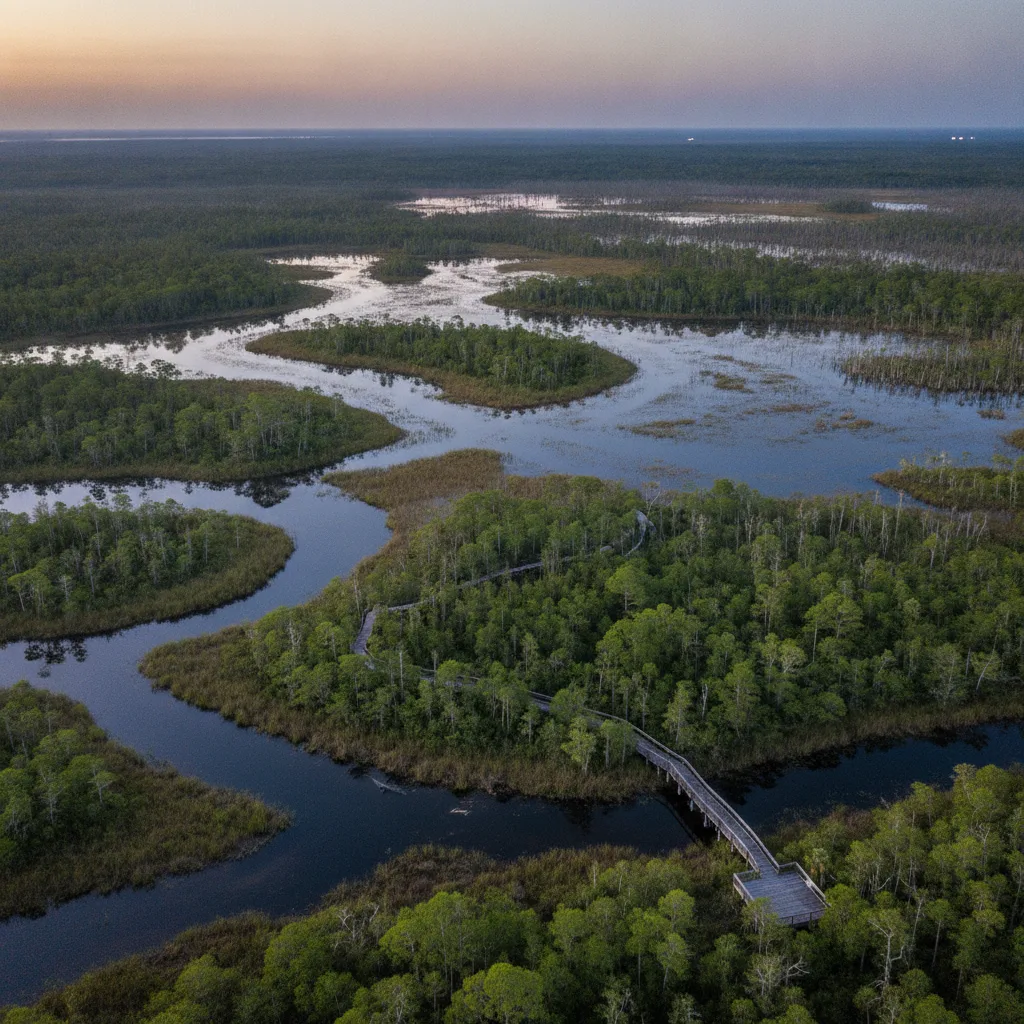
Everglades National Park Travel Guide — Florida
Our Visit America editorial team presents this comprehensive guide to Everglades National Park Florida, a unique and vital ecosystem that stands as one of the United States' most extraordinary natural treasures. We aim to provide confident, specific, and up-to-date information, cutting through generic travel fluff to help you plan an unforgettable journey into this "River of Grass."
Why Visit Everglades National Park
Everglades National Park is unlike any other national park in America. It’s not defined by towering mountains or deep canyons, but by a vast, slow-moving sheet of water that creates a mosaic of diverse habitats. This subtropical wilderness, covering over 1.5 million acres, is a UNESCO World Heritage Site, an International Biosphere Reserve, and a Wetland of International Significance, all testifying to its global importance.
For us, the primary draw is the unparalleled wildlife viewing. The Everglades is the only place on Earth where alligators and crocodiles coexist, and it's a critical refuge for numerous endangered species, including the Florida panther and West Indian manatee. Birdwatchers will be in paradise, with roseate spoonbills, wood storks, and countless other wading birds congregating, especially during the dry season. Beyond the iconic creatures, the sheer biodiversity, from ancient cypress trees draped in Spanish moss to intricate mangrove tunnels, offers a profound connection to nature. We believe a visit here offers a unique educational experience, revealing the delicate balance of a complex ecosystem and the ongoing efforts to preserve it.
Our team considers Everglades National Park an essential Florida experience. It offers a stark, wild contrast to the state's more developed attractions like Walt Disney World Resort, providing a raw, untamed beauty that captivates and educates. It's a testament to the power of nature and a vital reminder of the importance of conservation.
Who It's Best For
Everglades National Park caters to a surprisingly wide range of visitors, though its appeal is strongest for those with an appreciation for nature and wildlife. We find it particularly ideal for:
- Wildlife Enthusiasts: If spotting alligators, crocodiles, manatees, and a vast array of birdlife is high on your list, the Everglades delivers. The dry season, from December through April, is especially rewarding as receding water levels concentrate animals around accessible viewing areas.
- Nature Photographers: The unique landscapes and abundant wildlife offer endless opportunities for stunning photography, from sunrise over sawgrass prairies to close-ups of wading birds.
- Families with Curious Kids: The park offers boardwalk trails, tram tours, and airboat rides that make wildlife accessible and engaging for younger visitors. Ranger programs also provide educational insights into the ecosystem.
- Kayakers and Canoeists: With miles of mangrove tunnels and backcountry waterways, the Everglades is a paddler's paradise, offering intimate encounters with the environment.
- Those Seeking Solitude and Wilderness: While popular areas can be busy, the vastness of the park means that wilderness camping and remote paddling routes offer profound opportunities for quiet contemplation.
However, it's worth noting that traditional "hiking" as you might find in mountainous parks is limited here, and the summer months bring intense heat, humidity, and mosquitoes that can deter some. For those seeking adrenaline-pumping thrills or resort-style amenities, this might not be the primary destination, but it offers a profound and memorable experience for those who embrace its unique character.
Getting There & Parking
How to Get There
Everglades National Park has three main entrances, each offering access to different areas and experiences. Our team recommends choosing your entrance based on your itinerary and desired activities:
- Ernest Coe Visitor Center (Main Entrance near Homestead/Florida City): This is the most common entry point for visitors coming from Miami or the Florida Keys. It leads to Royal Palm, Anhinga Trail, Pa-hay-okee Overlook, and the Flamingo area. From Miami, it's roughly a 1.5-hour drive.
- Shark Valley Visitor Center (along US-41/Tamiami Trail): Located about an hour west of downtown Miami, this entrance provides access to the popular 15-mile loop road for tram tours, biking, and walking, known for exceptional alligator viewing.
- Marjory Stoneman Douglas Visitor Center (Gulf Coast Entrance in Everglades City): Situated on the park's western side, this entrance is ideal for those coming from Naples or Fort Myers. It's the gateway to the Ten Thousand Islands and primarily offers boat tours and paddling opportunities.
While there is no public transportation directly into the park, visitors can drive their own vehicles or book guided tours that include transportation from major South Florida cities. When considering how to get to Everglades National Park, remember that each entrance offers a distinct starting point for your adventure.
Parking
Parking is available at all visitor centers and major trailheads. However, during peak season (December-April) and especially on weekends, parking lots can fill up quickly, particularly at popular spots like Shark Valley and Royal Palm. At Shark Valley, for instance, parking may operate on a "one car in, one car out" basis between 10 a.m. and 3 p.m., so we advise arriving early, especially if you have a scheduled tram tour. Private vehicles are not permitted beyond the entrance road and parking lot at Shark Valley; access to the tram road and observation tower is by foot, bicycle, or tram only. Always ensure your vehicle is in a designated parking area for visitor and wildlife safety. We also recommend checking the official park website for any current alerts or temporary closures, as roadwork on US 41/Tamiami Trail can cause delays, and wildfires have led to temporary closures in certain areas in 2026.
Top Things to Do
Our team has curated a list of the top things to do at Everglades National Park, ensuring you experience the best of this unique ecosystem. From wildlife encounters to serene paddles, there's an adventure for every interest. When exploring things to do at Everglades National Park, remember to factor in the season, as some activities are best enjoyed during the dry, cooler months.
Airboat Tours
No visit to the Everglades is complete without an exhilarating airboat tour. These flat-bottomed boats glide over the shallow "River of Grass," offering fantastic opportunities to spot alligators, birds, and other wildlife. While airboat tours are not permitted within the core Everglades National Park boundaries, several authorized concessioners operate just outside the park along the Tamiami Trail (US-41), including Coopertown Airboats, Everglades Safari Park, and Gator Park. These tours typically last between 40 minutes and two hours and often include wildlife shows. Airboat tours are available year-round, though schedules may shift during the rainy season due to weather.
Shark Valley Tram Tour & Biking
At the Shark Valley entrance, we highly recommend the two-hour guided tram tour along the 15-mile loop road. Park-trained naturalists provide interpretive narration, offering insights into the Everglades ecosystem. The tram makes a stop at the Shark Valley Observation Tower, providing panoramic views of the "River of Grass." Alternatively, you can rent bicycles at the Shark Valley Visitor Center and pedal the loop yourself for a more active experience. This area is renowned for its exceptional wildlife viewing, particularly alligators, which are often seen sunning themselves along the trail.
Boat Tours from Flamingo and Gulf Coast
For a different aquatic perspective, consider the boat tours departing from Flamingo Marina in the park's southern section or the Marjory Stoneman Douglas Visitor Center at the Gulf Coast entrance. From Flamingo, you can choose between Florida Bay Boat Tours (seasonal, reopening November 2026) or Backcountry Boat Tours, which venture into the magnificent Everglades backcountry year-round. These 90-minute tours highlight the unique plant and animal life and the rich history of the area. From the new Marjory Stoneman Douglas Visitor Center in Everglades City, you can take a 90-minute pontoon boat tour into the Ten Thousand Islands, a maze of mangrove islands and waterways.
Kayaking and Canoeing
For an immersive and quiet experience, kayaking or canoeing through the Everglades' waterways is unparalleled. Rental options are available at Flamingo and the Gulf Coast. Paddle through serene mangrove tunnels, explore quiet backcountry waterways, and get up-close with wildlife. Spring, particularly April, is an ideal time for paddling before the summer heat and high water levels. The Wilderness Waterway, a 99-mile route from Everglades City to Flamingo, is a popular multi-day challenge for experienced paddlers.
Everglades National Park Hiking Trails
While the Everglades might not offer mountainous treks, the Everglades National Park hiking trails provide intimate access to diverse habitats and incredible wildlife viewing opportunities. We encourage visitors to explore these unique pathways, but always be prepared for the subtropical environment.
- Anhinga Trail (Royal Palm): This is arguably the most famous and rewarding of the Everglades National Park hiking trails. A paved, accessible boardwalk loop, it's a prime spot for viewing alligators, turtles, and wading birds at close range, especially during the dry season when wildlife concentrates around the remaining water.
- Gumbo Limbo Trail (Royal Palm): Also starting at Royal Palm, this paved loop winds through a dense, shaded hammock of tropical trees, including the distinctive Gumbo Limbo tree. It offers a cooler, shadier alternative to the Anhinga Trail.
- Pa-hay-okee Overlook Trail: This short boardwalk leads to an observation tower offering expansive views over the "River of Grass," providing a sense of the vastness of the Everglades landscape.
- Pinelands Trail: A short, paved loop through a pine rockland forest, offering a glimpse into a drier, fire-dependent ecosystem within the park.
- Mahogany Hammock Trail: A boardwalk trail leading through one of the largest remaining stands of old-growth mahogany trees in the United States.
- Snake Bight Trail (Flamingo): This longer, unpaved trail (about 1.6 miles one way) leads to a boardwalk overlooking Snake Bight, a shallow bay known for its birdlife. Be prepared for mosquitoes, especially during the wet season.
When venturing onto Everglades National Park hiking trails, always bring plenty of water, wear sun protection, and use insect repellent, especially from May to November when mosquitoes can be "catastrophic." Remember that pets are generally not permitted on any trails (paved, unpaved, or boardwalks) within the park due to wildlife concerns.
Best Time to Visit
Our team unequivocally recommends visiting Everglades National Park during the dry season, from December through April. This period offers the most comfortable conditions and the best opportunities for wildlife viewing.
- Weather: Temperatures are mild and pleasant, typically ranging from 24-27°C (75-81°F), with lower humidity. This makes outdoor activities like hiking, biking, and boat tours much more enjoyable.
- Wildlife Viewing: As water levels recede, animals, particularly alligators and wading birds, concentrate around remaining water sources, making them significantly easier to spot. The Anhinga Trail in February, for example, can feature 20-30 alligators visible from the boardwalk.
- Mosquitoes: While always present, mosquitoes are generally manageable with standard repellent during the dry season.
The wet season, from May through November, presents a different experience. While the park is open 24/7, this period is characterized by high humidity, frequent heavy rains, and "catastrophic" mosquito levels, especially from June to September. Wildlife disperses as water levels rise, making sightings less concentrated. Hurricanes are also a possibility during these months. However, if you visit during the wet season, you'll encounter fewer crowds and witness the Everglades in its full, lush glory, with many subtropical plants in bloom. Just be prepared with industrial-grade repellent and plan activities for early mornings before the heat and humidity become intense.
For the best overall experience, we strongly advise targeting your trip between December and April. April is particularly noted as a "last sweet spot" before the summer conditions set in.
Where to Stay Nearby
While Everglades National Park itself offers limited lodging options beyond camping, several nearby towns provide convenient access and a range of accommodations. Our team suggests considering these areas based on which park entrance you plan to use most frequently:
- Homestead/Florida City: Located just outside the Ernest Coe Visitor Center (main entrance), these towns offer the widest selection of hotels, motels, and restaurants. They are a practical base for exploring the Royal Palm and Flamingo areas of the park. You'll find everything from budget-friendly options to mid-range hotels here.
- Everglades City: This charming, historic fishing village is the closest town to the Marjory Stoneman Douglas Visitor Center (Gulf Coast entrance). It offers a more rustic and authentic Old Florida experience with a few small hotels, B&Bs, and guesthouses, along with seafood restaurants. It's an excellent choice if your focus is on the Ten Thousand Islands and west coast paddling.
- Miami: If you prefer to combine your Everglades adventure with a vibrant city experience, Miami is a viable option, especially for accessing the Shark Valley entrance. Many tour operators offer day trips to Shark Valley from Miami. While it's a longer drive to the Homestead entrance, staying in Miami allows you to explore other South Florida attractions like the Miami Beach Art Deco District.
- Key Largo: As the first of the Florida Keys, Key Largo offers a slightly more upscale and coastal vibe, approximately an hour's drive from the Homestead entrance. It's a good choice if you plan to combine your Everglades trip with diving, snorkeling, or exploring the northern Keys. You can even continue your journey down the Key West & Overseas Highway.
For those seeking an immersive park experience, the Flamingo area within the park offers unique houseboat stays and two frontcountry campgrounds. Reservations for camping and houseboats are highly recommended, especially during the dry season.
Everglades National Park Camping
For those who wish to extend their immersion in this unique ecosystem, Everglades National Park camping offers memorable opportunities. Our team believes that spending a night under the vast Florida sky, surrounded by the sounds of the wilderness, is an unparalleled experience.
The park offers two frontcountry campgrounds accessible by vehicle:
- Long Pine Key Campground (near Homestead entrance): Open seasonally, typically during the dry season (November-May). It offers both tent and RV sites with amenities like restrooms and cold showers.
- Flamingo Campground (at the end of the main park road): Open year-round, this campground boasts stunning views of Florida Bay. It offers tent and RV sites, some with electrical hookups, as well as flush toilets, cold showers, and a dump station. The Flamingo area also provides access to the marina, boat tours, and canoe/kayak rentals.
For the adventurous, wilderness camping is available throughout the park's backcountry, accessible by canoe, kayak, or powerboat. These sites range from elevated wooden platforms called "chickees" (found in the mangrove estuaries) to ground sites on small islands. Wilderness camping requires a permit and online reservation via Recreation.gov, with a $21 non-refundable permit reservation fee and a $2 per person, per night recreation fee. It's crucial to plan meticulously for backcountry trips, as conditions can be challenging, and you must be self-sufficient. Remember that pets are not permitted anywhere in the wilderness, including campsites and beaches.
When enjoying Everglades National Park camping, remember quiet hours are from 10 p.m. to 6 a.m., and generators can only operate from 8 a.m. to 8 p.m. Always store food securely to prevent wildlife encounters, and dispose of all garbage properly. Pets are allowed in frontcountry campgrounds but must be kept on a leash (maximum 6 feet) at all times and not left unattended.
Sample 2-Day Itinerary
To help you make the most of your visit, our team has crafted a sample 2-day itinerary for Everglades National Park, focusing on key highlights and experiences. This assumes you're visiting during the dry season (December-April) for optimal wildlife viewing and comfortable weather.
Day 1: Homestead Entrance to Flamingo
- Morning (8:00 AM - 12:00 PM): Start your day early at the Ernest F. Coe Visitor Center (Homestead Entrance). Pay your park entrance fee ($35 per vehicle for 7 days; non-U.S. residents aged 16+ also pay a $100 nonresident fee in 2026). Grab a map and speak with a ranger for current conditions and wildlife sightings. Head to Royal Palm and walk the iconic Anhinga Trail and Gumbo Limbo Trail. These boardwalks offer incredible close-up views of alligators, turtles, and wading birds.
- Lunch (12:00 PM - 1:00 PM): Pack a picnic to enjoy at one of the designated picnic areas, or grab a bite in Florida City before heading further into the park.
- Afternoon (1:00 PM - 5:00 PM): Continue your drive down the main park road towards Flamingo. Stop at the Pa-hay-okee Overlook for panoramic views of the "River of Grass." Explore the Pinelands Trail. Upon reaching Flamingo, check into your campsite or houseboat (reservations essential). Consider a Backcountry Boat Tour from Flamingo Marina for a different perspective of the estuaries.
- Evening: Enjoy dinner at the Flamingo Restaurant or prepare a meal at your campsite. Take a walk around the marina, keeping an eye out for manatees and crocodiles.
Day 2: Shark Valley & Airboats
- Morning (8:00 AM - 12:00 PM): Drive to the Shark Valley Visitor Center (along US-41). Arrive early to secure parking, especially if you plan on taking the tram tour. Embark on the 2-hour guided tram tour, enjoying naturalist commentary and panoramic views from the observation tower. Alternatively, rent a bike and cycle the 15-mile loop, known for abundant alligator sightings.
- Lunch (12:00 PM - 1:00 PM): Snacks are available at Shark Valley, but we recommend bringing your own lunch or heading to one of the airboat tour operators along Tamiami Trail, which often have dining options.
- Afternoon (1:00 PM - 4:00 PM): Experience an iconic Everglades airboat tour from one of the authorized concessioners just east of Shark Valley, such as Coopertown Airboats, Everglades Safari Park, or Gator Park. These tours offer a thrilling way to skim across the sawgrass and encounter wildlife.
- Late Afternoon: Depending on your departure plans, you can either head back towards Miami or continue your Florida adventure, perhaps towards the Gulf Coast entrance or other destinations.
This itinerary provides a robust overview of Everglades National Park. Remember to check current conditions and book any tours or accommodations in advance, especially during peak season. You can also explore other fantastic Florida destinations like the St. Augustine Historic District, Kennedy Space Center, or Dry Tortugas National Park.
Frequently Asked Questions
What are the best things to do in South Florida?
Beyond Everglades National Park, South Florida offers a diverse range of attractions. Our team recommends exploring the vibrant culture and beaches of Miami, including the Miami Beach Art Deco District. You can also visit the stunning coral reefs and marine life at Biscayne National Park, or drive down the scenic Overseas Highway to Key West. For family fun, Walt Disney World Resort is a major draw, though it's a bit further north. Other options include the Big Cypress National Preserve, various state parks, and fishing tours.
Is Everglades National Park good for kids?
Yes, Everglades National Park is an excellent destination for kids! Our team finds that the park's unique wildlife, accessible boardwalks, and engaging activities make it a memorable and educational experience. Children often love spotting alligators, turtles, and a variety of birds along trails like the Anhinga Trail. Airboat rides offer an exciting adventure, and the Shark Valley tram tour provides an easy way to see wildlife with interpretive narration. Ranger-led programs are also available and tailored to engage younger audiences.
What are some essential Everglades National Park tips?
Our top tips for visiting Everglades National Park include:
- Visit during the dry season (Dec-Apr): For the best weather and wildlife viewing.
- Arrive early: Especially at popular areas like Shark Valley, to beat crowds and secure parking.
- Bring insect repellent: Essential year-round, but crucial during the wet season.
- Wear sun protection: Hats, sunscreen, and light, long clothing are recommended.
- Carry plenty of water: Hydration is key in the Florida heat.
- Book tours and accommodations in advance: Especially during peak season.
- Check park alerts: For any temporary closures or conditions before you go.
- Respect wildlife: Maintain a safe distance and never feed animals.
- Be aware of pet restrictions: Pets are not allowed on trails.
What should I know about Everglades National Park parking?
Everglades National Park parking is generally available at visitor centers and trailheads, but it can become congested during peak times. At Shark Valley, parking lots fill quickly between 10 a.m. and 3 p.m., and a "one car in, one car out" system may be implemented. We recommend arriving 1.5 to 2 hours early for scheduled tram tours at Shark Valley. Private vehicles are restricted beyond the entrance road and parking lot at Shark Valley, with access to the loop by foot, bike, or tram only. Always park in designated areas. Check the park's official website for real-time updates on parking availability and any temporary closures due to events like wildfires or roadwork.
What is the best time to visit Everglades National Park?
The best time to visit Everglades National Park is during the dry season, which typically runs from December through April. During these months, the weather is cooler and drier, with lower humidity, making outdoor activities more comfortable. Crucially, receding water levels concentrate wildlife, such as alligators and wading birds, around central water sources, significantly increasing your chances of sightings. While it's also the busiest time, the benefits of comfortable conditions and abundant wildlife make it the optimal period for a visit.
What are the Everglades National Park hours and fees?
Everglades National Park is open 24 hours a day, 365 days a year, for its main entrances (Homestead and Gulf Coast). However, the Shark Valley entrance operates from 8:30 a.m. to 6:00 p.m., with gates locking nightly. Visitor center hours vary seasonally; for example, the Ernest F. Coe Visitor Center is open 8 a.m. to 5 p.m. in the dry season and 9 a.m. to 5 p.m. in the wet season.
As for fees in 2026, a standard 7-day vehicle pass costs $35, covering all occupants. A motorcycle pass is $30, and a pedestrian/cyclist pass is $20. Children 15 and under enter free. A significant change for 2026 is an additional $100 nonresident fee per person aged 16 and older for non-U.S. residents. U.S. residents can purchase an America the Beautiful Pass for $80, while non-U.S. residents pay $250 for an annual pass. [cite
Everglades National Park Travel Guide — Florida
Our Visit America editorial team presents this comprehensive guide to Everglades National Park Florida, a unique and vital ecosystem that stands as one of the United States' most extraordinary natural treasures. We aim to provide confident, specific, and up-to-date information, cutting through generic travel fluff to help you plan an unforgettable journey into this "River of Grass."
Why Visit Everglades National Park
Everglades National Park is unlike any other national park in America. It’s not defined by towering mountains or deep canyons, but by a vast, slow-moving sheet of water that creates a mosaic of diverse habitats. This subtropical wilderness, covering over 1.5 million acres, is a UNESCO World Heritage Site, an International Biosphere Reserve, and a Wetland of International Significance, all testifying to its global importance. [cite: 34, 40]
For us, the primary draw is the unparalleled wildlife viewing. The Everglades is the only place on Earth where alligators and crocodiles coexist, and it's a critical refuge for numerous endangered species, including the Florida panther and West Indian manatee. [cite: 9, 39, 40] Birdwatchers will be in paradise, with roseate spoonbills, wood storks, and countless other wading birds congregating, especially during the dry season. Beyond the iconic creatures, the sheer biodiversity, from ancient cypress trees draped in Spanish moss to intricate mangrove tunnels, offers a profound connection to nature. We believe a visit here offers a unique educational experience, revealing the delicate balance of a complex ecosystem and the ongoing efforts to preserve it.
Our team considers Everglades National Park an essential Florida experience. It offers a stark, wild contrast to the state's more developed attractions like Walt Disney World Resort, providing a raw, untamed beauty that captivates and educates. It's a testament to the power of nature and a vital reminder of the importance of conservation.
Who It's Best For
Everglades National Park caters to a surprisingly wide range of visitors, though its appeal is strongest for those with an appreciation for nature and wildlife. We find it particularly ideal for:
- Wildlife Enthusiasts: If spotting alligators, crocodiles, manatees, and a vast array of birdlife is high on your list, the Everglades delivers. The dry season, from December through April, is especially rewarding as receding water levels concentrate animals around accessible viewing areas. [cite: 6, 32, 37]
- Nature Photographers: The unique landscapes and abundant wildlife offer endless opportunities for stunning photography, from sunrise over sawgrass prairies to close-ups of wading birds.
- Families with Curious Kids: The park offers boardwalk trails, tram tours, and airboat rides that make wildlife accessible and engaging for younger visitors. Ranger programs also provide educational insights into the ecosystem. [cite: 22, 35]
- Kayakers and Canoeists: With miles of mangrove tunnels and backcountry waterways, the Everglades is a paddler's paradise, offering intimate encounters with the environment. [cite: 11, 19, 31]
- Those Seeking Solitude and Wilderness: While popular areas can be busy, the vastness of the park means that wilderness camping and remote paddling routes offer profound opportunities for quiet contemplation.
However, it's worth noting that traditional "hiking" as you might find in mountainous parks is limited here, and the summer months bring intense heat, humidity, and mosquitoes that can deter some. For those seeking adrenaline-pumping thrills or resort-style amenities, this might not be the primary destination, but it offers a profound and memorable experience for those who embrace its unique character.
Getting There & Parking
How to Get There
Everglades National Park has three main entrances, each offering access to different areas and experiences. Our team recommends choosing your entrance based on your itinerary and desired activities:
- Ernest Coe Visitor Center (Main Entrance near Homestead/Florida City): This is the most common entry point for visitors coming from Miami or the Florida Keys. It leads to Royal Palm, Anhinga Trail, Pa-hay-okee Overlook, and the Flamingo area. From Miami, it's roughly a 1.5-hour drive.
- Shark Valley Visitor Center (along US-41/Tamiami Trail): Located about an hour west of downtown Miami, this entrance provides access to the popular 15-mile loop road for tram tours, biking, and walking, known for exceptional alligator viewing. [cite: 15, 33]
- Marjory Stoneman Douglas Visitor Center (Gulf Coast Entrance in Everglades City): Situated on the park's western side, this entrance is ideal for those coming from Naples or Fort Myers. It's the gateway to the Ten Thousand Islands and primarily offers boat tours and paddling opportunities. [cite: 5, 29, 31, 42]
While there is no public transportation directly into the park, visitors can drive their own vehicles or book guided tours that include transportation from major South Florida cities. When considering how to get to Everglades National Park, remember that each entrance offers a distinct starting point for your adventure.
Parking
Parking is available at all visitor centers and major trailheads. However, during peak season (December-April) and especially on weekends, parking lots can fill up quickly, particularly at popular spots like Shark Valley and Royal Palm. [cite: 3, 15] At Shark Valley, for instance, parking may operate on a "one car in, one car out" basis between 10 a.m. and 3 p.m., so we advise arriving early, especially if you have a scheduled tram tour. [cite: 3, 15] Private vehicles are not permitted beyond the entrance road and parking lot at Shark Valley; access to the tram road and observation tower is by foot, bicycle, or tram only. [cite: 15] Always ensure your vehicle is in a designated parking area for visitor and wildlife safety. [cite: 15] We also recommend checking the official park website for any current alerts or temporary closures, as roadwork on US 41/Tamiami Trail can cause delays, and wildfires have led to temporary closures in certain areas in 2026. [cite: 10, 13, 20, 27, 30]
Top Things to Do
Our team has curated a list of the top things to do at Everglades National Park, ensuring you experience the best of this unique ecosystem. From wildlife encounters to serene paddles, there's an adventure for every interest. When exploring things to do at Everglades National Park, remember to factor in the season, as some activities are best enjoyed during the dry, cooler months.
Airboat Tours
No visit to the Everglades is complete without an exhilarating airboat tour. These flat-bottomed boats glide over the shallow "River of Grass," offering fantastic opportunities to spot alligators, birds, and other wildlife. While airboat tours are not permitted within the core Everglades National Park boundaries, several authorized concessioners operate just outside the park along the Tamiami Trail (US-41), including Coopertown Airboats, Everglades Safari Park, and Gator Park. [cite: 15, 23, 24, 40] These tours typically last between 40 minutes and two hours and often include wildlife shows. [cite: 24] Airboat tours are available year-round, though schedules may shift during the rainy season due to weather. [cite: 28]
Shark Valley Tram Tour & Biking
At the Shark Valley entrance, we highly recommend the two-hour guided tram tour along the 15-mile loop road. Park-trained naturalists provide interpretive narration, offering insights into the Everglades ecosystem. [cite: 15, 33] The tram makes a stop at the Shark Valley Observation Tower, providing panoramic views of the "River of Grass." [cite: 33] Alternatively, you can rent bicycles at the Shark Valley Visitor Center and pedal the loop yourself for a more active experience. [cite: 15, 33] This area is renowned for its exceptional wildlife viewing, particularly alligators, which are often seen sunning themselves along the trail. [cite: 15, 32]
Boat Tours from Flamingo and Gulf Coast
For a different aquatic perspective, consider the boat tours departing from Flamingo Marina in the park's southern section or the Marjory Stoneman Douglas Visitor Center at the Gulf Coast entrance. From Flamingo, you can choose between Florida Bay Boat Tours (seasonal, reopening November 2026) or Backcountry Boat Tours, which venture into the magnificent Everglades backcountry year-round. [cite: 36] These 90-minute tours highlight the unique plant and animal life and the rich history of the area. [cite: 36] From the new Marjory Stoneman Douglas Visitor Center in Everglades City, you can take a 90-minute pontoon boat tour into the Ten Thousand Islands, a maze of mangrove islands and waterways. [cite: 5, 29, 31, 42]
Kayaking and Canoeing
For an immersive and quiet experience, kayaking or canoeing through the Everglades' waterways is unparalleled. Rental options are available at Flamingo and the Gulf Coast. [cite: 29, 31] Paddle through serene mangrove tunnels, explore quiet backcountry waterways, and get up-close with wildlife. Spring, particularly April, is an ideal time for paddling before the summer heat and high water levels. [cite: 11] The Wilderness Waterway, a 99-mile route from Everglades City to Flamingo, is a popular multi-day challenge for experienced paddlers.
Everglades National Park Hiking Trails
While the Everglades might not offer mountainous treks, the Everglades National Park hiking trails provide intimate access to diverse habitats and incredible wildlife viewing opportunities. We encourage visitors to explore these unique pathways, but always be prepared for the subtropical environment.
- Anhinga Trail (Royal Palm): This is arguably the most famous and rewarding of the Everglades National Park hiking trails. A paved, accessible boardwalk loop, it's a prime spot for viewing alligators, turtles, and wading birds at close range, especially during the dry season when wildlife concentrates around the remaining water. [cite: 6, 32]
- Gumbo Limbo Trail (Royal Palm): Also starting at Royal Palm, this paved loop winds through a dense, shaded hammock of tropical trees, including the distinctive Gumbo Limbo tree. It offers a cooler, shadier alternative to the Anhinga Trail.
- Pa-hay-okee Overlook Trail: This short boardwalk leads to an observation tower offering expansive views over the "River of Grass," providing a sense of the vastness of the Everglades landscape.
- Pinelands Trail: A short, paved loop through a pine rockland forest, offering a glimpse into a drier, fire-dependent ecosystem within the park.
- Mahogany Hammock Trail: A boardwalk trail leading through one of the largest remaining stands of old-growth mahogany trees in the United States.
- Snake Bight Trail (Flamingo): This longer, unpaved trail (about 1.6 miles one way) leads to a boardwalk overlooking Snake Bight, a shallow bay known for its birdlife. Be prepared for mosquitoes, especially during the wet season.
When venturing onto Everglades National Park hiking trails, always bring plenty of water, wear sun protection, and use insect repellent, especially from May to November when mosquitoes can be "catastrophic." [cite: 6] Remember that pets are generally not permitted on any trails (paved, unpaved, or boardwalks) within the park due to wildlife concerns. [cite: 9, 12, 43]
Best Time to Visit
Our team unequivocally recommends visiting Everglades National Park during the dry season, from December through April. This period offers the most comfortable conditions and the best opportunities for wildlife viewing. [cite: 6, 11, 32, 37, 47]
- Weather: Temperatures are mild and pleasant, typically ranging from 24-27°C (75-81°F), with lower humidity. [cite: 6] This makes outdoor activities like hiking, biking, and boat tours much more enjoyable.
- Wildlife Viewing: As water levels recede, animals, particularly alligators and wading birds, concentrate around remaining water sources, making them significantly easier to spot. [cite: 6, 11, 32, 37] The Anhinga Trail in February, for example, can feature 20-30 alligators visible from the boardwalk. [cite: 6]
- Mosquitoes: While always present, mosquitoes are generally manageable with standard repellent during the dry season. [cite: 6]
The wet season, from May through November, presents a different experience. While the park is open 24/7, this period is characterized by high humidity, frequent heavy rains, and "catastrophic" mosquito levels, especially from June to September. [cite: 6, 37, 47] Wildlife disperses as water levels rise, making sightings less concentrated. [cite: 6, 11] Hurricanes are also a possibility during these months. [cite: 6] However, if you visit during the wet season, you'll encounter fewer crowds and witness the Everglades in its full, lush glory, with many subtropical plants in bloom. [cite: 47] Just be prepared with industrial-grade repellent and plan activities for early mornings before the heat and humidity become intense. [cite: 6]
For the best overall experience, we strongly advise targeting your trip between December and April. April is particularly noted as a "last sweet spot" before the summer conditions set in. [cite: 11]
Where to Stay Nearby
While Everglades National Park itself offers limited lodging options beyond camping, several nearby towns provide convenient access and a range of accommodations. Our team suggests considering these areas based on which park entrance you plan to use most frequently:
- Homestead/Florida City: Located just outside the Ernest Coe Visitor Center (main entrance), these towns offer the widest selection of hotels, motels, and restaurants. They are a practical base for exploring the Royal Palm and Flamingo areas of the park. You'll find everything from budget-friendly options to mid-range hotels here.
- Everglades City: This charming, historic fishing village is the closest town to the Marjory Stoneman Douglas Visitor Center (Gulf Coast entrance). It offers a more rustic and authentic Old Florida experience with a few small hotels, B&Bs, and guesthouses, along with seafood restaurants. It's an excellent choice if your focus is on the Ten Thousand Islands and west coast paddling.
- Miami: If you prefer to combine your Everglades adventure with a vibrant city experience, Miami is a viable option, especially for accessing the Shark Valley entrance. Many tour operators offer day trips to Shark Valley from Miami. While it's a longer drive to the Homestead entrance, staying in Miami allows you to explore other South Florida attractions like the Miami Beach Art Deco District.
- Key Largo: As the first of the Florida Keys, Key Largo offers a slightly more upscale and coastal vibe, approximately an hour's drive from the Homestead entrance. It's a good choice if you plan to combine your Everglades trip with diving, snorkeling, or exploring the northern Keys. You can even continue your journey down the Key West & Overseas Highway.
For those seeking an immersive park experience, the Flamingo area within the park offers unique houseboat stays and two frontcountry campgrounds. [cite: 11] Reservations for camping and houseboats are highly recommended, especially during the dry season. [cite: 47]
Everglades National Park Camping
For those who wish to extend their immersion in this unique ecosystem, Everglades National Park camping offers memorable opportunities. Our team believes that spending a night under the vast Florida sky, surrounded by the sounds of the wilderness, is an unparalleled experience.
The park offers two frontcountry campgrounds accessible by vehicle:
- Long Pine Key Campground (near Homestead entrance): Open seasonally, typically during the dry season (November-May). It offers both tent and RV sites with amenities like restrooms and cold showers.
- Flamingo Campground (at the end of the main park road): Open year-round, this campground boasts stunning views of Florida Bay. It offers tent and RV sites, some with electrical hookups, as well as flush toilets, cold showers, and a dump station. The Flamingo area also provides access to the marina, boat tours, and canoe/kayak rentals.
For the adventurous, wilderness camping is available throughout the park's backcountry, accessible by canoe, kayak, or powerboat. These sites range from elevated wooden platforms called "chickees" (found in the mangrove estuaries) to ground sites on small islands. Wilderness camping requires a permit and online reservation via Recreation.gov, with a $21 non-refundable permit reservation fee and a $2 per person, per night recreation fee. [cite: 3, 41] It's crucial to plan meticulously for backcountry trips, as conditions can be challenging, and you must be self-sufficient. Remember that pets are not permitted anywhere in the wilderness, including campsites and beaches. [cite: 41]
When enjoying Everglades National Park camping, remember quiet hours are from 10 p.m. to 6 a.m., and generators can only operate from 8 a.m. to 8 p.m. [cite: 26] Always store food securely to prevent wildlife encounters, and dispose of all garbage properly. [cite: 26] Pets are allowed in frontcountry campgrounds but must be kept on a leash (maximum 6 feet) at all times and not left unattended. [cite: 9, 12, 26, 43]
Sample 2-Day Itinerary
To help you make the most of your visit, our team has crafted a sample 2-day itinerary for Everglades National Park, focusing on key highlights and experiences. This assumes you're visiting during the dry season (December-April) for optimal wildlife viewing and comfortable weather.
Day 1: Homestead Entrance to Flamingo
- Morning (8:00 AM - 12:00 PM): Start your day early at the Ernest F. Coe Visitor Center (Homestead Entrance). Pay your park entrance fee ($35 per vehicle for 7 days; non-U.S. residents aged 16+ also pay a $100 nonresident fee in 2026). [cite: 3, 25, 44] Grab a map and speak with a ranger for current conditions and wildlife sightings. Head to Royal Palm and walk the iconic Anhinga Trail and Gumbo Limbo Trail. These boardwalks offer incredible close-up views of alligators, turtles, and wading birds.
- Lunch (12:00 PM - 1:00 PM): Pack a picnic to enjoy at one of the designated picnic areas, or grab a bite in Florida City before heading further into the park.
- Afternoon (1:00 PM - 5:00 PM): Continue your drive down the main park road towards Flamingo. Stop at the Pa-hay-okee Overlook for panoramic views of the "River of Grass." Explore the Pinelands Trail. Upon reaching Flamingo, check into your campsite or houseboat (reservations essential). Consider a Backcountry Boat Tour from Flamingo Marina for a different perspective of the estuaries. [cite: 36]
- Evening: Enjoy dinner at the Flamingo Restaurant or prepare a meal at your campsite. Take a walk around the marina, keeping an eye out for manatees and crocodiles.
Day 2: Shark Valley & Airboats
- Morning (8:00 AM - 12:00 PM): Drive to the Shark Valley Visitor Center (along US-41). Arrive early to secure parking, especially if you plan on taking the tram tour. [cite: 3, 15] Embark on the 2-hour guided tram tour, enjoying naturalist commentary and panoramic views from the observation tower. Alternatively, rent a bike and cycle the 15-mile loop, known for abundant alligator sightings. [cite: 15, 33]
- Lunch (12:00 PM - 1:00 PM): Snacks are available at Shark Valley, but we recommend bringing your own lunch or heading to one of the airboat tour operators along Tamiami Trail, which often have dining options.
- Afternoon (1:00 PM - 4:00 PM): Experience an iconic Everglades airboat tour from one of the authorized concessioners just east of Shark Valley, such as Coopertown Airboats, Everglades Safari Park, or Gator Park. [cite: 15, 23, 24] These tours offer a thrilling way to skim across the sawgrass and encounter wildlife.
- Late Afternoon: Depending on your departure plans, you can either head back towards Miami or continue your Florida adventure, perhaps towards the Gulf Coast entrance or other destinations.
This itinerary provides a robust overview of Everglades National Park. Remember to check current conditions and book any tours or accommodations in advance, especially during peak season. You can also explore other fantastic Florida destinations like the St. Augustine Historic District, Kennedy Space Center, or Dry Tortugas National Park.
Frequently Asked Questions
What are the best things to do in South Florida?
Beyond Everglades National Park, South Florida offers a diverse range of attractions. Our team recommends exploring the vibrant culture and beaches of Miami, including the Miami Beach Art Deco District. You can also visit the stunning coral reefs and marine life at Biscayne National Park, or drive down the scenic Overseas Highway to Key West. For family fun, Walt Disney World Resort is a major draw, though it's a bit further north. Other options include the Big Cypress National Preserve, various state parks, and fishing tours. [cite: 34, 38]
Is Everglades National Park good for kids?
Yes, Everglades National Park is an excellent destination for kids! Our team finds that the park's unique wildlife, accessible boardwalks, and engaging activities make it a memorable and educational experience. Children often love spotting alligators, turtles, and a variety of birds along trails like the Anhinga Trail. Airboat rides offer an exciting adventure, and the Shark Valley tram tour provides an easy way to see wildlife with interpretive narration. [cite: 15, 22, 33] Ranger-led programs are also available and tailored to engage younger audiences. [cite: 35]
What are some essential Everglades National Park tips?
Our top tips for visiting Everglades National Park include:
- Visit during the dry season (Dec-Apr): For the best weather and wildlife viewing. [cite: 6, 37]
- Arrive early: Especially at popular areas like Shark Valley, to beat crowds and secure parking. [cite: 3, 15]
- Bring insect repellent: Essential year-round, but crucial during the wet season. [cite: 6, 40, 41, 47]
- Wear sun protection: Hats, sunscreen, and light, long clothing are recommended.
- Carry plenty of water: Hydration is key in the Florida heat.
- Book tours and accommodations in advance: Especially during peak season. [cite: 47]
- Check park alerts: For any temporary closures or conditions before you go. [cite: 27]
- Respect wildlife: Maintain a safe distance and never feed animals.
- Be aware of pet restrictions: Pets are not allowed on trails. [cite: 9, 12, 43]
What should I know about Everglades National Park parking?
Everglades National Park parking is generally available at visitor centers and trailheads, but it can become congested during peak times. At Shark Valley, parking lots fill quickly between 10 a.m. and 3 p.m., and a "one car in, one car out" system may be implemented. [cite: 3, 15] We recommend arriving 1.5 to 2 hours early for scheduled tram tours at Shark Valley. [cite: 15] Private vehicles are restricted beyond the entrance road and parking lot at Shark Valley, with access to the loop by foot, bike, or tram only. [cite: 15] Always park in designated areas. Check the park's official website for real-time updates on parking availability and any temporary closures due to events like wildfires or roadwork. [cite: 10, 13, 20, 27, 30]
What is the best time to visit Everglades National Park?
The best time to visit Everglades National Park is during the dry season, which typically runs from December through April. [cite: 6, 11, 32, 37, 47] During these months, the weather is cooler and drier, with lower humidity, making outdoor activities more comfortable. [cite: 6] Crucially, receding water levels concentrate wildlife, such as alligators and wading birds, around central water sources, significantly increasing your chances of sightings. [cite: 6, 11, 32, 37] While it's also the busiest time, the benefits of comfortable conditions and abundant wildlife make it the optimal period for a visit. [cite: 37]
What are the Everglades National Park hours and fees?
Everglades National Park is open 24 hours a day, 365 days a year, for its main entrances (Homestead and Gulf Coast). [cite: 2, 3, 4, 16, 28, 34] However, the Shark Valley entrance operates from 8:30 a.m. to 6:00 p.m., with gates locking nightly. [cite: 3, 4, 28, 34] Visitor center hours vary seasonally; for example, the Ernest F. Coe Visitor Center is open 8 a.m. to 5 p.m. in the dry season and 9 a.m. to 5 p.m. in the wet season. [cite: 2, 28]
As for fees in 2026, a standard 7-day vehicle pass costs $35, covering all occupants. A motorcycle pass is $30, and a pedestrian/cyclist pass is $20. Children 15 and under enter free. [cite: 3, 25] A significant change for 2026 is an additional $100 nonresident fee per person aged 16 and older for non-U.S. residents. [cite: 3, 14, 25, 44, 46] U.S. residents can purchase an America the Beautiful Pass for $80, while non-U.S. residents pay $250 for an annual pass. [cite