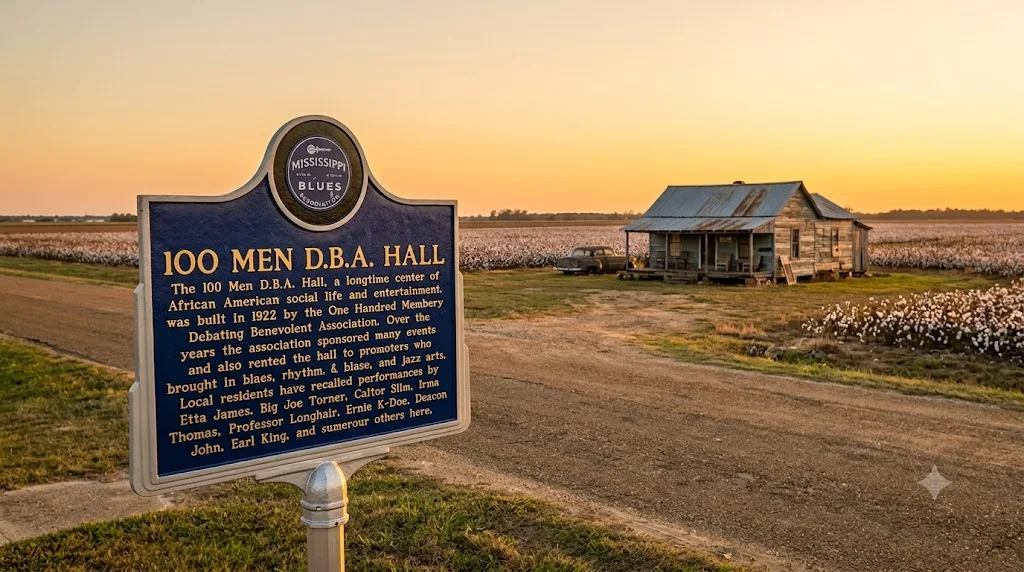
Our Mississippi Blues Commission guide covers practical planning for Mississippi Blues Commission Mississippi — best time to visit, getting there, and what to do on the ground.
Mississippi Blues Commission Travel Guide — Mississippi
As the independent US travel authority, our team at Roam States is dedicated to bringing you the most authentic and actionable travel advice. When it comes to American music history, few places resonate as deeply as Mississippi, the undisputed "Birthplace of the Blues." The Mississippi Blues Commission Mississippi oversees the expansive Mississippi Blues Trail, an extraordinary journey through the genre's origins and evolution. This isn't a single museum or landmark, but a statewide network of over 200 distinctive historical markers, each telling the story of legendary performers, pivotal places, and events that shaped this foundational American music.
Why Visit Mississippi Blues Commission
Visiting the Mississippi Blues Commission, through its Blues Trail, offers an unparalleled opportunity to immerse yourself in the roots of modern popular music. We believe it's essential for anyone with an appreciation for music, history, and American culture. The trail provides a tangible connection to the lives and struggles of the artists who created the blues, weaving together narratives of pain, resistance, and ultimately, profound artistic expression.
Each marker on the trail is a portal to a specific moment or figure, offering extensively researched descriptions that bring the stories to life. From the cotton fields of the Delta where the blues first emerged to the juke joints where legends were born, the Mississippi Blues Trail provides a comprehensive and deeply moving educational experience. It's a journey that reveals not just musical history, but also the broader context of African American social history and the Civil Rights Movement in the United States.
Who It's Best For
The Mississippi Blues Trail is ideal for a diverse range of travelers. Die-hard blues fans will find it an indispensable pilgrimage, offering insights into the birthplaces and stomping grounds of their musical heroes. History buffs will appreciate the deep dive into a crucial aspect of American cultural and social history, often intertwined with the Civil Rights Movement.
Road trippers will find the trail a fantastic framework for exploring the state, with markers spread across various towns and regions. It's also suitable for those seeking an authentic and less-traveled path, moving beyond typical tourist traps to discover the soul of Mississippi. While not specifically designed for young children, older kids and teenagers with an interest in music or history can certainly find the interactive elements and compelling stories engaging. We recommend it for anyone looking for a rich, educational, and emotionally resonant travel experience.
Getting There & Parking
Navigating the Mississippi Blues Trail means traveling across the state, as markers are located in numerous towns and cities. The primary way to experience the trail is by car, offering the flexibility to follow your own itinerary. Many of the key blues sites are concentrated in the Mississippi Delta region, but markers extend throughout the state.
For those flying in, Jackson-Medgar Wiley Evers International Airport (JAN) serves as a central hub for Mississippi. From there, renting a car is essential for exploring the trail. We suggest downloading or requesting a physical map of the Mississippi Blues Trail in advance to help plan your route.
Regarding parking for individual Mississippi Blues Commission sites, most markers are located in public areas, often with readily available street parking or small lots nearby. For specific museums along the trail, such as the Delta Blues Museum in Clarksdale or the B.B. King Museum and Delta Interpretive Center in Indianola, dedicated parking is generally available. The GRAMMY Museum Mississippi in Cleveland, for example, offers free and convenient on-site parking for all visitors, including spaces for buses and group tours.
When visiting attractions in larger cities like Jackson, such as the Mississippi Civil Rights Museum, a museum parking garage is accessible from Jefferson Street between Amite and Mississippi Street, with street parking also available on North Street.
Top Things to Do
The beauty of the Mississippi Blues Commission's trail is the sheer breadth of things to do at Mississippi Blues Commission sites. Our team recommends focusing on key regions and individual markers that resonate most with your interests. Here are some of our top suggestions:
- Explore Clarksdale: Often considered the heart of the Delta Blues, Clarksdale is home to numerous markers, including the legendary "Crossroads" of Highways 61 and 49. Visit the Delta Blues Museum, the oldest music museum in Mississippi, which houses a collection of instruments and exhibits on blues legends like Muddy Waters and B.B. King. The museum is open Monday through Saturday from 10 AM to 5 PM, with final admission at 4:30 PM. General admission is $15 for ages 17+, with discounts for seniors and military.
- Visit the B.B. King Museum and Delta Interpretive Center: Located in Indianola, this museum celebrates the life and legacy of the "King of the Blues," B.B. King. It offers a deep dive into his music, his life, and the culture of the Mississippi Delta. The museum is open Tuesday–Saturday from 10 AM to 5 PM, and Sunday–Monday from 12 PM to 5 PM, with winter hours (November–March) closed on Mondays.
- Experience the GRAMMY Museum Mississippi: In Cleveland, this interactive museum highlights Mississippi's profound impact on American music across all genres, with a strong focus on blues artists who have received GRAMMY recognition. The museum operates Tuesday-Saturday from 10 AM to 5 PM and Sunday from 12 PM to 3 PM. General admission tickets are around $16.
- Journey to the Emmett Till Interpretive Center: While not strictly a blues site, the center in Sumner offers critical context to the social and racial history that shaped the blues. It explores the tragic story of Emmett Till and its pivotal role in the Civil Rights Movement. The Emmett Till Interpretive Center is open Tuesday-Saturday from 12 PM to 5 PM. Admission for tours of the Tallahatchie County Courthouse and the interpretive center is $5.
- Explore Jackson, Mississippi: The state capital offers a blend of history and culture, making it an excellent base for exploring parts of the Blues Trail and other significant sites. There are many things to do in Jackson. We highly recommend visiting the Mississippi Civil Rights Museum, which provides a powerful and unflinching look at the struggle for equality in the state. The museum is open Tuesday-Saturday from 9 AM to 5 PM and Sunday from 1 PM to 5 PM. Admission is $15 for adults, with free admission on Sundays. Other notable attractions include the Museum of Natural Science, the Eudora Welty House, and the Old Capitol Museum. For a unique evening, consider a Jackson Ghost Tour.
- Visit Elvis Presley's Birthplace: In Tupelo, you can explore the humble beginnings of the "King of Rock and Roll," whose music was heavily influenced by the blues.
Best Time to Visit
The best time to visit the Mississippi Blues Commission's trail largely depends on your preference for weather and crowds. We generally recommend spring (April to May) and fall (September to October). During these seasons, the weather is typically mild and pleasant, making it comfortable for driving and exploring outdoor markers and towns.
Summers (June to August) in Mississippi can be very hot and humid, which might make extensive outdoor exploration less enjoyable. However, summer often brings a vibrant schedule of blues festivals and live music events across the state, which could be a draw for some travelers. Winters (November to March) are generally mild, but some smaller attractions or businesses might have reduced hours. Always check the operating hours of specific museums and sites, as some may have seasonal adjustments or be closed on certain holidays. For instance, the Delta Blues Museum is closed on New Year's Day, Martin Luther King Jr. Day, Memorial Day, Independence Day (July 3-4, 2026), Labor Day, Thanksgiving, Christmas Eve, and Christmas Day.
Where to Stay Nearby
Finding suitable Mississippi Blues Commission lodging is key to a comfortable and authentic journey. Since the Blues Trail spans the state, your lodging choices will depend on which sections you plan to explore. We suggest basing yourself in a few key locations to minimize travel time between markers.
- Clarksdale: As a central hub for the Delta Blues, Clarksdale offers unique lodging experiences. The Shack Up Inn, located on a former plantation, provides rustic yet comfortable accommodations in renovated sharecropper shacks and cotton bins. Other options include the Clark House Inn and Hampton Inn Clarksdale, Ms.
- Indianola: For those focusing on the B.B. King Museum, Indianola has several hotel options.
- Cleveland: Near the GRAMMY Museum Mississippi, Cleveland offers various hotels to suit different budgets.
- Jackson: As the state capital, Jackson provides a wide array of Mississippi Blues Commission lodging, from luxury hotels to budget-friendly options. We recommend hotels like The Westin Jackson, Hilton Garden Inn Jackson Downtown, Homewood Suites by Hilton Jackson Fondren Medical District, and Baymont by Wyndham Jackson/Ridgeland. Many hotels in Jackson offer amenities like pools and are pet-friendly.
- Natchez: If your journey takes you south, Natchez offers historic accommodations, including well-preserved antebellum mansions. Consider staying at the Monmouth Historic Inn. For more options throughout the state, you can explore our guide to the Best places in Mississippi.
Sample 2-Day Itinerary
To truly experience the essence of the Mississippi Blues Trail, we recommend at least a two-day itinerary, focusing on the heart of the Delta.
Day 1: Clarksdale & The Crossroads
Begin your day in Clarksdale, widely recognized as a pivotal location for the blues. Start with a visit to the Delta Blues Museum (open 10 AM-5 PM, closed Sundays; $15 adult admission). Immerse yourself in the exhibits and learn about the legends who shaped the genre. Afterwards, drive to the famous "Crossroads" of Highways 61 and 49, marked by a distinctive Mississippi Blues Trail sign, where Robert Johnson is fabled to have sold his soul. Explore other nearby markers in Clarksdale, such as the Riverside Hotel, a historic lodging for many Black musicians during segregation, including Bessie Smith. For lunch, enjoy some local Southern fare. In the evening, experience live blues music at a local juke joint like Ground Zero Blues Club (co-owned by Morgan Freeman), which offers live music and Southern staples. Consider staying at the unique Shack Up Inn for an authentic Delta experience.
Day 2: Indianola, Cleveland & Jackson
On your second day, head south to Indianola (approx. 1-hour drive from Clarksdale) to visit the B.B. King Museum and Delta Interpretive Center (open Tue-Sat 10 AM-5 PM, Sun-Mon 12 PM-5 PM). This museum provides an in-depth look at the life and music of B.B. King. Afterward, continue to Cleveland (approx. 30-minute drive) to explore the GRAMMY Museum Mississippi (open Tue-Sat 10 AM-5 PM, Sun 12 PM-3 PM; $16 adult admission). This museum showcases Mississippi's rich musical heritage and its impact on the GRAMMY Awards. Conclude your blues journey by driving to Jackson (approx. 2-hour drive from Cleveland). In Jackson, we recommend visiting the Mississippi Civil Rights Museum (open Tue-Sat 9 AM-5 PM, Sun 1 PM-5 PM; $15 adult admission, free on Sundays) to understand the broader historical context of the blues. For dinner, explore Jackson's vibrant culinary scene. You might consider staying at The Westin Jackson for a luxurious end to your trip.
Last updated: 2026-07-13 by the Roam States team.