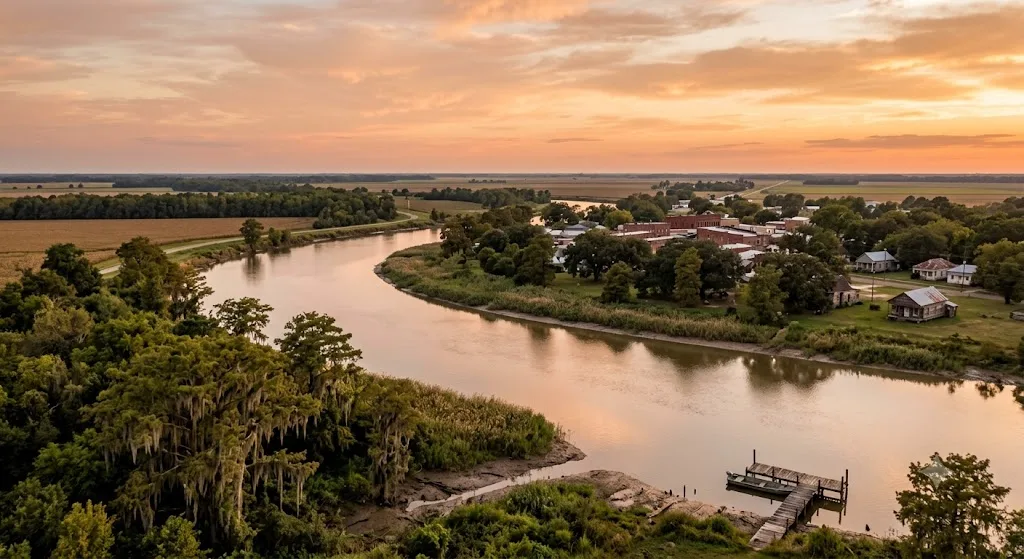
Our Mississippi Delta National Heritage Area guide covers practical planning for Mississippi Delta National Heritage Area Mississippi — best time to visit, getting there, and what to do on the ground.
Why Visit Mississippi Delta National Heritage Area
The Mississippi Delta National Heritage Area Mississippi is a place where American culture runs deep, a region that has profoundly shaped our nation's identity. We at Roam States believe it's an essential destination for anyone seeking to understand the roots of American music, the struggles and triumphs of the Civil Rights Movement, and the enduring legacy of Southern agriculture. This isn't just a collection of historical sites; it's a living landscape that tells a powerful story through its music, its people, and its fertile lands.
Designated by Congress in 2009, the Mississippi Delta National Heritage Area (MDNHA) encompasses 18 counties within the alluvial floodplain of the Mississippi River. It’s a partnership between the people of the Mississippi Delta and the National Park Service, dedicated to preserving and interpreting the region's rich cultural heritage. Here, you'll discover the birthplace of the Blues, the cradle of Rock and Roll, and a vibrant hub for Gospel music. Beyond its musical contributions, the Delta was a pivotal battleground during the Civil War and a crucial center for the Civil Rights Movement. It's also a region defined by its agricultural history, where cotton was once king and modern "precision-ag" now thrives. Visiting the MDNHA offers a chance to experience the profound culinary, religious, artistic, and literary heritage that continues to flourish here.
Who It's Best For
The Mississippi Delta National Heritage Area appeals to a diverse range of travelers. Our team finds it particularly compelling for:
- History Buffs: Those fascinated by American history, especially the Civil War and the Civil Rights Movement, will find countless significant sites and stories. The region played a critical role in both, offering a tangible connection to pivotal moments in our nation's past.
- Music Enthusiasts: If you're drawn to the origins of American music, particularly the Blues, this is hallowed ground. From legendary juke joints to the Mississippi Blues Trail markers, the Delta is where the music was born and where its spirit lives on.
- Cultural Explorers: Travelers eager to immerse themselves in unique regional culture, including foodways, literature, and local traditions, will find the Delta incredibly rewarding. Its distinct identity is palpable in every town and along every backroad.
- Road Trippers: Given the sprawling nature of the heritage area across 18 counties, it's ideal for those who enjoy exploring by car, stopping at various towns and points of interest.
- Educational Travelers: Students and lifelong learners will appreciate the interpretive centers and museums that delve deep into the region's complex narratives, offering a rich educational experience.
Getting There & Parking
Reaching the Mississippi Delta National Heritage Area involves traveling across a broad region, as it encompasses 18 counties. There isn't a single entrance gate or visitor center for the entire heritage area, but rather numerous access points to its various sites and communities. The MDNHA is managed by the Delta Center for Culture and Learning at Delta State University.
By Car: The most practical way to explore the Mississippi Delta National Heritage Area is by car. Major interstates and highways provide access to the region. Interstate 55, Highway 61, and Highway 278 are key routes that offer relatively quick and easy access to many top sites and attractions. We recommend planning your routes carefully, as the area is extensive.
Airports: For those flying in, regional airports like Memphis International Airport (MEM) to the north, or Jackson-Medgar Wiley Evers International Airport (JAN) to the south, offer convenient access. From there, you'll need to rent a car to navigate the Delta.
Parking: Parking availability and fees will vary significantly depending on the specific site you visit. Most towns and smaller attractions will offer free or inexpensive parking. Larger museums and popular sites may have dedicated parking lots, and it's always wise to check their individual websites for the most current information on parking and any potential fees or reservation requirements for 2026. For instance, hotels like Hampton Inn Clarksdale offer easy parking.
As of 2026, we haven't found any universal fees or reservation systems for entering the Mississippi Delta National Heritage Area itself. Individual attractions, however, will have their own admission costs and may require reservations, especially for group tours. Always check specific site details before your visit.
Top Things to Do
Exploring the Mississippi Delta National Heritage Area offers a deep dive into American history and culture. Our team has curated a list of top things to do at Mississippi Delta National Heritage Area, focusing on its core themes of blues music, agriculture, and civil rights. These are just some of the highlights; the region is rich with discoveries around every bend.
Blues Music & Culture
- Follow the Mississippi Blues Trail: This is a must for any music lover. The Mississippi Blues Trail features over 200 markers across the state, with a significant concentration in the Delta, highlighting birthplaces, juke joints, and significant events in blues history. You can start your journey at the Gateway to the Blues Visitor Center and Museum in Tunica Resorts.
- Visit the Delta Blues Museum (Clarksdale): As the state's oldest music museum, the Delta Blues Museum is dedicated to preserving and interpreting the history and heritage of the blues. It's a foundational stop for understanding the genre.
- Experience the B.B. King Museum and Delta Interpretive Center (Indianola): Located in B.B. King's hometown, this museum tells the story of his life, career, and the Delta's broader history, music, and social relations. It features artifacts, interactive exhibits, and the restored cotton gin where King once worked.
- Explore Dockery Farms (Cleveland/Ruleville area): Often described as the birthplace of the blues, Dockery Farms was a self-contained community and a gathering place for foundational blues artists. It's a nationally recognized historic site.
- Visit the GRAMMY Museum Mississippi (Cleveland): While not exclusively blues, this museum celebrates the power of music with cutting-edge exhibits and interactive experiences, offering a broader perspective on American music, including the blues. For more details, see our GRAMMY Museum Mississippi guide.
Civil Rights History
- Journey along the Mississippi Freedom Trail: This trail commemorates people, places, and events of the Civil Rights Movement, with many key markers in the Delta.
- Emmett Till Historic Intrepid Center (Glendora) and Tallahatchie County Courthouse (Sumner): The murder of Emmett Till in 1955 was a catalyst for the Civil Rights Movement. The Intrepid Center provides a moving interpretation of the tragedy, and the Sumner Courthouse has been restored to its 1955 appearance, where the trial took place.
- Amzie Moore House (Cleveland): The home of NAACP member and businessman Amzie Moore served as a crucial meeting place for local organizers, hosting figures like Stokely Carmichael and Martin Luther King Jr. It now operates as a museum and interpretive center.
- Fannie Lou Hamer Memorial Gardens (Ruleville): Honor the sharecropper, organizer, and freedom fighter Fannie Lou Hamer, one of the most powerful voices of the Civil Rights Movement.
- Mound Bayou: This historically black town, founded in 1887 by former slaves, was an oasis during the turbulent Civil Rights era, nurturing leaders like Medgar Evers. Visit the Mound Bayou Museum of African American Culture and History.
- Medgar and Myrlie Evers Home National Monument (Jackson): While outside the immediate Delta, this site is often included in comprehensive Civil Rights tours of Mississippi and is a crucial stop for understanding the movement. Consider visiting our Mississippi Civil Rights Museum guide for more information on related sites.
Agricultural & Natural Heritage
- Lakeport Plantation (Lake Village, AR - near the Delta border): Explore a historic cotton plantation to understand the agricultural heritage of the region.
- Theodore Roosevelt National Wildlife Refuge Complex (Rolling Fork): Experience the natural beauty and wildlife of the Delta. The visitor center can provide information on various refuges.
- Mississippi River Adventures: The Mississippi River itself is a central part of the Delta's heritage. Consider a canoe trip with Quapaw Canoe Company in Clarksdale for a unique perspective on "that lawless stream."
- Museum of the Mississippi Delta (Greenwood): This museum offers insights into the region's agricultural history, including farming implements, and also features a children's discovery room.
These things to do at Mississippi Delta National Heritage Area provide a comprehensive look at the region's diverse offerings. When planning your trip, remember that many sites have varied hours and some are seasonal, so always check ahead for 2026 operating schedules. For example, the GRAMMY Museum Mississippi is closed on Mondays, Easter, Thanksgiving, Christmas Eve, Christmas Day, and New Year's Day. The Museum of the Mississippi Delta is open Tuesday to Saturday, 10 am to 4 pm, and closed Sunday and Monday.
Best Time to Visit
Our team recommends visiting the Mississippi Delta National Heritage Area during the spring (March to May) and fall (October to November) months. These seasons offer the most pleasant weather for exploring the region's outdoor attractions and historical sites.
- Spring (March-May): The weather is mild with comfortable temperatures and less humidity, making it ideal for outdoor activities and sightseeing. Many festivals, including blues and arts events, take place during this time. For instance, the Juke Joint Festival in Clarksdale, a four-day event with dozens of live acts, typically occurs in April. The Crosstie Arts & Jazz Festival in Cleveland is another spring highlight.
- Fall (October-November): Similar to spring, fall brings comfortable temperatures and less rain, creating excellent conditions for exploring. This is also a popular time for festivals, such as the Highway 61 Blues Festival, usually held the first weekend in October at Warfield Point Park in Greenville.
Summer (June-September) can be very hot and humid, with temperatures often reaching 87-92°F (30-33°C), making extended outdoor exploration challenging. Additionally, June brings a possibility of cyclones and hurricanes from the Gulf of Mexico. While some indoor attractions offer respite, we generally advise against visiting during peak summer unless you plan primarily for indoor activities or water parks.
Winter (December-February) offers milder temperatures compared to many other parts of the US, with average temperatures ranging from 29°F to 64°F (-1°C to +17°C). This can be a good time for those interested in history, culture, and food, with fewer crowds. However, some outdoor recreational activities along the Mississippi River might have seasonal restrictions.
Ultimately, the best time to visit Mississippi Delta National Heritage Area depends on your priorities, but for a balanced and comfortable experience, we confidently recommend spring and fall.
Where to Stay Nearby
When planning your trip to the Mississippi Delta National Heritage Area, you'll find a range of lodging options, from charming boutique hotels to familiar chain accommodations. Given the expansive nature of the heritage area, we recommend choosing a central town as your base, or perhaps splitting your stay between a couple of locations to minimize driving. Here are some options for Mississippi Delta National Heritage Area lodging:
- Cleveland: Often considered a cultural hub of the Delta, Cleveland offers several highly-rated hotels. The Cotton House, Cleveland, a Tribute Portfolio Hotel, is known for blending Southern charm with modern amenities. The Lyric Hotel West End, Trademark Collection by Wyndham, is another popular choice. Both have been noted for reserving room blocks for MDNHA events, indicating their central role in accommodating visitors to the area.
- Clarksdale: A legendary blues town, Clarksdale has options like the Travelers Hotel, praised for its central location near the Delta Blues Museum, free WiFi, and easy parking. The Hampton Inn Clarksdale is another solid choice, noted for its clean rooms, comfortable amenities, and good breakfast.
- Indianola: Home to the B.B. King Museum, Indianola offers a few choices, including hotels that are convenient for visiting local attractions.
- Tunica Resorts: For those interested in casino resorts and entertainment, Tunica offers several larger hotels, such as the Gold Strike Casino Resort and Horseshoe Tunica. While further north, they can serve as a base for exploring the northern reaches of the Delta.
- Greenville: As a larger Delta city, Greenville provides a variety of lodging, including hotels like Harlow's Casino Resort & Spa.
- Vicksburg: Located on the southern edge of the heritage area, Vicksburg offers historic hotels and chain options. This is an excellent base for exploring the Vicksburg National Military Park, a crucial Civil War site. For more lodging options, consult our Vicksburg National Military Park guide.
When searching for Mississippi Delta National Heritage Area lodging, consider what aspects of the Delta you plan to explore most intensely. Many hotels in the region are praised for their Southern hospitality and convenient access to historic attractions. We recommend booking in advance, especially if your visit coincides with any of the numerous festivals or events in the Delta.
Sample 2-Day Itinerary
To truly experience the depth of the Mississippi Delta National Heritage Area, we suggest at least a two-day itinerary, though more time would allow for deeper exploration. This sample itinerary focuses on the core themes and provides a taste of what the Delta offers.
Day 1: Blues & Culture in the Central Delta
- Morning (Cleveland): Begin your day in Cleveland, a vibrant Delta town. Start with a visit to the GRAMMY Museum Mississippi to get a broad overview of American music's impact. Afterwards, head to Dockery Farms, a historic site considered by many to be the birthplace of the blues. Explore the grounds and imagine the sounds that once echoed here.
- Lunch (Cleveland or Indianola): Enjoy a classic Delta lunch.
- Afternoon (Indianola): Drive south to Indianola, the hometown of B.B. King. Spend your afternoon at the B.B. King Museum and Delta Interpretive Center, immersing yourself in the life and legacy of the "King of the Blues" and the broader Delta culture.
- Evening (Clarksdale): Continue to Clarksdale, a legendary blues town. Check into your Mississippi Delta National Heritage Area lodging. Enjoy dinner at a local restaurant, perhaps with live blues music if available in one of the historic juke joints.
Day 2: Civil Rights & River Heritage
- Morning (Clarksdale & Sumner): Start your day at the Delta Blues Museum in Clarksdale, delving further into the genre's history. Then, shift focus to Civil Rights history by driving to Sumner and Glendora. Visit the Tallahatchie County Courthouse, restored to its 1955 appearance, and the Emmett Till Historic Intrepid Center, both pivotal sites in the story of Emmett Till.
- Lunch (Ruleville or Mound Bayou): Grab a bite in Ruleville and visit the Fannie Lou Hamer Memorial Gardens, honoring a key Civil Rights activist. Alternatively, explore Mound Bayou, a historic all-Black town, and its Museum of African American Culture and History.
- Afternoon (Vicksburg): Head south to Vicksburg, a city rich in Civil War history and part of the MDNHA. Spend your afternoon at the Vicksburg National Military Park, exploring the battlefields and memorials. This offers a powerful contrast and connection to the region's broader historical narrative.
- Evening (Vicksburg or Natchez): Conclude your trip with dinner in Vicksburg, or, for those extending their journey, consider driving further south to Natchez, known for its historic homes. Our Natchez Historic Homes guide can provide further inspiration.
This itinerary provides a robust experience, hitting key themes and locations within the Mississippi Delta National Heritage Area. Remember to check hours and any reservation requirements for individual sites in 2026.
Last updated: 2026-07-06 by the Roam States team.