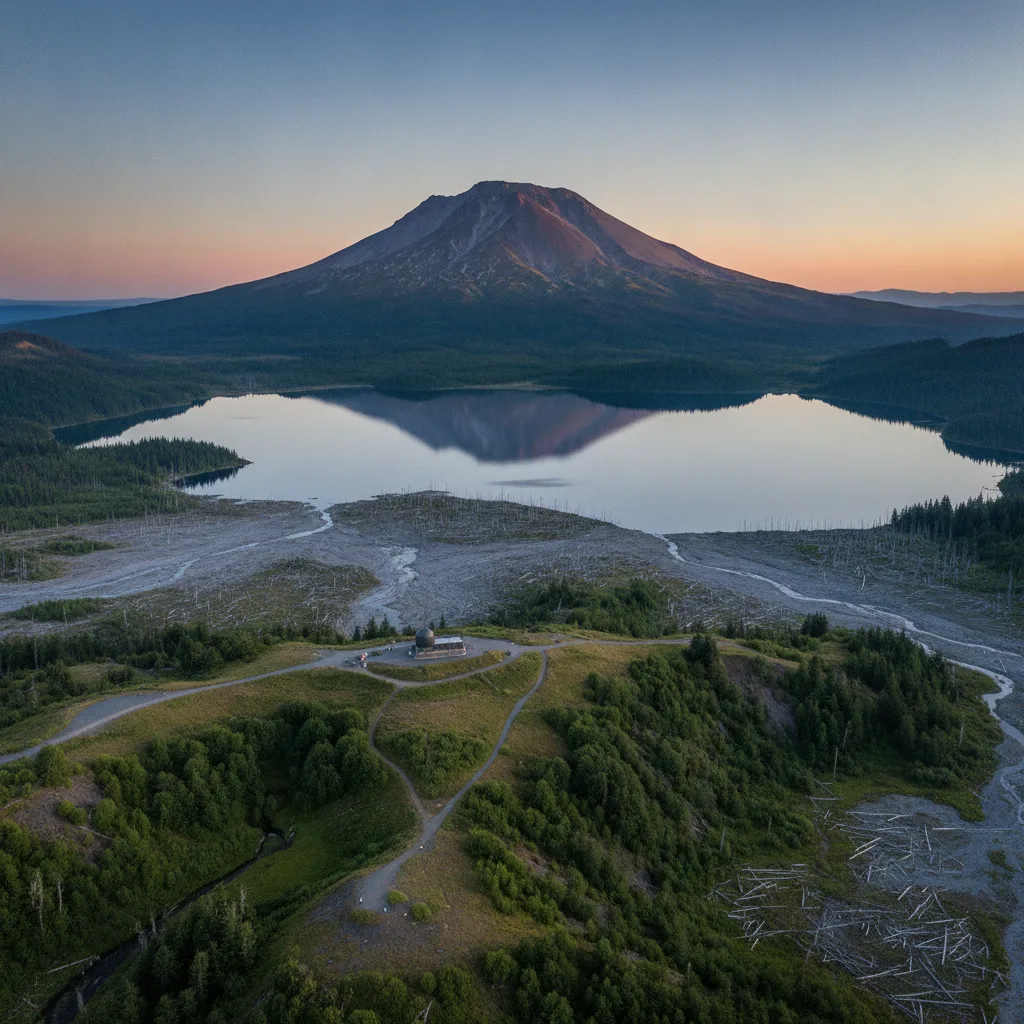
Mount St. Helens Monument Travel Guide — Washington
Welcome to the Roam States guide to the Mount St. Helens Monument Washington, a place where the raw power of nature and the remarkable resilience of life are on full display. This isn't just a destination; it's a living testament to one of the most significant geological events in recent history, preserving the blast zone of the catastrophic 1980 eruption and allowing visitors to witness real-time ecological recovery. Our team believes that experiencing this dynamic landscape offers a profound understanding of our planet's forces and the enduring spirit of renewal.
Why Visit Mount St. Helens Monument
Visiting Mount St. Helens Monument offers a unique and powerful experience unlike any other. It’s a place where history, geology, and ecology converge, providing an unparalleled opportunity to see the aftermath of a major volcanic eruption and the subsequent rebirth of life. We recommend it for anyone seeking a deeper connection to natural processes and a stark reminder of Earth's dynamic power. The monument, designated by Congress in 1982, spans 110,000 acres and is managed by the U.S. Forest Service, emphasizing research, recreation, and education.
The landscape itself is a dramatic classroom. You'll witness areas of complete devastation alongside vibrant new growth, showcasing nature's incredible ability to heal and adapt. From the eerie "moonscape" of the blast zone to the flourishing forests and lakes, the ecological recovery here is a truly inspiring sight. It’s a destination that encourages reflection and offers a profound appreciation for the natural world.
Who It's Best For
The Mount St. Helens Monument caters to a diverse range of visitors, making it a compelling choice for many travel styles.
- Nature Enthusiasts and Geologists: Those with a keen interest in geology, volcanology, and ecological succession will find the monument an absolute marvel. It’s a living laboratory where you can observe the ongoing changes and scientific research firsthand.
- Hikers and Outdoor Adventurers: With numerous trails ranging from easy interpretive walks to strenuous backcountry treks, hikers will find ample opportunities to explore diverse terrains and stunning views.
- Families with Older Children: While some areas are accessible for all ages, the interpretive centers and educational programs are particularly engaging for school-aged children and teenagers who can grasp the historical and scientific significance. The sheer scale of the blast zone can be awe-inspiring for young minds.
- History Buffs: Visitors interested in the 1980 eruption and its impact on the region will appreciate the detailed exhibits and viewpoints that tell the human and geological story of Mount St. Helens.
- Photographers: The dramatic landscapes, from stark volcanic plains to lush new growth and stunning views of the crater, offer endless opportunities for captivating photography.
While younger children can certainly enjoy some aspects, the full appreciation of the monument's significance might be best suited for those who can understand the historical context and ecological processes at play.
Getting There & Parking
Understanding how to get to Mount St. Helens Monument is crucial for planning your visit, as access points and conditions vary. The monument is primarily accessed via three main routes, each offering a different perspective and experience:
- West Side (State Route 504 - Spirit Lake Highway): This is the most popular route, heading east from I-5 at Castle Rock. It leads directly into the heart of the blast zone and offers spectacular crater views and several visitor centers. However, it's vital to note that the Johnston Ridge Observatory, a key viewpoint at the end of SR 504, is currently inaccessible due to a significant landslide that occurred in May 2023, destroying the Spirit Lake Outlet Bridge. Construction on a new bridge began in April 2026, with officials eyeing a 2027 reopening for the observatory itself. Despite this, other attractions along SR 504, such as the Science and Learning Center at Coldwater, remain accessible.
- East Side (Forest Roads 25 & 99): Accessible from Randle via US-12, this route offers summer and fall opportunities to view the crater and Spirit Lake, along with various interpretive sites and hiking trails. Windy Ridge Viewpoint, accessible via Forest Road 99, provides one of the closest car-accessible views of the crater and Spirit Lake. Forest Roads 25 and 99 are typically closed due to snow from November to May.
- South Side (Forest Roads 83 & 81): This area, accessed via State Route 503 from I-5 at Woodland, features lava flows, waterfalls, caves, and lush forests, including popular sites like Ape Cave.
Mount St. Helens Monument Parking
Parking at most developed recreation sites within the Mount St. Helens Monument requires a fee. A $5 per vehicle per day pass is common, or a valid Recreation Pass is accepted. On the west side, a Monument Pass costs $8 per adult (children 15 and under are free) and is required at certain trailheads and visitor centers (when open). For the east and south sides, a National Forest Recreation Pass is required, which costs $5 per vehicle per day or $30 for an annual pass. The America the Beautiful annual pass is also widely accepted. Washington State Sno-Park Permits are required at Sno-Parks from December 1 to March 31 and are not available on-site.
Top Things to Do
There are many things to do at Mount St. Helens Monument, offering a range of experiences from interpretive learning to adventurous exploration. Our team has carefully curated a list of the most impactful activities to help you plan your visit.
- Visit the Mount St. Helens Visitor Center at Silver Lake: Located near the monument's western entrance, this Washington State Parks visitor center provides excellent exhibits, a movie theater, and educational opportunities. It's open year-round, with summer hours typically 9 a.m. to 5 p.m. and winter hours 10 a.m. to 4 p.m.. Fees are $5 for adults, $2.50 for ages 7-17, and free for children 6 and younger.
- Explore the Science and Learning Center at Coldwater: Situated at milepost 43 on State Route 504, this hands-on education center offers spectacular views and immersion into the blast zone. It's open to the public seven days a week, typically from 10 a.m. to 4 p.m. from June 13 to October 31.
- Hike Ape Cave: On the south side of the monument, Ape Cave is the third-longest lava tube in North America, stretching 2.5 miles. It's a chilly, pitch-black experience that requires two sources of light per person and sturdy shoes. The cave is open seasonally, typically from May 18 to October 31. Timed entry tickets are required per vehicle ($2 administration fee) and can be reserved on Recreation.gov, in addition to a $5 day-use or valid Recreation Pass. Lanterns are available for rent at Ape's Headquarters during open hours (9 a.m. to 5 p.m.).
- Drive to Windy Ridge Viewpoint: For breathtaking views of the crater and Spirit Lake from the east side, Windy Ridge is a must-see. It's the closest you can get by car to the crater and offers panoramic vistas of the blast zone and the recovering landscape. You can climb the 357 steps of the "Sandladder" for an even higher vantage point. Forest Road 99, which leads to Windy Ridge, is typically open from late spring through fall. Note that restrooms at Windy Ridge were closed for replacement in 2026, but facilities at Smith Creek Overlook (less than 1 mile away) are open.
- Experience the Forest Learning Center: Operated by Weyerhaeuser at milepost 33 on SR 504, this center offers free exhibits and educational displays focused on forest ecosystems and the reforestation efforts post-eruption.
- Climb Mount St. Helens: For the truly adventurous, summiting Mount St. Helens is a challenging but rewarding experience. Permits are required year-round, with a quota system in place from April 1 to October 31 to protect the volcano's features and reduce crowding. Permits are released online on Recreation.gov on the first day of the preceding month at 7:00 AM Pacific Time. The recreation fee for a climbing permit during quota season is $20 per climber per day, plus a $6 reservation fee. The most common route is Monitor Ridge from Climbers Bivouac.
These things to do at Mount St. Helens Monument provide a comprehensive understanding of this extraordinary natural wonder.
Mount St. Helens Monument Hiking Trails
The Mount St. Helens Monument hiking trails offer incredible diversity, from easy interpretive loops to challenging backcountry expeditions, allowing visitors to immerse themselves in the recovering landscape. We highly recommend exploring these trails to truly appreciate the monument's unique environment.
- Hummocks Trail: Located off SR 504, this easy 2.5-mile loop winds through the rolling mounds created by the 1980 landslide, offering close-up views of the reshaped landscape, wetlands, and young forests. It's a fantastic option for families and those seeking an accessible introduction to the blast zone.
- Birth of a Lake Interpretive Trail: An easy 1.2-mile round-trip boardwalk trail at Coldwater Lake, this path explains how the eruption's debris avalanche dammed Coldwater Creek to create the new lake. It's accessible and offers scenic views of the lake and surrounding recovery.
- Harmony Trail #224: This moderate 2-mile round-trip trail offers a steep descent to the shores of Spirit Lake, providing stunning views of the lake and the volcano. It's open late spring through fall, depending on snow.
- Loowit Trail: For experienced backpackers, the Loowit Trail is a challenging 32-mile circumnavigation of Mount St. Helens, offering an intimate and rugged experience of the volcanic landscape. Portions of this trail, particularly those around Spirit Lake, may be subject to closures due to ongoing repair projects.
- Boundary Trail #1: This trail offers spectacular views of the volcano and the blast zone. While access to the Johnston Ridge Observatory and its immediate trails (like the Eruption Trail) is currently closed, other sections of the Boundary Trail, such as the segment to Norway Pass, offer challenging climbs with incredible vistas.
- Ape Canyon Trail #234: A moderate 6-mile trail that can lead to Pumice Butte or connect to the Loowit Trail, offering diverse views of lava flows and forests.
When planning your Mount St. Helens Monument hiking trails adventure, always check current conditions and permit requirements, especially for summit climbs or backcountry camping. Many trails are seasonal, closing due to snow in winter and early spring.
Best Time to Visit
The best time to visit Mount St. Helens Monument largely depends on what you hope to experience, as each season offers a distinct perspective on this remarkable landscape. We've found that the monument truly shines from mid-May through October, when the main access roads, particularly State Route 504, are typically open.
- Summer (June-August): This is arguably the most popular time, offering the fullest access to all areas, including the Spirit Lake Highway (SR 504) up to Coldwater Lake. The weather is generally warm and clear, ideal for hiking and enjoying the viewpoints. However, expect larger crowds and be prepared to reserve timed entry tickets for popular attractions like Ape Cave well in advance.
- Spring (April-May): Early spring can still see snow at higher elevations, but as the season progresses, wildflowers begin to bloom, and the landscape comes alive. This is a quieter time to visit before the peak summer crowds. Access roads may still be opening incrementally, so check conditions before you go. Climbing season for the summit typically begins April 1.
- Fall (September-October): The autumn months offer crisp air, fewer crowds, and stunning fall foliage in the surrounding forests. Road access generally remains open, making it an excellent time for hiking and photography. Snow can begin to fall at higher elevations towards the end of October, leading to road closures.
- Winter (November-March): While much of the monument's higher elevation access is closed due to snow, the Mount St. Helens Visitor Center at Silver Lake remains open year-round. Winter offers opportunities for snowshoeing, cross-country skiing, and a more solitary experience of the monument's lower elevations. Climbing permits are free and self-issued during this period, though conditions are more challenging.
Given the ongoing closure of Johnston Ridge Observatory until at least 2027, focusing on the Science and Learning Center at Coldwater, Ape Cave, and Windy Ridge (when accessible) is key for 2026 visits.
Where to Stay Nearby
While Mount St. Helens Monument itself doesn't have extensive lodging options within its immediate boundaries, several nearby communities offer a range of accommodations to suit different preferences. Our team recommends considering these areas for convenient access to the monument.
- Castle Rock, Washington: Located directly off I-5, Castle Rock is a primary gateway to the west side of the monument via State Route 504. It offers a selection of motels, restaurants, and gas stations, making it a practical base for exploring the visitor centers and trails along SR 504.
- Cougar, Washington: Situated closer to the south side of the monument, Cougar is the closest town to attractions like Ape Cave and the Climber's Bivouac trailhead. You'll find a few small lodges, cabins, and basic services here, providing a more rustic and secluded experience.
- Randle, Washington: For those planning to access the east side of the monument, including Windy Ridge, Randle is a good option. It offers limited lodging, including cabins and small inns, along with essential services.
- Longview/Kelso, Washington: These larger towns, a bit further south on I-5 from Castle Rock, provide a wider array of hotels, dining options, and amenities. They serve as a good base if you prefer more choices and don't mind a slightly longer drive to the monument's entrances.
For a more immersive natural experience, consider Mount St. Helens Monument camping, which we detail in a dedicated section.
If you're extending your trip in Washington, consider exploring other incredible destinations. The vibrant city of Seattle offers attractions like Chihuly Garden and Glass and Pike Place Market. For more natural beauty, Mount Rainier National Park, Olympic National Park, and North Cascades National Park are all within reach, offering diverse landscapes and outdoor activities. You can find more ideas for your Washington state adventure on our site.
Sample 2-Day Itinerary
To truly appreciate the Mount St. Helens Monument, we recommend dedicating at least two full days. This allows for exploration of different access points and a deeper dive into its unique features.
Day 1: West Side Exploration (SR 504)
- Morning: Start your day at the Mount St. Helens Visitor Center at Silver Lake. Spend a couple of hours exploring the exhibits, watching the interpretive film, and walking the short trail along Silver Lake.
- Late Morning/Lunch: Continue east on State Route 504. Stop at the Forest Learning Center (milepost 33) for free exhibits on reforestation. Have a picnic lunch at one of the scenic pullouts.
- Afternoon: Proceed to the Science and Learning Center at Coldwater (milepost 43). Explore the exhibits and take a hike on the accessible Birth of a Lake Interpretive Trail (1.2 miles round-trip) or the Hummocks Trail (2.5-mile loop) to experience the blast zone up close.
- Evening: Head back to Castle Rock or Longview/Kelso for dinner and overnight accommodation.
Day 2: South Side & East Side Adventure (Ape Cave & Windy Ridge)
- Morning: Drive to the south side of the monument to explore Ape Cave. Remember to reserve your timed entry ticket in advance on Recreation.gov and bring two light sources per person. Allow 1-2 hours for the lower cave or more if you tackle the upper cave.
- Lunch: Grab lunch in the town of Cougar or pack a picnic to enjoy before heading to the east side.
- Afternoon: Make your way to the east side of the monument via Forest Roads 25 and 99 (check seasonal access). Drive to the Windy Ridge Viewpoint. Take the 357 steps up the Sandladder for unparalleled views of the crater and Spirit Lake. Explore the various interpretive sites along Forest Road 99, such as Meta Lake Interpretive Site and Harmony Falls Viewpoint.
- Evening: Depart from the monument, perhaps heading towards another Pacific Northwest gem like Deception Pass State Park or even south towards Columbia River Gorge in Oregon.
Planning your trip to Mount St. Helens Monument requires careful consideration of current conditions, especially with the Johnston Ridge Observatory closure. However, the available visitor centers, diverse hiking opportunities, and stunning viewpoints ensure a profoundly educational and awe-inspiring experience. We encourage travelers to embrace the journey through this ever-recovering landscape. For more extensive travel planning, our USA Road Trip Planner can help you integrate this destination into a larger adventure.
Mount St. Helens Monument Camping
For those who wish to extend their stay and fully immerse themselves in the natural beauty of the area, Mount St. Helens Monument camping offers several options, both within and just outside the monument boundaries. While the monument itself doesn't have numerous developed campgrounds, the surrounding Gifford Pinchot National Forest provides ample opportunities.
- Developed Campgrounds: The Gifford Pinchot National Forest, which encompasses the monument, operates several campgrounds. For instance, Forest Road 83, on the south side, provides access to various campgrounds like Lower Falls and Sunset Falls. Beaver Bay Campground, though not operated by the national forest, is conveniently located near Ape Cave and other south-side trails. It offers showers, full bathrooms, and waterfront access on Yale Reservoir. Paradise Creek Campground, also in the Gifford Pinchot National Forest, provides a quintessential Northwestern forest camping experience.
- Dispersed Camping: Free, primitive dispersed camping is available in designated areas of the Gifford Pinchot National Forest, particularly along Forest Road 83 on the south side of Mount St. Helens. These sites offer a more rugged experience with minimal facilities, so campers should come prepared with all necessary supplies, including water, and practice Leave No Trace principles.
- Backcountry Camping: For experienced hikers, camping in the Mount Margaret Backcountry requires a special backcountry permit. This area offers rugged, steep trails and stunning landscapes for those seeking a true wilderness experience.
- Climber's Bivouac: For those planning to summit Mount St. Helens, the Climber's Bivouac trailhead offers a few flat spots for tent camping or car camping, allowing climbers to get an early start on their strenuous ascent.
Reservations for developed campgrounds are highly recommended, especially during peak season. Climbing permits and Mount Margaret Backcountry permits can be obtained online through Recreation.gov. Be aware of seasonal closures for many campgrounds and roads due to snow, particularly from late fall through spring. Always check current conditions before planning your Mount St. Helens Monument camping trip.
Is It Worth Visiting?
We unequivocally assert that Mount St. Helens Monument is worth visiting. This is not merely a scenic overlook; it’s an immersive journey into geological history and ecological resilience. The sheer scale of the 1980 eruption's impact, followed by the remarkable regrowth, offers a perspective on natural processes that few places on Earth can rival.
Even with the temporary closure of Johnston Ridge Observatory, the monument still provides an abundance of compelling experiences. The Science and Learning Center at Coldwater, the unique exploration of Ape Cave, and the panoramic views from Windy Ridge offer profound insights into the volcano's story and the ongoing recovery. For hikers, the diverse Mount St. Helens Monument hiking trails present opportunities to explore everything from ancient forests to newly formed landscapes. The educational value for families and the sheer awe inspired by the blast zone make it a truly memorable destination. If you seek a powerful connection to nature's cycles of destruction and rebirth, then Mount St. Helens Monument is worth visiting, offering a perspective that will stay with you long after you leave.
Last updated: 2026-07-13 by the Roam States team.