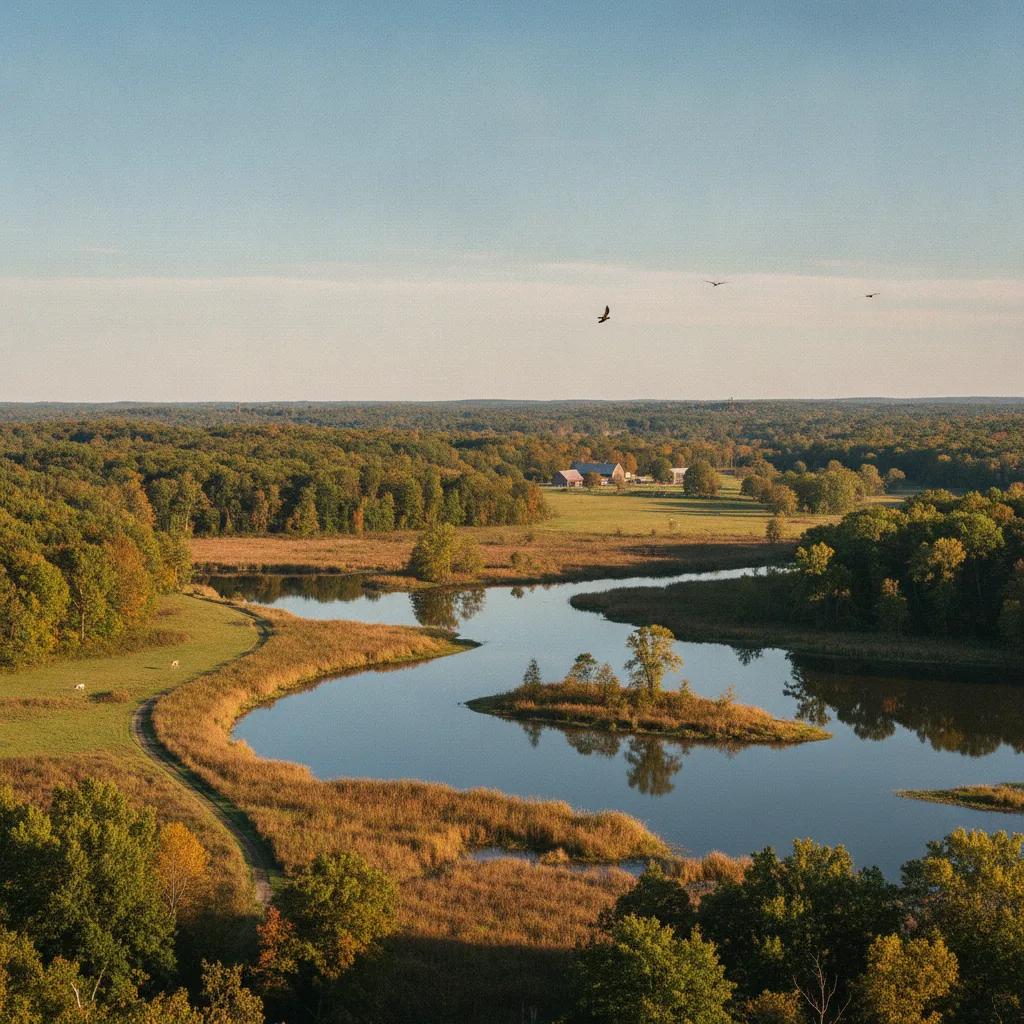
Our Patuxent Research Refuge guide covers practical planning for Patuxent Research Refuge Maryland — best time to visit, getting there, and what to do on the ground. We’ll cut through the generic travel advice to give you the precise details you need for a truly rewarding visit to the nation’s first wildlife refuge.
As independent US travel authorities, our team at Roam States has explored countless natural wonders, but few offer the unique blend of conservation, education, and accessible wilderness found at Patuxent Research Refuge Maryland. Established by executive order of President Franklin D. Roosevelt in 1936, this refuge holds the unique distinction of being the only national wildlife refuge specifically created to support wildlife research. Spanning over 13,000 acres of tranquil forests, meadows, and wetlands, it serves as a vital sanctuary for migratory birds and a living laboratory for ecological studies amidst the bustling Baltimore-Washington corridor. We’ve compiled this comprehensive guide to ensure your visit is as enriching and seamless as possible.
Why Visit Patuxent Research Refuge
We believe Patuxent Research Refuge offers a truly distinctive experience for anyone seeking to connect with nature and understand the critical role of scientific research in conservation. Unlike many other refuges, Patuxent's core mission is scientific investigation, which means you're not just observing wildlife; you're witnessing the legacy of groundbreaking ecological studies in action. From endangered species recovery efforts to habitat restoration and climate research, the work here directly informs the health of the Chesapeake Bay watershed and beyond.
Beyond its scientific importance, the refuge provides an unparalleled opportunity for quiet contemplation and wildlife observation. The vast expanse of unbroken tree cover, a rarity in central Maryland, creates a haven for deep-forest songbirds like the Scarlet Tanager, allowing them to thrive away from predators. Whether you're a seasoned birder hoping to spot a rare species or simply looking for a peaceful escape from urban life, the refuge’s diverse habitats — from serene lakes to winding forest trails — offer a profound sense of serenity. It’s a place where the sounds and sights of the eastern woods truly lend serenity to the soul.
Who It's Best For
Patuxent Research Refuge caters to a surprisingly wide array of visitors, making it a versatile destination for many types of travelers:
- Birders and Wildlife Enthusiasts: With its critical habitat for migratory birds and diverse ecosystems, the refuge is a prime location for birdwatching and wildlife photography. The viewing blinds at Cash Lake in the South Tract, for instance, offer excellent opportunities to observe waterfowl.
- Families with Children: The National Wildlife Visitor Center, located in the South Tract, is designed to engage young minds with interactive exhibits focusing on global environmental issues, migratory bird studies, and creature life cycles. Ranger-guided tram tours (free, first-come, first-served) provide an accessible way for families to see wildlife without extensive hiking. The Kids Discovery Center and Agents of Discovery app further enhance the experience for younger visitors.
- Hikers, Bikers, and Equestrians: With nearly 20 miles of footpaths and gravel roads across both tracts, and specific trails for biking and horseback riding in the North Tract, outdoor adventurers will find ample space to explore.
- Researchers and Students: Given its primary mission, the refuge is an invaluable resource for environmental science education and research, offering programs and insights into ongoing ecological studies.
- Those Seeking Solitude: The North Tract, with its 25 miles of trails and generally fewer visitors, provides a quieter atmosphere for those seeking respite and a deeper connection with nature.
- Anyone on a Budget: General admission to Patuxent Research Refuge is free, making it an accessible and affordable option for a day out in nature.
How to Get There & Parking
Reaching Patuxent Research Refuge is straightforward, whether you're coming from Washington D.C., Baltimore, or Annapolis. The refuge is divided into two publicly accessible areas: the South Tract, which houses the National Wildlife Visitor Center, and the North Tract, offering more extensive trails. It's important to note that the Central Tract is dedicated solely to research and is not open to the public. There is no direct connector between the North and South Tracts, so you'll need to use public roads to travel between them.
Directions to the South Tract (National Wildlife Visitor Center)
The South Tract is located at 10901 Scarlet Tanager Loop, Laurel, MD 20708-4036.
- From Washington, D.C.: Take the Baltimore/Washington Parkway (Route 295) North to Exit 22 for Powder Mill Road-Beltsville. Turn right (east) onto Powder Mill Road and continue for 2.0 miles. Turn right into the Visitor Center entrance (Scarlet Tanager Loop) and drive 1.4 miles to the Visitor Center Parking area.
- From Baltimore, MD: Take the Baltimore/Washington Parkway (Route 295) South to the Powder Mill Road-Beltsville Exit. Turn left onto Powder Mill Road (East) and go 2.0 miles. Turn right into the Visitor Center entrance (Scarlet Tanager Loop) and drive 1.4 miles to the Visitor Center Parking area.
- From Annapolis, MD: Take US Route 50 West to Exit 11 for MD Route 197/Collington Road and Bowie. Follow signs from there.
Directions to the North Tract
The North Tract is located at 230 Bald Eagle Drive, Laurel, MD 20724.
- From Washington, D.C.: Take the Baltimore-Washington Parkway (MD Route 295) North and exit onto MD Route 198 East toward Fort Meade. Travel almost 2 miles, then turn right onto Bald Eagle Drive (at the ball fields). Drive past the Hunter Contact Station on the right and continue to the North Tract Visitor Contact Station on the left, approximately 1 mile from Route 198.
- From Baltimore, MD: Take the Baltimore/Washington Parkway (MD Route 295) South to the MD Route 198 exit toward Fort Meade/Laurel. Turn left onto Route 198 heading East and travel about 2 miles. Then turn right onto Bald Eagle Drive (at the ball fields), drive past the Hunter Contact Station on the right, and continue to the North Tract Visitor Contact Station on the left, approximately 1 mile from Route 198.
Parking at Patuxent Research Refuge Maryland
We're pleased to confirm that parking at both the South Tract (National Wildlife Visitor Center) and the North Tract is free. At the South Tract, ample parking is available directly at the Visitor Center. For the North Tract, you'll find gravel lots at the Visitor Contact Station and at designated points along the Wildlife Loop and near Lake Allen. During peak times, especially for special events, these lots can fill up, so arriving earlier in the day is always a good strategy.
Top Things to Do
The array of things to do at Patuxent Research Refuge is surprisingly diverse, catering to nature lovers, active adventurers, and those simply seeking a tranquil escape. Our team has highlighted the best ways to experience this unique refuge.
Wildlife Viewing & Birding
Patuxent is a premier destination for wildlife viewing, particularly for birders. The refuge's extensive wetlands, forests, and meadows provide critical habitat for countless birds, mammals, pollinators, and amphibians. We recommend bringing binoculars and a camera to fully appreciate the diverse species. The South Tract's National Wildlife Visitor Center features gigantic binoculars mounted on decks behind the center, offering excellent views of seasonal birds utilizing the wetlands. Two new camouflaged viewing blinds along Cash Lake Trail in the South Tract are perfect for birders and photographers seeking an unobtrusive vantage point. Keep an eye out for deep-forest songbirds like the Scarlet Tanager, which thrive in the refuge's unbroken tree cover.
Patuxent Research Refuge Hiking Trails
Exploring the Patuxent Research Refuge hiking trails is one of the most rewarding things to do at Patuxent Research Refuge. With nearly 20 miles of footpaths and gravel roads, there's a trail for every activity level.
- South Tract Trails: The South Tract offers about five miles of walking trails, easily accessible from the Visitor Center.
- Cash Lake Trail (1.4 miles): This is arguably the most popular trail, winding along the edge of Cash Lake, the largest impoundment in the refuge. It offers numerous opportunities to view waterfowl and observe beaver activity. The trail is generally easy to navigate and features excellent viewing blinds.
- Valley Trail: This more secluded trail traverses through the woods along an old gully, providing a different ecological perspective.
- Fire Road Trail: Often combined with the Cash Lake and Valley Trails to form a complete loop, offering a comprehensive taste of the South Tract's diverse habitats.
- North Tract Trails: The North Tract boasts 25 miles of trails, offering a quieter and more extensive experience for walking, biking, and horseback riding. Due to its history as a former Army munitions test site, visitors are strictly required to stay on marked roads and trails for safety.
- Many trails here are narrow and reserved for foot traffic, but refuge maps clearly indicate where biking is permitted.
- The eight miles of paved roads forming the Wildlife Loop provide an excellent route for auto touring or longer bike rides.
Our team's expert verdict: Always check the refuge's official website or the Visitor Center for updated trail maps and conditions, especially for the North Tract, which may have closures due to hunting seasons or staff shortages.
National Wildlife Visitor Center
The National Wildlife Visitor Center in the South Tract is a hub of activity and education. It's one of the largest science and environmental education centers within the Department of the Interior. Inside, you'll find interactive exhibits that delve into global environmental issues, migratory bird studies, endangered species, and the research techniques employed by scientists. There are educational films, public programs, and a small bookstore and nature shop operated by the Friends of Patuxent. Don't miss the pollinator gardens surrounding the Visitor Center, which are alive with butterflies and brightly colored birds.
Fishing
Fishing is a popular seasonal activity at Patuxent Research Refuge. You'll need a valid Maryland non-tidal fishing license. Fishing is permitted on Cash Lake in the South Tract from an accessible pier and along parts of the shoreline. Fishing is also popular at North Tract. Information and permits for fishing are available at the Visitor Center's information desk. We recommend reviewing the Patuxent Fishing Regulations for 2026, available on the refuge's official website, to ensure compliance.
Biking & Horseback Riding
While hiking is prevalent across both tracts, the North Tract is the designated area for biking and horseback riding, offering 25 miles of trails for these activities. Touring the North Tract on a bike allows you to cover more ground and experience different facets of the refuge in a single visit. Remember to consult the refuge maps to identify trails where biking is allowed, as some are reserved for foot traffic only.
Environmental Education Programs & Events
The refuge regularly hosts a variety of free public programs and events, many of which require advance registration. These can include guided walks, nature talks, and family-friendly activities. For instance, in July 2026, the refuge is hosting a "Kids Click! Youth Nature & Wildlife Photo Contest" and a "Wingspan Game Play" session, a board game all about birds. Check the official Patuxent Research Refuge events calendar for the most up-to-date schedule.
Best Time to Visit
Choosing the best time to visit Patuxent Research Refuge largely depends on your interests, as each season offers unique highlights.
- Spring (March-May): We find spring to be a truly magical time. Migratory birds return, filling the air with song, and the refuge's diverse plant life bursts into bloom. This is an excellent period for birdwatching and photography, and the weather is typically mild and pleasant for hiking.
- Summer (June-August): While summer can bring warm and humid conditions, it's a great time for families to explore. The Visitor Center's indoor exhibits offer a cool retreat, and ranger-led programs are often in full swing. Early mornings or late afternoons are best for outdoor activities to avoid the midday heat. Keep an eye on weather alerts, as extreme heat can occur in July.
- Fall (September-November): Autumn is another prime season, offering comfortable temperatures for outdoor activities and stunning foliage displays. The migratory bird patterns shift, bringing different species through the refuge. Hunting seasons also begin in the fall, so be sure to check refuge guidelines if you plan to visit during this time.
- Winter (December-February): For those seeking solitude and unique wildlife viewing opportunities, winter can be surprisingly rewarding. With fewer visitors, the refuge offers a quiet atmosphere. Waterfowl are often abundant on the lakes, and tracking animal prints in fresh snow can be an exciting activity. Be aware of potential closures due to inclement weather.
The refuge grounds are generally open from sunrise to sunset, with the South Tract closing at 4 PM on Tuesdays and the National Wildlife Visitor Center open Wednesday through Saturday from 10 AM to 4 PM. The North Tract, as of late 2023, has temporarily reduced hours, opening only on Sundays from 8 AM to 4 PM due to staff shortages. Both tracts are closed on federal holidays. We always advise checking the official U.S. Fish & Wildlife Service website for Patuxent Research Refuge before your visit for any last-minute alerts or changes to hours and access.
Where to Stay Nearby
While Patuxent Research Refuge itself does not offer overnight accommodations, there are numerous Patuxent Research Refuge lodging options in the surrounding towns of Laurel, Bowie, and Greenbelt, Maryland. These areas provide convenient access to the refuge and a range of amenities to suit different budgets and preferences. We’ve scouted out some of the best areas for Patuxent Research Refuge lodging.
Laurel, Maryland
Laurel is the closest major town to the refuge, making it an ideal base for your visit. It offers a variety of chain hotels, from budget-friendly to mid-range, with easy access to dining and shopping. You'll find options with amenities like complimentary breakfast, pools, and fitness centers, providing a comfortable stay after a day of exploring the refuge.
Bowie, Maryland
Just a short drive from the South Tract, Bowie offers additional lodging choices, often including hotels with slightly more upscale amenities. This area provides good access not only to Patuxent but also to other regional attractions, such as the Bowie Baysox stadium for baseball fans.
Greenbelt, Maryland
Located slightly further south, Greenbelt is another excellent option, particularly if you're also planning to visit Washington D.C. or other points along the Baltimore-Washington Parkway. Greenbelt provides a mix of hotels and is known for its convenient location and access to public transportation into D.C.
Our team's expert verdict: We recommend booking your Patuxent Research Refuge lodging in advance, especially during peak seasons or if your visit coincides with local events, to secure the best rates and availability.
Sample 2-Day Itinerary
To help you make the most of your visit, our team has crafted a sample 2-day itinerary for Patuxent Research Refuge, designed to immerse you in its natural beauty and educational offerings.
Day 1: South Tract Immersion
- Morning (9:30 AM - 12:30 PM): National Wildlife Visitor Center & Short Hike. Arrive at the South Tract and head directly to the National Wildlife Visitor Center. Spend an hour or two exploring the interactive exhibits, watching educational films, and browsing the nature shop. Afterward, step outside to enjoy the pollinator gardens and then embark on the Cash Lake Trail (1.4 miles). This easy loop offers excellent opportunities for birdwatching from the viewing blinds and appreciating the serene lake environment.
- Lunch (12:30 PM - 1:30 PM): Picnic at the Refuge or Local Eatery. Pack a picnic to enjoy at one of the designated areas near the Visitor Center, or head into nearby Laurel for a quick bite at a local restaurant.
- Afternoon (1:30 PM - 4:00 PM): Extended South Tract Exploration. Take on a longer hike by combining the Valley Trail and Fire Road Trail with parts of the Cash Lake Trail for a comprehensive experience of the South Tract's wooded and wetland habitats. Alternatively, check the refuge's events calendar for any scheduled ranger-led programs or tram tours (first-come, first-served).
- Evening: Dinner & Relaxation. Enjoy dinner in Laurel or Bowie and relax at your chosen Patuxent Research Refuge lodging.
Day 2: North Tract Adventure & Nearby Exploration
- Morning (8:00 AM - 12:00 PM): North Tract Trails. Head to the North Tract, which opens at 8 AM on Sundays (check for updated 2026 hours). This area offers a more rugged and solitary experience. Choose from the 25 miles of trails for a longer hike, a bike ride, or even horseback riding if you bring your own horse. Remember to stay on marked trails due to the area's history. This is an excellent opportunity for serious birding and wildlife photography in a less crowded setting.
- Lunch (12:00 PM - 1:00 PM): Pack a Lunch or Head to Laurel. Again, a packed lunch is ideal for maximizing time in nature. Otherwise, return to Laurel for lunch.
- Afternoon (1:00 PM - 4:00 PM): Discover More of Maryland. Depending on your interests, spend the afternoon exploring a nearby Maryland gem. You could head to Assateague Island for wild horses and beaches, delve into history at Fort McHenry National Monument, or explore the charming streets of Historic Annapolis & Naval Academy. For a broader view of the state's offerings, consult our guide to the Best places in Maryland.
- Evening: Departure or Extended Stay. Enjoy a final Maryland dinner before heading home, or extend your stay to explore more of the region.
Is It Worth Visiting?
Without a doubt, our team believes Patuxent Research Refuge is absolutely worth visiting. It stands as a testament to the power of dedicated conservation and scientific inquiry, offering a unique perspective that sets it apart from many other natural areas. As the nation's only wildlife refuge established specifically for research, it provides a rare glimpse into the ongoing efforts to protect and understand our natural world.
For us, the value of Patuxent Research Refuge extends beyond its scientific mission. It's a place where tranquility reigns, where the simple act of walking a trail can lead to unexpected wildlife encounters, and where the sheer expanse of protected habitat provides a much-needed respite from the everyday. Whether you're drawn by the allure of migratory birds, the quiet beauty of its diverse landscapes, or the educational opportunities at the National Wildlife Visitor Center, the refuge delivers a rich and meaningful experience. Its free admission for general visitors in 2026 further enhances its appeal, making it an accessible and invaluable resource for connecting with nature. The opportunity to engage with the natural world here, knowing it's also a hub for vital ecological research, makes a visit to Patuxent Research Refuge a truly enriching endeavor.
FAQ Longtails
Patuxent Research Refuge camping
Camping is not permitted directly within Patuxent Research Refuge. The refuge is dedicated to wildlife research and day-use recreational activities. However, there are numerous state parks and private campgrounds in the broader Maryland area that offer camping facilities. We recommend exploring options in nearby state parks such as Patapsco Valley State Park or Greenbelt Park, which is closer to the D.C. area.
Things to do in Laurel
Beyond the Patuxent Research Refuge, Laurel, Maryland, offers several attractions. You can explore the historic Main Street with its shops and restaurants, visit the Laurel Museum to learn about local history, or enjoy a performance at the Laurel Mill Playhouse. For family fun, there are local parks and recreation centers. The city also hosts various community events throughout the year, so checking the local Laurel calendar for 2026 events would be beneficial during your visit.
Patuxent Research Refuge with kids
Patuxent Research Refuge is an excellent destination for families with kids. The National Wildlife Visitor Center in the South Tract is particularly kid-friendly, featuring interactive exhibits, educational films, and a Kids Discovery Center. Ranger-guided tram tours offer an easy way for children to see wildlife. The easy walking trails, like the Cash Lake Trail, are suitable for little legs, and the Agents of Discovery app provides an engaging, gamified outdoor experience. The refuge also hosts family-oriented events, such as the "Kids Click! Youth Nature & Wildlife Photo Contest" in summer 2026.
Best hotels near Patuxent Research Refuge
The best hotels near Patuxent Research Refuge are primarily found in Laurel, Bowie, and Greenbelt, Maryland. In Laurel, you'll find popular chain hotels like the Holiday Inn Express & Suites Laurel, Courtyard by Marriott Laurel, and Hampton Inn Laurel, offering comfortable stays and convenient access to the refuge. Bowie and Greenbelt also provide good options, often with slightly more amenities, such as the Best Western Capital Beltway in Greenbelt or the Comfort Inn Conference Center in Bowie. We advise checking current reviews and booking in advance, especially during peak travel times.
Patuxent Research Refuge tips
Our top tips for visiting Patuxent Research Refuge include: 1) Plan your visit around the specific hours of the North and South Tracts and the Visitor Center, as they vary and are closed on federal holidays. 2) General admission is free, but bring a Maryland non-tidal fishing license if you plan to fish, and be aware of potential future fees for general recreation starting in Fall 2027. 3) Stay on marked trails, especially in the North Tract, due to its history as a former munitions site. 4) Bring binoculars for birdwatching and a camera for photography. 5) Pack water and snacks, as no food or drink is available on the refuge. 6) Dogs are welcome on a leash. 7) Check the refuge's official website for any alerts, such as weather closures or temporary changes to hours.
Where to stay near Patuxent Research Refuge
For accommodation near Patuxent Research Refuge, we recommend looking at hotels in the towns of Laurel, Bowie, and Greenbelt, Maryland. Laurel is the closest and offers a good selection of hotels. Bowie provides additional options and is convenient for the South Tract. Greenbelt is a bit further but offers excellent access to the wider Baltimore-Washington metropolitan area. All these locations provide a range of hotel types and amenities to suit different travel needs, ensuring you have a comfortable place to stay after a day of exploring the refuge.
Last updated: 2026-07-06 by the Roam States team.