Our Piscataway Park guide covers practical planning for Piscataway Park Maryland — best time to visit, getting there, and what to do on the ground.
Piscataway Park Travel Guide — Maryland
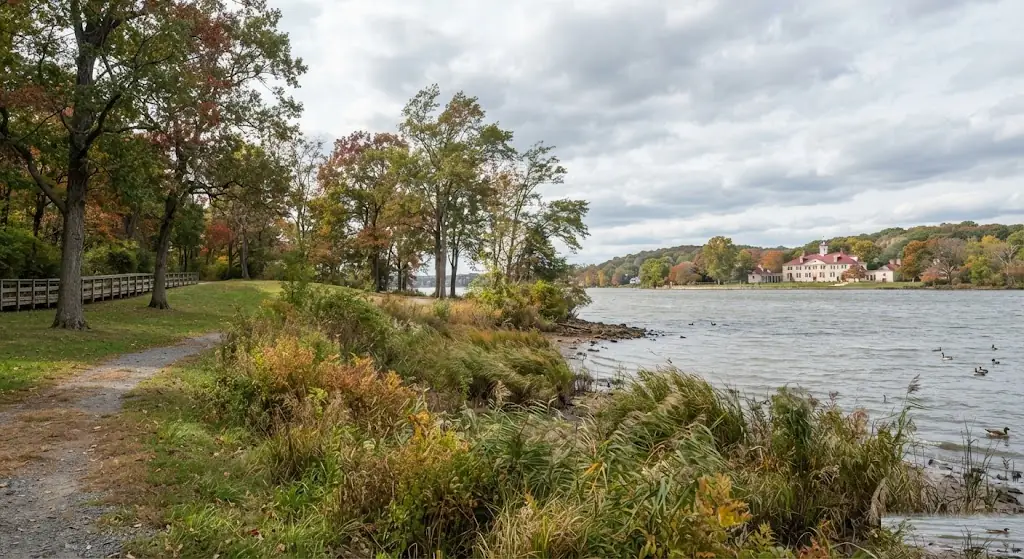
For those seeking a serene escape into nature and history just a stone's throw from the nation's capital, Piscataway Park Maryland offers an unparalleled experience. This unique National Park Service site is more than just a park; it's a living testament to environmental preservation and cultural heritage. Established in 1961, Piscataway Park spans approximately 5,000 acres along six miles of the Potomac River shoreline, directly across from George Washington's Mount Vernon. Its primary mission is to preserve the historic viewshed from Mount Vernon, ensuring that visitors today can still appreciate the same tranquil landscape that captivated the first president. Beyond its scenic beauty, the park provides opportunities for hiking, fishing, and a deep dive into the natural and cultural history of the Potomac River watershed, stewarded in partnership with the Accokeek Foundation and the Alice Ferguson Foundation.
Why Visit Piscataway Park
We recommend a visit to Piscataway Park for its distinctive blend of natural beauty, historical significance, and commitment to preservation. It stands as a remarkable achievement in public-private conservation, safeguarding the panoramic views from Mount Vernon that George Washington himself cherished. Unlike many national parks focusing on specific landmarks, Piscataway was pioneering in its dedication to preserving a scenic character. Here, you'll find a diverse ecosystem featuring wetlands, woods, meadows, and streams, providing vital habitat for a rich array of wildlife, including bald eagles, beavers, deer, foxes, and ospreys.
Beyond the natural allure, the park offers a tangible connection to the past. The National Colonial Farm, operated by the Accokeek Foundation, is an outdoor living history museum depicting the life of a typical tobacco-planting family in Prince George's County during the 1770s. Visitors can explore reconstructed colonial structures, fields, and gardens, gaining insight into 18th-century agricultural practices. The park also acknowledges its deeper history as the ancestral homeland of the Piscataway people, who have lived on these shores for thousands of years and continue to celebrate their heritage here. This combination of ecological preservation and cultural storytelling makes Piscataway Park a truly enriching destination.
Who It's Best For
Piscataway Park caters to a wide range of visitors, making it an ideal destination for various interests. It's particularly well-suited for history enthusiasts eager to experience a colonial farmstead and appreciate the unspoiled views across the Potomac to Mount Vernon. Nature lovers and birdwatchers will find ample opportunities to observe diverse wildlife and explore varied ecosystems, from tidal wetlands to woodlands. Families with children will appreciate the engaging, hands-on learning experiences at the National Colonial Farm and the easy-to-navigate boardwalks. Hikers and cyclists will enjoy the network of trails and scenic back roads, some of which connect to larger regional routes. Anglers and paddlers can take advantage of the fishing piers and boat launches available within the park. Essentially, if you seek a peaceful retreat that combines outdoor recreation with a profound sense of history and environmental stewardship, Piscataway Park is an excellent choice.
Getting There & Parking
Navigating to Piscataway Park is relatively straightforward, though we advise travelers to pay close attention to directions as some roads in the area share similar names. For those wondering how to get to Piscataway Park, the primary access point for the National Colonial Farm and Visitor Center is located at 3400 Bryan Point Road, Accokeek, MD 20607. From the Capital Beltway (I-495/95 S), take Exit 3 to MD-210 South/Indian Head Highway. Travel approximately 9 miles, then turn right at the traffic light by B&J Carryout onto Livingston Road. Drive one block, turn right onto Biddle Road, and then turn left onto Bryan Point Road, following it for about 3.5 miles into the park entrance.
For visitors coming from Waldorf, take Route 228 for seven miles to its end, then turn right (north) onto Indian Head Highway. Get into the far-left lane and take the next left onto Livingston Road (again, look for B&J Carryout). Drive one block, turn right onto Biddle Road, then left onto Bryan Point Road for 3.5 miles, keeping right to enter the park.
Parking at Piscataway Park is free of charge. All visitors, including school buses, should follow the signs for visitor parking located near the Education Center. Accessible parking spaces are also available. We recommend checking the official National Park Service website for any current alerts or temporary closures, as parts of the park, including the Marshall Hall Boat Ramp, may experience temporary closures for deer management on select days between March 16, 2026, and April 15, 2026, from 4:00 p.m. to 6:00 a.m.
Top Things to Do
There are numerous things to do at Piscataway Park, offering a variety of experiences for every visitor. Our team recommends allocating ample time to explore the park's diverse offerings.
Explore the National Colonial Farm
A highlight of any visit to Piscataway Park is the National Colonial Farm, an outdoor living history museum. Here, you can step back in time to the 1770s and learn about the daily lives of ordinary tobacco planters in Southern Maryland. The farm features reconstructed colonial structures, heritage breed animals, and period gardens. Skilled interpreters often lead tours, providing fascinating insights into colonial agriculture and culture. The National Colonial Farm Visitor Center is open Wednesday through Sunday from 10:00 a.m. to 4:00 p.m. between March 15 and December 15.
Enjoy the Water Activities
The Potomac River and Piscataway Creek offer excellent opportunities for water-based recreation. Fishing is a popular activity, with public fishing piers available at the National Colonial Farm and Farmington Landing. A Maryland state fishing license is required for individuals 16 and older. For those interested in boating, Farmington Landing provides a quiet spot to launch small craft, while Marshall Hall offers a concrete ramp for larger boats. Kayaks and canoes can be rented from the Fort Washington Marina, a nearby facility.
Discover Wildlife and Nature
Piscataway Park is a haven for wildlife viewing. The park's wetlands, forests, and meadows are home to bald eagles, beavers, deer, foxes, and ospreys. Birdwatchers, in particular, will find the park rewarding, especially along the Accokeek Creek Boardwalk, which traverses a diverse marsh ecosystem. We recommend bringing binoculars and a camera to capture the natural beauty. The park's commitment to preserving this habitat makes it one of the best things to do at Piscataway Park for nature enthusiasts.
Piscataway Park Hiking Trails
For those who enjoy exploring on foot, Piscataway Park hiking trails offer a variety of scenic routes. The park boasts numerous nature trails that wind through woodlands and meadows, providing intimate access to the diverse ecosystems. A notable feature is the 0.5-mile boardwalk that crosses the marsh east of the National Colonial Farm, offering unique views of the freshwater tidal wetlands and excellent opportunities for birdwatching. The Accokeek Creek Boardwalk is another popular option for experiencing the marsh environment. These Piscataway Park hiking trails also connect to portions of the Captain John Smith and Potomac Heritage scenic trails, allowing for longer, more extensive walks for dedicated hikers. We advise visitors to carry water, especially during warmer months, and be prepared for changing weather conditions.
Visit Marshall Hall
At the southwestern end of the park, you'll find the remains of Marshall Hall, a historic plantation that once spanned thousands of acres. While the 1730s manor house was destroyed by fire, visitors can still see its remains and the Marshall family cemetery. This area also offers views of the Potomac River and serves as a launch point for larger boats.
Best Time to Visit
The best time to visit Piscataway Park largely depends on your preferred activities and tolerance for weather conditions. Our team generally recommends the spring and fall for the most comfortable experience. During these seasons, temperatures are moderate, and the natural scenery is at its most vibrant, with blooming wildflowers in spring and colorful foliage in autumn. The moderate weather is ideal for hiking, cycling, and exploring the National Colonial Farm without the intense heat and humidity of summer.
Summers in Piscataway Park are typically hot and humid, with daytime highs often exceeding 90 degrees Fahrenheit and scattered afternoon thunderstorms. While still enjoyable for water activities and early morning/late afternoon visits, we advise carrying plenty of water and seeking shelter during storms. Winters are generally cold, with occasional snowfall, and nighttime lows frequently near freezing. While some park areas are accessible, the National Colonial Farm Visitor Center is closed from December 16 through March 14. For wildlife viewing, especially birdwatching, late fall can be particularly rewarding for rarities.
Piscataway Park grounds are open daily for pedestrian access from 6:00 a.m. to 10:00 p.m., with vehicle access to gated areas from 9:00 a.m. to 10:00 p.m. However, the National Colonial Farm gate has seasonal hours: April 1–September 30 from 7:00 a.m. to 7:00 p.m., and October 1–March 31 from 7:00 a.m. to 5:00 p.m. The park is closed on Thanksgiving Day (November 26, 2026) and Christmas Day (December 25, 2026), and New Year's Day (January 1, 2027).
Where to Stay Nearby
While Piscataway Park does not offer on-site camping or lodging, there are several excellent options for Piscataway Park lodging in the surrounding areas of Accokeek, Fort Washington, Waldorf, and across the Potomac in Alexandria, Virginia. Our team has identified a range of accommodations to suit different preferences and budgets.
For those preferring traditional hotel stays, numerous highly-rated options are available within a reasonable driving distance. In nearby Alexandria, Virginia, you'll find choices such as the Hampton Inn & Suites Fort Belvoir Alexandria South, Best Western Plus Alexandria / Fort Belvoir, and Fairfield Inn & Suites by Marriott Alexandria. These hotels are known for their comfort and amenities. Many travelers find these convenient for combining a visit to Piscataway Park with exploration of the wider Washington D.C. metropolitan area.
If you're looking for Piscataway Park lodging with more space or a home-away-from-home feel, vacation rentals are a popular choice. Platforms like Vrbo list various houses, apartments, condos, and charming cottages in the vicinity of Piscataway Park, offering privacy and amenities ideal for families or groups. Prices for vacation rentals near Piscataway Park can start from around $535 per night, with rates varying based on season and specific features.
For those interested in camping, while there are no designated campgrounds within Piscataway Park itself, several private campgrounds and state parks in Maryland and nearby Virginia offer camping experiences. While not directly adjacent, options like Charity's Hope Family Farm Resort and Grasshopper Acres are listed as top-rated campsites near Piscataway, MD, through third-party platforms. These typically require reservations made in advance. Always verify current availability and book well ahead, especially during peak seasons.
Sample 2-Day Itinerary
To fully immerse yourselves in the natural beauty and rich history of Piscataway Park, we've crafted a sample 2-day itinerary:
Day 1: History and Nature Immersion
- **Morning (9:00 AM - 1:00 PM):** Arrive at Piscataway Park and head directly to the National Colonial Farm. Begin your visit at the Visitor Center (open Wednesday-Sunday, 10 AM-4 PM, March 15-Dec 15) to gather maps and information. Explore the living history museum, including the reconstructed 1770s farmstead, heritage livestock, and period gardens. Consider joining a guided tour if available to learn from skilled interpreters.
- **Lunch (1:00 PM - 2:00 PM):** Enjoy a picnic lunch at one of the designated picnic areas within the park. Remember, open fires are prohibited, and all fires must be contained in portable firepits or charcoal grills.
- **Afternoon (2:00 PM - 5:00 PM):** Embark on a nature walk along the Accokeek Creek Boardwalk. This 0.5-mile boardwalk offers fantastic opportunities for birdwatching and observing the diverse marsh ecosystem. Continue exploring some of the other nature trails, keeping an eye out for bald eagles, beavers, and deer.
- **Evening:** Head to your chosen accommodation in Accokeek, Fort Washington, or Alexandria. Enjoy dinner at a local restaurant, perhaps sampling some fresh Chesapeake Bay seafood.
Day 2: River Views and Regional Exploration
- **Morning (9:00 AM - 12:00 PM):** Return to Piscataway Park and make your way to Farmington Landing or Marshall Hall. Enjoy some fishing from the pier (Maryland fishing license required for those 16 and older) or launch a small boat or kayak to explore Piscataway Creek or the Potomac River. Alternatively, simply take in the stunning views of the Potomac, directly across from Mount Vernon.
- **Lunch (12:00 PM - 1:00 PM):** Grab a quick bite at a local eatery in Accokeek or pack another picnic to enjoy by the water.
- **Afternoon (1:00 PM - 5:00 PM):** Expand your exploration beyond Piscataway Park. We highly recommend visiting George Washington's Mount Vernon, just across the river in Virginia, to gain a full perspective of the viewshed. Another excellent option is Fort Washington Park, a historic coastal defense fort with beautiful river views. For those interested in more nature, the Dyke Marsh Wildlife Preserve offers exceptional birdwatching.
- **Evening:** Depending on your departure schedule, enjoy a final meal in the area or begin your journey home, refreshed by your visit to Piscataway Park and its surroundings.
Is It Worth Visiting?
Without a doubt, our team believes that is Piscataway Park worth visiting. This unique National Park Service site offers a compelling blend of natural beauty, historical depth, and recreational opportunities that make it a truly valuable destination. The park's primary purpose—to preserve the historic viewshed from Mount Vernon—is a testament to its significance, allowing visitors to connect with George Washington's perspective on the Potomac River. This alone provides a unique historical dimension often overlooked in other natural areas.
Beyond the views, the park's commitment to environmental preservation has created a thriving habitat for diverse wildlife, making it a fantastic spot for birdwatching and nature photography. The National Colonial Farm offers an engaging, immersive experience into 18th-century life, providing educational value for all ages. The fact that there is no entrance fee for Piscataway Park makes it an accessible and budget-friendly option for a day trip or a longer stay. Whether you're a history buff, a nature enthusiast, an active outdoorsperson, or a family seeking an educational outing, the question of is Piscataway Park worth visiting can be confidently answered with a resounding yes. It's a place where you can truly appreciate the interconnectedness of land, water, and human history along the tidal Potomac.
FAQ
Piscataway Park camping
There is no designated camping within Piscataway Park itself. However, several private campgrounds and state parks in the surrounding Maryland and Virginia areas offer camping options. These typically require advance reservations. For example, Hipcamp lists several top-rated campsites near Piscataway, MD, such as Charity's Hope Family Farm Resort and Grasshopper Acres. We recommend checking platforms like Recreation.gov or state park websites for availability and booking information.
things to do in Accokeek
Beyond Piscataway Park, there are several things to do in Accokeek and the immediate vicinity. A must-see is George Washington's Mount Vernon, located directly across the Potomac River, offering a comprehensive look at the first president's estate. Other nearby attractions include Fort Hunt Park, a historic site and recreational area, and the Mount Vernon Trail, an 18-mile paved path along the Potomac, perfect for cycling or walking. The Dyke Marsh Wildlife Preserve is another excellent spot for birdwatching and experiencing diverse wildlife. The Accokeek Foundation, a key partner in Piscataway Park, also hosts events like the "River & Roots" festival, celebrating local history and culture.
Piscataway Park with kids
Visiting Piscataway Park with kids is a fantastic idea, as the park offers several engaging activities for younger visitors. The National Colonial Farm is a particular highlight, allowing children to see farm animals, explore historical buildings, and learn about 18th-century life in a hands-on environment. The park's nature trails and boardwalks are generally easy to navigate, providing opportunities for wildlife spotting (like bald eagles and deer) and enjoying the outdoors. The Accokeek Foundation also hosts family-friendly events, such as the "River & Roots" festival, which includes storytelling, cultural demonstrations, and hands-on fun for all ages. We recommend bringing binoculars for wildlife viewing and allowing children to explore the farm at their own pace.
best hotels near Piscataway Park
The best hotels near Piscataway Park are typically found in nearby towns like Accokeek, Fort Washington, Waldorf, and Alexandria, Virginia. Top choices in Alexandria, VA, include the Hampton Inn & Suites Fort Belvoir Alexandria South, Best Western Plus Alexandria / Fort Belvoir, and Fairfield Inn & Suites by Marriott Alexandria, all highly rated for comfort and convenience. These hotels offer a good balance of amenities and proximity to both the park and the wider D.C. area. For those seeking more extended stays or a home-like atmosphere, vacation rentals such as houses, apartments, and cottages are also available in the surrounding communities.
Piscataway Park tips
Our top Piscataway Park tips for a smooth and enjoyable visit include:
- **Check Hours and Closures:** While the park grounds are generally open dawn to dusk, specific areas like the National Colonial Farm and its Visitor Center have seasonal hours and may be closed on certain holidays (Thanksgiving, Christmas, New Year's Day). Temporary closures for deer management may also occur.
- **Dress for the Weather:** Summers are hot and humid, so bring water, hats, and sunscreen. Winters are cold, so layer up. Spring and fall offer moderate temperatures.
- **Wear Comfortable Shoes:** You'll be doing a fair amount of walking on trails and around the farm.
- **Bring Binoculars:** Essential for birdwatching and spotting distant wildlife.
- **Fishing License:** If you plan to fish, ensure you have a valid Maryland state fishing license if you are 16 or older.
- **No Entrance Fee:** Admission to Piscataway Park is free year-round.
- **Picnic Essentials:** Pack a picnic and enjoy the scenic surroundings. Remember, open fires are prohibited outside of portable grills.
- **Respect Private Property:** Much land within Piscataway Park is privately owned; please respect owners' privacy.
- **Pets Welcome (on leash):** Dogs are allowed in the park on a leash.
where to stay near Piscataway Park
When considering where to stay near Piscataway Park, visitors have several excellent options, primarily in nearby Maryland communities and across the river in Virginia. In Maryland, areas like Accokeek, Fort Washington, and Waldorf offer a mix of chain hotels and local accommodations. For a wider selection of hotels with established reputations, we often point travelers towards Alexandria, Virginia, which is a short drive away and provides convenient access to both the park and Washington D.C. Popular choices include the Hampton Inn & Suites Fort Belvoir Alexandria South and the Fairfield Inn & Suites by Marriott Alexandria. Additionally, for those seeking a more unique or spacious experience, vacation rentals such as houses and cottages can be found in the surrounding areas, providing a comfortable base for exploring the region.
Our team at Roam States firmly believes that Piscataway Park is a hidden gem along the Potomac River, offering a tranquil yet enriching experience for all who visit. Its dedication to preserving history and nature, combined with the variety of activities available, makes it a destination we highly recommend for anyone exploring the best places in Maryland. From the immersive historical lessons at the National Colonial Farm to the peaceful moments spent observing wildlife along its scenic trails, Piscataway Park provides a refreshing escape and a deeper understanding of this historically significant region. We encourage you to plan your trip and discover the enduring charm of this unique national park. For more travel inspiration, explore our National Park Service resources and Visit Maryland for additional planning tools.
Last updated: 2026-07-13 by the Roam States team.